
Review · ROME
Trevi Fountain, Pantheon, and Campo Dei Fiori Market Food and Wine Tour
Rome makes you work for its best meals, and this four-hour walking tour turns that effort into the main event. You begin near Campo de’ Fiori, sample market goods and cured meats, then work your way through Piazza Navona, the Pantheon area, and Trevi Fountain with food in hand.
I like the mix of Roman sights and small food stops, especially the chance to taste prosciutto from Norcia, local cheeses, pizza, tiramisu, coffee, wine, and gelato in one morning. I also like the practical guidance: several guides, including Maria, Matteo, Andrea, and Fabrizia, have been praised for explaining history clearly and offering restaurant advice. The main drawback is that you see the Pantheon from outside only, and four hours of walking and eating can feel long if you prefer a short sightseeing stop.
Key points to know before booking
- Seven or more tastings can replace lunch, so arrive hungry and skip breakfast or keep it very light.
- Campo de’ Fiori market is best earlier in the day, but Sunday has only a few open stands.
- The Pantheon interior is not included, so plan a separate visit if you want to see the dome and interior.
- The tour ends at Trevi Fountain, leaving you well placed to continue exploring central Rome.
- Vegetarian food is available with advance notice, but gluten-free, dairy-free, and vegan diets cannot be accommodated.
- Groups are limited to 15 people, though the actual group may be smaller.
A food-first route through central Rome
The appeal here is simple: you cover several of Rome’s famous central landmarks while eating enough local food to count as lunch. This is not a formal monument tour with long indoor visits. It is a walking food experience with history added along the way.
The route begins at 10:45 a.m. and lasts about four hours. The published meeting point is Piazza Farnese, while the opening portion takes place around Campo de’ Fiori. Check your booking confirmation carefully for the exact place to meet, since the two squares are close but not identical.
The group size is capped at 15. That is small enough for a guide to keep an eye on the group, though narrow streets, traffic, and busy squares can still make it easy to drift behind. Wear comfortable shoes, carry water, and keep your belongings secure at crowded sights.
At $107.68 per person, the price is not cheap for a walking tour. The value comes from the amount of food included, drinks, a local guide, and a full route through central Rome. If you pay separately for lunch, several tastings, wine, coffee, dessert, and gelato, the price becomes easier to justify. If your main goal is entering Rome’s monuments, it is less convincing because the Pantheon entrance is not included.
More wine tastings in Rome:
- Rome: Pasta Cooking Class with Market Visit and Wine
★ 4.9 · 277 reviews - Tasty Trionfale Farmers Market Food Tour and Local Wines Tasting
★ 5.0 · 43 reviews - Rome: Testaccio Food & Market Tour with Pasta & Wine
★ 5.0 · 38 reviews
Campo de’ Fiori: market goods and Norcia meats
Campo de’ Fiori is the right place to begin a food tour. Its name means Field of Flowers, and the square has long served as an important public space in central Rome. During the day, market stalls sell produce, flowers, and food products.
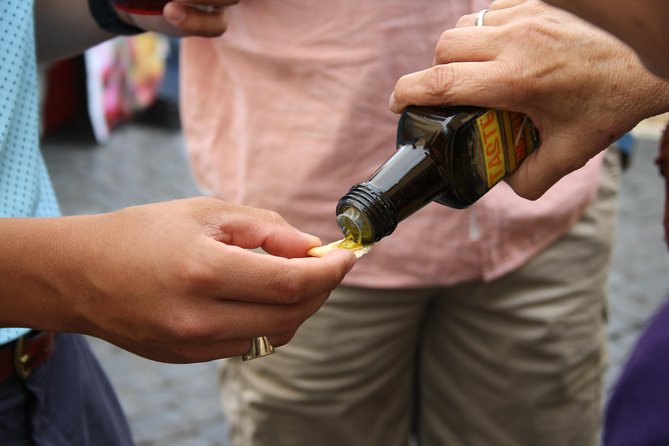
Your first tastes may include balsamic vinegar, truffles, olive oils, and limoncello. These samples give you a quick introduction to the ingredients sold across Italy, but they are also useful if you plan to shop for edible souvenirs later. You can ask about flavors, storage, and how locals use each product.
The stronger food stop comes after the market, with a platter of salumi, cheese, and prosciutto from Norcia. Norcia, in Umbria, is known for cured pork products, and the tasting comes from a family-run shop that has operated since 1890. That detail adds context to what could otherwise be just another plate of sliced meat.
This first section lasts about an hour and a half, so it is not a rushed pass through the stalls. You have time to listen, taste, and get a sense of how Roman food shops differ from ordinary restaurants.
Sunday is the weak point. Only a few market stands are open, so the Campo de’ Fiori portion may feel quieter and offer less variety. If the market is especially important to you, book a weekday or Saturday departure.
Pizza and Piazza Navona
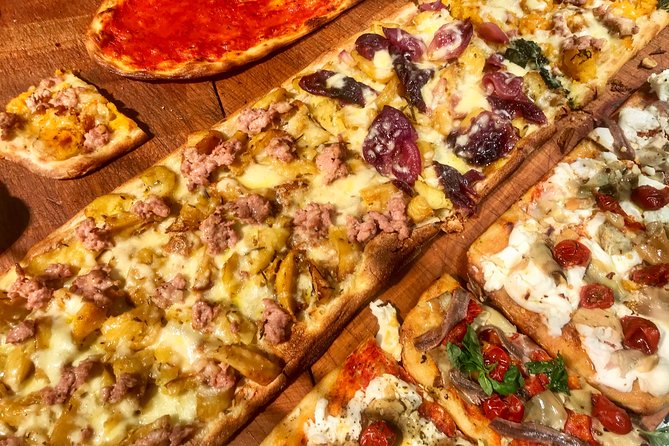
After Campo de’ Fiori, the food continues with pizza from a local bakery dating to 1824. The description emphasizes a crisp crust, and one particularly memorable detail from the tastings is the crust itself. Roman pizza is often thinner and crisper than the softer, thicker styles associated with Naples.
The food is served as part of a larger lunch sequence rather than as one sit-down restaurant meal. That format works well if you want to compare small portions and keep moving, but it does mean you should not expect a long restaurant break.
The route then reaches Piazza Navona, one of Rome’s great Baroque squares. It occupies the former site of an ancient Roman stadium, and the long oval shape still hints at that earlier use. The three fountains give the square much of its character, with Bernini’s Fountain of the Four Rivers at the center.
Here, the emphasis turns to dessert. Tiramisu is served as the Roman-style sweet course, and it has received especially strong praise from people who had already sampled several versions elsewhere in Italy. The guide explains the square while you eat, which is a pleasant way to absorb the architecture without standing through a long lecture.
This stop takes about an hour. It is one of the better balances on the route because you get a major public square, Roman history, and a substantial food break in one place.
Coffee near Sant’Eustachio
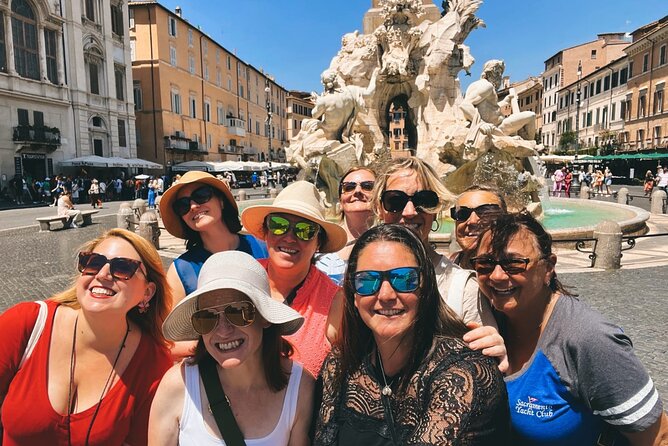
The next stop is outside the Basilica di Sant’Eustachio, followed by coffee at a shop that has served organic coffee since 1938. The tour presents this as a chance to drink coffee in the local style, rather than treating coffee as an afterthought.
Expect a short stop of about 30 minutes. The basilica is viewed from outside, so this section is more about the setting, the coffee tradition, and the surrounding streets than about a full church visit.
A practical point matters here: Italian coffee stops are usually brief. You may be standing rather than settling in for a long café visit. That suits the pace of this tour, which moves steadily between food counters and monuments.
Several people have singled out the espresso as one of the best tastes of the morning. The coffee stop also breaks up the heavier foods, giving you a small, sharp pause before gelato and the final landmarks.
More food and drink tours in Rome:
- Roman Food Tour with Visit to the Trionfale Food Market
★ 5.0 · 471 reviews - Rome: Food Tour with Market Visit
★ 4.9 · 200 reviews - Devour Rome Testaccio Market Food Tour
★ 5.0 · 180 reviews - Rome: Street Food, Local Market and Hidden Gems Tour
★ 5.0 · 57 reviews
The Pantheon from the outside
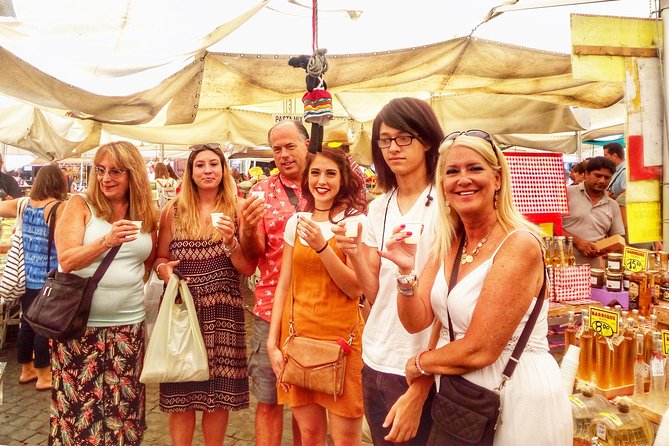
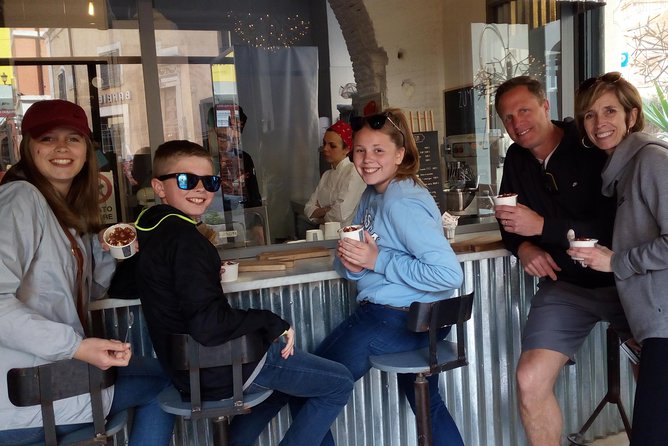
On the way to the Pantheon, you stop for artisanal gelato made with natural ingredients. This is another popular part of the route, and it gives you a chance to compare Italian gelato with the ice cream you may know at home.
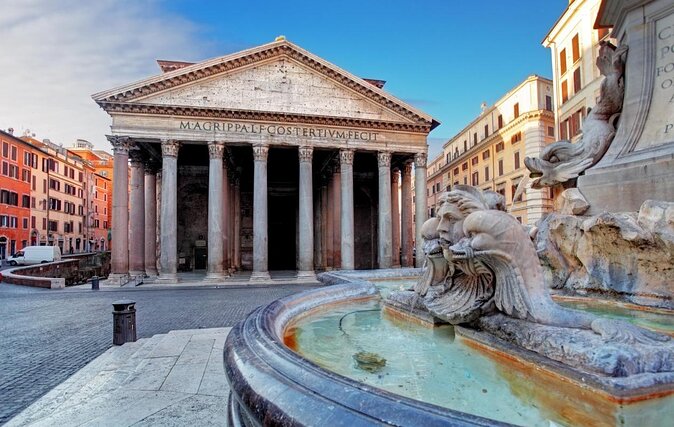
The Pantheon itself is one of Rome’s most important ancient buildings. It began as a temple dedicated to the gods of pagan Rome and remains remarkably well preserved. The guide explains the building’s purpose and history from the square outside.
The limitation is clear: entry inside the Pantheon is not included. You will not see the interior dome, the oculus, or the tombs during this tour. Admission is also listed as not included, so you must arrange and pay for a separate visit if you want to go inside.
That may disappoint anyone choosing the tour mainly for ancient architecture. On the other hand, an outside explanation works well if you already plan a dedicated Pantheon visit, or if you want to keep the food route moving. I would schedule the interior visit before or after the tour rather than expecting this experience to cover it.
The Pantheon portion lasts about 30 minutes. That is enough for orientation and photographs, but not for a full architectural study.
Trevi Fountain and the end of the route
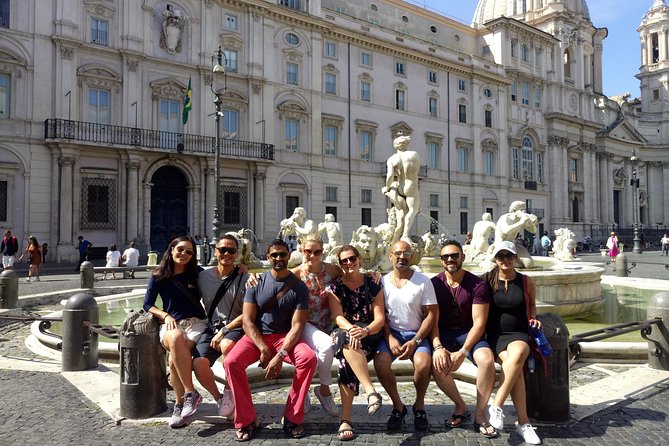
The final major sight is Trevi Fountain. The guide explains the monument and the coin tradition, then you have a chance to make the familiar wish by tossing a coin with your right hand over your left shoulder.
Trevi Fountain is one of Rome’s busiest attractions, and the tour does not make the crowd disappear. It does, however, give you context before you arrive and leaves you in the right place to return later for quieter photographs. The fountain is especially useful as an endpoint because you can continue to the nearby streets, shops, cafés, or other central sights on your own.
The tour ends at Piazza di Trevi rather than returning to Campo de’ Fiori. That matters when planning the rest of your day. You are not being taken back to your hotel, and hotel pickup and drop-off are not included. From the center, taxis and buses are practical options, but you should allow extra time if you have a fixed afternoon booking.
The Spanish Steps are not part of this tour. Do not book it expecting a route that links every major central Rome sight in one sweep.
How much food do you really get?
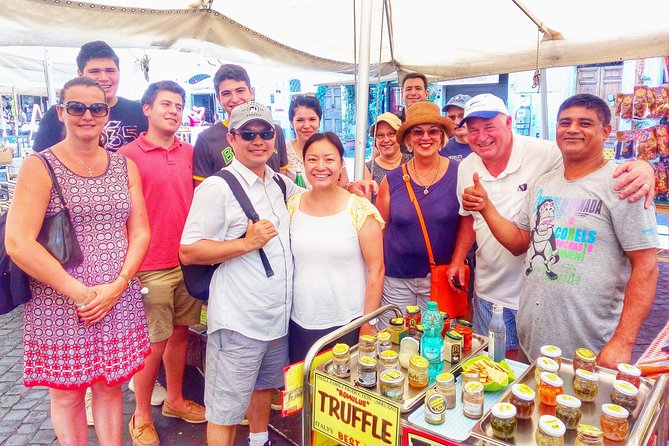
The tour includes at least seven tasting stops, but the exact selection can change. The published examples include:
- Prosciutto and other salumi from Norcia
- Regional cheeses
- Olive oils, balsamic vinegar, truffles, and limoncello
- Pizza
- Pasta or other lunch items
- Wine, beer, and soft drinks
- Tiramisu
- Italian coffee
- Artisanal gelato
The food is intended to replace lunch. That is not a token tasting menu with one bite at each stop. Several descriptions of the experience point to generous portions, so arrive hungry. A large breakfast will work against you.
Drinks are included, although the quality of the wine and beer may not satisfy someone looking for a serious tasting. This is a food tour with drinks, not a specialist wine excursion. The focus is on trying Roman staples and learning how they fit into everyday eating.
Dietary limits require careful planning. Vegetarian options can be arranged if you state the need in advance when booking. The tour cannot accommodate vegan, dairy-free, or gluten-free diets. If you have a nut allergy, cross-contamination is possible. That warning should be taken seriously.
The guide can shape the whole morning
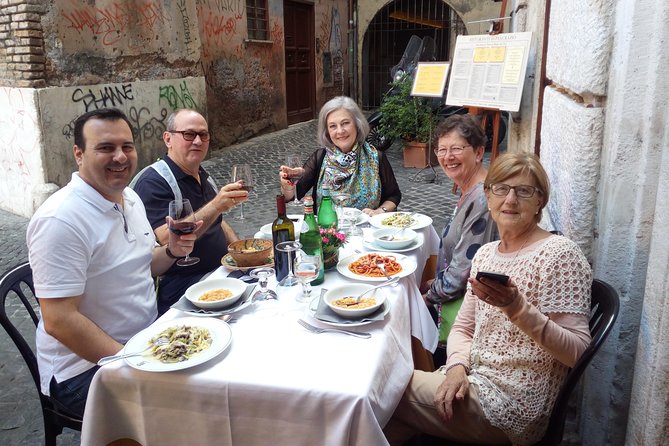
The guide is central to the experience because the food stops are spread through public streets and small businesses. Strong guides have included Maria, Matteo, Andrea, Fabrizia, Francesca, Barbara, Greta, and Marco.
The best guide reports describe clear explanations, good awareness of traffic, and helpful behavior in crowded areas. One guide used images on a tablet to show how ancient sites looked in earlier periods. Another helped locate an ATM and added a few nearby sights that suited the group. Those details show the practical value of a local guide, especially on a first visit to Rome.
The guides also need to manage a lot at once: food timing, street crossings, a moving group, restaurant coordination, and explanations in noisy squares. An audio system is not included, and one account found it difficult to hear the guide. Stay close, move toward the guide during explanations, and mention early if you cannot hear.
Guide quality can vary from one departure to another. The overall rating is 4.8 from 320 ratings, with 95 percent recommending the experience, but the small number of poor experiences includes complaints about communication and last-minute cancellations. That does not define the normal tour, but it is a reason to keep your schedule flexible when possible.
Walking, clothing, and timing
You need a moderate level of fitness. The route covers several central neighborhoods on foot, with repeated stops, standing, and uneven city surfaces. This is not a strenuous hike, but it is not a seated meal either.
Wear smart casual clothing. You enter a church area, so shoulders and knees should be covered. Comfortable shoes are more important than dressing up, but avoid clothing that would prevent entry into a religious building.
The start time of 10:45 a.m. makes the tour useful as a combined breakfast-lunch activity. You can eat lightly before meeting the group, then treat the tastings as your main midday meal.
The tour is offered in English. Children must be accompanied by an adult. Group discounts may be available, and mobile tickets are accepted.
Cancellation is free up to 24 hours before the start time for a full refund. Changes made less than 24 hours before departure are not accepted, and late cancellations are not refunded. The experience also requires a minimum number of bookings, so the operator may offer another date or a full refund if that minimum is not met.
Who should book this Rome food tour?
I would choose this experience if you want a practical introduction to central Rome and prefer tasting your way through a city rather than sitting through a long lecture. It suits first-time visitors, couples, families with older children, and anyone who wants restaurant suggestions for the rest of a Rome stay.
It is also useful early in a trip. Guides can point you toward places for later meals, explain local food habits, and show you which central sights deserve more time.
I would skip it if your priority is entering monuments. The Pantheon is outside only, and no visit to the Spanish Steps is included. I would also skip it if you need vegan, dairy-free, gluten-free, or fully nut-safe food.
Should you book it?
Book this tour if you want a filling lunch, a small group, several Roman specialties, and a guided route through Campo de’ Fiori, Piazza Navona, the Pantheon area, and Trevi Fountain. The strongest part is the combination of food and local orientation, with guides such as Maria, Matteo, Andrea, and Fabrizia adding history and practical advice.
Before paying, make three checks: confirm the meeting point, notify the operator in advance about vegetarian needs, and plan a separate Pantheon visit if its interior matters to you. For a food-focused introduction to Rome at $107.68, the value is solid if you arrive hungry and treat the landmarks as part of the route rather than the main purpose.
FAQ
Where does the tour start?
The listed meeting point is Piazza Farnese in Rome. The opening portion takes place around Campo de’ Fiori, so check your booking confirmation for the precise meeting instructions.
What time does the tour begin?
The tour starts at 10:45 a.m.
How long does the tour last?
It lasts approximately four hours.
Where does the tour end?
The tour ends at Trevi Fountain, at Piazza di Trevi.
Is hotel pickup included?
No. Hotel pickup and drop-off are not included. Taxis and buses can be used to reach the meeting point.
Is admission to the Pantheon included?
No. The tour views the Pantheon from outside and does not include entry.
Is the Spanish Steps part of the route?
No. The Spanish Steps are not included.
What food and drinks are included?
Food may include prosciutto, salumi, cheeses, olive oils, balsamic vinegar, truffles, limoncello, pizza, tiramisu, coffee, and gelato. Wine, beer, and soft drinks are also included.
Can vegetarians join the tour?
Yes, vegetarian options can be arranged if you advise the operator in advance through the special requirements field.
Can people with vegan, gluten-free, or dairy-free diets join?
No. The tour does not accommodate vegan, gluten-free, or dairy-free participants. Nut cross-contamination is also possible.
What happens if I need to cancel?
You can cancel at least 24 hours before the start time for a full refund. Cancellations or changes made less than 24 hours before the start time are not accepted for a refund.
More Markets in Rome
- Rome: Colosseum, Roman Forum & Trajan’s Market Exterior Tour
★ 4.3 · 2,038 reviews - Authentic Roman Cooking Class & Market Experience
★ 5.0 · 363 reviews - Kitchen of Mamma: Pasta Cooking Class with market visit in Rome
★ 5.0 · 140 reviews - Farmers’ Market Shopping with Cooking Class and Pasta Making
★ 5.0 · 91 reviews
More Food in Rome
- Rome E-Bike Tour: Ultimate Street Food and Market Feast
★ 4.9 · 50 reviews - Rome: Taste of Testaccio Food & Market Tour
★ 4.9 · 38 reviews - Rome: Vatican Street Food and Wine Tour with Farmers Market
★ 5.0 · 37 reviews - Rome: Campo De’ Fiori Market & Trevi 4-Hour Food & Wine Tour
★ 4.8 · 9 reviews
Just added around Rome
- Testaccio Experience: Street Food, Market and Traditions★ 5.0 · 4 reviews
- Rome: Temples, Squares & Markets Guided Walking Tour★ 4.8 · 26 reviews
- Rome: Testaccio Food & Market Tour with Pasta & Wine★ 5.0 · 38 reviews
- Rome: Trajan’s Markets & Museum of The Imperial Fora Tour★ 4.8 · 4 reviews
- Rome: Taste of Testaccio Food & Market Tour★ 4.9 · 38 reviews
- Rome: The Vatican Market Experience Tasting and Class★ 4.7 · 10 reviews
- Farmers Market Shopping and Roman Full Course Class – SHARED★ 5.0 · 12 reviews
- Rome: Market and Cooking Class at a Local’s Home★ 4.0 · 3 reviews
Shopping Tours, compared.
Damnoen Saduak Market and Maeklong Railway Market
Read our review →
The Old Siam: Damnoen Saduak and Maeklong Railway Market
Read our review →
Train Market & Floating Market with Boat Ride
Read our review →
Ayutthaya & Ayothaya Floating Market Day Trip
Read our review →
Hanoi Cooking Class: Culture, Local Market & Meaning CSR Impact
Read our review →
5 Traditional Dishes Hanoi Cooking Class with Market Trip
Read our review →
Cooking Class and Lunch at a Tuscan Farmhouse with Local Market Tour from Florence
Read our review →
Cooking Class, Market & Thai Herbs Garden Tour
Read our review →Browse the lists this tour appears in