
Review · UBUD
Jambangan bali cooking class with morning market tour
The best part of the Jambangan Bali cooking class happens before the cooking begins. You visit a morning market, choose herbs, spices, vegetables, and meat, then walk through Kelabang Moding village to see rice fields, temples, a school, and everyday Balinese life before entering a family home. I like the market-to-table flow and the chance to learn customs such as making a daily offering. I also like that Putu and his family keep the setting personal, with a small group and time to ask questions.
The main consideration is the early start and the four-and-a-half-hour length. You will spend time outdoors in warm conditions, and the experience takes place in a Balinese home rather than a polished cooking studio. That is the point for many people, but anyone wanting a quick, air-conditioned class may prefer another option.
Key points at a glance
- Market shopping comes first: Choose fresh ingredients with the cooking team, then see how they fit into Balinese food.
- Putu and his family host at home: You learn in a real family setting, not a staged restaurant classroom.
- The village walk adds context: Rice fields, temples, a school, and local homes help connect the food with daily life.
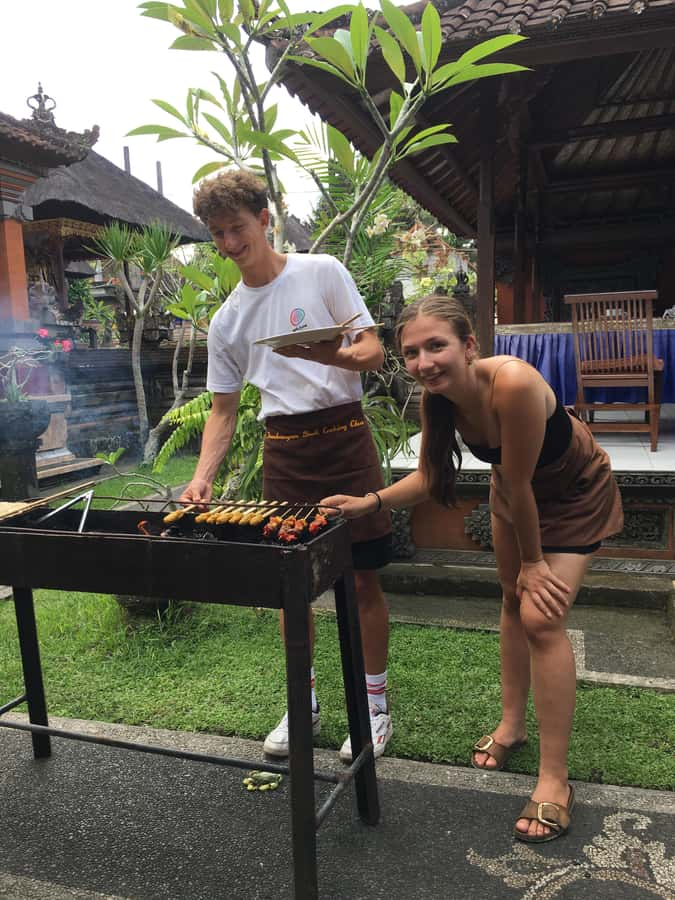
- You cook every recipe yourself: Traditional methods are part of the lesson, followed by a meal made by your group.
- Cultural activities are built in: You will learn about daily offerings and coconut oil processing.
- The price is modest: At $27 per person, the market visit, transport within Ubud, instruction, meal, recipes, and certificate make this a strong-value half-day outing.
From the morning market to the family kitchen
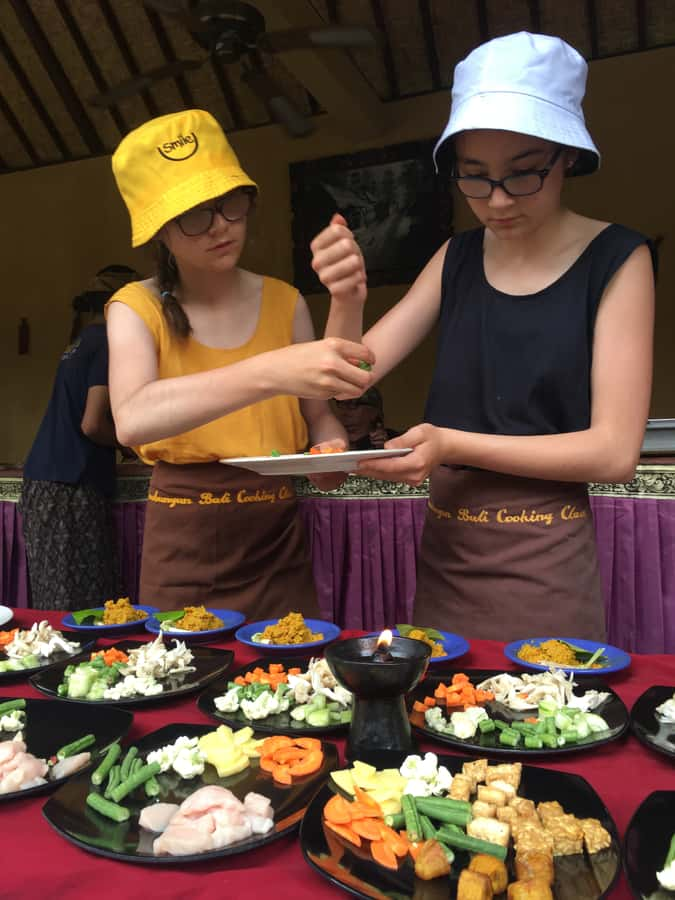
I like cooking classes that begin with ingredients rather than a stack of prepared bowls. Here, the morning market gives you a practical introduction to Balinese cooking. You can pick herbs and spices, crisp vegetables, and cuts of meat with the class team, then see the raw materials that will become your meal.
That matters because Balinese food depends on combinations of fresh aromatics and seasonings. Buying ingredients at the start gives you a better sense of what goes into the dishes than simply arriving at a table where everything has already been chopped.
The market is also the liveliest part of the morning, so bring your camera if you enjoy watching local trade and food preparation. You should bring cash as well. The class includes the planned experience, but cash is useful if you want to buy something separately or cover a personal expense.
The exact market location and pickup time are not specified, so check the available starting times when you book. The morning option is the one that includes the market tour. If you choose a later class, do not assume this part is included.
More Market Cooking Classes in Indonesia
- Ubud: Cooking Class with Transfers and Optional Market Visit
★ 4.9 · 824 reviews - Balinese Ubud cooking school (9 Dish Cooking and Market Tour)
★ 5.0 · 540 reviews - Ubud: Balinese Cooking Class and Market Tour
★ 4.8 · 531 reviews
Rice fields and a look at Kelabang Moding
After the market, you return toward Kelabang Moding village. The route includes rice fields, with a chance to see rice farmers doing their daily work and speak with local farmers. This gives you a useful link between the food on your plate and the work behind it.
I would treat this as a cultural walk rather than a formal farm tour. The information promises a view of daily activity and conversation, not a long agricultural lesson or a guaranteed hands-on farming session. Still, even a short look at rice work can help you understand why rice is so central to Balinese meals and village life.
You will also pass village temples and a school. These details may sound small on paper, but they help you read the village as a lived-in place. The class is not only about recipes. It shows you where family, religion, education, and farming fit into the same setting.
Wear comfortable clothing and shoes suitable for walking. The operator specifically advises bringing a camera and cash. Since the morning can be warm, the family provides water during the class, according to the experience details shared by recent participants.
Entering a Balinese family home
The cooking takes place at a Balinese home, where Putu and his family welcome you. This is the heart of the experience. You are not just being shown a regional menu. You are being invited to see how a family home functions and to hear about Balinese life from people who live it.
The setting may appeal to you if you prefer a personal class with conversation and cultural explanation. It may feel less controlled than a commercial kitchen. Floors, seating, work surfaces, and the pace may be different from what you expect at home, and the class is not presented as a luxury culinary school.
That difference is worth considering before you book. The appeal comes from the home setting, family welcome, and direct contact with Balinese customs. If you want a highly polished demonstration with a professional kitchen layout, this probably is not the right match.
The class is conducted in English by Balinese chefs who can explain both the food and the culture. Putu is named in the welcome and family setting, while the wider cooking team may vary. You should be able to ask questions as the class moves along rather than listening to a one-way talk.
Making offerings and learning coconut oil work
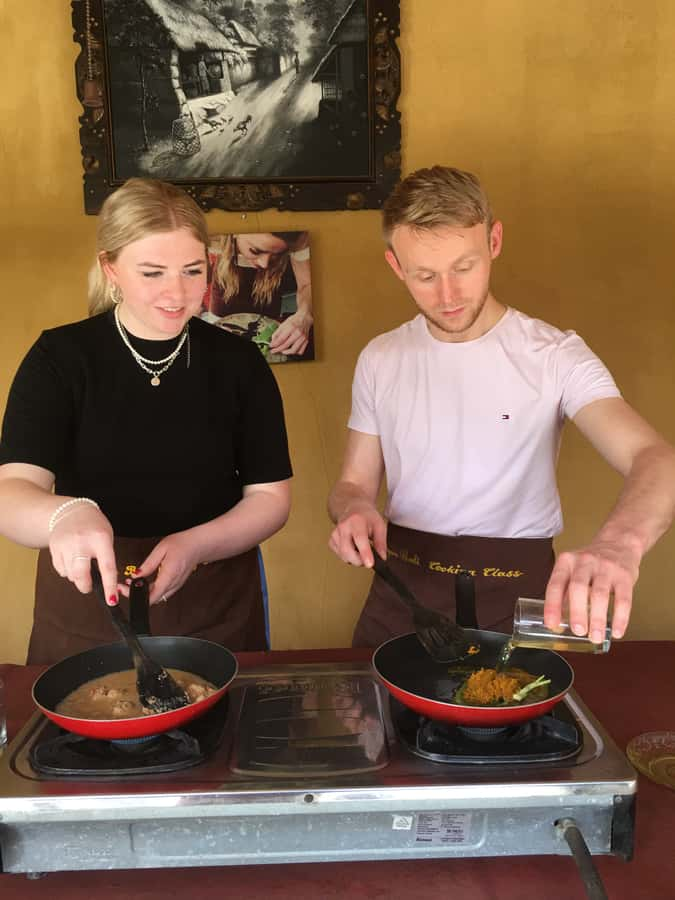
Two included activities add cultural detail beyond the cooking bench. You will make a daily offering and learn about coconut oil processing. These are useful additions because they show how food, household tasks, and spiritual practice can overlap in Balinese life.
Making a daily offering is not treated as a separate sightseeing stop. It is a simple activity within the visit to the home, giving you a chance to learn by doing. The experience does not promise a religious ceremony or a formal temple ritual, so keep your expectations at the level of an introduction to an everyday custom.
The coconut oil session offers another view of household production. You can see how a familiar cooking ingredient connects to local work and traditional methods. The supplied details do not specify the exact equipment or length of this demonstration, so the amount of hands-on time may depend on the day and the group.
I value these parts because they keep the class from becoming only a recipe lesson. You leave with a better sense of how ordinary tasks can carry cultural meaning.
More Market Cooking Classes in Ubud
- Balinese Cooking class with traditional morning market visit
★ 5.0 · 161 reviews - PRIVATE Ubud Market Tour & Balinese Cooking Class with Putu
★ 5.0 · 125 reviews - Balinese cooking class/Go shopping at the market, cook, eat
★ 5.0 · 12 reviews
Cooking with traditional methods
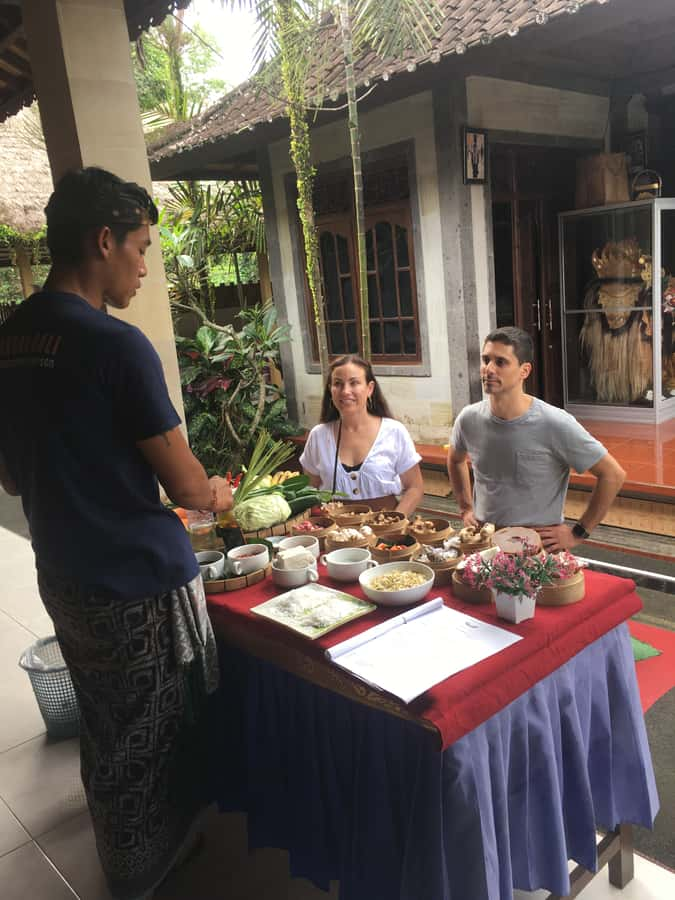
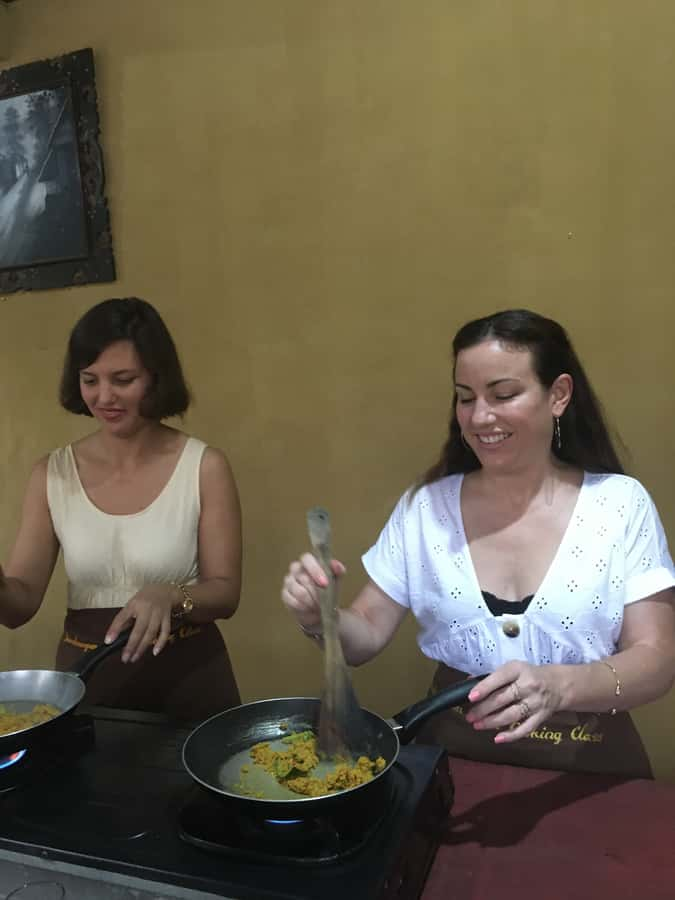
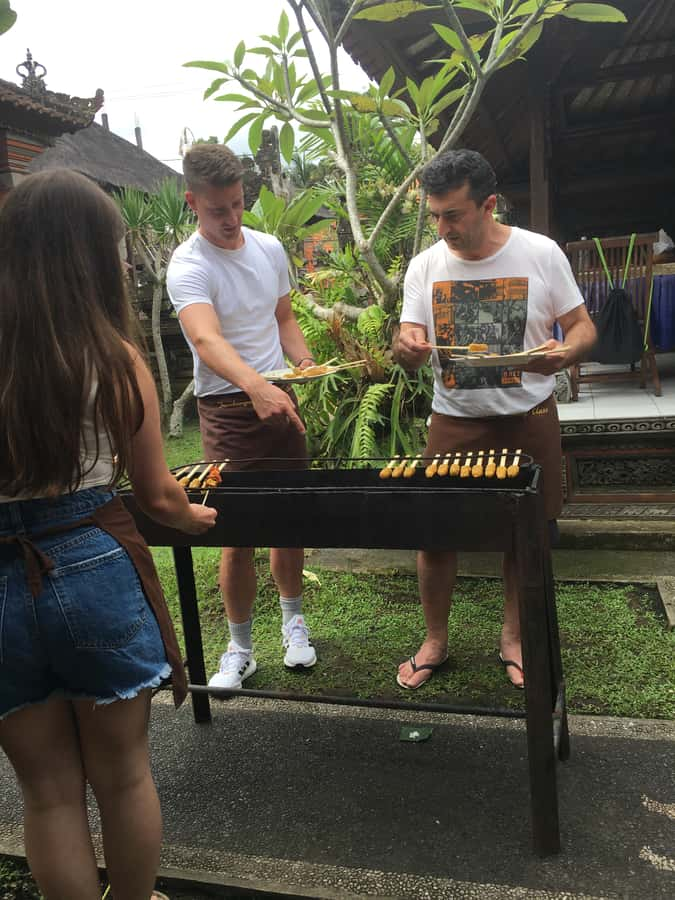
Once you are back at the home, you prepare the recipes yourself. The class emphasizes hands-on work, so you should expect to take part rather than watch a chef do everything. The available information does not list the exact dishes, which means you should not book this expecting a named menu.
That lack of a fixed menu can be a benefit. Ingredients at the market may guide the day, and the class can focus on the food available and suitable for the session. It also means anyone with a strong dietary requirement should ask before booking, since no specific substitutions are promised.
The chefs explain traditional Balinese techniques and the role of the ingredients. You can use the class to learn the basic structure of Balinese cooking, not just copy steps. Pay attention to how herbs, spices, vegetables, and meat are prepared and combined. The market visit makes these lessons easier to remember.
The pace is likely relaxed but active. With 270 minutes for the complete experience, you have time for transport, the market, village sights, cultural activities, cooking, and eating. It is a half-day commitment, not a quick two-hour stop between other Ubud plans.
Eating the meal you prepared
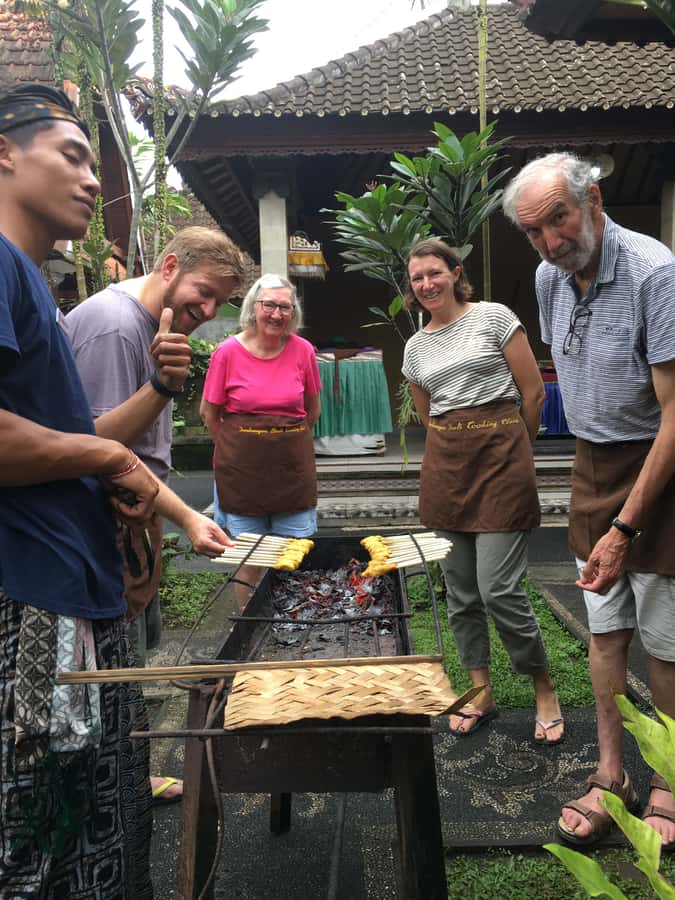
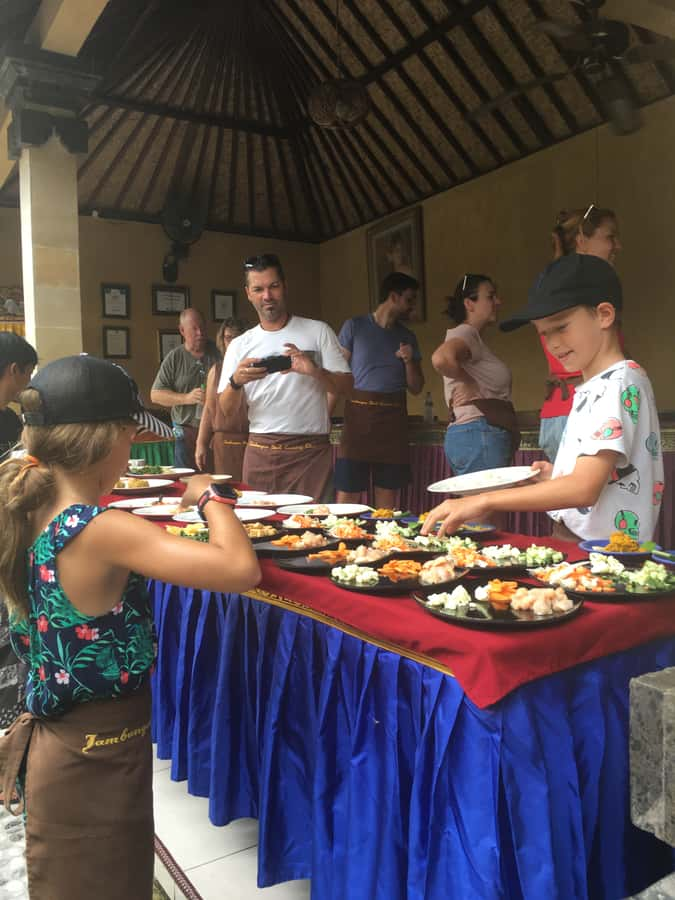
After the cooking, you sit down to enjoy what you made. The meal is served in the warung and garden at the home, with the description referring to lunch and dinner depending on the class timing. For the morning version, you should expect the food to serve as your main meal around midday.
This is where the hands-on format pays off. You recognize the ingredients from the market and the steps from the kitchen, so the final meal feels connected to the whole morning. It is also a practical chance to ask about flavors, methods, and how the recipes fit into local home cooking.
Water is provided, which matters in Bali’s heat. Beer is not included, and you should budget separately for any personal purchases. The experience does not list other drinks or a special beverage pairing, so do not expect a full bar service.
Food is one of the most praised parts of this class. The cooking is described as delicious, but I would keep the focus on participation rather than restaurant-level presentation. You are there to make and understand the meal, then enjoy it in a family setting.
What the $27 price really covers
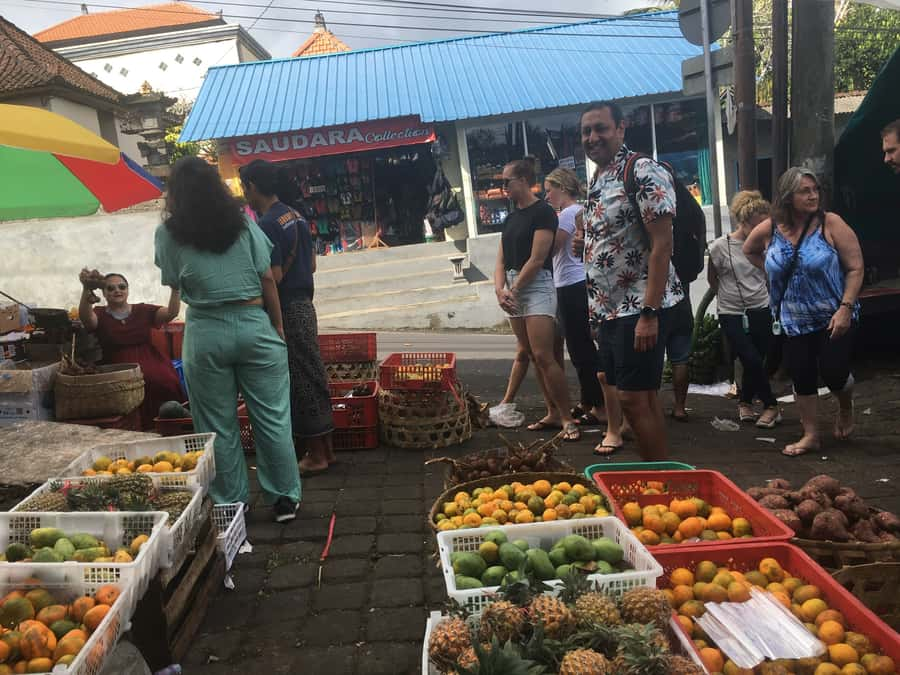
At $27 per person, this is a low-cost way to spend four and a half hours in Ubud. The value comes from the number of pieces bundled together: hotel pickup and drop-off in the Ubud area, the morning market, rice fields, a village visit, a Balinese home, cultural activities, cooking instruction, the meal, recipes, and a certificate.
A separate cooking class and market tour could easily use the same amount of time without giving you the family-home setting or village context. Here, you are paying for a connected experience rather than one isolated lesson.
The price has limits. Pickup is free only for hotels in the Ubud area. If your hotel is outside that zone, extra transport charges depend on the location. Ask for the transport cost before booking if you are staying elsewhere, since that can change the total value.
A certificate and recipe collection are included for the trip home. The recipes are especially useful because they give you a chance to repeat the meal after Bali. The exact format of the recipes is not specified, so think of them as a practical reminder rather than a professional cookbook.
Pickup, timing, and comfort
The duration is 270 minutes, or four and a half hours. Pickup is included for Ubud-area hotels, and you are asked to wait in the hotel lobby 10 minutes before the scheduled time. The driver will ask for you by name, so keep your phone available and make sure your booking name is clear.
Transport receives a very strong score in the supplied information, and the pickup system is straightforward. Still, Ubud traffic and hotel access can affect the day, so avoid scheduling another fixed activity immediately afterward.
The class is offered in English. The chefs are described as fully conversant in English and in Balinese cuisine and culture. That is important because the cultural parts only have value if you can follow the explanations and ask questions.
The activity is listed as wheelchair accessible. Since the experience includes a market, village areas, rice fields, and a private home, you may want to confirm the exact route and facilities if you have specific mobility needs. Accessibility is stated, but detailed information about surfaces, toilets, or transfers is not provided.
The activity is marked as unsuitable for people with altitude sickness and people over 95 years old. Bali’s Ubud area is not known here for a high-altitude itinerary, but you should still follow the operator’s stated limits when deciding if this outing fits you.
Who will enjoy this class most
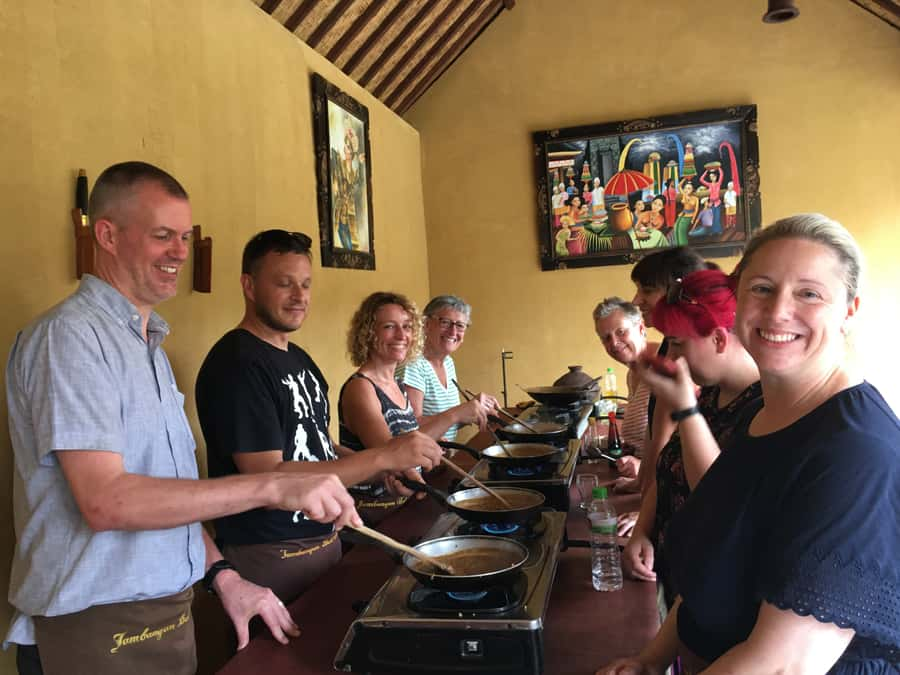
I would choose this class if you want food and culture in the same morning. It works especially well for couples, families, and small groups who enjoy doing things together rather than watching a staged show.
It is also a good choice if you have already seen Ubud’s main sights and want a closer look at ordinary village life. The school, temples, rice work, home visit, and offering activity give you more context than a restaurant meal alone.
Children may enjoy choosing ingredients and preparing food, though the supplied details do not state a minimum age or child policy. If you are booking with children, check that point first.
You may want another option if you need a specific menu, have strict dietary requirements, dislike early mornings, or want a luxury kitchen. The experience is built around local life, warm weather, walking, and active participation.
Booking advice and cancellation flexibility
You can cancel up to 24 hours in advance for a full refund. The reserve-now, pay-later option lets you hold a place without paying immediately, which is useful when your Ubud schedule is still changing.
Pick a morning starting time if the market matters to you. Wait in your hotel lobby 10 minutes before pickup, bring a camera and cash, and ask about extra transport if your hotel is outside Ubud.
The strongest feature is the personal welcome. Putu and his family make the class feel connected to a real household, while the market and village walk give the cooking a clear sense of place. The high rating across 35 reviews supports the idea that the family welcome, food, and organization are the main strengths.
Should you book the Jambangan Bali cooking class?
Book it if you want an affordable, personal introduction to Balinese food that includes more than a recipe lesson. The $27 price is particularly good when you use the included Ubud pickup, market tour, meal, recipes, and certificate.
I would skip it if you want a short class, a fixed list of dishes, or a polished restaurant setting. For everyone else, the early market, rice fields, family home, offering activity, and shared meal create a useful half-day look at Bali through its food.
FAQ
How much does the Jambangan Bali cooking class cost?
The price is $27 per person. Extra transport costs may apply if your hotel is outside the Ubud area.
How long does the experience last?
The experience lasts 270 minutes, which is four and a half hours.
Is hotel pickup included?
Free pickup and drop-off are included for hotels in the Ubud area. Pickup outside Ubud may cost extra depending on the hotel location.
Does the morning class include a market tour?
Yes. The morning class includes a market visit where you can choose herbs, spices, vegetables, and meat.
What language is the class taught in?
The class is conducted in English by Balinese chefs who can explain Balinese cuisine and culture.
What activities are included besides cooking?
The experience includes the market tour for the morning class, rice fields, a Balinese house visit, coconut oil processing, making a daily offering, and cooking at the home.
Is a meal included?
Yes. You eat the recipes you prepare in the warung and garden at the home.
Can I cancel for a refund?
You can cancel up to 24 hours in advance for a full refund. You can also reserve now and pay later.
More Markets in Ubud
- Ubud Traditional Night Market Food Tour-All Inclusive
★ 4.4 · 95 reviews - Bali Food Tour: Savor Street Food and Night Market Adventures
★ 5.0 · 46 reviews - Ubud Day Tour : Waterfall, Temple and Local Night Market Tour
★ 5.0 · 17 reviews - Bali Night Market Experience and Ubud Highlights tour
★ 5.0 · 16 reviews
More Cooking Classes in Ubud
- Hanoi Cooking Class: Culture, Local Market & Meaning CSR Impact
★ 5.0 · 5,147 reviews - 5 Traditional Dishes Hanoi Cooking Class with Market Trip
★ 5.0 · 4,890 reviews - Cooking Class and Lunch at a Tuscan Farmhouse with Local Market Tour from Florence
★ 5.0 · 4,831 reviews - Chiang Mai: Cooking Class, Market & Thai Herbs Garden Tour
★ 4.9 · 4,824 reviews
Just added around Ubud
- Balinese cooking class/Go shopping at the market, cook, eat★ 5.0 · 12 reviews
- Bali: Safari Zoo and Ubud Palace and Market Day Tour★ 4.7 · 6 reviews
- Bali: Ubud Monkey Forest, Coffee Plantation, and Market Tour★ 5.0 · 5 reviews
- Bali – Ubud Night Market Food Tour★ 3.8 · 14 reviews
- Bali Night Market Experience and Ubud Highlights tour★ 5.0 · 16 reviews
- Ubud Day Tour : Waterfall, Temple and Local Night Market Tour★ 5.0 · 17 reviews
- Bali Food Tour: Savor Street Food and Night Market Adventures★ 5.0 · 46 reviews
- Ubud Traditional Night Market Food Tour-All Inclusive★ 4.4 · 95 reviews
Market Cooking Classes, compared.
Hanoi Cooking Class: Culture, Local Market & Meaning CSR Impact
Read our review →
5 Traditional Dishes Hanoi Cooking Class with Market Trip
Read our review →
Cooking Class and Lunch at a Tuscan Farmhouse with Local Market Tour from Florence
Read our review →
Cooking Class, Market & Thai Herbs Garden Tour
Read our review →
Authentic Cooking Class with Market & Farm Visit
Read our review →
Paella Cooking Experience & Boqueria Market Tour
Read our review →
Cooking Class Hoi An:Local Market, Basket Boat, Fishing & Cooking
Read our review →Browse the lists this tour appears in