
Review · MARKET TOURS
Private-Red Patrol Bucharest Flea Market Tour with a Romanian car
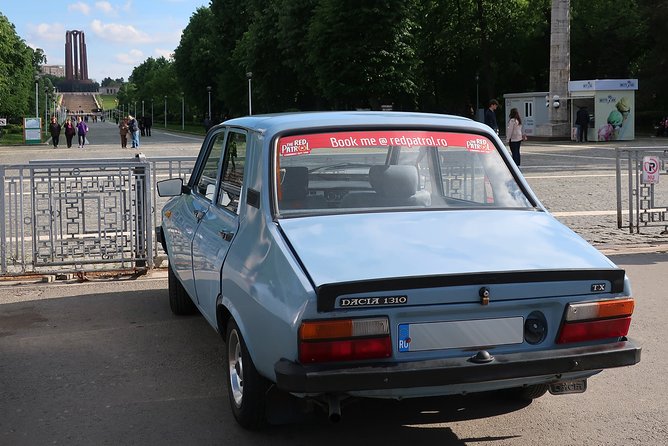
Bucharest’s flea markets make more sense when you arrive in a classic Romanian Dacia. This private Sunday outing takes you across the city in an authentic 1980s car, with stops for old household goods, books, jewelry, toys, furniture, and Communist-era curiosities. I like the local market access and the chance to see Bucharest from street level, not just through its grand monuments. I also like the personal help with shopping, especially if you want to identify or bargain for older objects.
The private format keeps the pace flexible, and guides such as Serban are praised for being attentive, funny, and good at adjusting the tour to your interests. The main drawback is simple: you ride in the Dacia, but you do not drive it. Also, the tour runs on Sundays and has a strict late-cancellation policy, so it needs a firm place in your schedule.
Key points at a glance
- Two very different flea markets: Search for everything from teapots and stamps to watches, military coats, electronics, and furniture.
- A real Romanian Dacia: The 1980s car is transportation, conversation piece, and photo prop all at once.
- Private attention: Your group travels alone, with up to three people per car. Larger groups use a small convoy.
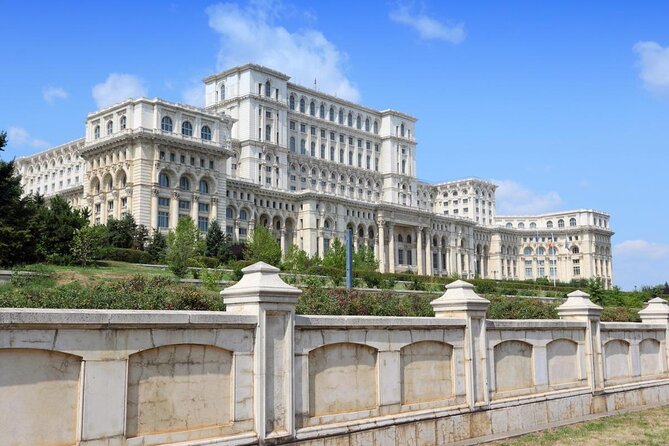
- Communist-era Bucharest: See Răzoare, Carol Park, the former Colonel’s Quarter, the mausoleum, and Parliament House.
- Shopping help included: The guide can assist with antiques and objects you want to understand or buy.
- Best for history and collecting: This suits curious shoppers, vintage fans, and anyone who wants a less polished view of the capital.
Why the old Dacia changes the morning
Bucharest is a city of grand avenues, layered neighborhoods, and sharp contrasts. A modern minivan could get you from market to market, but the vintage Dacia gives the ride a different purpose. You are moving through the present in a car that belongs to the city’s recent past.
The cars are authentic Romanian 1980s Dacias, not themed replicas. During winter, they are heated, which matters on a Sunday morning when you may spend time outside at open-air stalls. The cars also create a natural link between the objects you are hunting and the city that produced, used, and saved them.
This is a private activity, so only your group participates. The normal arrangement is three people per car. If your party is larger, the company uses two or three cars in a convoy. That keeps the experience social without putting you in a large bus or forcing you to follow strangers’ shopping interests.
You do not drive the Dacia on this outing. If driving a classic Romanian car is your main goal, you need the separate Communist tour instead. Here, the value is the guided ride and the local setting.
More flower and flea markets in the world:
- Bangkok: Night Bike Tour with Temples & Flower Market Visit
★ 4.8 · 751 reviews - Bangkok: Night Bike Tour with Temples & Flower Market Visit
★ 5.0 · 223 reviews - Jaipur Tuk-Tuk Tour with Flower Market Visit
★ 5.0 · 124 reviews
The first market, Valea Cascadelor
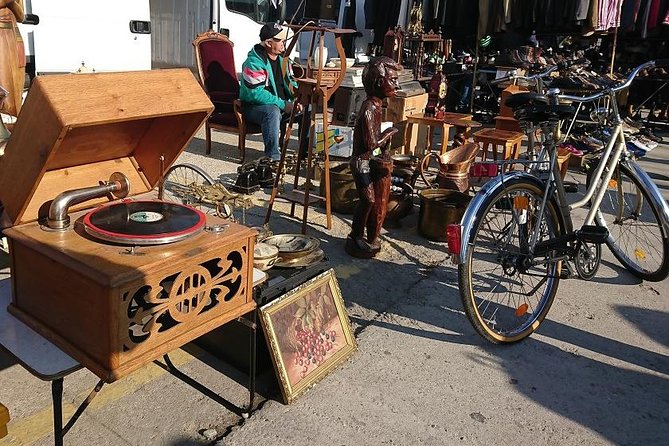
The morning begins at Bazarul cu Amintiri, part of the Valea Cascadelor market area. It is one of Bucharest’s biggest flea markets and dates back to the 1980s, so even the market’s age fits the theme of the tour.
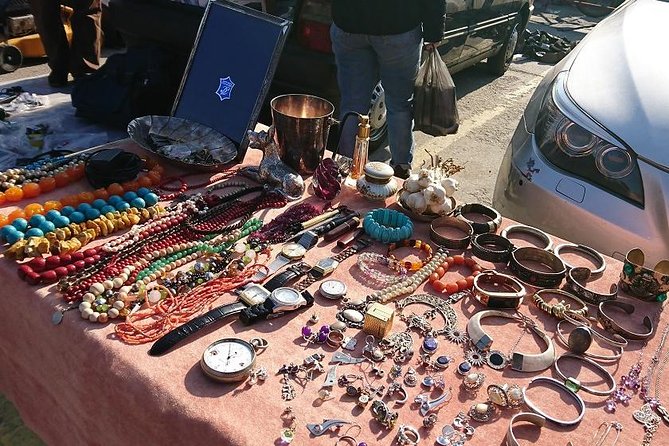
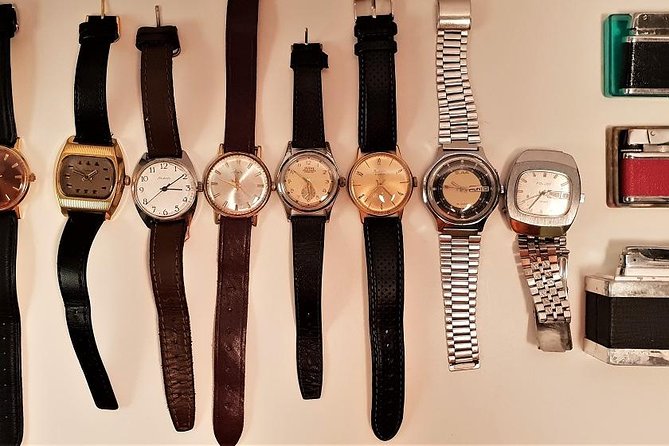
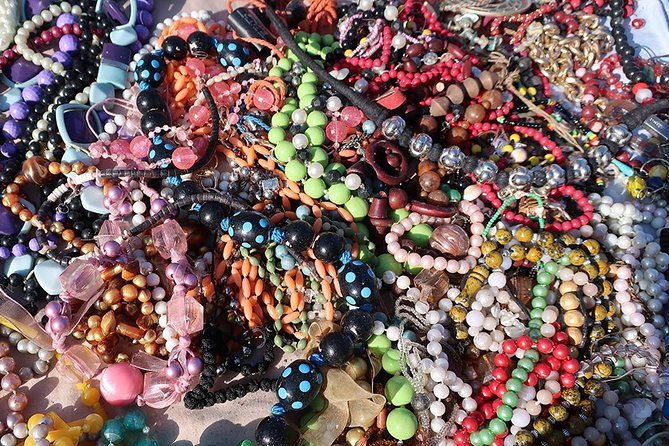
You get about an hour here. That is enough time to look carefully without turning the stop into a rushed photo visit. Expect a wide mix of ordinary objects and possible finds: plates, teapots, magazines, dolls, stamps, books, bags, military coats, watches, jewelry, toys, and furniture.
The appeal is the lack of a fixed museum-style collection. The stock depends on what sellers have brought that day. You might see items from the Communist period, but you can also find objects dating back to the 19th century. That uncertainty is part of the fun, though it means you should not arrive with a specific purchase in mind.
The guide can help with antique shopping. This does not mean every object comes with a formal valuation or certificate. It means you have someone familiar with the local setting who can help you ask questions, compare items, and understand what you are looking at.
Prices depend heavily on your bargaining skills. The tour description makes that clear with a joke about how cold your blood can get. You should treat bargaining as part of the experience, not as a guarantee of a bargain. Set your own limit before you buy, especially with jewelry, watches, or objects that may be difficult to verify.
I would allow yourself time to browse before purchasing. First impressions at a large flea market can be misleading, and you may find similar objects later in the morning. On the other hand, one-of-a-kind pieces can disappear quickly. The guide is useful here because you can explain what interests you and ask for practical help.
Răzoare and the city between markets
The drive to the next area includes a brief stop at Răzoare, known here as the Colonel’s Quarter. It was the first residential area built during the Soviet occupation period, following a Soviet urban plan in the 1950s.
The stop lasts about 15 minutes, so think of it as a quick historical pause rather than a full neighborhood walk. It gives you a chance to connect Bucharest’s architecture and urban planning with the political changes that shaped the city after the Second World War.
This is one reason the car circuit matters. You are not only being taken to markets. You are crossing Bucharest from one side to another and seeing how the city’s different periods sit next to each other. The guide’s explanations give meaning to what could otherwise look like an ordinary stretch of streets.
The road time also helps break up the shopping. Two markets in one morning could feel repetitive, but the historic stops add variety. You get a moving view of the city, a short explanation at Răzoare, and then another chance to browse.
Carol Park, the second market, and the red marble mausoleum
The next major stop is near the entrance to Carol Park. Here you visit another flea market and spend time walking in the park. The market portion includes about 45 minutes for browsing and exploration.
The objects may overlap with the first market, but the selection is not fixed. You might find old toys, jewelry, plates, lamps, electronics, and chandeliers. If you are furnishing a room, collecting period pieces, or simply enjoy objects with a past, this stop gives you another chance to look without needing to commit at the first market.
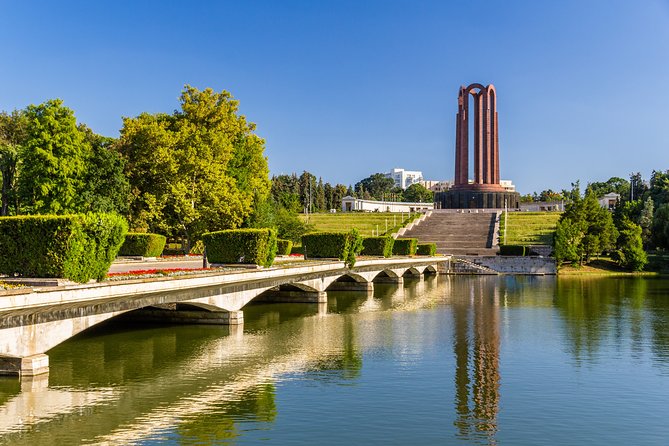
The park adds a different mood. You are not only moving from stall to stall. You can walk through a well-known Bucharest park and see the 48-meter red marble mausoleum built in the 1960s. It is described as a monument to Communist heroes, and the guide provides explanations and time for photos.
For visitors interested in 20th-century history, this is an important stop. It places Communist memory in a public setting rather than reducing the subject to a few lines about the former regime. The monument is also visually striking, so it gives you a strong photographic subject after the more cluttered market scenes.
The time is limited, however. Forty-five minutes must cover the market, the park walk, the monument, and photos. If you like to examine every stall slowly, you may need to choose your priorities. I would decide in advance if your main aim is shopping or sightseeing, then tell the guide. The private format makes that sort of adjustment easier.
More private market tours in the world:
- Cairo 8 Hour Private Tour of Pyramids, Egyptian Museum and Bazaar
★ 5.0 · 2,931 reviews - Private Excursion to Maeklong Railway and Floating Markets
★ 5.0 · 850 reviews - Floating and Railway Market (Optional Waterfall): Private Tour
★ 5.0 · 827 reviews - Cairo: Private Pyramids, Museum & Bazaar Tour with Lunch
★ 4.6 · 744 reviews
Parliament House and the best photo stop
The final listed stop is Parliament House, also called Casa Poporului. You spend around 30 minutes here for explanations and photographs. Admission to the building is not included, so this outing is about the exterior view and the story behind it, not an interior visit.
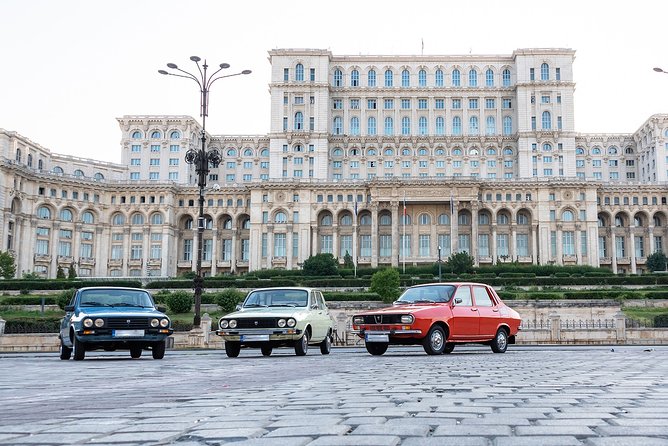
The building is a major symbol of Communist Romania and one of Bucharest’s defining sights. The stop lets you place the vintage Dacia in front of the huge structure, creating a photo that links two very different parts of the country’s recent past.
This is likely the most staged part of the morning, but it earns its place. After wandering through flea markets full of personal objects, you see the grand political architecture that shaped the city around them. The contrast is useful: small household goods and personal possessions on one side, a massive state building on the other.
The guide takes time to explain the building and help with photos. If you are traveling with friends or family, the cars make the pictures more distinctive than the usual monument snapshot. The tour includes a personalized gift as well, which adds a small physical reminder of the outing.
Do not expect to enter Parliament House on this tour. If an interior visit is important to you, plan it separately and confirm its requirements before booking another activity.
The guide makes the difference
A flea market can be enjoyable on its own, but a local guide changes how much you get from it. Serban is specifically associated with this experience, and the feedback about his work highlights his attention to personal interests, historical explanations, humor, and practical care.
One particularly useful detail is the guide’s ability to adjust to different needs within a group. A family traveling with an older parent received help focused on comfort, while the historical explanations and photo assistance kept the outing engaging for everyone. That suggests the private format is more than a smaller vehicle. It gives the guide room to notice what your group needs.
The guide also takes photos for you. That matters when the group wants pictures with the Dacia and Parliament House, since nobody has to be left out of every shot. It is a modest feature, but it makes the morning easier.
The shopping assistance is best understood as cultural guidance rather than professional appraisal. You can ask about objects, get help navigating the market, and explain what you collect. If you hope to buy a valuable antique, use your own judgment and ask for clear information before paying.
What the $114.03 price buys you
At $114.03 per person, this is not the cheapest way to see a Bucharest market. The price makes more sense when you use the included services: hotel pickup and drop-off within Bucharest, private transportation for about four hours, a professional local guide, market entry, bottled water, a personalized gift, and the vintage Dacia itself.
You are also paying for a route that links two markets with historic stops. Using public transport or taxis could cost less, but you would need to plan the route, interpret the neighborhoods, arrange the timing, and handle the shopping without a guide. The tour saves that effort and gives the ride its own character.
The value is strongest for a small group of two or three people who would otherwise pay separately for transport and a guide. A larger group can still use the service, but the company puts you into a convoy of cars, so the experience may feel slightly less unified.
The price is less compelling if you only want to buy inexpensive souvenirs. In that case, visit a market independently and spend the money on your purchases. It becomes a better deal if you care about the Dacia, Communist history, local context, and the convenience of hotel pickup.
Food and drinks beyond the bottled water are not included. Since the tour lasts three to four hours and begins at 9 a.m., eat before pickup or plan your food around the morning. The schedule is built around markets and monuments, not a café stop.
Timing, pickup, and practical limits
The tour starts at 9 a.m. on Sundays. It runs for approximately three to four hours, with the guided circuit described as four hours. Sunday scheduling makes sense for the flea markets, but it reduces your flexibility if you have only one full day in Bucharest.
Pickup and drop-off are offered from your Bucharest hotel. Confirm the exact pickup details when you book, especially if you are staying outside the city or at a private apartment. Confirmation is issued at booking, and the schedule requires at least 48 hours of advance booking.
Most people can participate, and the activity is private. The supplied information does not list special accessibility arrangements, so you should discuss mobility needs with the provider before booking. The markets and park include walking, and the sightseeing time is split between the car and outdoor stops.
The cars are heated in winter, a useful detail for a tour that includes open-air markets. You should still dress for walking and changing weather, since several parts of the outing take place outside.
Cancellation terms need attention. You can receive a full refund if you cancel at least 24 hours before the start time. Cancellations or changes made inside that window are not accepted and are subject to the full charge. Since this is a private activity with limited Sunday availability, book only when your plans are firm.
Who will enjoy this Bucharest outing
I would choose this tour if you like objects with a past, small historical details, and unusual ways to see a city. It is especially good for collectors, vintage fans, photographers, and visitors who want more than a standard center-city tour.
It also suits families or small groups who prefer their own guide. The private setup lets you spend more time on plates and books, or move on quickly to the monuments, depending on your interests. The guide’s humor, photo help, and attention to comfort are useful for mixed-age groups.
History fans get several strong themes in one morning: Soviet-era housing, Communist urban planning, the 1960s mausoleum, the Dacia, and Parliament House. You do not get a full political history course, but the stops create a clear outline of Bucharest’s 20th-century story.
I would be more cautious if you dislike shopping, bargaining, or uncertain collections. The markets are the heart of the experience, and their appeal depends on your curiosity. This is not a polished design market with labeled displays and fixed prices.
It may also be a poor fit if you want to drive a classic car. The Dacia is your ride, not your vehicle. Book the Communist tour instead if taking the wheel matters most.
Should you book the Red Patrol flea market tour?
Book it if you want Bucharest through its old objects, local markets, and Communist-era streets rather than through a standard list of central sights. The Dacia, private guide, two markets, Carol Park, and Parliament House make a varied morning, and the small-group format gives you room to follow your own interests.
Skip it if your time in Bucharest is extremely tight, you want to tour inside Parliament House, or you have no interest in flea markets. At $114.03 per person, the experience earns its price through the car, guide, transport, and historical context, not through shopping alone.
For the right person, this is a practical and memorable way to connect Bucharest’s everyday past with its monumental one. Tell the guide what you collect, bring patience for bargaining, and leave room in your luggage for a lucky find.
FAQ
When does the tour start?
The tour starts at 9:00 a.m. on Sundays.
How long does the experience last?
The tour lasts approximately three to four hours. The guided circuit is described as lasting four hours.
Will I drive the classic Dacia?
No. You ride in the Dacia, but you do not drive it. If you want to drive a Dacia, you need to book the separate Communist tour.
How many people travel in each car?
The usual arrangement is up to three people per car. Groups larger than three use a convoy of two or three cars.
Is hotel pickup included?
Yes. Hotel pickup and drop-off from Bucharest are included.
Is admission to Parliament House included?
No. The Parliament House stop is for photos and explanations, and the admission ticket is not included.
Can I cancel for a refund?
Yes, if you cancel at least 24 hours before the experience starts. Cancellations or changes made less than 24 hours before the start time are not accepted and are not refunded.
More Shopping Tours in the world
- Hanoi Cooking Class: Culture, Local Market & Meaning CSR Impact
★ 5.0 · 5,147 reviews - 5 Traditional Dishes Hanoi Cooking Class with Market Trip
★ 5.0 · 4,890 reviews - Cooking Class and Lunch at a Tuscan Farmhouse with Local Market Tour from Florence
★ 5.0 · 4,831 reviews - Chiang Mai: Cooking Class, Market & Thai Herbs Garden Tour
★ 4.9 · 4,824 reviews
More Markets in the world
- Bangkok: Damnoen Saduak Market and Maeklong Railway Market
★ 4.5 · 26,723 reviews - The Old Siam: Damnoen Saduak and Maeklong Railway Market
★ 4.5 · 10,992 reviews - Bangkok: Train Market & Floating Market with Boat Ride
★ 4.7 · 9,547 reviews - From Bangkok: Ayutthaya & Ayothaya Floating Market Day Trip
★ 4.7 · 6,084 reviews
Just added around the world
- Three-Hour Private Chengdu Tea Wholesale Market Tour★ 5.0 · 4 reviews
- Half-day Dandan Noodles Cooking Class with a Local Market Visit★ 5.0 · 8 reviews
- Chania: Old Town, Public Market, Hill of Prophet Elias, Agia Triada★ 5.0 · 35 reviews
- Moroccan Cooking Class with a Local Family & Market Visit★ 5.0 · 16 reviews
- Chania Old Town, Public Market and Chrisopigi Monastery Tour★ 4.5 · 6 reviews
- 3-Hour Herbal Wholesale TCM Market and a Local Wet Market Tour★ 5.0 · 4 reviews
- Food Tasting & Market Shopping: Private Guided Tour in PORT LOUIS★ 4.5 · 9 reviews
- Charleston International Sweet Treats & Historic City Market Tour★ 5.0 · 22 reviews
Flower & Flea Market Tours, compared.

Night Bike Tour with Temples & Flower Market Visit
Read our review →Night Bike Tour with Temples & Flower Market Visit
Read our review →

Jaipur Tour by Tuk-Tuk or Car with Flower Market
Read our review →
Half-Day Guided Sightseeing Tour with Flower Market
Read our review →
Half or Full Day Sightseeing Tour with Flower Market
Read our review →

Browse the lists this tour appears in