
Review · DUBAI
Private Historic Old Dubai and Souks Walking Tour featuring Hidden Gems
Dubai’s glass towers tell only half the story. This private walk takes you into Al Fahidi Historical Neighbourhood, where old courtyard homes, narrow lanes, coffee traditions, small museums, and street art give you a clearer sense of how Dubai began. You then cross Dubai Creek by a wooden abra and finish among the spices, gold, and sales pitches of Deira.
I like the private guide format, since guides such as Ricky, Eslam, Orlina, Ben, Piri, Lana, and Jose can shape the pace around your group. I also like the mix of quiet heritage lanes and lively souks. The main drawback is time: two hours goes quickly, and the tour can feel rushed if you want long museum visits or serious shopping.
Key points at a glance
- A private two-hour walk: Your group stays together with a professional guide rather than following a large crowd.
- Al Fahidi beyond the postcard view: You enter restored heritage homes built by Iranian traders and see a more modest side of Dubai.
- Coffee and Emirati hospitality: The Coffee Museum and included tea or coffee tasting add local context to the walk.
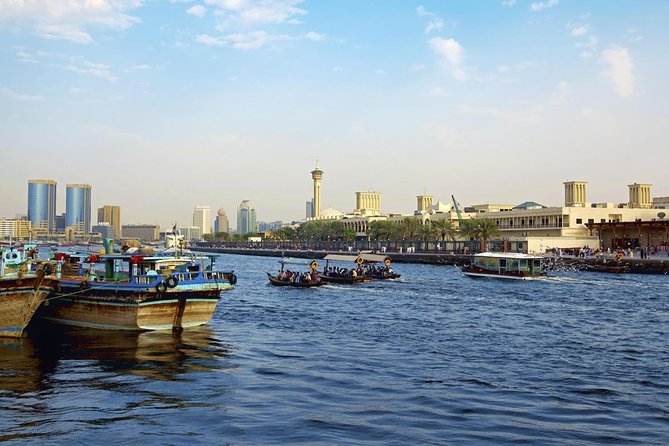
- An abra across Dubai Creek: The short traditional boat ride links Bur Dubai with Deira and gives the tour a welcome change of pace.
- Souks with different personalities: The Spice Souk is about aroma and ingredients, while the Gold Souk is about scale and display.
- A useful finish: The tour ends at the Gold Souk, where you can keep exploring or leave by taxi or metro.
Why this tour makes sense in a city of skyscrapers
Dubai is easy to experience from air-conditioned malls, hotel lounges, and observation decks. Those places have their appeal, but they do not explain much about the older city. This walk shifts the focus to the creek, the former residential quarter, traditional boats, and markets that still give Deira and Bur Dubai their character.
At $129 per person, this is not the cheapest way to see Old Dubai. The price makes more sense for couples, families, or small groups who want a private guide and a compact introduction rather than a basic self-guided stroll. A private format also matters in the narrow lanes, where a guide can point out details you might pass without noticing.
The pace is active but manageable for most people who can walk for two hours. Wear comfortable shoes, bring water, and dress for the weather. The tour operates in all weather conditions, so a hot afternoon or a sudden change in conditions can affect your comfort.
More Market Walking Tours in Dubai
- Historic Old Dubai & Souk Small Group Walking Tour
★ 5.0 · 156 reviews - Dubai Souks, Food & Culture Walking Tour
★ 5.0 · 132 reviews - Private Old Dubai Walking Tour: Forts, Souks, and Boats
★ 5.0 · 116 reviews
Starting beside the Arabian Tea House
The meeting point is the Arabian Tea House Restaurant and Cafe in Al Fahidi, opposite the Musalla Post Office on Al Fahidi Street. This puts you right beside the old quarter, not at a distant hotel or a generic transport stop.
You do not get hotel pickup or drop-off, so plan your route to the meeting point. Public transportation is nearby, and the tour ends in Deira at the Gold Souk, making it easy to continue by taxi or metro afterward.
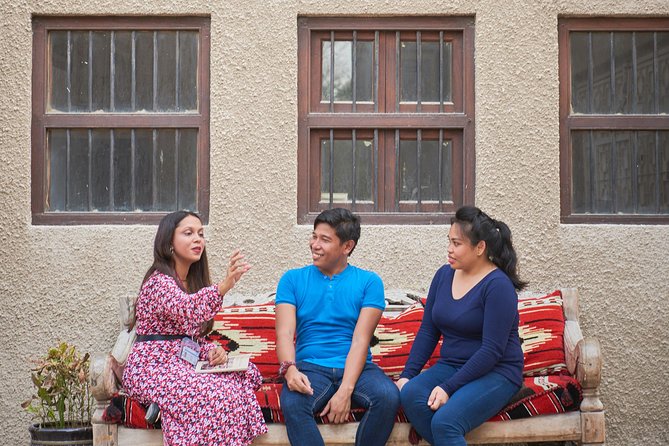
The guide is an important part of this experience. The names connected with the tour include Ricky, Eslam, Orlina, Ben, Piri, Lana, and Jose. The feedback attached to the experience repeatedly praises the guides for being friendly, clear, and good at explaining the city. Lana, in particular, is noted for guiding efficiently around the old quarter while avoiding the largest groups much of the time.
Al Fahidi: old homes and quiet lanes
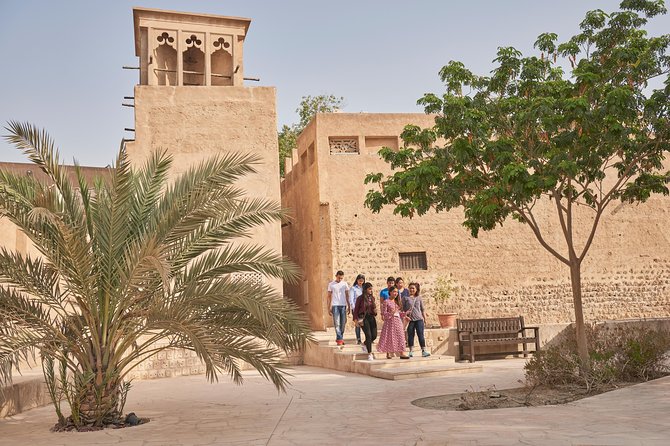
The first stop takes about 40 minutes, making it the longest part of the walk. You weave through the original residential district, entering heritage homes built by Iranian traders.
Look for the design details rather than expecting a grand palace district. Courtyard houses, shaded passages, old walls, and wind-catching architectural features help explain how people lived before Dubai’s modern expansion. The quarter is valuable because it gives you a physical sense of scale: Dubai’s older core was compact, practical, and tied closely to the creek.
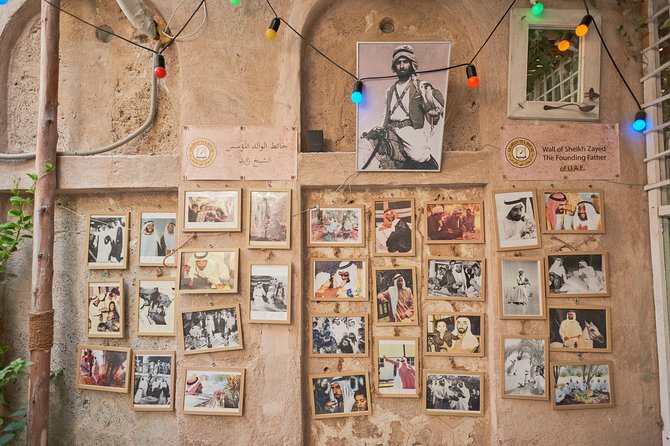
The lanes also offer street art and restored architecture. Your guide can connect those visual details to Dubai’s changing identity, from a trading settlement linked to pearls and the creek to the global city outside the neighborhood.
This is one place where a private tour has a clear advantage. You can ask why a building looks a certain way or pause for a photograph without waiting for a large group to catch up. The tradeoff is that 40 minutes is enough for an introduction, not a slow architectural study.
Alserkal Cultural Foundation and a restored home
One of the old houses now contains the Alserkal Cultural Foundation. The stop lasts about 10 minutes and includes admission.
This is a useful pause because it shows how a historic home can serve a present-day cultural purpose. You see an art collection inside a restored traditional building, rather than treating the old quarter as an outdoor museum with no connection to modern life.
Ten minutes is brief, so you should not expect a full gallery visit. Think of it as a focused stop that adds art and local culture to the architectural story. If you enjoy small cultural spaces more than major institutions, this may be one of the most rewarding parts of the walk.
More Market Walking Tours in United Arab Emirates
- walking tour in old dubai, souks, abra boat, old town
★ 5.0 · 89 reviews - Walking Tour in Dubai. Souks, museums, Local Food Testing
★ 5.0 · 11 reviews - Dubai Old Town, Creek, Abra boat, Souks Guided walking Tour
★ 4.7 · 3 reviews - Dubai: Guided City Walking Tour to Spice and Gold Souk
★ 5.0 · 3 reviews
Coffee Museum and Emirati hospitality
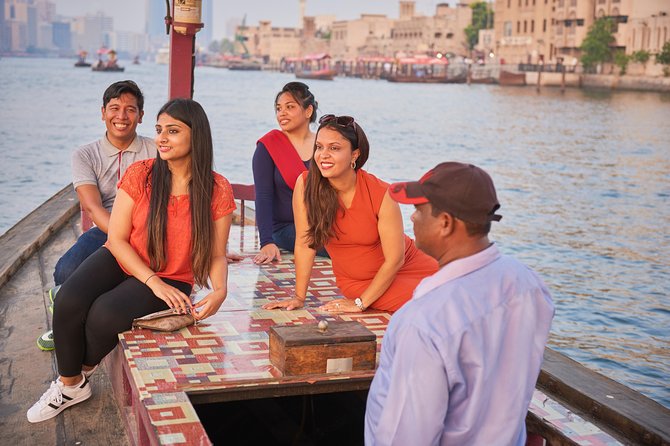
The Coffee Museum takes about 10 minutes. Here, the guide explains the close link between coffee and Emirati hospitality, with traditional tea or coffee tasting included in the tour.
This stop works because coffee is not treated as just a drink. It becomes a way to understand welcome, custom, and social life in the Emirates. The museum also gives the walk a sensory element that old walls alone cannot provide.
The included tasting is modest, not a meal. Food and additional drinks are not included, so plan to eat before or after the tour if you need something substantial. The tasting is best viewed as a cultural sample rather than a cafe visit.
The overview also refers to a coin museum among the museums visited. The detailed stop information does not give a separate duration or admission note for it, so ask your guide what is open on your date. Small museums in Old Dubai can have changing access, and the exact sequence may depend on conditions.
Al Fahidi Fort and the closed Dubai Museum
Dubai Museum and Al Fahidi Fort are listed as part of the historical story, but the museum is currently closed for construction. The fort itself is the site associated with Dubai’s pearl diving past and the defense of the old settlement.
This closure is the most important expectation to set before booking. You will still see the fort area and receive context from your guide, but you should not count on an indoor museum visit. If the museum is a major reason you want this tour, confirm its status before you go.
The closure does not ruin the walk, since the strongest parts are spread across the old neighborhood, coffee stop, boat ride, and souks. Still, the experience is better understood as an Old Dubai street tour with cultural stops than as a full museum tour.
The route toward the creek and Deira
After the heritage quarter, the tour moves toward the creek and the markets. The supplied route refers to a souk such as Al Kabeer or Meena Bazaar before the boat ride. The exact emphasis may vary, so ask your guide where your group will spend its time.
This transition is part of the appeal. You move from restored residential lanes into working market streets, then cross the water by abra. It is a small journey, but it shows how the two sides of the creek connect.
The walking route means you should not expect a hop-on, hop-off style experience. There is no hotel transport, and the value comes from moving through the city at street level. If you prefer a relaxed vehicle tour, this will feel more demanding. If you want to understand how the old districts fit together, walking is the better choice.
Crossing Dubai Creek by traditional abra
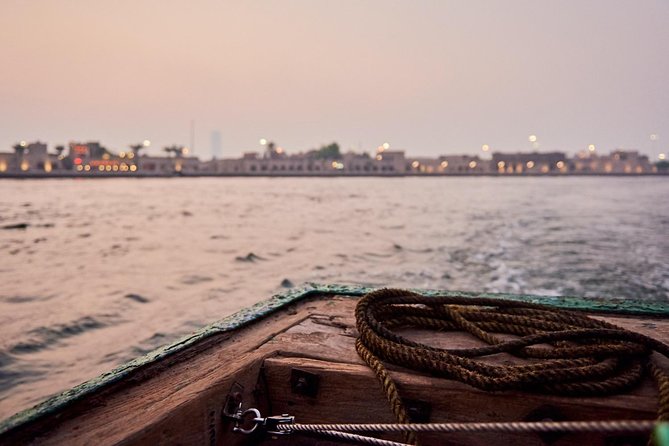
The abra ride takes about five minutes and is included. These small wooden boats are a practical part of creek transport, not a long sightseeing cruise, so keep your expectations realistic.
Even in a short crossing, the boat ride changes the mood. You leave Bur Dubai and arrive in Deira, shifting from heritage homes to trading streets and markets. The creek is the connecting thread of the tour, linking Dubai’s older communities and commercial life.
Because the ride is brief, have your camera ready, but do not make it the whole point of the experience. The value is in the connection between neighborhoods and in the simple pleasure of crossing by a traditional boat instead of by road.
Spice Souk: saffron, vanilla, and sales talk
The Spice Souk receives about 10 minutes. The guide focuses on saffron and vanilla beans, described as historic favorites among the spices traded here.
This is the stop where your senses do much of the work. You can expect colorful displays, strong aromas, and shopkeepers offering products for inspection. The guide helps you distinguish the market experience from a simple souvenir stop and gives the spices some cultural and commercial context.
Ten minutes is enough for an introduction but short for careful shopping. If you want to buy saffron or other spices, the tour gives you a first look, not a full purchasing session. You may want to return after the tour, when you can compare stalls at your own pace.
Keep in mind that the tour price does not include food, drinks, or purchases. You are free to browse, but anything you buy is extra.
Gold Souk: a quick look at Dubai’s big display
The Gold Souk is the final stop and receives about five minutes during the guided portion. The guide introduces the market’s scale and the display of gold jewelry, after which you can continue exploring on your own.
Five minutes is not long enough for shopping, comparing designs, or negotiating. That is not necessarily a problem. The guided visit gives you orientation, then leaves the decision to you. If gold is your main interest, treat the tour’s final stop as a starting point and stay afterward.
The end point is practical. You finish at the Gold Souk in Deira, rather than being taken back to the starting point. You can continue through the souks, arrange a taxi, or use the metro to reach another part of Dubai.
How much value do you get for $129?
The price is easiest to justify when you share the tour with family or friends and care about having a guide to yourselves. A private walk removes the uncertainty of a large group and lets you ask questions about coffee, architecture, markets, and the creek as they arise.
The two-hour length also suits a first or final day in Dubai. You get a clear introduction without committing half a day. On the other hand, the per-person price is high if you only want to see the souks or take an abra. Those can be visited independently for less.
I would view the fee as payment for interpretation, route planning, entry to the included cultural stops, the tasting, and the private format. It is less attractive if you want extensive shopping time, a long boat ride, or a full museum visit while the Dubai Museum remains closed.
Who should book this walk?
I would recommend it to first-time Dubai visitors who want a break from modern attractions and to families who prefer a guide-led introduction. Children under six are free, while children six and older who can walk for the duration receive a reduced-price ticket. Children must be accompanied by an adult.
It also suits couples and small groups who like history in manageable portions. The combination of short stops keeps the experience moving, while the private format allows the guide to explain details at your level.
You may want something else if you have limited mobility, dislike walking in warm weather, or want to spend most of your time shopping. The tour is designed for people who can walk for about two hours, and it runs in all weather conditions.
You can cancel for a full refund up to 24 hours before the local start time. Changes or cancellations made later are not accepted for a refund.
Should you book it?
Book this tour if you want Dubai’s older neighborhoods explained by a private guide, with a coffee tradition, restored homes, a short abra crossing, and introductions to both major souks. Its strongest features are the guides, the range of experiences packed into two hours, and the useful finish at the Gold Souk.
Skip it if the Dubai Museum is your main reason for going, since it is currently closed for construction, or if you want unhurried shopping time. For everyone else, this is a smart way to see a quieter, more personal side of Dubai before returning to the towers and malls.
FAQ
How long does the Old Dubai tour last?
The tour lasts approximately two hours.
Where does the tour begin?
It begins at the Arabian Tea House Restaurant and Cafe in Al Fahidi, opposite the Musalla Post Office on Al Fahidi Street, Bur Dubai.
Where does the tour end?
The tour ends at the Gold Souk in Deira. From there, you can continue through the souks or take a taxi or metro elsewhere in Dubai.
Is the abra boat ride included?
Yes. A traditional wooden abra ride across Dubai Creek is included in the tour.
Are museum admissions included?
Admission is included for the listed included stops. Al Fahidi Fort and Dubai Museum are part of the historical route, but Dubai Museum is currently closed for construction.
Is food or a drink included?
Traditional Emirati tea or coffee tasting is included. Food and other drinks are not included.
Can children join the tour?
Yes. Children must be accompanied by an adult. Children under six are free, and children six and older who can walk for the tour receive a reduced-price ticket.
More Private Market Tours in United Arab Emirates
- Dubai: Private Old Town, Heritage & Souks Walking Tour
★ 4.9 · 102 reviews
More Private Market Tours in Dubai
- Dubai Private Tour of Creek, Souks, Frame, and Burj Khalifa Entry
★ 5.0 · 107 reviews - Private Tour Old Dubai Souks Creek and Abra Tour with Tastings
★ 5.0 · 28 reviews - Dubai:Private Frame Entry, Mosque, Souks, Tastings& transfer
★ 4.8 · 9 reviews
Just added around Dubai
- Walking Tour in Dubai. Souks, museums, Local Food Testing★ 5.0 · 11 reviews
- Old Dubai Heritage Tour: Souks, Mosques & more hidden gems!★ 4.3 · 72 reviews
- Old Dubai Guided Tour With Photographer: Souks & Street Food★ 4.9 · 74 reviews
- Dubai:Private Frame Entry, Mosque, Souks, Tastings& transfer★ 4.8 · 9 reviews
- Dubai: Discover Dubai Old Town, Souks, Museum & Street Food★ 4.9 · 25 reviews
- Dubai Old Town, Creek, Abra boat, Souks Guided walking Tour★ 4.7 · 3 reviews
- Dubai Food Tour: 4 Cuisines, Souks & Street Bites★ 3.0 · 3 reviews
- Dubai: Guided City Walking Tour to Spice and Gold Souk★ 5.0 · 3 reviews
Market Walking Tours, compared.
Tokyo Tsukiji Fish Market Food and Culture Walking Tour
Read our review →
Ben Youssef, Secret Garden, & Souks Walking Tour
Read our review →
Air Raid Shelter + St. Nicholas Market Walking Tour
Read our review →

Nishiki Market Brunch Walking Tour (7 Tastings + Brunch)
Read our review →