
Review · HANOI
Mini Hanoi Coffee Workshop: Pick Any Signature Coffee You Like
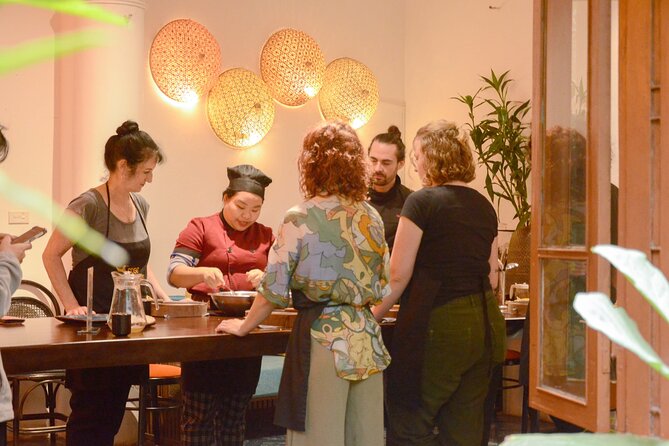
Hanoi’s coffee culture is best understood with a small metal filter in your hands, not just from a café table. This 90-minute workshop takes you into an Indochine-style villa in a quiet alley, where you learn the stories behind egg coffee, coconut coffee, salt coffee, and other local favorites.
I like the mix of clear English storytelling and hands-on work. Simon receives especially strong praise for making the class fun and easy to follow, while Alex, Trung, and Piey also lead sessions. I also like the $15 price, which covers several tastings, tea, a snack, and recipes. The main caution is finding the tucked-away meeting point, and one booking had a changed start time before the host helped the participants locate the venue.
Key points at a glance
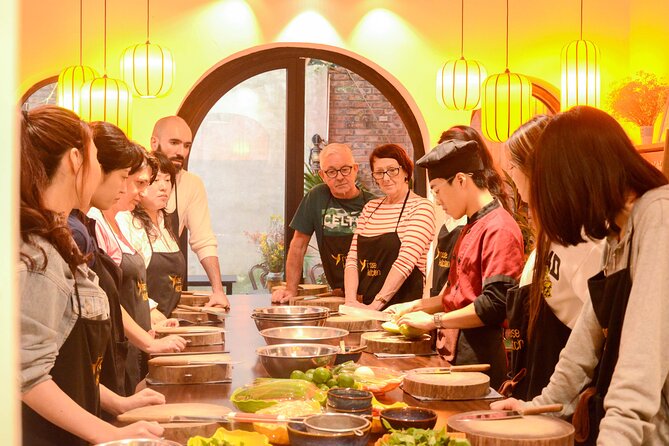
- Make 2 to 4 Vietnamese coffees: Choose from egg, coconut, salt, brown coffee, and a coffee cocktail, depending on your comfort level and the session.
- Learn inside a quiet garden villa: Su Quan Roastery is at 75/173 Hoàng Hoa Thám, away from Hanoi’s main café streets.
- Guides explain the culture in English: Simon is a frequent host, with Alex, Trung, and Piey also named in the feedback.
- Taste more than sweet egg coffee: The workshop explains traditional tools, brewing methods, roasting, growing regions, and coffee customs.
- Tea, a snack, and recipes are included: You get a gentle welcome before the practical part begins, plus something useful to take home.
- Your booking supports farming families: Part of the workshop income helps fund education for children connected to the provider’s Da Lat coffee farm.
Why this coffee class is more than a tasting
Hanoi has no shortage of coffee shops. You can order a tiny glass of egg coffee almost anywhere in the Old Quarter, often while motorbikes roar past your table. What you do not always get is an explanation of how the drink came to be, how Vietnamese coffee developed, or why local brewing feels different from the café routine you know at home.
This workshop gives you that context in a compact format. The story reaches from French colonial cafés to wartime creativity and Vietnam’s rise as the world’s second-largest coffee producer. You also hear about coffee-growing areas, roasting, and the habits passed through families.
I like this approach because it turns a sweet drink into a piece of social history. You are not simply told that egg coffee is popular. You learn why people created new coffee styles and how practical local ingenuity shaped what is now one of Hanoi’s best-known food experiences.
The class is also built around doing. You handle traditional brewing tools, prepare your own drinks, and taste the result. That matters in Vietnam, where coffee is often slow, social, and made with care. The lesson gives you a better sense of what is happening when a small metal filter sits above your glass and takes several minutes to drip.
More coffee and tea market tours in Hanoi:
- Active Volcano, Rice Field, Hot Spring, Fruit market, Tea Plantation with Lunch
★ 5.0 · 513 reviews - Da Nang Cooking Class with Coffee Tasting and Market Visit
★ 5.0 · 310 reviews - Kyoto: Nishiki Market Tea Ceremony with Koto Performance
★ 4.8 · 294 reviews
Finding Su Quan Roastery in Hoàng Hoa Thám
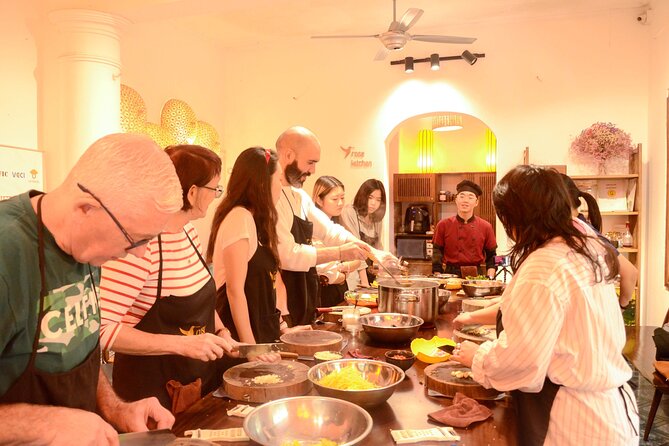
The meeting point is Su Quan Roastery, 75/173 Hoàng Hoa Thám, Ngọc Hồ, Ba Đình, Hanoi. It is near public transportation, but the address leads into a tucked-away setting rather than a large street-front business.
Give yourself extra time to find it. The quiet alley is part of the charm, but it can also make the first few minutes less smooth, especially if you are arriving by taxi or walking from an unfamiliar part of Ba Đình. One booking had trouble locating the venue, and staff sent someone out to help. That is reassuring, but it is still better to arrive early with the address ready on your phone.
The setting is a useful break from central Hanoi’s noise. The workshop takes place in a tranquil garden villa with air conditioning, so you get a calmer room for listening, mixing, and tasting. The air conditioning is especially welcome in Hanoi’s warmer months, when a hot drink and a crowded café can quickly become uncomfortable.
The activity begins and ends at this same meeting point. There is no separate hotel pickup or drop-off described, so plan your own way there and back.
The welcome tea sets a slower pace
The session begins with complimentary herbal tea. This is a small detail, but it helps set the mood. Coffee workshops can feel rushed when the instructor moves straight into equipment and measurements. Here, the tea gives you time to settle in before the stronger flavors arrive.
A traditional Vietnamese snack is also served during the session. The exact snack is not specified, so do not book this expecting a full meal. Think of it as a light local bite that supports the tasting rather than a replacement for breakfast or lunch.
The English instruction is one of the strongest reasons to choose this class. The session is conducted fully in English, and the feedback gives Simon particular credit for making the explanations enjoyable and easy to follow. Piey is also praised for combining practical instruction with a fun atmosphere. Alex, also identified as Trung, and the local aunties receive warm comments for their friendliness and hospitality.
The exact guide is not guaranteed in the information provided. If hearing from a particular person matters to you, check before booking rather than assuming Simon will lead every session.
From French cafés to Hanoi’s signature drinks
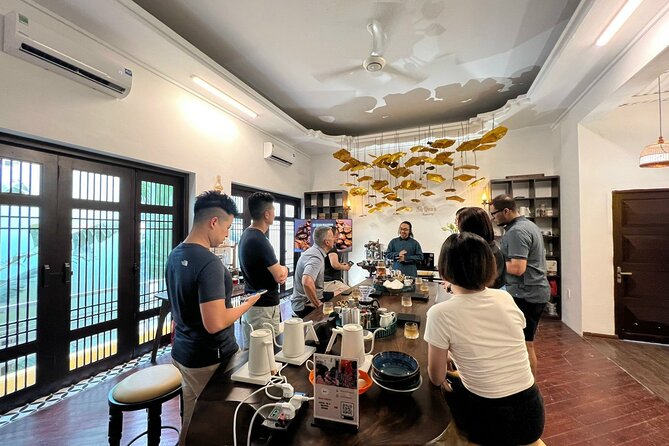
The history section gives you a useful frame for the tastings. Vietnam’s coffee culture developed through French influence, then changed through local adaptation and hard economic periods. Wartime creativity helped produce drinks that use available ingredients in clever ways.
The class also explains how Vietnam became the world’s second-largest coffee producer. You hear about growing regions and roasting, not just finished drinks. This is valuable because Vietnamese coffee is often treated as a syrupy novelty, when its flavor depends on beans, roast style, equipment, and preparation.
I would pay close attention here if you plan to visit a coffee farm, buy beans, or order coffee across Vietnam. The lesson gives you vocabulary and context for the rest of your trip. You may start noticing the difference between a slow-dripped cup, a blended iced drink, and a dessert-like specialty coffee.
The talk is not described as a formal lecture with a set number of minutes. It is woven into the practical session, which should suit you if you prefer stories connected to something you can taste and make.
More coffee stops in Hanoi:
- Hungry in Vienna? A Food Lover’s Coffee & Market Walk
★ 4.9 · 276 reviews - From rick’s coffee to local markets authentic casablanca
★ 5.0 · 90 reviews - Vienna Eats: Private Foodie Walk with Coffee & Markets
★ 5.0 · 77 reviews - Ethiopian Culinary Tour – Market, Food, Coffee Ceremony & more
★ 5.0 · 65 reviews
Making egg, coconut, salt, and brown coffee
The hands-on part is the heart of the experience. Depending on your comfort level, you make and taste 2 to 4 iconic Hanoi-style coffees. The choices include egg coffee, coconut coffee, salt coffee, brown coffee, and a coffee cocktail.
Egg coffee is the drink most closely associated with Hanoi. Its creamy topping can make the coffee feel more like a dessert, but the workshop lets you understand the preparation instead of simply receiving a finished glass. The egg coffee receives repeated praise, so it is a sensible first choice if you have never tried it.
Coconut coffee offers a cooler, sweeter direction. It was a favorite in one of the strongest comments, and it gives you a useful contrast with the richer egg style. Salt coffee brings a savory edge and shows how a small ingredient can change the balance of a familiar drink.
The coffee cocktail is an optional extra for people comfortable with a more playful finish. The available information does not specify the recipe or alcohol content, so ask before making it if you have dietary, religious, or personal restrictions. One session included liqueurs, but you should not assume every group receives the same cocktail preparation.
You may not make every listed drink. The description says 2 to 4 styles, while the experience name refers to five signature brews. The number depends on the session and your comfort level. If sampling as many drinks as possible is your priority, confirm the exact format before paying.
Traditional tools make the lesson practical
The workshop includes traditional Vietnamese brewing methods and tools. This is where the class earns its value. A café tasting can tell you what a drink tastes like. Using the equipment helps you understand how the drink is built.
The Vietnamese phin filter is central to the country’s coffee ritual, even though the supplied information does not list each tool by name. You can expect to work with traditional equipment rather than only watching a demonstration. The class is designed so you craft the drink and taste the result.
That hands-on format also makes the recipes more useful. You leave with recipes and stories, so the experience can continue after Hanoi. You may not recreate every café detail in your own kitchen, but you should have a better idea of the method and the balance of ingredients.
The session is not aimed only at serious coffee fans. The style choices give non-experts an easy entry point, and the light snack and tea keep the tone social. Still, the experience makes the most sense if you are willing to taste sweet, creamy, salty, or mixed drinks and take part in the preparation.
What $15 buys you
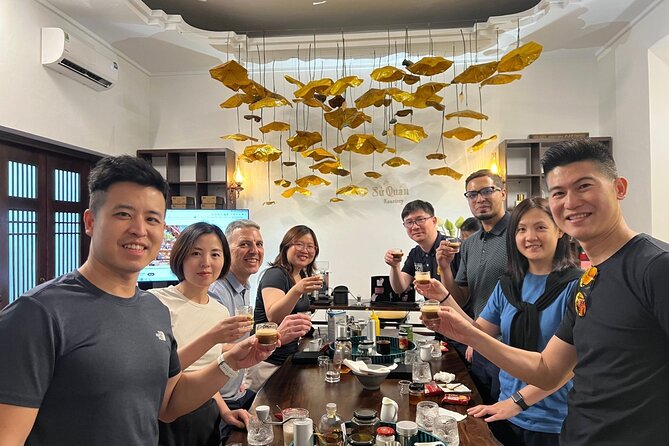
At $15 per person, this is a strong value for a 90-minute cultural activity. Your fee covers an English-led session, the welcome tea, a traditional snack, hands-on brewing, several coffee tastings, and recipes. You are also paying for a quieter setting and guidance that helps explain what you are drinking.
Compare that with buying two or three specialty coffees in Hanoi. A café visit may cost less, especially if you order a basic drink, but it will not normally include the background, equipment practice, or instruction. A private cooking class would usually cost more, though this coffee workshop is shorter and more focused.
The class is particularly good value for a first morning in Hanoi or a spare afternoon between sightseeing stops. It gives you a local food experience without taking half a day. At the same time, you should not expect a full coffee-farm visit, a market tour, or a long roasting demonstration. Those are outside the stated program.
Another positive is the provider’s connection to a Da Lat coffee farm. Families have cared for their land there for generations, and part of each workshop supports education for farmers’ children. This does not transform a $15 activity into a major aid project, but it gives the purchase a useful community link.
Timing, group size, and comfort
The experience lasts about one hour and 30 minutes. That is long enough for history, preparation, tasting, and a snack without swallowing a full day of your itinerary.
The published maximum is 100 people. That is a large possible capacity for a hands-on class, although the information does not state the usual group size. Ask ahead if you need a small group or close individual instruction. A large session could make personal guidance less consistent, while a smaller group would likely feel more relaxed.
The room is fully air-conditioned, which is a practical advantage in Hanoi. You are working with hot coffee and spending time indoors, so cooling matters. The villa setting also gives the class a quieter feel than a café on a major road.
The experience is offered in English. Confirmation is provided at booking, and mobile tickets are accepted. Personal expenses are not included, so bring your own money for anything beyond the workshop itself.
Who should book this workshop
I would recommend it to anyone who wants a quick, structured introduction to Vietnamese coffee. It suits first-time visitors who need a short activity, couples looking for something more personal than a café stop, and food-focused visitors who like making what they eat and drink.
It is also a good fit if you are unsure about egg coffee. You can taste it in context, compare it with coconut or salt coffee, and decide what you like instead of ordering blindly from a menu.
The class works well for people who want cultural background but do not want a long museum talk. Stories are tied to tools, ingredients, and drinks. The format should also suit mixed groups, since a serious coffee drinker can ask about brewing while a casual drinker can simply enjoy the tasting.
I would hesitate if you dislike sweet drinks, cannot consume egg or dairy-based ingredients, or want a serious barista qualification. The session focuses on Vietnamese coffee culture and signature styles, not professional espresso training. Also consider the alley location if you need step-free access or very simple door-to-door transport, since no detailed accessibility information is provided.
Cancellation and planning advice
Free cancellation is available if you cancel at least 24 hours before the local start time. Inside that window, the payment is not refunded, and changes made less than 24 hours ahead are not accepted.
Choose your time carefully. One booking had a changed start time, so check your confirmation and messages before leaving. Since the venue can be tricky to locate, arrive early rather than aiming to reach the alley at the exact starting minute.
Should you book the Su Quan coffee workshop?
Book it if you want a compact, good-value Hanoi food experience that combines stories with real preparation. The strongest reasons are the English guidance, the chance to make several local coffee styles, the quiet villa setting, and the useful recipes you take away.
The main limits are equally clear. The guide may vary, the exact number of drinks is not fixed, the venue can take effort to find, and the published maximum group size is high. If you accept those points, $15 buys more than a coffee tasting. It gives you a better understanding of why Hanoi coffee tastes and feels the way it does.
FAQ
Where does the coffee workshop take place?
It takes place at Su Quan Roastery, 75/173, Đ. Hoàng Hoa Thám, Ngọc Hồ, Ba Đình, Hà Nội 100000, Vietnam.
How long does the experience last?
The workshop lasts approximately 1 hour and 30 minutes.
What coffee styles can I make?
You may make and taste 2 to 4 styles, depending on your comfort level and the session. Options include egg coffee, coconut coffee, salt coffee, brown coffee, and a coffee cocktail.
Is the workshop conducted in English?
Yes. The full experience is conducted in English by a cultural storyteller.
Are tea and food included?
Yes. A complimentary herbal welcome tea and a traditional Vietnamese snack are included.
What else is included?
The experience includes hands-on use of traditional Vietnamese brewing tools and methods, your own coffee creations, and recipes to take with you.
Does the workshop end at the same place?
Yes. The activity ends back at the meeting point at Su Quan Roastery.
How much does the workshop cost?
The listed price is $15 per person.
Can I cancel for a refund?
Yes, if you cancel at least 24 hours before the experience’s local start time. Cancellations within 24 hours are not refundable, and changes within that period are not accepted.
More Workshops in Hanoi
- Hanoi Cooking Class: Culture, Local Market & Meaning CSR Impact
★ 5.0 · 5,147 reviews - 5 Traditional Dishes Hanoi Cooking Class with Market Trip
★ 5.0 · 4,890 reviews - Vietnamese Food Cooking Class in Hanoi with Market Experience
★ 5.0 · 778 reviews - Hanoi: Handcrafted Wood Carving Workshop with Local Artisan
★ 5.0 · 733 reviews
Just added around Hanoi
- Weekend Hanoi Night Market & Street Food Tour★ 4.5 · 47 reviews
- Hanoi: Vietnamese Cooking Class- Market Tour with Local Chef★ 5.0 · 2 reviews
- Hanoi Cooking Class: Market Tour, Free Recipe & Beverages★ 5.0 · 10 reviews
- Hanoi Food Adventure: Vietnamese Market Tour & Cooking Class★ 4.8 · 5 reviews
- Hanoi’s Culinary: Authentic Cooking Class and Local Market★ 4.8 · 5 reviews
- 2 Day Sapa-Bac Ha Market: Night Train& Homestay-Bus Ha Giang★ 5.0 · 2 reviews
- Hanoi: Old Quarter Market Tour and Cooking Class with Meal★ 4.8 · 192 reviews
- Hanoi: Maya Traditional Cooking Class & Market Tour★ 4.9 · 243 reviews
Coffee & Tea Market Tours, compared.
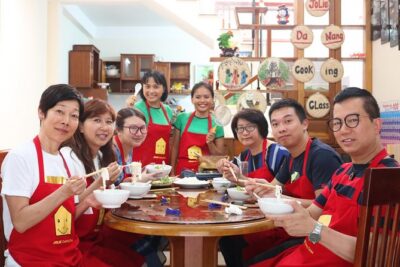
Da Nang Cooking Class with Coffee Tasting and Market Visit
Read our review →
Nishiki Market Tea Ceremony with Koto Performance
Read our review →
Hungry in Vienna? A Food Lover’s Coffee & Market Walk
Read our review →
Delicious Doughnuts & Tea: Small-Group Borough Market Experience
Read our review →
From rick’s coffee to local markets authentic casablanca
Read our review →
Vienna Eats: Private Foodie Walk with Coffee & Markets
Read our review →
Ethiopian Culinary Tour – Market, Food, Coffee Ceremony & more
Read our review →
Private Floating Market, Train Market and After Rain Cafe Tour
Read our review →Browse the lists this tour appears in