
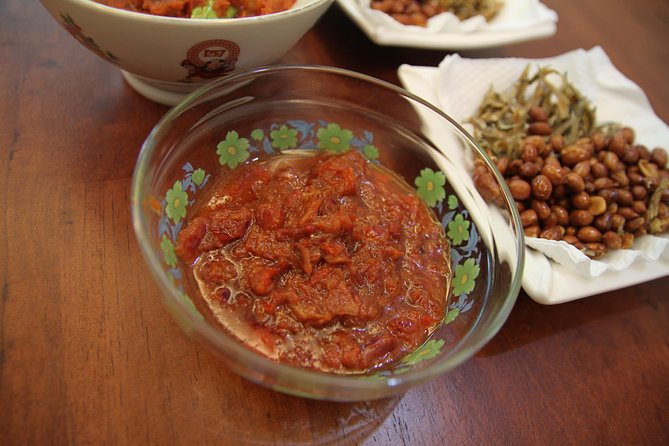
Review · KUALA LUMPUR
Market Visit & Private Hands-on Cooking Class at Daun Senja
Daun Senja’s best idea is simple: start with the ingredients, not a prepared cooking-school pantry. You visit a local wet market, stop for breakfast at a food stall, then head to Patricia and Kingston’s home to cook a three-course Malaysian meal together.
I like the private format for up to five people, which gives you room to ask questions and work at your own pace. I also like the market stop, especially if you want to see a quieter part of the Kuala Lumpur area rather than spend the whole morning in a formal class. The main consideration is location: Taman Suntex in Cheras is outside central Kuala Lumpur, and one review estimates a Grab ride of about 20 to 30 minutes.
Key points at a glance
- The morning begins at a local wet market, except on Mondays, when breakfast takes place at a small local restaurant instead.
- Patricia and Kingston host a private class for your party, with a maximum of five people.
- You cook three Malaysian dishes by hand, with menus that may include Nasi Lemak, Chicken Pong Teh, Roti Jala, sambal, salads, and local desserts.
- A market breakfast is part of the experience, often featuring Indian-style roti or dosa at a food stall.
- You eat the meal you prepare, with a glass of wine or beer included.
- The $130 price makes the most sense for a full group, since the booking covers a private experience rather than an open class.
Why the market visit matters
Many cooking classes begin with ingredients already measured and lined up. Here, the morning starts at a local market, where the food has a setting and a purpose before it reaches the kitchen.
You visit a wet market on most days, with Monday as the exception. That timing matters. If you book for Monday, the market portion changes to breakfast at a small local restaurant, where you may have roti and dosa instead. You still get a local food stop, but you miss the produce-shopping part of the morning.
The market gives you a better handle on Malaysian cooking. You can see the kinds of vegetables, herbs, sauces, and other products used in daily meals rather than only hearing a list of ingredients in a classroom. The experience also takes you away from the central Kuala Lumpur sightseeing circuit, into a calmer residential area where international visitors are less common.
I would not treat the market as a quick shopping errand. It is part of the cultural value of the class. You get to ask what ingredients are used for, how they are chosen, and how they fit into Malaysian home cooking. That context helps when you later work at the stove.
Breakfast is another strong touch. The food-stall stop is not just a snack before the class. It gives you a chance to try a local morning meal with your hosts and see how Malaysians eat outside the home. If you have never tried roti or dosa, this is an easy and friendly introduction.
More market cooking classes in the world:
- Hanoi Cooking Class: Culture, Local Market & Meaning CSR Impact
★ 5.0 · 5,147 reviews - 5 Traditional Dishes Hanoi Cooking Class with Market Trip
★ 5.0 · 4,890 reviews - Cooking Class and Lunch at a Tuscan Farmhouse with Local Market Tour from Florence
★ 5.0 · 4,831 reviews
Meeting Patricia and Kingston at 8 a.m.
The experience starts at 8 a.m. in Taman Suntex, 43200 Cheras, Selangor. It ends at the same meeting point after roughly four and a half hours.
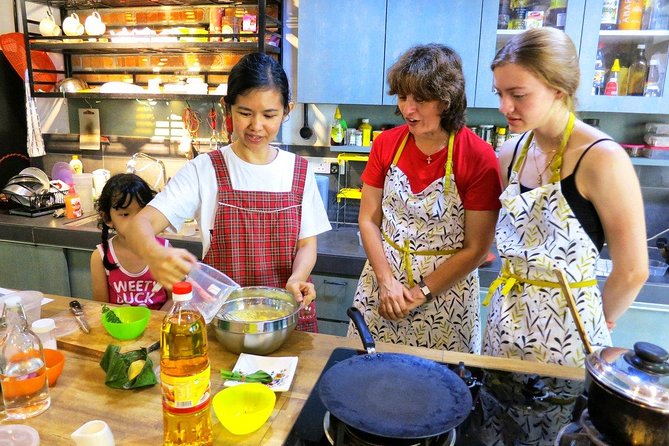
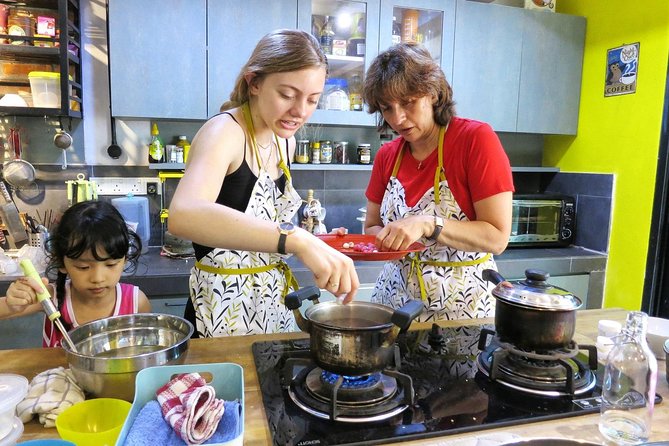
The host names most often associated with the class are Patricia and Kingston. Their role is more personal than that of a guide who simply demonstrates recipes from across a counter. You cook alongside them, ask questions as you go, and get explanations while the food is being prepared.
That style suits me because it lets you slow down when something is unfamiliar. A recipe can tell you to fry, stir, fold, or simmer, but a hands-on teacher can show you what the mixture should look like and how the ingredients change as they cook.
The private setup is useful for families and small groups. Your booking includes only your own party, up to five people, so you are not sharing the cooking stations with a large class. Families with children have found the setting workable, and one family was able to have a young child nearby during the lesson.
You should still allow enough time to reach Taman Suntex. The meeting point is not in the heart of central Kuala Lumpur. A Grab is a practical choice, and a previous estimate places the ride at about 20 to 30 minutes from the city center, though traffic can affect that timing.
Three menu choices, three different views of Malaysian food
The class offers three menu options. The exact choice should be clarified when booking or before the lesson, since the options are quite different in style.
Option 1: Chicken Pong Teh, eggplant sambal, and Pulut Inti
Chicken Pong Teh is served with rice and forms the main part of this menu. It is paired with eggplant sambal, giving you a chance to work with a spicy side dish, and Pulut Inti for dessert.
This option gives you a good spread of textures and cooking methods. The chicken and rice make it a filling meal, while the sambal brings heat and the sticky rice dessert provides a sweet finish.
More private market tours in the world:
- Cairo 8 Hour Private Tour of Pyramids, Egyptian Museum and Bazaar
★ 5.0 · 2,931 reviews - Private Excursion to Maeklong Railway and Floating Markets
★ 5.0 · 850 reviews - Floating and Railway Market (Optional Waterfall): Private Tour
★ 5.0 · 827 reviews - Cairo: Private Pyramids, Museum & Bazaar Tour with Lunch
★ 4.6 · 744 reviews
Option 2: Nasi Lemak, pineapple and cucumber salad, and Sago Gula Melaka pudding
Nasi Lemak is one of Malaysia’s best-known dishes, and this menu gives it the central role. The pineapple and cucumber salad adds a fresh counterpoint, while Sago Gula Melaka pudding finishes the meal with palm sugar flavor.
I would choose this menu if you want a familiar Malaysian classic paired with a lighter side and a dessert that shows off local ingredients. It is also a useful choice if you want to recreate the meal at home, since the dish combination gives you a complete lunch rather than a single specialty.
Option 3: Chicken Curry, Roti Jala, and Ondeh Ondeh
This menu focuses on curry and two items that make the class especially hands-on. Roti Jala is a lacy, net-shaped bread or pancake served with the chicken curry, while Ondeh Ondeh is a sweet local treat.
I like this option for cooks who enjoy learning a technique rather than only following a simmering recipe. Roti Jala requires attention to the batter and shaping process, and the finished dish gives the curry a different partner from ordinary steamed rice.
Cooking side by side instead of watching a demonstration
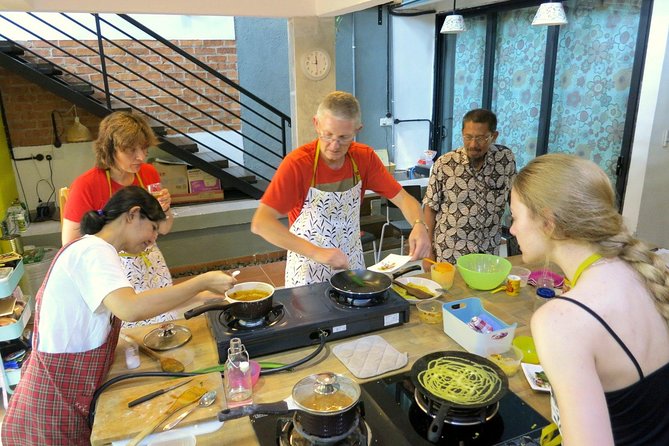
The strongest part of the class is the chance to cook rather than watch. You work through the recipes with guidance from Patricia and Kingston, and you can ask why a certain ingredient is used or how it affects the finished food.
That matters because Malaysian cooking often depends on balance. Heat, sweetness, salt, fragrance, and texture need to work together. A hands-on lesson lets you see how those elements change during cooking, which is far more useful than simply copying a printed ingredient list.
The teaching style also works for mixed groups. You do not need to be an expert home cook. Beginners can ask basic questions without holding up a large class, while experienced cooks can focus on technique, substitutions, and how to reproduce the recipes at home.
Several details make this especially practical. The recipes are not presented as impossible projects requiring ingredients you can find only in Malaysia. One participant from Switzerland found the dishes realistic to recreate at home with products available there. That is a major advantage if your goal is to keep cooking Malaysian food after the holiday.
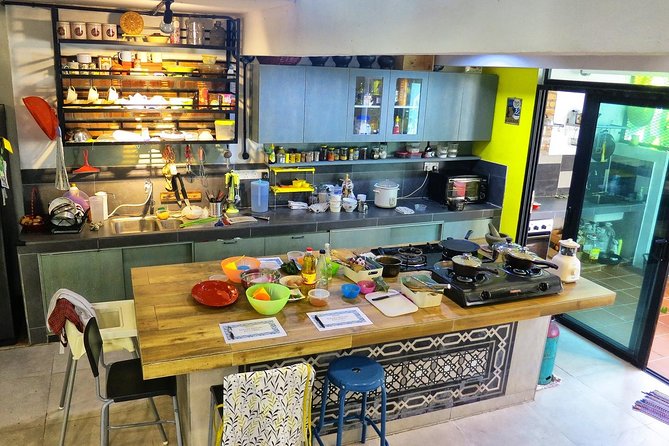
The class has a home-cooking feel rather than a polished restaurant-school atmosphere. I see that as a strength, but it is also worth setting the right expectation. If you want professional equipment, formal culinary instruction, or a large teaching kitchen, this is not that kind of class. It is a warm, informal lesson built around shared food and conversation.
Eating what you have prepared
After the cooking, you sit down to enjoy the three-course meal. That final meal gives the morning a satisfying shape: you see the ingredients at the market, prepare them in the kitchen, and then taste the result.
A glass of wine or beer is included, which adds a small celebratory touch. The meal is not simply a tasting of one dish. The selected menu includes a main course, a side or companion dish, and dessert, so you get a fuller sense of how a Malaysian meal can be put together.
This is also where the class feels different from a market tour alone. A market visit can show you ingredients, but it does not necessarily teach you what to do with them. Here, the meal gives those ingredients a clear purpose.
The hosts also make the meal social. You are welcomed into a family home, and the time includes conversation about food and culture. That can be more rewarding than a tightly timed class where everyone leaves as soon as the last plate is served.
What the $130 price really means
The listed price is $130, with group discounts available. Because the experience is private for up to five people, the value depends heavily on the size of your party.
For five people, the per-person cost is much easier to justify. You receive a market visit, breakfast, private instruction, ingredients, a three-course meal, and a drink over about four and a half hours. You also avoid sharing the lesson with strangers.
For one or two people, the price is harder to compare with a standard group cooking class. You are paying for privacy and personal attention, not just for the food. If you care about asking many questions, choosing your pace, and having direct contact with a local family, that extra cost may be worthwhile.
I would compare it with the price of a regular Kuala Lumpur cooking class only after checking whether that class includes transport, a market visit, breakfast, and a full meal. Many do not. Daun Senja’s value comes from combining all of those parts into one morning.
Group discounts can improve the deal for families or friends. Since the class is capped at five, it is best suited to a small group that wants a shared activity rather than to a solo visitor looking for the cheapest cooking lesson.
Who will enjoy this most
I would recommend Daun Senja to several types of visitors:
- Families, since the private format allows children to take part and gives parents more control over the pace.
- Couples or small groups, especially if you want an experience built around conversation rather than a standard sightseeing stop.
- Cooks who want usable recipes, not just a short demonstration.
- Visitors who have already seen central Kuala Lumpur, and want a quieter local setting.
- People interested in food culture, because the morning connects market ingredients, breakfast habits, home cooking, and the finished meal.
It is less suitable if your schedule is tight or you want to stay within central Kuala Lumpur. The 8 a.m. start and trip to Cheras require planning. It may also disappoint anyone who expects a restaurant-style cooking academy with formal instruction and high-end facilities.
Monday bookings deserve special attention. The market is closed then, so the morning begins with breakfast at a local restaurant instead. That alternative still offers local food, but it is not the same market experience.
Practical details before you book
The activity lasts about four hours and 30 minutes. You meet in Taman Suntex at 8 a.m. and return there at the end.
The experience is private and limited to your party, with a maximum of five participants. Mobile tickets are available, and confirmation is sent within 48 hours, subject to availability.
Service animals are allowed, and the meeting area is near public transportation. The supplied information does not give a full mobility-access description, so you should ask the provider about any specific access needs before booking.
Free cancellation is available if you cancel at least 24 hours before the start time. Cancellations or changes made within 24 hours are not refunded or accepted, based on local time.
Should you book Daun Senja?
Book this class if you want a personal morning that links market food, breakfast, home cooking, and a shared meal. The private format, welcoming hosts, and practical recipes give it more substance than a short cooking demonstration.
I would especially choose it for a family or group of friends, where the $130 price can be shared. If you are staying in central Kuala Lumpur and have limited time, consider the extra ride to Cheras before committing. For everyone else, this is a thoughtful way to spend a morning learning dishes you can realistically cook again at home.
FAQ
Where does the cooking class start and finish?
It starts at Taman Suntex, 43200 Cheras, Selangor, Malaysia, at 8 a.m. The activity ends back at the same meeting point.
How long does the experience last?
The experience lasts approximately four hours and 30 minutes.
How many people can join the private class?
The class is private for your party and can include up to five people.
Is the market visit available every day?
The wet-market visit is available except on Mondays. Monday bookings begin with breakfast at a small local restaurant instead.
What food might I learn to cook?
The menu options include Chicken Pong Teh with rice, eggplant sambal, Pulut Inti, Nasi Lemak, pineapple and cucumber salad, Sago Gula Melaka pudding, chicken curry, Roti Jala, and Ondeh Ondeh.
Can I cancel for a full refund?
Yes. You can cancel at least 24 hours before the experience starts for a full refund. Cancellations or changes made less than 24 hours before the start time are not accepted for a refund.
More Markets in the world
- Bangkok: Damnoen Saduak Market and Maeklong Railway Market
★ 4.5 · 26,723 reviews - The Old Siam: Damnoen Saduak and Maeklong Railway Market
★ 4.5 · 10,992 reviews - Bangkok: Train Market & Floating Market with Boat Ride
★ 4.7 · 9,547 reviews - From Bangkok: Ayutthaya & Ayothaya Floating Market Day Trip
★ 4.7 · 6,084 reviews
More Cooking Classes in the world
- Chiang Mai: Cooking Class, Market & Thai Herbs Garden Tour
★ 4.9 · 4,824 reviews - Chiang Mai: Authentic Cooking Class with Market & Farm Visit
★ 4.9 · 4,546 reviews - Barcelona: Paella Cooking Experience & Boqueria Market Tour
★ 4.8 · 3,661 reviews - Cooking Class Hoi An:Local Market, Basket Boat, Fishing & Cooking
★ 5.0 · 3,660 reviews
Just added around the world
- Three-Hour Private Chengdu Tea Wholesale Market Tour★ 5.0 · 4 reviews
- Half-day Dandan Noodles Cooking Class with a Local Market Visit★ 5.0 · 8 reviews
- Chania: Old Town, Public Market, Hill of Prophet Elias, Agia Triada★ 5.0 · 35 reviews
- Moroccan Cooking Class with a Local Family & Market Visit★ 5.0 · 16 reviews
- Chania Old Town, Public Market and Chrisopigi Monastery Tour★ 4.5 · 6 reviews
- 3-Hour Herbal Wholesale TCM Market and a Local Wet Market Tour★ 5.0 · 4 reviews
- Food Tasting & Market Shopping: Private Guided Tour in PORT LOUIS★ 4.5 · 9 reviews
- Charleston International Sweet Treats & Historic City Market Tour★ 5.0 · 22 reviews
Market Cooking Classes, compared.
Hanoi Cooking Class: Culture, Local Market & Meaning CSR Impact
Read our review →
5 Traditional Dishes Hanoi Cooking Class with Market Trip
Read our review →
Cooking Class and Lunch at a Tuscan Farmhouse with Local Market Tour from Florence
Read our review →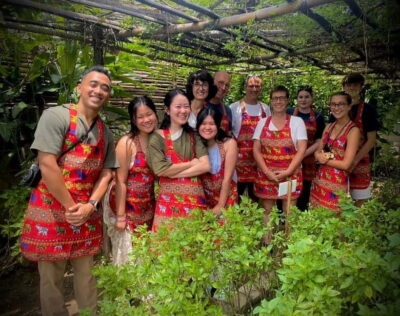
Cooking Class, Market & Thai Herbs Garden Tour
Read our review →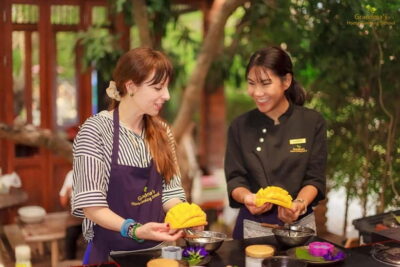
Authentic Cooking Class with Market & Farm Visit
Read our review →
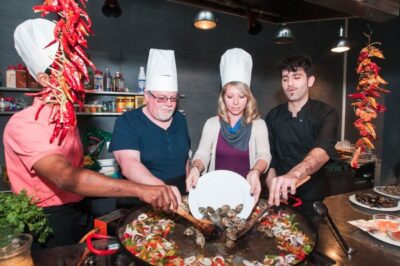
Paella Cooking Experience & Boqueria Market Tour
Read our review →
Cooking Class Hoi An:Local Market, Basket Boat, Fishing & Cooking
Read our review →Browse the lists this tour appears in