
Review · SEOUL
Korean Palace and Market Tour in Seoul Including Insadong and Gyeongbokgung Palace
Seoul’s royal past and everyday commerce come together neatly on this full-day outing. You move from the grand gates of Gyeongbokgung Palace to the quiet halls of Jogyesa Temple, then into the craft shops of Insadong and the crowded lanes of Namdaemun Market. It is a useful first look at the city, especially if you want its major sights explained as you go.
I like the mix of three very different cultural stops and the practical hotel pickup, lunch, and return transport. Guides such as Lizzy, BK, Miel, Daria, and Yujeong have earned strong praise for clear explanations and friendly energy. The tradeoff is pace: with several palaces, a museum, markets, lunch, and a shopping stop packed into one day, some visits feel brief. The ginseng center is also a sales-oriented stop that some people would rather skip.
Key points to know before booking
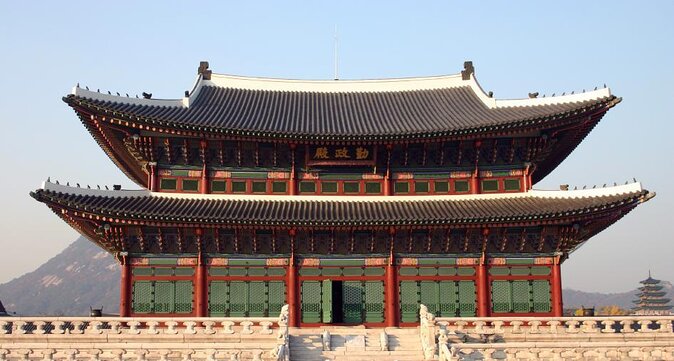
- Gyeongbokgung and Changdeokgung provide two different views of Joseon royal life: one is broad and ceremonial, while the other is more intimate, with gardens and smaller architectural details.
- The itinerary includes a 30-minute ginseng center visit: treat this as a required shopping stop, not as free sightseeing time.
- Guiding is a major strength: past guides named Lizzy, BK, Miel, Daria, AJ, Bonnie, Felicity, and Yujeong were praised for history explanations, organization, and warmth.
- The tour runs for about 8 hours and 30 minutes: comfortable shoes matter, since you walk through palace grounds, temple areas, and markets.
- The group may reach 30 people: that keeps the price reasonable but can make transfers and listening to the guide less personal.
- Palace closures have backup plans: Deoksugung replaces Gyeongbokgung on Tuesdays, and Changgyeonggung replaces Changdeokgung on Mondays.
A full day that puts Seoul’s past first
This tour is built for you if you want a broad introduction rather than a slow study of one palace. It begins around 8:30 a.m. with hotel pickup in an air-conditioned vehicle, then moves through royal Seoul, Buddhist Seoul, traditional shopping streets, and one of the city’s largest markets.
At $89 per person, the value comes from the number of pieces bundled together. Admission to the palaces and museum, a Korean lunch, a professional guide, hotel transport, and drop-off are included. If you tried to arrange all of those stops yourself, you would save some money by using Seoul’s public transport, but you would also spend time planning routes and learning the background on your own.
The tour’s rating of 4.1 from 174 ratings suggests a generally positive but not flawless experience. The biggest variable is the guide. Strong guides turn a long list of stops into a coherent story about Korea’s royal government, religion, occupation, restoration work, and modern city life. The less successful outings appear to have suffered from rushed explanations, awkward vehicle changes, or too much time devoted to shopping.
A few more market tours around Seoul worth a look
- Seoul Street Food Market Tour
★ 5.0 · 1,226 reviews - Local Home Korean Cooking Class & Market Adventure in Seoul
★ 5.0 · 1,024 reviews - Seoul: Night Market Food Tour with Local Guide
★ 4.9 · 943 reviews
Gyeongbokgung explains the scale of royal Seoul
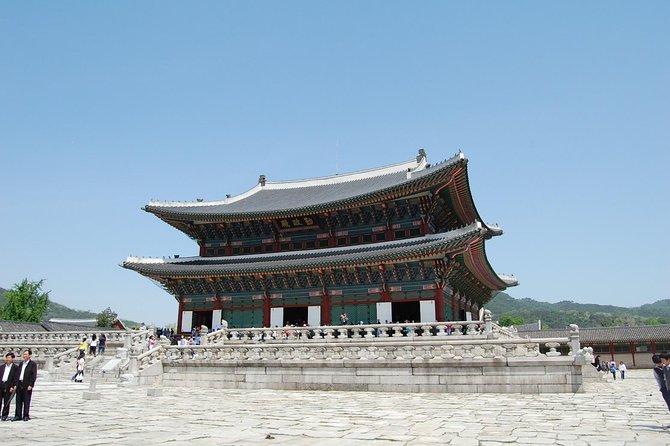
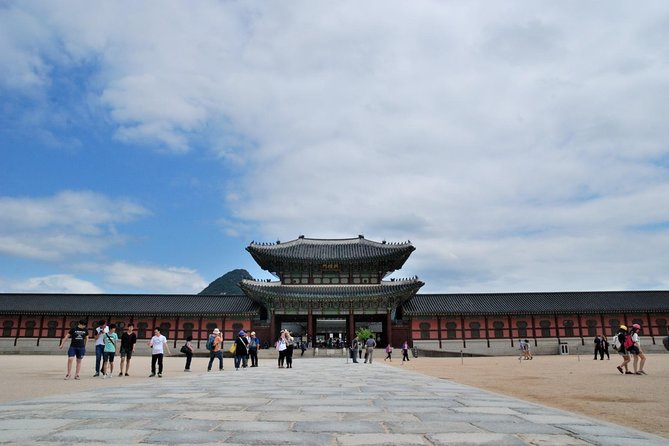
Gyeongbokgung Palace is the grand opening act. Built in 1395 by the Joseon Dynasty, it was the first and largest of Seoul’s Five Grand Palaces. The grounds give you a sense of royal scale, with broad courtyards, gates, pavilions, halls, and carefully restored structures.
The palace was badly damaged during the Japanese occupation, so what you see is a mix of surviving buildings and restoration work. That does not make the visit less worthwhile. In fact, the rebuilding helps you understand how modern Korea has worked to recover and present its architectural past.
Your guide leads you around the grounds rather than simply dropping you at the entrance. That matters here. Without context, several halls can look similar, and it is easy to focus only on taking photographs. A good explanation helps you notice the purpose of the spaces and the way the palace was organized.
The scheduled visit lasts about one hour. That is enough for a useful overview, but not enough for every corner. You should expect a guided highlights visit rather than a leisurely morning at the palace. Wear shoes that can handle uneven paths and be ready for outdoor walking.
Fifteen minutes at the National Folk Museum
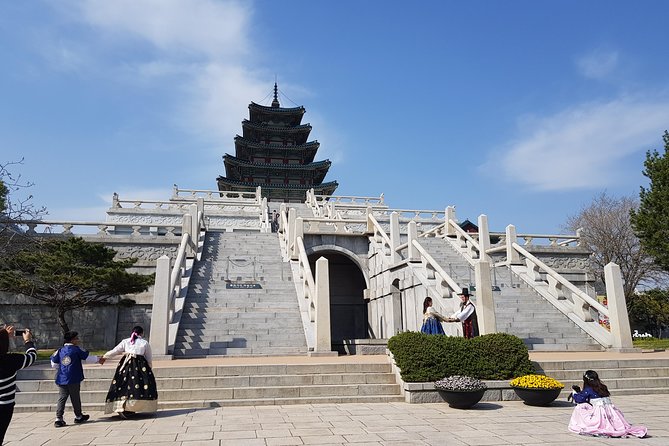
The National Folk Museum of Korea is on the Gyeongbokgung grounds and adds a more personal side to the palace visit. Its displays use artifacts, replicas, and illustrations to show how Korean life developed from ancient times into the twentieth century.
The planned museum visit is about 15 minutes, so you will not have time to examine every exhibit. Still, this short stop helps balance the royal architecture. Gyeongbokgung shows where the court operated, while the museum points toward the daily customs and material life of ordinary people.
If museums are your main interest, you may find the time too short. If you prefer a mixed day of indoor and outdoor sights, the quick visit works well. Listen closely to the guide’s explanation, since you will have limited time to read every display yourself.
Jogyesa Temple brings a quieter pause
Jogyesa Buddhist Temple is the chief temple of the Jogye Order of Korean Buddhism. The visit lasts about 20 minutes and includes the entrance area, trees lining the approach, and the main hall, which dates back roughly five centuries according to the tour information.
After the palace grounds, the temple offers a change of mood. Instead of royal authority and formal courtyards, you get a working Buddhist setting centered on devotion and ceremony. A large Buddha statue inside the main hall is one of the key sights.
This is a short stop, so do not expect a long meditation session or an extensive temple tour. You will have time to look, listen, and ask a few questions. One past participant especially valued the Buddhist connection and the sound of chanting, which points to the kind of personal meaning this stop can provide.
More shopping tours in Seoul:
- Seoul: Palace, Temple and Market Guided Foodie Tour at Night
★ 4.9 · 750 reviews - Seoul: Korean Cooking Class at a Local Home and Market Tour
★ 5.0 · 348 reviews - Seoul: Guided Food & Market Tour with 8+ Tastings
★ 4.9 · 342 reviews - Seoul Night Palace & Market Food Tour with Vehicle
★ 5.0 · 275 reviews
The ginseng center is the day’s clear compromise
Around midday, the coach stops at a ginseng center for about 30 minutes. This is a shopping visit, not a major historic attraction. Ginseng products are presented as Korean health and longevity goods, and the setting is designed for browsing and buying.
Some people enjoy learning about a well-known Korean product and may want to take home a gift. Others find the sales pitch intrusive, especially when the rest of the tour is focused on culture and architecture. You should know about this stop before booking, because it is part of the schedule rather than an optional extra.
The most practical approach is to treat the visit as a fixed break. Listen to the presentation if it interests you, browse if you wish, and do not feel that you must buy anything. The itinerary gives you no indication that purchases are required.
Lunch adds a welcome taste of local routine
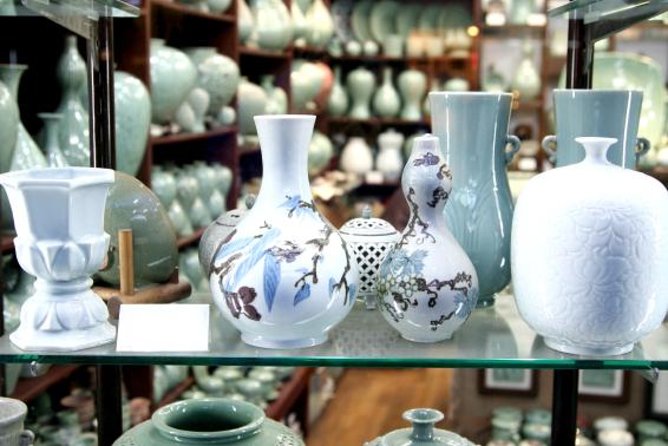
A Korean lunch at a local restaurant is included in the price. The exact menu is not specified, so you should advise the operator of dietary requirements when booking rather than waiting until the meal.
Lunch matters on a day with this much walking. It also gives you a chance to sit down and reset before the second half of the schedule. Several strong experiences specifically praised the food, though the meal should be viewed as a practical included lunch rather than a focused food tour.
If you want to explore Seoul’s cuisine dish by dish, this tour will not replace a dedicated food experience. If you want a reliable midday meal without having to search for a restaurant while keeping up with a group, it is useful.
Changdeokgung shows a more graceful side of the dynasty
Changdeokgung Palace offers a different experience from Gyeongbokgung. It was built during the Joseon period and is listed as a UNESCO World Heritage site. The tour highlights its large gate, halls, pavilions, and Geumcheongyo Bridge.
The grounds include the Huwon, or Rear Garden, with lotus ponds, lawns, trees, and flowers. This is where the palace visit becomes less about grand ceremony and more about the relationship between buildings and outdoor space. The gardens are a major reason to keep Changdeokgung on your Seoul plans.
The scheduled stop lasts about 40 minutes. That is enough to see important sections, but the visit remains brisk. You may wish you had more time in the garden, particularly if you enjoy photography or traditional design.
Changdeokgung closes on Mondays. On those days, the tour visits Changgyeonggung Palace instead, another of the Five Grand Palaces. This is a sensible substitute, but you should check the day of your booking if seeing Changdeokgung specifically is important to you.
Insadong is best for browsing, not rushing
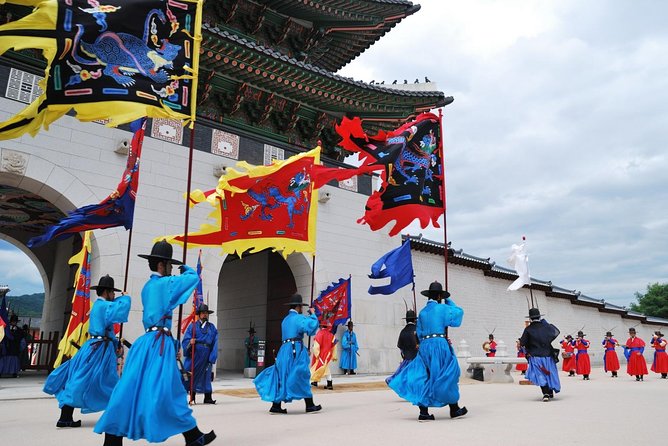
Insadong Antique Alley brings the tour into central Seoul’s traditional arts district. You walk through alleys lined with galleries, antique shops, Korean restaurants, and teahouses. The scheduled visit is about 30 minutes.
This is a good place to look for artwork, craft items, and small souvenirs. The appeal is not just a single landmark. It is the chance to see a more traditional commercial side of the city, with shops and tea houses occupying narrow streets close to major tourist sights.
Half an hour goes quickly. Use the time to follow the guide’s orientation, note shops you want to revisit, and avoid trying to inspect every display. If you find something you like, ask about the price and keep track of the meeting point. The tour’s fixed schedule does not leave much room for extended shopping.
Namdaemun ends the day with practical Seoul
Namdaemun Market is described as Korea’s largest traditional market and has operated since 1964. It is the final major stop, with about 30 minutes to browse goods and look for souvenirs.
Namdaemun is less polished than a palace and more useful as a glimpse of daily buying and selling. You can expect a wide range of goods, bargain hunting, and crowded market lanes. The short visit gives you a taste of the area, but not enough time for a serious shopping expedition.
The itinerary also includes duty-free shops before the Namdaemun visit. That adds another commercial element to a day already containing the ginseng center. If shopping is your goal, you may appreciate the variety. If you want only cultural sights, these stops will feel like the weakest part of the program.
Transport and group size affect the experience
Hotel pickup and drop-off remove one of the day’s biggest hassles. You do not need to find each palace, temple, and market yourself, and the air-conditioned vehicle offers welcome relief between stops.
The advertised maximum is 30 people, although the actual group can vary. A group of that size keeps the tour affordable, but it can also slow down movement through gates and markets. You may need to stay alert at meeting points, especially in busy Namdaemun.
One account described a poor vehicle arrangement involving two groups, a small bus, and a cramped eight-seat van. That appears to have been an exception rather than the stated standard, but it is a useful reminder that transport comfort can vary. Most positive accounts describe the vehicle as comfortable and the day as well organized.
Guides such as BK, Lizzy, Miel, Daria, AJ, Bonnie, Felicity, Spring Kim, and Yujeong received especially warm praise for clear English, energy, historical explanations, and personal attention. One guide adjusted the plan during heavy rain, while another made sure breaks came at sensible times on a very hot day. Those details matter because the day depends heavily on the person leading it.
How much walking should you expect?
The tour states that a moderate amount of walking is involved. You walk through palace grounds, temple areas, alleyways, and markets, often standing while the guide speaks. Comfortable walking shoes are a must.
Weather can change the feel of the day. Heavy rain once made the outing harder, while hot conditions made regular breaks important. You should bring suitable clothing, water, and protection from sun or rain, although the supplied details do not specify any equipment provided by the operator.
The pace is manageable for most people, and most participants can take part. Still, this is not a sit-down sightseeing tour. If you have mobility concerns, contact the provider before booking and ask about the current vehicle and walking arrangements.
Who will get the most from this Seoul tour?
I would choose this tour for a first full day in Seoul, particularly if you want an organized introduction before exploring alone. It works well for solo visitors, couples, families, and anyone who wants the city’s major historic sights explained in plain language.
It is also a good fit if you have limited time. In one day, you cover royal palaces, a Buddhist temple, a museum, two traditional shopping districts, lunch, and a city transfer route. You will not know every corner of Seoul afterward, but you will understand the basic shape of its historic center.
I would hesitate if you dislike group schedules, shopping stops, or short visits. Independent visitors who enjoy lingering in palace gardens may prefer to spend a whole morning at Gyeongbokgung or Changdeokgung. You should also skip this option if the ginseng stop would seriously annoy you.
Price, cancellation, and booking details
At $89, the tour is fairly priced for a full day that includes transport, guide service, admissions, and lunch. Its value improves if your hotel is included in the pickup route and you would otherwise need to arrange several transfers.
Confirmation is provided at booking, and the activity ends back at the meeting point after hotel drop-off. Free cancellation is available up to 24 hours before the start time. Canceling or changing the booking within 24 hours does not qualify for a refund.
Because palace closures affect the route, check the weekday before you commit. Gyeongbokgung is closed on Tuesdays, when Deoksugung Palace and the Seoul Museum of History are substituted. Changdeokgung is closed on Mondays, when Changgyeonggung Palace is visited instead.
Should you book it?
Book this tour if you want Seoul’s royal sights, temple culture, markets, lunch, and transport handled in one busy day. The strongest reason to choose it is the guiding. With a good leader such as BK, Lizzy, Miel, Daria, or Yujeong, the palaces become much easier to understand, and the day feels like more than a sequence of photo stops.
Think twice if you want a relaxed pace or dislike commercial visits. The ginseng center and duty-free stop take time away from the historic sites, and the group may be as large as 30 people. For a first look at Seoul, though, the mix is practical and broad, with enough history, food, shopping, and local atmosphere to help you decide where to return on your own.
FAQ
How long does the tour last?
The tour lasts approximately 8 hours and 30 minutes, beginning at about 8:30 a.m. and ending with drop-off back at the meeting point.
Is hotel pickup included?
Yes. Hotel pickup and drop-off in Seoul are included, along with transport in an air-conditioned vehicle.
What sights are included?
The main stops are Jogyesa Temple, Gyeongbokgung Palace, the National Folk Museum of Korea, a ginseng center, Insadong Antique Alley, Changdeokgung Palace, and Namdaemun Market.
Is lunch included?
Yes. A Korean lunch at a local restaurant is included. You should provide any dietary requirements when booking.
How much walking is involved?
A moderate amount of walking is involved through palace grounds, temple areas, markets, and traditional shopping streets. Comfortable walking shoes are recommended.
Is the tour suitable for most people?
Most people can participate, according to the tour information. Because walking is required, contact the provider in advance if you have specific mobility concerns.
How large is the group?
The maximum group size is 30 people.
What happens if Gyeongbokgung Palace is closed?
Gyeongbokgung is closed on Tuesdays. On those days, the tour visits Deoksugung Palace and the Seoul Museum of History instead.
What happens if Changdeokgung Palace is closed?
Changdeokgung is closed on Mondays. The replacement visit is Changgyeonggung Palace, another of the Five Grand Palaces of the Joseon Dynasty.
Is the ginseng center optional?
The ginseng center is included as a 30-minute shopping stop. The tour information does not describe it as optional.
Can I cancel for a full refund?
Yes, if you cancel at least 24 hours before the experience starts. Cancellations or changes made within 24 hours are not refunded.
Just added around Seoul
- Seoul: The Biggest Sea-food Noryangjin Market Tour★ 4.3 · 30 reviews
- Seoul: Sokcho beach, market, hot spring and Seorak Cable Car★ 4.8 · 5 reviews
- Seoul: Namdaemun Market Food Tour★ 4.9 · 34 reviews
- Seoul: Guided Street Food Tour at Namdaemun Market★ 5.0 · 10 reviews
- Seoul: Gwangjang Market Vegan & Vegetarian Food Tour★ 5.0 · 16 reviews
- Seoul: Gyeongbokgung Palace Tour & Lunch at Authentic Market★ 4.5 · 2 reviews
- Seoul Evening Tour:Gwangjang Market&Naksan Park&Eungbongsan★ 5.0 · 2 reviews
- Seoul Gwangjang Market Foody Walking Tour★ 4.1 · 7 reviews
Shopping Tours, compared.
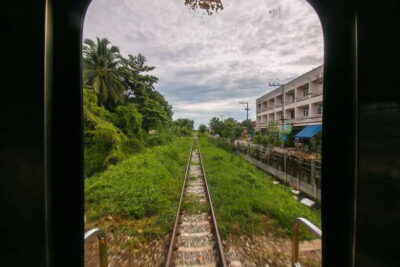
Damnoen Saduak Market and Maeklong Railway Market
Read our review →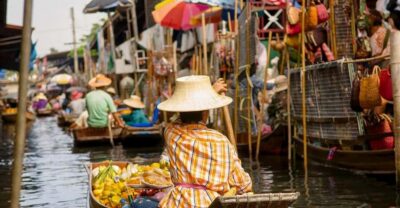
The Old Siam: Damnoen Saduak and Maeklong Railway Market
Read our review →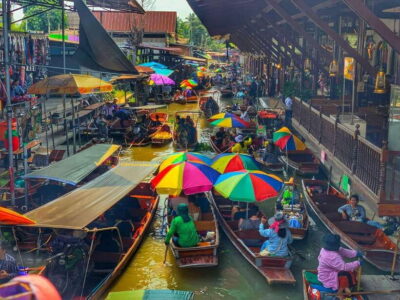
Train Market & Floating Market with Boat Ride
Read our review →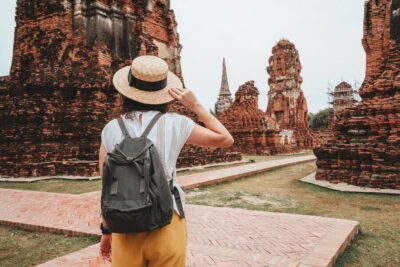
Ayutthaya & Ayothaya Floating Market Day Trip
Read our review →
Hanoi Cooking Class: Culture, Local Market & Meaning CSR Impact
Read our review →
5 Traditional Dishes Hanoi Cooking Class with Market Trip
Read our review →
Cooking Class and Lunch at a Tuscan Farmhouse with Local Market Tour from Florence
Read our review →
Cooking Class, Market & Thai Herbs Garden Tour
Read our review →Browse the lists this tour appears in