
Review · SEOUL
Seoul: Guided Food & Market Tour with 8+ Tastings
Seoul’s food culture makes the most sense when you taste it one small plate at a time. This three-hour walk takes you from Gwangjang Market to Ikseondong Hanok Village and Insadong, with enough food to replace a meal and enough local context to help you order with confidence later.
I like the wide mix of savory, sweet, and traditional drinks, and I like that the tour ends quietly in a teahouse rather than at one more crowded food stall. Guides including Jae, Alex, Youla, and Taeseong are praised for their clear English and warm approach. The main drawback is the walking: the route is not suitable for wheelchairs, and rain will not stop the tour.
Five things to know before you book
- Gwangjang Market leads the tour: Plan on about 80 minutes of tastings, food stories, and help navigating one of Seoul’s best-known food markets.
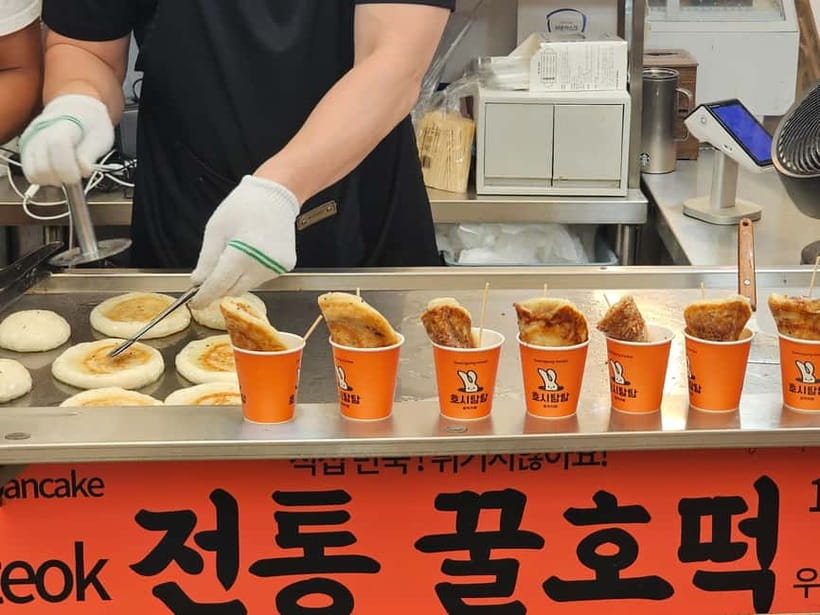
- You get more than a snack: The included food covers dumplings, gimbap, tteokbokki, mung bean pancake, fish, sweets, grilled rice cake, tea, and a Secret Dish.
- The route changes pace nicely: Market eating gives way to quiet lanes, a Hanok village, modern shops, and a calm tea stop.
- Guides make unfamiliar food easier: Jae, Alex, Youla, Taeseong, Ji-yoon, and others are noted for explaining ingredients, customs, and how to approach local stalls.
- Bring an appetite and good shoes: Several people found the meal-sized amount of food surprisingly filling, while the three-hour walk calls for comfortable footwear.
Why this food tour is useful on a first day in Seoul
I would put this experience early in a Seoul visit, especially if Korean food is new to you. A market can be exciting but confusing. You may see trays of food, busy counters, and dishes with no English explanation, then hesitate at the exact moment you should be ordering.
A good guide removes that friction. You can point, taste, ask questions, and learn the basic rhythm of Korean street food without having to solve every detail yourself. The guide also explains what you are eating and how it fits into daily life, so the food becomes more than a series of samples.
The tour is not limited to one style of Korean cooking. You get chewy rice cakes, crisp mung bean pancake, dumplings, rolled rice, fish, sweet snacks, bread, and tea. That range matters because Korean food is not simply spicy food. Some dishes are soft and comforting, some crisp and savory, and others are sweet enough to finish a meal.
The food is served in tasting portions, but do not arrive after a large breakfast or lunch. Several stops together can cover a substantial meal. At the same time, the pace includes walks between tastings, which helps prevent the experience from becoming one long food rush.
More food and drink tours in Seoul:
- Seoul Street Food Market Tour
★ 5.0 · 1,226 reviews - Seoul: Night Market Food Tour with Local Guide
★ 4.9 · 943 reviews - Seoul Night Palace & Market Food Tour with Vehicle
★ 5.0 · 275 reviews
Starting at Jongno 5-ga and entering Gwangjang Market
Meet outside Jongno 5-ga Station, Exit 8, on Seoul’s dark blue Line 1. The meeting point is by the police station, and your guide carries an orange umbrella. That is a useful detail in a busy area, so arrive with the station exit and landmark already in mind.
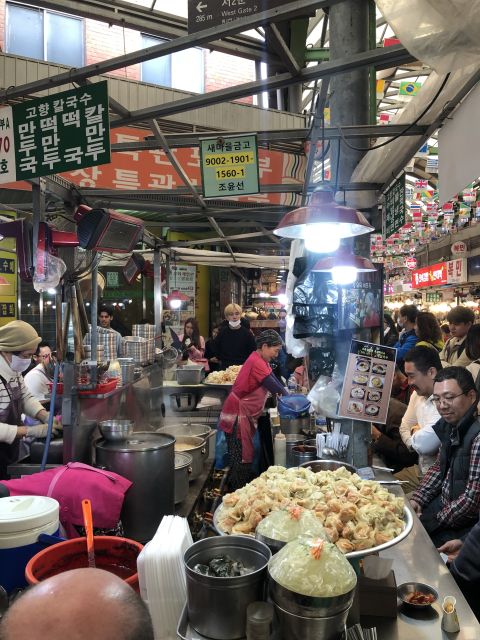
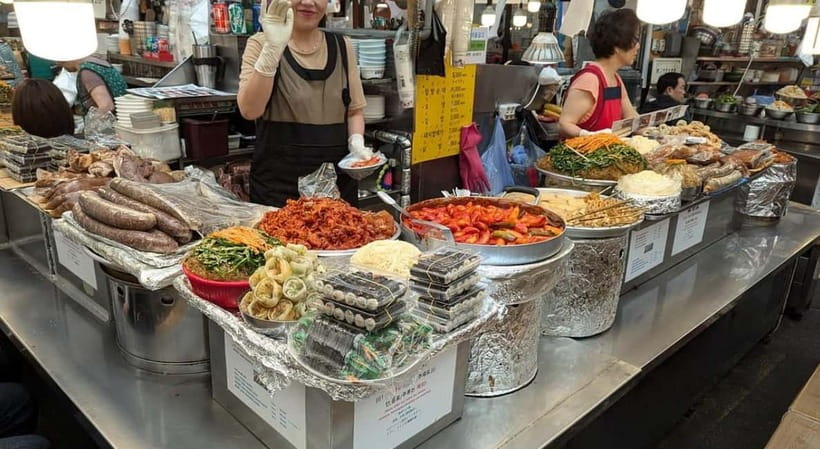
The first major stop is Gwangjang Market, where you spend about 80 minutes. This is the heart of the tour, not a quick photo stop. Your guide leads you to several food counters and small eateries, introducing dishes that can be hard to identify or order on your own.
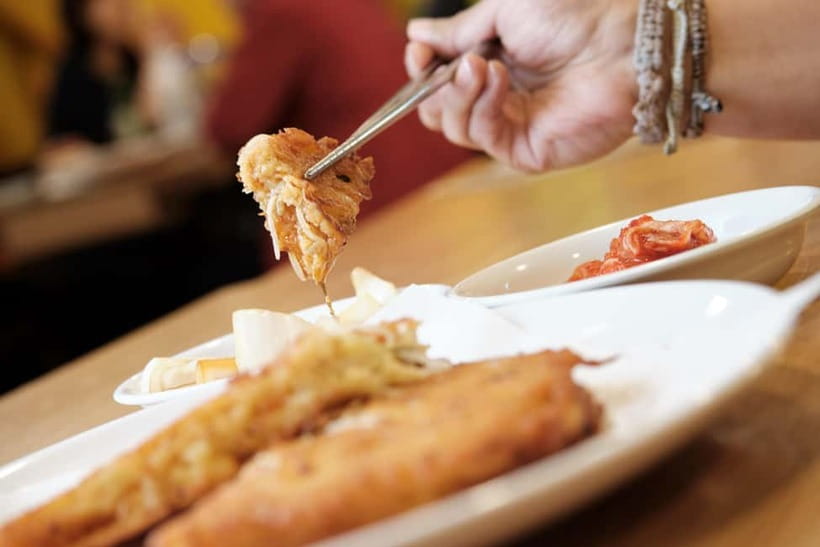
Expect a broad opening round of Korean favorites. The included tastings feature mandu, or Korean dumplings, freshly prepared gimbap, tteokbokki, mung bean pancake with sweet onions, and minced fish fillets served with fish soup.
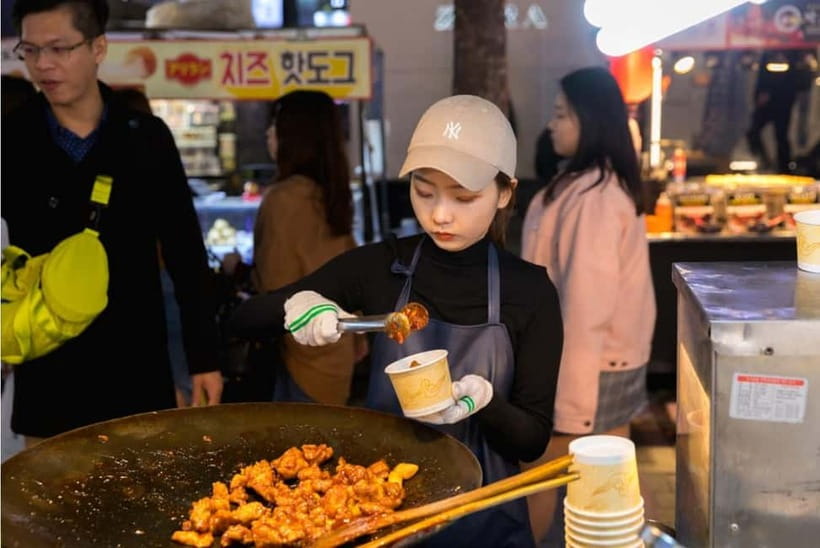
Tteokbokki is chewy rather than soft, with a slightly spicy sauce. It is often compared with gnocchi because of the rice cake texture, though the seasoning gives it a very different character. If you are sensitive to heat, tell the guide early. The dish is described as slightly spicy, but individual tolerance varies.
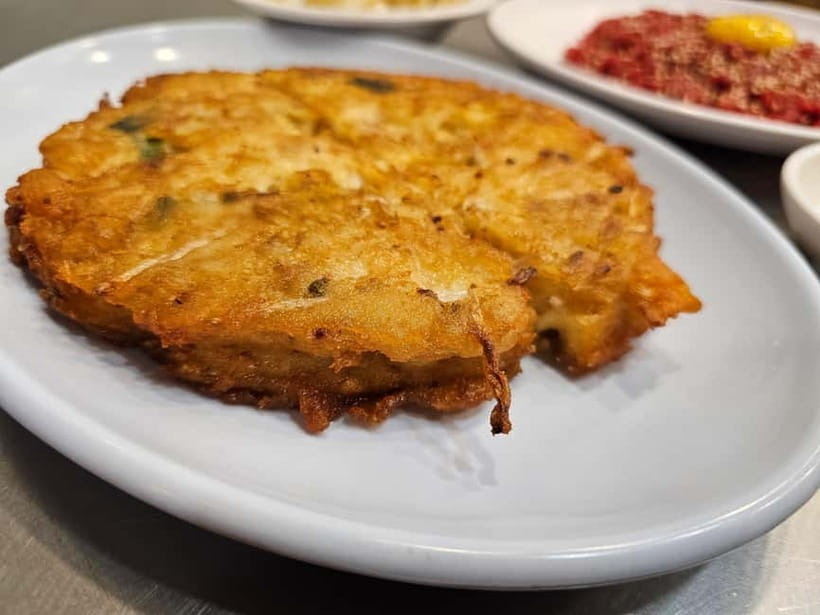
The mung bean pancake, called nokdujeon or bindae-tteok, is one of the more useful tastings here. It is crisp outside, soft inside, and paired with sweet onions. I like that this gives you a savory market classic that is less familiar to many first-time visitors than tteokbokki.
Mandu and gimbap add a gentler contrast. The dumplings offer a warm, savory filling, while gimbap gives you neat rolls of rice and fillings that are easy to enjoy between stronger flavors. Your guide explains each dish as it arrives, which helps if you have questions about texture, sauces, or ingredients.
The fish tasting is another helpful introduction. You try minced fish fillets hot from the grill with fish soup, a combination that shows how a simple market ingredient can appear in both a snack and a light broth. It is also a reminder to mention dietary needs before booking, since the standard food list includes meat and fish.
The market can feel intense, especially at a busy time. That is where the guide earns the fee. Instead of wandering from stall to stall and buying too much of one thing, you get a planned sequence with explanations and shared portions. The tradeoff is that you have less freedom to choose every stop yourself.
Sweet snacks, drinks, and the Secret Dish
The market portion also includes a Korean honey snack and a traditional rice drink. The honey snack is the kind of sweet you may have seen in Korean television dramas, while the rice drink offers a cool, lightly sweet break from spicy and savory food.
The drinks included are water and tea, with extra drinks available only if you select an upgrade or pay separately according to the booking option. Some tour experiences have included local beverages such as makgeolli or somaek, but you should not assume alcohol is part of the basic package.
At some point, the guide reveals the Secret Dish. Its identity is deliberately kept back, so it is best treated as an extra surprise rather than a promised specific food. This is a small but effective part of the format. You get the familiar classics first, then something you might not have thought to order.
Dietary needs should be stated when you book. Vegetarian options and other dietary adjustments are supported, but the standard selection includes fish and other animal products. One vegetarian account found that the tour could work by leaving out a few offerings, though your exact substitutes depend on the day and the guide.
The walk between Jongno neighborhoods
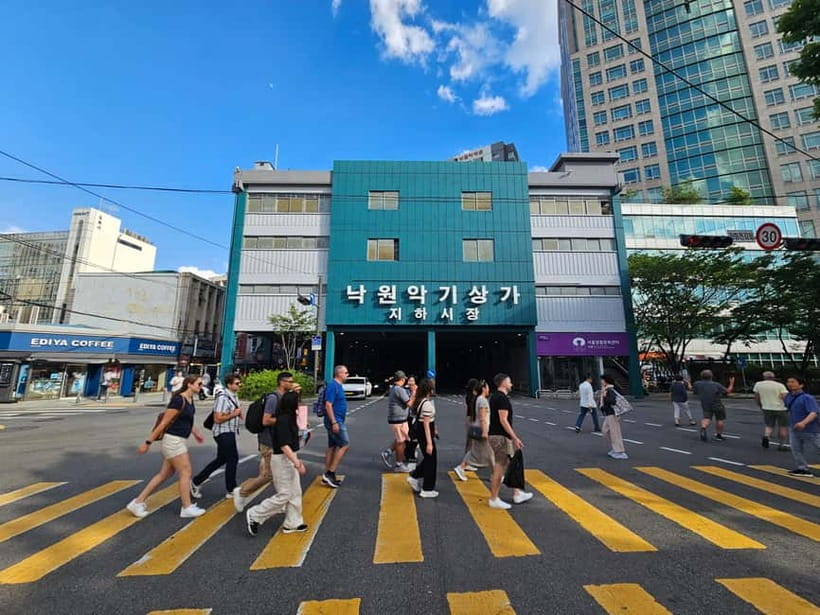
After the market, the route spends about 20 minutes walking through backstreets and scenic areas. This transition is important because it lets you see how quickly Seoul changes from food stalls and crowded market lanes to quieter traditional streets.
Do not think of this as dead time between restaurants. The guide uses the walk to explain the area, point out local details, and answer questions about Korean food and society. You also get a chance to let the previous tastings settle.
Comfortable shoes are essential. The tour takes place in rain or shine, and the route includes walking through market areas and traditional neighborhoods. An umbrella and weather-appropriate clothing are sensible, though the official requirement is simply comfortable footwear.
The group size can vary. Some departures have been intimate, even a private-feeling experience with one guide and one participant, while other groups have included several nationalities and different age groups. A smaller group makes conversation easier, but you should not book expecting a private tour unless your confirmation says so.
A few more market tours around Seoul worth a look
- Seoul: Palace, Temple and Market Guided Foodie Tour at Night
★ 4.9 · 750 reviews - Seoul: Namdaemun Market Food Tour
★ 4.9 · 34 reviews - Seoul: Gwangjang Market Netflix Food Tour
★ 4.7 · 31 reviews - Seoul: The Biggest Sea-food Noryangjin Market Tour
★ 4.3 · 30 reviews
Ikseondong Hanok Village and a modern Seoul twist
The next stop is Ikseondong Hanok Village, visited for about 30 minutes. Its traditional Korean houses and narrow lanes provide a visual change from Gwangjang Market. The area also blends old structures with newer cafés, shops, and food businesses, giving you a look at Seoul’s habit of placing new life inside older streets.
Here, the food includes sweet and salty cream bread. This stop adds a modern bakery note to the itinerary and keeps the tasting list from becoming only traditional market fare. Some departures have also included a modern surprise food or ice cream nearby, but the exact offering can vary.
I like this section because it gives the tour a little breathing room. You are still eating, but you are also looking around and learning how different parts of Jongno fit together. The drawback is that the village can be busy and lane space is limited, so stay close to the guide and expect a walking tour rather than a slow, empty-street photo session.
Ikseondong is also a good place to notice the contrast between Seoul’s past and present. You may move from a low traditional building to a polished shop or café within a few steps. The guide’s local explanation helps make sense of that change instead of leaving you with only a string of attractive streets.
Insadong and the quiet teahouse finish
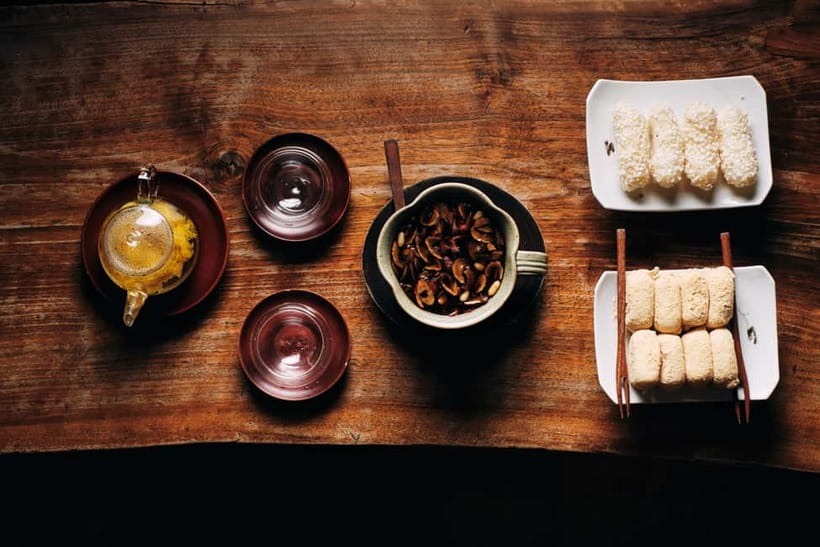
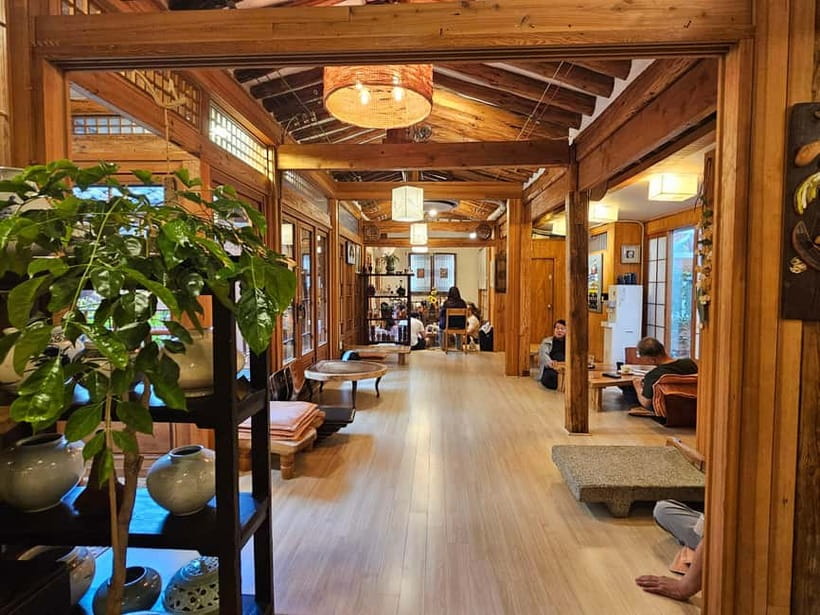
The final part takes about 40 minutes in Insadong. You continue walking and tasting, then settle into a traditional teahouse for freshly brewed herbal tea and a delicate rice cake.
This ending is one of the strongest features of the experience. After the noise and intensity of the market, a seated tea stop gives you time to talk with the guide and think about what you have eaten. The tea selection can include traditional Korean options, and one guide recommended omija-cha, a tea made from magnolia berries, to a participant who later became a fan.
The grilled rice cake paired with traditional tea is another worthwhile contrast. Rice cake appears earlier in the spicy tteokbokki, but here it is treated differently, with a grilled texture and a calmer pairing. The rice cake served with tea is delicate and sweet, making the final stop feel more like a proper close than another rushed sample.
You finish in Insadong, a convenient area for continuing your day. The tour does not include onward transportation, but the neighborhood gives you a useful base for more walking, shopping, or finding another café. One guide even helped arrange a taxi for a participant, though that should be viewed as personal assistance rather than a guaranteed service.
What the $71 price really covers
At $71 per person, this is not the cheapest way to eat in Seoul. You can buy individual market snacks for much less. The value comes from the range, the guide, the explanations, and the confidence you gain for the rest of your visit.
You are paying for at least eight food experiences, drinks, a three-hour guided route, and access to small stalls or eateries you might pass without understanding. If you tried to recreate the full spread alone, you would need to know which counters to choose, how much to order, and how to avoid filling up on the first dish.
The price works best for you if you are curious and want variety. It is less compelling if you already know Seoul’s food districts well or prefer to choose every meal independently. It also may not suit a very light eater, since the combination of market food, sweets, bread, rice cake, and tea can be surprisingly substantial.
The alcohol upgrade is separate, so check the booking choices if local drinks matter to you. Water and tea are included, but extra drinks are not part of the standard package.
The guides and the human side of the tour
The guide can shape this experience more than any single dish. The listed guides include Jae, Alex, Youla, Taeseong, Ji-yoon, Chris, Jenny, Chloe, and others. The strongest pattern in the feedback is not one particular personality, but the guides’ ability to explain food clearly, adjust to different tastes, and keep the group comfortable.
Jae is praised for excellent English, warmth, and passion. Taeseong is noted for food knowledge, humor, and explanations of Korean history and culture. Alex is often described as friendly and attentive, with useful suggestions for the rest of a Seoul stay. Youla is recognized for combining food information with history and conversation.
That variety matters because you are not only learning dish names. Guides explain how Korean food connects to celebrations, daily routines, old neighborhoods, and changing social habits. They also answer the practical questions you are likely to have later: what to order, how a dish is served, and which foods may suit your preferences.
The tour also works well for solo visitors. You have a built-in group for a few hours, and the guide can make a market feel less intimidating. Parents and older family members can enjoy it too, provided everyone is comfortable walking and standing in market settings.
Who should book, and who should think twice
Book this tour if you want a broad first taste of Seoul, prefer guidance over guesswork, or enjoy learning the story behind a dish. It is especially useful on your first day or two, when you want a clear introduction to Jongno, Gwangjang Market, Ikseondong, and Insadong.
It also suits solo visitors, couples, families with adventurous eaters, and anyone who wants to try foods outside the most familiar Korean barbecue choices. The route includes enough sweet food and tea to balance the spicy and savory dishes.
Think twice if you need wheelchair access, dislike walking in all weather, or have strict dietary limits. Vegetarian and other dietary options are supported, but you should provide details at booking and understand that the standard menu includes fish and other animal products.
Should you book this Seoul food tour?
I would book it if you want Seoul explained through food rather than simply photographed. The market tastings are generous, the neighborhood walk gives the meal context, and the tea house provides a calm finish that many food tours skip.
Bring an appetite, wear comfortable shoes, and tell the provider about dietary needs before you go. At $71, the tour is best viewed as a guided introduction to Korean eating, not just a collection of cheap snacks. For a first visit to Seoul, that is a fair trade.
FAQ
Where does the Seoul food tour meet?
Meet outside Jongno 5-ga Station, Exit 8, on Line 1, by the police station. The guide carries an orange umbrella.
Where does the tour finish?
The tour finishes in Insadong, or Insa-dong.
How long does the tour last?
The experience lasts three hours. The listed schedule includes about 80 minutes at Gwangjang Market, 20 minutes walking, 30 minutes in Ikseondong Hanok Village, and 40 minutes in Insadong.
What food is included?
Included tastings feature mung bean pancake with sweet onions, Korean dumplings, freshly prepared gimbap, slightly spicy tteokbokki, minced fish fillets with fish soup, a Korean honey snack, sweet and salty cream bread, grilled rice cake with traditional tea, and a Secret Dish.
Are drinks included?
Water and tea are included. Extra drinks are not included unless you select an available upgrade option.
Is the tour available for vegetarians?
Vegetarian and other dietary options are supported. Tell the activity provider about your needs when booking, since the standard food selection includes meat and fish.
What language is the tour conducted in?
The tour is conducted in English with a live English-speaking guide.
What should I bring?
Bring comfortable shoes. The tour takes place rain or shine, so weather-appropriate clothing is also sensible.
More Shopping Tours in Seoul
- Seoul: Nighttime Tour of Palace, Market, Naksan Park & More
★ 4.9 · 143 reviews - Fortress Night Hike & Snack at a Local Market
★ 5.0 · 112 reviews - Seoul: Gyeongbok Palace, N Tower, & Local Market City Tour
★ 4.9 · 107 reviews - Korean Cooking Class with Grocery Shopping at Seoul Local Market
★ 5.0 · 107 reviews
More Markets in Seoul
- Local Home Korean Cooking Class & Market Adventure in Seoul
★ 5.0 · 1,024 reviews - Seoul: Korean Cooking Class at a Local Home and Market Tour
★ 5.0 · 348 reviews - Cook 3 Authentic Korean Dishes with Local Market Tour
★ 5.0 · 231 reviews - Korean Palace and Market Tour in Seoul Including Insadong and Gyeongbokgung Palace
★ 4.0 · 174 reviews
Just added around Seoul
- Seoul: Sokcho beach, market, hot spring and Seorak Cable Car★ 4.8 · 5 reviews
- Seoul: The Biggest Sea-food Noryangjin Market Tour★ 4.3 · 30 reviews
- Seoul: Namdaemun Market Food Tour★ 4.9 · 34 reviews
- Seoul: Guided Street Food Tour at Namdaemun Market★ 5.0 · 10 reviews
- Seoul: Gwangjang Market Vegan & Vegetarian Food Tour★ 5.0 · 16 reviews
- Seoul: Gyeongbokgung Palace Tour & Lunch at Authentic Market★ 4.5 · 2 reviews
- Seoul Evening Tour:Gwangjang Market&Naksan Park&Eungbongsan★ 5.0 · 2 reviews
- Seoul Gwangjang Market Foody Walking Tour★ 4.1 · 7 reviews
Shopping Tours, compared.
Damnoen Saduak Market and Maeklong Railway Market
Read our review →
The Old Siam: Damnoen Saduak and Maeklong Railway Market
Read our review →
Train Market & Floating Market with Boat Ride
Read our review →
Ayutthaya & Ayothaya Floating Market Day Trip
Read our review →
Hanoi Cooking Class: Culture, Local Market & Meaning CSR Impact
Read our review →
5 Traditional Dishes Hanoi Cooking Class with Market Trip
Read our review →
Cooking Class and Lunch at a Tuscan Farmhouse with Local Market Tour from Florence
Read our review →
Cooking Class, Market & Thai Herbs Garden Tour
Read our review →Browse the lists this tour appears in