
Review · SEOUL
Seoul: The Biggest Sea-food Noryangjin Market Tour
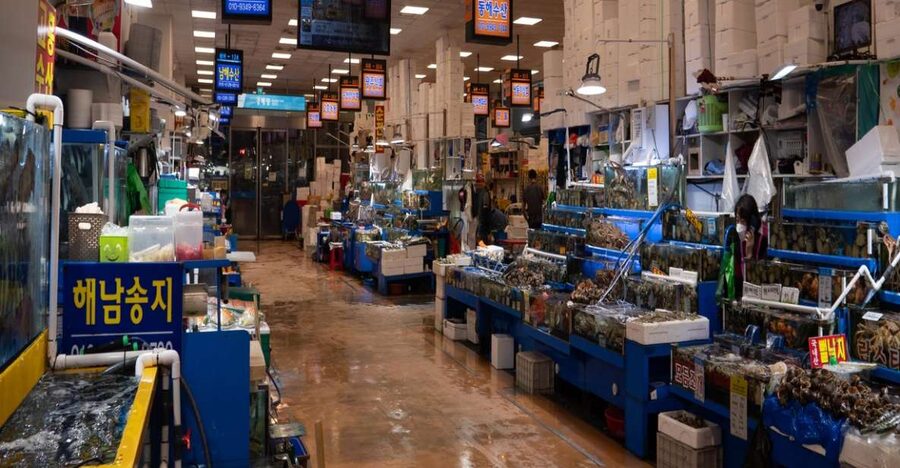
Noryangjin Market is not a polished food hall. It is a working seafood market where as much as 250 to 300 tons of products change hands each day. In two hours, a guide leads you through the stalls, explains unfamiliar fish and shellfish, and brings you to a trusted vendor for a meal of seasonal sashimi and spicy fish stew.
I like the way this tour turns a confusing market into a readable one, and I like the chance to watch fish being filleted before eating it. Guides such as Joy, Sally, Sophie, Sujin, and Steve have been praised for clear explanations and friendly help. The main consideration is the price: at $110 per person, this costs far more than simply buying a meal yourself.
Key things to know before you book
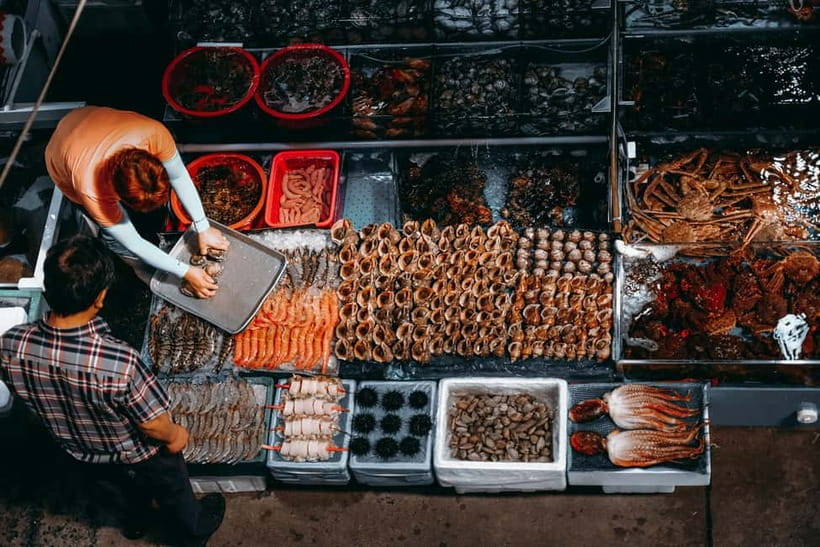
- A working market, not a staged attraction: You see live seafood, freshly prepared fish, dried products, and the practical routines of Korean market dining.
- A guide makes the difference: The English-speaking guide explains what you are looking at and how Koreans commonly prepare and eat it.
- The meal is included: Your food includes seasonal assorted sashimi and spicy fish stew, with live octopus sometimes part of the experience.
- Small groups help: The tour is limited to 10 people, so you can ask questions and stay close to the guide.
- Wear shoes you can clean: Market floors may be wet, so waterproof footwear or careful walking is sensible.
- The minimum group is four: If fewer than four people book, the tour can be canceled.
Noryangjin Market is Seoul’s seafood classroom
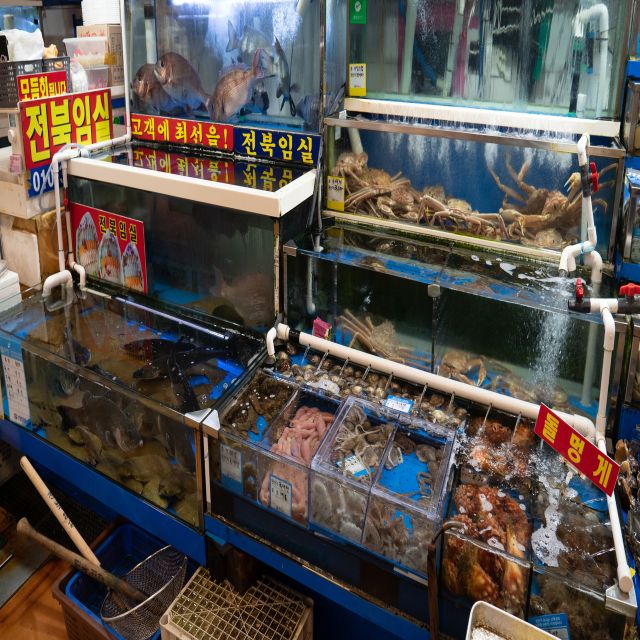
Start at Exit 7 of Noryangjin Station. Your exact meeting time and any updated meeting details are sent by email or WhatsApp, so check your messages before setting out.
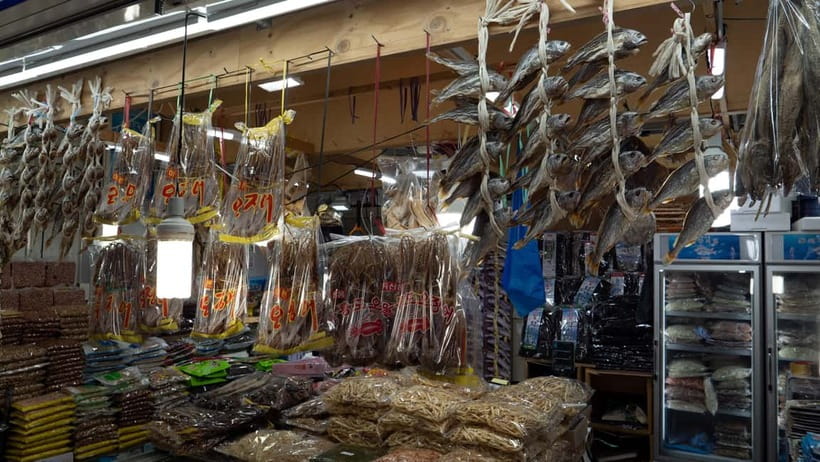
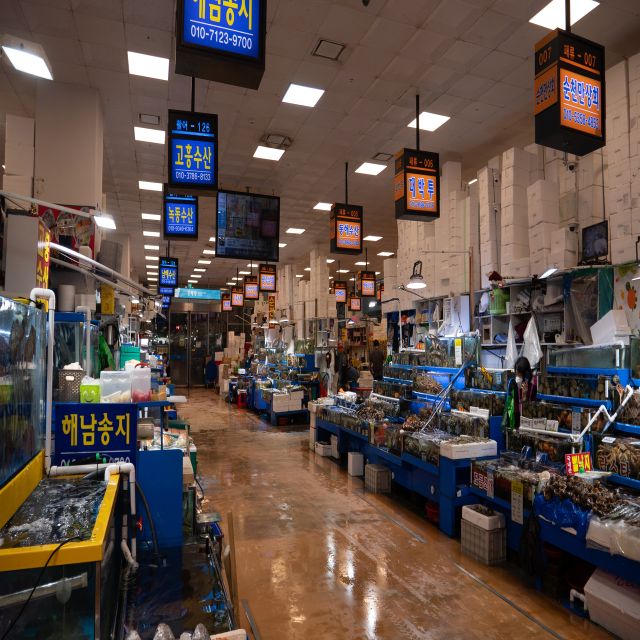
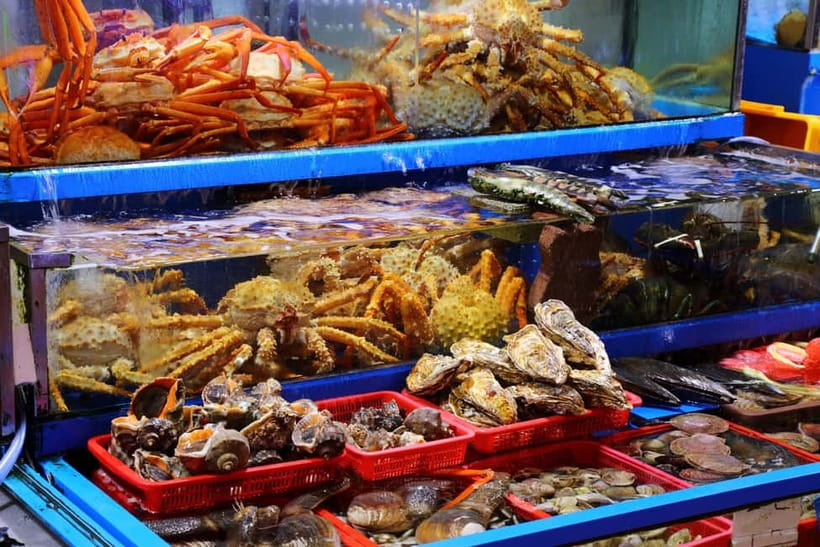
From the station, you enter one of Seoul’s best places to see the country’s close relationship with the sea. The point is not simply to count tanks or photograph unusual fish. Your guide explains which seafood Koreans eat often, which ingredients may be unfamiliar to an international visitor, and how local cooking habits developed.
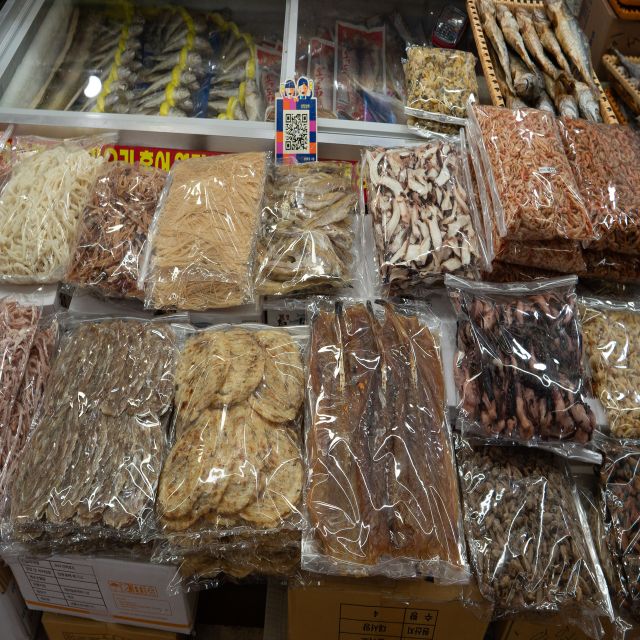
That context matters. On your own, it is easy to walk past a tank of shellfish without knowing what you are seeing, or to mistake a dried product for something intended to be eaten as-is. With a guide, the market becomes a lesson in ingredients, preparation, and daily food customs.
I especially like the scale of the place. Noryangjin handles roughly 250 to 300 tons of seafood a day, according to the tour information. That figure gives you a sense of why the market feels practical and busy rather than designed for sightseeing.
You should expect the normal sights and smells of a fish market: live seafood, freshly cleaned fish, wet surfaces, and stalls working at close range. This is part of the appeal, but it may not suit you if you want a quiet, tidy, or highly controlled food experience.
More food and drink tours in Seoul:
- Seoul Street Food Market Tour
★ 5.0 · 1,226 reviews - Seoul: Night Market Food Tour with Local Guide
★ 4.9 · 943 reviews - Seoul: Guided Food & Market Tour with 8+ Tastings
★ 4.9 · 342 reviews
What the two-hour route actually covers
The tour lasts about two hours, with roughly the first part spent walking through the market and learning how it works. A guide introduces the layout, points out different stalls, and explains seafood that you may not recognize.
Past participants have singled out guides including Joy, Sally, Sophie, Sujin, and Steve. The names are useful to know because the guide is central to the experience. This is not an audio tour or a simple escort to a restaurant. You depend on the guide to translate the market’s sights into something understandable.
Expect explanations about:
- Fish and shellfish commonly eaten in Korea
- Ingredients that are unusual outside Korea
- Traditional ways to prepare seafood
- Korean eating customs connected with sashimi and stew
- The role of the market in everyday food culture
The tour is designed for people who do not speak Korean, so you do not need to work out vendor conversations on your own. That is a real benefit. Buying seafood in a large Korean market can be intimidating when you do not know the names, prices, preparation styles, or dining process.
The route is short enough to fit into a busy Seoul schedule. Two hours gives you a useful introduction without taking an entire morning or afternoon. Still, do not expect an exhaustive tour of every section. The market is large, and the focus is on selected ingredients, explanations, and the meal.
Watching fish become lunch
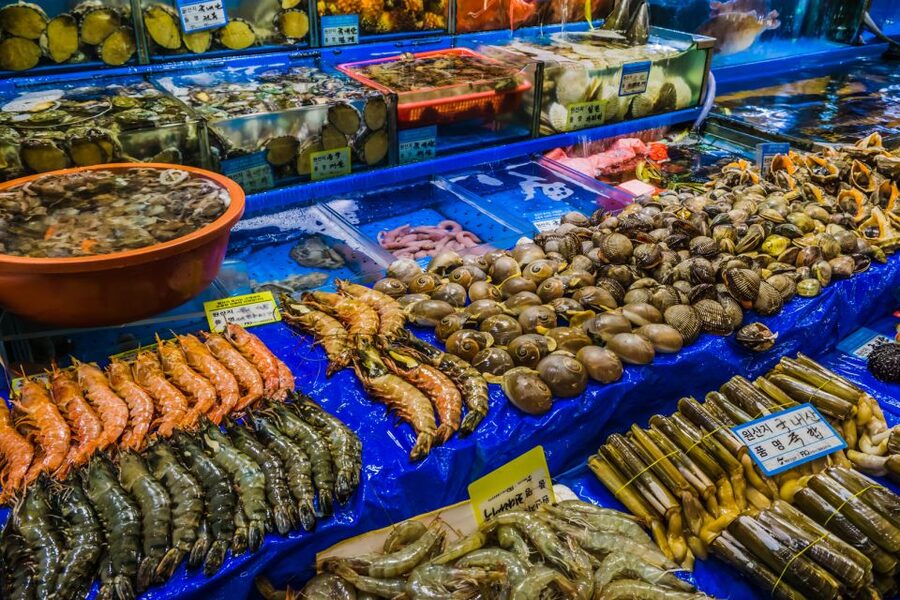
One of the strongest parts of the experience is the stop at a trusted seafood vendor. You can watch fresh fish being filleted and prepared before it reaches the table.
This is more than a cooking demonstration. You see the link between the market stall and the meal in front of you. The fish is not an abstract ingredient listed on a menu. You have just watched it being handled and turned into food.
The preparation takes place in a working market setting, so it will not have the presentation or pace of a formal cooking class. That is exactly why it is useful. You see the everyday process rather than a performance built for an audience.
For some people, the hands-on nature may be too much. The market can include seafood that is live or freshly killed, and the preparation is direct. If you are uncomfortable seeing fish handled this way, you should know that before booking.
A practical point: wear waterproof shoes if you have them. One participant specifically advised careful walking because market floors can be wet. You do not need special clothing, but shoes with a good grip will make the visit more comfortable.
Seasonal sashimi, spicy fish stew, and live octopus
The meal includes seasonal assorted sashimi and spicy fish stew. This combination gives you two different sides of Korean seafood dining.
The sashimi lets you taste the freshness of the market product with minimal cooking. The spicy fish stew offers a warmer, more strongly seasoned contrast. Together, they show how the same food culture can value clean, raw flavors and bold, comforting broth.
Live octopus may also be included or available as part of the meal. One account describes trying octopus that was still moving, which can be an exciting moment if you enjoy unusual food. It is also the clearest example of why you should tell the operator about allergies or food concerns ahead of time.
Your guide can explain how to eat the food in a Korean style. This may include serving customs, sauces, and the best way to combine items at the table. A guide even helped one participant find a sauce at a convenience store after the meal, a small but useful touch for anyone who wants to repeat the flavors later.
The meal is not a separate restaurant stop where you simply order whatever you like. The included food is seasonal sashimi and spicy fish stew, so the menu is shaped by the market and the day’s seafood. That is part of the value, but it also means this is not the best choice if you need a highly customized menu.
Tell the provider about allergies in advance. The information specifically asks you to do so, and seafood is the central feature of the tour. No insurance is included.
A few more market tours around Seoul worth a look
- Seoul: Palace, Temple and Market Guided Foodie Tour at Night
★ 4.9 · 750 reviews - Seoul Night Palace & Market Food Tour with Vehicle
★ 5.0 · 275 reviews - Seoul: Namdaemun Market Food Tour
★ 4.9 · 34 reviews - Seoul: Gwangjang Market Netflix Food Tour
★ 4.7 · 31 reviews
What you are paying for at $110
At $110 per person, this is an expensive seafood meal if you judge it only by the amount of food on the table. You can find less costly meals in Seoul, and you can visit Noryangjin Market without joining a tour.
The price makes more sense when you consider the service around the meal. You get an English-speaking local guide, a structured walk through a large market, explanations of Korean seafood customs, a vendor visit, fish preparation, and the included meal. You are paying for access, translation, guidance, and confidence as much as for sashimi and stew.
I would see this as a value purchase for a first visit to Seoul, especially if you are curious about Korean food but do not feel ready to handle the market alone. The guide helps you understand what you are seeing and removes much of the uncertainty around ordering.
I would not recommend it to someone who already speaks Korean, knows Noryangjin well, and is comfortable negotiating a meal independently. In that case, the tour’s main advantage may not justify the cost.
The small-group limit of 10 helps protect the experience. You are less likely to lose the guide in the market, and it is easier to ask about a strange-looking fish or preparation method. A group of fewer than four can lead to cancellation, though, so keep that condition in mind when planning around fixed dates.
The guides shape the experience
The strongest pattern in the guide feedback is personal attention. Joy is described as friendly and entertaining, with strong explanations about the market and Korean food. Sally is noted for kindness and clear facts about the seafood. Sophie is praised for making the market feel accessible and for choosing an excellent meal.
Sujin is associated with a highly informative visit, while Steve is remembered for good communication and personality. These details suggest that the experience depends heavily on the individual guide, as any small-group walking tour does.
That is not a criticism. It is a reason to value the format. The guide is the bridge between you and a market that can otherwise feel hard to read. A warm, capable guide can answer the small questions that make a meal easier: what to try, how to eat it, and what a particular ingredient means in Korean cooking.
The tour is offered in English. It is specifically intended for international visitors, including people who do not speak Korean. If you want a market visit with cultural explanation rather than a simple food stop, this is the right format.
Who will enjoy this market tour most
I would recommend it to you if:
- You want to understand Korean seafood rather than just eat it
- You are curious about unfamiliar fish, shellfish, or live octopus
- You are visiting Noryangjin for the first time
- You prefer a small group to a large bus tour
- You want a meal arranged for you after the market walk
- You do not speak Korean and want help dealing with vendors
- You enjoy seeing food prepared in a direct, traditional setting
It is less suitable if you dislike raw seafood, need a strictly predictable menu, or feel uneasy around live animals and fish preparation. It may also feel overpriced if your main goal is simply to eat sashimi.
The tour is wheelchair accessible, which makes it a practical option for people who need that feature. Still, a wet market environment can have tight working areas and slippery surfaces, so it is sensible to ask the operator for current meeting and access details before you go.
Timing, cancellation, and meeting details
The meeting point is Exit 7 of Noryangjin Station. The provider sends the meetup time and related details by email or WhatsApp, so confirm those messages rather than relying only on a general booking page.
You can cancel up to 24 hours before the tour for a full refund. A same-day cancellation or no-show receives no refund. Weekend and holiday reservations cannot be confirmed, so build in flexibility if your Seoul schedule includes those dates.
The operator also uses a minimum of four participants. If fewer than four people are booked, the tour may be canceled, with notice sent by WhatsApp. You can reserve now and pay later, which helps if you are still arranging several Seoul activities.
My call: book it for the explanation, not just the food
I would book this tour if Noryangjin feels exciting but slightly intimidating. The combination of a working market, English explanations, fish preparation, and a seasonal meal gives you a clear introduction to Korean seafood culture in a short time.
I would skip it if you are already comfortable ordering at Korean markets or if $110 feels too high for a guided meal. You can visit the market independently, but you will give up the cultural background and the help of a guide such as Joy, Sally, Sophie, Sujin, or Steve.
For most first-time visitors who want more than a quick photograph and a plate of sashimi, the tour earns its price through guidance and context. Just arrive ready for wet floors, direct seafood preparation, and food that may be more adventurous than a standard restaurant lunch.
FAQ
Where does the Noryangjin Market tour meet?
The meeting point is Exit 7 of Noryangjin Station. The provider sends the meeting time and any updated details by email or WhatsApp.
How long does the tour last?
The tour lasts two hours.
What language is the tour offered in?
The tour is conducted in English with a live guide.
What food is included?
The included meal consists of seasonal assorted sashimi and spicy fish stew.
Can I try live octopus?
Live octopus has been part of the dining experience described for this tour, but the exact food selection may vary. Ask the provider if this is important to you.
Is the tour suitable for wheelchair users?
The activity is listed as wheelchair accessible.
What happens if there are fewer than four participants?
If fewer than four people join, the tour may be canceled. Notice is sent by WhatsApp.
Can I cancel for a refund?
You can cancel up to 24 hours in advance for a full refund. There is no refund for a no-show or cancellation on the day of the tour.
More Shopping Tours in Seoul
- Seoul: Nighttime Tour of Palace, Market, Naksan Park & More
★ 4.9 · 143 reviews - Fortress Night Hike & Snack at a Local Market
★ 5.0 · 112 reviews - Seoul: Gyeongbok Palace, N Tower, & Local Market City Tour
★ 4.9 · 107 reviews - Korean Cooking Class with Grocery Shopping at Seoul Local Market
★ 5.0 · 107 reviews
More Markets in Seoul
- Local Home Korean Cooking Class & Market Adventure in Seoul
★ 5.0 · 1,024 reviews - Seoul: Korean Cooking Class at a Local Home and Market Tour
★ 5.0 · 348 reviews - Cook 3 Authentic Korean Dishes with Local Market Tour
★ 5.0 · 231 reviews - Korean Palace and Market Tour in Seoul Including Insadong and Gyeongbokgung Palace
★ 4.0 · 174 reviews
Just added around Seoul
- Seoul: Sokcho beach, market, hot spring and Seorak Cable Car★ 4.8 · 5 reviews
- Seoul: Namdaemun Market Food Tour★ 4.9 · 34 reviews
- Seoul: Guided Street Food Tour at Namdaemun Market★ 5.0 · 10 reviews
- Seoul: Gwangjang Market Vegan & Vegetarian Food Tour★ 5.0 · 16 reviews
- Seoul: Gyeongbokgung Palace Tour & Lunch at Authentic Market★ 4.5 · 2 reviews
- Seoul Evening Tour:Gwangjang Market&Naksan Park&Eungbongsan★ 5.0 · 2 reviews
- Seoul Gwangjang Market Foody Walking Tour★ 4.1 · 7 reviews
- Seoul: Fearless Foodie Gwangjang Market Food Adventure★ 5.0 · 10 reviews
Shopping Tours, compared.
Damnoen Saduak Market and Maeklong Railway Market
Read our review →
The Old Siam: Damnoen Saduak and Maeklong Railway Market
Read our review →
Train Market & Floating Market with Boat Ride
Read our review →
Ayutthaya & Ayothaya Floating Market Day Trip
Read our review →
Hanoi Cooking Class: Culture, Local Market & Meaning CSR Impact
Read our review →
5 Traditional Dishes Hanoi Cooking Class with Market Trip
Read our review →
Cooking Class and Lunch at a Tuscan Farmhouse with Local Market Tour from Florence
Read our review →
Cooking Class, Market & Thai Herbs Garden Tour
Read our review →Browse the lists this tour appears in