
Review · KATHMANDU
Half Day Cooking Class in Thamel with Local Market Visit
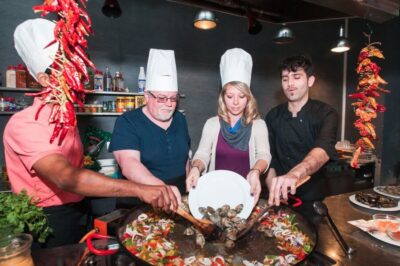
The best part of this Thamel cooking class is that you do not simply watch a chef work. You visit a local market, handle the ingredients, and cook four dishes yourself, eating each course while it is still hot. The class covers Nepali and Newari food, spices, and everyday cooking methods in a friendly, hands-on setting.
I like the choice of three four-dish menus, since you get some control over what you cook. I also like the relaxed approach to chili: add plenty if you enjoy heat, or leave it out if you do not. The main point to check is the market visit. One Saturday morning class did not include it, so that part may depend on the day and schedule. Spices bought at the market may also cost more than expected.
Key points to know
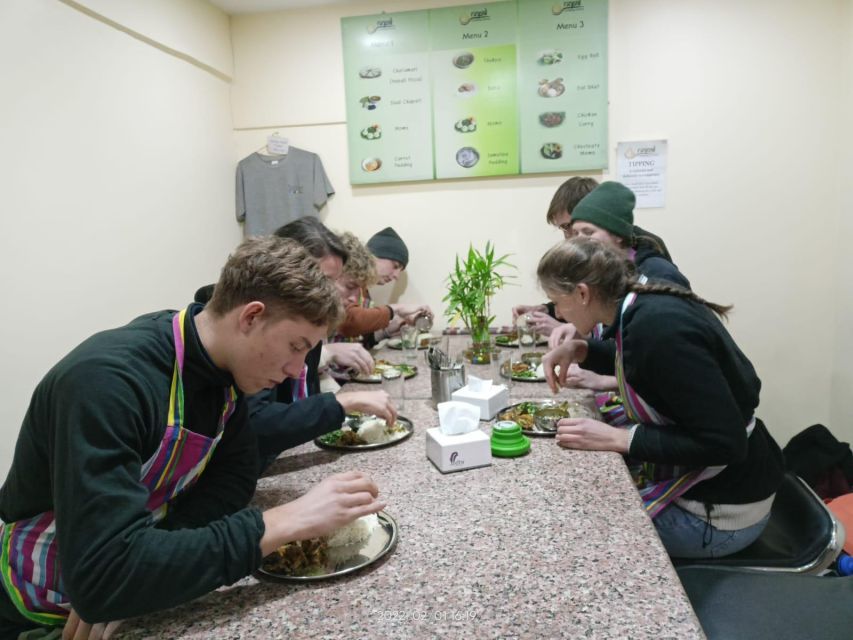
- Four courses, cooked and eaten in stages: You prepare one dish, eat it fresh, then move to the next.
- Momos are included on every menu: You will not miss Nepal’s best-known dumpling.
- Three menus offer useful choice: Some individual dishes can also be adjusted or exchanged.
- Small groups keep the class practical: The maximum is eight people, with an English-speaking instructor.
- Market access may vary: The local market visit is planned into the experience, but it was missed on one Saturday morning session.
- $21 is strong value for a full meal: Ingredients, equipment, tea, water, instruction, and the food you cook are included.
A Thamel cooking class that puts you to work
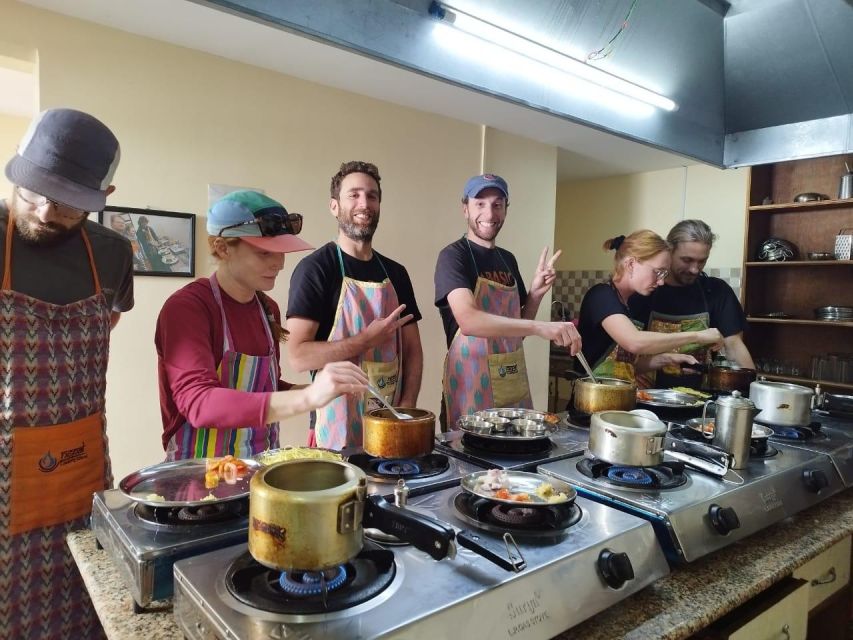
This three-hour experience begins in Thamel, Kathmandu’s main visitor district, with a walk to a local market for ingredients. The market stop gives the class a useful starting point. Instead of treating Nepali cooking as a list of unfamiliar recipes, you see the produce and spices before they reach the kitchen.
That matters because Nepali food is shaped by small choices: how much spice goes into a dish, when an ingredient is added, and how long something cooks. The class introduces those points in a practical way rather than leaving you with a recipe sheet and a quick demonstration.
The format is limited to eight participants. That is a sensible size for a cooking lesson. You should have enough room to work, and the instructor can correct a technique or answer a question without trying to manage a large crowd.
The experience is offered at 9 am, 1:30 pm, and 4:30 pm. The morning class may suit you if you want the rest of the day free. The afternoon and evening options work well if you have a busy sightseeing schedule or prefer to make cooking your main meal later in the day.
More produce and farmers markets in the world:
- Hanoi Cooking Class: Culture, Local Market & Meaning CSR Impact
★ 5.0 · 5,147 reviews - Cooking Class and Lunch at a Tuscan Farmhouse with Local Market Tour from Florence
★ 5.0 · 4,831 reviews - Cooking Class Hoi An:Local Market, Basket Boat, Fishing & Cooking
★ 5.0 · 3,660 reviews
Starting at the market with Nepali ingredients
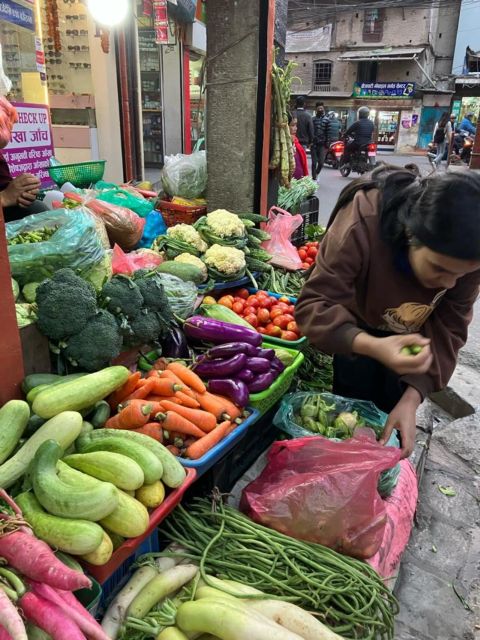
The local market visit is one of the more useful parts of the plan. You get a chance to see the ingredients in their everyday setting and learn what goes into the dishes before cooking begins. It also gives the instructor a natural way to explain spices and food customs.
Keep your expectations practical. This is not presented as a long market tour or a separate food walk. It is an ingredient-shopping stop connected to the cooking class, so the length and detail may be modest.
You should also confirm the market portion when you arrive. A Saturday morning group did not visit the market, and the reason was unclear. The class can still work without it, but the market adds local context and helps make the experience feel more than a standard kitchen lesson.
If you buy spices there, check the price before agreeing. One account found them expensive. That does not mean the spices are poor, but you should treat shopping as optional rather than part of the value of the $21 class.
Three menus, four dishes, and plenty of momos
You choose from three different menus, each with four traditional dishes. The exact dishes are not specified in the available information, so you should check the menu options when booking or at the start of the session.
The useful detail is that the food is not fixed in a rigid way. Individual dishes may be switched or adjusted within the menu choices. That makes the class easier to enjoy if one ingredient does not suit you or if you have already eaten a similar dish elsewhere in Nepal.
Momos appear on every menu. That is a smart choice. These filled dumplings are among Nepal’s most familiar foods, and making them gives you a clear cooking task involving dough, filling, folding, and steaming or cooking. The class information does not specify the exact filling or cooking method, so do not assume every session uses the same recipe.
The remaining dishes are traditional Nepali and Newari preparations. Newari cooking comes from the Kathmandu Valley and is known for distinctive spice combinations and a broad range of small dishes. This class gives you a short introduction rather than a full survey, but four courses offer more range than a single-recipe workshop.
Cooking one course at a time
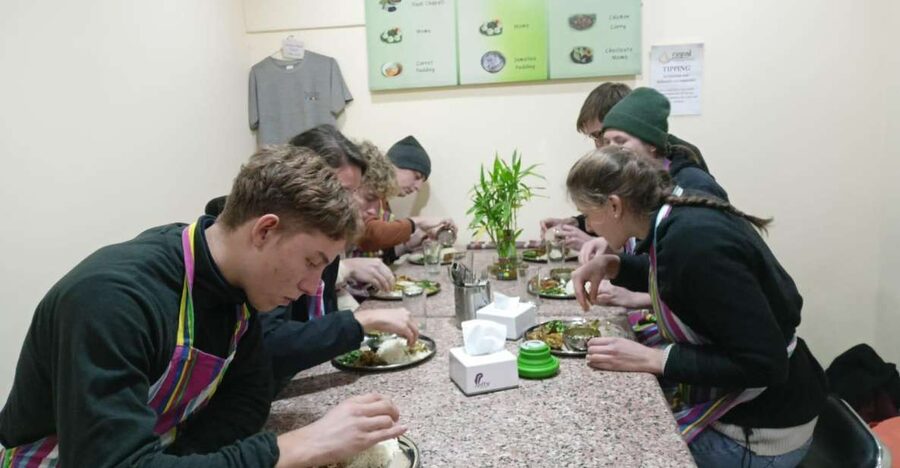
The teaching method is simple and effective. The chef takes you through the process step by step, then you cook one course and eat it before moving on. Your food stays fresh and hot, and you get a clear sense of how each dish tastes when it is finished.
I prefer this format to cooking everything at once and sitting down to a large meal at the end. You can focus on one technique at a time, ask questions while the dish is in progress, and notice how the flavors change from course to course.
You also control the heat. If you like chili, you can add more. If spicy food is not your thing, you can use little or none. That flexibility is important because Nepali food can be quite different from one kitchen to another, and a class should teach you how to adjust a recipe rather than force one level of heat on everyone.
The class is suited to beginners because the instructor handles the process step by step. You do not need advanced cooking skills or a special set of tools. The school provides the equipment and ingredients.
More market cooking classes in the world:
- 5 Traditional Dishes Hanoi Cooking Class with Market Trip
★ 5.0 · 4,890 reviews - Chiang Mai: Cooking Class, Market & Thai Herbs Garden Tour
★ 4.9 · 4,824 reviews - Chiang Mai: Authentic Cooking Class with Market & Farm Visit
★ 4.9 · 4,546 reviews - Chef Guided Food Tour of Pike Place Market
★ 5.0 · 3,733 reviews
What the atmosphere is likely to feel like
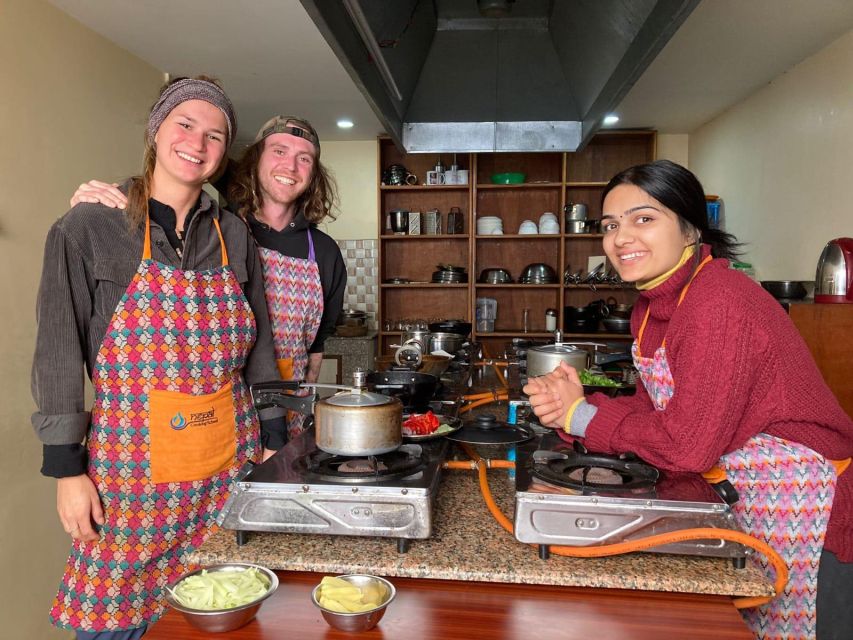
The strongest pattern in the feedback is the friendly, personal teaching style. One participant described feeling welcome from the first minute, with staff explaining the recipes patiently and keeping the session relaxed. Another described a family of cooks who grow their own spices.
Those details suggest a small, informal class rather than a formal culinary school with strict technique drills. That is good news if you want conversation, tasting, and help at the stove. It may be less suitable if you are looking for professional-level knife work, advanced pastry skills, or a certificate.
The English-speaking instructor explains the food and cooking methods in English. Since the class is limited to eight, you can ask about ingredients, spice levels, and menu changes as you go.
The welcome also seems to work for solo participants. A person attending alone found the format comfortable and well organized. If you are traveling without companions, a shared class gives you a natural social setting without the cost of booking a private lesson.
Eating the food you make
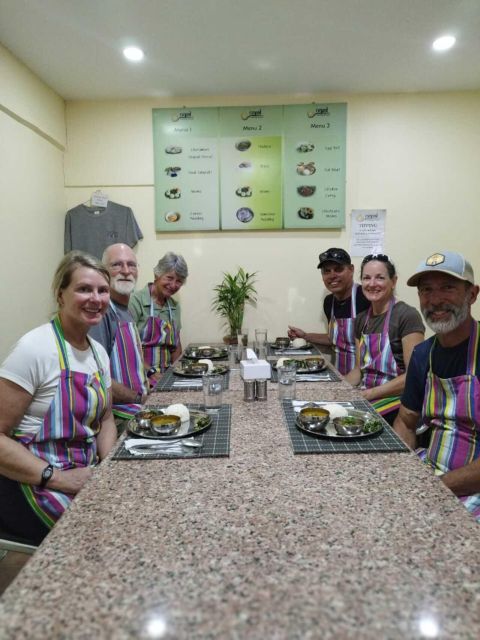
Come hungry. You receive four courses and eat your own work as you go, with masala tea and drinking water included.
This is more than a tasting portion. The description specifically encourages you to arrive ready for plenty of food, and the format is built around a full meal. Because you cook each course yourself, you also get a better idea of portion size, texture, and seasoning than you would from a restaurant tasting.
There is a small practical advantage here. If you dislike an ingredient or want less chili, you can adjust your own portion before it reaches the plate. The staff can suggest alternatives, but you should tell them about allergies or dietary restrictions before the class begins.
Alcohol is not included. That is not a serious drawback for a daytime cooking lesson, but it is worth knowing if you are comparing this with a restaurant-based food experience.
Is $21 a good price?
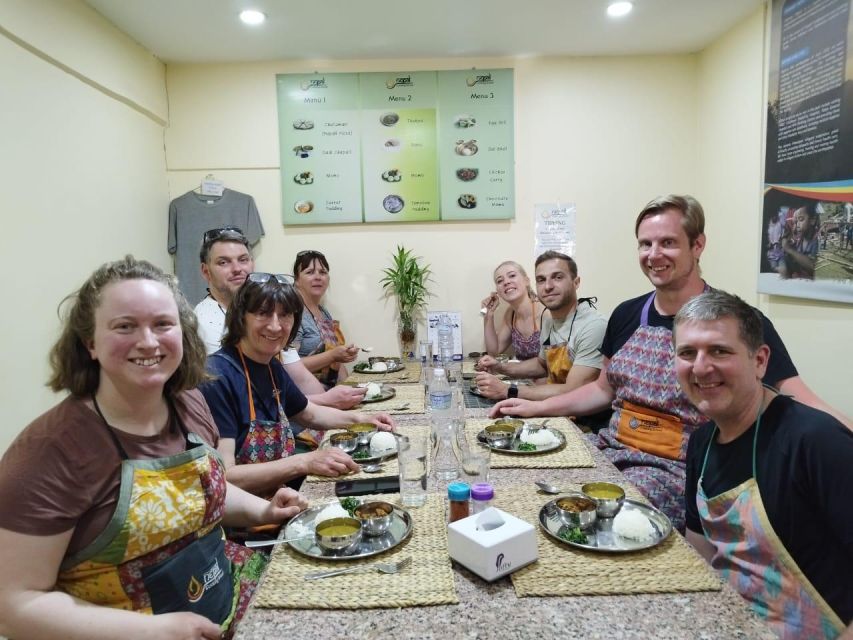
At $21 per person, the class offers a lot for a three-hour session. The price includes the cooking lesson, four courses, ingredients, kitchen equipment, the local market visit, masala tea, drinking water, and the meal you prepare.
The value is strongest if you want both an activity and lunch or dinner. A standard meal would cover only the eating, while this class adds instruction and a look at local ingredients. The small maximum group of eight also helps justify the price, since you are not paying for a large demonstration where you barely touch the food.
Pick-up is provided only inside Thamel and is done on foot. If you are staying outside the area, you need to make your own way there. Private transport is not included, so do not expect a vehicle transfer.
The price does not include alcohol or extra spice purchases. Keep those separate from your calculation.
Timing, meeting area, and what to bring
The available shifts are 9 am, 1:30 pm, and 4:30 pm, and the stated duration is three hours. The included details also describe the cooking portion as two to three hours, so allow the full three hours when planning your day.
The class takes place in the Bagmati Zone, with pick-up by walking inside Thamel. You should confirm the precise meeting point and start time before setting out, particularly if you are coming from another part of Kathmandu.
Bring a camera if you want photos of the market, ingredients, or finished dishes. You should also wear clothes that are comfortable for cooking, although no special equipment is listed as necessary.
The most important preparation is dietary. Tell the cooking school about allergies or restrictions before the lesson. The staff may be able to change ingredients or suggest alternatives, but the available information does not promise a separate menu for every diet.
Who will enjoy this most?
I would choose this class if you want a direct introduction to Nepali food without committing to a full culinary program. It suits first-time cooks, solo visitors, couples, and small groups who like to do things rather than watch.
It is especially useful if you want to learn about spice balance. You can taste the food as you go and adjust the chili to your own level. The repeated cooking and eating also make the methods easier to remember when you return home.
Families and groups with mixed food preferences may like the menu flexibility. Three menus and possible dish swaps give you more room than a single fixed recipe.
I would think twice if the market visit is the main reason you are booking. It may not happen in every session, particularly on some Saturday morning classes. I would also look elsewhere if you want advanced culinary training, a private chef, or transportation from outside Thamel.
Cancellation and booking flexibility
You can cancel up to 24 hours before the activity for a full refund. You can also reserve now and pay later, which helps if your Kathmandu schedule may change.
The class runs in small groups, with a maximum of eight participants. Check availability for the date and start time you want, since the three daily shifts may not all suit your plans.
Should you book the Nepal Cooking School class?
Book it if you want a friendly, affordable, hands-on meal and a useful introduction to Nepali and Newari cooking. The four-course format, adjustable spice level, momos on every menu, and small group size give it more substance than a quick demonstration.
The one caution is the market visit. Treat it as a welcome part of the plan, not the sole reason to book, since it was missed during at least one Saturday morning session. At $21, the cooking, food, tea, equipment, and instruction still make this a strong choice for most people staying in or near Thamel.
FAQ
How long does the cooking class last?
The experience lasts three hours. The cooking portion is also described as lasting two to three hours.
Where does the class take place?
The class takes place in the Bagmati Zone of Nepal, with walking pick-up available inside Thamel.
How much does the experience cost?
The price is $21 per person.
What time does the class start?
There are three daily shifts: 9 am, 1:30 pm, and 4:30 pm. You should check availability for your preferred date and time.
How many people can join the class?
The class is a small group with a maximum of eight participants.
Is the instructor available in English?
Yes. The cooking instructor teaches in English.
How many dishes will I cook?
You will cook four traditional Nepali and Newari dishes as part of a four-course meal.
Are momos included?
Yes. Momos are included on each of the three menu options.
Are ingredients and cooking equipment provided?
Yes. All ingredients and cooking equipment are included.
Is the local market visit guaranteed?
The local market visit is included in the activity details, but one Saturday morning session did not include it. You should confirm this part when you attend.
What food and drinks are included?
You taste your own creations and receive masala tea and drinking water. Alcoholic beverages are not included.
Can I adjust the spice level?
Yes. You can add more or less chili according to your taste, including using little or none.
Is transportation included from outside Thamel?
No. Walking pick-up is available inside Thamel, but private transportation and pick-up outside the Thamel area are not included.
Can I cancel for a full refund?
Yes. You can cancel up to 24 hours in advance for a full refund.
Do I need previous cooking experience?
No specific cooking experience or prerequisite is listed. The chef takes you through the process step by step.
More Markets in the world
- Bangkok: Damnoen Saduak Market and Maeklong Railway Market
★ 4.5 · 26,723 reviews - The Old Siam: Damnoen Saduak and Maeklong Railway Market
★ 4.5 · 10,992 reviews - Bangkok: Train Market & Floating Market with Boat Ride
★ 4.7 · 9,547 reviews - From Bangkok: Ayutthaya & Ayothaya Floating Market Day Trip
★ 4.7 · 6,084 reviews
More Cooking Classes in the world
- Barcelona: Paella Cooking Experience & Boqueria Market Tour
★ 4.8 · 3,661 reviews - Hoi An Cooking Class(Market,BasketBoat Crabfishing&Cooking Class)
★ 5.0 · 3,386 reviews - Phuket Thai Cooking Class with Market Tour Option
★ 5.0 · 2,665 reviews - Barcelona Paella Cooking Class with Market Visit, Tapas & Sangria
★ 5.0 · 2,531 reviews
Just added around the world
- Three-Hour Private Chengdu Tea Wholesale Market Tour★ 5.0 · 4 reviews
- Half-day Dandan Noodles Cooking Class with a Local Market Visit★ 5.0 · 8 reviews
- Chania: Old Town, Public Market, Hill of Prophet Elias, Agia Triada★ 5.0 · 35 reviews
- Moroccan Cooking Class with a Local Family & Market Visit★ 5.0 · 16 reviews
- Chania Old Town, Public Market and Chrisopigi Monastery Tour★ 4.5 · 6 reviews
- 3-Hour Herbal Wholesale TCM Market and a Local Wet Market Tour★ 5.0 · 4 reviews
- Food Tasting & Market Shopping: Private Guided Tour in PORT LOUIS★ 4.5 · 9 reviews
- Charleston International Sweet Treats & Historic City Market Tour★ 5.0 · 22 reviews
Market Cooking Classes, compared.
Hanoi Cooking Class: Culture, Local Market & Meaning CSR Impact
Read our review →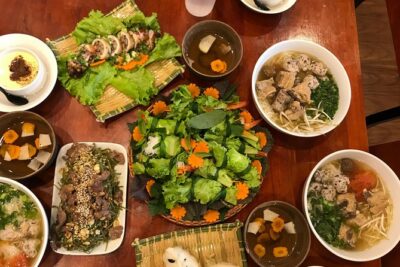
5 Traditional Dishes Hanoi Cooking Class with Market Trip
Read our review →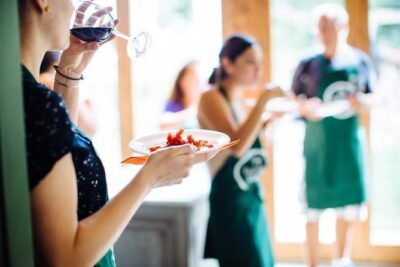
Cooking Class and Lunch at a Tuscan Farmhouse with Local Market Tour from Florence
Read our review →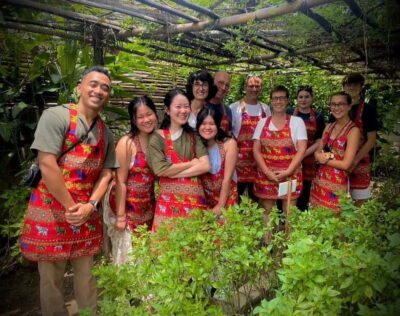
Cooking Class, Market & Thai Herbs Garden Tour
Read our review →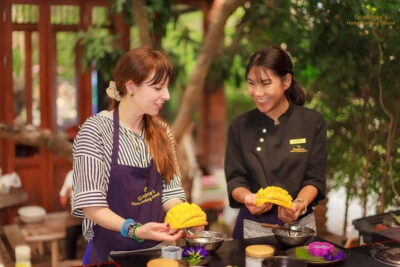
Authentic Cooking Class with Market & Farm Visit
Read our review →
Paella Cooking Experience & Boqueria Market Tour
Read our review →
Cooking Class Hoi An:Local Market, Basket Boat, Fishing & Cooking
Read our review →Browse the lists this tour appears in