
Review · KATHMANDU
From Bazaar to Hippie Hub: Ason & Freak Street in Kathmandu
Kathmandu’s story comes into focus when you walk from tourist-friendly Thamel into the working markets of Asan, Indra Chowk, and Potey Bazaar, then finish on old Freak Street. This route moves from coffee shops and trekking stores to spice stalls, religious rituals, bead sellers, and the fading traces of the Hippie Trail.
I like the small group of five, which gives your English-speaking guide room to explain what you are seeing and point out side details you could easily miss. I also like the route’s contrast, especially the shift from the Annapurna Temple and Newar Muslim bead makers to the cafes of Freak Street. The main drawback is simple: this is a three-hour city walk with about two hours of movement, so comfortable shoes, water, and some tolerance for crowded streets are essential.
Key points to know before you book
- Start at Pumpernickel Bakery: Meet 15 minutes early in central Thamel, a practical place for coffee or breakfast before setting out.
- Keep the group tiny: With no more than five participants, you can ask questions and hear the guide’s explanations more easily.
- See Kathmandu’s working markets: Asan Bazaar, Indra Chowk, and Potey Bazaar show daily commerce rather than a polished sightseeing version of the city.
- Visit the Annapurna Temple: Learn why Annapurna, linked with grain and prosperity, matters to local worshippers.
- Walk through Freak Street: Jhochhen recalls Kathmandu’s 1960s and 1970s Hippie Trail, though today it is quieter and more modest.
- Plan for a true walking tour: Food, drinks, transport to Thamel, and personal purchases are not included.
Why this route gives you a useful first look at Kathmandu
Many first visits to Kathmandu begin in Thamel, where cafes, gear shops, restaurants, and narrow lanes make the city easy to approach. This tour does not leave you there. It uses Thamel as a starting point, then takes you into places where residents shop, worship, work, and pass through their day.
That change matters. Thamel is geared toward visitors, while Asan and Indra Chowk offer a closer look at Kathmandu’s trading life. You will see goods packed into small shops and market stalls, with spices, textiles, kitchenware, cosmetics, and household items competing for space. The route is not a quiet heritage walk. It is active, close-packed, and sometimes demanding.
The guide’s role is especially important here. A market can look like a blur of color and noise if you do not know what you are looking at. The strongest part of this experience is the explanation of local deities, rituals, communities, and customs. Direct feedback praises the guide’s clear explanations and the way the tour includes less obvious stops, which is useful if you want more than a list of famous sights.
The small group helps. Five people is a different experience from following a large flag through narrow streets. You can stop to ask why a shrine matters, how a certain item is used, or what makes one market distinct from the next. It also means the guide can keep the pace practical without turning every stop into a long lecture.
A few more market tours around the world worth a look
- Bangkok: Damnoen Saduak Market and Maeklong Railway Market
★ 4.5 · 26,723 reviews - The Old Siam: Damnoen Saduak and Maeklong Railway Market
★ 4.5 · 10,992 reviews - Bangkok: Train Market & Floating Market with Boat Ride
★ 4.7 · 9,547 reviews
Starting at Pumpernickel Bakery in Thamel
The meeting point is Pumpernickel Bakery, centrally located in Thamel. Your guide waits 15 minutes before the scheduled start with a sign reading Meeting Point, Amazing Kathmandu. That buffer is worth using, especially if you are new to the area or need breakfast before walking.
The bakery offers coffee, all-day breakfast, cakes, and options for gluten-free and vegan diets. Those purchases are not part of the tour, but the location makes an easy rendezvous. You will need to arrange your own transport to Thamel, so allow time for Kathmandu traffic and finding the bakery.
Thamel is a fitting opening scene. Its lanes are filled with shops, cafes, and colorful market activity, and it has long served as Kathmandu’s main base for international visitors. The tour begins in this familiar pocket, then gradually reveals the city beyond the visitor economy.
I would book an early start if possible, particularly during warmer weather. The supplied information does not set one fixed departure time, so check the available times when booking. Regardless of the hour, wear shoes suited to several hours on foot and carry water.
The 45-minute walk toward Asan Bazaar
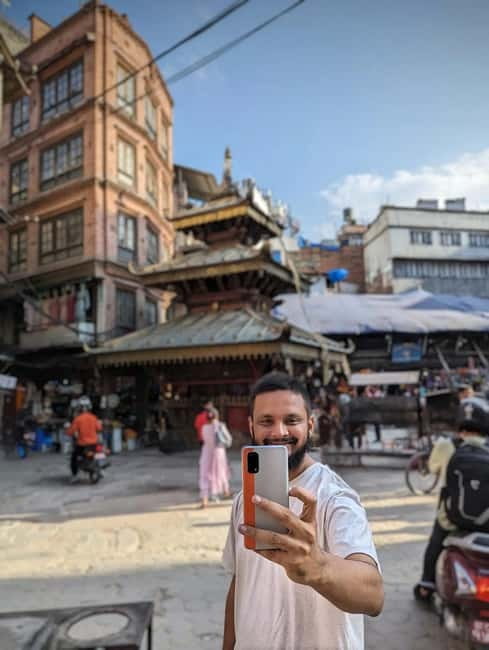
The first walking section lasts about 45 minutes. That is a substantial opening stretch, not a short transfer between attractions. You will move from Thamel toward Asan Bazaar, with the guide setting the historical and cultural context along the way.
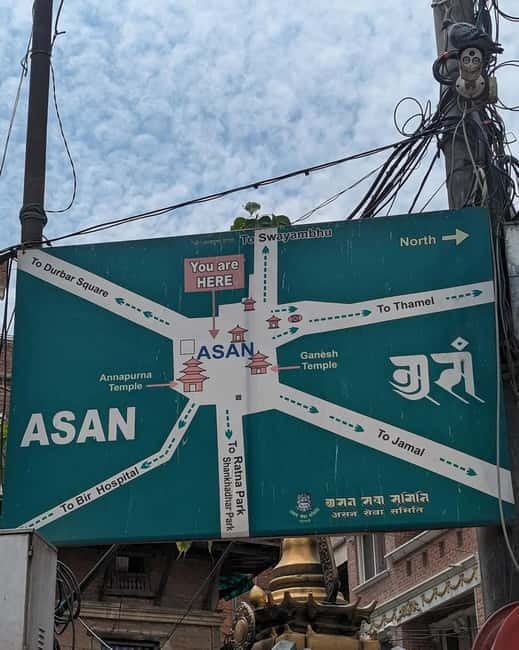
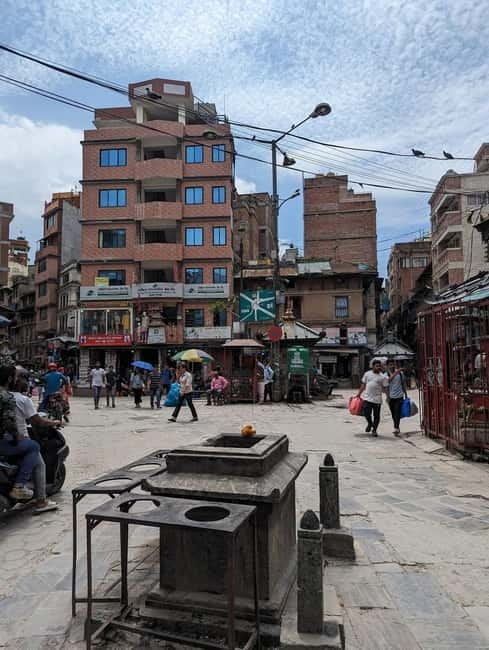
Asan is one of Kathmandu’s oldest and best-known market squares. Its appeal is not one grand building or a single photo stop. The square works as a living marketplace, where everyday trade and religious life occupy the same tight space.
Expect a busy mix of vendors and shoppers. The goods listed for this route include fragrant spices, bright textiles, shiny kitchenware, and ordinary household supplies. These details are valuable because they show how the city functions beyond its monuments. A market is also a place to understand what people buy, carry, wear, cook with, and use at home.
The practical drawback is the same feature that makes Asan interesting: it can feel crowded and intense. You may need to stay close to the guide and watch your footing. Keep your bag secure, avoid blocking shop entrances, and ask before photographing people or merchandise at close range.
Annapurna Temple and the meaning of prosperity
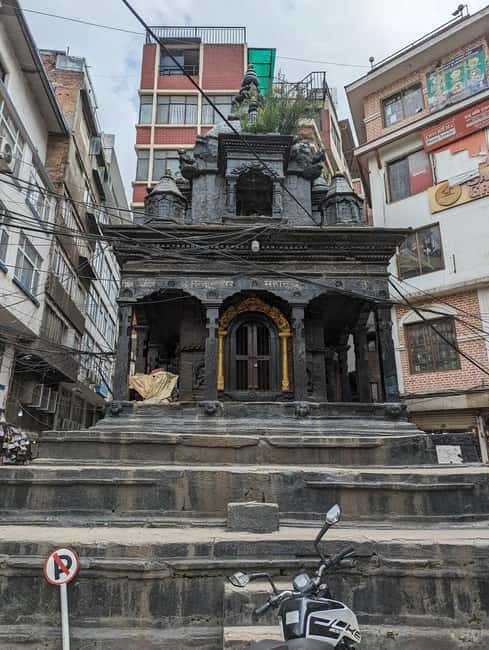
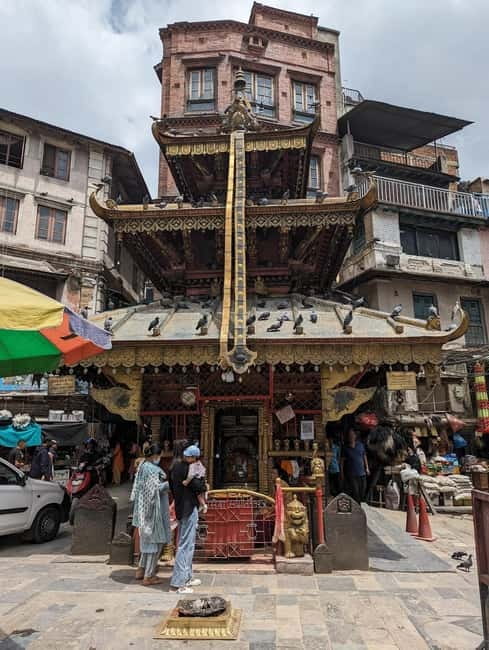
At Asan, the tour includes the Temple of Annapurna. Annapurna is revered as the goddess of grain and prosperity, and the guide explains her place in the local community. You may also witness spiritual rituals carried out by devotees.
This is an important pause in the route because it connects the market to religious life. Grain is not an abstract symbol here. It relates to food, household security, and the basic hopes that shape daily worship. The temple gives the market a second layer: Asan is not only a place to buy goods, but also a place where faith remains part of ordinary city life.
Take your cue from the guide and from worshippers. Photography is allowed on the tour, but that does not mean every moment should be photographed. Be especially careful around rituals and people who are praying. Modest, respectful behavior will make the visit more comfortable for everyone.
This stop also rewards questions. Ask about the deity, the rituals, and the way religious sites fit into the market area. Since the group is limited to five, you should have a reasonable chance to get an answer without holding up a crowd.
More shopping tours in the world:
- From Bangkok: Ayutthaya & Ayothaya Floating Market Day Trip
★ 4.7 · 6,084 reviews - Hanoi Cooking Class: Culture, Local Market & Meaning CSR Impact
★ 5.0 · 5,147 reviews - 5 Traditional Dishes Hanoi Cooking Class with Market Trip
★ 5.0 · 4,890 reviews - Cooking Class and Lunch at a Tuscan Farmhouse with Local Market Tour from Florence
★ 5.0 · 4,831 reviews
Indra Chowk and the craft of Potey Bazaar
From Asan, the route continues to Indra Chowk, another market square with a strong daily rhythm. The walking section is listed at about 30 minutes, giving you time to see how one commercial area leads into another.
The most distinctive stop here is Potey Bazaar. Newar Muslim artisans make and sell glass bead garlands called potey. These garlands are traditionally worn by married women in Nepal, so the items carry cultural meaning beyond their decorative appeal.
You will also find cosmetics and small household goods in the area. That mix is part of what makes the bazaar useful to see. It is neither a staged craft display nor a single-purpose souvenir stop. It is a place where a specific tradition exists beside ordinary shopping.
Potey Bazaar also presents Kathmandu as a city shaped by more than one community. The bead work and the surrounding trade offer a practical way to learn about the city’s multicultural character. The guide can help you understand what you are seeing, rather than leaving you to guess whether an item is ornamental, religious, or part of daily dress.
If you are considering purchases, remember that personal expenses are not included. The tour price covers the guided walk, not beads, cosmetics, food, drinks, or other goods. Ask about prices and use normal market courtesy. You do not need to buy anything to appreciate the stop.
New Road and the change from old commerce to modern Kathmandu
The route then passes through New Road, where older traditions meet newer commercial influences. The walk from this section is listed at about 15 minutes, making it one of the shorter transitions in the program.
New Road helps you see that Kathmandu is not frozen in the past. Along this stretch, the city’s traditional markets give way to a more modern urban feel. The value lies in the contrast. You are not moving between isolated attractions; you are watching the character of the streets change as you walk.
This is also a useful point to notice the tour’s overall design. It links places that can seem unrelated on a map: a tourist district, a religious market, a bead bazaar, a modern shopping area, and an old counterculture lane. Together, they make a more complete picture of Kathmandu than a single monument visit would.
Do not expect long breaks at every location. The experience has a three-hour limit, and much of that time is spent walking. If you prefer a slow food tour with several tastings or extended shopping time, this may feel too brisk. If you like learning through movement, the pace should suit you.
Freak Street and Kathmandu’s Hippie Trail past
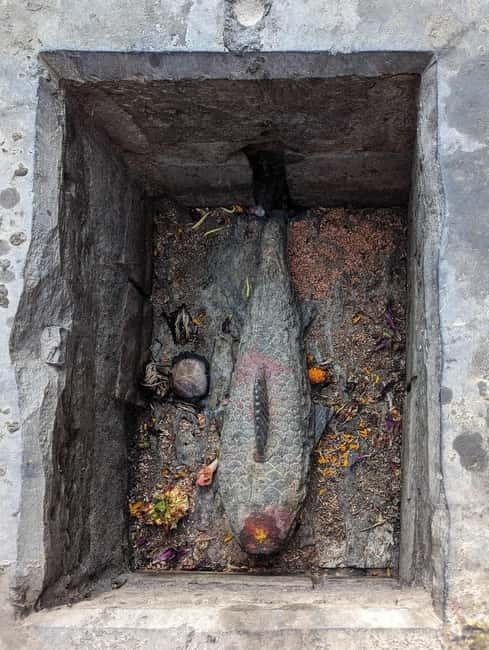
The final major area is Jhochhen, better known as Freak Street. The route reaches it after passing through New Road, and the final walking section is listed at about 30 minutes before returning to Pumpernickel Bakery.
Freak Street became a key stop on the Hippie Trail in the 1960s and 1970s. People came to Kathmandu in search of alternative lifestyles, spiritual practice, artistic ideas, and a different pace of life. The lane attracted well-known counterculture figures, including Jimi Hendrix, George Harrison, Cat Stevens, Joni Mitchell, and Allen Ginsberg. Members of the Rolling Stones were also rumored to have visited.
The guide explains how a government crackdown on drug use in the mid-1970s helped bring that period to an end. The point is not to treat Freak Street as a living 1960s theme park. Its importance lies in how that era left a mark on Kathmandu’s cultural identity.
Today, you can expect quaint cafes, small shops, and local character rather than a preserved hippie colony. That difference is useful to understand before you go. The past is present through stories, names, and atmosphere, but the lane has changed.
I like this ending because it adds a modern cultural chapter to the religious and commercial parts of the route. You begin with contemporary Thamel, pass through older markets and sacred spaces, and finish with a place shaped by international counterculture. Freak Street gives the tour a human story that extends beyond architecture.
What three hours and $15 really buy you
At $15 per person, this is priced as an accessible guided city walk. The value depends on what you want from a guide. If you only need directions between Asan, Indra Chowk, and Freak Street, you could walk those areas independently. If you want context about Annapurna, Potey bead garlands, Newar Muslim artisans, and the Hippie Trail, the fee is easier to justify.
The small group is a major part of that value. A maximum of five participants means the guide can explain details without shouting over a large crowd. It also supports the sort of unplanned questions and out-of-the-way stops that make a city walk feel personal.
The price does not include food or drinks, so budget for anything you buy at Pumpernickel Bakery or along the route. It also does not include transport to or from the start. The tour returns to Pumpernickel Bakery, which is helpful if you want to continue exploring Thamel afterward.
Free cancellation is available up to 24 hours before the activity for a full refund, and you can reserve while paying later. Those terms help if your Kathmandu schedule is still shifting, though you should confirm the available start time when booking.
Who will enjoy this Kathmandu walk most
I would choose this tour for a first day in Kathmandu, especially if you want to understand the city before visiting more formal sights. One direct booking comment calls it a strong first-day activity, and that makes sense: the route gives you orientation, cultural context, and an introduction to several neighborhoods in one outing.
It also suits you if you like markets, local religious traditions, urban history, and small-group guiding. The English-speaking guide can explain the meaning behind what you see, and the limited group size keeps the experience more conversational.
You may want something else if you dislike walking in crowded areas, want guaranteed quiet, or prefer a food-focused tour. The route covers several streets and markets, and some parts may feel noisy or hectic. Weather can vary, so prepare for changing conditions and carry water and a snack.
Respect is essential. Ask before taking close photographs, follow local customs, and avoid treating worshippers or artisans as scenery. That approach will make the tour better for you and for the people who live and work along the route.
Should you book From Bazaar to Hippie Hub?
Book it if you want a compact, affordable introduction to Kathmandu that goes beyond Thamel. The best reasons are the five-person limit, the clear focus on local markets and religious life, and the guide’s attention to less obvious details. The combination of Asan Bazaar, Annapurna Temple, Potey Bazaar, and Freak Street gives you several different sides of the city in three hours.
Skip it if you want a relaxed outing with little walking, included meals, or long shopping stops. For most first-time visitors who can manage two hours of walking and want useful cultural context, the $15 cost is fair. Start at Pumpernickel Bakery, wear good shoes, stay attentive in the markets, and let the route show you how Kathmandu changes from one street to the next.
FAQ
Where does the tour start?
The tour starts at Pumpernickel Bakery in Thamel, Kathmandu. Your guide will be there 15 minutes before the meeting time with an Amazing Kathmandu meeting sign.
How long does the tour last?
The tour lasts three hours. The listed walking sections total about two hours, with the remaining time used for stops and explanations.
How many people can join the group?
The group is limited to a maximum of five participants.
What language is the tour offered in?
The live guided tour is offered in English.
Are food, drinks, and transport included?
No. Food, drinks, transport to and from the starting point, and personal expenses are not included.
What should I bring?
Wear comfortable walking shoes, prepare for changing weather, and carry water and snacks for personal use. Photography is allowed, but you should respect privacy and local customs.
Just added around the world
- Three-Hour Private Chengdu Tea Wholesale Market Tour★ 5.0 · 4 reviews
- Half-day Dandan Noodles Cooking Class with a Local Market Visit★ 5.0 · 8 reviews
- Chania: Old Town, Public Market, Hill of Prophet Elias, Agia Triada★ 5.0 · 35 reviews
- Moroccan Cooking Class with a Local Family & Market Visit★ 5.0 · 16 reviews
- Chania Old Town, Public Market and Chrisopigi Monastery Tour★ 4.5 · 6 reviews
- 3-Hour Herbal Wholesale TCM Market and a Local Wet Market Tour★ 5.0 · 4 reviews
- Chania: Morning Bites and Market Delights Food Tour★ 5.0 · 11 reviews
- Food Tasting & Market Shopping: Private Guided Tour in PORT LOUIS★ 4.5 · 9 reviews
Shopping Tours, compared.
Damnoen Saduak Market and Maeklong Railway Market
Read our review →
The Old Siam: Damnoen Saduak and Maeklong Railway Market
Read our review →
Train Market & Floating Market with Boat Ride
Read our review →
Ayutthaya & Ayothaya Floating Market Day Trip
Read our review →
Hanoi Cooking Class: Culture, Local Market & Meaning CSR Impact
Read our review →
5 Traditional Dishes Hanoi Cooking Class with Market Trip
Read our review →
Cooking Class and Lunch at a Tuscan Farmhouse with Local Market Tour from Florence
Read our review →
Cooking Class, Market & Thai Herbs Garden Tour
Read our review →Browse the lists this tour appears in