
Review · SEOUL
Seoul: Authentic Korean Cooking Class and Market Tour
Seoul’s best food lessons often begin away from restaurant tables. This one starts at Sillim market, where Ann helps you choose seasonal produce and Korean seasonings before taking you to a local home. You then cook dishes you help select, share lunch, and finish with dessert and tea.
I like the personal scale, with no more than four participants, and the freedom to choose what you cook. I also like the setting: Ann’s mother welcomes you into a Korean house decorated with traditional hand-embroidered works. The main consideration is time. At 210 minutes, this is a half-day commitment, not a quick cooking demonstration.
Key points at a glance
- Start at Sillim Station: Meet inside the station at 10:30 a.m., beside Cafe Mignon and before the exits.
- Shop for the meal: Walk through a traditional local market and learn how ingredients and seasonings are used.
- Choose your Korean dishes: Cook options such as bulgogi, bibimbap, and kimchi pancakes with Ann.
- Cook in a family home: The class takes place in a Korean house where you can see traditional embroidered works and meet Ann’s mother.
- Finish with dessert and tea: Make a traditional sweet, then sit down for a quiet tea-time.
- Keep the group small: The limit is four participants, which suits anyone who wants hands-on guidance and room for questions.
Why this Seoul cooking class feels personal
Many food classes show you a recipe, hand you a plate, and send you on your way. This experience connects the meal to the place where the ingredients are bought and the home where the food is prepared.
That connection matters. At the market, you are not simply passing stalls on the way to a kitchen. You shop for fresh produce and authentic seasonings, with Ann explaining ingredients and sharing cultural stories. You get a better sense of how Korean food is assembled before you start cooking.
The class also has a family touch. You cook at a Korean house filled with hand-embroidered works, and Ann’s mother is part of the welcome. That gives the visit a warmer feel than a standard commercial kitchen. You are seeing a domestic setting rather than a purpose-built classroom.
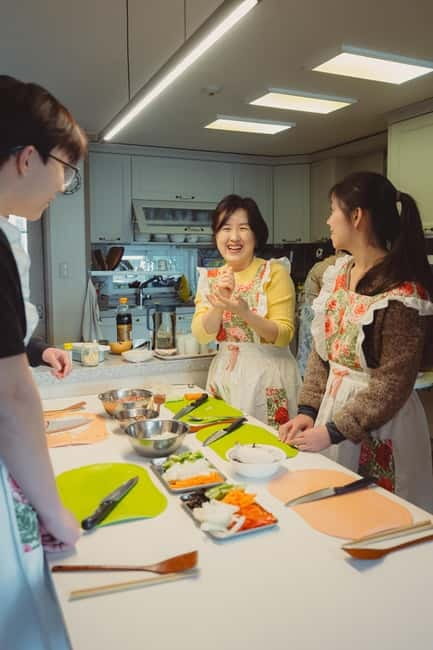
The small group size is another major advantage. With a maximum of four participants, you should have a better chance to take part in the chopping, mixing, seasoning, and cooking instead of watching someone else do the work. Ann is the English-speaking host, and the experience is designed for conversation as well as instruction.
More Market Cooking Classes in South Korea
- Local Home Korean Cooking Class & Market Adventure in Seoul
★ 5.0 · 1,024 reviews - Seoul: Korean Cooking Class at a Local Home and Market Tour
★ 5.0 · 348 reviews - Korean Cooking Class with Grocery Shopping at Seoul Local Market
★ 5.0 · 107 reviews
Meeting Ann at Sillim Station
Your meeting point is inside Sillim Station on Seoul Subway Line 2, station number 230. The meeting time is 10:30 a.m.
After passing through the ticket gates, stay inside the station and look for Cafe Mignon, a small take-out cafe. The meeting point is directly in front of it, before you go through any exit. Ann will be holding a Sobaan cooking sign.
This is a useful meeting arrangement because you do not need to hunt for a street address in an unfamiliar neighborhood. Still, Sillim is a busy Seoul station, so give yourself enough time to find the correct part of the concourse. The key detail is simple: do not leave through an exit before looking for the cafe.
Starting at a subway station also keeps the experience practical for a day in Seoul. You meet in a transport hub, then move into a neighborhood market and a local home. The route shifts from public city life to a more private family setting without requiring a long organized transfer.
Shopping for ingredients at a local market
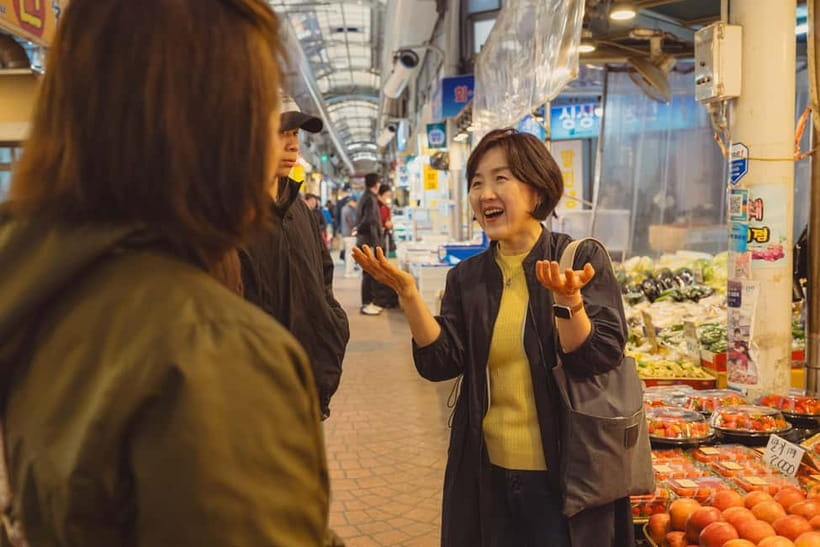
The first part of the experience is a guided walk through a traditional market near Sillim. You shop for the ingredients used in the class, including fresh produce and Korean seasonings.
This is where the experience gains much of its cultural value. Korean cooking depends on the balance of sauces, fermented ingredients, vegetables, meat, and texture. Seeing those items in a market gives you a clearer idea of what belongs in a Korean kitchen than a recipe card alone.
Ann also explains the stories and uses behind certain ingredients. You can expect stops where she points out typical foods and discusses their place in Korean food culture. The focus is not only on naming ingredients. It is also on learning how to pick groceries and understand the role each item plays in a dish.
The market portion should suit curious eaters who want context. You may enjoy it less if you prefer to get straight to the stove, since the walk and shopping take up part of the 210 minutes. In my view, that time is well used because it makes the cooking feel connected to everyday Seoul rather than staged for visitors.
The exact shopping list depends on the dishes selected. That is a strength for people who already have a favorite Korean meal in mind, but it also means you should not expect a fixed menu announced long in advance.
Choosing what to cook with Ann
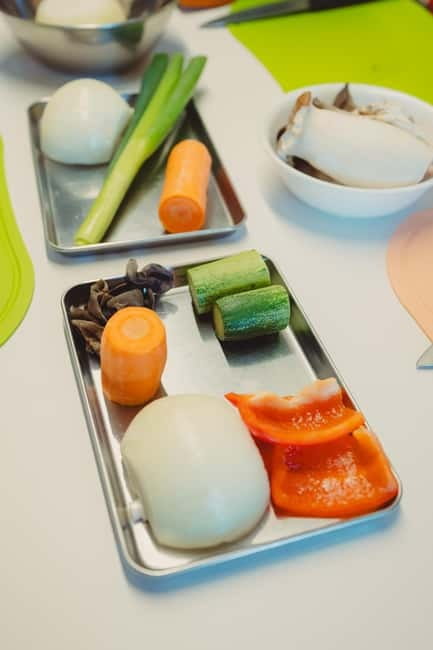
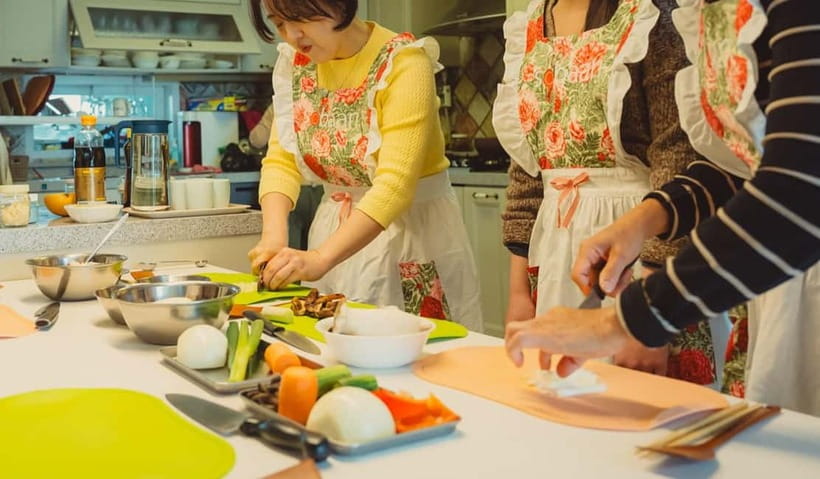
After the market, you head to the Korean house for the cooking lesson. The dishes can be chosen with your input, with examples including bulgogi, bibimbap, and kimchi pancakes.
This flexibility is one of the best features for mixed groups. One person may want to learn a familiar Korean favorite, while another may be more interested in a dish they have not tried before. You can tell Ann what interests you and take part in shaping the meal.
The class is not described as a formal professional cooking course, and that is probably the right way to approach it. You are there to learn traditional dishes in a local setting, not to earn a culinary certificate. Expect practical instruction, a relaxed pace, and plenty of attention to the food you are preparing.
The informal pace is important. You can ask questions as you work, and the small group gives you more opportunity to handle the ingredients yourself. The experience is especially suited to people who want to understand the process instead of merely watching a chef demonstrate it.
The choice of dishes also affects the meal. Three dishes have been prepared during one visit, so you may cook several items rather than focus on only one recipe. Since the final selection depends on your group, ask Ann about your preferences at the start.
More market cooking classes in Seoul:
- Hanoi Cooking Class: Culture, Local Market & Meaning CSR Impact
★ 5.0 · 5,147 reviews - 5 Traditional Dishes Hanoi Cooking Class with Market Trip
★ 5.0 · 4,890 reviews - Cooking Class and Lunch at a Tuscan Farmhouse with Local Market Tour from Florence
★ 5.0 · 4,831 reviews - Chiang Mai: Cooking Class, Market & Thai Herbs Garden Tour
★ 4.9 · 4,824 reviews
Cooking inside a Korean family home
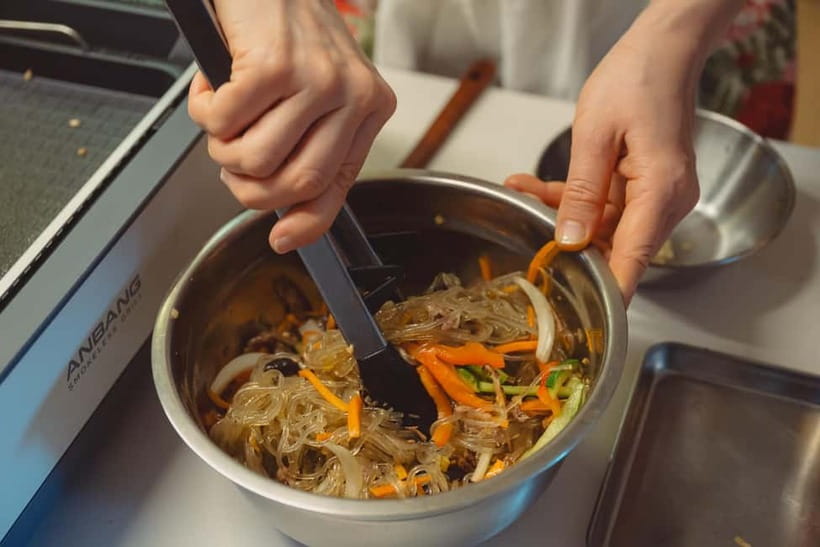
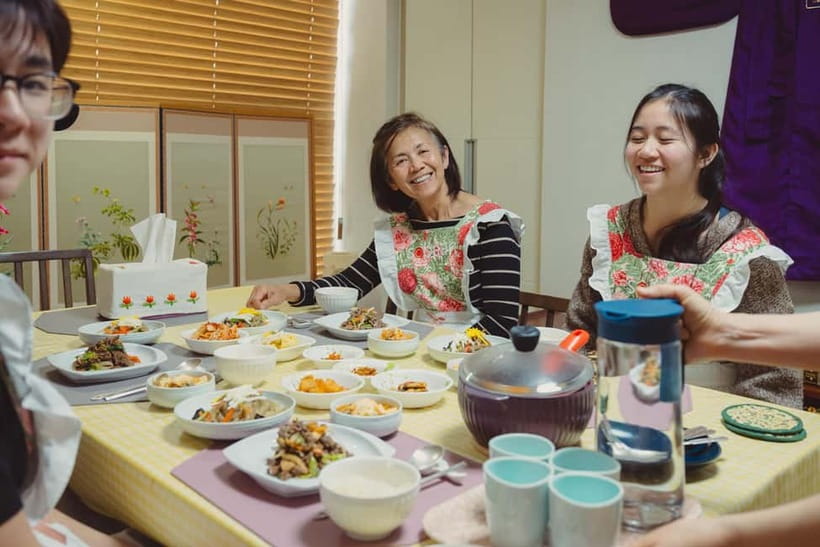
The class takes place in a local Korean house decorated with traditional hand-embroidered works. You are welcomed by Ann and her mother, which adds a family and cultural element to the meal.
The room itself is part of the experience. The embroidered pieces give you something to look at while you cook and later drink tea, and they create a setting unlike a modern cooking studio. You may find this especially appealing if you enjoy crafts, interiors, and the quieter side of Korean culture.
A home setting also changes the mood. The focus is not only on technique. You are sharing space with a family and learning about food in a place that feels lived in. That can make the class more memorable than a lesson held in a commercial venue, though it may feel more intimate than some people expect.
If you want a polished, restaurant-style production with a fixed sequence and a large kitchen, this may not be your ideal choice. If you want a friendly home visit tied to food, the setting is a clear advantage.
The available information does not specify the exact kitchen layout or which equipment you will use. You should therefore judge the class as a hands-on home cooking experience rather than a highly technical kitchen workshop.
Sitting down to a homemade Korean lunch
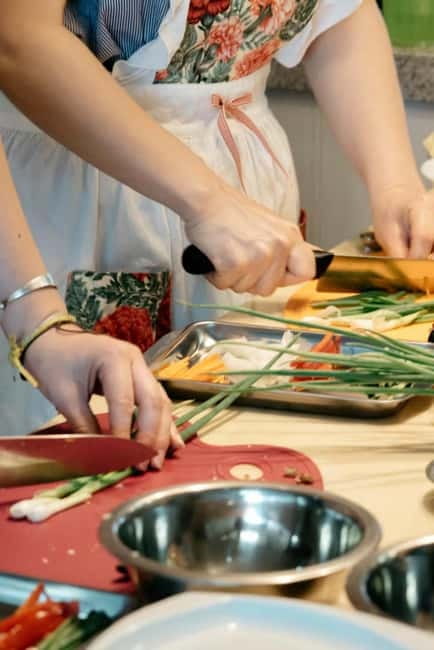
Once the cooking is finished, you sit down to eat the meal you prepared. Lunch is homemade, and the menu reflects the dishes chosen by your group.
This makes the meal feel earned. You have seen the ingredients at the market, helped prepare them, and now get to taste the result in the same home. For many people, that full sequence is more satisfying than a restaurant meal ordered from a menu.
The lunch also gives you time to slow down. A market walk and cooking lesson can be active, but the shared meal creates a natural pause. You can talk with Ann, compare the dishes, and enjoy the food without rushing to the next attraction.
Food preferences and dietary needs are not specified in the information provided. If you have restrictions, contact the provider before booking rather than assuming the chosen dishes can be adjusted. The menu is shaped by group input, but no particular dietary accommodations are promised.
Making dessert and sharing tea
The final stage is a traditional Korean dessert lesson followed by tea-time in the embroidery-filled room.
This is a small but important finish. Dessert gives the class a second kind of cooking project, while tea-time lets you enjoy the room and the company after lunch. It also helps the experience avoid ending abruptly at the main meal.
The dessert is made together, so you are still involved rather than simply being served something sweet. The exact dessert is not named, so you should book this for the process and the cultural setting, not for one specific recipe.
Tea-time may be the quietest part of the visit. If the market provides the public Seoul setting and lunch provides the shared meal, the final tea gives you a chance to appreciate the home, embroidery, and conversation. It is a gentle ending to a three-and-a-half-hour program.
What the $69 price gets you
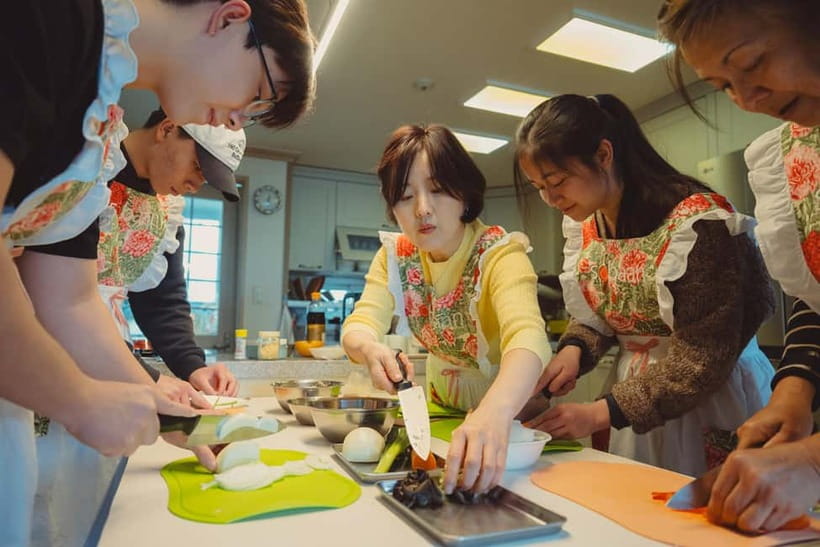
At $69 per person, the cost covers a 210-minute experience with several parts: a guided market tour, ingredient shopping, a cooking class, homemade lunch, dessert making, and tea.
That is a fair price if you value personal instruction and a small group. You are not paying only for a recipe lesson. The fee also includes the market orientation, the host’s time, the meal, the dessert, and access to a local family setting that is difficult to arrange independently.
The value is strongest for solo visitors, couples, and small groups who want a focused cultural activity. With only four participants, your payment supports a more attentive experience than a large class where each person gets a limited task.
The price may feel less attractive if you are mainly looking for a cheap meal or a quick introduction to Korean food. You could eat for less elsewhere, and this activity takes most of a morning and early afternoon. The point is the complete experience, not simple food consumption.
The reserve-now-and-pay-later option gives you some planning flexibility, and cancellation is free up to 24 hours before the activity for a full refund. Wheelchair access is listed, which is useful to know, although the details of the market route and the home entrance are not provided. If access needs are important for you, confirm those specifics in advance.
Who should book this experience
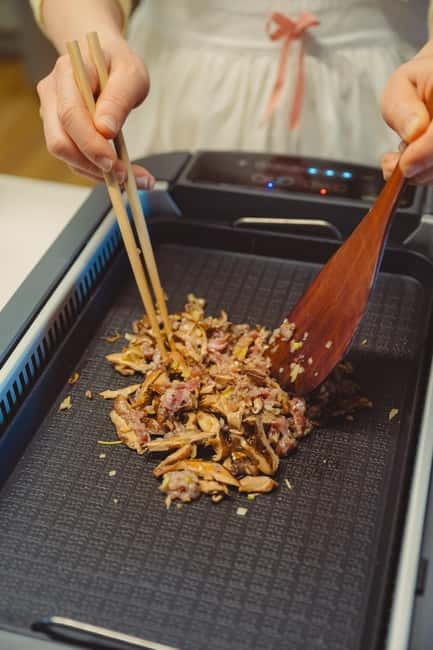
I would recommend this class to you if you enjoy food, local homes, and small-group activities. It is particularly suitable if you want to learn why ingredients matter, not just memorize a recipe.
It also fits first-time visitors who want a softer introduction to Korean culture. You get food, family hospitality, a market, crafts, and conversation in one outing. The English-speaking host helps make the experience approachable.
This is a good choice for couples and friends because you can discuss which dishes to make together. It can also work well for solo visitors, since the group limit is four and the cooking naturally creates conversation.
Families should consider the length and the cooking format. Children who enjoy preparing food may like it, but the information does not specify a minimum age or special child program. Ask before booking if that matters.
You may want to choose another activity if you need a fixed menu, a short session, or a lesson centered on advanced culinary technique. This class is about food and cultural exchange in equal measure.
Practical details before you book
Plan to meet at 10:30 a.m. inside Sillim Station, not outside on the street. Find Cafe Mignon after the ticket gates and before the exits, then look for the Sobaan cooking sign.
The full program lasts 210 minutes. Wear something comfortable for walking through the market and cooking. Specific clothing rules are not provided, so practical casual wear is the safest choice.
The host language is English, and the group is limited to four people. The provider lists the experience as wheelchair accessible, but you should confirm the exact route and home access if you use a wheelchair.
Your meal choices are made with input from the group. Bulgogi, bibimbap, and kimchi pancakes are examples, not a guaranteed fixed menu. If you have a particular dish in mind, mention it when arranging the experience.
Should you book the Sillim market and home cooking class?
Book it if you want more than a restaurant meal and prefer a personal, unhurried introduction to Korean food. The strongest reasons are the market shopping, the choice of dishes, the four-person limit, and the chance to eat in a family home with Ann and her mother.
Think twice if your schedule is tight or if you want a highly structured culinary course with a confirmed menu. For everyone else, $69 buys a full morning and early afternoon of food, culture, and conversation, with a quiet dessert-and-tea finish that gives the day a distinct sense of place.
FAQ
Where does the experience meet?
You meet inside Sillim Station on Seoul Subway Line 2, station number 230, at 10:30 a.m.
How do I find the meeting point inside Sillim Station?
After passing through the ticket gates, look for Cafe Mignon, a take-out cafe, before going through any exit. The meeting point is in front of the cafe.
How will I recognize the host?
The host will be holding a Sobaan cooking sign.
How long does the experience last?
The experience lasts 210 minutes.
What language is the experience offered in?
The host or greeter speaks English, and English is the listed language for the experience.
How many people can join the group?
The group is limited to four participants.
What dishes might I cook?
Possible dishes include bulgogi, bibimbap, and kimchi pancakes. The dishes are chosen with participant input.
Is lunch included?
Yes. The experience includes a homemade Korean lunch prepared during the cooking class.
Is dessert included?
Yes. You make a traditional Korean dessert and then enjoy tea-time in a room filled with embroidery.
Is the activity wheelchair accessible?
Yes, the activity is listed as wheelchair accessible. The available information does not provide detailed access information for the market route or home entrance, so confirm those points if needed.
More Markets in Seoul
- Seoul Street Food Market Tour
★ 5.0 · 1,226 reviews - Seoul: Night Market Food Tour with Local Guide
★ 4.9 · 943 reviews - Seoul: Palace, Temple and Market Guided Foodie Tour at Night
★ 4.9 · 750 reviews - Seoul: Guided Food & Market Tour with 8+ Tastings
★ 4.9 · 342 reviews
More Cooking Classes in Seoul
- Chiang Mai: Authentic Cooking Class with Market & Farm Visit
★ 4.9 · 4,546 reviews - Barcelona: Paella Cooking Experience & Boqueria Market Tour
★ 4.8 · 3,661 reviews - Cooking Class Hoi An:Local Market, Basket Boat, Fishing & Cooking
★ 5.0 · 3,660 reviews - Hoi An Cooking Class(Market,BasketBoat Crabfishing&Cooking Class)
★ 5.0 · 3,386 reviews
Just added around Seoul
- Seoul: Sokcho beach, market, hot spring and Seorak Cable Car★ 4.8 · 5 reviews
- Seoul: The Biggest Sea-food Noryangjin Market Tour★ 4.3 · 30 reviews
- Seoul: Namdaemun Market Food Tour★ 4.9 · 34 reviews
- Seoul: Guided Street Food Tour at Namdaemun Market★ 5.0 · 10 reviews
- Seoul: Gwangjang Market Vegan & Vegetarian Food Tour★ 5.0 · 16 reviews
- Seoul: Gyeongbokgung Palace Tour & Lunch at Authentic Market★ 4.5 · 2 reviews
- Seoul Evening Tour:Gwangjang Market&Naksan Park&Eungbongsan★ 5.0 · 2 reviews
- Seoul Gwangjang Market Foody Walking Tour★ 4.1 · 7 reviews
Market Cooking Classes, compared.
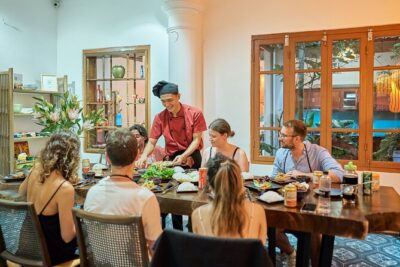
Hanoi Cooking Class: Culture, Local Market & Meaning CSR Impact
Read our review →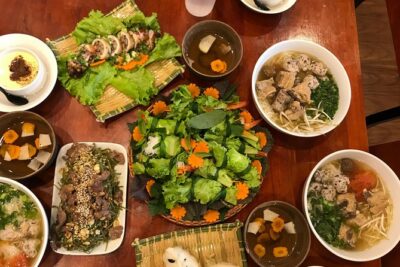
5 Traditional Dishes Hanoi Cooking Class with Market Trip
Read our review →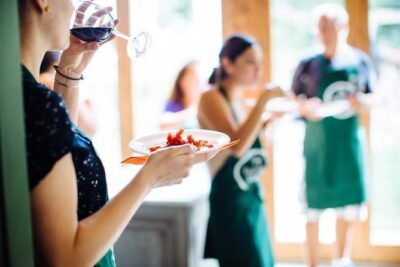
Cooking Class and Lunch at a Tuscan Farmhouse with Local Market Tour from Florence
Read our review →
Cooking Class, Market & Thai Herbs Garden Tour
Read our review →
Authentic Cooking Class with Market & Farm Visit
Read our review →
Paella Cooking Experience & Boqueria Market Tour
Read our review →
Cooking Class Hoi An:Local Market, Basket Boat, Fishing & Cooking
Read our review →Browse the lists this tour appears in