
Review · MARKET TOURS
Split: Historical & Gastro Treasures Tour with Green Market
Split’s best food story begins at the Green Market, not in a polished restaurant. This three-hour tour pairs market produce and Dalmatian specialties with Diocletian’s Palace, then settles you into a traditional konoba for seafood, pasta, black risotto, wine, and dessert. Come hungry. The portions are generous.
I like the mix of local food and practical history, and I like that guides such as Hani, Olga, Christina, Vicky, Lucy, and Darko make the experience personal rather than scripted. The main thing to consider is the $135 price, especially if you do not drink alcohol or prefer a light lunch.
Key points
- Green Market first: Morning departures include prosciutto, cheese, peka bread, soparnik, grappa, and local produce.
- Diocletian’s Palace with context: See Peristil Square, the Golden Gate, and medieval Pjaca while learning how the old palace functions today.
- A full Dalmatian meal: Expect seafood, two pasta dishes, black risotto, local wines, and a final dessert.
- Guides make the difference: Hani, Olga, Christina, Vicky, Lucy, and others are praised for warmth, humor, food knowledge, and local insight.
- Good first-day choice: The tour helps you understand what to eat and where local food fits into Split life.
- Afternoon change: The Green Market is closed later in the day, so afternoon tours replace it with similar tastings at a local tavern.
Why the Green Market is the right place to begin
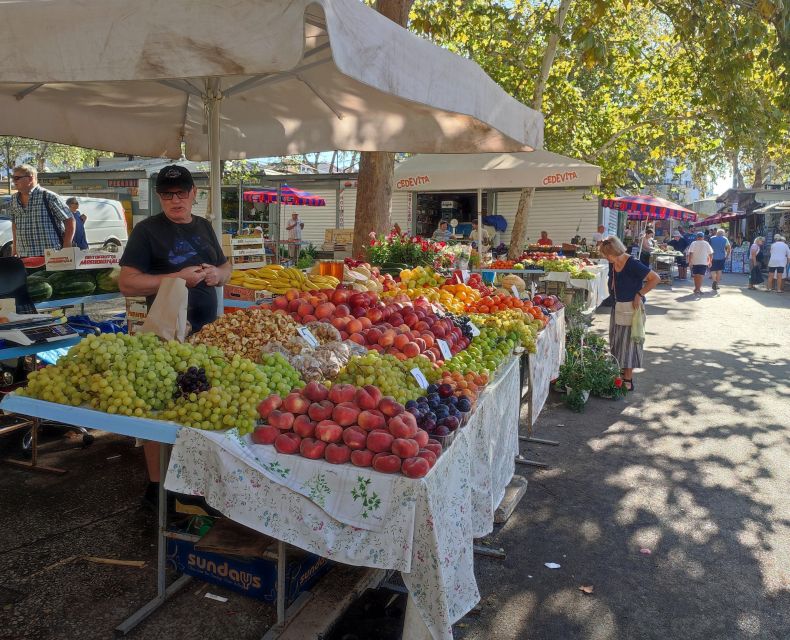
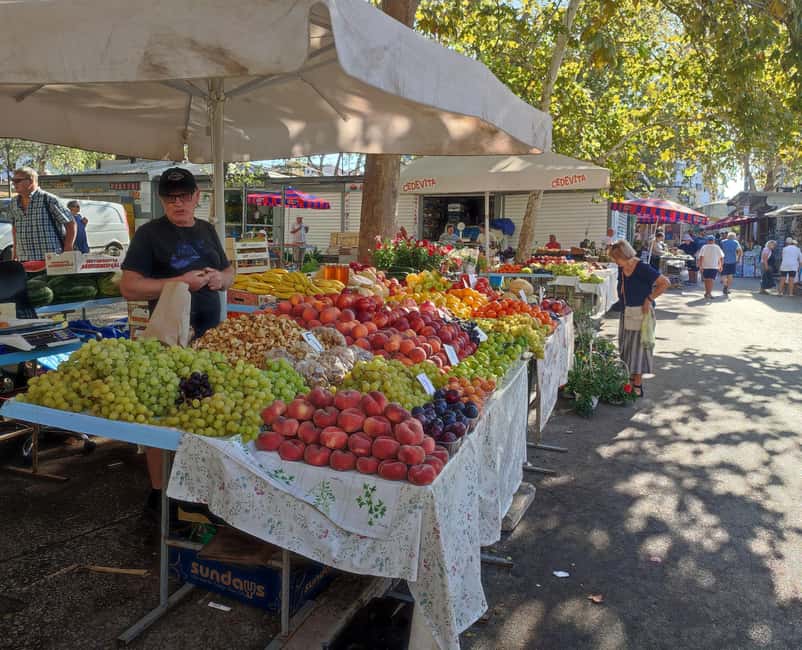
The morning version starts at Split’s Green Market, where you get a more useful introduction to Dalmatian food than you would from a menu alone. Your guide leads you through local produce and explains the foods as you taste them.
The opening spread includes prosciutto, cheese, traditional peka bread, soparnik pie, and grappa. These are not tiny decorative bites. The food is intended to feel like a Mediterranean brunch, so this first stop can fill you up quickly.
I especially like the market portion because it connects food with daily life. You are not simply handed a plate and told what it is. You can see the setting where local produce is sold and hear how the food fits into Croatian homes and celebrations.
Soparnik is one of the more distinctive tastes here. It is a traditional pie associated with Dalmatia, and it gives you a chance to try something you might not order on your own. The peka bread also helps explain the appeal of simple regional cooking: good bread, cured meat, cheese, and a little local spirit can make a fine start to the day.
The market can be busy, and that is part of the point. You will need to stay close to your guide and pay attention while moving through the stalls. If you prefer a quiet, seated tasting from the start, this may feel less comfortable than a standard restaurant food tour.
A few more market tours around the world worth a look
- Bangkok: Damnoen Saduak Market and Maeklong Railway Market
★ 4.5 · 26,723 reviews - The Old Siam: Damnoen Saduak and Maeklong Railway Market
★ 4.5 · 10,992 reviews - Bangkok: Train Market & Floating Market with Boat Ride
★ 4.7 · 9,547 reviews
Walking from Roman palace to living city
After the market, the tour turns toward Split’s central sights. The focus is Diocletian’s Palace, the UNESCO-listed Roman complex that forms the core of the modern city.
You visit Peristil Square, the Golden Gate, and Pjaca, a medieval Venetian square. These stops give you a useful outline of Split’s past without turning the tour into a long academic lecture.
The best part is the connection between old stones and modern life. The palace is not an isolated ruin outside town. People live, shop, eat, and walk through it every day. Guides explain how the area changed over the centuries and how the palace is used now.
Several guides, including Olga, Hani, Christina, and Darko, are praised for making the history easy to follow. Their approach appears to be conversational, with room for questions and local stories. That suits Split well. You get enough background to understand what you are seeing, but the tour keeps moving toward lunch.
The route also includes music and small cultural details on some departures. These touches help the walk feel like an introduction to the city rather than a checklist of monuments.
If your main goal is a detailed archaeological tour, this is not the right product. The history is one part of a larger food experience. You will learn the essential story of the palace, then spend substantial time eating and talking.
A konoba meal with seafood and black risotto
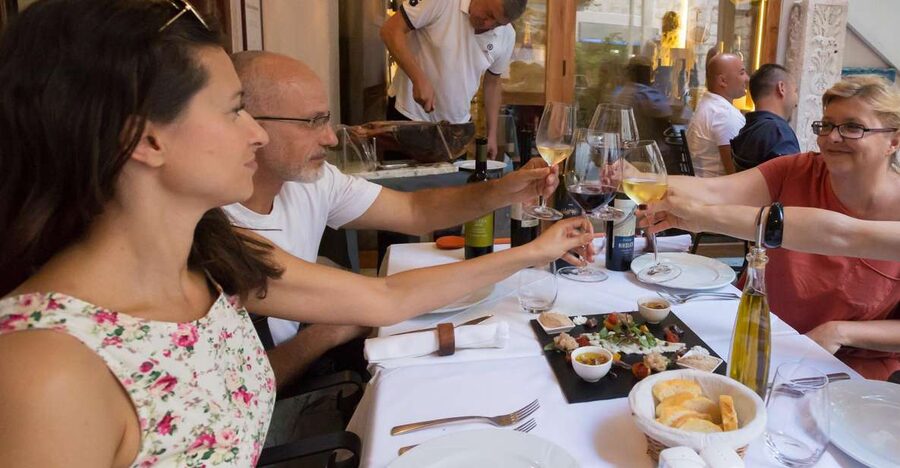
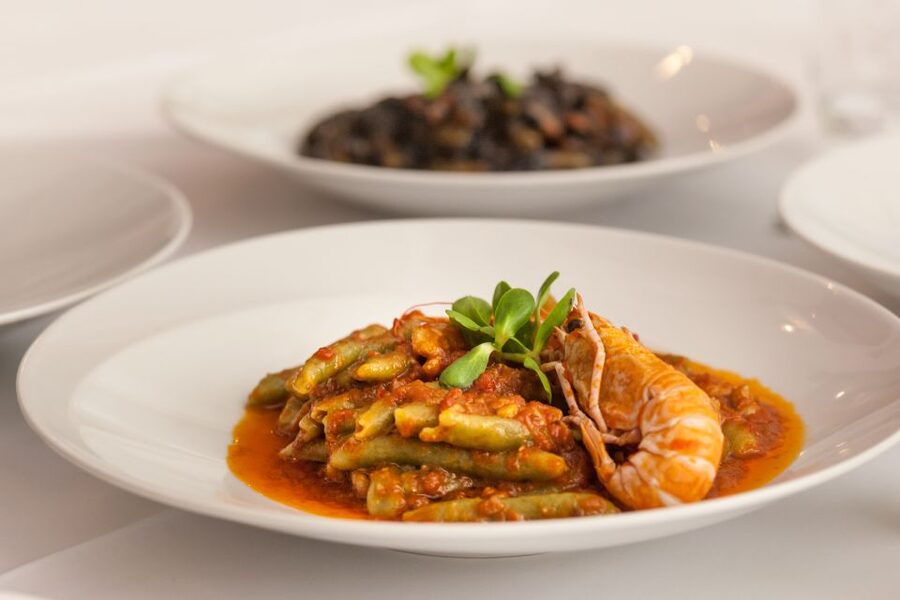
The food portion becomes more substantial at a traditional konoba, the tavern-style setting used for regional cooking. Here you get a seafood starter with white wine, followed by two types of traditional pasta and famous black risotto with local red wine from Brač island.
This is where the $135 price begins to make more sense. You are not paying for one tasting plate and a short walk. The tour includes the cost of all food and wine, and the meal is substantial enough to function as lunch.
Black risotto is made with cuttlefish ink, which gives the dish its dark color and a distinct sea flavor. It can look unusual if you have never tried it, but this is exactly the sort of local dish that is useful to sample with a guide nearby. Some food tour participants also end up trying dishes such as octopus stew, depending on the day and menu.
The two pasta dishes add variety. You may find different shapes, sauces, or preparations, since the exact food can vary by season and restaurant. The important point is that the meal gives you several ways to taste Dalmatian cooking rather than reducing the region to grilled fish.
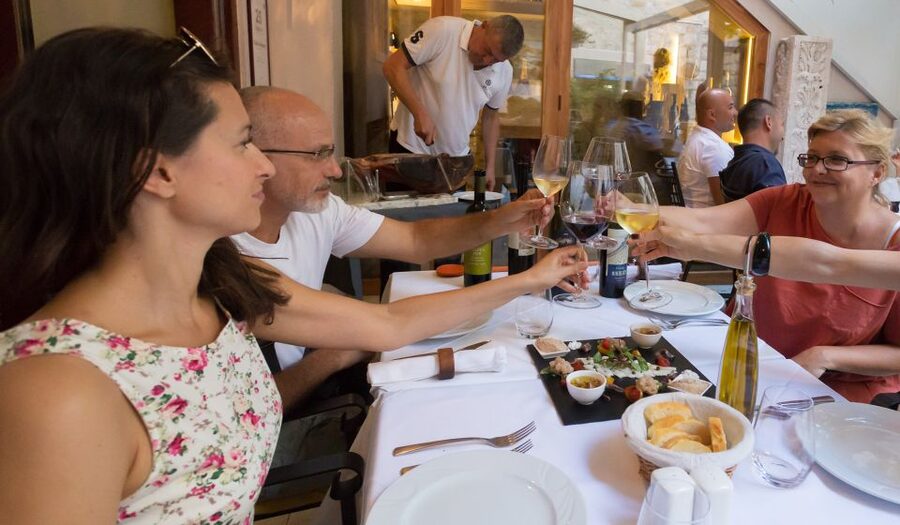
The wine pairings are another strong feature. White wine accompanies the seafood starter, while local red wine from Brač is served with the later courses. If you enjoy wine, the pairings add real value and help you understand how drinks fit with the meal.
If you do not drink alcohol, the price may feel high. Wine and grappa are built into the experience, and there is no reduced price mentioned for skipping them. You should still tell the provider about dietary needs, but do not assume every restriction can be handled without advance notice.
Dessert keeps the meal going
The final course is a light gelato or a traditional dessert, depending on the season. Spring, summer, and autumn may bring different choices.
I like the seasonal idea, though the gelato option is less distinctive than the local pastry. If you have a choice, ask what the traditional dessert is before deciding. Gelato is easy to find elsewhere in Split, while a regional sweet gives the tour a more memorable finish.
One practical point matters here: do not plan a large dinner immediately afterward. The first market tasting and the konoba meal together make this a serious food outing. The advice to come hungry is not just cheerful marketing. It is useful planning.
More shopping tours in the world:
- From Bangkok: Ayutthaya & Ayothaya Floating Market Day Trip
★ 4.7 · 6,084 reviews - Hanoi Cooking Class: Culture, Local Market & Meaning CSR Impact
★ 5.0 · 5,147 reviews - 5 Traditional Dishes Hanoi Cooking Class with Market Trip
★ 5.0 · 4,890 reviews - Cooking Class and Lunch at a Tuscan Farmhouse with Local Market Tour from Florence
★ 5.0 · 4,831 reviews
The guides shape the experience
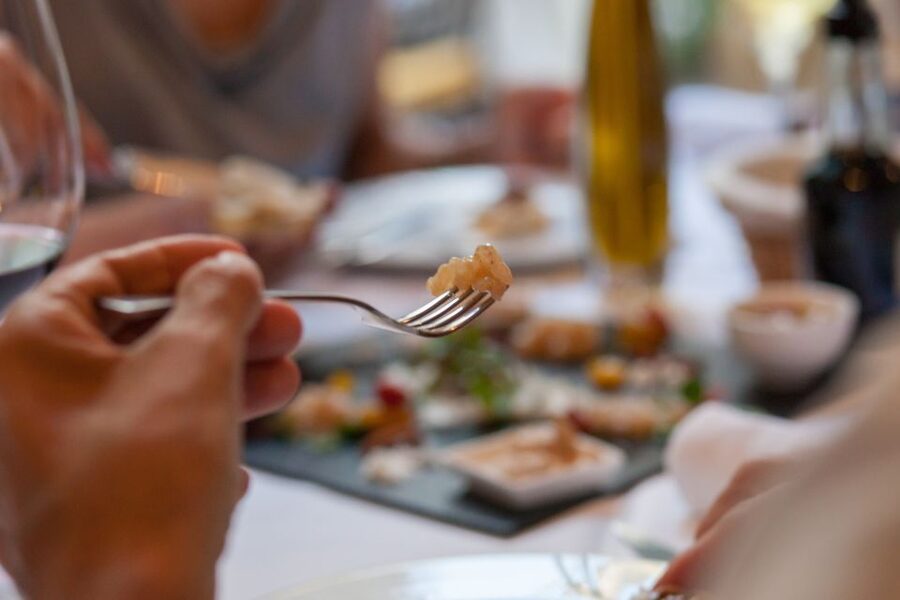
The company uses several English-speaking guides, so your host may be Hani, Olga, Christina, Vicky, Lucy, Lucija, Ana, Maria, Ella, Doris, or another member of the team. The names vary by departure, but the strongest pattern is clear: the guide is central to the experience.
Hani is praised for humor, warmth, and strong knowledge of food and local culture. Olga is often described as energetic and especially good at explaining both food and history. Christina is noted for making people feel at ease, while Vicky receives praise for her understanding of wine, cuisine, and Split’s traditions.
Lucija and Lucy are also singled out for making the tour comfortable and social. That matters because the meal is shared around tables, and the guide has to keep everyone involved. A good host explains each dish, answers questions, and keeps the pace relaxed.
The tour works best when you enjoy conversation. You are likely to hear personal opinions about local flavors and receive practical suggestions for eating during the rest of your stay. One useful tip from the experience is to schedule it near the beginning of your time in Split, when the food advice can still guide later meals.
The guide may also adjust tastings for food restrictions. Still, you should list allergies or dietary needs when booking. This is particularly important with seafood, dairy, bread, alcohol, and dishes containing ingredients that are not obvious from their names.
Morning or afternoon: choose carefully
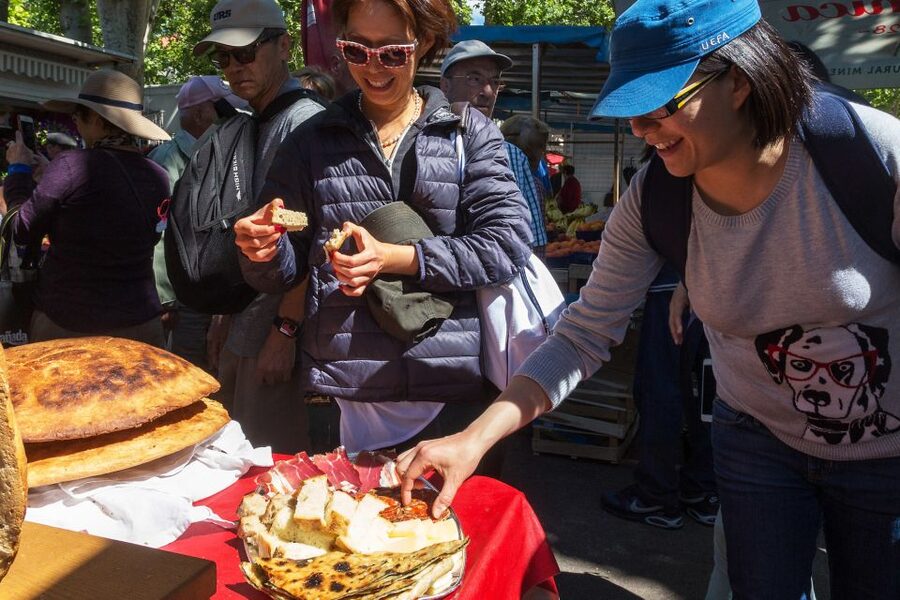
The morning option includes the Green Market, and that is the version I would choose if the market is important to you. You get to see local produce, taste the market foods, and connect the meal to the place where ingredients are sold.
The afternoon version does not include the Green Market because it is not open during those hours. Similar foods are tasted at a local tavern instead. That still gives you the food experience, but it removes the market atmosphere and the chance to watch local shopping in action.
This difference is worth checking before you book. If your priority is palace history and a full meal, either option may work. If you want the strongest link to everyday Split, choose the morning departure.
The activity begins at a meeting point on Hrvojeva 1 street, though the exact meeting point can vary by the option booked. It ends back at the meeting point. Hotel pickup and drop-off are not included, so plan your own way to the start.
Is $135 a fair price?

At $135 per person, this is not a bargain walking tour. It is also more than a simple lunch. The price includes a licensed local guide, all listed food, wine, market tastings, the palace walk, and dessert.
For someone who would otherwise book a palace tour and a separate food tour, the combination can be good value. You also avoid the risk of ordering unfamiliar dishes alone and discovering too late that you do not like them.
The value is strongest for people who appreciate generous portions, several wine tastings, and a guide who can explain local customs. It is weaker for anyone who eats very little, avoids alcohol, or wants a tightly focused palace visit.
The social side also matters. The meal is arranged as a relaxed experience, and the guide helps conversation flow. If you enjoy meeting other people while eating, that adds to the price. If you want a private meal with no group interaction, this may not suit you.
The high 4.9 rating from 144 reviews reflects very strong satisfaction, but I would still read the offer in practical terms: this is a long, food-heavy introduction to Split, not a light snack walk.
Who should book this Split food tour?
I would recommend it to first-time visitors who want to understand Split through both its buildings and its table. It suits curious eaters, couples, small groups, and anyone who likes a guide with personality.
It is particularly useful if you are unsure what to order in Croatia. You can try prosciutto, soparnik, peka bread, seafood, pasta, cuttlefish risotto, local wine, and dessert in one organized outing.
Families may appreciate the relaxed pace, though the alcohol and full meal may not appeal equally to every member. Vegetarians should give advance notice. The tour has accommodated dietary restrictions on some departures, but the exact menu is not fixed.
You should also book with realistic expectations. Food portions are generous, and the tour includes walking through historic streets and market areas. Comfortable shoes and an appetite matter more here than formal clothes.
The tour is also a good choice for food lovers who have already seen the main Split sights but want context around local cooking. The palace portion is not exhaustive, yet it provides enough background to make the meal feel tied to place.
Final decision: book it if food is part of your sightseeing
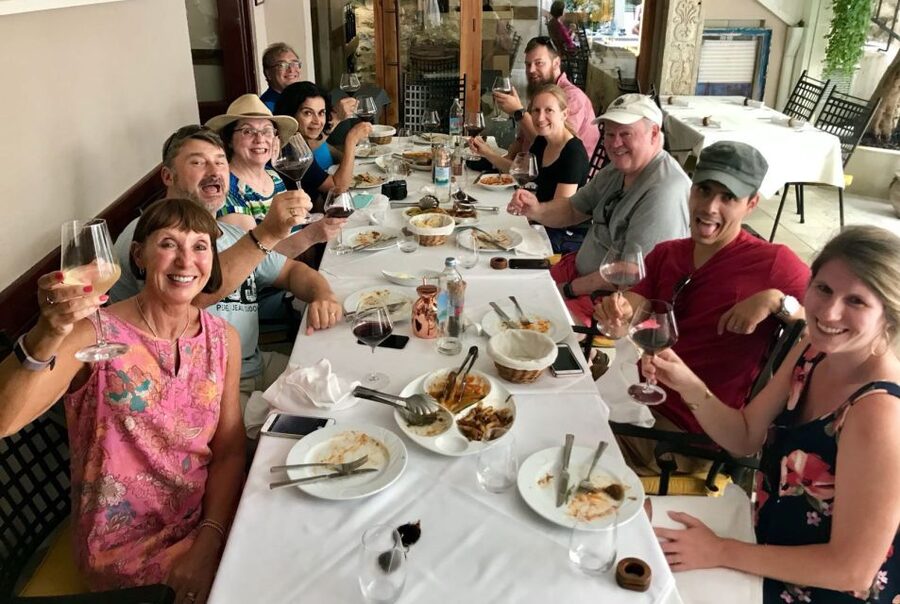
Book this tour if you want Split in one generous serving: Roman and Venetian landmarks, market life, traditional dishes, local wine, and a guide who can explain why the food matters.
Choose the morning option for the Green Market. Tell the provider about allergies or diet restrictions. Arrive hungry, and leave room for the final dessert even after the seafood, pasta, risotto, bread, cheese, and cured meat.
Skip it if you want a cheap history walk, a private restaurant meal, or a short tasting with no alcohol. For everyone else, the combination is sensible and unusually complete. It gives you a practical start in Split, along with several dishes and eating ideas you might not discover by wandering alone.
FAQ

How long does the Split Historical and Gastro Treasures Tour last?
The tour lasts three hours.
What food is included at the Green Market?
The morning tour includes prosciutto, cheese, traditional peka bread, soparnik pie, and grappa, along with a local Mediterranean brunch.
Which Split sights are included?
The walking portion includes Diocletian’s Palace, Peristil Square, the Golden Gate, and the medieval Venetian square called Pjaca.
What is served at the konoba?
The meal includes a traditional seafood starter with white wine, two types of traditional pasta, black risotto, and local red wine from Brač island.
Is dessert included?
Yes. The final course is light gelato or a traditional dessert, depending on the season.
Does the afternoon tour visit the Green Market?
No. The Green Market is not open in the afternoon. Similar foods are tasted at a local tavern instead.
Is hotel pickup included?
No. Hotel pickup and drop-off are not included. The tour begins and ends at the stated meeting point.
What should I do about food allergies or diet restrictions?
You should indicate all food allergies and dietary restrictions when booking. The guides have adjusted tastings for some restrictions, but the exact menu can vary.
More Heritage Tours in the world
- Private Excursion to Floating Market and Ayutthaya World Heritage
★ 5.0 · 515 reviews - Palermo: Walking Tour of Historic Markets and Monuments
★ 4.9 · 478 reviews - Discover Palermo in 3 hours. Art, history, markets and street food
★ 5.0 · 352 reviews - Private Heritage Walking Tour in Jaisalmer Fort and Old Bazaar
★ 5.0 · 306 reviews
Just added around the world
- Three-Hour Private Chengdu Tea Wholesale Market Tour★ 5.0 · 4 reviews
- Half-day Dandan Noodles Cooking Class with a Local Market Visit★ 5.0 · 8 reviews
- Chania: Old Town, Public Market, Hill of Prophet Elias, Agia Triada★ 5.0 · 35 reviews
- Moroccan Cooking Class with a Local Family & Market Visit★ 5.0 · 16 reviews
- Chania Old Town, Public Market and Chrisopigi Monastery Tour★ 4.5 · 6 reviews
- 3-Hour Herbal Wholesale TCM Market and a Local Wet Market Tour★ 5.0 · 4 reviews
- Food Tasting & Market Shopping: Private Guided Tour in PORT LOUIS★ 4.5 · 9 reviews
- Charleston International Sweet Treats & Historic City Market Tour★ 5.0 · 22 reviews
Shopping Tours, compared.

Damnoen Saduak Market and Maeklong Railway Market
Read our review →
The Old Siam: Damnoen Saduak and Maeklong Railway Market
Read our review →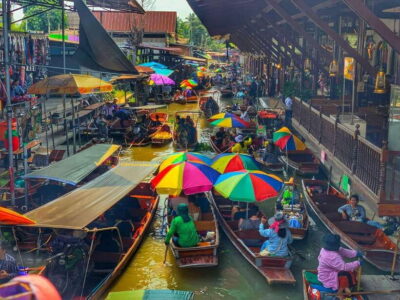
Train Market & Floating Market with Boat Ride
Read our review →
Ayutthaya & Ayothaya Floating Market Day Trip
Read our review →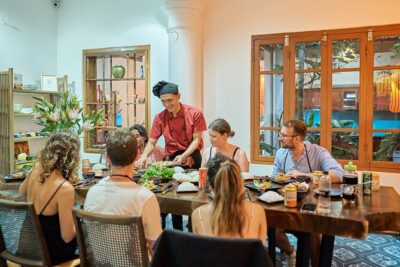
Hanoi Cooking Class: Culture, Local Market & Meaning CSR Impact
Read our review →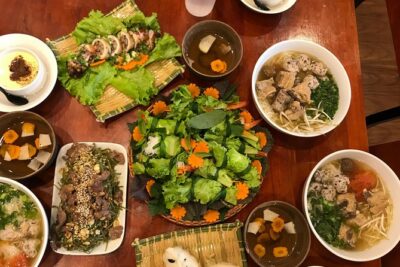
5 Traditional Dishes Hanoi Cooking Class with Market Trip
Read our review →
Cooking Class and Lunch at a Tuscan Farmhouse with Local Market Tour from Florence
Read our review →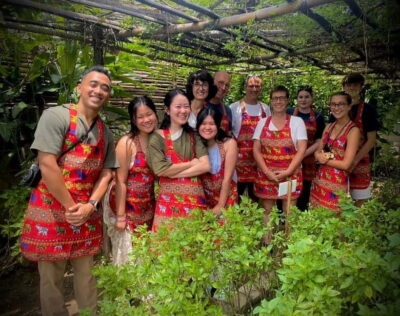
Cooking Class, Market & Thai Herbs Garden Tour
Read our review →Browse the lists this tour appears in