
Review · AUSTRALIA
Sydney Fish Market Behind the Scenes Tour
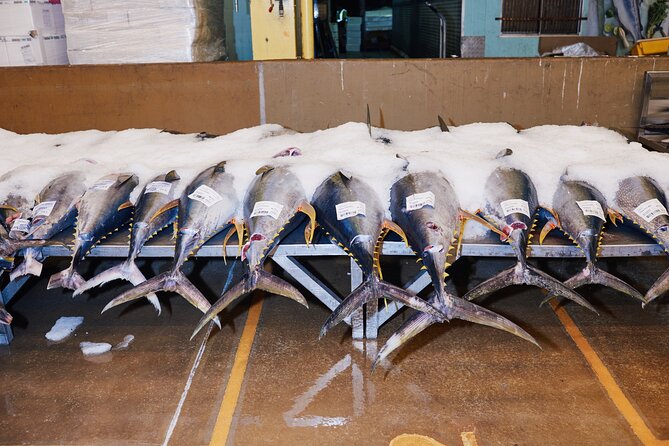
Sydney Fish Market gets most interesting before the public sees it. On this two-hour morning tour, you enter the auction floor, watch seafood change hands through a Dutch auction, and see fishmongers prepare the catch for sale. More than 50 tonnes of seafood can pass through the auction, with over 150 buyers taking part.
I like the access to the normally closed auction floor, and I like the mix of practical trade knowledge and odd sea creatures in the blue crates. The main drawback is the early start: you must arrive by 5:50am, and the tour is not suitable for children under 10 or wheelchair users.
Key points
- Early access at 5:50am: Begin before the market opens fully to the public, when the auction work is underway.
- A working Dutch auction: Watch more than 50 tonnes of seafood move through a system where prices begin high and drop until buyers act.
- More than 100 species: See familiar fish beside unusual Australian seafood in the market’s famous blue crates.
- Real preparation demonstrations: Watch tuna filleting, oyster shucking, sushi preparation, and work with live lobsters.
- Small group of 10 or fewer: A limited group makes it easier to hear explanations and ask questions.
- Practical market access: Safety footwear is supplied for the auction floor, with comfortable shoes, socks, and a jacket recommended.
Why the auction floor is the real attraction
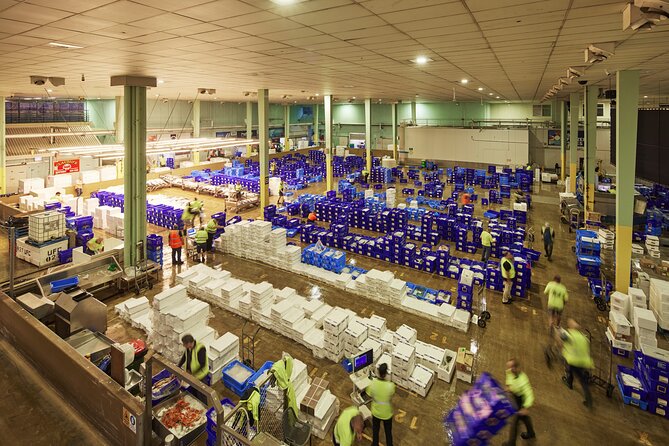
Sydney Fish Market is not just a place to buy prawns and sit down with a plate of seafood. Its working auction floor gives you a look at the trade before fish reaches a restaurant counter or retail display.
That access matters. From outside, a fish market can look like a row of stalls and seafood counters. Inside the auction area, you see the commercial side: crates arriving, quality being checked, species identified, and buyers competing for stock. The activity has a purpose, and the guide helps you understand what you are seeing rather than leaving you to guess.
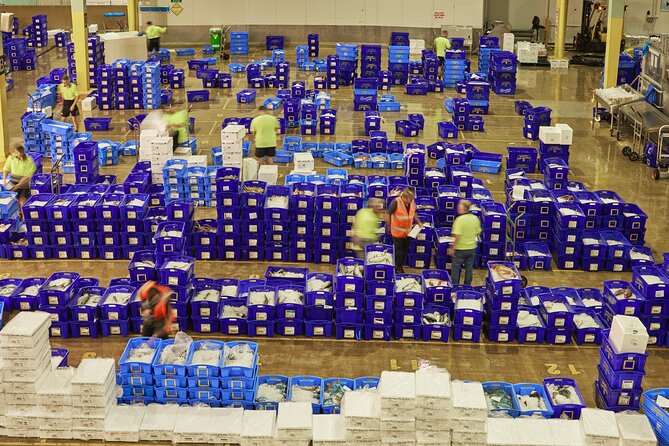
The Dutch auction is the star. In a standard auction, the price rises as people bid. Here, the price starts high and drops until a buyer accepts it. The system lets a large amount of fresh seafood move quickly, which makes more sense once you know that over 50 tonnes may be sold during the process.
You will not simply hear a definition and move on. The point is to watch the system operating around you. That makes the auction easier to understand and gives the tour a useful connection to the seafood on your plate later in the day.
More Fish Market Tours in Australia
- Sydney Fish Market Discovery Tour
★ 4.2 · 10 reviews - Sydney Fish Market Behind the Scenes Tour
★ 5.0 · 9 reviews - Sydney Harbour & Fish Market Sightseeing Cruise
★ 4.5 · 4 reviews
Seeing 100 seafood species in blue crates
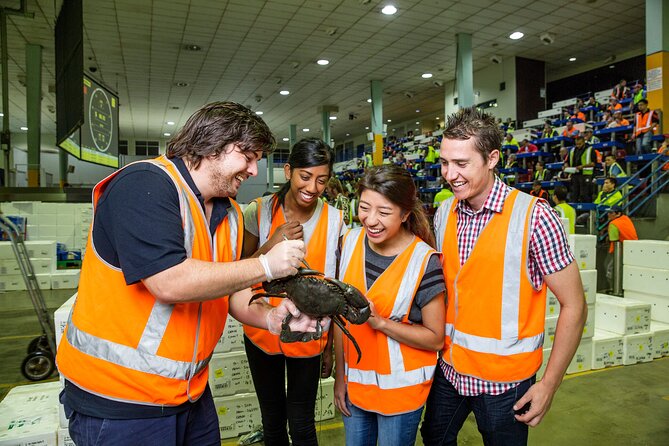
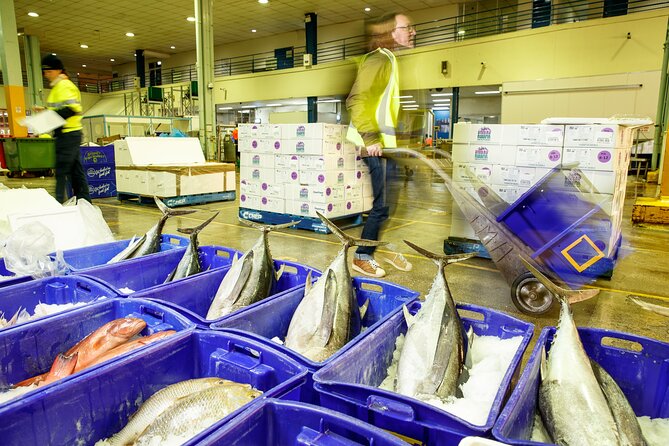
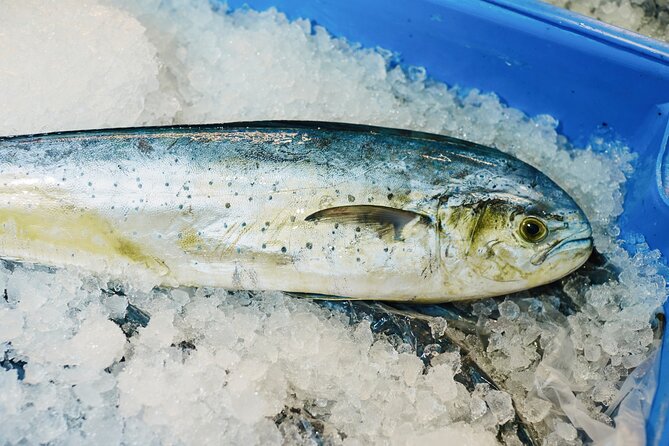
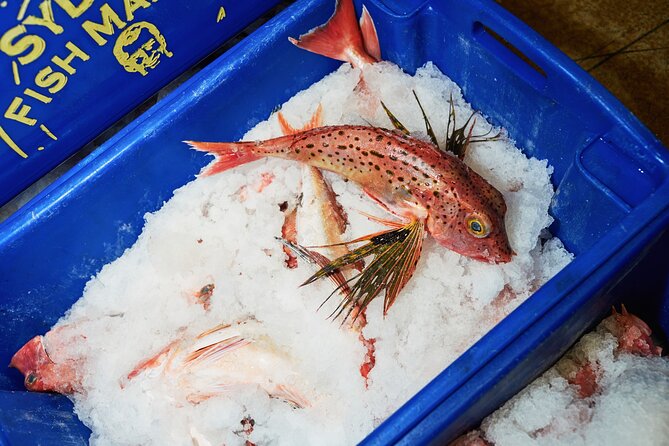
The famous blue crates provide another strong reason to book. They hold more than 100 seafood species, ranging from familiar favorites to creatures you may not recognize at all.
This is where the tour gets especially good for anyone interested in food. You can connect names, shapes, sizes, and handling methods with the seafood sold in Australia. The focus is not only on premium fish. The variety includes the weird and wonderful, along with species you may never have seen in a shop.
Your guide can explain what happens before the seafood reaches a restaurant or retail counter. That context is valuable because it turns the market into more than a display. You begin to see the decisions behind the sale: freshness, quality, species, preparation, and timing.
A guide with fishing experience can add useful perspective. Mark is described as an experienced fisherman who leads the tour, and Mike is also named as an informative guide. Guide assignments can change, so you should not book expecting one particular person. Still, the tour is built around explanations from people familiar with the market and seafood trade.
Tuna filleting, oysters, sushi, and live lobsters
The demonstrations keep the tour moving. You may watch tuna filleting, oyster shucking, sushi preparation, and the handling of live lobsters.
Each one shows a different part of seafood preparation. Tuna filleting gives you a clear look at the skill needed to break down a large fish. Oyster shucking shows the careful handwork behind a familiar restaurant item. Sushi preparation connects the market to the finished food, while live lobsters add a reminder that seafood is not always arriving as neat portions in a refrigerated case.
I like this combination because it avoids making the tour only about auction numbers. You get the business side and the food side in the same visit. The demonstrations also suit different interests. Food lovers can focus on preparation, while anyone curious about commercial fishing can pay closer attention to handling and quality checks.
This is still a working market, not a staged cooking class. The demonstrations are included, but food and drinks are not. You are paying for access and explanation, not a breakfast or tasting session. Plan a separate meal if you want to eat at the market afterward.
What happens from meeting point to market floor
The stated meeting location is the LG Information Hub at Sydney Fish Market, 1 Bridge Road, Glebe. It is on the ground level on the side of the building closest to the city.
The general directions also refer to meeting in the market foyer on Level 1 of the main arcade, using the glass doors to the left of the arcade entrance and then the stairs or lift. Because these directions describe different levels, check the current instructions in your confirmation and allow time to ask at the information hub if needed. The important point is to arrive by 5:50am for check-in.
Once the group is together, you receive safety footwear for the auction floor. Wear socks for comfort, and bring a jacket because the market environment may feel cool. Comfortable shoes are sensible for the walking and standing involved, even though special footwear is supplied for the auction area.
The group is limited to 10 participants. That is a useful size for this kind of visit. You are more likely to hear the guide over market activity, and questions about species, buyers, auctions, or preparation are easier to ask than in a large group.
The guided visit lasts two hours and returns to the starting point at 1 Bridge Road. Transportation to and from the market is not included, so you need to arrange your own way there and back. The market location is in Glebe, but the activity information does not specify a transport service or pickup.
Same stalls, a different way to shop and eat:
- Queen Victoria Market Ultimate Foodie Tour
★ 5.0 · 295 reviews - Adelaide Central Market Discovery Tour
★ 5.0 · 203 reviews - Sunshine Coast Hinterland and Noosa Day Trip from Brisbane Incl Eumundi Markets
★ 4.5 · 189 reviews - Eumundi Markets Bus Transfer: Mooloolaba Sunshine Coast & Noosa
★ 5.0 · 84 reviews
Why the early start changes the visit
Arriving at 5:50am is the biggest practical commitment. This is not a late-morning sightseeing stop you can add after breakfast. The early timing gives you access to the auction activity, but you need to plan for it the night before.
The benefit is seeing the market at work rather than after the main commercial action has passed. The auction floor is normally closed to the public, so the early arrival is tied to the part of the visit that makes it different from simply shopping at Sydney Fish Market.
The tradeoff is simple: if you dislike early mornings, the schedule may make the tour feel like work. You also need to be comfortable standing and walking in a market setting. A jacket and socks are not decorative packing suggestions here. They make the supplied safety footwear more comfortable and help you manage the early start.
High-heeled and open-toed shoes are not allowed. Hats, smoking, and littering are also prohibited. No wheelchairs or prams are allowed on the auction floor, and the activity is not suitable for wheelchair users. Children under 10 cannot join.
Is $56 a fair price?
At $56 per person, the price is reasonable if you want access to the working side of the market rather than a standard visit to its public areas.
You are paying for a two-hour guided visit, a small group, safety footwear, and live preparation demonstrations. The strongest value comes from the auction floor. Without that access, you could see seafood at the market without understanding how the commercial process works. The guide turns a short visit into a lesson about buying, selling, handling, and preparation.
The value is also better for people who would otherwise spend time trying to understand the market alone. You could walk around the public areas for less, but you would not necessarily see the Dutch auction or receive an explanation of the quality checks and sales process.
Food and drinks are extra, and transport is not included. Add those costs when planning your morning. If you are mainly looking for a seafood meal, this tour may not be the best use of $56. If you are curious about food production, fishing, auctions, or the route from ocean to plate, the price buys access that an ordinary market visit does not.
Free cancellation up to 24 hours before the start gives you some flexibility, and you can reserve now and pay later. That helps when your Sydney schedule is still moving, though the early start still needs firm planning.
A historic market with a changing future
One unusual reason to consider booking now is the market’s reported future change. A recent visitor noted that the current historic market is expected to be demolished to make way for a new one.
The timing and exact status can change, so confirm the current situation before booking. Still, this detail gives the visit extra weight. You may be seeing a working place with a long commercial life shortly before its setting changes.
That does not mean you should treat the tour as a museum visit. The market remains a place of work, and the main value is seeing the seafood trade in action. But the possibility of redevelopment makes the behind-the-scenes access more memorable for anyone interested in Sydney’s changing food culture and working waterfront.
Who will enjoy this tour most
I would choose this tour for food-focused visitors, seafood fans, cooking students, photographers who can work within the rules, and anyone who wants to understand what happens before fish reaches a plate.
It also suits repeat visitors to Sydney who have already seen the public market and want a different angle. The auction system, species identification, and preparation demonstrations offer more substance than a quick browse through seafood counters.
The tour is less suitable if you want a relaxed morning, a tasting session, or a family activity for young children. The early check-in, market footwear, standing, and restrictions on prams and wheelchairs all matter.
It is also not the right choice if you only want to buy lunch. You can do that separately at the market without paying for a guided auction visit.
Practical preparation for the 5:50am check-in
Keep your morning simple. Wear comfortable shoes, bring socks, and pack a jacket. Do not wear open-toed or high-heeled shoes, and leave hats at home.
Arrive early enough to find the correct entrance. The meeting instructions refer both to the ground-level LG Information Hub and to the Level 1 foyer, so read your confirmation carefully. If the directions still seem unclear, ask at the information hub rather than rushing in at the last minute.
The tour is in English, and the small group has a maximum of 10 participants. That makes it a good choice if you want explanations and the chance to ask questions without being part of a large crowd.
Should you book the Sydney Fish Market Behind the Scenes Tour?
Book it if you want to see the auction floor, understand the Dutch auction, and connect seafood preparation with the food you eventually eat. The tuna filleting, oyster shucking, sushi preparation, live lobsters, and unusual species add variety, while the small group keeps the visit focused.
Skip it if you want a later start, a meal included in the price, or easy access for a wheelchair or pram. For everyone else, $56 is a fair price for a rare look at the market’s working side, especially if the current building is approaching a major change.
FAQ
How long does the Sydney Fish Market Behind the Scenes Tour last?
The guided tour lasts two hours and begins and ends at the Sydney Fish Market meeting location.
What time should I arrive?
You should arrive by 5:50am for check-in.
Where is the meeting point?
The stated meeting point is the LG Information Hub at Sydney Fish Market, 1 Bridge Road, Glebe, on the ground level nearest the city. General directions also refer to the Level 1 foyer, so check your confirmation for the latest entrance details.
Is food included?
No. Food and drinks are not included in the $56 price.
What will I see on the tour?
You can see the normally closed auction floor, the Dutch auction, more than 100 seafood species, tuna filleting, live lobsters, sushi preparation, oyster shucking, and other seafood preparation work.
What should I wear?
Wear comfortable shoes and bring socks and a jacket. High heels and open-toed shoes are not allowed, and safety footwear is provided for the auction floor.
Can children or wheelchair users join?
Children under 10 are not permitted. The tour is not suitable for wheelchair users, and wheelchairs and prams cannot be taken onto the auction floor.
More Shopping Tours in Australia
- Rusty’s Market Foodlovers Tour
★ 5.0 · 18 reviews - Adelaide: Central Market Early Risers Breakfast Tour
★ 4.8 · 16 reviews - Adelaide Central Market Food Tour
★ 5.0 · 13 reviews - Queen Victoria Market: ‘Flavours of Australia’ Food Tour
★ 5.0 · 9 reviews
More Markets in Australia
- Small-Group Adelaide Central Market Early Breakfast Tour
★ 5.0 · 73 reviews - Melbourne Flavors: Queen Victoria Market Food Tour
★ 4.8 · 63 reviews - Adelaide: Central Market Morning Tour
★ 4.8 · 53 reviews - Adelaide Central Market Delicious Lunch Tour
★ 5.0 · 21 reviews
Just added around Australia
- Port Douglas Sunday Markets Day Tour★ 4.0 · 25 reviews
- Rusty’s Market Foodlovers Tour★ 5.0 · 18 reviews
- Noosa Heads and Eumundi Markets Private Tour from Brisbane★ 5.0 · 2 reviews
- Noosa, Eumundi Markets, Glass House Mountains from Brisbane★ 5.0 · 4 reviews
- Small-Group Adelaide Central Market Early Breakfast Tour★ 5.0 · 73 reviews
- Adelaide Central Market Food Tour★ 5.0 · 13 reviews
- A Taste of Adelaide Central Markets Food Tour★ 5.0 · 5 reviews
- Adelaide Central Market Delicious Lunch Tour★ 5.0 · 21 reviews
Fish Market Tours, compared.
Tokyo Tsukiji Fish Market Food and Culture Walking Tour
Read our review →
Tokyo Sushi Making Class in Tsukiji with Professional Chef
Read our review →
Tsukiji Fish Market Guided Tour and Sushi Making with Pro Chef
Read our review →Tsukiji Fish Market Food and Culture Walking Tour
Read our review →
Tsukiji Fish Market: Street Food & Culture Walking Tour
Read our review →
Tsukiji Fish Market Small-Group Food Walking Tour
Read our review →Browse the lists this tour appears in