
Review · TOKYO
Tsukiji Fish Market: Street Food & Culture Walking Tour
Tsukiji is best understood with your appetite switched on. This two-hour walk takes you through Tsukiji Jogai Market, where food stalls, seafood shops, and Japanese cooking traditions come together, then adds a fish-cutting demonstration and a visit to Tsukiji Hongwanji Temple.
I like the focus on local food knowledge and the chance to see a whole fish prepared with traditional knife work. I also like that guides such as George and Tomo have been praised for finding worthwhile food stops and explaining the market clearly. The main drawback is crowd control: with groups of up to 30 people, the tour can feel slow or hectic, especially around New Year, and some guides may be hard to hear.
Key points to know before you book
- The fish-cutting show is the tour’s most distinctive feature: You see a skilled chef fillet a whole fish, then learn how that technique connects to Japanese food culture.
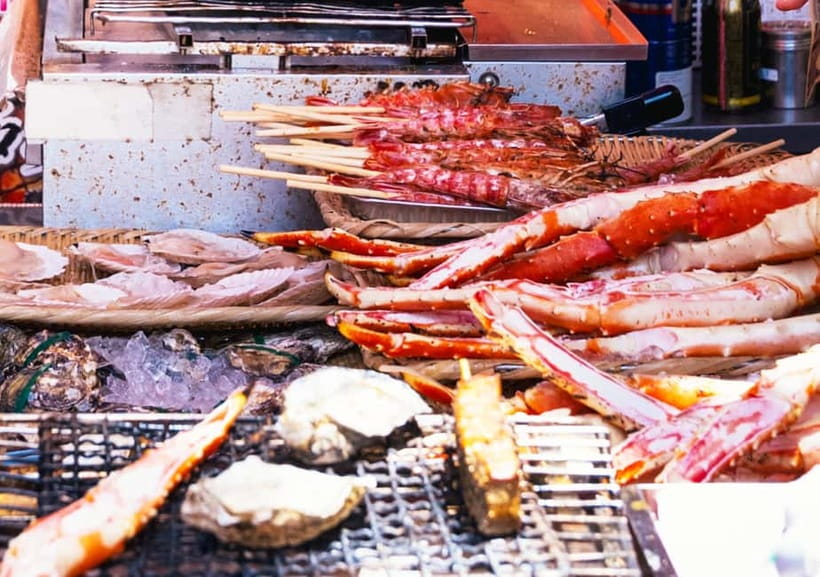
- Food is the main event: You visit several market stalls and eateries, but meals are not included in the price, so bring extra money for anything you want to taste.
- The group may be larger than expected: The activity is described as small-group, yet the maximum is 30 people. That can limit personal attention.
- Tsukiji Hongwanji Temple adds cultural context: The final stop gives the food walk a Buddhist and historical angle, though some people may find the temple portion brief.
- The tour is accessible: Wheelchair and stroller users can participate, and the meeting point is near public transportation.
- Plan for a lively, sometimes crowded morning: Wear comfortable shoes, stay close to the guide, and speak up if you cannot hear.
Why this Tsukiji walk works well
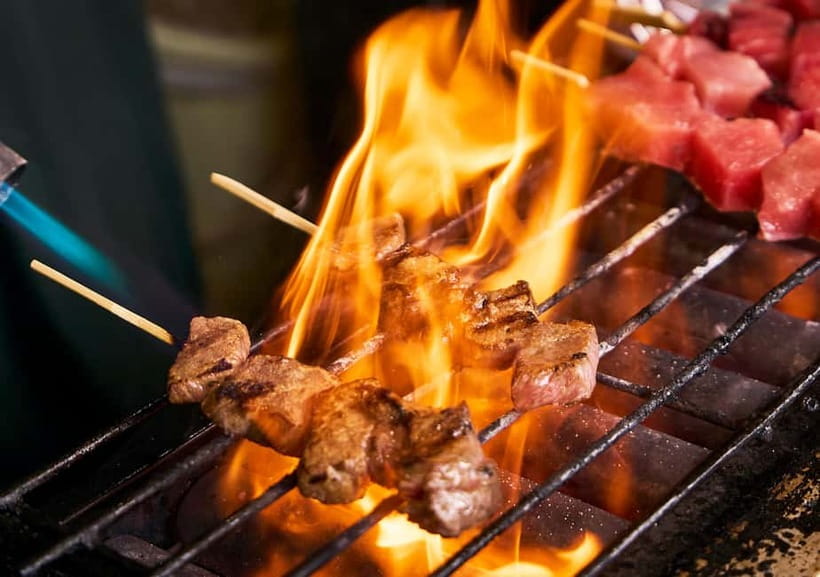
A market visit on your own can be fun, but it can also leave you guessing. Which stall deserves your time? What is the seafood in front of you? How do you eat it? This tour gives you a guide to interpret the ingredients, cooking methods, and customs as you move through the market.
That help matters most at Tsukiji Jogai Market. The area is packed with food choices, and a local guide can point you toward places that fit the group and the day. The experience is not built around a long lecture. It is built around walking, stopping, tasting, and asking questions.
The advertised price is $33.16 per person, which is reasonable for a guided two-hour introduction to one of Tokyo’s best-known food areas. Still, you need to factor in the cost of food. Meals are not included, even though the route includes a seafood bowl after the fish-cutting demonstration. Think of the price as payment for the guide, market orientation, cultural explanation, and demonstration, not as a food package.
The overall rating is very strong, with a 5 out of 5 score from 669 reviews and a 99 percent recommendation rate. That suggests the basic idea works well for many people. The less favorable experiences point to a clear warning: the quality depends on the guide’s voice, organization, and ability to keep the group together.
More Fish Market Tours in Japan
- Tokyo Tsukiji Fish Market Food and Culture Walking Tour
★ 5.0 · 3,184 reviews - Tokyo: Tsukiji Fish Market Food and Walking tour
★ 5.0 · 1,724 reviews - Tokyo: Tsukiji Fish Market Guided Walking Tour
★ 4.9 · 1,397 reviews
Starting at Tsukiji Hongwanji Temple
The meeting point is in front of Tsukiji Hongwanji Temple, at 3-chōme-15-1 Tsukiji, Chuo City. The tour includes a 15-minute visit inside the temple, so you may begin with Buddhist culture before turning toward the market.
This is a useful choice because it gives you a little context beyond food. A local guide explains the temple’s character, Buddhist culture, and place in Tokyo’s history. You will not get a long temple tour, but the stop can help you see Tsukiji as more than a collection of stalls.
Some people may find this section less valuable than the food stops. Fifteen minutes is enough for an introduction, not a detailed study. If you are mainly booking for seafood, consider the temple a short opening or closing note rather than the heart of the experience.
The activity ends back at the meeting point. That makes the route simple for planning, especially if you want to continue sightseeing in the Tsukiji area afterward.
Sampling Tsukiji street food for 45 minutes
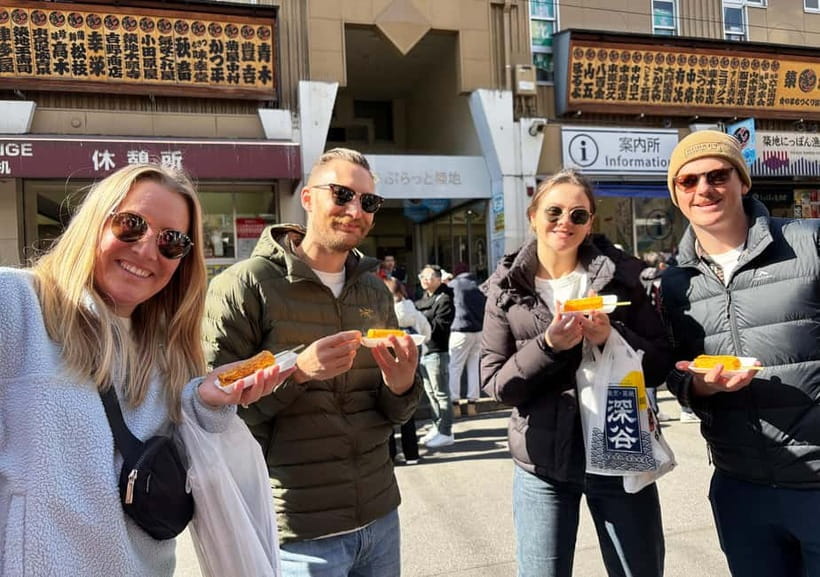
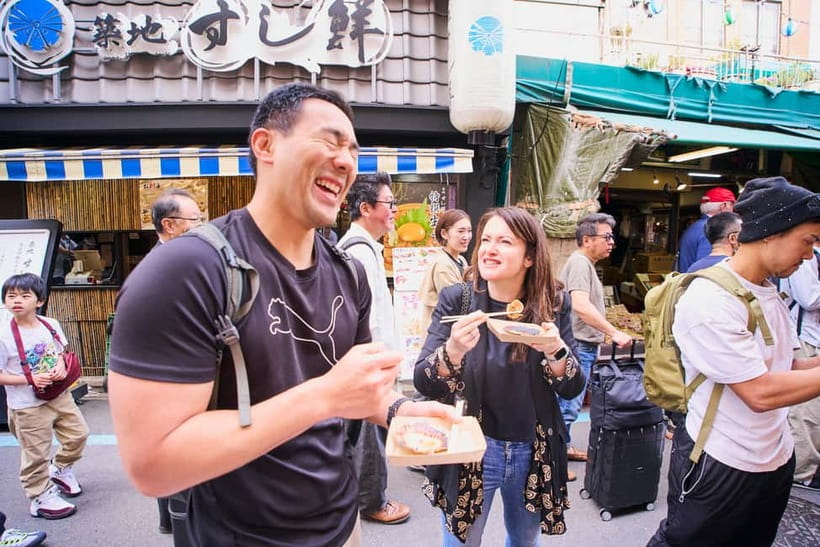
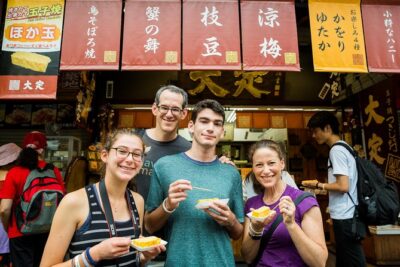
The first major portion gives you about 45 minutes to explore Japanese food culture with the guide. This is where the tour feels most informal. You walk through the market, stop at food stands, and learn about ingredients and eating customs as you go.
You should expect a food-focused walk rather than a sit-down meal. The guide’s role is to help you choose and understand what you encounter. George has been singled out for taking people to strong food stops, while Tomo has been praised for explaining the market’s history and culture along with the food.
That personal guidance can save time and reduce guesswork. If you have limited time in Tokyo, you may prefer to sample a few targeted items rather than wander every aisle. It is also useful if Japanese ingredients are unfamiliar and you want a quick explanation before buying.
The catch is that food purchases are not included. You pay for your own tastings, and the total cost depends on how much you eat. I would set aside a separate food budget and ask the guide which stops are optional before ordering.
The market can also be difficult for a group. People stop suddenly, queues form, and food stalls may have limited room. A few people have found the experience too focused on moving between stalls, with more waiting than expected. That is not a dealbreaker for me, but it means you should not expect a perfectly smooth walking pace.
Watching the 30-minute fish-cutting demonstration
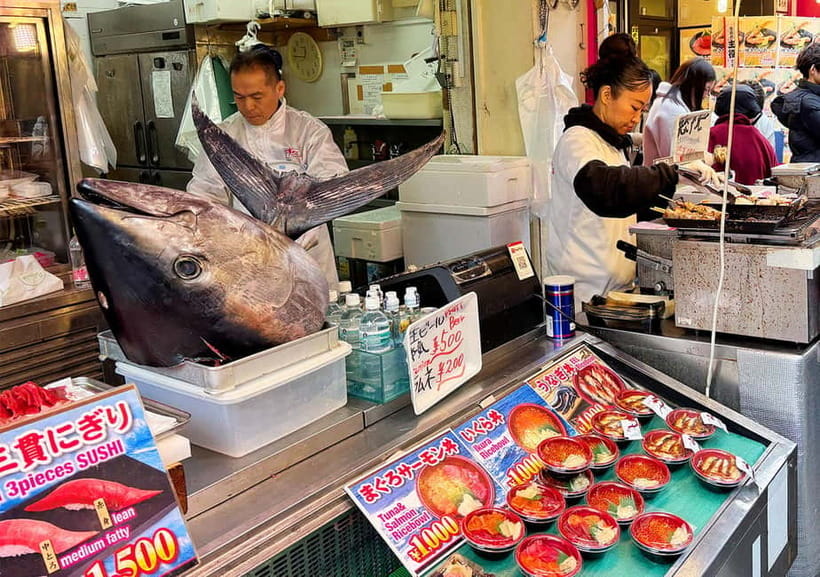
The fish-cutting show is the most unusual part of the tour. A skilled chef fillets a whole fish using traditional techniques, allowing you to watch the work rather than simply receive a finished dish.
This adds real value because it connects your food tasting to the craft behind it. The knife work, portioning, and handling of the fish show why preparation is such an important part of Japanese cuisine. You are not just looking at seafood in a market case. You are seeing how it becomes food.
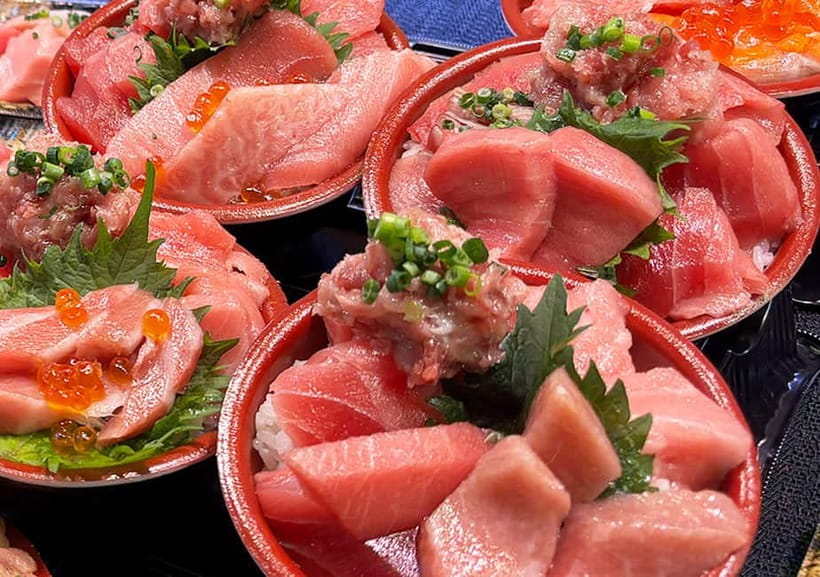
After the demonstration, you enjoy a fresh seafood bowl and learn more about Japanese food culture. Read the meal details carefully, though. The tour includes the demonstration, but meals are listed as not included. You should be prepared to pay separately for the bowl and other food.
For many people, this will justify a good part of the tour fee. You get something more specific than a basic market walk, and the demonstration gives the guide a natural chance to explain cooking techniques and ingredients.
The quality of this stop still depends on how well the guide manages the group. If people are standing far from the demonstration or cannot hear the explanation, the value drops. Stay close, ask for clarification, and tell the guide quickly if you are missing the commentary.
More Fish Market Tours in Tokyo
- Tokyo Sushi Making Class in Tsukiji with Professional Chef
★ 5.0 · 1,177 reviews - Tsukiji Fish Market Guided Tour and Sushi Making with Pro Chef
★ 5.0 · 775 reviews - Tokyo: Tsukiji Fish Market Food and Culture Walking Tour
★ 4.7 · 757 reviews - Tsukiji Fish Market Small-Group Food Walking Tour
★ 5.0 · 621 reviews
Seeing the working side of Tsukiji
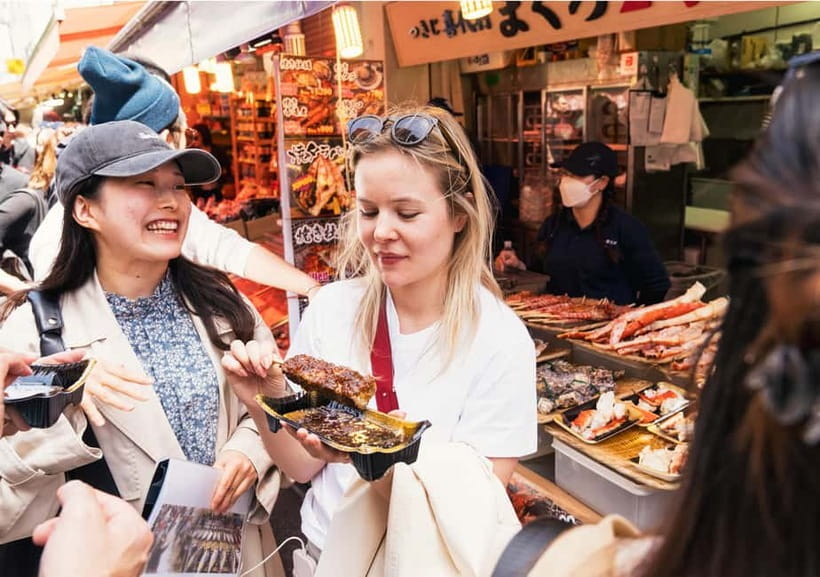
Another 30-minute section takes you through Tsukiji Fish Market, where professional traders operate. This is important because it shifts the mood from casual snacking to the daily business of seafood.
You get a look at an authentic market setting rather than a staged food attraction. Professional traders are working, so the guide’s job is also to help you observe without getting in the way. This portion may appeal most to people who want to understand how the market functions, not just where to buy a tasty bite.
The word authentic should not make you expect a quiet, carefully arranged museum visit. You may find noise, foot traffic, and people moving with purpose. That energy is part of the setting, but it can also make the tour feel rushed.
One practical point matters here: keep your group in sight. A crowded market is not the place to stop for a long photo break without warning. One person found that the guide did not always wait, while another felt the tour became unorganized in crowded conditions. I would treat staying together as your responsibility as well as the guide’s.
Returning to Tsukiji Hongwanji Temple
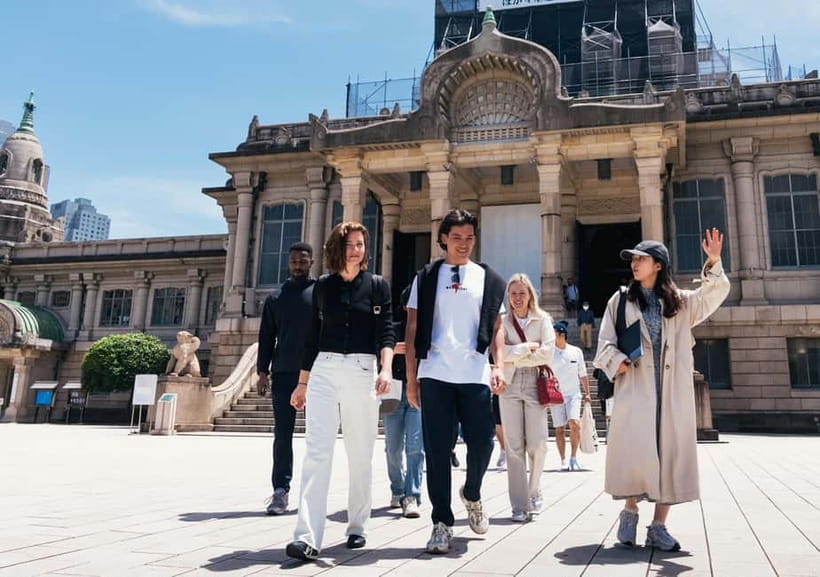
The temple portion lasts about 15 minutes and gives the walk a different tone. Inside Tsukiji Hongwanji Temple, the guide discusses Buddhist culture and the site’s appeal.
I like this addition because it keeps the experience from becoming only a sequence of food purchases. You get a small window into the beliefs and traditions that shape daily life in Japan. It also gives you a chance to pause after the busy market.
Still, do not book the tour mainly for the temple. The time is short, and some people have found that this part added little compared with the food exploration. If your priority is Buddhist architecture or religious history, you would need a longer, more focused visit elsewhere.
For this tour, the temple works best as supporting material. The main subject remains Tsukiji’s food culture.
How much personal attention will you get?
The tour is described as small-group, and the guide is meant to have more time for each person. But the maximum group size is 30. That is not a tiny group, especially in narrow or crowded market areas.
A group of that size can work when the guide is organized and speaks clearly. Strong guides such as George and Tomo have been praised for explaining the food, history, and culture well. One especially positive experience described clear English and thorough explanations throughout the morning.
Other experiences point to problems with quiet speech, sun exposure, waiting, and missed stalls. If hearing is important to you, stand near the guide and mention it at the start. If you have difficulty staying in direct sun, explain that clearly before the walking portion begins and ask where you can wait in shade.
The experience is wheelchair and stroller accessible, which is a useful advantage. The market itself can still feel crowded, so accessibility does not necessarily mean every moment will be effortless. Allow extra patience when moving through busy areas.
Is $33.16 good value?
At $33.16, I see this as a fair orientation tour, especially if you want a local guide to explain ingredients and point you toward food worth trying. The fish-cutting demonstration gives it more substance than a simple stroll through market stalls.
The value is strongest for first-time visitors who want a short introduction. You receive a guide, market interpretation, a traditional preparation demonstration, a seafood bowl experience, and a brief temple visit. You also get help navigating a food district that can feel confusing on your own.
The value is weaker if you already know Tsukiji well or are comfortable exploring markets independently. You can walk through the area without paying for a guide, and the tour does not cover your meals. If you expect a private experience, the possible 30-person group will also feel too large.
I would think of the fee as paying for direction and context. It is not the cheapest way to eat at Tsukiji, but it can be a practical way to get oriented quickly.
Timing, comfort, and useful planning tips
The tour lasts about two hours, so it fits neatly into a Tokyo morning or early-day plan. You meet at Tsukiji Hongwanji Temple and return there, making the logistics straightforward.
The meeting point is near public transportation, and confirmation is sent when you book. The experience requires good weather. If poor weather cancels the activity, you are offered another date or a full refund.
You should wear comfortable shoes and keep your belongings close in the crowd. Come ready to walk, stand, and wait at food stalls. Since meals are not included, bring money for the seafood bowl and any additional tastes you want.
This is not the best choice if you need a quiet, slow tour with long explanations at every stop. It is better suited to someone who likes to move, taste, and learn in short bursts.
Who should book this Tsukiji experience?
I would recommend it to a first-time Tokyo visitor who wants a guided introduction to Japanese ingredients and market customs. It also suits anyone who feels unsure about ordering at food stalls or wants to see a fish-cutting demonstration without arranging a private visit.
Families may appreciate the short duration and stroller access. Wheelchair users can participate, though the crowd level and pace are worth considering. Food lovers will get the most from the tour because tastings and cooking methods form its core.
I would be more cautious if you dislike crowds, need a consistently quiet guide, or want a detailed temple visit. The tour can also disappoint if you expect every food item to be included in the $33.16 price.
Should you book it?
Book this tour if you want a quick, guided introduction to Tsukiji, with food tasting, a traditional fish-cutting show, and a short Buddhist culture stop. The best guides can make the market easier to understand and help you spend your time well.
Skip it if you are confident exploring on your own and would rather spend the fee directly on food. If you do book, stay close to the guide, budget extra for meals, and confirm early that the guide can speak loudly enough for you to follow in a crowded market.
FAQ
How long does the Tsukiji Fish Market tour last?
The tour lasts approximately two hours.
Where does the tour begin?
It begins at Tsukiji Hongwanji Temple, at 3-chōme-15-1 Tsukiji, Chuo City, Tokyo 104-0045, Japan.
Does the tour include food?
Meals are not included. The route includes food stops and a fresh seafood bowl after the fish-cutting demonstration, but you should plan to pay separately for food.
Is the tour wheelchair and stroller accessible?
Yes. The activity is described as wheelchair and stroller accessible.
How large can the tour group be?
The maximum group size is 30 people. The experience is described as small-group, but it may not feel intimate at the maximum capacity.
What happens if the weather is poor?
The experience requires good weather. If it is canceled because of poor weather, you are offered a different date or a full refund. You can also cancel up to 24 hours before the start time for a full refund.
More Street Food Market Tours in Japan
- Tokyo Food Tour Taste Fresh Delights at Tsukiji Market
★ 5.0 · 429 reviews - Toyosu Market Morning Tuna Auction and Tsukiji Food Tour with Licensed Guide
★ 4.5 · 146 reviews - Tokyo Tsukiji Fish Market Food Tour: 15 Stops & Walk Local Street
★ 5.0 · 139 reviews - Tsukiji Fish Market Private Food Tour in Tokyo
★ 5.0 · 18 reviews
More Market Walking Tours in Japan
- Tsukiji Fish Market: Street Food & Culture Walking Tour
★ 4.8 · 259 reviews - Tokyo: Guided Walking Tour of Tsukiji Market with Breakfast
★ 4.4 · 134 reviews - Tokyo: Tsukiji Market Walking Tour & Sushi Cooking Class
★ 4.6 · 122 reviews - Tokyo: Guided Walking Tour of Tsukiji Market with Lunch
★ 4.4 · 24 reviews
Just added around Tokyo
- Tokyo: Private Tsukiji Street Food & Sake with Local Guide★ 5.0 · 3 reviews
- Tokyo: Tsukiji Market Guided Tour & Sushi-Making Experience★ 4.4 · 11 reviews
- Tokyo: Tsukiji Market and Hama-rikyu Gardens Guided Tour★ 4.8 · 73 reviews
- Tokyo : Tsukiji Fish Market Food Walking & Shrine Visit Tour★ 5.0 · 3 reviews
- Tokyo: Tsukiji Fish Market Culture Tour with Sashimi Tasting★ 4.6 · 54 reviews
- Tokyo: Tsukiji Fish Market Foodie and Educational Tour★ 5.0 · 4 reviews
- Tokyo: Guided Walking Tour of Tsukiji Market with Lunch★ 4.4 · 24 reviews
- Tokyo’s Kitchen: Tsukiji Market Food & Culture Walk★ 4.7 · 74 reviews
Fish Market Tours, compared.
Tokyo Tsukiji Fish Market Food and Culture Walking Tour
Read our review →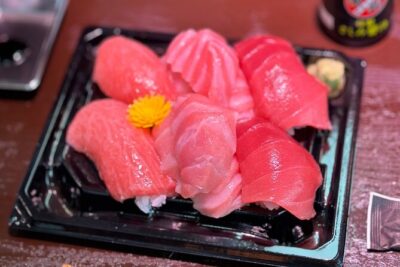

Tokyo Sushi Making Class in Tsukiji with Professional Chef
Read our review →
Tsukiji Fish Market Guided Tour and Sushi Making with Pro Chef
Read our review →Tsukiji Fish Market Food and Culture Walking Tour
Read our review →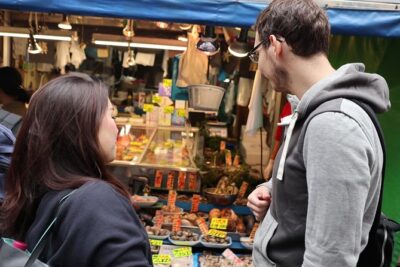
Tsukiji Fish Market Small-Group Food Walking Tour
Read our review →
Tsukiji Fish Market Sushi Making Class with Pro Chef
Read our review →Browse the lists this tour appears in