Review · TOKYO
Tsukiji Fish Market Small-Group Food Walking Tour
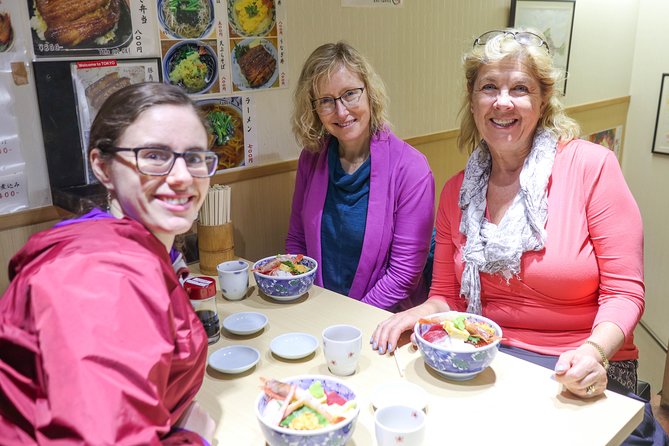
Tsukiji is less about watching a wholesale fish auction than about eating your way through Tokyo’s famous outer market. You’ll weave among seafood stalls, dried fish shops, cooking stores, and narrow food lanes, tasting items such as sushi, grilled eel, scallops, tamagoyaki, and crab.
I like two things here. First, lunch is included, and it is not just a token snack. Several stops can add up to a hearty morning meal. Second, the guide connects the food to Japanese customs, market history, a Buddhist temple, and a Shinto shrine. The main catch is important: the wholesale fish market moved to Toyosu in 2018, so this is not a tour of the giant auction floor.
Key points
- Small group: The maximum is seven people, a useful size for crowded lanes and food stalls.
- Plenty to eat: Samples may include tuna nigiri, unagi, tamagoyaki, scallops, crab, dried seafood, and local snacks, followed by a seafood lunch.
- A cultural side trip: The route includes a Japanese Buddhist temple and Shinto shrine, not just market counters.
- Strong guide potential: Guides including Kazu, Yuki, Hitomi, Mark, and Tiger have been praised for food knowledge, good recommendations, and friendly company.
- Know the market’s limits: Tsukiji Outer Market remains active, but the wholesale trading center is now at Toyosu.
- Food restrictions matter: Vegan options are unavailable, and allergy-free meals cannot be guaranteed.
What Tsukiji is today
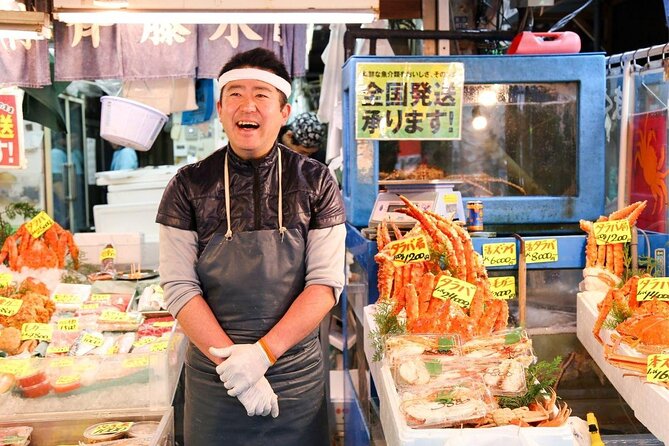
Let’s clear up the biggest point before you book. The inner wholesale market, including the famous fish auction operation, moved from Tsukiji to Toyosu in 2018. Tsukiji did not shut down. Its Outer Market continues to serve restaurants, local shoppers, cooks, and curious visitors.
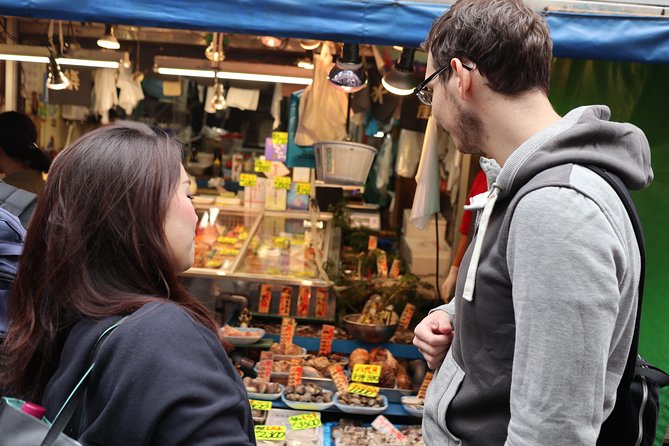
That means this tour gives you the working retail and food side of Tsukiji. You’ll see shops selling fish, fruit, vegetables, meat, dried goods, seasonings, knives, cookware, and tableware. You may also pass nearby wet fish markets where live seafood activity continues.
I prefer this setting for a food walk because it gives you more chances to taste things. Toyosu is the place to consider if your main goal is the wholesale auction, but Tsukiji is the better fit if you want food stalls, specialty shops, and a guide who can help you make sense of what you are seeing.
The market can be tight. Signs ask people not to stop in busy lanes, and some food must be eaten in designated areas or at a counter. Stay close to your guide, keep your bag under control, and do not expect a slow stroll with long photo stops at every stall.
More Fish Market Tours in Japan
- Tokyo Tsukiji Fish Market Food and Culture Walking Tour
★ 5.0 · 3,184 reviews - Tokyo: Tsukiji Fish Market Food and Walking tour
★ 5.0 · 1,724 reviews - Tokyo: Tsukiji Fish Market Guided Walking Tour
★ 4.9 · 1,397 reviews
Meeting at Tsukiji Station
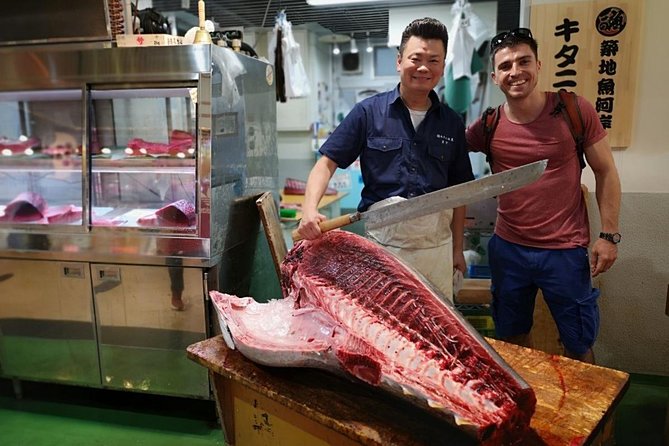
The tour begins at Tsukiji Station, Exit 1, at 3 Chome-9 Tsukiji. Your guide waits near the station, and the first meeting portion takes only a few minutes. The easiest plan is to arrive early enough to find Exit 1 without rushing.
One practical tip is to look for other people who appear to be waiting for a food tour and confirm that you are in the right place. The meeting area can feel less obvious than a hotel lobby, especially if you have just arrived in Tokyo and are still getting used to the station system.
The tour lasts about three hours and ends at Shiodome Tower in Higashishinbashi. That ending point is useful because you can continue toward other central Tokyo sights, though you should not plan a tight connection immediately afterward. Market lines, food preparation, and group pacing can vary.
The maximum group size is seven. That matters here. A large party would have trouble stopping at counters or hearing explanations over the market noise. A small group also gives you a better chance to ask about unfamiliar fish, Japanese ingredients, and the customs connected with the shrines.
Eating through the Outer Market
The food is the reason to book this experience. You are not simply looking at displays while a guide recites names. You get to try several items, with a fresh seafood lunch included along the way.
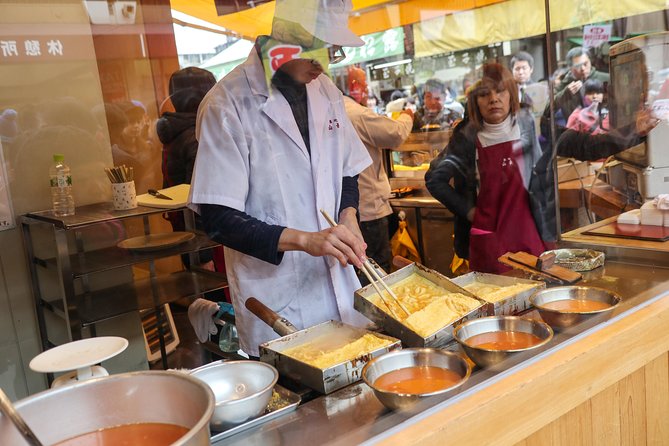
The exact stops can change, but the food examples are generous. You might try tuna nigiri, grilled eel, Japanese sweet omelet, scallops on a stick, giant crab legs, dried seafood, and other local bites. One food stop may offer a small taste, while another may give you a more substantial item. By the end, you should arrive at lunch with a good appetite, not an empty stomach.
Tamagoyaki is a particularly nice market sample. This sweet Japanese omelet is familiar to many people from sushi shops, but tasting it fresh from a market stall gives you a better sense of its texture and sweetness. Unagi, or grilled eel, offers another classic Japanese flavor, usually savory and glazed.
The food is not only about quantity. A good guide can explain what you are eating, how it is prepared, and why it belongs in this market. Guides such as Mark have been singled out for explaining seafood types, while Kazu has been praised for knowing which places to choose and helping with substitutions when needed.
Still, do not assume every snack will be a major tasting. One stop may have a long queue, or a certain item may not be available. A visit has sometimes included fewer samples than expected, with one small grilled item and lunch doing most of the work. This is a market tour, not a fixed restaurant tasting menu.
The included seafood lunch
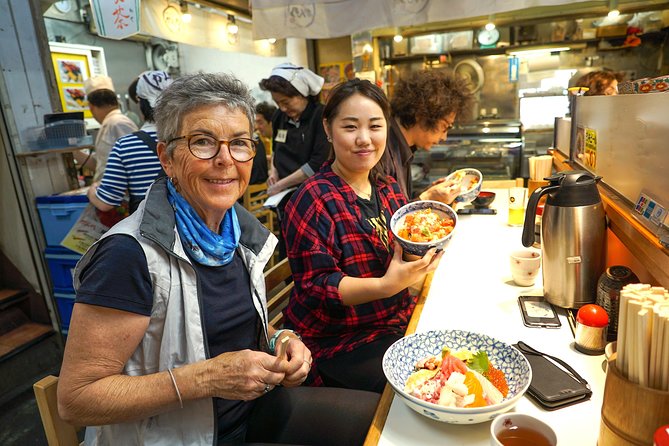
Lunch is one of the strongest parts of the value. You get a sit-down meal at a local restaurant or small food counter, with seafood as the focus. Some departures allow you to choose what you want for the meal, which is helpful if you have already eaten a particular item at an earlier stall.
The meal also gives you a break from the narrow market lanes. A small booth or compact restaurant setting can feel very Japanese, though you should not expect a spacious dining room. The route is designed around local food, not luxury seating.
Come hungry. The market samples can include several larger bites as well as tiny tastes, and lunch follows them. If you eat a full breakfast first, you may spend the rest of the tour managing your appetite instead of enjoying the food.
Dietary planning needs care. Vegan options are not available. The operator cannot guarantee an allergy-free meal because the food is prepared in kitchens it does not control. Substitutions may not be possible at every stop, although the guide may try to compensate at another stop.
One especially useful example involved a person with coeliac disease. A guide worked to find appropriate choices and make small changes where possible. That is encouraging, but it is not a promise of a gluten-free tour. Tell the operator and guide about restrictions, then decide if the remaining uncertainty is acceptable.
More Fish Market Tours in Tokyo
- Tokyo Sushi Making Class in Tsukiji with Professional Chef
★ 5.0 · 1,177 reviews - Tsukiji Fish Market Guided Tour and Sushi Making with Pro Chef
★ 5.0 · 775 reviews - Tokyo: Tsukiji Fish Market Food and Culture Walking Tour
★ 4.7 · 757 reviews - Tsukiji Fish Market: Street Food & Culture Walking Tour
★ 5.0 · 669 reviews
Old Tsukiji Market and its 460 shops
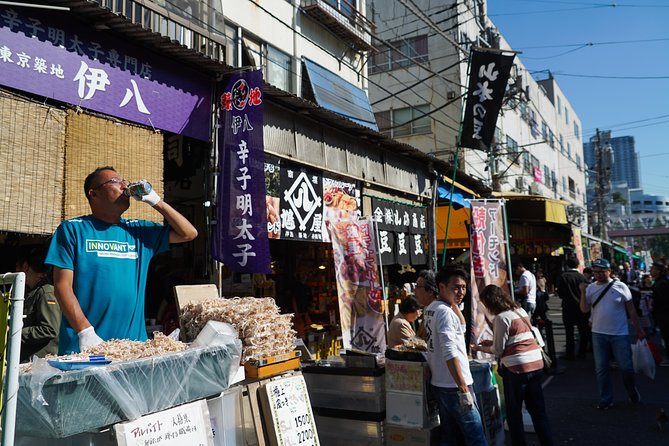
The route includes the old Tsukiji Market area, where around 460 shops sell fresh fish, produce, meat, dried foods, seasonings, cooking tools, and tableware. This is where the tour becomes more useful than simply following a map through the market.
You can ask why one dried fish looks different from another, how Japanese shops display seafood, or what a particular seasoning is used for. If you are looking for a souvenir, this is also a good place to consider knives, tea-related items, packaged foods, and kitchen goods, though your guide may be more useful for explaining what is practical and what is mainly decorative.
The market is aimed at several kinds of customers. Restaurant buyers come for supplies, local residents shop for ingredients, and visitors browse and eat. That mix gives Tsukiji its appeal. You are not walking through a set built only for sightseeing.
At the same time, the market’s fame means some lanes can be crowded. You may need to move when asked, and there may be restrictions on eating while walking. Wear shoes suited to a few hours on your feet, and bring water, especially in summer.
Temples, shrines, and a city view
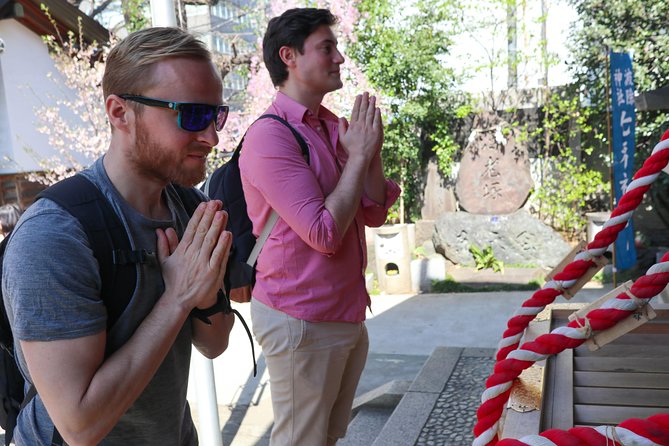
The tour adds a useful cultural layer by visiting a Japanese Buddhist temple and a Shinto shrine. These stops help explain why the Tsukiji area matters beyond food. You get a chance to learn how two major Japanese religious traditions appear in everyday city life.
The temple and shrine also provide a change of pace. After seafood counters and tight lanes, a quieter religious site gives you time to look around and hear context from the guide. You do not need to be religious to appreciate the contrast between the market’s practical energy and the calm of a worship space.
The route also includes a city viewpoint with views toward Tokyo Bay. This is a welcome reminder that Tsukiji sits in a large, modern waterfront city, not in an isolated food district. The view is a bonus rather than the main reason to book, but it broadens the experience.
Exact timing at these stops can vary because the food portion takes priority. If your main interest is temples or city views, you may prefer a dedicated cultural tour. Here, those sites support the food story.
How the guides shape the morning
This tour depends heavily on the person leading it. The strongest departures feature guides who know where to stop, explain the food clearly, and keep the group moving without making the morning feel rushed.
Names associated with this route include Kazu, Yuki, Hitomi, Mark, Tiger, Mia, and Mummy. Kazu has been praised for market knowledge, kindness, and care with food substitutions. Yuki has been noted for knowing good places to eat. Hitomi has been described as fun and well informed, while Mark has helped explain different kinds of seafood.
That range tells you what to hope for: a guide who acts as translator, food scout, and cultural interpreter. A good guide can point out seafood you would otherwise pass, explain unfamiliar words, and prevent you from wasting time in a line for something less worthwhile.
There is a risk of inconsistency. One departure can include detailed explanations, while another may provide much less information. If you want to learn, ask questions early. Ask what you are eating, where it comes from, how it is prepared, and why the shop is worth visiting. The small group makes that easier.
Is $87.37 a fair price?
At $87.37 per person, this is not the cheapest way to wander Tsukiji. You could buy individual snacks on your own, and the market is open to independent visitors. The price pays for more than the food itself: a three-hour route, a guide, several tastings, an included seafood lunch, and visits to cultural sites.
The value improves if you are new to Japanese seafood. You will not need to guess which stalls welcome visitors, figure out what every menu item means, or spend your morning walking past food without knowing what to order. The small group also gives you a practical advantage in crowded lanes.
The value is weaker if you already know Tsukiji well or mainly want the wholesale market. This tour does not take you to the former inner market, and it is not designed around the Toyosu auction. You are paying for guided eating in the Outer Market.
The average booking lead time is about 40 days, which suggests you should reserve ahead if your Tokyo schedule is fixed. Free cancellation is available up to 24 hours before the start time. Changes or cancellations inside that window are not refunded.
Weather, clothing, and food etiquette
Tokyo summers can be very hot and humid. Bring water and wear a hat to reduce the risk of heat illness. Lightweight clothing and comfortable shoes will make the three hours easier.
A market is not the place for a large backpack or a long selfie stop. Keep your belongings close, follow the guide’s instructions, and eat where the shop allows. These simple habits show respect for the people working there and make it easier for the group to keep moving.
You may want to carry a little extra money for shopping after the tour. The experience includes food, but it does not mean every interesting item in the market is included. Tsukiji has cooking tools, seasonings, dried goods, and other products worth browsing once the guided portion ends.
Who should book this Tsukiji walk?
I would choose this tour if you want a first taste of Japanese seafood without having to plan every stop yourself. It suits people who enjoy trying unfamiliar foods, asking questions, and walking through crowded market lanes.
It is also a good fit for couples and small groups. The group limit of seven keeps the experience personal, and a small party may make it easier to share the morning with people who enjoy food as much as you do.
Families may find the range of foods appealing, but picky eaters should read the restrictions carefully. Vegans should not book this tour, and people with serious allergies need to understand that safe preparation cannot be guaranteed.
I would not choose it if your dream is the famous wholesale auction. In that case, look for an experience based at Toyosu instead. I would also skip it if you want a long, quiet temple visit or a formal sushi lesson. This is a moving, food-heavy market walk with culture added along the way.
Should you book it?
Book this Tsukiji tour if you want a guided introduction to the Outer Market, several seafood samples, and a proper lunch in one compact morning. The strongest part is the combination of food and local context, especially when your guide explains what you are tasting and leads you to places you might miss alone.
Go in with accurate expectations. You will not see the old wholesale fish auction, and the number of samples can vary. If you accept Tsukiji as a living food district rather than a wholesale market, the $87.37 price can be good value, particularly for a first visit to Tokyo.
FAQ
Where does the tour begin?
It begins at Tsukiji Station, Exit 1, at 3 Chome-9 Tsukiji, Chuo City, Tokyo.
Where does the tour end?
The tour ends at Shiodome Tower, 1 Chome-6-3 Higashishinbashi, Minato City, Tokyo.
How long does the tour last?
The experience lasts approximately three hours.
What food is included?
A fresh seafood lunch is included, along with food samples at several local shops and stalls.
What kinds of food might I try?
Possible foods include tuna nigiri sushi, grilled eel, tamagoyaki, scallops, crab, dried seafood, and local snacks. The exact selections can vary.
Does the tour visit the wholesale fish auction?
No. The former inner wholesale market moved to Toyosu in 2018. This experience focuses on Tsukiji Outer Market and nearby food and cultural sites.
How large is the group?
The maximum group size is seven people.
Are vegan options available?
No. Vegan options are not available on this tour.
Can the tour accommodate food allergies?
Allergy-free meals cannot be guaranteed. Substitutions may not be possible at every stop, though efforts may be made to offer alternatives elsewhere.
Can I cancel for a refund?
You can cancel up to 24 hours before the experience starts for a full refund. Cancellations or changes made less than 24 hours before the start time are not accepted for a refund.
More Market Walking Tours in Tokyo
- Bangkok: City Highlights Temple and Market Walking Tour
★ 4.5 · 3,990 reviews - Marrakech: Ben Youssef, Secret Garden, & Souks Walking Tour
★ 4.6 · 2,802 reviews - Marrakech: Colorful Medina Souks Guided Walking Tour
★ 4.7 · 2,470 reviews - Air Raid Shelter + St. Nicholas Market Walking Tour
★ 5.0 · 1,950 reviews
More Market Walking Tours in Japan
- Tsukiji Fish Market: Street Food & Culture Walking Tour
★ 4.8 · 259 reviews - Tokyo: Guided Walking Tour of Tsukiji Market with Breakfast
★ 4.4 · 134 reviews - Tokyo: Tsukiji Market Walking Tour & Sushi Cooking Class
★ 4.6 · 122 reviews - Tokyo: Guided Walking Tour of Tsukiji Market with Lunch
★ 4.4 · 24 reviews
Just added around Tokyo
- Tokyo: Private Tsukiji Street Food & Sake with Local Guide★ 5.0 · 3 reviews
- Tokyo: Tsukiji Market Guided Tour & Sushi-Making Experience★ 4.4 · 11 reviews
- Tokyo: Tsukiji Market and Hama-rikyu Gardens Guided Tour★ 4.8 · 73 reviews
- Tokyo : Tsukiji Fish Market Food Walking & Shrine Visit Tour★ 5.0 · 3 reviews
- Tokyo: Tsukiji Fish Market Culture Tour with Sashimi Tasting★ 4.6 · 54 reviews
- Tokyo: Tsukiji Fish Market Foodie and Educational Tour★ 5.0 · 4 reviews
- Tokyo’s Kitchen: Tsukiji Market Food & Culture Walk★ 4.7 · 74 reviews
- Tokyo: Guided Walking Tour of Tsukiji Market with Lunch★ 4.4 · 24 reviews
Fish Market Tours, compared.
Tokyo Tsukiji Fish Market Food and Culture Walking Tour
Read our review →

Tokyo Sushi Making Class in Tsukiji with Professional Chef
Read our review →
Tsukiji Fish Market Guided Tour and Sushi Making with Pro Chef
Read our review →Tsukiji Fish Market Food and Culture Walking Tour
Read our review →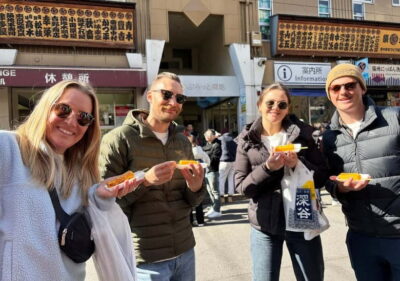
Tsukiji Fish Market: Street Food & Culture Walking Tour
Read our review →