
Review · JAPAN
Kanazawa: Sushi Making Experience at Oumicho Market
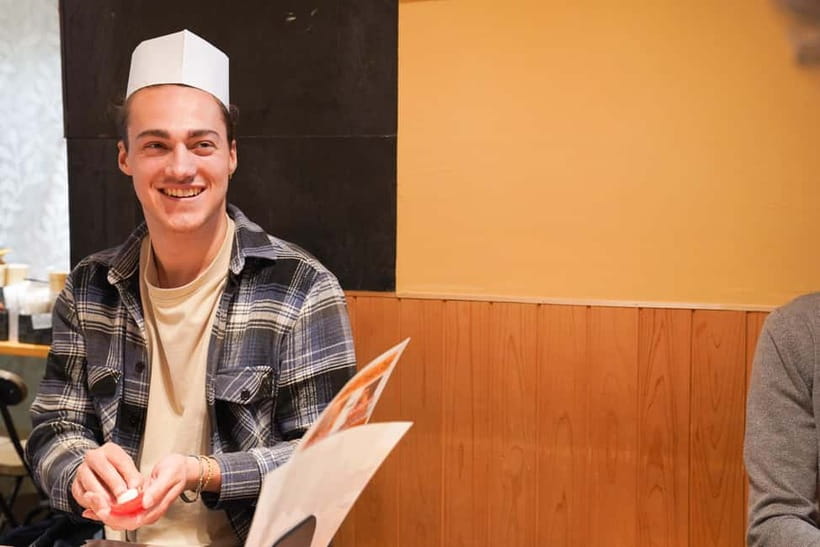
Kanazawa’s Omicho Market is not just a place to shop for seafood. At Sushi Enome, you sit close to the market action and learn to turn fresh ingredients into your own meal. I like the mix of hands-on cooking and local food culture, and I like that you eat eight pieces of sushi made during the lesson.
The private two-hour format gives you direct time with a professional chef, and the finished meal makes the $70 price easier to justify. The main drawback is that the instruction is in Japanese, so you may need translation help, gestures, and close watching. Also, the restaurant can be tricky to find inside the market, so arrive early.
Key points at a glance
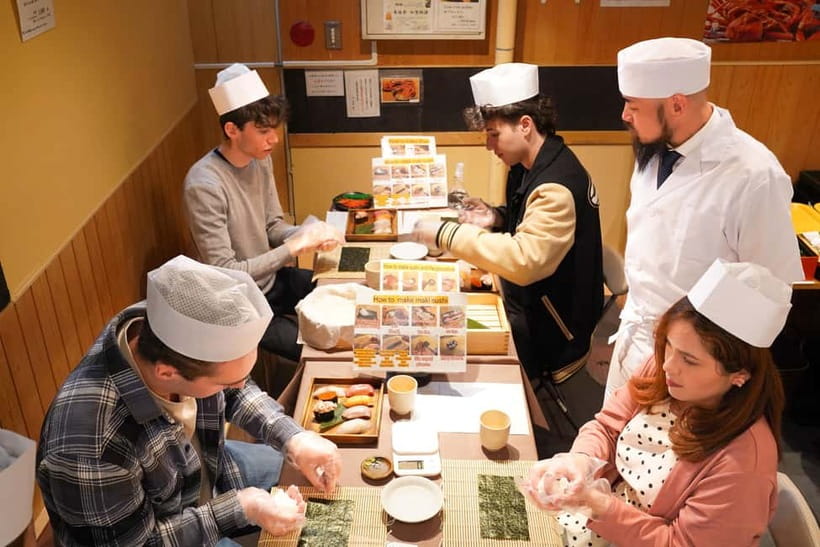
- Make eight pieces of sushi: Prepare five nigiri, two gunkan-maki, and one sushi roll, then eat your work.
- Cook inside Omicho Market: The lesson takes place at Sushi Enome, amid one of Kanazawa’s busiest food markets.
- Learn practical basics: The chef covers knife use, sushi shaping, rolling, and some of the history and culture behind the food.
- Private group setting: You get a more personal lesson than you would in a large classroom.
- Plan for Japanese instruction: Translation support has been used during sessions, but the listed instructor language is Japanese.
- Arrive early: Enter through the Emza, or M’ZA, entrance and allow extra time to locate the restaurant.
Why this sushi lesson works in Omicho Market
I like this experience because it connects the meal to the place where Kanazawa’s seafood culture is on display. Omicho Market has more than 300 years of history, and its narrow paths are filled with food stalls, shoppers, locals, and sightseers. You are not making sushi in an isolated cooking studio. You are learning inside a working market.
That setting gives the lesson a useful sense of place. You can hear the activity around you while the chef explains how sushi comes together. The experience remains focused on cooking, but the market helps you understand why seafood matters so much in Kanazawa.
The lesson is also refreshingly modest in scale. You are not expected to produce a full restaurant menu. Instead, you make five pieces of nigiri, two gunkan-maki, and one roll. Eight pieces is enough to feel like a proper meal, while still leaving room to concentrate on your technique.
A few more market tours around Japan worth a look
- Tokyo Tsukiji Fish Market Food and Culture Walking Tour
★ 5.0 · 3,184 reviews - Tokyo: Tsukiji Fish Market Food and Walking tour
★ 5.0 · 1,724 reviews - Tokyo: Tsukiji Fish Market Guided Walking Tour
★ 4.9 · 1,397 reviews
Finding Sushi Enome inside the market
Your meeting point is Sushi Enome, located inside Omicho Market. Enter through the Emza, or M’ZA, entrance. At the first intersection, turn right, then walk a short distance until you see the Sushi Enome sign on your left.
This sounds simple, but the market can be confusing when you are watching signs, people, and food displays at the same time. I would arrive at least 10 minutes early, as requested, and add a little extra time if this is your first visit to Omicho Market.
The early arrival has another benefit. You can get your bearings before the lesson begins rather than rushing in with your attention split. The market is a worthwhile place to look around, but do not wander too far once you have found the entrance. The activity does not include hotel pickup or drop-off, so you are responsible for getting to the market.
The opening lesson with a professional chef
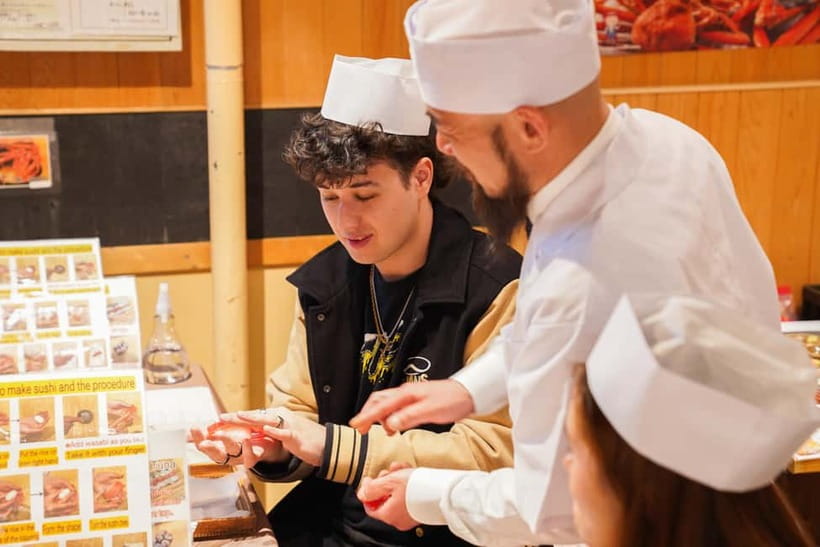
Once the activity begins, a professional sushi chef introduces the basic ideas behind sushi and explains some of its history and culture. The lesson is not only about pressing fish onto rice. You also learn how the ingredients are handled and why technique matters.
Instruction includes knife use and the basic process of rolling sushi. These are useful skills to watch closely, even if you do not plan to make restaurant-quality sushi at home. The chef demonstrates the movements, then gives you a chance to copy them.
The listed instructor language is Japanese. That is the one point you should consider carefully before booking. Some sessions have included a second restaurant staff member to help with translation, and the teaching has been described as patient and good-humored. Still, translation arrangements should not be treated as a guaranteed full lesson in English unless the operator confirms that directly.
A Japanese-language demonstration can work well for a food lesson because the actions are visible. You can watch how the chef holds the knife, handles the rice, and shapes each piece. If you need detailed explanations, ask about language support before you reserve.
Shaping five pieces of nigiri
Nigiri is the familiar sushi style made with a small mound of seasoned rice topped with fish or another ingredient. Here, you make five pieces. This part of the lesson gives you the clearest look at the balance between rice, topping, pressure, and shape.
The challenge is restraint. Too much pressure can make the rice dense, while too little can leave the piece loose. The chef shows you how to form the rice and place the seafood so the finished piece holds together without losing its light texture.
The seafood comes from Kanazawa, and the activity uses fresh ingredients supplied for the lesson. That matters because nigiri is simple food. There is no heavy sauce or complicated cooking process to cover up the main ingredient. The rice and fish need to work together.
I like the fact that you make several pieces rather than only one practice sample. Five pieces give you time to adjust. Your first attempt may look different from your fifth, and that small improvement is part of the fun.
More shopping tours in Japan:
- Nishiki Market Brunch Walking Tour (7 Tastings + Brunch)
★ 5.0 · 1,355 reviews - Tsukiji Fish Market Guided Tour and Sushi Making with Pro Chef
★ 5.0 · 775 reviews - Tokyo: Tsukiji Fish Market Food and Culture Walking Tour
★ 4.7 · 757 reviews - Tsukiji Fish Market: Street Food & Culture Walking Tour
★ 5.0 · 669 reviews
Making two gunkan-maki and one roll
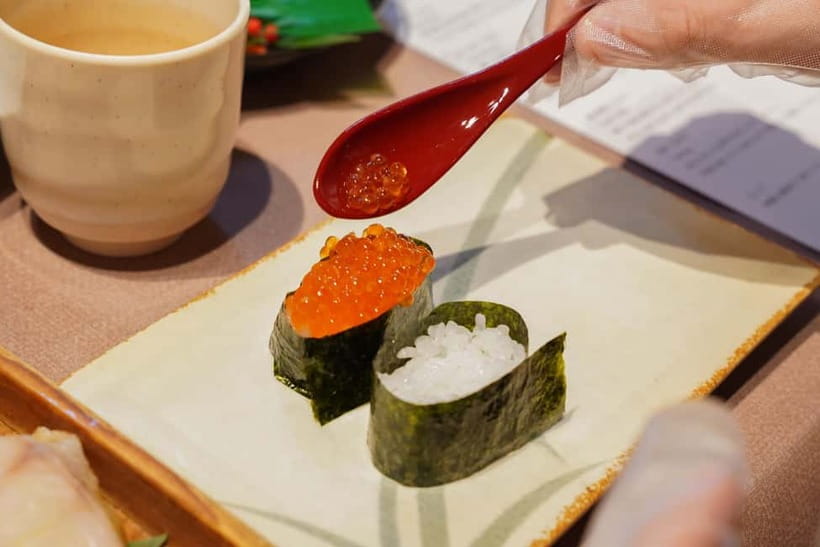
You also prepare two gunkan-maki. This style uses rice wrapped with seaweed, creating a small boat shape that can hold a softer topping. It gives you a different task from nigiri because the seaweed and rice need to form a stable little container.
The two gunkan pieces let you practice the shape more than once. As with the nigiri, the chef can show you the correct movement, then let you work through it yourself. Pay attention to how much rice you use. A small amount is usually easier to control than an oversized portion.
The final item is one sushi roll. Rolling looks easy until you try to keep the filling centered and the seaweed firm. The lesson includes instruction in this basic technique, so you get a useful change of pace after forming individual pieces.
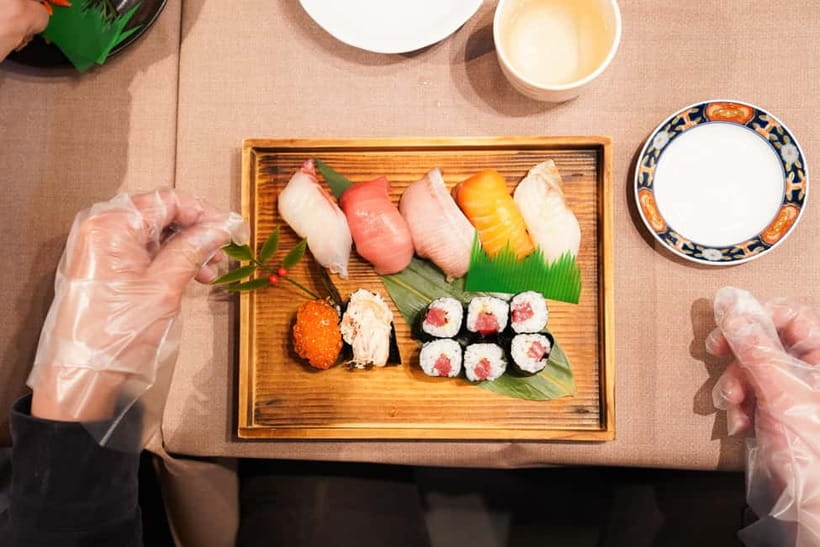
Your final plate includes three different sushi styles. That makes the experience more rewarding than a lesson focused only on one shape. You leave having tried several basic methods, not just watched a chef prepare food.
Eating what you make
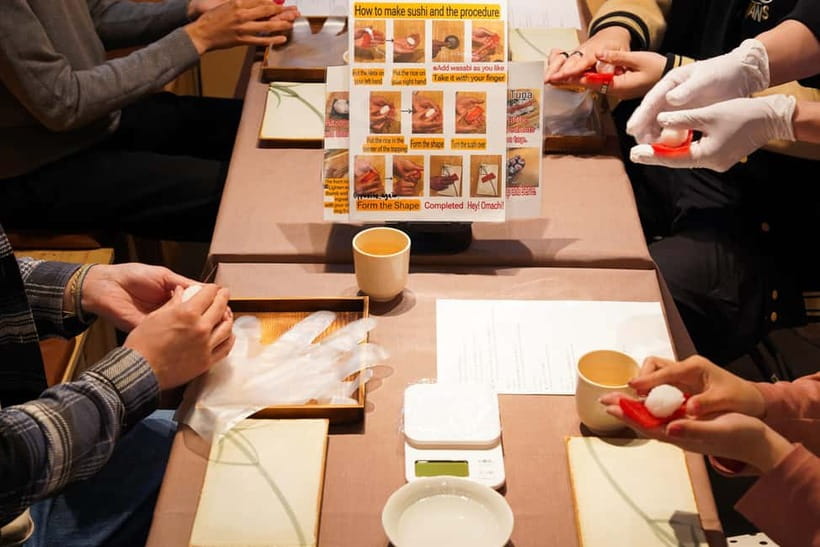
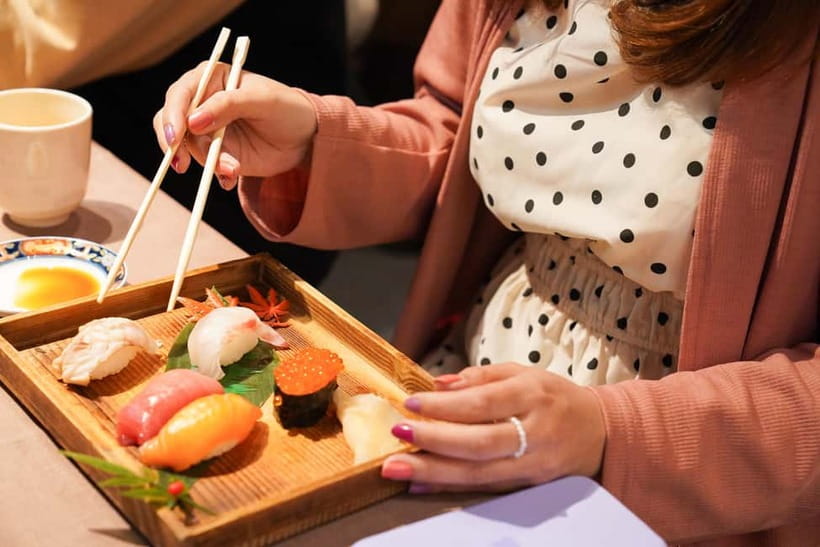
After the preparation, you taste the sushi you made. This is the payoff, but it is also part of the lesson. Eating your pieces lets you see how well the rice held together, how the fish and rice balance, and how your shaping affected the result.
The included meal consists of five nigiri, two gunkan-maki, and one roll. Drinks are not included, so plan to buy those separately if you want one with your meal. Alcohol is not allowed as part of the activity, and smoking is also prohibited.
I like the built-in meal because it gives the $70 price real substance. You are paying for instruction, ingredients, a private group setting, and the food itself. If you only wanted a quick sushi meal, this would be an expensive way to eat eight pieces. If you want to learn a skill and have a structured food experience in the market, the value is stronger.
The seafood is meant to be enjoyed fresh, without turning the meal into a long tasting menu. You make the pieces, take photographs, and eat them while the experience is still fresh in your mind.
What the private group format changes
The activity is offered as a private group. That matters if you want to ask questions, work at your own pace, or take photographs without sharing the lesson with a large class. It can also make the experience a good choice for couples, families, or a small group of friends.
A private booking does not mean the chef will automatically speak your language. The instructor is listed as Japanese, so communication remains an important practical point. The private setting gives you more direct attention, but it does not remove the need to watch demonstrations carefully.
The two-hour length is well suited to the amount of food you prepare. You have time for an introduction, demonstrations, hands-on work, and eating without needing to spend an entire morning or afternoon. I would not book this if you want a fast drop-in activity. It is structured, and you should arrive ready to stay for the full session.
The market setting and your photo opportunities
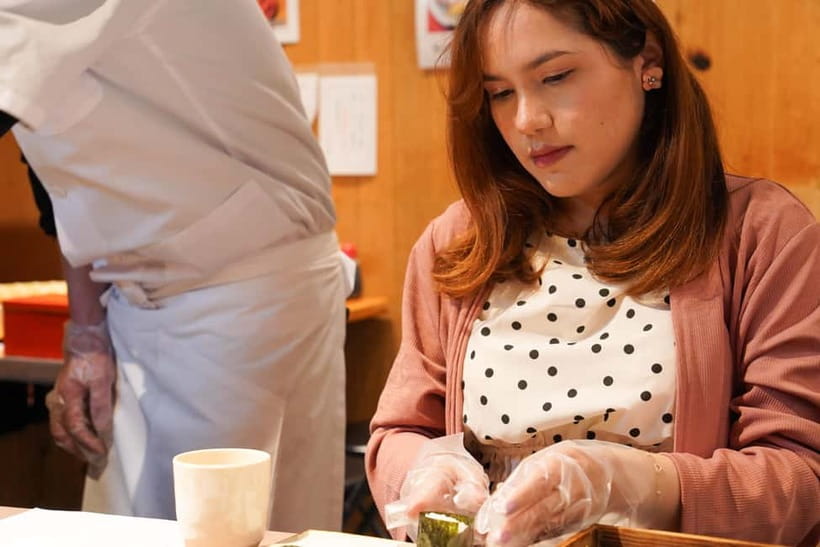
Omicho Market adds energy to the experience. You make sushi while the market continues around you, which gives your photographs a stronger sense of place than a plain classroom would. You can take pictures of the preparation and the finished plate.
Keep your camera or phone ready, but do not let photographs replace the lesson. The knife and rolling sections require attention, especially if you are unfamiliar with sushi preparation. The best photos will come after you have completed the main steps and have your finished sushi in front of you.
You may also want to visit more of the market before or after the activity. The lesson itself lasts two hours, and the market has enough activity to justify arriving early or staying a little afterward. Just remember that any additional food or drinks outside the included sushi cost extra.
Who will get the most from this experience
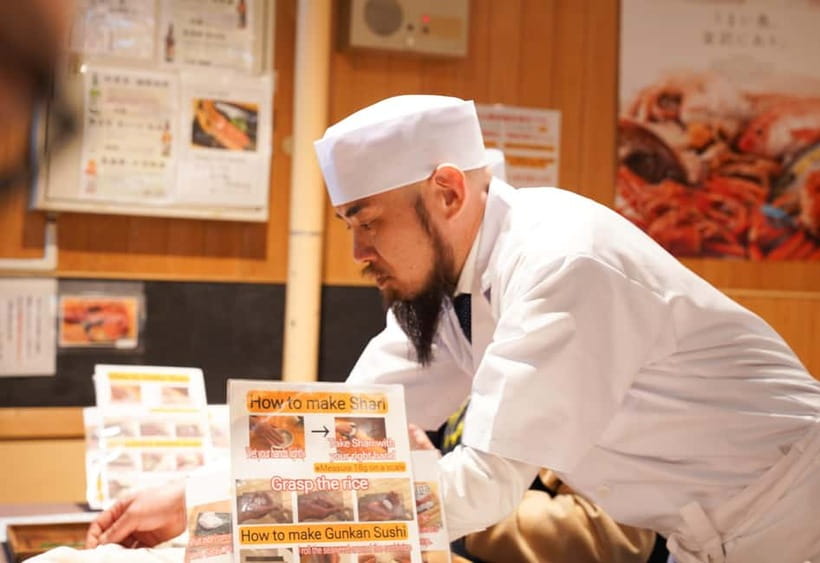
I would recommend this lesson to anyone who enjoys food with a clear connection to place. It suits first-time sushi makers, couples looking for a shared activity, and families who want something more active than simply sitting down for a meal.
It is also a good fit if you want a short cultural activity during a Kanazawa visit. The lesson covers sushi history and culture, but it remains practical. You learn by handling rice, seaweed, fish, and a knife rather than listening to a long talk.
You may want to choose another activity if you need detailed English instruction throughout. Japanese is the listed teaching language, and translation support is not clearly promised for every booking. You should also think twice if you dislike busy market settings or prefer a quiet restaurant meal.
Comfortable clothing is required because you will be cooking. The activity is wheelchair accessible, which is useful information for people who need step-free access, though the market itself may still feel crowded at busy times.
Is $70 a fair price in Kanazawa?
At $70 per person, this is not the cheapest way to eat sushi in Kanazawa. You can find simpler meals for less. The price makes more sense when you count the two-hour lesson, the professional chef, all ingredients, the private group format, and the eight pieces you prepare and eat.
The value also depends on your interest. If you only care about eating top-quality sushi, spend the money on a restaurant meal instead. If you want to understand how sushi is shaped and leave with a story to tell, the lesson offers more than food alone.
I see the price as fair for a private, hands-on experience in one of Kanazawa’s best-known food locations. The fresh local seafood and the chance to learn several sushi styles help justify the cost. Drinks are extra, and transportation is not included, so keep those small additions in your budget.
Free cancellation is available up to 24 hours before the activity for a full refund. You can also reserve now and pay later, which helps if you are still arranging your Kanazawa schedule.
Small details that make the lesson better
Wear clothes that are comfortable for cooking and easy to move in. You do not need to bring ingredients or special equipment, since the necessary food and supplies are included.
Arrive 10 minutes early, and use the Emza entrance rather than assuming you will spot Sushi Enome from outside the market. The meeting instructions are clear once you are in the right section, but the first visit can take a few minutes.
I would also check the language situation when booking. The chef may demonstrate clearly, and some sessions have had translation support from restaurant staff. Still, a quick confirmation can prevent disappointment if you want detailed explanations in English.
Should you book this sushi-making experience?
Book it if you want to do more than eat in Kanazawa. You will make five nigiri, two gunkan-maki, and one roll, then sit down to taste your own work inside a market with more than 300 years of history. The private format, patient teaching style, fresh seafood, and cheerful atmosphere make it a strong choice for food-focused visitors.
Think carefully if English instruction is essential, since Japanese is the listed language. If that is acceptable, and you arrive early enough to find Sushi Enome, this two-hour lesson offers a practical and memorable way to meet Kanazawa through its seafood.
FAQ
Where does the sushi-making experience take place?
It takes place at Sushi Enome inside Omicho Market in Kanazawa, on Japan’s main island of Honshu.
How do I find Sushi Enome?
Enter Omicho Market through the Emza, or M’ZA, entrance. Turn right at the first intersection and walk a short distance. The Sushi Enome sign will be on your left.
How long does the activity last?
The sushi-making experience lasts two hours.
How many pieces of sushi will I make?
You will make five pieces of nigiri sushi, two pieces of gunkan-maki, and one sushi roll.
Is the sushi I make included in the price?
Yes. The activity includes tasting the five nigiri, two gunkan-maki, and one sushi roll you prepare.
What language is the instruction in?
The instructor language is Japanese. Translation support has been used in some sessions, but you should confirm language arrangements if you need instruction in another language.
What should I bring?
Wear comfortable clothing suitable for cooking. All necessary ingredients are included.
Is the activity wheelchair accessible?
Yes, the activity is listed as wheelchair accessible.
Just added around Japan
- Nagoya Super Market Tour & Home Cooking Class with a Local, Akiko★ 5.0 · 10 reviews
- Tokyo: Private Tsukiji Street Food & Sake with Local Guide★ 5.0 · 3 reviews
- Tokyo: Tsukiji Market Guided Tour & Sushi-Making Experience★ 4.4 · 11 reviews
- Tokyo: Tsukiji Market and Hama-rikyu Gardens Guided Tour★ 4.8 · 73 reviews
- Tokyo : Tsukiji Fish Market Food Walking & Shrine Visit Tour★ 5.0 · 3 reviews
- Tokyo: Tsukiji Fish Market Culture Tour with Sashimi Tasting★ 4.6 · 54 reviews
- 【Family pack】Tokyo: Tsukiji fish market food tour★ 5.0 · 3 reviews
- Tokyo: Tsukiji Fish Market Foodie and Educational Tour★ 5.0 · 4 reviews
Shopping Tours, compared.
Damnoen Saduak Market and Maeklong Railway Market
Read our review →
The Old Siam: Damnoen Saduak and Maeklong Railway Market
Read our review →
Train Market & Floating Market with Boat Ride
Read our review →
Ayutthaya & Ayothaya Floating Market Day Trip
Read our review →
Hanoi Cooking Class: Culture, Local Market & Meaning CSR Impact
Read our review →
5 Traditional Dishes Hanoi Cooking Class with Market Trip
Read our review →
Cooking Class and Lunch at a Tuscan Farmhouse with Local Market Tour from Florence
Read our review →
Cooking Class, Market & Thai Herbs Garden Tour
Read our review →Browse the lists this tour appears in