Review · TOKYO
Tokyo: Tsukiji Fish Market Foodie and Educational Tour
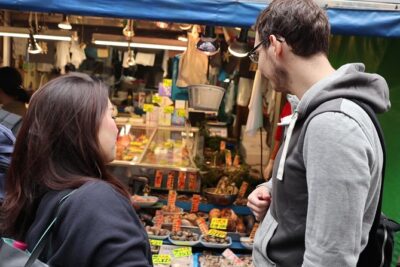
Tsukiji is more than a place to grab sushi. It is a working food district with a shrine, wholesalers, narrow shopping lanes, cooking tools, snacks, and plenty of chances to spend money before you realize it. This two-hour walk gives you a useful introduction, with freshly cut tuna, wasabi, and sake built into the price.
I like two things right away. First, the group is limited to six, so you can ask questions without shouting over a crowd. Second, the tour connects food with local life, from the Namiyoke Inari Shrine to a wholesaler’s tuna tasting and the everyday pleasures of a Japanese convenience store. The main drawback is simple: street food, drinks, market purchases, and Lawson snacks cost extra, and this tour is not suitable for vegetarians.
Key points at a glance
- A small-group Tsukiji walk: The group is limited to six people, which makes it easier to follow the guide through busy market lanes.
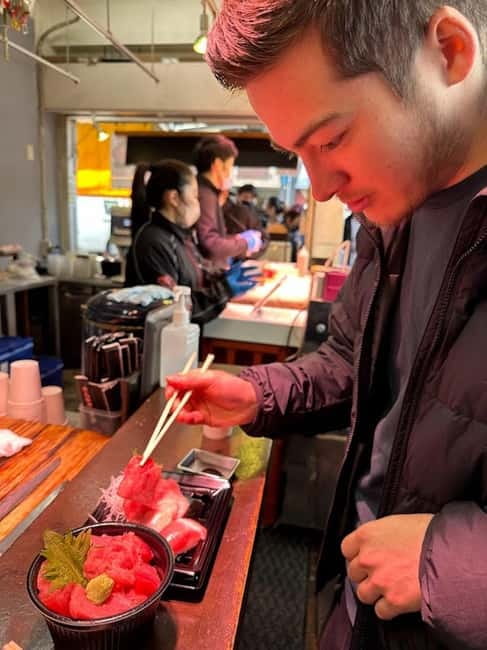
- Tuna, fresh wasabi, and sake included: You receive a small bento box with freshly cut tuna, fresh wasabi, water, and a small amount of sake.
- Namiyoke Inari Shrine adds local context: You learn why the shrine is important and how to pray for protection from misfortune.
- More than a fish market: The route includes cooking tools, ingredients, fruit, vegetables, souvenirs, restaurants, and other food stops.
- Lawson becomes part of the lesson: The tour ends with advice on Japanese convenience-store snacks and drinks.
- Plan for extra spending: Market food, drinks, shopping, and Lawson purchases are not included in the $70 price.
Why this Tsukiji tour feels different
Many market walks focus on eating as much as possible. This one takes a slower, more useful approach. You eat, but you also learn how the area works and what to look for after the guide leaves.
That matters in Tsukiji. The lanes can feel packed, and many stalls sell items you may not recognize. A guide can explain the difference between a food stall, a wholesale shop, a restaurant, and a store aimed at home cooks. You may also get help avoiding tourist traps and finding options that feel more connected to everyday Japanese food culture.
The tour is led in English. Chinami has received especially strong praise for her clear English, local advice, and ability to explain Japanese life beyond the market itself. If Chinami is your guide, you can also ask for food and sightseeing suggestions for the rest of your time in Tokyo and Kyoto.
At $70 per person, this is not a cheap snack crawl. But the price includes a live guide for two hours, the historical walk, photos, water, a tuna bento, fresh wasabi, and sake. For a first visit to Tsukiji, that package can be good value, particularly if you want context rather than a series of unconnected bites.
More Fish Market Tours in Japan
- Tokyo Tsukiji Fish Market Food and Culture Walking Tour
★ 5.0 · 3,184 reviews - Tokyo: Tsukiji Fish Market Food and Walking tour
★ 5.0 · 1,724 reviews - Tokyo: Tsukiji Fish Market Guided Walking Tour
★ 4.9 · 1,397 reviews
Meeting outside Lawson at Tsukiji 4 chome
The tour begins outside the Lawson convenience store at the Tsukiji 4 chome intersection. Look for the staff member holding a notice board. Do not gather directly around the store entrance, since that can block people going in and out.
This is a practical starting point. You do not need to search for a hidden office or restaurant. The route also ends at the same Lawson, so you finish where you started rather than trying to find your way to a new station or street.
The first walk takes about 10 minutes. Wear comfortable shoes and keep your belongings close, since the tour includes several walking sections and market lanes. Two hours passes quickly here, and you will get more from the tour if you arrive ready to walk, listen, taste, and make a few choices about what you want to buy.
Namiyoke Inari Shrine and Tsukiji’s spiritual side
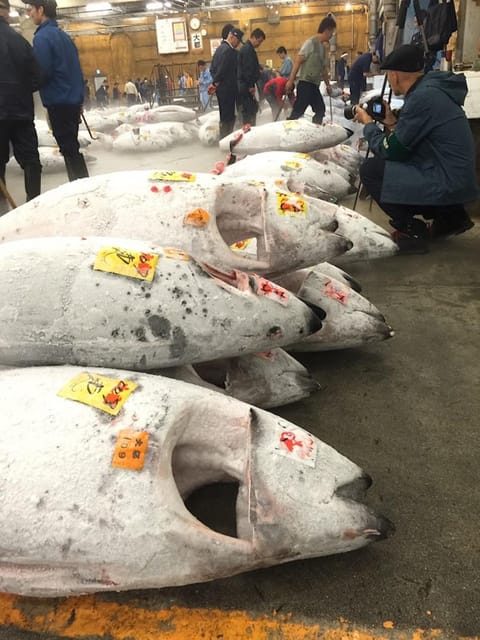
After the opening walk, you spend about 15 minutes at Namiyoke Inari Shrine. This is more than a quick photo stop. The guide explains why the shrine is highly worshipped by local people and how to pray for protection from bad luck, misfortune, and turmoil.
This stop gives the market a human setting. Tsukiji is not only about fish counters and quick meals. It is also a neighborhood with traditions, beliefs, and people who come to ask for safety and good fortune.
If you have never visited a Japanese shrine, the explanation is useful. You can learn the basic manner of praying instead of copying the nearest person and hoping for the best. The visit is short, so do not expect a long religious lecture. It works as a compact introduction before the tour turns back toward food.
The shrine also helps break up the eating schedule. You are not simply moving from one sample to another. You are seeing two sides of the district, one spiritual and one commercial, within a short walk.
The tuna bento, wasabi, and small sake tasting
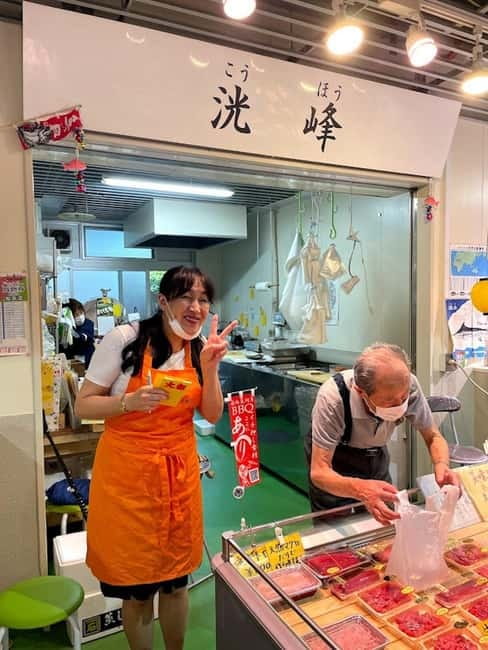
The food center of the tour comes next, with about 35 minutes for a visit, tasting, and guided explanation. You stop at one of the stores in Tsukiji Uogashi Mall, connected with the local wholesaler Tsukiji KohHoh at Toyosu Market.
Here you receive a small bento box with freshly cut tuna and fresh wasabi. A small amount of Japanese sake is also included. This is not a full restaurant meal, so arrive with realistic expectations. It is a focused tasting that lets you pay attention to the ingredients and their preparation.
The tuna is the main event. The guide explains the food and the art behind this style of Japanese cuisine, while you taste it for yourself. One of the best reasons to book this tour is that the bento gives you a clear reference point for the rest of your market visit. After tasting fresh tuna with proper wasabi, you will have a better sense of what you want to seek out later.
The sake portion is small, which is sensible during a walking tour. If you do not drink alcohol, tell the operator about your needs before booking or at the start of the experience. The supplied information does not promise a replacement drink, so do not assume one will be available.
The bento is included, but other food and drinks are not. That distinction matters. You get a planned tasting without paying separately for it, then you can decide if you want to spend more in the market.
More Fish Market Tours in Tokyo
- Tokyo Sushi Making Class in Tsukiji with Professional Chef
★ 5.0 · 1,177 reviews - Tsukiji Fish Market Guided Tour and Sushi Making with Pro Chef
★ 5.0 · 775 reviews - Tokyo: Tsukiji Fish Market Food and Culture Walking Tour
★ 4.7 · 757 reviews - Tsukiji Fish Market: Street Food & Culture Walking Tour
★ 5.0 · 669 reviews
Tsukiji Uogashi Mall for ingredients and kitchen finds
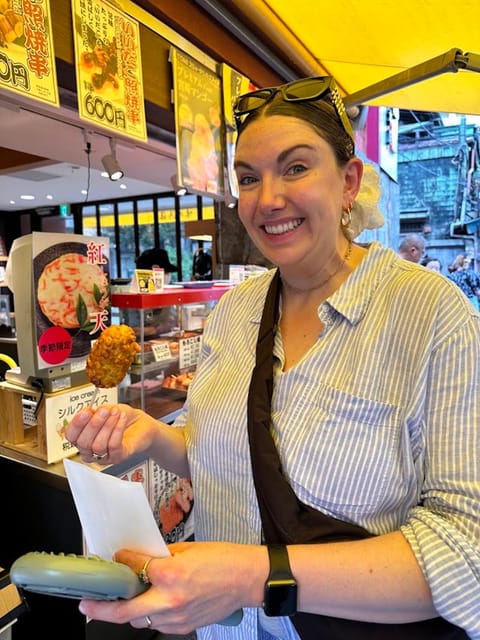
The guide shows you Tsukiji Uogashi Mall and points out more products, vegetables, fruit, restaurants, and a food court. This part is useful if you are interested in Japanese cooking rather than only ready-to-eat food.
You might find ingredients to take home, though the tour does not include purchases and availability can vary. The same goes for cooking knives, utensils, and other kitchen goods in the surrounding market. If you are planning to buy a knife or delicate food item, bring a shopping plan and check the rules for taking it home. The tour provides advice, but it does not include shipping or packing services.
I like this section because it gives you options. Some people want sushi. Others want fruit, a kitchen tool, a small souvenir, or a look at the supplies used by home cooks. The guide can help you understand what you are seeing, instead of leaving you to guess from labels and displays.
Do not expect a long shopping session. The tour has only two hours total, and the mall visit is part of a wider route. If a particular knife, ingredient, or gift matters to you, make a note of it and return later with more time.
The Outer Market: street food, sweets, and shopping
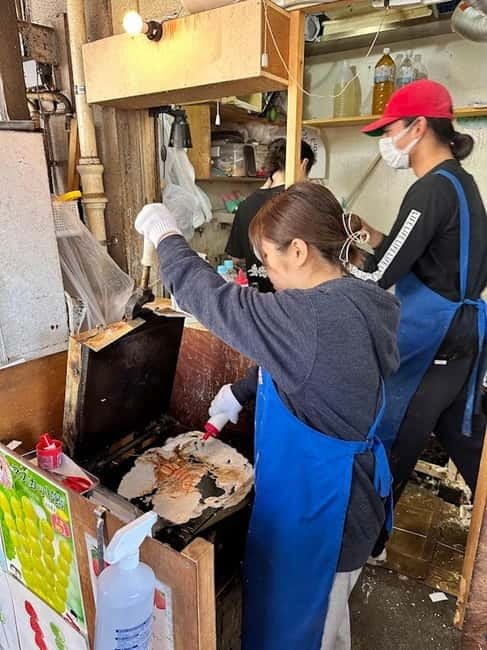
The tour then spends about 45 minutes at the famous Tsukiji Outer Market. This is the longest stop, and it is where you get the best chance to explore beyond the included bento.
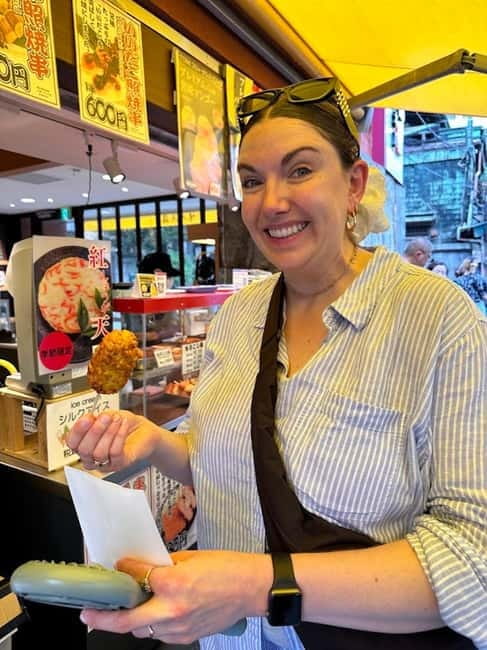
You can look for street food, drinks, desserts, local snacks, regional ingredients, cooking knives, utensils, and souvenirs. The guide explains the history of the market area and points out alternative food choices, so you are not limited to fish.
This is where your extra budget becomes important. Food and drinks at the Outer Market are not included. If you want to sample several items, set aside spending money before you arrive. The tour can tell you what is worth trying, but it cannot cover every bite.
The market is also not a quiet food hall. It is a working shopping district with narrow lanes and active stalls. Keep moving when the group moves, listen for instructions, and avoid blocking shop entrances. A small group helps here, since six people are easier to keep together than a large tour party.
The guide’s role is especially useful in this section. You can ask which foods are worth your limited time, what makes a particular ingredient special, or where to look for something you have already tasted. Chinami’s local advice has been praised for helping people avoid tourist traps and find a more genuine experience.
For food lovers, this is the part that can expand the tour beyond the included tasting. For cautious eaters, it is fine to browse without buying. The tour does not require you to purchase street food.
Finishing at Lawson with Japanese snack advice
The final 10-minute walk returns to Lawson at the Tsukiji 4 chome intersection. Rather than treating the convenience store as a place to wait for your train, the guide uses it as the final food lesson.
Japanese convenience stores are famous for more than quick drinks. You can ask for recommendations on snacks and beverages, and the guide will explain what to buy and enjoy. This is practical advice for the rest of your trip, especially if you want an inexpensive breakfast, picnic item, or late-night snack.
You pay for Lawson purchases yourself. That may sound like a small detail, but it is worth remembering because the tour ends with snack hunting. Bring a little extra cash or another accepted payment method if you want to try something.
The ending is also convenient. You return to the same place where you met, with no need to navigate from the market to an unfamiliar neighborhood. If you want to keep exploring Tsukiji afterward, you can do so on your own. If you have an appointment elsewhere, you already know the route back to the starting point.
What the $70 price really covers
The $70 fee buys more than a meal. It covers a small English-speaking group, a two-hour guided walk, a historical overview, shrine instruction, market orientation, photos, a bottle of water, a small tuna bento, fresh wasabi, and a small amount of sake.
The value depends on how you travel. If you only want the cheapest possible sushi or snack, you can spend less by exploring on your own. If you want help understanding the market, choosing food, and connecting the area to local customs, the guide adds real value.
The six-person limit is important. A guide can answer questions and adjust explanations more easily with a small group. It also makes the busy market less awkward than following a large flag through narrow lanes.
Your total cost can rise if you buy several snacks, drinks, souvenirs, or cooking items. I would treat the $70 as the cost of the guided introduction, then set a separate food and shopping budget.
Free cancellation is available up to 24 hours before the tour for a full refund, and you can reserve now and pay later. Starting times vary, so check availability when choosing your date.
Who should book this experience
This tour suits first-time visitors to Tsukiji who want a clear introduction without spending half a day figuring out the market alone. It is also a good fit for people who enjoy food stories, local customs, and practical advice about what to buy.
You will get the most from it if you eat fish and are open to tasting tuna and sake. Vegetarians should not book this experience, since it is specifically marked as unsuitable for them.
Families can ask about bringing children. If a child will not eat the bento, tell the operator the child’s age and food preferences in advance. The tour may be able to adjust the experience, but this needs to be discussed ahead of time.
The tour is less suitable for someone who wants a long, relaxed market meal. The schedule is active, and each stop has a set place in the two-hour route. It is also not the best choice if you want every food and purchase included in one upfront price.
Should you book the Tsukiji tour?
Book it if you want fresh tuna with context, a small group, and a guide who can explain both shrine customs and market food. The combination of Namiyoke Inari Shrine, Uogashi Mall, the Outer Market, and Lawson makes the tour broader than a simple tasting walk.
Skip it if you are vegetarian, want a full meal, or prefer to explore without a fixed route. For everyone else, $70 is a fair price for a compact first look at Tsukiji, especially when you value clear English guidance, local food advice, and a bento tasting already included.
FAQ
Where does the tour start?
It starts outside Lawson at the Tsukiji 4 chome intersection. Meet the staff member holding a notice board, and avoid gathering directly around the store entrance.
Where does the tour finish?
The tour returns to the same Lawson store at the Tsukiji 4 chome intersection.
How long does the tour last?
The experience lasts two hours, including walking, the shrine visit, food tasting, market time, and the return walk.
What food is included?
The price includes a small bento box with freshly cut tuna and fresh wasabi. A small amount of sake and a bottle of water are also included.
Are street food and market purchases included?
No. Street food, drinks, snacks, souvenirs, ingredients, cooking tools, and other purchases are paid for separately. Lawson purchases are also your responsibility.
Is the tour suitable for vegetarians?
No. The experience is listed as unsuitable for vegetarians.
Is the tour available in English?
Yes. The tour has a live English-speaking guide.
Can children join the tour?
Children may be accommodated, but you should provide their ages and food preferences in advance, especially if they will not eat the included bento.
More Street Food Market Tours in Tokyo
- Tsukiji Fish Market Private Food Tour in Tokyo
★ 5.0 · 18 reviews - Tokyo: Private Tsukiji Street Food & Sake with Local Guide
★ 5.0 · 3 reviews
More Street Food Market Tours in Japan
- Tokyo Food Tour Taste Fresh Delights at Tsukiji Market
★ 5.0 · 429 reviews - Tsukiji Fish Market: Street Food & Culture Walking Tour
★ 4.8 · 259 reviews - Toyosu Market Morning Tuna Auction and Tsukiji Food Tour with Licensed Guide
★ 4.5 · 146 reviews - Tokyo Tsukiji Fish Market Food Tour: 15 Stops & Walk Local Street
★ 5.0 · 139 reviews
Just added around Tokyo
- Tokyo: Private Tsukiji Street Food & Sake with Local Guide★ 5.0 · 3 reviews
- Tokyo: Tsukiji Market Guided Tour & Sushi-Making Experience★ 4.4 · 11 reviews
- Tokyo: Tsukiji Market and Hama-rikyu Gardens Guided Tour★ 4.8 · 73 reviews
- Tokyo : Tsukiji Fish Market Food Walking & Shrine Visit Tour★ 5.0 · 3 reviews
- Tokyo: Tsukiji Fish Market Culture Tour with Sashimi Tasting★ 4.6 · 54 reviews
- Tokyo: Guided Walking Tour of Tsukiji Market with Lunch★ 4.4 · 24 reviews
- Tokyo’s Kitchen: Tsukiji Market Food & Culture Walk★ 4.7 · 74 reviews
- Tokyo Morning Tour: Meiji Shrine, Asakusa & Fish Market★ 4.9 · 44 reviews
Fish Market Tours, compared.
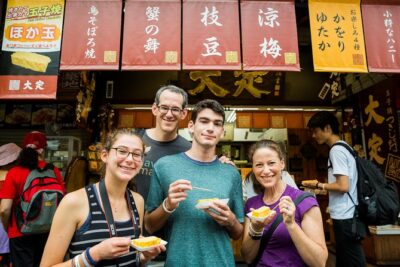
Tokyo Tsukiji Fish Market Food and Culture Walking Tour
Read our review →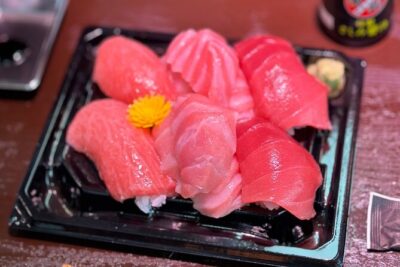

Tokyo Sushi Making Class in Tsukiji with Professional Chef
Read our review →
Tsukiji Fish Market Guided Tour and Sushi Making with Pro Chef
Read our review →Tsukiji Fish Market Food and Culture Walking Tour
Read our review →
Tsukiji Fish Market: Street Food & Culture Walking Tour
Read our review →