
Review · KYOTO
Nishiki Market Food Tour with Cooking Class
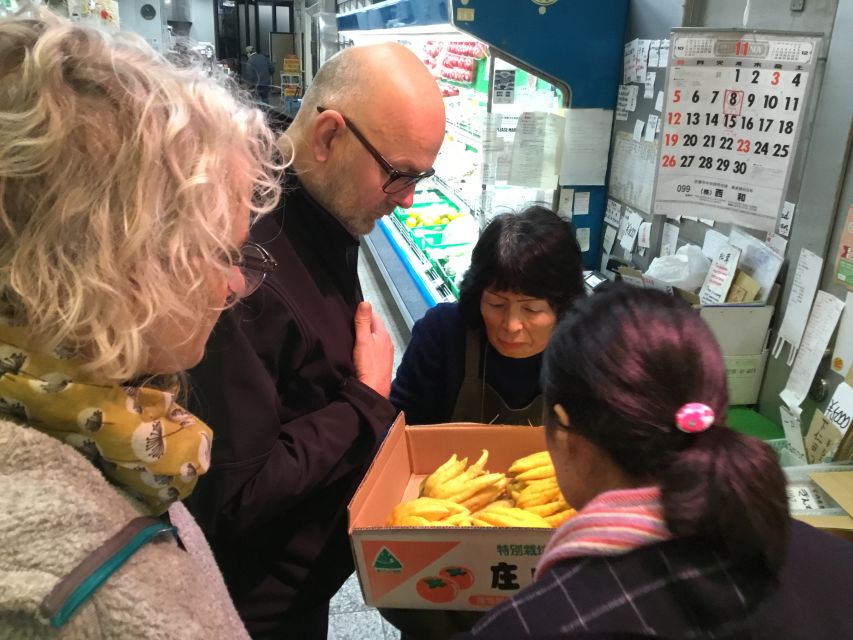
Nishiki Market is easy to rush through in 15 minutes and much harder to understand without help. This private experience slows the market down, explains its food customs and older shops, then turns the ingredients you see into your own donburi meal. Guides such as Chie, Momo, and Mio have helped visitors ask questions, compare ingredients, and speak with stall staff.
I like the private format, since you can set the pace and request substitutions, and I like that the cooking class uses ingredients bought during the market walk. The free pickle samples and small food tastings add flavor to the tour without making it feel like a simple shopping trip.
The main point to consider is timing. The market portion usually lasts about an hour, and one participant felt it allowed less tasting and explanation than expected. You also need to plan separate time if you want to return for personal shopping.
Key points at a glance
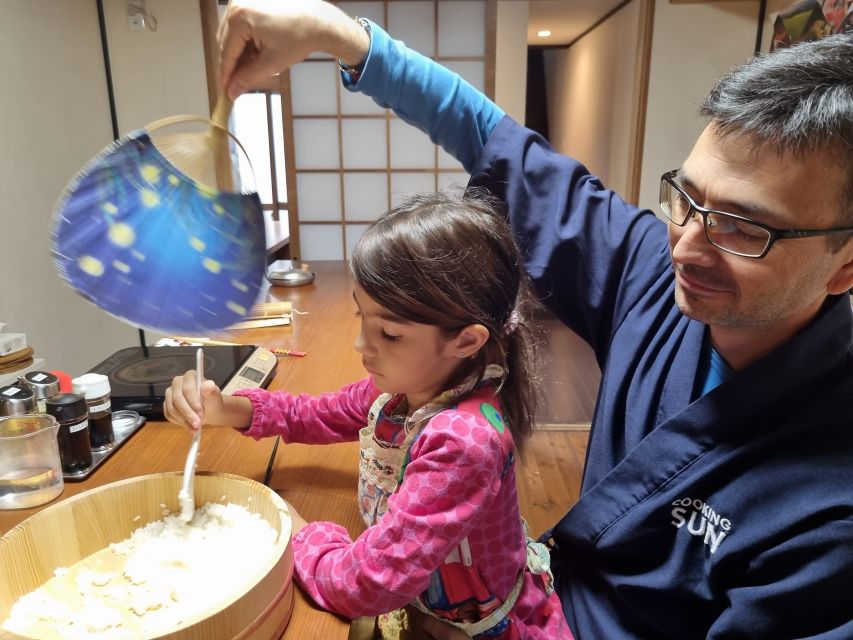
- Cook what you saw at Nishiki Market: Choose seafood, tempura, or chicken and egg donburi, with ingredients included.
- A private English-speaking guide: Ask as many questions as you like and request help speaking with shop staff.
- A useful introduction to market etiquette: You learn why eating while walking is not acceptable in Nishiki Market.
- Three donburi choices: Members of the same group can choose different dishes, including tofu as a substitute for chicken when available.
- Small tastings along the way: Try Japanese pickles and other sample foods before cooking.
- A compact 150-minute plan: About one hour at the market, followed by about one hour cooking and eating, with taxi transport to the studio included.
Why Nishiki Market needs a guide
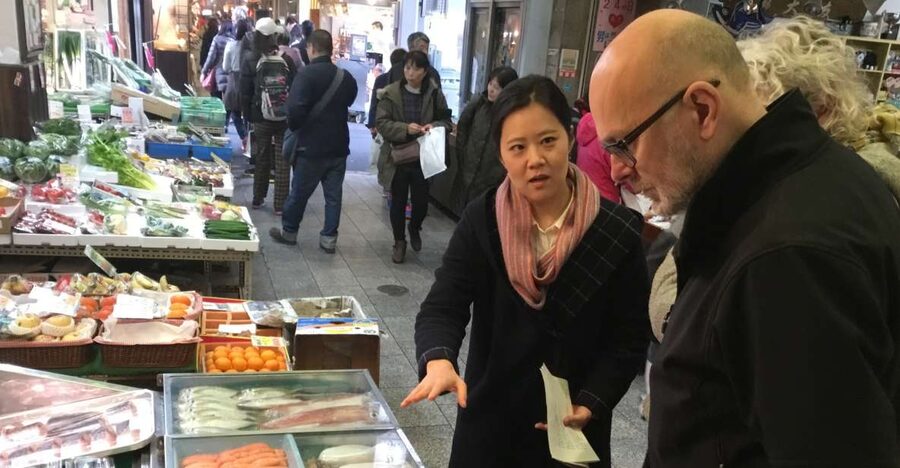
Nishiki Market is often called Kyoto’s kitchen, but that nickname can create the wrong expectation. It is not one tidy food hall with a clear beginning and end. It is a long covered market street lined with shops, counters, samples, traditional products, and stalls aimed at both local shoppers and sightseers.
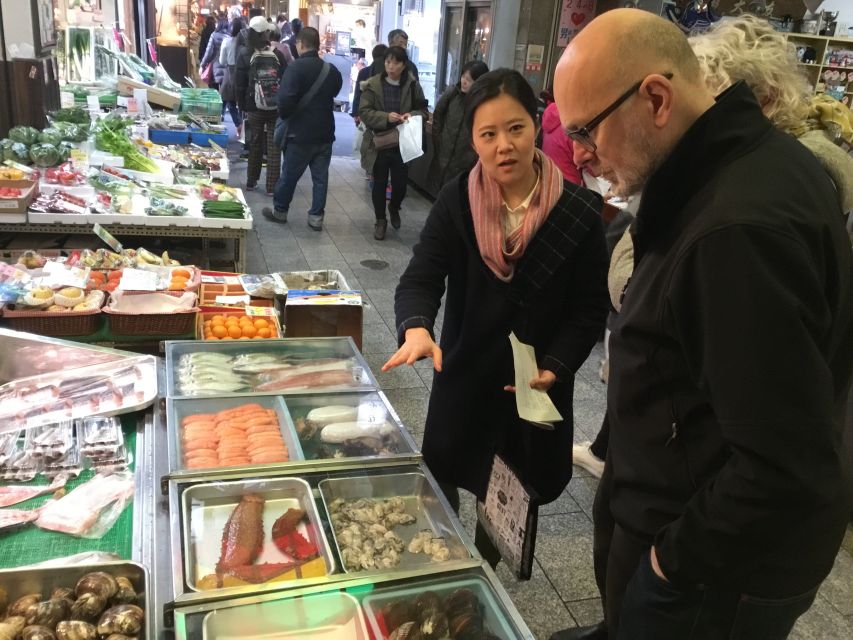
You can walk through quickly on your own. The trouble is knowing what you are looking at. A guide can explain the difference between familiar and less familiar ingredients, point out shops with long local connections, and tell you which foods are worth a closer look.
That help matters most when you see something you cannot identify. Your English-speaking guide can explain how it is used and, when needed, help translate a question to the shop staff. This turns a row of appealing but mysterious foods into a lesson in everyday Japanese cooking.
The market also has its own rules. You are told not to eat while walking, an easy detail to miss if you are focused on the samples. Instead, you should eat food where the vendor indicates. For a first visit, these small instructions help you behave politely and avoid an awkward mistake.
More Market Cooking Classes in Japan
- Tokyo Sushi Making Class in Tsukiji with Professional Chef
★ 5.0 · 1,177 reviews - Tsukiji Fish Market Guided Tour and Sushi Making with Pro Chef
★ 5.0 · 775 reviews - Tokyo: Tsukiji Fish Market Sushi Making Class with Pro Chef
★ 4.9 · 506 reviews
The first hour: food stalls, samples, and local context
The meeting point is the western entrance of Nishiki Market. After a short briefing, you begin walking with your private guide. The market section normally takes about one hour, though the private setup allows room for questions and a slower pace.
Expect a mixture of explanation and tasting. Japanese pickles are included as free samples, and other sample foods are part of the tour. The exact selection can vary, but the point is to give you a first taste before you decide what you may want to buy or revisit later.
I especially like the way this portion can help you plan the rest of your Kyoto food time. Guides have pointed out which shops are more traditional and which parts of the market have become more focused on tourists. They can also recommend foods to return for later, rather than leaving you to make every choice in a crowded passage.
You should keep your personal shopping separate from the scheduled tour. The ingredients for the cooking class are included, but food you choose to buy for yourself is not. One useful practical detail is that the market walk is not intended to provide unlimited time for shopping. If you see souvenirs, pickles, spices, or other foods you want to take home, plan to return after the experience.
Three donburi choices, with room for substitutions
After the market walk, the experience shifts from looking and tasting to cooking. You choose one of three bowl meals:
- Kaisen-don: A seafood bowl
- Ten-don: A tempura bowl
- Oyako-don: Chicken and egg over rice
The ingredients for the donburi are included in the price. That is useful because you are not simply taking a cooking lesson with ingredients prepared in advance. The market provides the setting and the food context, and the class shows you how those elements come together in a Japanese home-style meal.
Each person can choose a different dish. That works well for families and small groups with mixed tastes. In one class, one participant requested tofu instead of chicken, and the guide accommodated the change. A substitution is not guaranteed for every ingredient, but the private format makes it sensible to ask in advance or at the start.
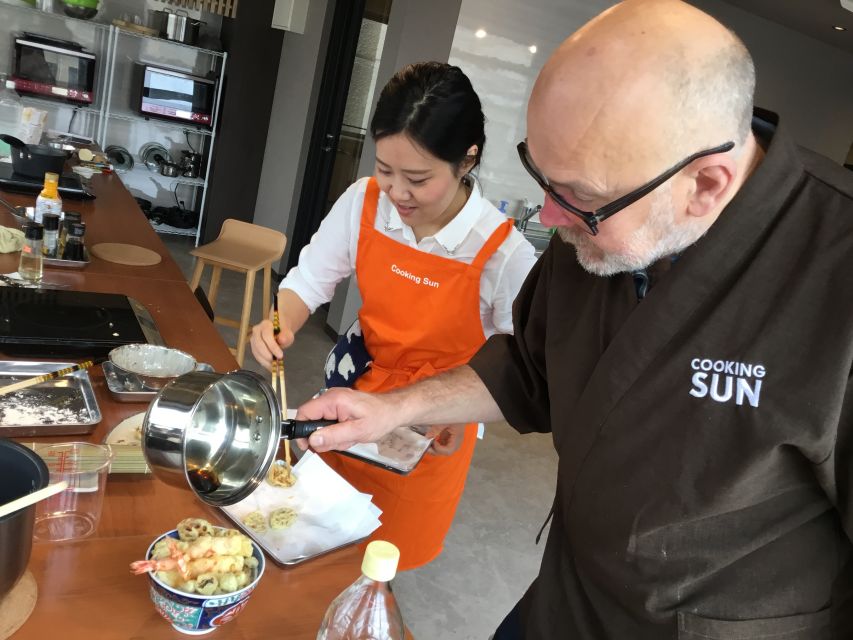
If you enjoy cooking, pay close attention to the small instructions. The class covers more than putting ingredients into a bowl. You can learn about dashi, sauces, brands, presentation, and ways to make the finished dish look attractive as well as taste good.
The recipe is included, so the meal has value beyond lunch. You leave with something you can try at home, provided you can find suitable ingredients.
The cooking studio and what the class feels like
The market and cooking studio are separate locations. Taxi transport from the market to the studio is included, so you do not need to find your own way after the walking portion. The listed duration is 150 minutes, with roughly one hour in the market and one hour for cooking and eating. The remaining time covers the transition and the natural pauses in a small private activity.
The studio is described as a clean, well-stocked kitchen built for cooking classes. The setting is cozy rather than large and commercial, which suits the private group arrangement. You prepare the dishes soon after arriving, rather than spending a long time watching a demonstration before touching anything.
The teaching style is hands-on. You are guided through each step, with help on cooking methods, sauces, seasoning, and presentation. Children can take part, and the activity has worked well for family groups because different people can prepare different bowls.
The class is also flexible in a way a large group lesson cannot be. You can ask why a particular sauce is used, how a Japanese ingredient differs from one you know at home, or how to adjust the dish to your own tastes. The guides have been praised for making the session personal, including buying small extras to suit individual preferences.
One caution: the quality of individual ingredients can vary. A participant found the fatty tuna disappointing. That does not undermine the class, but seafood is never a completely uniform product. If you choose kaisen-don, your experience may depend more on the particular market ingredients available that day than if you choose chicken and egg.
More Street Food Market Tours in Japan
- Kyoto: Local Food Tasting Tour at the Nishiki Market
★ 4.7 · 135 reviews - Kyoto: Nishiki Market and Depachika Food Tour with a Local
★ 4.7 · 76 reviews - Kyoto: Nishiki Market Tour with a Local Foodie & Tastings
★ 4.5 · 67 reviews - Kyoto: Nishiki Market Food Tour
★ 4.9 · 21 reviews
What you actually learn about Japanese food
This is not a chef-training course. It is a practical introduction to how several familiar Japanese flavors work together.
You may learn how dashi forms the base of a dish, how sauces are used, and which brands or ingredients to look for. The guide can also explain how Kyoto foods differ from items you may find elsewhere in Japan. The strongest part of the lesson is its connection to the market. You see foods in their shop setting first, then use related ingredients in the kitchen.
The donburi format is a smart choice for a short class. A bowl meal gives you several elements to work with without turning the session into an all-day project. Tempura teaches a different technique from chicken and egg, while seafood offers a chance to focus on freshness, cutting, and arrangement.
You also receive advice on presentation. That may sound minor, but it helps explain why Japanese home cooking often feels carefully considered even when the meal itself is simple. The goal is not only to make food edible. You are shown how to make it look inviting.
The recipe gives you a bridge back home. Dashi and donburi are practical choices for a souvenir lesson because they can become part of a regular meal, not just a dish you make once on holiday.
Sake, pickles, and extra tasting details
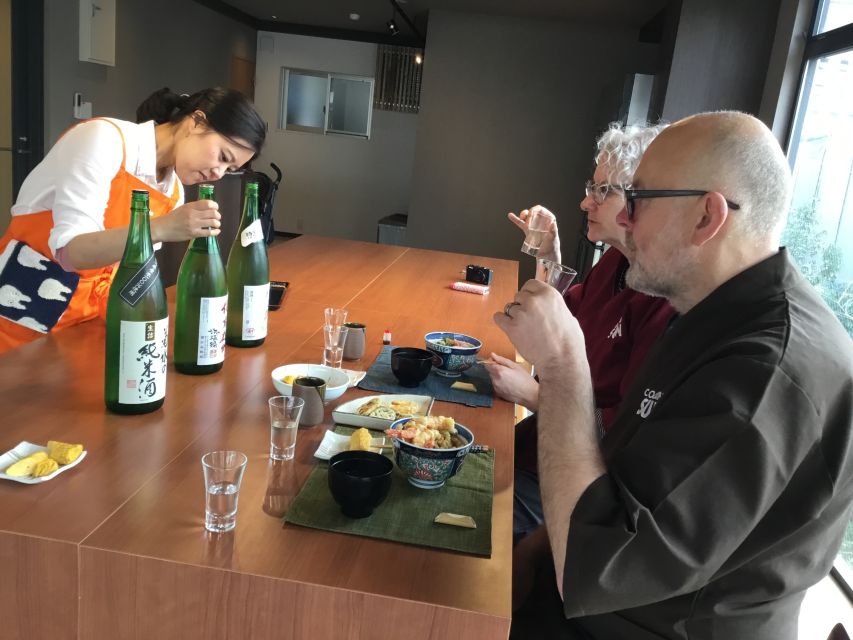
Three types of sake are available as an optional tasting. Since it is optional, you can decide if it suits your group and your plans for the rest of the day. The included market samples already provide plenty of food interest, so you do not need to add sake for the experience to feel complete.
The pickle tasting is especially useful for visitors who may otherwise walk past the pickle stalls. Japanese pickles can differ in texture, saltiness, and seasoning, and tasting them with an explanation is more helpful than simply seeing rows of jars.
Other food samples are included during the market walk. These tastings are small, so you should not treat the tour as a replacement for a full meal before the class. You are cooking and eating a donburi later, but the market section is designed for exploration rather than a long lunch.
If there is a food you want to eat independently, that cost is not included. The tour fee covers the class ingredients and the planned tastings, not every snack or purchase that catches your eye.
Is $109 a fair price?
At $109 per person, this is not the cheapest way to see Nishiki Market. A self-guided walk costs nothing beyond what you choose to eat, and a basic cooking lesson without a market tour may cost less.
The value here comes from combining several services in a small private group. You receive an English-speaking guide, market interpretation, tastings, translation help, the donburi ingredients, a recipe, a cooking class, your finished meal, and taxi transport from the market to the studio.
That package makes the price easier to justify for first-time visitors who want context rather than a quick photo stop. It is also good value for a family or small group that wants one shared activity with different food choices.
The price is less convincing if your main goal is personal shopping. You have limited time for buying your own food during the planned market visit, and extra purchases cost more. It is also not the best match for someone who already knows Japanese cooking and wants an advanced lesson.
The high overall rating of 4.9 from 42 reviews fits the experience’s strongest features: personal attention, friendly English instruction, flexible dishes, and a clean cooking setting. Still, the two useful cautions remain the same: the market explanation may feel brief if you want a long tasting session, and one ingredient may not impress every palate.
Who should book this experience?
I would choose this for a first visit to Kyoto, especially if Nishiki Market is on your list but you do not know how to approach it. The guide gives you a useful starting point, then the class turns that orientation into something you can repeat at home.
It suits families particularly well. Children can take part in the cooking, different people can choose different bowls, and the class keeps everyone involved instead of asking the whole group to watch one demonstration.
It also works for enthusiastic home cooks. The lesson includes useful points about dashi, sauces, brands, substitutions, and presentation. You may come away with more than a holiday recipe, especially if you pay attention to the reasons behind each step.
I would think twice if you want a long, unhurried food crawl. The market visit lasts about an hour, and the activity has a clear schedule. You should also skip it if you dislike seafood, chicken, egg, or tempura and do not want to request a substitution.
Book with the market entrance in mind. Meet at the western side entrance, keep personal shopping for later, and allow enough appetite for the donburi you will prepare.
Final verdict: a useful Kyoto food lesson
I recommend the Nishiki Market Food Tour with Cooking Class if you want your market visit to have a purpose. You learn what you are seeing, taste a few local foods, then prepare a meal using ingredients tied to the same place.
The best reasons to book are the private guide, the chance to ask questions freely, and the practical cooking lesson. Chie, Momo, and Mio have each been praised for friendly teaching and clear English in past sessions, though your assigned guide may differ.
Choose it for context, flexibility, and a recipe you can take home. Do not choose it for extensive independent shopping or a long market feast. For most first-time visitors, the combination of Nishiki Market and hands-on cooking offers a more useful memory than simply walking through the stalls.
FAQ
Where does the Nishiki Market tour begin?
Meet at the western side entrance of Nishiki Market.
How long does the experience last?
The listed duration is 150 minutes. The usual plan includes about one hour in the market and about one hour cooking and eating.
What donburi dishes can I choose?
You can choose kaisen-don with seafood, ten-don with tempura, or oyako-don with chicken and egg.
Are the cooking ingredients included?
Yes. The ingredients for the donburi cooking are included in the tour fee.
Can people in the same group choose different dishes?
Yes. Each person can choose a different donburi option.
Is the cooking class taught in English?
Yes. The instructor language is English, and the activity uses an English-speaking guide.
Is taxi transportation included?
Yes. Taxi transportation from Nishiki Market to the cooking studio is included.
Can I cancel the booking for a refund?
You can cancel up to 24 hours in advance for a full refund. The experience also offers reserve now and pay later booking.
More Market Cooking Classes in Kyoto
- Hanoi Cooking Class: Culture, Local Market & Meaning CSR Impact
★ 5.0 · 5,147 reviews - 5 Traditional Dishes Hanoi Cooking Class with Market Trip
★ 5.0 · 4,890 reviews - Cooking Class and Lunch at a Tuscan Farmhouse with Local Market Tour from Florence
★ 5.0 · 4,831 reviews - Chiang Mai: Cooking Class, Market & Thai Herbs Garden Tour
★ 4.9 · 4,824 reviews
More Street Food Market Tours in Kyoto
- Taste of Nishiki Market Walking Food Tour with Local guide
★ 5.0 · 17 reviews - Kyoto: Nishiki Market Food Tour with Local Guide
★ 4.6 · 5 reviews - Dubai: Old Town, Creek, Museums, Souks, & Street Food Tour
★ 4.8 · 10,816 reviews - Dubai: Old Town, Souks, Street Food, Guided Tour & Abra Ride
★ 4.9 · 7,170 reviews
Just added around Kyoto
- Taste of Nishiki Market Walking Food Tour with Local guide★ 5.0 · 17 reviews
- Kyoto: Wholesale Fish Market Walking Tour★ 5.0 · 2 reviews
- Kyoto: Nishiki Market Tour with a Local Foodie & Tastings★ 4.5 · 67 reviews
- Golden Pavilion, Nijo Castle, & Nishiki Market Half day tour★ 5.0 · 29 reviews
- Kyoto: Arashiyama Unveiled Bamboo, Temple, Matcha, & Monkeys★ 5.0 · 6 reviews
- Kyoto: Nishiki Market Food Tour★ 4.9 · 21 reviews
- Kyoto: Nishiki Market Food Tour with Local Guide★ 4.6 · 5 reviews
- Kyoto: Enjoy Sushi & Market Tour! Best for Family & Couple!★ 4.8 · 20 reviews
Market Cooking Classes, compared.
Hanoi Cooking Class: Culture, Local Market & Meaning CSR Impact
Read our review →
5 Traditional Dishes Hanoi Cooking Class with Market Trip
Read our review →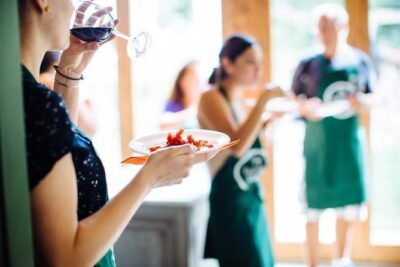
Cooking Class and Lunch at a Tuscan Farmhouse with Local Market Tour from Florence
Read our review →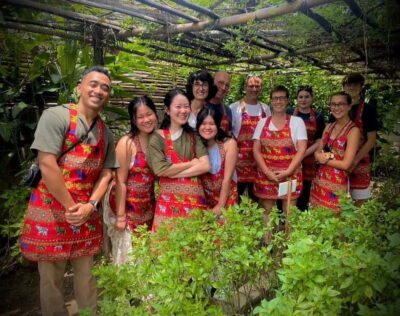
Cooking Class, Market & Thai Herbs Garden Tour
Read our review →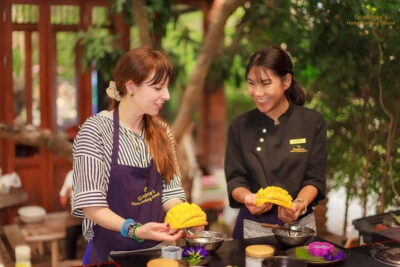
Authentic Cooking Class with Market & Farm Visit
Read our review →
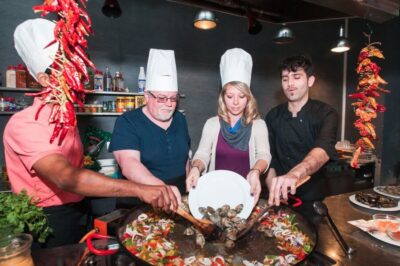
Paella Cooking Experience & Boqueria Market Tour
Read our review →
Cooking Class Hoi An:Local Market, Basket Boat, Fishing & Cooking
Read our review →Browse the lists this tour appears in