
Review · AUSTRALIA
Sydney Fish Market Discovery Tour
Sydney Fish Market makes the journey from ocean to plate feel surprisingly close. In one hour, you walk from the Information Hub into auction areas, commercial wharves, retailer spaces, and oyster stations, with a Seafood Educator explaining what you are seeing.
I like the focus on the Dutch auction, a detail most casual shoppers miss, and the practical advice on seasonal and sustainable seafood. I also like that the tour includes the new building’s design, market history, fishing vessels, and the work of fishmongers rather than treating the market as just a place to buy lunch.
The main consideration is value. At $35 per person, this is a short, information-led tour, and food and drinks are not included. You will need to decide if an hour of guided access and explanation is worth more to you than simply wandering around and spending the money on seafood.
Key points at a glance

- The Dutch auction: Learn how seafood is sold through the market’s auction system.
- Working wharves: See commercial fishing wharves and different types of fishing vessels.
- Oyster shucking: Watch skilled staff open oysters at close range.
- Seafood buying advice: Get help choosing seasonal and sustainable seafood.
- New market building: Hear how the building’s design supports the modern market.
- Short, accessible format: The English-language tour lasts 60 minutes and is wheelchair accessible.
From the city-side entrance to the working market

You meet your guide at the Information Hub on the ground level, on the side of the building closest to the city. The official starting point is listed as 1 Bridge Road, and the tour returns there after one hour.
That meeting point matters. Sydney Fish Market is more than a row of seafood counters, so arriving at the correct side of the building saves you from wandering around looking for a guide. I would arrive with enough time to find the Information Hub, especially if you are visiting during a busy part of the day.
Your guide is an experienced Seafood Educator, not simply someone leading a general sightseeing walk. The role is to explain how the market works, where seafood comes from, and how the people in the trade fit together. One recent departure was led by Michael, whose enthusiasm for seafood and the market made a strong impression. Guide assignments can vary, but the format is built around a specialist host.
The tour is conducted in English. It is wheelchair accessible, and the route takes place around the market building and its working areas. Wear closed-toe shoes. That is a sensible rule for any working seafood site, where wet floors and active commercial spaces are part of the setting.
More Fish Market Tours in Australia
- Sydney Fish Market Behind the Scenes Tour
★ 5.0 · 10 reviews - Sydney Fish Market Behind the Scenes Tour
★ 5.0 · 9 reviews - Sydney Harbour & Fish Market Sightseeing Cruise
★ 4.5 · 4 reviews
The Dutch auction reveals how seafood is sold
The auction stands are the tour’s most distinctive stop. You learn how the Dutch auction operates, a system in which the price begins high and drops until a buyer accepts it. This gives you a much clearer picture of the market than simply watching shoppers choose prawns or fish from a display.
The auction helps explain why speed matters in seafood sales. Buyers need to judge quality, quantity, timing, and price in a short window. Your guide connects that process to the seafood that later appears in retail shops and restaurants.
For me, this is where the $35 price begins to make sense. You are not just being shown a room. You are being given the logic behind a major part of the seafood trade, including the decisions that shape what gets sold and how it reaches customers.
The auction area may not be active in exactly the same way at every moment. This is still a working market rather than a staged show, so you should expect explanation and observation, not a guaranteed dramatic sale taking place in front of you. The educator’s context is what makes the stop useful.
Commercial wharves and the boats behind the counter
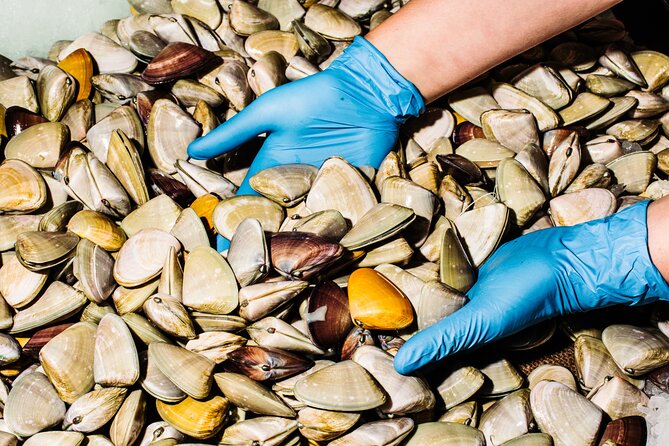
The route also takes you toward the commercial wharves, where you learn about different kinds of fishing vessels. This section links the market to the people and equipment involved before the seafood arrives at the counter.
That connection is easy to miss when you visit on your own. A retailer can tell you what a fish costs, but the tour asks you to think about how it was caught, handled, and brought to market. You gain a better sense of the chain between the ocean, fishing boats, auction buyers, fishmongers, and your dinner plate.
The wharves also add a working waterfront feel to the visit. You are not confined to a food hall looking at displays. You see part of the commercial setting that supports the market, while your guide explains the roles of vessels and the people who use them.
Do not expect a long maritime tour. The entire experience lasts 60 minutes, so this is a concise look at the wharves rather than a detailed lesson in boat design or fishing technology. Still, it gives the market a useful sense of place.
How to choose seasonal and sustainable seafood
The practical seafood advice may be the most useful part for anyone who plans to eat or shop at the market afterward. You learn how to think about seasonal seafood and sustainability, rather than choosing only by habit or appearance.
Seasonality matters because what is available can change. Your guide helps you understand that seafood choices are linked to supply, fishing practices, and the time of year. That information can make you a more confident customer at the market’s retailers.
Sustainability is handled as part of the seafood story. You get a better understanding of where seafood comes from and how it is caught. The value here is practical: you leave with questions to ask and factors to consider when choosing what to buy.
The tour does not promise a full cooking class or a personal shopping consultation. It gives you a framework for making better choices. If you already know a great deal about seafood sourcing, this part may feel familiar. If you usually buy the same items without asking where they come from, it can change how you approach the counters.
Same stalls, a different way to shop and eat:
- Queen Victoria Market Ultimate Foodie Tour
★ 5.0 · 295 reviews - Adelaide Central Market Discovery Tour
★ 5.0 · 203 reviews - Sunshine Coast Hinterland and Noosa Day Trip from Brisbane Incl Eumundi Markets
★ 4.5 · 189 reviews - Eumundi Markets Bus Transfer: Mooloolaba Sunshine Coast & Noosa
★ 5.0 · 84 reviews
Fishmongers, retailers, and the route from ocean to plate
The market’s retailers are part of the walk, and you learn what it really means to be a fishmonger. That is a useful distinction. A fishmonger is not just a person behind a counter selling seafood. The job includes handling, presenting, explaining, and helping customers choose products.
You explore the market’s famous retail areas while hearing how the trade functions. The food selection is broad, and the tour gives you a better way to read what you see. Instead of treating every counter as interchangeable, you begin to notice the work behind the displays.
This is also where the tour can help you plan the rest of your visit. You may want to return after the guided hour to compare seafood, watch the counters, or choose a meal. Food and drinks are not included in the $35 tour price, so budget separately if you want to eat afterward.
One important point: do not book this expecting a guaranteed fish and chip meal. A recent departure included food to try, but the published inclusions cover the 60-minute guided tour only. Since food and drinks are specifically excluded, regard any tasting as something that may occur rather than part of the paid package.
Oyster shucking at close range
Watching oysters being shucked is one of the clearest visual moments on the tour. You see the technique up close in real time, rather than hearing a general explanation about how oysters are opened.
This small demonstration works because it shows skill in action. Oyster shucking requires care, control, and the right handling of the shell. It also gives you a closer look at the kind of work that takes place behind the seafood counter.
For many people, this will be the most memorable part of the hour. It is quick, direct, and easy to understand, even if you know little about seafood. It also adds a human element to the market: the product does not simply appear ready to eat. Someone has to handle it properly.
If oysters are not your thing, the demonstration still has value as part of the fishmonger story. You are seeing a trade skill rather than being asked to sample something.
The new building and the market’s changing future
The tour includes the new building’s design features and explains how the market is looking ahead. This gives the visit a modern angle. You are not only hearing about the market’s past, but also about the facilities now used to support its future.
The building itself is part of the experience as you move through the site. Your guide points out design features while explaining how the new setting relates to the market’s role. This helps you see the architecture as more than a backdrop for seafood stalls.
You also hear stories from the market’s past. The historical material is not separate from the working tour. It helps explain why the site matters and how its purpose has developed over time.
The balance between past and future is welcome, but keep your expectations in check. This is not a museum tour with a long gallery presentation. The history is delivered while you walk, observe, and move between working areas. That makes it lively, but it also means the information comes at a fairly brisk pace.
Is $35 good value for one hour?
At $35, the tour sits in the range where your expectations matter. If you want a guided explanation of the auction, wharves, building, seafood sourcing, and retail trade, the price is reasonable for a specialist-led hour. You are paying for access, structure, and interpretation.
If you mainly want to eat seafood, the calculation changes. Food and drinks are not included, and one recent participant felt a meal should have been part of the experience. That is a fair concern, especially because the market itself offers plenty of temptation once the tour ends.
I would book this for the information, not the meal. The best value comes from the Dutch auction explanation, the working wharf visit, and the guidance on seasonal and sustainable choices. Those are details you may not pick up during a casual walk through the retailers.
The rating is 4.2 from 10 reviews, which suggests a generally positive but not unanimous response. The strongest praise centers on the guide’s passion, the new building, the market’s food selection, and how much participants learned. The weaker response focuses on price and the lack of an included meal. That split gives you a useful picture: the tour works best for curious visitors who value context.
Who will enjoy this Sydney Fish Market walk?
I would recommend it to first-time visitors who want the market explained before they start shopping. It is also a good fit for seafood lovers, food-focused visitors, and anyone interested in the working side of a city rather than just its postcard sights.
Families may appreciate the short format, especially if a full market visit feels hard to organize. The auction, boats, and oyster shucking provide several concrete things to watch. The one-hour length also limits the risk of committing to a long specialist tour.
It suits visitors who care about sustainability and want better questions to ask when buying seafood. You do not need to be an expert. In fact, the tour is likely most useful if you enjoy seafood but are unsure how to judge seasonality, sourcing, or preparation.
I would skip it if you want a long food tasting, a full meal, or a tour devoted mainly to cooking. I would also think twice if you are already very familiar with seafood auctions and fish markets. You can still enjoy the setting, but the educational value may be smaller.
Practical details for a smooth visit
The tour lasts exactly one hour, with starting times available according to the date you choose. You meet at the Information Hub on the ground level, on the city-facing side of the building, and return to the same location at 1 Bridge Road.
Transport to and from Sydney Fish Market is not included, so you need to arrange your own way there. Food and drinks are also separate. Wear closed-toe shoes, leave pets at home, and note that smoking is not allowed.
The tour is wheelchair accessible, which makes the route workable for visitors who need that feature. It is offered in English with a live guide.
You can cancel up to 24 hours before the tour for a full refund, and the reserve-now, pay-later option keeps your plans flexible. Those booking terms are useful if your Sydney schedule may shift.
Should you book the Sydney Fish Market Discovery Tour?
Book it if you want the market to make sense, not simply look appetizing. The Dutch auction, commercial wharves, oyster shucking, fishmonger work, and seafood sourcing advice give you a fuller picture than an unplanned walk through the counters.
At $35, I would treat it as a compact orientation tour. Plan to buy your own food afterward, and do not assume a meal is included. If you value expert explanation and want to make smarter seafood choices, it is a worthwhile first stop. If lunch is your main goal, spend the hour browsing and put the $35 toward your plate instead.
FAQ
How long does the Sydney Fish Market Discovery Tour last?
The tour lasts 1 hour, or 60 minutes.
Where does the tour start?
You meet your guide at the Information Hub on the ground level, on the side of the building closest to the city. The listed address is 1 Bridge Road.
Where does the tour finish?
The tour returns to the starting location at 1 Bridge Road.
Is food included in the tour price?
No. Food and drinks are not included in the published tour inclusions. You should budget separately if you want to eat at the market.
What does the tour cost?
The price is $35 per person.
Is the tour wheelchair accessible?
Yes. The activity is listed as wheelchair accessible.
What language is the tour offered in?
The live tour guide conducts the experience in English.
What should I bring?
Bring closed-toe shoes. Pets and smoking are not allowed.
More Shopping Tours in Australia
- Rusty’s Market Foodlovers Tour
★ 5.0 · 18 reviews - Adelaide: Central Market Early Risers Breakfast Tour
★ 4.8 · 16 reviews - Adelaide Central Market Food Tour
★ 5.0 · 13 reviews - Queen Victoria Market: ‘Flavours of Australia’ Food Tour
★ 5.0 · 9 reviews
More Markets in Australia
- Small-Group Adelaide Central Market Early Breakfast Tour
★ 5.0 · 73 reviews - Melbourne Flavors: Queen Victoria Market Food Tour
★ 4.8 · 63 reviews - Adelaide: Central Market Morning Tour
★ 4.8 · 53 reviews - Adelaide Central Market Delicious Lunch Tour
★ 5.0 · 21 reviews
Just added around Australia
- Port Douglas Sunday Markets Day Tour★ 4.0 · 25 reviews
- Rusty’s Market Foodlovers Tour★ 5.0 · 18 reviews
- Noosa Heads and Eumundi Markets Private Tour from Brisbane★ 5.0 · 2 reviews
- Noosa, Eumundi Markets, Glass House Mountains from Brisbane★ 5.0 · 4 reviews
- Small-Group Adelaide Central Market Early Breakfast Tour★ 5.0 · 73 reviews
- A Taste of Adelaide Central Markets Food Tour★ 5.0 · 5 reviews
- Adelaide Central Market Food Tour★ 5.0 · 13 reviews
- Adelaide Central Market Delicious Lunch Tour★ 5.0 · 21 reviews
Fish Market Tours, compared.
Tokyo Tsukiji Fish Market Food and Culture Walking Tour
Read our review →

Tokyo Sushi Making Class in Tsukiji with Professional Chef
Read our review →
Tsukiji Fish Market Guided Tour and Sushi Making with Pro Chef
Read our review →Tsukiji Fish Market Food and Culture Walking Tour
Read our review →
Tsukiji Fish Market: Street Food & Culture Walking Tour
Read our review →
Tsukiji Fish Market Small-Group Food Walking Tour
Read our review →Browse the lists this tour appears in