
Review · CHINA
Half-Day Chengdu Cooking Class with a Local Market Visit
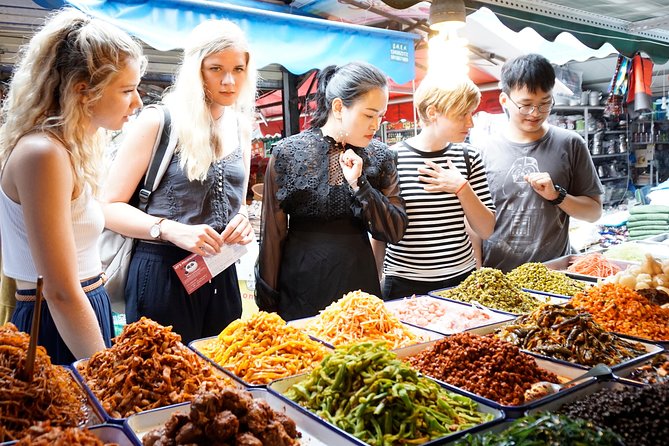
The best part of this Chengdu cooking class happens before you reach the stove. You walk through Liangjiaxiang market with a local guide, examine unfamiliar vegetables and spices, try a few local tastes, and see how daily food shopping works in Chengdu. Then you use those ingredients in a hands-on Sichuan meal.
I like the market-to-table format, which gives the cooking lesson a clear purpose. I also like that guides such as Lance and Jerry do more than lead the way. They explain ingredients, translate with the chef, answer questions about local life, and help you take part even when your Chinese is limited.
The main thing to consider is the pace. Four hours is enough for a market visit and several dishes, but not enough for a long, relaxed food tour and a full cooking school session. The market also involves walking, standing, and unfamiliar sights, so comfortable shoes matter.
Key points to know before booking
- Liangjiaxiang market comes first: You learn about Sichuan spices, vegetables, snacks, and shopping habits before cooking.
- Three or more dishes may be prepared: Past menus have included mapo tofu, kung pao chicken, twice-cooked pork, stir-fried cabbage, cucumber salad, dumplings, and wontons.
- Lance and Jerry are central to the experience: They guide the market walk, explain local food, and translate during the lesson.
- The meal you cook is included: You sit down afterward to eat your dishes, with beverages, beer, tea, and light refreshments included.
- Vegetarian cooking is possible: Tell the operator when booking so the menu can be adjusted.
- The group can reach 15 people: Smaller groups or private arrangements are available, but the exact class size can vary.
Why the market visit matters in Chengdu
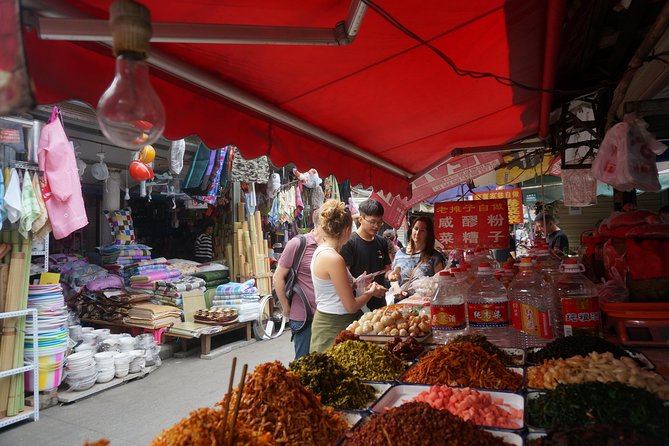
Sichuan food can look simple on a restaurant menu, yet its flavor depends on details you may not recognize at first glance. Sichuan pepper, dried chilies, fermented bean paste, fresh vegetables, aromatics, and different types of tofu all play separate roles. A market walk gives you a chance to see those ingredients before they become dinner.
Liangjiaxiang market is in Chengdu’s Jinniu District. This is not just a quick stop for a photo. Your guide helps you look at the produce, spices, and prepared food with some context. You might taste fruit you have never tried, sample a snack, or see how local shoppers choose ingredients.
The market also gives the class a stronger connection to ordinary Chengdu life. Instead of learning only a restaurant recipe, you see the food system that supports it. Guides have helped visitors practice simple Chinese phrases, order food, and understand how people select produce.
I would pay attention to the explanations rather than trying to rush through every stall. Ask about the ingredients you see in dishes later in the class. That is where the tour makes the most sense: the peppercorns, chilies, tofu, vegetables, and sauces stop being mysterious items and become tools you can use.
The market is described as clean and easy to reach, but you should still expect a working food market rather than a polished attraction. You may encounter strong smells, wet floors, crowded areas, or produce that looks unfamiliar. That is part of the point, but it may not suit someone who wants a quiet sightseeing walk.
More Local Market Tours in China
- Half-Day steamed Buns Cooking Class with a Local Market Visit
★ 5.0 · 26 reviews - Half-Day Professional Mapo Tofu Cooking with a Local Market Visit
★ 5.0 · 19 reviews - Old Guangzhou Backstreet Alley Local Market Walking Private Tour
★ 5.0 · 18 reviews
Meeting Lance or Jerry in the market
The English-speaking guide is one of the most important parts of this activity. Lance and Jerry have led sessions, and both have been praised for making the tour friendly and easy to follow. Their role is especially useful because the chef’s demonstrations and the market conversations may happen in Chinese.
Lance often acts as guide and translator in the kitchen. Jerry has also led market walks and helped visitors understand the ingredients and cooking steps. The exact staff member can depend on the date and class schedule, so book this for the format rather than for a guaranteed individual guide.
The guides also add local details beyond the recipe. You may hear about daily life in Chengdu, the meaning of a neighborhood, or the way people shop and eat. One useful feature is help with buying spices or other food products to take home, although you should treat that as assistance rather than a guaranteed shopping service.
The class welcomes solo participants, and the available format can be small-group or private. That matters if you are traveling alone or want direct help at the wok. A maximum of 15 people is listed, so ask about the expected group size if personal instruction is a major reason for booking.
Tea, snacks, and the move to Chilli Cool’s Kitchen
After the market, the experience moves to Chilli Cool’s Kitchen at 163-11 Yi Huan Lu Bei San Duan. The activity ends at this same meeting point. The kitchen has been described as clean, comfortable, and well set up for teaching.
Before the main cooking begins, you may have tea and light refreshments. Some sessions have included a traditional tea stop or a quiet tea setting, which gives you a short pause after the market walk. This is also a good time to ask about spice levels, ingredients, and the dishes you will prepare.
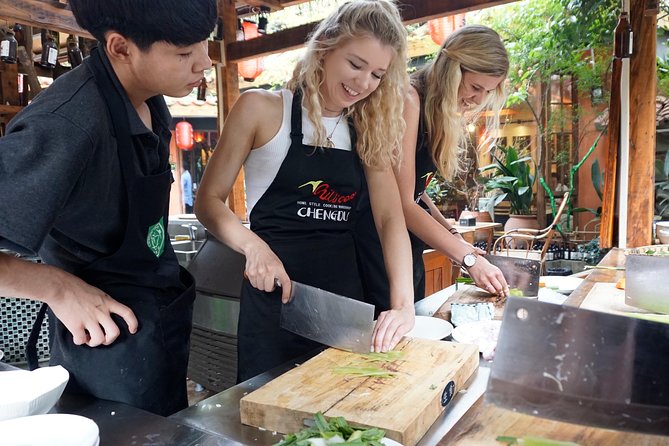
The kitchen is not only a demonstration space. You take part in the work. That can include chopping vegetables, mixing fillings, shaping dumplings, heating the wok, adding oil, and building a sauce in the correct order. The chef cooks alongside you or demonstrates the same dish so you can compare technique and texture.
The setting sounds more polished than a market stall, but it keeps the lesson informal. You are not expected to arrive with professional knife skills. The point is to learn enough to repeat the dish at home, not to pass a chef’s exam.
What you may cook during the four hours
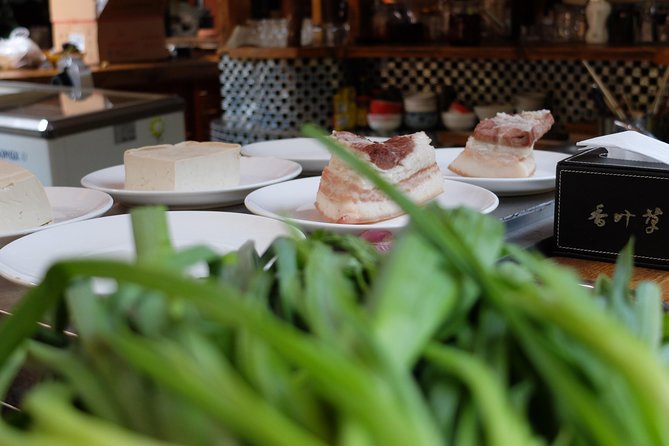
The exact menu can change, but the class has included several familiar Sichuan dishes. Mapo tofu is one of the most useful examples because it shows how tofu, chili, fermented bean paste, aromatics, and seasoning work together. You may know the dish from restaurants, but cooking it yourself makes the balance easier to understand.
Kung pao chicken has also appeared, along with twice-cooked pork, stir-fried cabbage, cucumber salad, and other vegetable dishes. Some sessions have prepared three main dishes, while others have included dumplings, wontons, or baozi. A class focused on dumplings may give you more time to shape chaoshou or similar filled wrappers.
The food is not simply placed in front of you. You learn the order of operations. Sichuan cooking often depends on timing: when the oil is hot, when the aromatics enter, when the sauce is added, and how quickly the food is tossed. The chef can show you these actions in a way a written recipe cannot.
This is also where the class earns its value. You get recipes to take home, but you gain more than a list of ingredients. You learn how to judge heat, texture, and seasoning. You may not reproduce a professional chef’s dish perfectly on the first try, but you should leave with a clearer method.
You should also expect some hands-on trial and error. Dumpling folds may look rough, and wok cooking can feel fast. That is fine. The guides and chef are there to correct technique and keep the process enjoyable, not to grade your results.
More Market Cooking Classes in China
- Chengdu: Cooking Class with Fresh Market Half Day Experience
★ 5.0 · 42 reviews - Hong Kong Market Walking Tour & Chinese Cooking Class
★ 5.0 · 24 reviews - Half-day Dandan Noodles Cooking Class with a Local Market Visit
★ 5.0 · 8 reviews - Beijing: Vegan Home Cooking & Local Market Tour with Sanxia
★ 4.8 · 4 reviews
Eating what you made
At the end, you sit down and eat the food prepared during the class. That final meal gives the four hours a satisfying shape. You have seen the ingredients, handled them, cooked them, and then tasted the result.
The meal can include extra items such as dumplings, depending on the session. Beverages are included, with tea, soft drinks, or beer noted as possibilities. Lunch or dinner is provided according to the class schedule.
I like this part because it lets you judge the cooking immediately. Did the tofu hold its texture? Was the sauce too hot? Did the cabbage stay crisp? You can talk through those questions with the guide and chef while the lesson is still fresh.
The food is designed to be Sichuan, so spice is part of the experience. If you have a low tolerance for heat, tell the operator when booking and again at the start. The available information confirms that dietary needs and vegetarian requests should be shared in advance, but it does not promise that every ingredient can be changed on the day.
How good is the value at $90?
At $90 per person, this is not the cheapest meal you can buy in Chengdu. You could eat Sichuan food for far less at a local restaurant. The price makes more sense when you count the market tour, guide, translation, ingredients, chef instruction, food tasting, recipes, drinks, and the final meal.
You are paying for access and explanation as much as for food. A restaurant can show you what mapo tofu tastes like. This class helps you understand how it is made and gives you a chance to ask why a particular spice, sauce, or cooking step matters.
The value is strongest if you want a practical food lesson that also introduces local daily life. It is weaker if you mainly want a large meal, a formal culinary qualification, or a long guided tour of Chengdu. The four-hour format offers a good middle ground, but it has limits.
Group discounts may be available, and the class can be arranged as a small-group or private experience. If you are traveling with family or friends, ask about the group rate. The minimum age is five, so it can work for families, though younger children may not want to spend much time chopping or standing at a stove.
The tour is booked an average of 18 days ahead, which suggests you should not leave it until the last minute during a short Chengdu stay. Confirmation is provided at booking, and mobile tickets make the practical side simple.
Who should book this cooking class?
I would recommend it to you if food is one of the main reasons you came to Chengdu. It is also a strong choice if you have eaten Sichuan dishes but want to understand the ingredients behind them.
Solo visitors can benefit from the guided format, since the class does not require you to organize a private group. Couples and families may like the shared meal at the end. A group of friends can make good use of the private option or any available group discount.
This is also a useful activity early in your stay. After learning about chilies, peppercorns, tofu, and sauces, you may recognize those flavors more clearly in restaurants around Chengdu. The class can help you order with more confidence, even if you never cook the dishes at home.
I would be more cautious if you dislike spicy food, have serious dietary restrictions, or prefer a passive sightseeing tour. The operator can accommodate vegetarian requests when advised in advance, but you should provide every dietary requirement at booking. The class operates in all weather, so rain or heat will not automatically cancel the market portion.
Wear comfortable walking shoes. The market and kitchen involve time on your feet, and the route is designed as an active half-day rather than a seated tasting.
Practical booking advice
The meeting point is 163-11 Yi Huan Lu Bei San Duan in Jinniu District, and it is near public transportation. Some sessions have met participants near a subway station, so check the current meeting instructions carefully rather than assuming hotel pickup is included.
The activity lasts about four hours and ends back at the meeting point. Lunch or dinner depends on the time of your class. Leave enough space in your schedule afterward, especially if you plan to visit another attraction across the city.
Bring your mobile ticket and the passport details requested at booking. The operator requires each participant’s passport name, number, expiry date, and country. That is easy to overlook, so have the information ready for everyone in your party.
Free cancellation is available if you cancel at least 24 hours before the local start time. Changes or cancellations made inside that window are not accepted for a refund. This is a reasonable policy, but pay attention to the local time if your booking was made from another country.
Should you book this Chengdu cooking class?
Yes, if you want more than a restaurant meal. The combination of Liangjiaxiang market, local explanations, hands-on cooking, and a shared Sichuan dinner gives you a useful look at Chengdu food from several angles.
Book it especially if you like learning by doing, want recipes to take home, or need an English-speaking guide to bridge the market and kitchen. Lance and Jerry bring much of the ease to the experience, while the chefs provide the cooking instruction.
Skip it if you want a quiet market visit, a luxury food tasting, or a guaranteed fixed menu. The dishes and staff can vary, and the four-hour schedule is active. For most food-focused visitors, though, $90 buys a full half-day with a meal, instruction, local context, and a better understanding of why Sichuan cuisine tastes the way it does.
FAQ
How long does the Chengdu cooking class last?
The experience lasts approximately four hours, including the market visit, refreshments, cooking lesson, and meal.
Where does the activity start?
The meeting point is 163-11 Yi Huan Lu Bei San Duan, Jinniu District, Chengdu, Sichuan, China, postal code 610051.
Where does the activity end?
The activity ends back at the meeting point.
What is included in the price?
The price includes an English-speaking guide, market tour, ingredients, beverages or beer, light refreshments, food tasting, lunch or dinner depending on the class schedule, and recipes.
Is a vegetarian option available?
Yes. A vegetarian option is available, but you must advise the operator when booking. You should also provide details of any other dietary requirements at that time.
What is the minimum age?
The minimum age is five years old.
How many people can join the class?
The maximum group size is 15 travelers. Small-group and private options are available.
Can I cancel for a full refund?
Yes, if you cancel at least 24 hours before the experience start time. Cancellations or changes made less than 24 hours before the start are not accepted for a refund.
More Markets in China
- Mini Group Xian Day Tour to Terracotta Army, City Wall, Pagoda and Muslim Bazaar
★ 5.0 · 1,320 reviews - Shanghai Day Tour to Zhujiajiao Water Town, Yu Garden, Bazaar, Bund
★ 5.0 · 162 reviews - Organic Chinese Dumpling Class with Market Walk
★ 5.0 · 88 reviews - Xi’an: Terracotta Army, Lunch, City Wall, Pagoda, Bazaar
★ 5.0 · 72 reviews
More Cooking Classes in China
- Dumpling Cooking Class and Local Market Tour
★ 5.0 · 3 reviews - Hanoi Cooking Class: Culture, Local Market & Meaning CSR Impact
★ 5.0 · 5,147 reviews - 5 Traditional Dishes Hanoi Cooking Class with Market Trip
★ 5.0 · 4,890 reviews - Cooking Class and Lunch at a Tuscan Farmhouse with Local Market Tour from Florence
★ 5.0 · 4,831 reviews
Just added around China
- Three-Hour Private Chengdu Tea Wholesale Market Tour★ 5.0 · 4 reviews
- Half-day Dandan Noodles Cooking Class with a Local Market Visit★ 5.0 · 8 reviews
- 3-Hour Herbal Wholesale TCM Market and a Local Wet Market Tour★ 5.0 · 4 reviews
- Private Tour to Pearl Market Acrobatic Show & Peking Duck Dinner★ 5.0 · 5 reviews
- Private Distinctive Market Tour with Shaomai Lunch and Full Massage in Beijing★ 5.0 · 2 reviews
- Small Group Beijing Temple of heaven and Summer Palace with Pearl market★ 5.0 · 3 reviews
- Half Day Tour:Market Shopping Acrobatic Show & Peking Duck dinner★ 5.0 · 2 reviews
- Lama Temple, Hutong and Silk & Pearl Market Private Day Tour★ 5.0 · 5 reviews
Market Cooking Classes, compared.
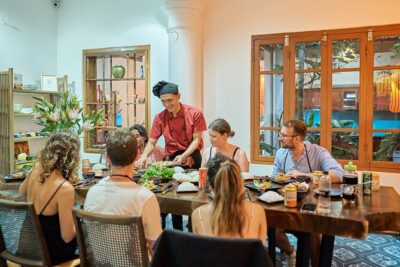
Hanoi Cooking Class: Culture, Local Market & Meaning CSR Impact
Read our review →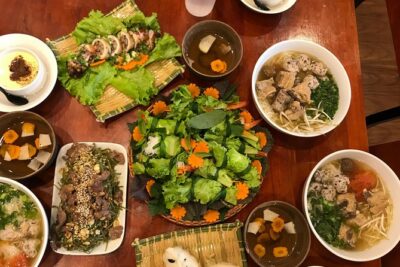
5 Traditional Dishes Hanoi Cooking Class with Market Trip
Read our review →
Cooking Class and Lunch at a Tuscan Farmhouse with Local Market Tour from Florence
Read our review →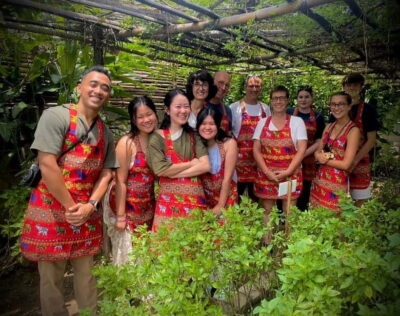
Cooking Class, Market & Thai Herbs Garden Tour
Read our review →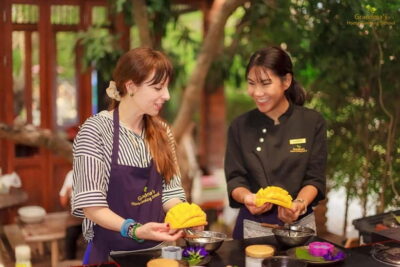
Authentic Cooking Class with Market & Farm Visit
Read our review →
Paella Cooking Experience & Boqueria Market Tour
Read our review →
Cooking Class Hoi An:Local Market, Basket Boat, Fishing & Cooking
Read our review →Browse the lists this tour appears in