
Review · TANZANIA
Arusha: Traditional Tanzania Cooking Class & Food Market Tour
Arusha’s best food lesson begins before you reach the cooking fire. You walk through the central market, see what local families buy, choose two dishes, and then carry those ingredients to a working local kitchen in Sanawari. I like the market-to-plate design, and I like that the ride to the cooking class uses ordinary local transport rather than keeping you inside a tourist vehicle. The main consideration is comfort: this is a basic kitchen, with charcoal burners, a gas burner, low tables, tubs, and simple utensils.
The $42 price covers pickup and drop-off near central Arusha, market shopping, ingredients, instruction, and the meal you prepare. That is a fair package for a four-hour experience, though drinks and spices are extra, and the group limit can be as high as 200 people, so ask about the expected group size when you book.
Key points to know before you book
- The market comes first: Spend about 30 minutes learning how Arusha’s fresh food trade works before cooking.
- You choose two dishes: The guide explains local foods, then you select the dishes for your lesson.
- Sanawari offers a real local setting: The class takes place in a simple kitchen, not a polished cooking studio.
- Public transport is part of the experience: You may ride from the central market to Sanawari as local residents do.
- Your meal is included: Eat what you prepare for lunch or dinner, with takeaway food sometimes available.
- Pickup keeps the day easy: Hotel pickup and drop-off are offered near Arusha city center.
Why this Arusha food tour feels different
Many cooking classes begin with premeasured ingredients and a spotless worktop. This one starts with the question: what is being sold today, and what do people here actually cook? That small change gives the experience its value.
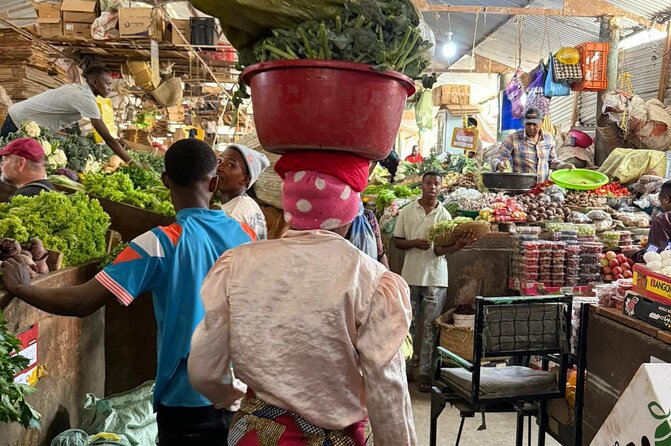
You meet your guide at your hotel, then head to Arusha’s central food market. The guide explains the produce, meat, and other local foods on sale, along with traditional ways to use them. You are not simply shown a few colorful stalls and hurried along. The point is to see the everyday food system behind the plate.
I especially like that your meal is not fixed in advance. You learn about several local dishes, then choose two for the cooking lesson. Ugali and ndizi are among the dishes associated with the class, though the exact choices depend on what you select and what the chef offers that day.
The experience is led by a local team. Guides named in the available information include Israel, James, Jack, Lameck, Bariki, Magret, and others, so your guide may vary. Israel is repeatedly singled out for enthusiasm and cultural explanations, while Magret is described as keeping the class lively and well organized. The important point is that the guide is part translator, part market escort, and part link to local customs.
More market cooking classes in the world:
- Hanoi Cooking Class: Culture, Local Market & Meaning CSR Impact
★ 5.0 · 5,147 reviews - 5 Traditional Dishes Hanoi Cooking Class with Market Trip
★ 5.0 · 4,890 reviews - Cooking Class and Lunch at a Tuscan Farmhouse with Local Market Tour from Florence
★ 5.0 · 4,831 reviews
Inside Arusha’s central food market
The market visit takes roughly 30 minutes. Some descriptions of the experience put it closer to 45 minutes, so I would allow a little flexibility rather than treating the timing as exact.
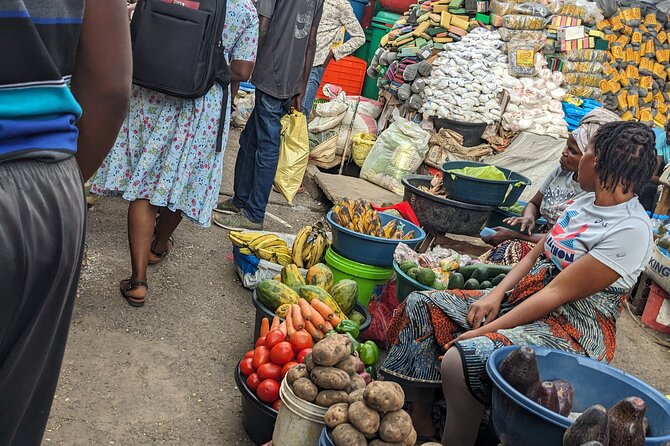
This is a working market, not a staged food hall. You can expect stalls with produce and other ingredients used in Tanzanian homes. Much of the food is locally sourced, although not everything comes from Tanzania. Your guide points out unfamiliar items, explains how they are used, and helps you understand what you are buying before the cooking begins.
The market is useful even if you already know your way around food markets. You get a quick look at local buying habits, the way ingredients are displayed, and the social side of shopping. The people you meet are described as friendly, but remember that this remains a place where people are doing their daily business. Be polite when taking photographs, and stay close to your guide in the crowded sections.
This is also where the tour gains its strongest cultural value. Food can tell you more about ordinary life than a museum label. Seeing the ingredients first helps you understand why a dish tastes the way it does, and why some foods appear at particular meals.
Choosing two Tanzanian dishes
After the market walk, the guide explains the available foods and cooking options. You then choose two dishes for the lesson. This is a better arrangement than a fixed menu for anyone who wants some control over the meal, especially if you have never tried Tanzanian food before.
The dish selection is also where you should speak up. Tell the guide if you have allergies, dietary restrictions, or ingredients you cannot eat. The supplied details do not promise a special dietary menu, so do not assume substitutions will be possible. Ask before the shopping is finished.
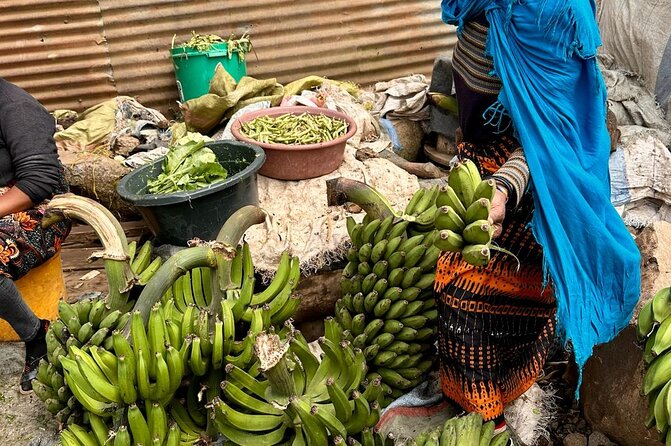
Ugali and ndizi are specifically connected with the class. Ugali is a staple made from maize flour, while ndizi refers to banana-based dishes that are common in Tanzanian cooking. The actual preparation may vary, and the tour description does not give a guaranteed menu or recipe list.
Once you decide, the ingredients are purchased fresh from the market. The cost of that shopping is included. That matters because you are not paying a second bill for the food used in your lesson.
The ride from the market to Sanawari
Sanawari is the cooking-class area, a short distance from the central market. The route is part of the day rather than dead time. You may use a form of ordinary public transport commonly used by local people.
I like this detail because it gives you a small glimpse of how Arusha connects its neighborhoods. It also means the experience may feel less controlled than a private transfer. Transport can be slower, busier, or less predictable than a direct car ride, and the tour’s own description presents this as part of the local experience.
Pickup and drop-off are offered at hotels near the city center. If your accommodation is outside that area, confirm the meeting point before the day of the tour. The provider contacts you by WhatsApp or email after booking, which is the right time to clarify pickup details and any food concerns.
More cooking classes in the world:
- Chiang Mai: Cooking Class, Market & Thai Herbs Garden Tour
★ 4.9 · 4,824 reviews - Chiang Mai: Authentic Cooking Class with Market & Farm Visit
★ 4.9 · 4,546 reviews - Barcelona: Paella Cooking Experience & Boqueria Market Tour
★ 4.8 · 3,661 reviews - Cooking Class Hoi An:Local Market, Basket Boat, Fishing & Cooking
★ 5.0 · 3,660 reviews
Cooking in a simple local kitchen
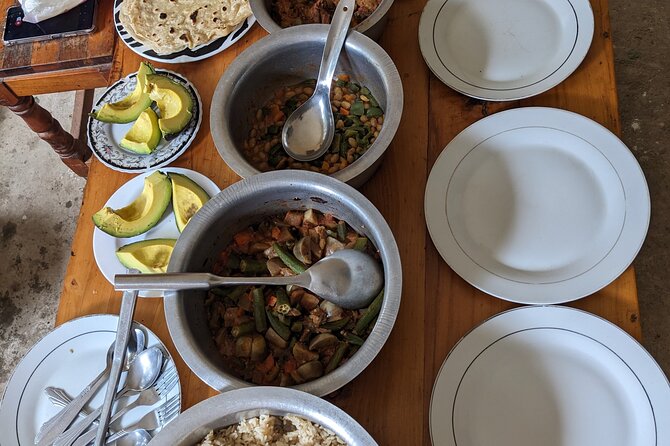
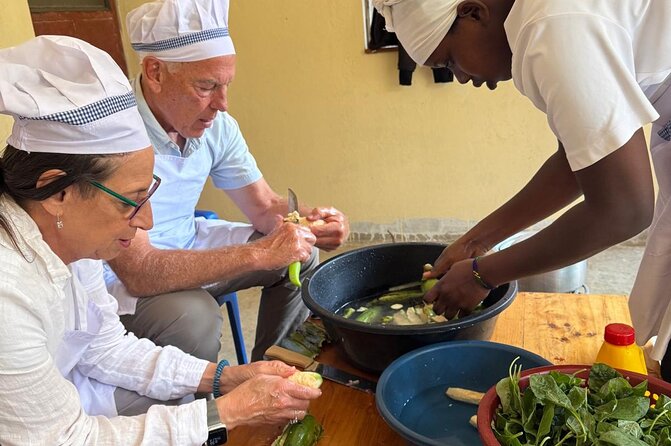
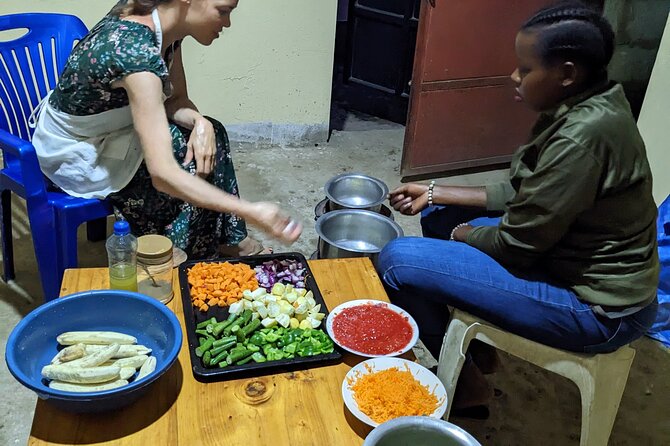
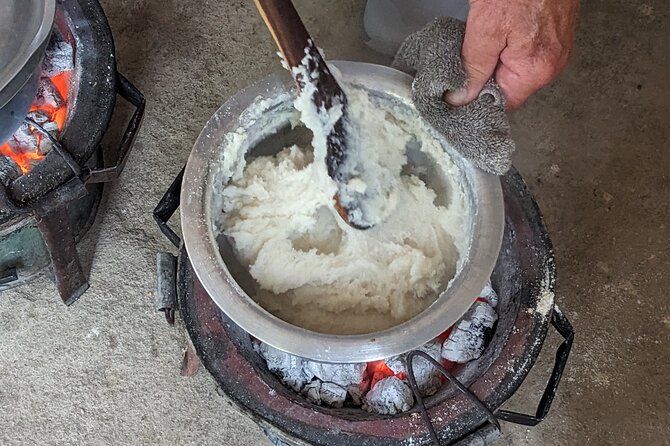
The class lasts about 1 hour and 30 minutes at the Sanawari destination. Do not arrive expecting a modern culinary school. The cooking space may have a low table, two charcoal burners, a gas burner, large tubs, and basic cooking tools.
That setup is a strength if you want to see how food is prepared in a local home-style setting. You can learn how heat, preparation, and teamwork work without the equipment found in a professional studio. It also gives the chef a chance to explain not just what to do, but how daily cooking is handled.
It is a drawback if you need a high level of comfort or prefer precise, restaurant-style instruction. The low work surface may be awkward for some people, and the basic equipment can make the class feel rough around the edges. The provider clearly signals this in advance, so the surprise should be limited.
The chef guides you through the dishes you selected. The class is intended to be hands-on, and the available accounts describe it as interactive and fun. Since the exact menu is not fixed, the lesson will depend on your choices, the ingredients, and the pace of the group.
Eating what you cook
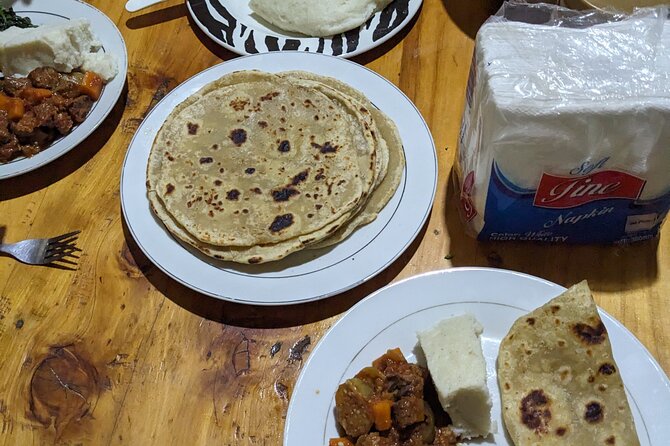
After the cooking, you sit down to eat the meal. The food is included for participants and can be served as lunch or dinner, depending on the starting time.
This is one of the better features of the experience. You do not merely watch a demonstration and receive a token taste. The meal comes from the ingredients you helped select and prepare. Starting hungry may be wise, since the market tour and cooking lesson lead directly into a proper meal.
The tour also offers the possibility of takeaway food after cooking. That option is not described in detail, so ask the guide about packaging, portions, and any additional cost if you want to take food with you.
Drinks are not included. You can buy water, soda, or beer along the way, so bring some Tanzanian shillings or ask your guide about the easiest place to purchase one. Spices from the market are also excluded, which matters if you hope to bring ingredients home.
What $42 really gets you
At $42 per person, this is priced above a simple restaurant meal but includes much more than food. You receive a guide, a market visit, transport assistance, fresh ingredients, a cooking lesson, the finished meal, and hotel pickup and drop-off near central Arusha.
The value is strongest if you care about context. A meal in a restaurant lets you taste Tanzanian food. This experience shows you the ingredients, the buying process, the cooking tools, and the social setting behind the meal.
The price is less compelling if you only want to eat local food quickly. The market and cooking class take around four hours, and some of that time involves transport and waiting for food to cook. You are paying for participation and contact with local life, not just a large menu.
A group of up to 200 people is allowed by the stated conditions. That is a very high maximum for a cooking class. The experience may be much more personal with a small group, while a large group could mean less time at the work surface and less direct attention from the chef. Ask how many people are booked for your date.
Who will enjoy this experience most
I would recommend this for anyone who wants an everyday view of Arusha beyond the usual sightseeing route. It suits food lovers, curious first-time visitors, and people who enjoy learning by doing rather than watching a demonstration.
It is also a good fit if you are staying in Arusha before or after a safari. The tour gives you a cultural activity that does not require a full day outside the city, and the hotel pickup helps keep the logistics simple.
Families and most visitors can participate, according to the supplied information. Still, the cooking space is basic, and the use of low tables and simple burners may not suit everyone. If you have mobility concerns, ask the provider for more information before booking.
You should also choose this class if you are comfortable with a little uncertainty. The exact dishes, transport flow, and timing can change with the market and the group. That is part of its local character, but it is not the right choice for someone who wants a tightly timed, polished food show.
Practical advice for a smoother day
Confirm your hotel location after booking. Pickup and drop-off are offered near the city center, but the information does not promise service to every address in the wider Arusha area.
Wear clothes and shoes that you do not mind using in a basic kitchen. The supplied details do not specify a dress code, but market walking, charcoal cooking, and food preparation are easier in practical clothing.
Keep your schedule flexible. The advertised duration is about four hours, while the market stop is roughly 30 minutes and the cooking lesson about 90 minutes. The remaining time covers pickup, travel, shopping, preparation, cooking, and eating.
Bring money for drinks and optional spices. Tips are not required, but you may leave one if you feel the guide and chef gave you good service.
The confirmation arrives at booking, and the provider also contacts you by WhatsApp or email. Save those details, especially if you need to confirm the pickup time or explain dietary needs.
Free cancellation is available up to 24 hours before the start time for a full refund. Changes made within 24 hours are not accepted, and poor weather can lead to a new date or a full refund. The exact cutoff follows Arusha local time.
Should you book the Arusha cooking class?
Book it if you want a personal, food-focused look at local life and do not need polished facilities. The strongest parts are the central market visit, the freedom to select two dishes, the fresh ingredient shopping, and the chance to cook and eat in a local setting.
Skip it if you want a quiet restaurant meal, a modern kitchen, or a guaranteed menu. Also ask about group size before paying, since the possible maximum of 200 could change the feel of the lesson.
For most visitors with four free hours in Arusha, $42 is a reasonable price for a market tour, transport, ingredients, instruction, and a meal. Go with an open mind, expect basic conditions, and you will get more than a recipe. You will see how a meal begins, from market stall to cooking fire to plate.
FAQ
How long does the Arusha cooking class and market tour last?
The experience lasts approximately four hours, including hotel pickup and drop-off, the market visit, transport to Sanawari, cooking, and the meal.
Is hotel pickup included?
Yes. Pickup and drop-off are included for hotels near Arusha city center. Confirm your location with the provider after booking if you are staying farther away.
What happens at the central food market?
You spend roughly 30 minutes with a guide who explains local foods, fresh ingredients, how they are used, and aspects of everyday Tanzanian food culture.
Do I choose the food I will cook?
Yes. After the market visit, the guide explains different local foods, and you select two dishes for the cooking lesson.
Is the meal included in the price?
Yes. The ingredients and the meal you prepare are included. Water, soda, beer, and spices bought from the market are not included.
Can I cancel for a full refund?
Yes, if you cancel at least 24 hours before the experience begins. Cancellations or changes made less than 24 hours before the start time are not eligible for a refund.
More Food in the world
- Tokyo Tsukiji Fish Market Food and Culture Walking Tour
★ 5.0 · 3,184 reviews - Bangkok: Markets, Temples and Food Night Tour by Tuk Tuk
★ 4.9 · 2,371 reviews - London Bridge & Borough Market Food Tour with 7 Authentic Dishes
★ 5.0 · 1,972 reviews - Tokyo: Tsukiji Fish Market Food and Walking tour
★ 5.0 · 1,724 reviews
More Food and Drink Tours in the world
- Dubai: Old Town, Creek, Museums, Souks, & Street Food Tour
★ 4.8 · 10,816 reviews - Dubai: Old Town, Souks, Street Food, Guided Tour & Abra Ride
★ 4.9 · 7,170 reviews - Bangkok by Night: Temples, Markets and Food Tuk-Tuk Tour
★ 5.0 · 3,752 reviews - Chef Guided Food Tour of Pike Place Market
★ 5.0 · 3,733 reviews
Just added around the world
- Half-day Dandan Noodles Cooking Class with a Local Market Visit★ 5.0 · 8 reviews
- Three-Hour Private Chengdu Tea Wholesale Market Tour★ 5.0 · 4 reviews
- Chania: Old Town, Public Market, Hill of Prophet Elias, Agia Triada★ 5.0 · 35 reviews
- Moroccan Cooking Class with a Local Family & Market Visit★ 5.0 · 16 reviews
- Chania Old Town, Public Market and Chrisopigi Monastery Tour★ 4.5 · 6 reviews
- 3-Hour Herbal Wholesale TCM Market and a Local Wet Market Tour★ 5.0 · 4 reviews
- Food Tasting & Market Shopping: Private Guided Tour in PORT LOUIS★ 4.5 · 9 reviews
- Charleston International Sweet Treats & Historic City Market Tour★ 5.0 · 22 reviews
Market Cooking Classes, compared.
Hanoi Cooking Class: Culture, Local Market & Meaning CSR Impact
Read our review →
5 Traditional Dishes Hanoi Cooking Class with Market Trip
Read our review →
Cooking Class and Lunch at a Tuscan Farmhouse with Local Market Tour from Florence
Read our review →
Cooking Class, Market & Thai Herbs Garden Tour
Read our review →
Authentic Cooking Class with Market & Farm Visit
Read our review →
Paella Cooking Experience & Boqueria Market Tour
Read our review →
Cooking Class Hoi An:Local Market, Basket Boat, Fishing & Cooking
Read our review →Browse the lists this tour appears in