
Review · KATHMANDU
Oldest Local Market Walking Tour With Living Goddess Kumari
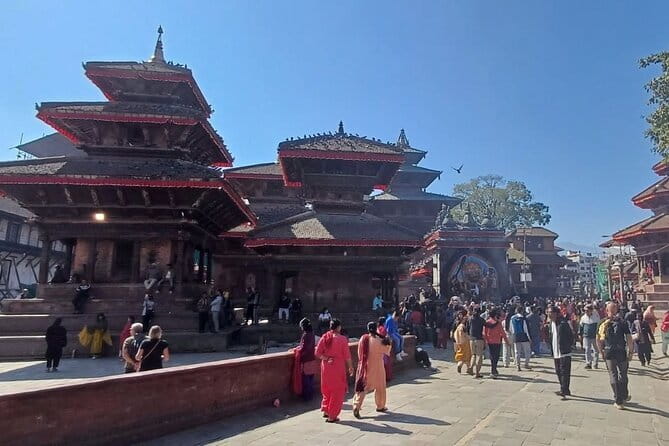
The most unusual part of this Kathmandu walk is the chance to see Kumari, the living goddess, a prepubescent girl honored as an embodiment of the goddess Taleju. Her home, the Kumari Ghar, gives this short tour a cultural focus far beyond a standard market stroll. You also enter Kathmandu Durbar Square, where temples, courtyards, and palace buildings bring Nepal’s past into view.
I like the pairing of Ason market and Durbar Square. Ason gives you daily life, with spice shops, textiles, stalls, and local trade, while the square provides grand architecture and religious sites. I also like that an English-speaking guide explains both Hinduism and Buddhism instead of leaving you to guess what the images and rituals mean.
The main consideration is time. Two hours is enough for an introduction, but not a slow, exhaustive tour of central Kathmandu. You also pay the Kathmandu Durbar Square entrance fee separately, listed at 1,000 Nepali rupees, so add that to the $39 price when working out the full cost.
Key points at a glance
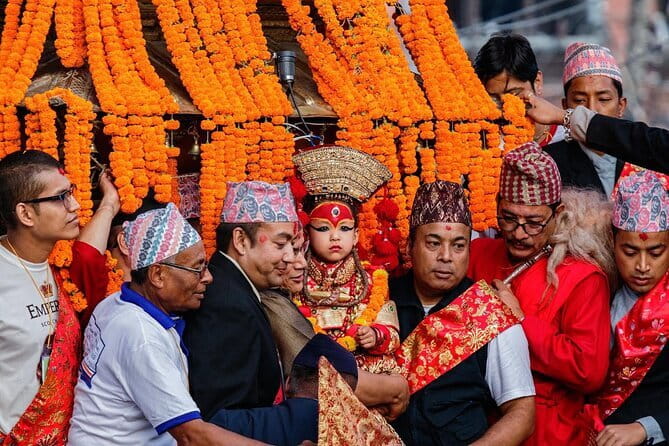
- See Kumari Ghar: The tour offers a chance to witness Kathmandu’s living goddess and learn about her religious role.
- Walk through Ason: Explore Kathmandu’s oldest local market area, with shops, stalls, spices, textiles, and traditional buildings.
- Visit Durbar Square: See one of the city’s major historic centers, filled with palaces, temples, and courtyards.
- Learn across two faiths: The guide connects Hindu and Buddhist traditions to the places you see.
- Start in Thamel: Meet at the main gate side of Chhaya Devi Complex, a practical meeting point for visitors staying in Thamel.
- Keep the plan flexible: You can cancel up to 24 hours before departure for a full refund and reserve without paying immediately.
Why Kumari makes this walk different
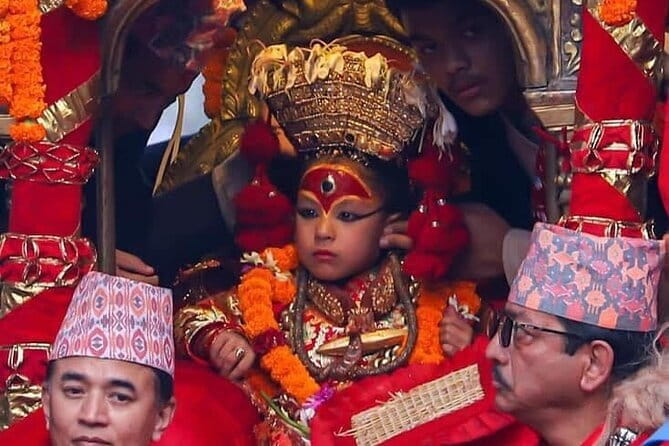
Many Kathmandu sightseeing walks center on monuments. This one adds a living religious tradition. Kumari is not simply a statue or a figure from a story. She is a young girl regarded as the earthly form of Taleju, and she resides in the Kumari Ghar near Durbar Square.
That distinction matters. You are not only looking at old stone and carved wood. You are approaching a custom that remains part of present-day Nepalese culture. The experience calls for quiet attention and respect. A brief sight of Kumari, including her striking gaze, may become the moment you remember most.
The tour information does not promise how long you will see her or whether she will appear at a particular moment. Treat the visit as an opportunity rather than a performance arranged for you. The value lies in understanding why Kumari matters, not in collecting a photograph.
An English-speaking guide helps here. Without explanation, the Kumari tradition can seem mysterious or easy to misunderstand. With context, you can better grasp its place within Kathmandu’s religious life and the connection between the royal, sacred, and civic parts of the old city.
More produce and farmers markets in the world:
- Hanoi Cooking Class: Culture, Local Market & Meaning CSR Impact
★ 5.0 · 5,147 reviews - Cooking Class and Lunch at a Tuscan Farmhouse with Local Market Tour from Florence
★ 5.0 · 4,831 reviews - Cooking Class Hoi An:Local Market, Basket Boat, Fishing & Cooking
★ 5.0 · 3,660 reviews
Ason market: Kathmandu’s everyday side
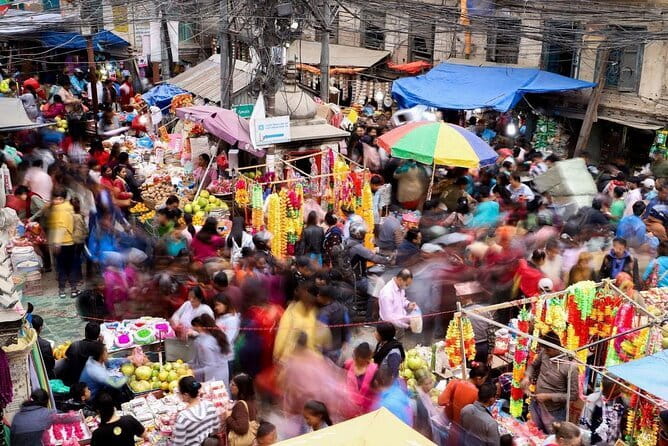
Ason is described as Kathmandu’s oldest local market area, and it offers a useful contrast to the formal buildings of Durbar Square. Its streets are lined with shops and stalls selling goods such as spices, textiles, and souvenirs. Traditional architecture appears among the commercial activity.
I like this stop because it gives you something to watch as well as something to see. The market shows how people shop, trade, and move through the center of Kathmandu. A temple courtyard can tell you about the past, but a working market gives you a sense of the city as it functions now.
Keep your expectations practical. This is a market walk, not a food tour, and meals and drinks are not included. You may find goods that tempt you, but purchases are personal expenses. The tour price does not cover them.
A guide is especially useful in Ason because a market can be hard to read from the outside. You may notice colors, smells, and shopfronts, but the guide can point out the significance of the goods and architecture. The supplied details do not identify every market stop, so expect a broad introduction rather than a fixed shopping list.
Kathmandu Durbar Square and the Kumari Ghar
The walk continues to Kathmandu Durbar Square, a historic center filled with palaces, temples, and courtyards. Its buildings reflect the long cultural development of the Kathmandu Valley, and the square remains one of the key places to understand the city.
This is the part of the experience where the guide’s storytelling matters most. A row of carved details can look decorative until you learn how it relates to religious practice or royal life. The tour is designed to explain both Hinduism and Buddhism, so you get more than a sequence of building names.
The Kumari Ghar is the special focus. It is the residence associated with Kumari, and visiting it adds a living tradition to the architectural setting. You should expect the experience to be respectful and brief rather than theatrical. The point is to observe and understand, not to treat the Kumari as an attraction staged for an audience.
Durbar Square requires a separate entrance payment of 1,000 Nepali rupees. This is the clearest extra cost attached to the tour. Bring that amount in addition to the tour price, and remember that the listed $39 does not include food, beverages, or personal spending.
How the two-hour route works
You meet at the main gate side of Chhaya Devi Complex in Thamel. The exact meeting time depends on the departure selected, so check availability when booking. The tour returns to Chhaya Center after the visit.
The supplied route lists Kathmandu Durbar Square as a two-hour guided tour, while the overall activity is also described as lasting two hours. In practical terms, this is a compact walking experience. Ason, the old city streets, Durbar Square, and the Kumari visit all compete for your attention, so you should not expect long independent time at each site.
That short format can be a strength. If you have just arrived in Kathmandu, a two-hour orientation helps you connect the market, the old royal center, and local religious traditions without giving up an entire day. It also works well beside longer excursions outside the city.
The tradeoff is depth. You will get an introduction, not a full archaeological or architectural study. If you want to examine every temple, shop at length, or linger in the square, plan extra time before or after the tour on your own, subject to the entrance arrangements and opening conditions in effect that day.
No transport is listed. The experience is presented as a walking tour, beginning and ending at Chhaya Center. Wear comfortable shoes and be ready for city streets, though the supplied information does not specify the walking distance or surface conditions.
More market walks in the world:
- Bangkok: City Highlights Temple and Market Walking Tour
★ 4.5 · 3,990 reviews - Tokyo Tsukiji Fish Market Food and Culture Walking Tour
★ 5.0 · 3,184 reviews - Marrakech: Ben Youssef, Secret Garden, & Souks Walking Tour
★ 4.6 · 2,802 reviews - Marrakech: Colorful Medina Souks Guided Walking Tour
★ 4.7 · 2,470 reviews
The guide can make or break a short tour
The experience includes an English-speaking guide, government taxes, VAT, and a bottle of mineral water. The guide is the main reason to book rather than simply visit the same locations independently.
One guide named in the supplied information is Santos. Alison specifically praised Santos as an excellent communicator and said the tour was explained in detail. Other comments describe the experience as informative and the guide as friendly, with particular approval for the thorough explanations.
That pattern is important for a tour this short. You are paying for interpretation, not just access to streets and buildings. A good guide helps you understand the religious meaning of Kumari, identify the difference between Hindu and Buddhist traditions, and place the square’s architecture within Kathmandu’s past.
The guide may also help you manage the transition from Ason’s market activity to the formal spaces of Durbar Square. Those places are close in the city’s historic core, but they offer very different experiences. The tour works best when the guide links them into one story.
The listed language is English. If you need another language, this activity may not suit you, since no other guide language is specified.
What the $39 price really covers
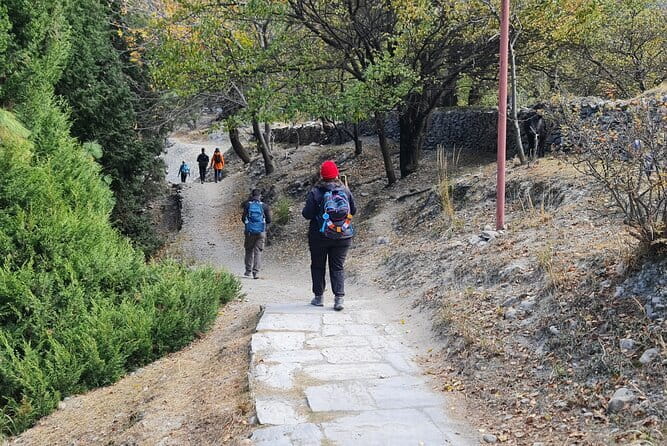
At $39 per person, the price is reasonable if you value a guide’s explanation and want the Kumari tradition placed in context. It includes the walking tour, an English-speaking guide, taxes and VAT, and bottled mineral water.
It does not include the 1,000 Nepali rupee Durbar Square entrance fee. Meals and beverages are also excluded, as are purchases and other personal expenses. The final cost is therefore higher than the headline price, though the known extras are easy to identify.
For a two-hour experience, the value depends on your interests. If you already know Kathmandu’s religious traditions and prefer to explore independently, you may find the price less compelling. If this is your first visit, the combination of Ason, Durbar Square, and Kumari gives you several major themes in one efficient outing.
I would especially consider it good value for someone staying in Thamel who wants a guided introduction without committing to a full-day program. The meeting point is at Chhaya Devi Complex, making it easy to fit into a day based around the Thamel area.
The bottled water is a small but useful inclusion. More important are the guide and the explanation of sites that can be confusing without background. Just budget separately for the entry fee and anything you buy in Ason.
What the feedback tells me about the experience
The strongest pattern is clear: people praised the explanations and the chance to see Kumari. Kristine described Kumari’s gaze as impressive and felt honored by the visit. That gives you a good sense of the emotional side of the experience, though your own viewing may differ.
Erin found the tour very informative. Alison singled out Santos’s communication and detailed explanations. Comments also describe the guide as friendly and the tour as incredible, with one short note in Japanese saying the guide’s explanation was thorough.
The perfect rating comes from eight reviews, so it is a positive signal but not a large sample. I would read it as evidence that the tour has delivered a strong experience for a small number of people, not as proof that every departure will be identical.
The praise also points to the tour’s real strength. This is not mainly about covering a long list of sights. It is about having someone explain a culturally sensitive tradition and connect the old market to the historic square. If that is what you want, the feedback aligns with the tour’s design.
Who should book this walking tour?
I would recommend it to first-time visitors who want a short introduction to Kathmandu’s old center. It suits you especially well if you are curious about religion, local markets, and the story behind Kumari.
It also fits:
- Visitors based in Thamel who want a nearby cultural activity
- People with only a few hours available
- Anyone who prefers an English-speaking guide to independent sightseeing
- Visitors interested in both Hindu and Buddhist traditions
- Those who want a focused city walk before taking longer trips elsewhere in Nepal
You may want a different option if you dislike guided walks, want a full meal experience, or prefer spending a whole day at one historic site. The tour does not include food, drinks, transport, or extended free time.
I would also be careful about expectations around Kumari. The chance to see her is the tour’s special feature, but it is a religious encounter, not an entertainment show. Approach it with patience and respect, and let the guide provide the context.
Practical details before you go
Meet at the main gate side of Chhaya Devi Complex in Thamel. The return point is Chhaya Center, so you do not need to arrange a separate pickup or drop-off based on the information provided.
The activity lasts two hours, and starting times depend on availability. Check the selected departure before you book, especially if you have another timed plan afterward.
Bring money for the 1,000 Nepali rupee Durbar Square entry fee. Food, drinks, souvenirs, and other personal costs are not included. A bottle of mineral water is provided.
The activity allows cancellation up to 24 hours in advance for a full refund. You can also reserve now and pay later, which helps if your Kathmandu plans are still changing.
Should you book it?
Book this tour if you want a compact, guided introduction to old Kathmandu with a genuine chance to learn about Kumari. The strongest reasons are the pairing of Ason market with Durbar Square, the focus on Hindu and Buddhist traditions, and the guide’s role in explaining a subject that is difficult to understand from a quick independent visit.
At $39 plus the separate entrance fee, it is not the cheapest way to walk through the old city. But the short duration, Thamel meeting point, bottled water, and English-language guiding make it practical for a first visit. Choose it for interpretation and cultural context, not for shopping time or a long architectural tour.
FAQ
Where does the tour begin?
It begins at the main gate side of Chhaya Devi Complex in Thamel, Kathmandu.
Where does the tour end?
The tour returns to Chhaya Center.
How long does the experience last?
The activity lasts two hours.
Is an English-speaking guide included?
Yes. An English-speaking live guide is included, and English is the listed tour language.
Is the Kathmandu Durbar Square entrance fee included?
No. The entrance fee is listed separately as 1,000 Nepali rupees.
Can I cancel for a full refund?
Yes. You can cancel up to 24 hours in advance for a full refund. You can also reserve now and pay later.
More Shopping Tours in the world
- 5 Traditional Dishes Hanoi Cooking Class with Market Trip
★ 5.0 · 4,890 reviews - Chiang Mai: Cooking Class, Market & Thai Herbs Garden Tour
★ 4.9 · 4,824 reviews - Chiang Mai: Authentic Cooking Class with Market & Farm Visit
★ 4.9 · 4,546 reviews - Bangkok: Floating Market and Train Market Experience
★ 4.8 · 3,998 reviews
More Markets in the world
- Bangkok: Damnoen Saduak Market and Maeklong Railway Market
★ 4.5 · 26,723 reviews - The Old Siam: Damnoen Saduak and Maeklong Railway Market
★ 4.5 · 10,992 reviews - Bangkok: Train Market & Floating Market with Boat Ride
★ 4.7 · 9,547 reviews - From Bangkok: Ayutthaya & Ayothaya Floating Market Day Trip
★ 4.7 · 6,084 reviews
Just added around the world
- Half-day Dandan Noodles Cooking Class with a Local Market Visit★ 5.0 · 8 reviews
- Three-Hour Private Chengdu Tea Wholesale Market Tour★ 5.0 · 4 reviews
- Chania: Old Town, Public Market, Hill of Prophet Elias, Agia Triada★ 5.0 · 35 reviews
- Moroccan Cooking Class with a Local Family & Market Visit★ 5.0 · 16 reviews
- Chania Old Town, Public Market and Chrisopigi Monastery Tour★ 4.5 · 6 reviews
- 3-Hour Herbal Wholesale TCM Market and a Local Wet Market Tour★ 5.0 · 4 reviews
- Food Tasting & Market Shopping: Private Guided Tour in PORT LOUIS★ 4.5 · 9 reviews
- Charleston International Sweet Treats & Historic City Market Tour★ 5.0 · 22 reviews
Local & Farmers Market Tours, compared.
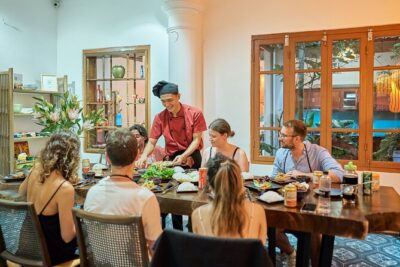
Hanoi Cooking Class: Culture, Local Market & Meaning CSR Impact
Read our review →
Cooking Class and Lunch at a Tuscan Farmhouse with Local Market Tour from Florence
Read our review →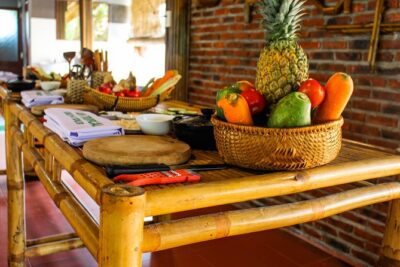
Cooking Class Hoi An:Local Market, Basket Boat, Fishing & Cooking
Read our review →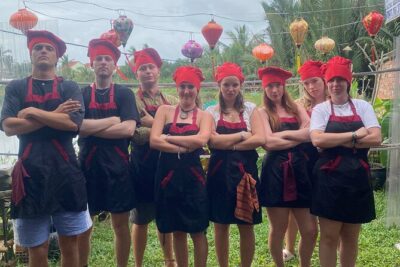
Hoi An Cooking Class(Local market,Basket Boat,Fishing & Cooking)
Read our review →
Old Dubai tour: Local Market, Tasting, Dubai creek with Abra ride
Read our review →
Half Day Easy Thai Cooking Class & Local Market Tour
Read our review →
Cancun Street Food Tour with Food Stalls, Local Market and Murals
Read our review →
Browse the lists this tour appears in