
Review · MARKET TOURS
Split: Private Roman History & Market Tour
Split’s best history lesson is not locked inside a museum. It is built into the walls, tucked beneath apartment windows, and mixed into the produce stalls of the Green Market. This private two-hour tour brings Diocletian’s Palace and everyday Split together, with food tastings that make the city easier to understand.
I like the combination of Roman sites and local food, and I like that your guide is born and raised in Split. The tour also has a welcome environmental feature: it is carbon neutral and run by a B Corp certified company. The main drawback is the price, $280 per person, which is a serious sum for two hours, especially if your main goal is simply to see the palace’s major sights.
- Taste Split at the Green Market: Sample seasonal fruit, vegetables, olive oil, cheese, dry figs, or rakija while learning how locals shop.
- Walk through a living Roman palace: Diocletian’s Palace is still home to local residents, not just an archaeological site.
- Hear local stories from a Splićana: Guides explain traditions connected to Roman and Illyrian times, as well as modern Split.
- See key palace landmarks: The route includes Peristil, the Vestibule, the Golden Gates, and a private section of the palace.
- Finish on the Riva: Your guide points out coffee shops and places for Dalmatian food and evening entertainment.
- Travel with a lighter footprint: The tour is carbon neutral and operated by a B Corp certified company.
Why Split Makes a Good Two-Hour Introduction
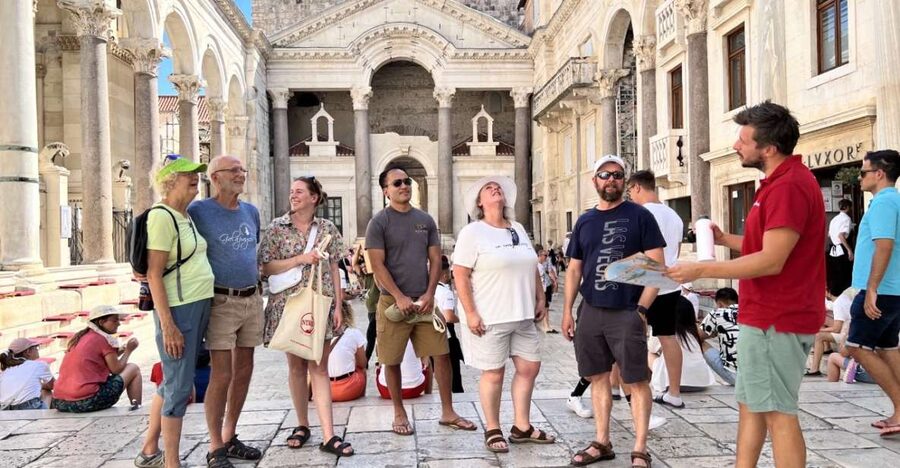
Split is the capital of Dalmatia and one of Croatia’s most unusual historic cities. It grew inside the palace built for the Roman emperor Diocletian, who retired here in the early fourth century. More than 1,700 years later, the old palace is still part archaeological site, part neighborhood, part shopping district, and part social center.
That mix is the point of this tour. You are not simply walking from one Roman monument to another. You are seeing how later generations built homes, shops, lanes, and daily routines into the old imperial structure.
A local guide helps with the social side of Split, too. The city has a strong sense of identity, and locals take real pride in their home. You will hear about Splićana, the people of Split, and the habits and customs they still value. The tone is friendly and personal rather than strictly academic.
The tour is conducted in English and is limited to your private group. That matters in Split, where the palace lanes can feel close and crowded at popular times. You can ask questions as you go, and the guide can adjust the explanation to your interests instead of delivering one fixed speech.
Meeting the Guide Beside the Riva
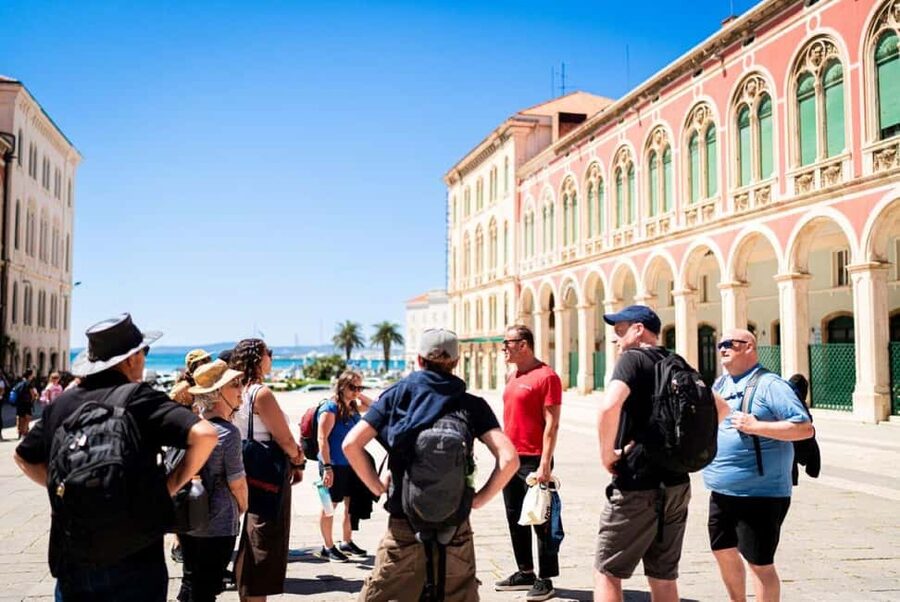
The meeting point is at the beginning of the Riva promenade, near the iron map of the city and its mock-up model. This is a practical place to begin because the Riva is one of Split’s main reference points, and the palace is directly behind it.
Your guide leads you from the waterfront toward the old city. Past tour groups and waterfront cafés, the setting changes quickly. The palace does not arrive as one grand building surrounded by open ground. Its walls and gates are woven into the city.
The local guides are one of the tour’s strongest features. Ted led one particularly well-paced visit, while Ivan was praised for explaining the city clearly. Another guide, described as a woman who spoke excellent English, was especially good at pointing out attractive corners and adding small local stories. Since guide assignments can change, you should not book expecting one particular person, but these names give you a sense of the company’s local staff.
More private market tours in the world:
- Cairo 8 Hour Private Tour of Pyramids, Egyptian Museum and Bazaar
★ 5.0 · 2,931 reviews - Private Excursion to Maeklong Railway and Floating Markets
★ 5.0 · 850 reviews - Floating and Railway Market (Optional Waterfall): Private Tour
★ 5.0 · 827 reviews
The Green Market and the Taste of Dalmatia
The food stop comes early, which is a smart choice. Food gives you an immediate way into local life, and the Green Market is where the palace area meets the daily business of Split.
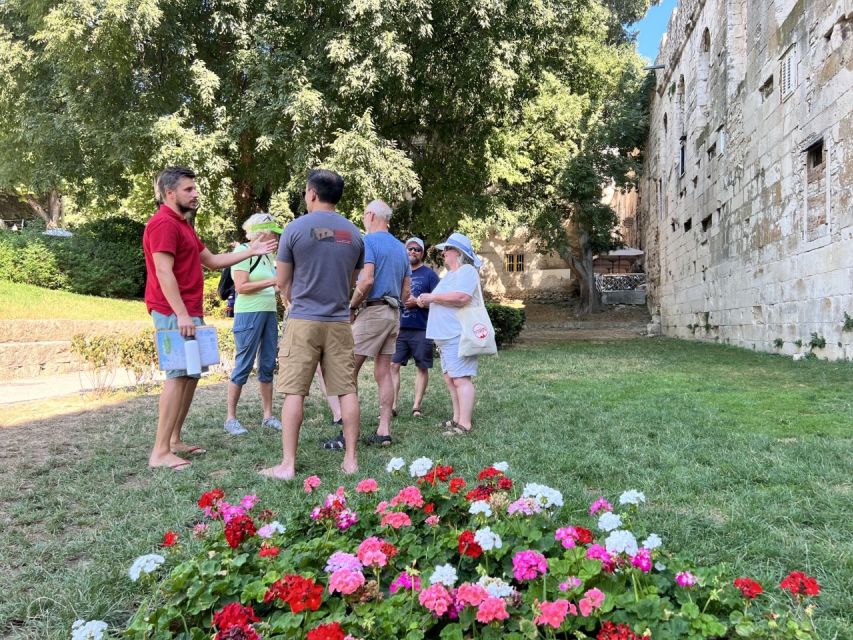
At the market, you can meet local vendors and see how people buy seasonal food. Tastings may include fruit, vegetables, olive oil, rakija, cheese, and dry figs. The exact selection can vary, since it depends on what is in season and available that day.
This is not a full meal, so you should not arrive expecting lunch. It is a guided introduction to ingredients and habits. Your guide explains what locals look for, how the food fits into Dalmatian life, and why the route to a Dalmatian heart is said to run through the stomach.
The market stop also adds balance to the Roman material. Diocletian’s Palace can easily become a parade of emperors, dates, and carved stone. At the Green Market, you see a more ordinary side of Split: people buying produce, vendors selling food, and local traditions carried through everyday meals.
The tasting is also useful if you are unsure what to order later in Croatia. Olive oil, dry figs, cheese, and rakija can appear in different settings across Dalmatia. Here, you receive some context before encountering them on your own.
One small limitation is that the food portion is tasting-sized. If you want a substantial meal, plan to eat separately after the tour. The guide can point you toward places for Dalmatian food and evening entertainment, but additional food and drinks are not included.
Entering Diocletian’s Palace Through the Golden Gates
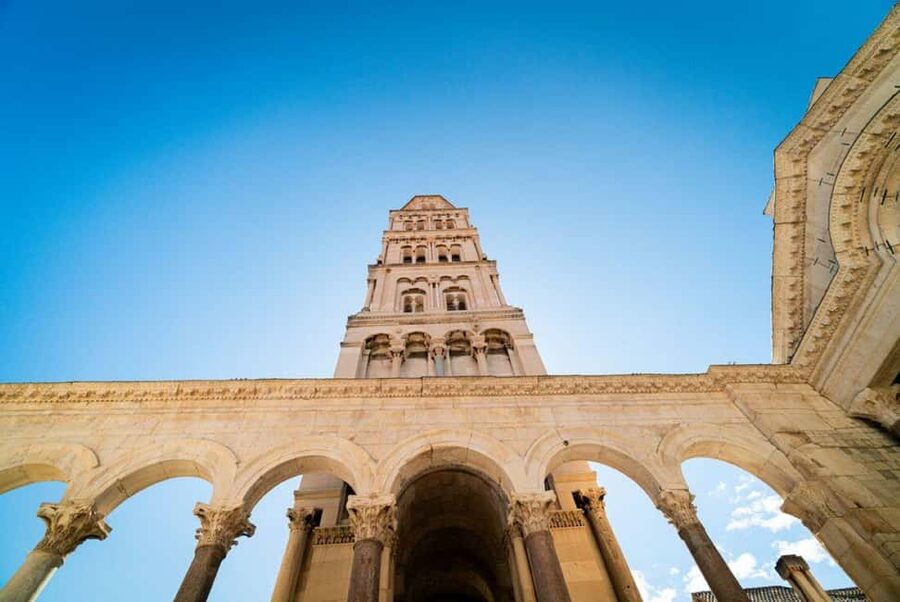
The palace is a UNESCO World Heritage Monument and one of the best-preserved Roman palaces in the world. It was not a normal city palace, and it was not designed as a public forum. Diocletian created a fortified residence near the Adriatic, with imperial apartments, ceremonial spaces, religious buildings, storage areas, and access to the sea.
The tour includes the Golden Gates, one of the palace’s main entrances. Walking through them gives you a useful sense of scale and purpose. These were not just decorative doors. They were part of a fortified complex built to protect the emperor and his household.
You also visit the main square within the palace walls, Peristil. This is the ceremonial heart of the complex, where the Roman past is easiest to picture. The surrounding stone, columns, and formal layout show how Diocletian presented himself as a ruler of almost sacred status.
Yet Peristil is not frozen in antiquity. Modern Split continues around it. People pass through, buildings rise from old walls, and the square functions as part of the living city. That contrast is one of the best reasons to explore the palace with a guide instead of only taking photographs.
The Vestibule, Private Palace Areas, and Roman Stories
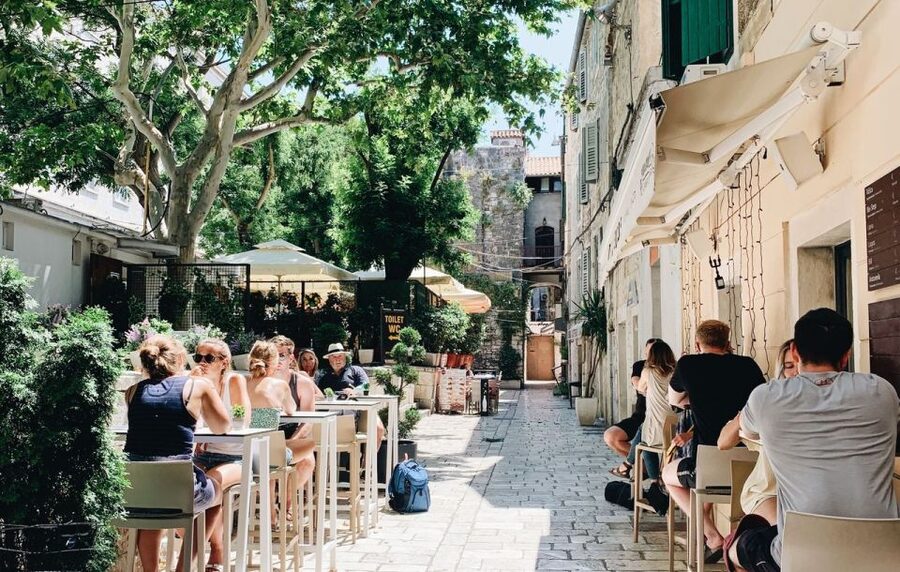
The Vestibule is another important stop. This circular entrance space once formed part of the approach to the emperor’s private apartments. Its shape and scale hint at the kind of authority Diocletian wanted visitors to feel before entering his residence.
The experience also includes a private section of the Diocletian Palace. Because access details can vary, you should think of this as an added part of the guided route rather than a guarantee of every interior area associated with the palace.
Your guide brings the stonework to life with stories about Diocletian’s habits and preferences. One detail concerns his love of salad, a small but memorable fact that makes the emperor feel less like a marble statue and more like a person with particular tastes.
You will also hear about the mythical White Stone and why a piece of it is said to bring happiness. Stories like this are not a replacement for the larger Roman history, but they make the route more memorable. Split’s old center is full of details that are easy to pass without context.
The tour also connects present-day customs with older Illyrian and Roman traditions. The information provided does not promise a formal historical lecture on every ritual, so expect selected stories and local interpretations rather than a university course. That is a good fit if you want history linked to place, food, and local belief.
A few more market tours around the world worth a look
- Bangkok: Damnoen Saduak Market and Maeklong Railway Market
★ 4.5 · 26,723 reviews - The Old Siam: Damnoen Saduak and Maeklong Railway Market
★ 4.5 · 10,992 reviews - Bangkok: Train Market & Floating Market with Boat Ride
★ 4.7 · 9,547 reviews - From Bangkok: Ayutthaya & Ayothaya Floating Market Day Trip
★ 4.7 · 6,084 reviews
Gregory of Nin and the Symbols of Modern Split
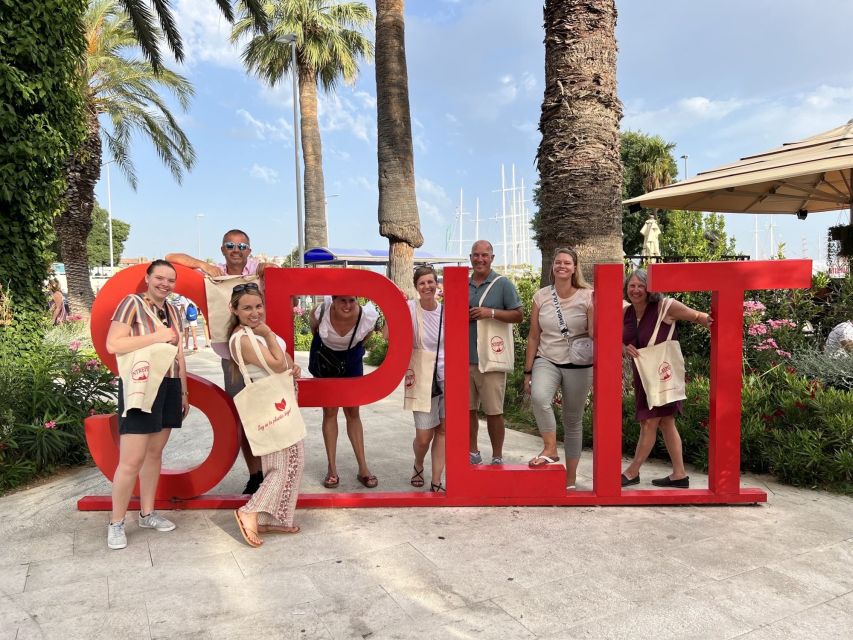
The route includes Gregory of Nin, or Grgur Ninski, whose statue has become one of Split’s most recognizable landmarks. You can make a wish by touching the statue’s golden toe, a simple local ritual that many visitors enjoy.
This stop is a reminder that Split’s identity is not only Roman. The city’s later religious, medieval, national, and sporting traditions all sit on top of the old palace.
You will also hear about Hajduk Split, the city’s famous football club, and why the name appears throughout the city, from suburban areas to the old center. Even if you do not follow football, this helps explain a powerful part of local pride.
This is where a local guide can give you something a map cannot. A monument, a club name, or a polished toe may look like a minor curiosity. With context, each becomes part of the way people in Split talk about their home.
Finishing on the Riva
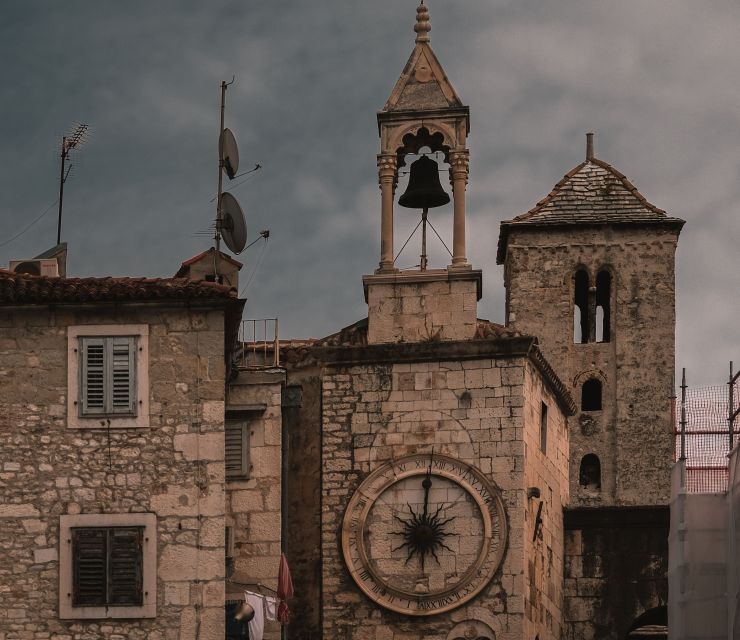
The tour ends back on the Riva promenade. This waterfront walkway is a natural place to stop because it links the old city with Split’s cafés, restaurants, and evening life.
Your guide points out favorite coffee shops and places for Dalmatian food and entertainment. No additional meal or drink is included, but the advice can help you plan the rest of your day.
Ending at the Riva also keeps the tour practical. You are not left at an isolated site or sent across town. From here, you can continue through the palace, sit by the waterfront, or follow the guide’s suggestions for food.
What the $280 Price Really Buys
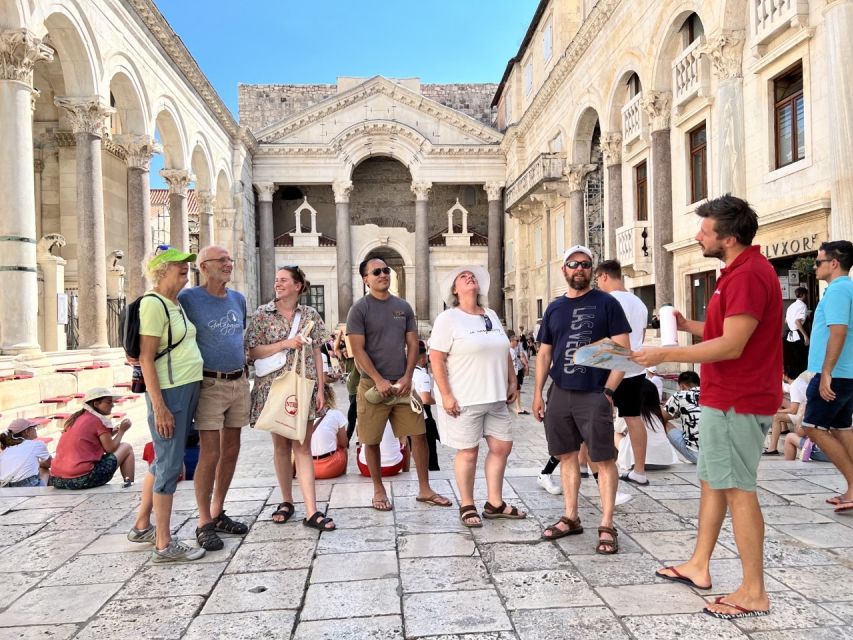
At $280 per person, this is expensive for a two-hour city walk. It makes the most sense for couples, families, or small groups who value a private guide and want a personal introduction to Split rather than the lowest possible price.
The price includes an English-speaking local guide, market tastings, and visits to several important palace areas. It does not include admission to the cathedral in Diocletian’s former mausoleum, the palace cellars, Bell Tower, museums, or Temple of Jupiter. Those sites may require separate entrance fees.
For a solo visitor or a couple watching costs, the value may be hard to justify. You are paying for privacy, local interpretation, flexibility, and the food stop, not for a long list of paid monuments.
For a family, the calculation may be more favorable. Children under six join free, provided you notify the operator in advance. The private format can also be easier with children because you are not trying to keep up with an unfamiliar group.
The two-hour length is another factor. It is long enough to orient yourself on arrival day, but short enough to fit before lunch, a boat trip, or an afternoon visit to another site. If you want a detailed visit to every palace museum and paid interior, this tour will not cover everything.
Who Will Get the Most From This Tour
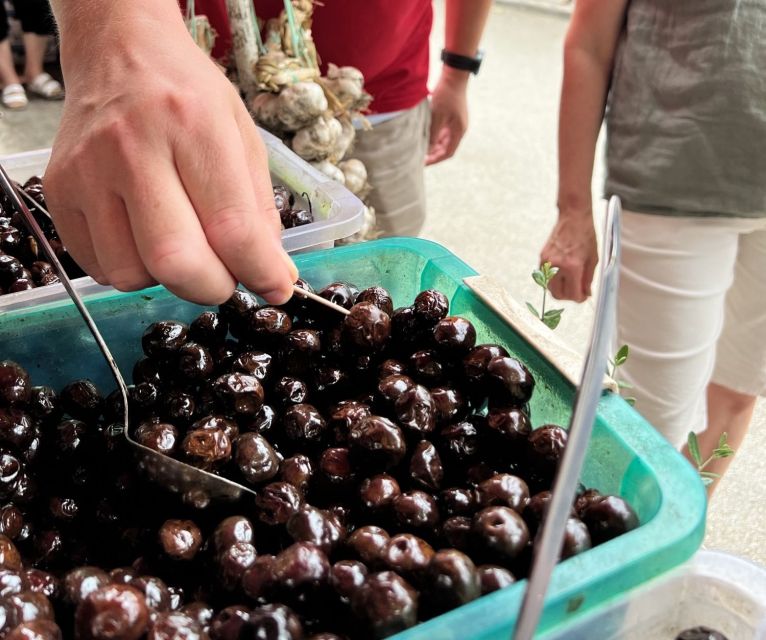
I would choose this tour if you want to understand how Split works as a city, not just photograph Roman remains. The Green Market, local rituals, football culture, and living palace walls give you a broad introduction in a short time.
It is a good match for:
- First-time visitors who want a clear orientation to Split
- Couples or families who prefer a private guide
- Food-focused visitors who enjoy small tastings with local explanation
- History fans who want Diocletian’s Palace placed in its modern setting
- Visitors who value a carbon-neutral tour operated by a B Corp certified company
- People with only two hours before another activity
You may want a different option if your top priority is entering every paid site inside the palace. The exclusions matter. Cathedral, Bell Tower, museums, Temple of Jupiter, and the underground area are not part of the included visit.
The tour also may not suit someone who wants a full meal. The Green Market stop includes tastings, while extra food and drinks cost more.
Practical Details Before You Book
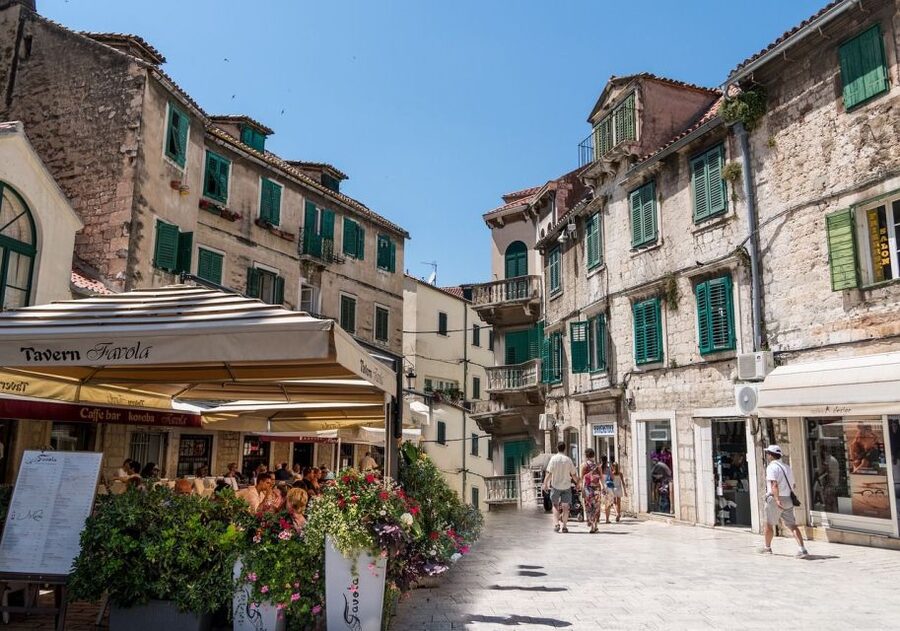
The experience lasts two hours and runs with a live English-speaking guide. Starting times depend on availability, so check the schedule that matches your plans.
You meet at the iron city map near the beginning of the Riva. Arrive with enough time to find the model and map, since the waterfront and old town can be confusing at first glance.
The tour is child-friendly, and children under six can participate free. Tell the operator in advance if you are bringing a child under six.
You can cancel up to 24 hours before the tour for a full refund. The reserve-now-and-pay-later option lets you hold a place without paying immediately, which is useful if your Split schedule is still changing.
The company describes the tour as carbon neutral and is B Corp certified. That does not change the route itself, but it gives environmentally minded visitors a clear reason to consider this operator over an otherwise similar private walk.
Should You Book the Split Roman History and Market Tour?
Book it if you want a short, private introduction that combines Diocletian’s Palace with food and local customs. The strongest parts are the local guide, the Green Market tastings, and the way the route connects Roman remains with the daily life of modern Split.
Skip it if $280 per person feels too high for two hours or if you mainly want paid palace interiors. In that case, a less expensive group walk or self-guided visit may offer better value.
For the right visitor, this tour does more than point out old stones. It shows you why Split’s history is still part of the city’s meals, rituals, football loyalties, and ordinary streets.
FAQ
How long does the Split Roman History and Market Tour last?
The tour lasts two hours.
What language is the tour conducted in?
The tour is conducted in English with a live local guide.
Where does the tour meet?
You meet at the beginning of the Riva promenade near the iron map of Split and the mock-up city model.
What food is included?
The Green Market stop includes tastings that may feature fruits, vegetables, olive oil, rakija, cheese, or dry figs. The selection depends on seasonal availability. Additional food and drinks are not included.
Which parts of Diocletian’s Palace are included?
The visit includes the main square within the palace walls, a private section of the palace, the Vestibule, and the Golden Gates. Entrance fees for the cathedral of the former imperial mausoleum, the underground area, Bell Tower, museums, and Temple of Jupiter are not included.
Can children join the tour?
Yes. The tour is child-friendly, and children under six can join free of charge. You should inform the operator if you are bringing a child under six.
More Heritage Tours in the world
- Private Excursion to Floating Market and Ayutthaya World Heritage
★ 5.0 · 515 reviews - Palermo: Walking Tour of Historic Markets and Monuments
★ 4.9 · 478 reviews - Discover Palermo in 3 hours. Art, history, markets and street food
★ 5.0 · 352 reviews - Private Heritage Walking Tour in Jaisalmer Fort and Old Bazaar
★ 5.0 · 306 reviews
More Shopping Tours in the world
- Hanoi Cooking Class: Culture, Local Market & Meaning CSR Impact
★ 5.0 · 5,147 reviews - 5 Traditional Dishes Hanoi Cooking Class with Market Trip
★ 5.0 · 4,890 reviews - Cooking Class and Lunch at a Tuscan Farmhouse with Local Market Tour from Florence
★ 5.0 · 4,831 reviews - Chiang Mai: Cooking Class, Market & Thai Herbs Garden Tour
★ 4.9 · 4,824 reviews
Just added around the world
- Three-Hour Private Chengdu Tea Wholesale Market Tour★ 5.0 · 4 reviews
- Half-day Dandan Noodles Cooking Class with a Local Market Visit★ 5.0 · 8 reviews
- Chania: Old Town, Public Market, Hill of Prophet Elias, Agia Triada★ 5.0 · 35 reviews
- Moroccan Cooking Class with a Local Family & Market Visit★ 5.0 · 16 reviews
- Chania Old Town, Public Market and Chrisopigi Monastery Tour★ 4.5 · 6 reviews
- 3-Hour Herbal Wholesale TCM Market and a Local Wet Market Tour★ 5.0 · 4 reviews
- Food Tasting & Market Shopping: Private Guided Tour in PORT LOUIS★ 4.5 · 9 reviews
- Charleston International Sweet Treats & Historic City Market Tour★ 5.0 · 22 reviews
Private Market Tours, compared.

Private Excursion to Maeklong Railway and Floating Markets
Read our review →
Floating and Railway Market (Optional Waterfall): Private Tour
Read our review →
Private Pyramids, Museum & Bazaar Tour with Lunch
Read our review →
Shopping in the Souks of Marrakech Private Tour
Read our review →
Local Markets & Khan el Khalili Private Shopping Tour
Read our review →
Private Excursion to Floating Market and Ayutthaya World Heritage
Read our review →
Private Heritage Walking Tour in Jaisalmer Fort and Old Bazaar
Read our review →Browse the lists this tour appears in