
Review · CHINA
Chengdu: Cooking Class with Fresh Market Half Day Experience
Chengdu’s best food lesson may begin before you reach the stove. This half-day experience takes you through a local spice market, where guides such as Lance and Jerry explain Sichuan pepper, chilies, produce, tea, and other ingredients before you cook with them. It is a useful way to understand why Chengdu food tastes so distinct.
I like the mix of market culture and practical cooking, and I like that the food, drinks, recipes, and a full meal are included. The class also works well for solo visitors, couples, families, and vegetarians. The one caution is price: at $82 per person, it costs more than a basic cooking lesson, though the market tour and generous food make the package easier to justify.
Key points to know
- The market comes first: Walk through an everyday spice and food market with an English-speaking guide before cooking.
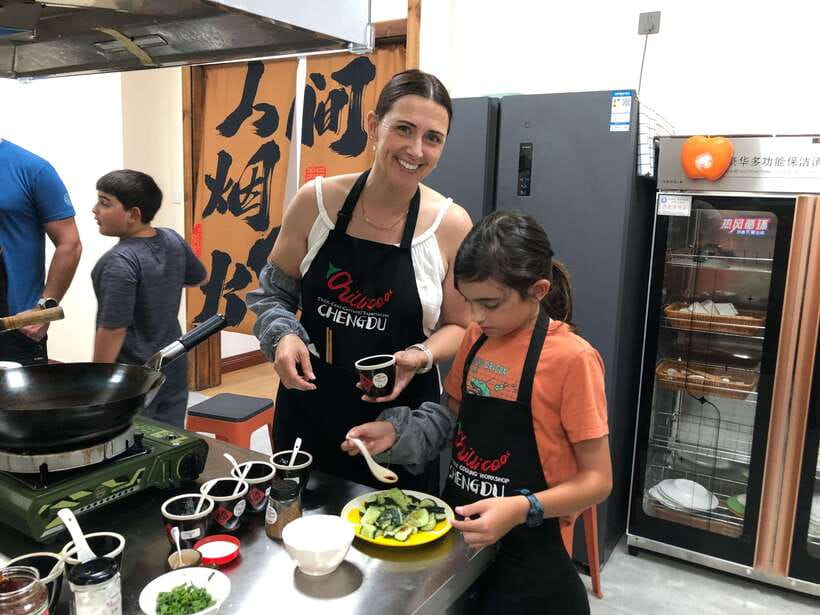
- Several dishes are prepared: You work through a selection of Sichuan dishes, with some sessions producing around three to five dishes.
- Guides make the difference: Lance, Jerry, and Lichi are praised for clear English, patient explanations, and easy conversation.
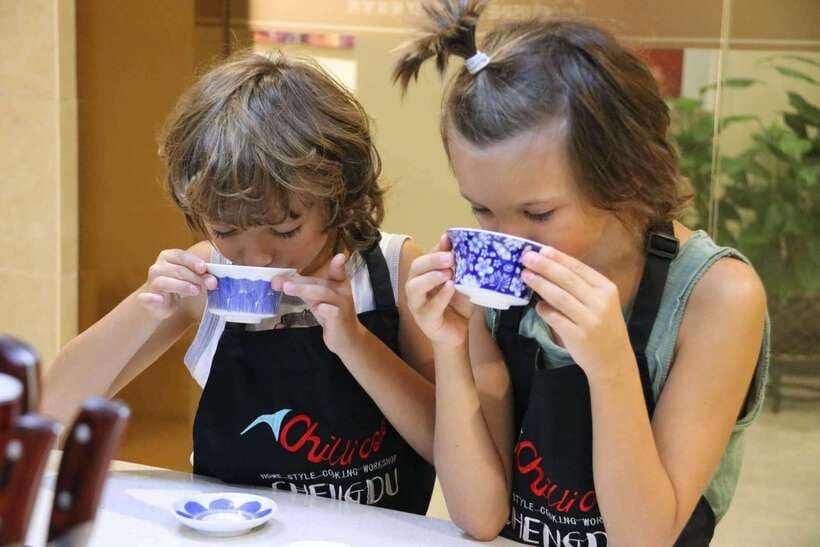
- Tea sets the tone: You are welcomed with Sichuan tea before the hands-on kitchen work begins.
- Dietary needs can be handled: Vegetarian and vegan menus are available when arranged in advance.
- The group stays small: The maximum is 15 people, with a chef and support staff helping at the cooking stations.
Why this Chengdu cooking class is worth your time
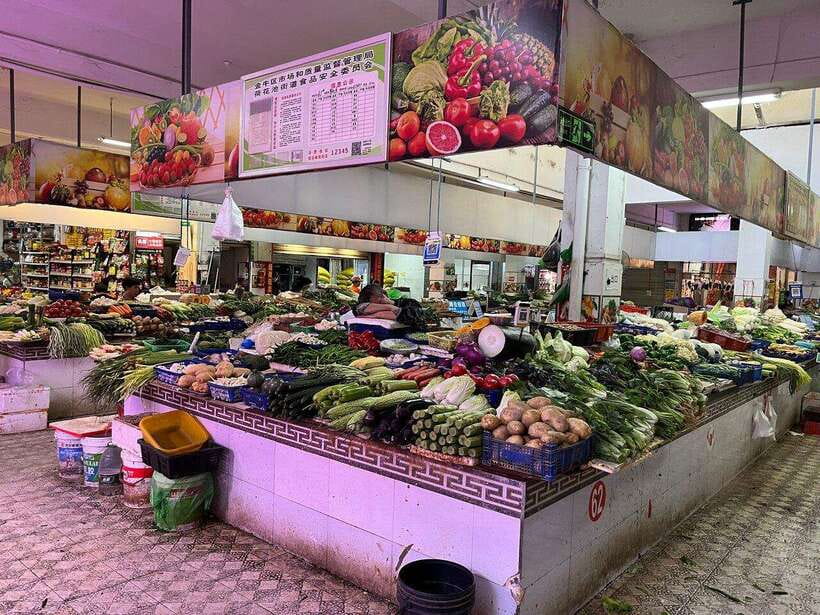
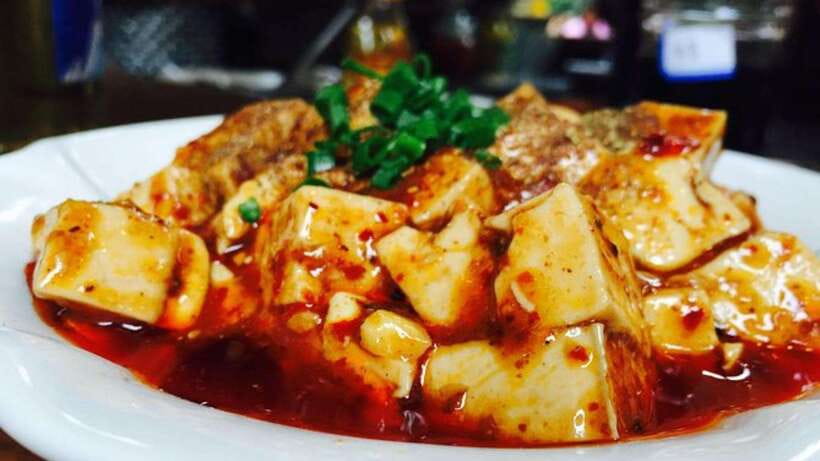
Chengdu is famous for food, but eating a bowl of noodles or ordering mapo tofu only tells you part of the story. This experience shows you the ingredients behind the flavor. You see the chilies, spices, vegetables, fruits, meat, and other products in a real market, then use related ingredients in the kitchen.
That order matters. You are not simply handed a recipe and told to stir. You first learn what the ingredients look and smell like, how they are presented locally, and how Sichuan cooking builds flavor. By the time you reach the workshop kitchen, the peppercorns and dried chilies have a bit of context.
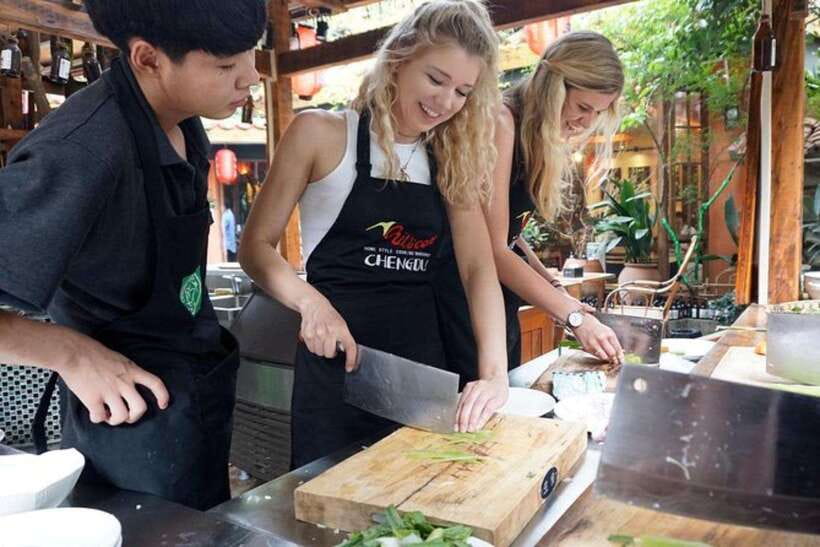
I also like the social shape of the activity. You cook in a small group, share work at several wok stations, and sit down together afterward. It can feel less formal than a demonstration class. You are expected to take part, but help is close by when the heat rises or the timing gets quick.
The experience lasts about four and a half hours. That is long enough for a proper food activity, but short enough to fit into a busy Chengdu visit. Morning sessions meet at 8:50 a.m. Afternoon options meet at 1:50 p.m. or 4:50 p.m., subject to availability.
More Market Cooking Classes in China
- Half-Day Chengdu Cooking Class with a Local Market Visit
★ 5.0 · 465 reviews - Half-Day steamed Buns Cooking Class with a Local Market Visit
★ 5.0 · 26 reviews - Hong Kong Market Walking Tour & Chinese Cooking Class
★ 5.0 · 24 reviews
Starting at Liang Jia Xiang Station
Your meeting point is Metro Line 6’s Liang Jia Xiang Station, Exit D, written in Chinese as 梁家巷地铁站6号线D出口. This is useful because you can show the Chinese name if you need help finding the correct exit.
The tour does not begin with hotel pickup, so you need to reach the station yourself. Plan a little extra time for the metro and station navigation. Meeting at a public transit stop keeps the arrangement simple, but it also means you should not cut it close, especially if you are unfamiliar with Chengdu’s metro system.
The morning start is early enough to catch the market at a lively part of the day. The afternoon class is a good choice if you prefer a slower morning or have another Chengdu sight planned first. One participant who chose the afternoon timing found the market visit worthwhile, so you do not need to assume that only the morning option works.
The maximum group size is 15 people. Actual sessions may be smaller, and one class had only a single participant, creating a very personal cooking lesson. You should not book expecting a private class, but a small group is possible.
Walking through a real spice market
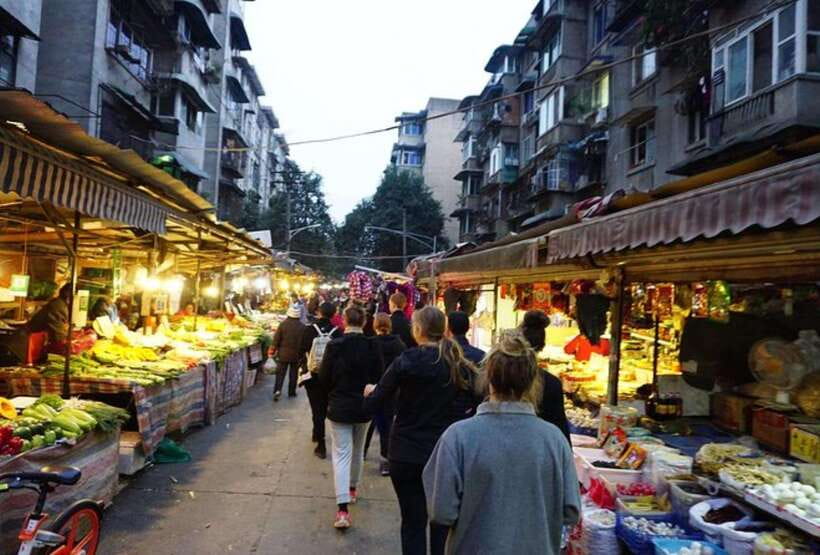
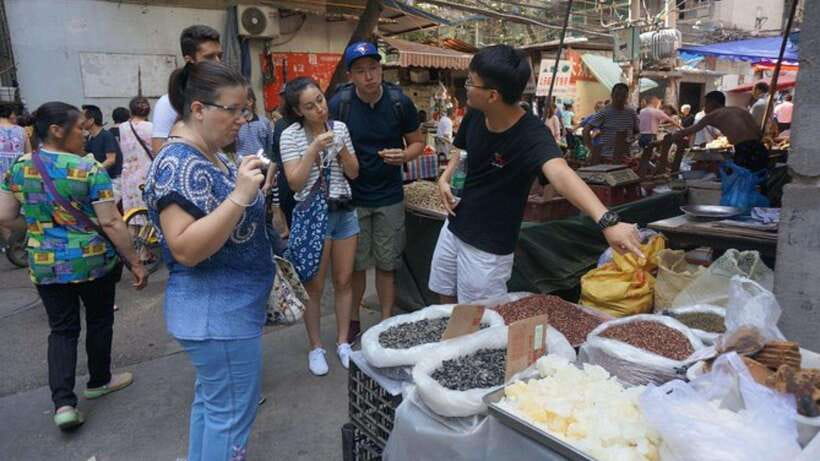
The market walk is more than a quick stop to buy ingredients. Your guide explains the products that shape Sichuan food and helps you connect unfamiliar items with the dishes you will later prepare.
Lance is often the guide named by participants, while Jerry and Lichi also lead sessions. Their role is especially useful here because a market can be hard to understand without translation. You can ask what a spice is, how it is used, and why it matters. Lance has also been praised for buying fruits and other foods for the group to taste, adding a small but memorable layer to the visit.
Expect to use your senses. You will see piles of produce and spices, smell the ingredients, and learn how Sichuan cooks assemble flavor from more than just heat. The market helps explain that Sichuan cooking is not simply about making food spicy. It is about contrast, fragrance, texture, and the particular effect of Sichuan pepper.
This is also the most local part of the morning or afternoon. You are not touring a polished food hall designed only for sightseeing. The point is to see ordinary ingredients in an everyday setting. That can mean the market feels less tidy or predictable than a modern supermarket, but it also gives you a better sense of how food shopping works in Chengdu.
The guide may turn the walk into a light challenge, asking you to identify spices or ingredients. That keeps the visit active instead of turning it into a long lecture. If you like asking questions, this is where you can get the most from the experience.
Tea, translation, and the move to the kitchen
After the market, you go to the workshop kitchen and are served Sichuan tea. This is not just a waiting drink. Tea is part of the local way of welcoming friends and visitors, and it gives the group a calm pause before the cooking begins.
The kitchen is described as cozy and well equipped. That matters because a cooking class can become frustrating if there is too little room, poor equipment, or no clear work area. Here, you prepare ingredients before moving to the woks, with the guide translating and helping the chef communicate instructions.
The chef may not speak English, so the guide’s translation is important. Lance has been praised for translating clearly and making sure instructions are not lost. Jerry has also been described as attentive and helpful. This arrangement lets you learn directly from a local chef without leaving you to guess what is happening.
The staff support is hands-on without taking over. Several people may be nearby to help with timing and safety, especially once the woks become hot and the cooking speeds up. Beginners should feel comfortable here. You do not need professional kitchen skills, and the finished food does not depend on you getting every step perfect on your own.
Same stalls, a different way to shop and eat:
- Mini Group Xian Day Tour to Terracotta Army, City Wall, Pagoda and Muslim Bazaar
★ 5.0 · 1,320 reviews - Shanghai Day Tour to Zhujiajiao Water Town, Yu Garden, Bazaar, Bund
★ 5.0 · 162 reviews - Organic Chinese Dumpling Class with Market Walk
★ 5.0 · 88 reviews - Flavors of Beijing: Eat Like A Real Chinese
★ 5.0 · 78 reviews
Cooking Sichuan dishes at wok speed
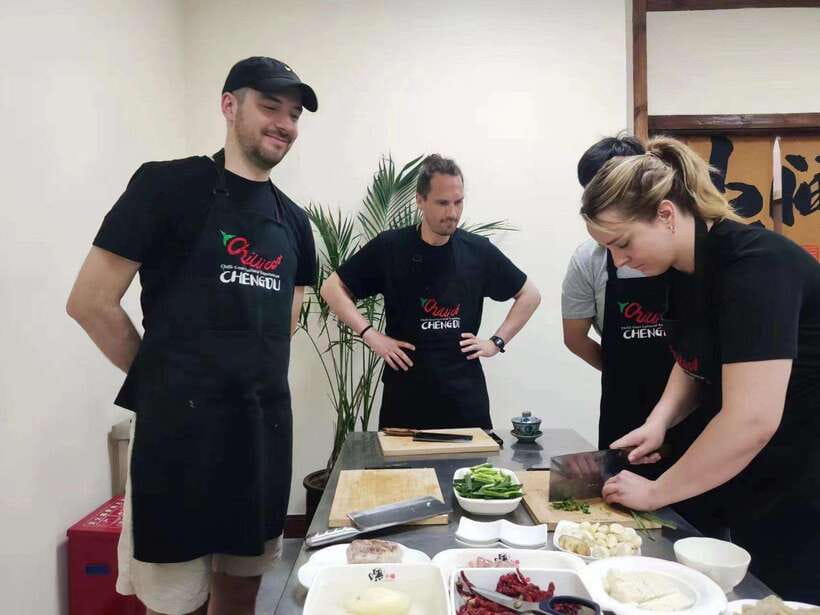
The class begins with preparation. You work through the ingredients, learn the basic steps, and get familiar with the dishes before the fast cooking starts. Some sessions have produced five dishes, while other participants describe making three dishes. The exact menu can vary, so book this for the experience of learning several Sichuan preparations rather than for one guaranteed dish list.
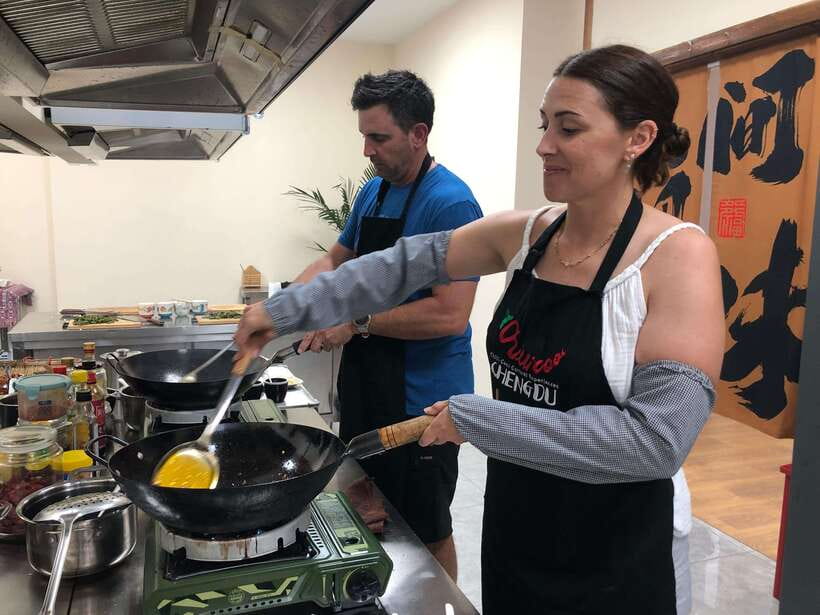
The wok stage is the most energetic part. Sichuan cooking often relies on quick timing, and hot oil, spices, and prepared ingredients come together fast. This is where the chef’s support matters most. You may work in pairs or teams at several stations, with staff keeping an eye on the heat and sequence.
I like that you are not simply watching a chef perform. You handle ingredients and cook the food yourself. At the same time, the class does not throw you into the kitchen without support. The balance suits beginners who want real participation but might worry about burning a wok or missing a step.
The experience also gives you useful skills for home cooking. You learn how spices are used, how ingredients are prepared, and how to manage a dish when the cooking pace picks up. Recipes are provided afterward, so you have a practical reference rather than only a pleasant memory.
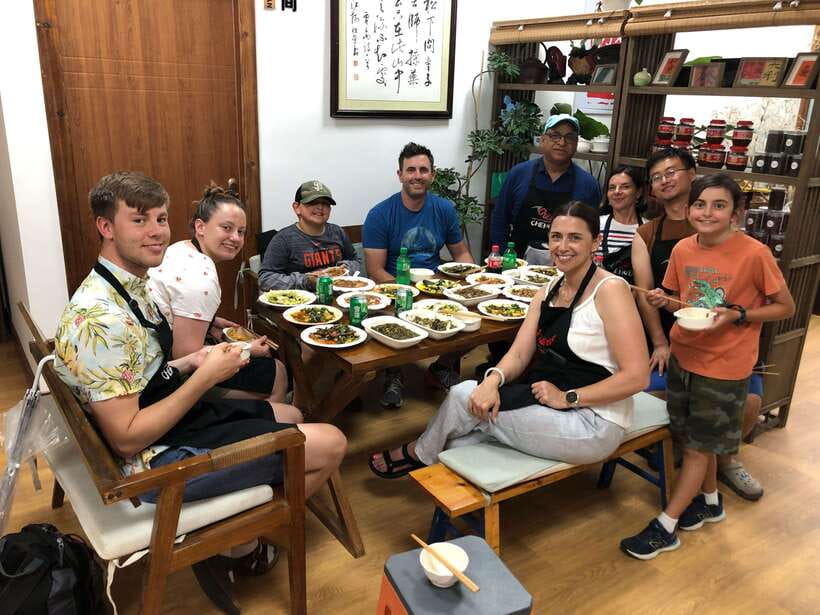
The food is the final test, and this is where the class delivers well. You sit down with the group and eat what you prepared, with beer or other beverages included. Sharing the meal gives the class a friendly finish, and it can be especially enjoyable if you are traveling alone or want to meet other people during your stay.
Vegetarian and vegan cooking options
Vegetarians should contact the operator when booking. The activity lists a vegetarian option, and advance notice is important so the ingredients and menu can be arranged properly.
A fully vegan menu has also been prepared for a participant, with classic Sichuan dishes adapted rather than replaced by a token side dish. That is encouraging if you have strict dietary needs, though you should still explain those needs clearly at the time of booking.
The kitchen handles more than one type of eater, but you should not wait until the market visit to announce an allergy or dietary restriction. Passport name, number, expiry date, and country are required for all participants when booking, and specific food requirements should be supplied then as well.
Is the $82 price good value?
The cost is $82 per person. That is not a bargain basement cooking class, and one participant felt the price was a little high. I think the value depends on how you count the day.
You are paying for an English-speaking guide, a market tour, all ingredients, tea and light refreshments, beverages or beer, food tasting, a lunch or dinner depending on the session, chef instruction, and recipes. You also receive a four-and-a-half-hour cultural activity rather than a short kitchen demonstration.
For a food-focused visitor, that is a fairer comparison than looking only at the cooking lesson. The market tour adds context, the meal replaces a restaurant lunch or dinner, and the guide gives you translation that would be difficult to arrange alone. If you mainly want to learn one simple dish at the lowest possible cost, you may find cheaper options. If you want a full half-day built around Sichuan food, the package has solid value.
The small maximum group size helps too. A class capped at 15 should offer more access to the chef than a large commercial demonstration, though the exact group size depends on the date.
Who will enjoy it most?
This is a strong choice if food is one of your main reasons for visiting Chengdu. It is also a good fit if you want cultural contact without committing to a full-day excursion outside the city.
You will get the most from it if you enjoy asking questions, tasting unfamiliar ingredients, and working with other people. Solo visitors can join comfortably, and the shared meal creates an easy way to meet fellow participants. Couples and families also fit the format, with a minimum age of five.
It is less suitable if you dislike walking, strong flavors, group activities, or hands-on cooking. Comfortable walking shoes are recommended, and the tour operates in all weather, so dress for the conditions. The activity includes food, but it is not designed for someone who wants to sit back while a chef does everything.
Practical details before you book
You can cancel up to 24 hours before the start for a full refund, and the reserve-now, pay-later option keeps your plans flexible. Confirmation is provided when you book.
The tour is offered in Chinese and English. Infant seats are available, and the activity is near public transportation. Remember that market walking and cooking both require practical clothing. Wear shoes you can walk and stand in comfortably.
The meeting times are 8:50 a.m. for the morning class, 1:50 p.m. for one afternoon class, and 4:50 p.m. for another afternoon option. Check the available start time before making other plans around it.
Should you book this Chengdu cooking class?
Book it if you want more than a meal and less than a formal culinary course. The combination of market, tea, translation, local instruction, cooking, and shared dining gives you a useful look at Chengdu food from several angles.
I would especially recommend it to first-time visitors who want an easy introduction to Sichuan ingredients, vegetarians who arrange their menu ahead of time, and solo visitors looking for a friendly group activity. Lance, Jerry, and Lichi add real value because clear explanations make the market and kitchen much easier to follow.
Skip it if $82 feels too high for a food activity or if you want a quiet, private lesson with a fixed menu. Otherwise, this is one of the better ways to turn Chengdu’s famous cuisine into something you can understand, cook, and carry home in the form of recipes.
FAQ
How long does the Chengdu cooking experience last?
The activity lasts about 4.5 hours, including the market visit, tea, cooking lesson, and shared meal.
Where is the meeting point?
Meet your guide at Metro Line 6, Liang Jia Xiang Station, Exit D. The Chinese station name is 梁家巷地铁站6号线D出口.
What time does the tour start?
The morning class meets at 8:50 a.m. Afternoon classes meet at 1:50 p.m. or 4:50 p.m., depending on availability.
Is the activity available in English?
Yes. The tour operates in English and Chinese, and an English-speaking guide accompanies the market visit and helps translate during the cooking class.
Can vegetarians or vegans join?
Yes. Vegetarian options are available, and vegan menus can be arranged. Tell the operator about your dietary needs when booking.
What is included in the price?
The price includes the English-speaking guide, market tour, ingredients, beverages or beer, light refreshments, food tasting, lunch or dinner according to the class time, and recipes.
More Markets in China
- Xi’an: Terracotta Army, Lunch, City Wall, Pagoda, Bazaar
★ 5.0 · 72 reviews - Organic Xiao Long Bao Soup Dumpling Class & Market Walk
★ 5.0 · 62 reviews - Private Guangzhou Food Tour Michelin Restaurant&Local Food Market
★ 5.0 · 32 reviews - Old Guangzhou Backstreet Alley Local Market Walking Private Tour
★ 5.0 · 18 reviews
More Cooking Classes in China
- Half-Day Professional Mapo Tofu Cooking with a Local Market Visit
★ 5.0 · 19 reviews - Half-day Dandan Noodles Cooking Class with a Local Market Visit
★ 5.0 · 8 reviews - Beijing: Vegan Home Cooking & Local Market Tour with Sanxia
★ 4.8 · 4 reviews - Dumpling Cooking Class and Local Market Tour
★ 5.0 · 3 reviews
Just added around China
- Three-Hour Private Chengdu Tea Wholesale Market Tour★ 5.0 · 4 reviews
- Half-day Dandan Noodles Cooking Class with a Local Market Visit★ 5.0 · 8 reviews
- 3-Hour Herbal Wholesale TCM Market and a Local Wet Market Tour★ 5.0 · 4 reviews
- Private Tour to Pearl Market Acrobatic Show & Peking Duck Dinner★ 5.0 · 5 reviews
- Private Distinctive Market Tour with Shaomai Lunch and Full Massage in Beijing★ 5.0 · 2 reviews
- Small Group Beijing Temple of heaven and Summer Palace with Pearl market★ 5.0 · 3 reviews
- Full-Day Private Tour Panjiayuan Antique Market and Beijing Capital Museum★ 5.0 · 3 reviews
- Half Day Tour:Market Shopping Acrobatic Show & Peking Duck dinner★ 5.0 · 2 reviews
Market Cooking Classes, compared.
Hanoi Cooking Class: Culture, Local Market & Meaning CSR Impact
Read our review →
5 Traditional Dishes Hanoi Cooking Class with Market Trip
Read our review →
Cooking Class and Lunch at a Tuscan Farmhouse with Local Market Tour from Florence
Read our review →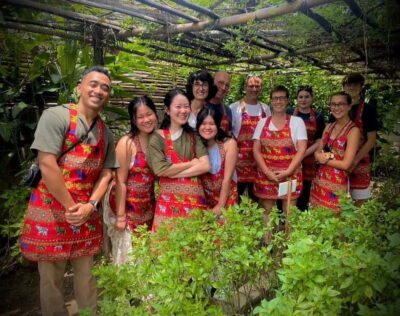
Cooking Class, Market & Thai Herbs Garden Tour
Read our review →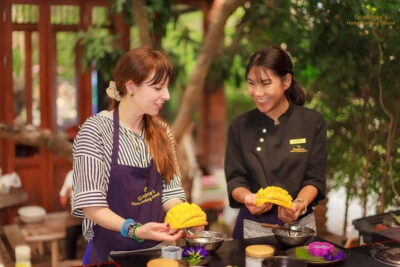
Authentic Cooking Class with Market & Farm Visit
Read our review →
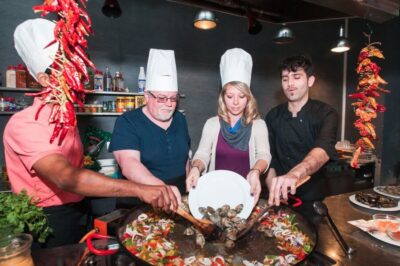
Paella Cooking Experience & Boqueria Market Tour
Read our review →
Cooking Class Hoi An:Local Market, Basket Boat, Fishing & Cooking
Read our review →Browse the lists this tour appears in