
Review · NAIROBI
Memorable Daily KIBERA Slums/Toi Market Tour with Locals (2 hours)
Kibera is not a museum or a staged attraction. It is a living Nairobi community, and this walking tour puts you beside the people who work, study, raise families, and build businesses there. A local youth guide such as Bramwel or Frederick gives the visit useful context, often drawing on personal ties to the area.
I like the tour for two clear reasons: it supports local youth employment, and it connects daily life with practical community projects involving housing, education, and health. The chance to finish at Olympic Primary School adds meaning beyond a quick walk through narrow streets.
The main consideration is ethical and practical. Kibera is home, not scenery, so you need to behave with care and keep your camera away unless you have permission. Conditions can also be muddy, and the advertised two-hour visit may run closer to three hours.
Key points at a glance
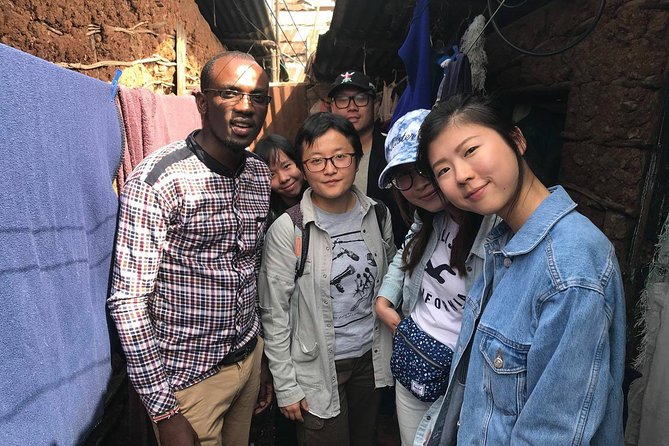
- Local guides with personal connections: Bramwel and Frederick are named guides associated with the tour, and guides may know residents, schools, and community projects personally.
- A serious look at daily life: You learn how homes, informal businesses, schools, and local services function in a densely settled part of Nairobi.
- Community support built into the price: The company says bookings help employ local young people and fund its rural girl-child education charity, MAKLWETA.
- Olympic Primary School finale: The tour ends at a major public school with a long record of helping Kibera families improve their prospects.
- Small price, substantial subject: At $25 per person, this is one of Nairobi’s lower-cost ways to understand a major part of the city beyond its usual attractions.
- Dress for the ground, not the brochure: Sturdy shoes that can handle wet or muddy paths are a smart choice.
Entering Kibera with a local guide
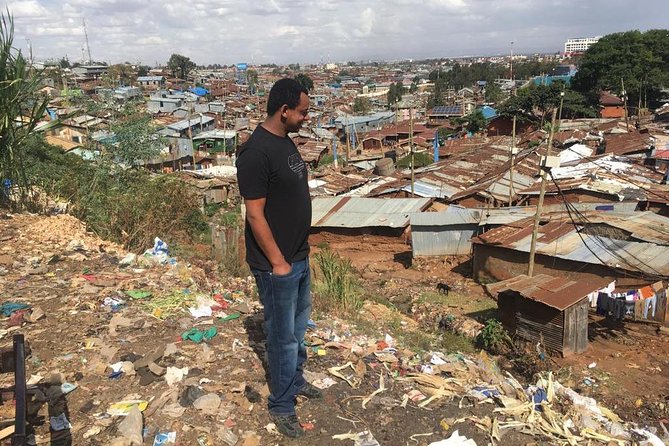
Kibera occupies roughly 2.5 square kilometers and is described for this tour as home to an estimated one million people from across East Africa. Numbers in informal settlements are difficult to verify, but the basic point is clear: this is a very large community in a compact area.
That density shapes what you see. The tour is less about famous sights than about understanding how people organize daily life when space, money, and formal services are limited. You may pass homes, small businesses, schools, and projects supported by local or international organizations.
A local guide matters here. The company’s founder, Erick, lived in Kibera for a period and still has relatives there. Guides such as Bramwel have also been described as having grown up in the area or remaining closely connected to it. That background can turn an awkward walk into a conversation with context.
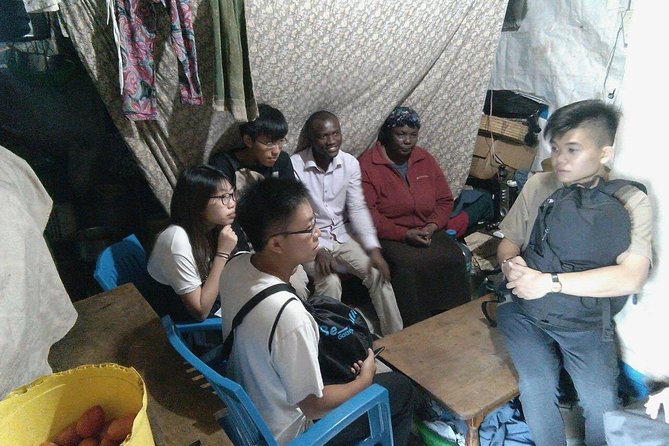
You should not expect a scripted performance. The strongest version of this tour seems to depend on your guide’s relationships and ability to explain what you are seeing. Bramwel is associated with a relaxed, personal style, while Frederick is described as friendly and attentive. Guides have also helped visitors arrange conversations with residents and, in some cases, visits inside a home.
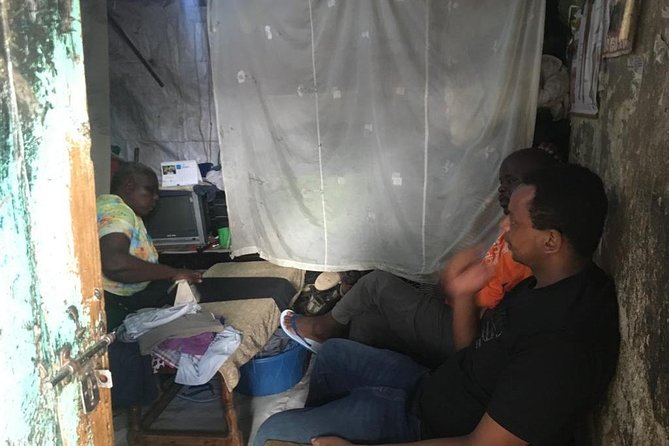
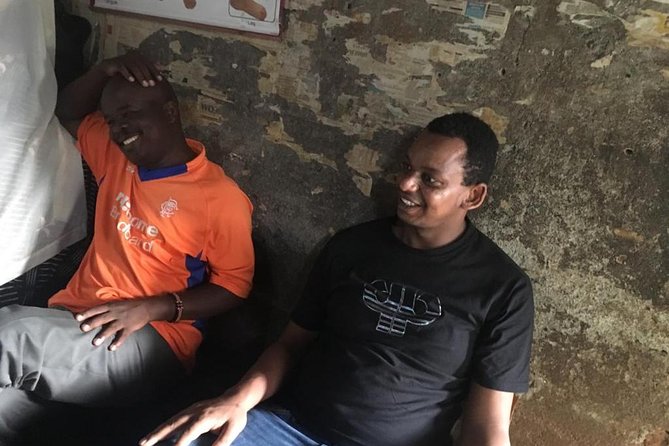
That last possibility needs a clear boundary. Entering a resident’s home should happen only by invitation, and you should not treat it as an entitlement included with your ticket. Ask before taking photographs, and accept a no without argument.
A few more market tours around Kenya worth a look
- Traditional Kenyan Cooking Class & Local Market Tour
★ 5.0 · 129 reviews - Mombasa City Tour,Fortjesus,Oldtown,Tusks and Spice Market.
★ 4.8 · 19 reviews - Half-Day Nairobi National Park and Maasai Market with Pick up
★ 5.0 · 16 reviews
What the two-hour walk actually teaches you
The advertised duration is about two hours, though the general estimate allows two to three hours. That is enough time for a substantial introduction, but not enough to understand every part of Kibera. Think of it as a guided orientation with human stories, not a full study of the settlement.
The walk focuses on several connected themes:
- How people earn money through informal work and small businesses
- The practical difficulties of housing and sanitation
- The role of schools in helping families change their economic prospects
- NGO projects aimed at housing, health, and education
- The strength and adaptability of local residents
- The gap between outside aid and what communities actually need
The informal economy is especially important. A city is often taught through its formal landmarks, yet much of Nairobi’s daily work happens outside offices, malls, and registered companies. Seeing how people make a living in Kibera gives you a more useful sense of the city’s wider economy.
The subject can be uncomfortable. That is not a reason to avoid it, but it is a reason to arrive with humility. Kibera is not a poverty-themed photo opportunity. You are walking through someone’s neighborhood, and the best experience comes from listening more than pointing a camera.
The Olympic Primary School ending
The tour begins and ends at Olympic Primary School, listed at MQQH+3FJ in Nairobi. The school is described as Kenya’s largest public primary school and as an institution with a history of strong academic performance and helping families move out of poverty.
That ending gives the route a useful focus. Without it, a walk through Kibera could leave you with only images of difficult living conditions. A school shows another side of the community: parents investing in children, teachers working within limited resources, and education acting as a possible route to a different future.
Do not assume that a school visit means a classroom tour or a chance to hand out gifts. The available information only confirms that the route ends there. Treat the school as a place of learning, not as a stop designed for visitors to interact freely with children.
Starting and ending at the same point also makes the tour easier to fit into a Nairobi day. You do not need to arrange a complicated one-way transfer after the walk. Round-trip transfers from a designated meeting point are included, though the stated meeting point remains Olympic Primary School, so confirm the exact pickup arrangement when booking.
NGO projects and the limits of outside help
The tour includes discussion of NGO work related to housing, education, and health. This can be one of the most useful parts because it moves beyond the simple idea that charity automatically solves problems.
Projects can help. They can also fail, lose funding, miss local priorities, or suffer from corruption. The guide’s explanation is important because it can show both successful work and projects that did not deliver what they promised.
The company says part of its proceeds supports MAKLWETA, a charity it founded to support rural girl-child education. It also says the tour helps employ Kenyan youth in a country where youth unemployment is very high. At $25, you are not making a major donation through one booking, but you are paying for a locally run service that says it directs some money and employment toward community needs.
You should still keep your expectations realistic. This tour is not a development project visit with formal impact reports, and it cannot give you a complete account of NGO work in Kibera. What it can do is introduce you to the people and issues behind broad development headlines.
More shopping tours in Kenya:
- Authentic Kenyan Cooking Class & Market Tour in Nairobi
★ 5.0 · 12 reviews - Nairobi: Hop on Hop off and Maasai market Collections Visit
★ 3.5 · 10 reviews - Market Tour and Traditional Kenyan Cooking Class in Nairobi
★ 4.8 · 6 reviews - Diani: Market and Street Food Walking Tour
★ 4.2 · 6 reviews
A personal route through a crowded community

The most praised part of this experience is the relationship with the guide. Bramwel and Frederick appear repeatedly as names connected with strong tours, and their value is not just their ability to point out buildings. Their local knowledge and personal contacts make the visit feel less like an escorted look from the outside.
One guide may show you where he grew up. Another may explain the meaning of different buildings or introduce you to someone willing to describe family life. These moments can be powerful, but they are also personal. Listen carefully, avoid intrusive questions, and do not assume that one person’s story represents everyone in Kibera.
You may hear about football, schools, family finances, local politics, or the effect of community programs. The point is not to collect dramatic stories. It is to understand that Kibera contains many lives and viewpoints, not one simple story of hardship.
The tour’s strongest tone is direct and friendly. The guides are described as making visitors feel safe and comfortable while walking. That is reassuring, but you should still use normal city awareness, keep valuables secure, and follow your guide’s instructions.
Camera manners and the ethics of slum tourism
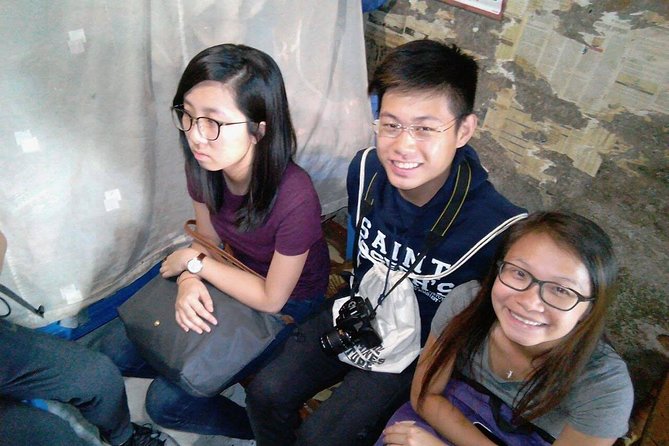
You need to think carefully about photography. The most respectful approach is to keep your camera down unless a person clearly agrees to be photographed. A child’s smile is not permission, and a crowded path is not a public stage.
Ask before photographing homes, businesses, people, and schoolchildren. If the answer is no, move on. You can still remember the walk through conversation, observation, and notes taken later.
This matters because the tour’s value rests on human contact. A camera can create distance between you and the people you came to meet. It can also make residents feel watched rather than respected.
I would avoid carrying expensive camera equipment and would not hand out money or sweets during the walk. The supplied information does not describe a donation program or a system for distributing gifts. If you want to support the community, use the local tour service, ask the company about its education work, or make a considered donation through an established organization.
Price, timing, and practical value
The price is $25 per person. For a two-hour local walking experience in Nairobi, that is a fair amount, particularly because fees and taxes are included and round-trip transfers from the designated meeting point are provided.
The value is not based on entrance tickets or grand sights. You are paying for a guide, local interpretation, coordination, and access to a part of Nairobi that you would be unlikely to understand well by walking in alone. The cost also supports a local company rather than an international sightseeing chain.
The tour is often booked about 11 days ahead, so it is sensible to reserve before your Nairobi stay fills up. Same-day arrangements have also been possible, but you should not depend on that, especially if you have limited time.
The maximum group size is listed as 50. That is a fairly large ceiling for a sensitive walking tour. A smaller group should allow better questions and more personal contact, but the booking information does not promise a small group. Ask about the expected group size if that matters to you.
The meeting point is Olympic Primary School, and the tour returns there. It is near public transportation, and most people can participate. Service animals are allowed. Lunch and drinks are not included, though local restaurants can be visited at your request.
Wear closed, sturdy shoes. Wet or muddy ground is possible, and this is not the place for sandals you would rather keep clean. Dress simply and respectfully, carry only what you need, and bring water unless you have arranged otherwise.
The one serious warning about reliability
The overall rating is 4.8 from 29 reviews, with 97 percent recommending the experience. That is strong, but it is not a reason to ignore the one serious complaint about a missed meeting and poor communication.
The company explained that the incident happened during a second wave of the coronavirus pandemic and a Nairobi lockdown, and said the customer received a full refund. Circumstances during that period were unusual, but the practical lesson remains useful: confirm the meeting time, pickup details, and a working phone contact before setting out.
Free cancellation is available up to 24 hours before the start time for a full refund. Cancellations or changes made within 24 hours are not refundable. Cutoff times use Nairobi local time, so check the clock carefully if you are booking from another country.
Who will appreciate this Kibera walk
I would recommend this tour to you if you want a human and social view of Nairobi, not just wildlife, museums, restaurants, and colonial-era sights. It suits people who ask questions, listen well, and can handle an experience that may be emotionally difficult.
It is particularly useful early in a Nairobi visit. The guide can give you context for the city’s inequality, youth employment, education system, and informal economy before you see other parts of Kenya.
It may not suit you if you want a polished attraction, a photography-focused outing, or a tightly timed sightseeing stop. You should also reconsider if you are uncomfortable walking on uneven or muddy ground or if you expect guaranteed access inside homes, schools, or community projects.
Families need to use judgment. The tour is open to most participants, but the subject matter and physical setting may be challenging for young children. The supplied information does not set a minimum age, so ask the operator before booking for a child.
Should you book the Kibera tour?
Book it if you want to meet Nairobi through local voices and are ready to treat Kibera as a community rather than an attraction. The $25 price is reasonable, the local guide model gives the experience purpose, and the Olympic Primary School ending helps balance difficult scenes with a sense of possibility.
Go with modest expectations. The quality depends heavily on your guide, the group size, the day’s conditions, and the access residents are comfortable offering. Confirm the meeting details, wear shoes that can get muddy, and make respect your main souvenir.
FAQ
How long does the Kibera tour last?
The tour is advertised as two hours, with an approximate duration of two to three hours.
Where does the tour start and end?
It starts and ends at Olympic Primary School, MQQH+3FJ, Nairobi, Kenya.
What is included in the $25 price?
All fees and taxes are included. Round-trip transfers from the designated meeting point are provided.
Is lunch included?
No. Lunch and drinks are not included, though you can request a visit to a local restaurant.
Can I cancel for a full refund?
Yes. You can cancel at least 24 hours before the experience start time for a full refund. Cancellations within 24 hours are not refundable.
How large can the group be?
The maximum group size is listed as 50 participants. A smaller group is not guaranteed.
Just added around Kenya
- Nairobi Traditional Cooking Classes and Local Market Visit★ 5.0 · 2 reviews
- Nairobi: Maasai Market and Nairobi City Tour★ 5.0 · 4 reviews
- Nairobi: Hop on Hop off and Maasai market Collections Visit★ 3.5 · 10 reviews
- Nairobi: Explore Maasai Market for Unique Souvenirs★ 5.0 · 5 reviews
- Market Tour and Traditional Kenyan Cooking Class in Nairobi★ 4.8 · 6 reviews
- Maasai Market Souvenir Shopping★ 5.0 · 2 reviews
- Local Market Tour and Traditional Meal Cooking Class★ 5.0 · 4 reviews
- Diani: Market and Street Food Walking Tour★ 4.2 · 6 reviews
Shopping Tours, compared.
Damnoen Saduak Market and Maeklong Railway Market
Read our review →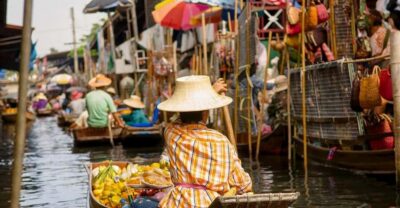
The Old Siam: Damnoen Saduak and Maeklong Railway Market
Read our review →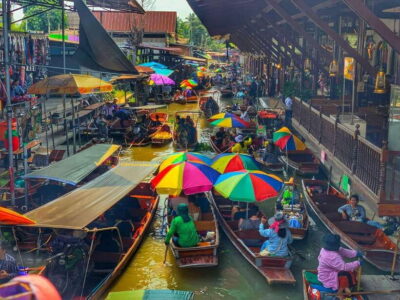
Train Market & Floating Market with Boat Ride
Read our review →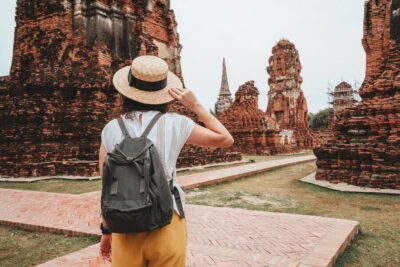
Ayutthaya & Ayothaya Floating Market Day Trip
Read our review →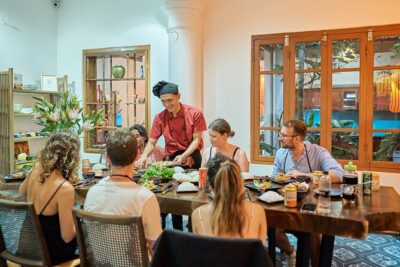
Hanoi Cooking Class: Culture, Local Market & Meaning CSR Impact
Read our review →
5 Traditional Dishes Hanoi Cooking Class with Market Trip
Read our review →
Cooking Class and Lunch at a Tuscan Farmhouse with Local Market Tour from Florence
Read our review →
Cooking Class, Market & Thai Herbs Garden Tour
Read our review →Browse the lists this tour appears in