
Review · OSAKA
All Inclusive Kuromon Markets Tour: Flavors Of Osaka
Kuromon Market is the kind of place where lunch can include scallops, tuna sashimi, gobo tempura, okonomiyaki, and cherry blossom mochi, all within two hours. Your guide handles ordering at stalls where menus may be handwritten or absent, so you can focus on tasting rather than guessing.
I like the small group of up to nine, which keeps the walk personal and makes it easier to ask questions. I also like the range of five to seven full dishes plus three or four smaller tastings, enough food to replace lunch for many people.
The main consideration is the strong seafood focus. Sweets and vegetable samples are included, but this is not a good fit for vegans, and anyone with a seafood dislike may find the menu narrow.
Key points at a glance
- Meet at Nipponbashi Station Exit 6: Arrive around 1:45 to 1:50 p.m. for the exact 2 p.m. departure.
- Taste five to seven dishes: Expect local favorites and market specialties such as scallops, tuna sashimi, gobo tempura, and okonomiyaki.
- Try three to four smaller samples: Green tea, pickled vegetables, dried fish, wasabi beans, and sweets add variety.
- Get help with ordering: Your English-speaking guide explains ingredients and cooking methods at stalls with little or no English.
- Keep the group small: The tour accepts no more than nine people, making conversation and food sharing easier.
- Plan for a filling meal: The food portions are substantial enough that some people arrive without lunch and leave full.
Starting at Nipponbashi Station Exit 6
Your meeting point is the top of the stairs at Exit 6 of Nipponbashi metro station. The tour starts at exactly 2 p.m., and the timing matters because a two-hour food walk has little room for late arrivals.
I would arrive between 1:45 and 1:50 p.m. That gives you time to find the exit, gather yourself, and meet the guide before the group moves into the market. There is no hotel pickup, so you need to make your own way to the station.
The exact meeting point is useful because Kuromon Market can feel confusing when you first approach it. Nipponbashi Station puts you close to the action, and beginning with a short introduction gives you a quick sense of what you are about to see and eat.
The English-speaking guides have included Anna, Hikaru, Taka, Mico, Michael, and Hakuri. Your assigned guide will vary, but the strongest part of this experience is the guide’s role in turning a crowded market into an understandable food lesson.
A few more market tours around Japan worth a look
- Tokyo Tsukiji Fish Market Food and Culture Walking Tour
★ 5.0 · 3,184 reviews - Tokyo: Tsukiji Fish Market Food and Walking tour
★ 5.0 · 1,724 reviews - Tokyo: Tsukiji Fish Market Guided Walking Tour
★ 4.9 · 1,397 reviews
Why Kuromon Market works so well for a food tour
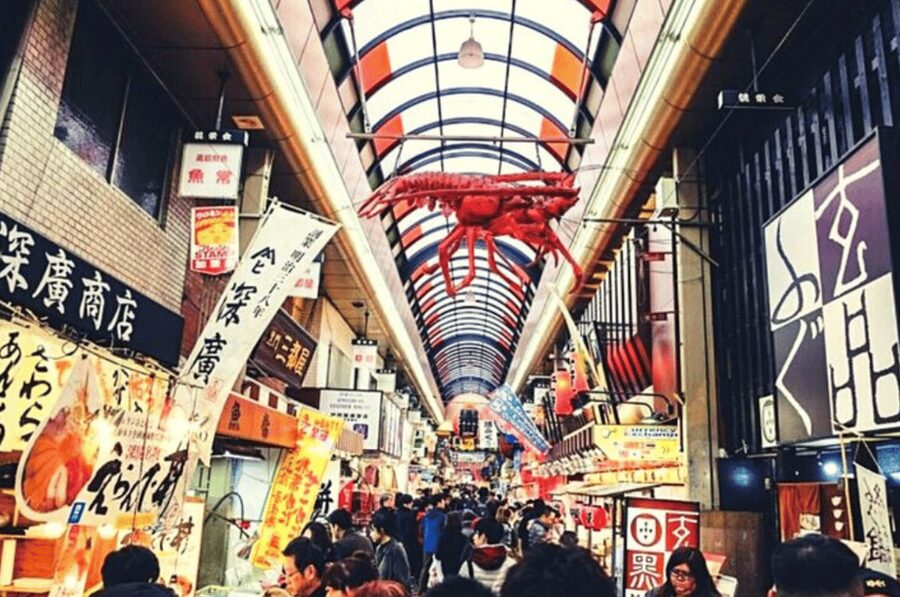
Kuromon Market has drawn food lovers for more than 200 years. Its covered shopping street is lined with lively vendors, many of whom specialize in one dish or ingredient and pass their methods through generations.
That background matters because the market is not just a row of places selling quick snacks. It is a working food district where you can see how Osaka’s cooking culture connects to seafood, prepared dishes, tea, pickles, sweets, and kitchen tools.
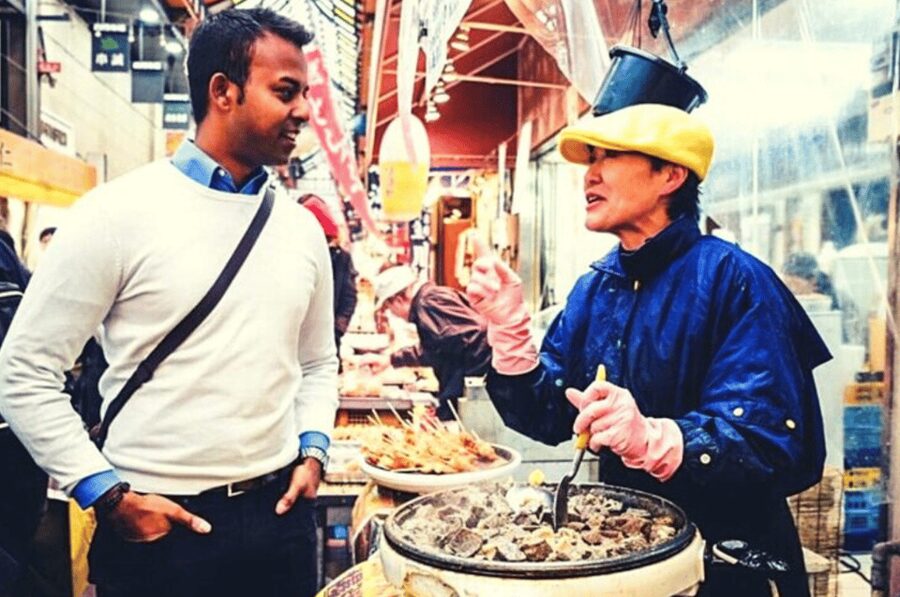
On your own, you might walk through the market and recognize only a few items. The handwritten signs can be hard to read even if you know Japanese, and many vendors do not speak English. Your guide orders the food, explains what you are eating, and describes how it is prepared.
I like that arrangement. You are not reduced to pointing at a picture and hoping for the best. You get context for each bite, and you can ask why an ingredient matters or how a dish fits into local food culture.
The main tasting: seafood, Osaka favorites, and sweets
The menu includes roughly five to seven dishes. The exact selection can change, but the listed food gives you a clear idea of the experience.
Scallops and tuna sashimi bring the seafood side of the market to the front. These are not abstract samples from a printed menu. You are eating items selected from a market famous for fresh food, with the guide helping you understand the ingredient and the preparation.
Gobo tempura adds a different texture and flavor. Gobo is burdock root, a common Japanese ingredient with a firm, earthy character. The tempura treatment makes it an easy way to try a familiar cooking method with a vegetable you may not often see outside Japan.
Okonomiyaki provides the Osaka connection. This savory dish is one of the city’s best-known foods, and including it keeps the tasting from becoming only a seafood tour.
The sweet course may include cherry blossom red bean mochi. That soft, chewy bite gives the meal a clear change of pace, while the red bean filling and floral note offer a taste of traditional Japanese sweets.
The food is not presented as a formal sit-down meal. You are moving through a market and sampling items along the way. That makes the experience lively, but it can also mean you are eating in a more casual setting than you would at a restaurant.
Smaller samples that fill out the picture
Alongside the larger dishes, you receive about three or four taste tests. These may include green tea, pickled vegetables, dried fish, wasabi beans, and other market items.
These smaller tastes are important because they show how much Japanese food depends on side dishes, preserved ingredients, texture, and strong flavors. A pickled vegetable or dried fish may tell you as much about everyday eating habits as a more famous dish.
Green tea gives you a calmer pause between savory foods. Wasabi beans bring heat and crunch, while dried fish offers a more concentrated seafood flavor. You do not have to build a whole meal from these items, but they help you understand the range of products sold around the main stalls.
I would not expect every bite to suit every palate. The market serves real local food rather than a carefully softened international menu. If you dislike strong seafood flavors, pickles, or pungent condiments, tell your guide early and ask what may be easier for you.
Same stalls, a different way to shop and eat:
- Nishiki Market Brunch Walking Tour (7 Tastings + Brunch)
★ 5.0 · 1,355 reviews - Tokyo Sushi Making Class in Tsukiji with Professional Chef
★ 5.0 · 1,177 reviews - Tsukiji Fish Market Guided Tour and Sushi Making with Pro Chef
★ 5.0 · 775 reviews - Tokyo: Tsukiji Fish Market Food and Culture Walking Tour
★ 4.7 · 757 reviews
What your guide adds to the experience
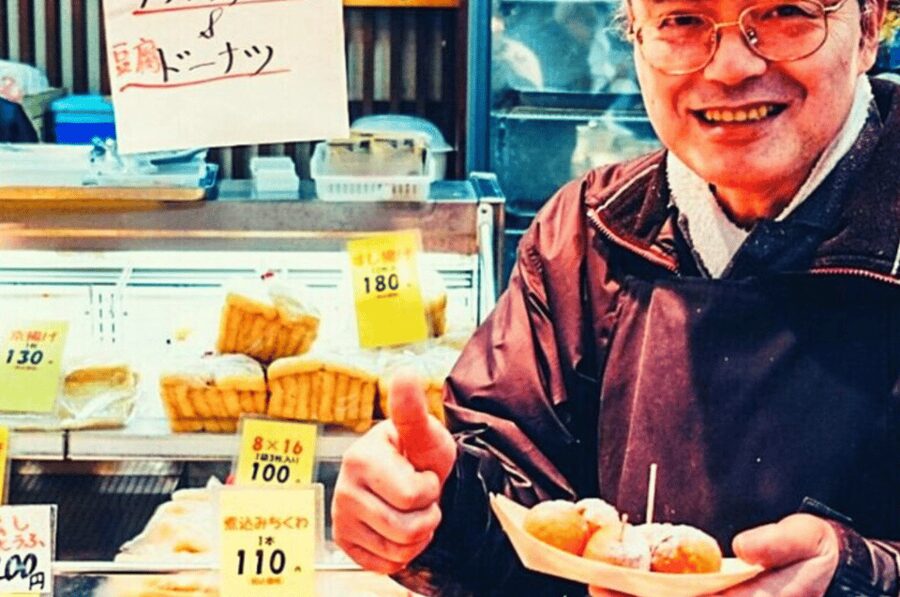
The guide is not simply there to lead you from stall to stall. The best guides explain ingredients, cooking methods, vendor specialties, and Osaka’s food culture as you eat.
Hikaru has a background as a chef, which adds practical insight into the food. Hakuri has also brought a chef’s perspective, along with experience in both Japan and the United States. That combination can be useful when you want an explanation that connects Japanese dishes to foods you already know.
Anna has been praised for her warm relationships with vendors and for making unfamiliar foods feel approachable. Mico has offered recommendations and market history, while Taka has been described as informative, helpful, and fun.
Those names do not guarantee who will lead your group. Still, they show the type of guide this tour aims to provide: someone who can order in the market, explain what is in front of you, and answer questions without turning the walk into a lecture.
The limited group size helps here. With no more than nine participants, you should have a better chance to hear the explanations and ask about food, customs, and places to eat later in Osaka.
A full lunch in a short two-hour schedule

Two hours sounds brief, but the schedule is focused. You are not spending time on hotel transfers or a long history talk before the food begins. The meeting point is near the market, and the time is devoted to eating, learning, and moving between vendors.
The combination of five to seven dishes and several small samples can make this a full meal. I would avoid eating a large lunch beforehand. Arriving hungry lets you enjoy the full range without having to decline items near the end.
At the same time, this is not a leisurely three-hour meal. You will be standing or moving through a market environment, and some food may be eaten shortly after purchase. If you want a slow meal with plenty of time at each course, choose a restaurant instead.
The pace suits a first afternoon in Osaka. You get an introduction to the city’s food scene, then still have the rest of the day for Dotonbori or other nearby sights. One guide has even added a look at Dotonbori when extra time allowed, but that should not be treated as a guaranteed part of the tour.
The seafood warning deserves attention

The experience description includes sweets, vegetables, tea, and other non-seafood items, but much of the main tasting is seafood. Scallops, tuna sashimi, dried fish, and other market selections make this a poor choice for anyone who wants a vegetarian or plant-based food walk.
The activity is specifically marked as not suitable for vegans or pregnant women. You should also think carefully about allergies, dietary restrictions, and raw fish before booking. The provided details do not promise a substitute menu.
If you enjoy seafood and want to sample dishes that may be difficult to order alone, the focus is a strength. If you are hoping for an even mix of meat, vegetables, noodles, and sweets, you may find the selection too narrow.
Is $61 a fair price?
At $61 per person, this is not the cheapest way to snack at Kuromon Market. You could buy individual items on your own for less, especially if you choose only one or two dishes.
The value comes from the food quantity, the translation help, and the guidance. You receive five to seven dishes, three to four additional tastings, and explanations of ingredients and cooking methods. You also avoid the uncertainty of handwritten menus and vendors who may not speak English.
For a first visit to Osaka, that help has real value. You can try more foods in two hours than you might comfortably order by yourself, and you get a better chance of understanding what you are eating.
The price makes less sense if you are already comfortable ordering Japanese food, speak Japanese, or plan to spend the afternoon eating only a few inexpensive snacks. In that case, the tour’s main benefit is the guide and the organized selection, not simple access to the market.
Knives, tableware, and useful souvenirs
The tour includes a look at unique Japanese knives and tableware souvenirs. This is a welcome extra for anyone interested in cooking or practical gifts.
Do not expect a dedicated shopping tour. The main purpose is food, and the amount of shopping time may depend on the pace of the group. Still, your guide can point out items worth noticing and help explain what makes Japanese kitchen tools or tableware distinctive.
This is also a good reason to leave some room in your luggage. The market experience is not limited to prepared food. It also shows the tools, ingredients, and serving pieces connected to Japanese cooking.
Planning your afternoon in Osaka
Because the tour begins at 2 p.m. and lasts two hours, it works well as a late lunch or early afternoon meal. You can pair it with an evening around Dotonbori, which is close enough to make a natural continuation of the day.
Arrive early rather than trying to cut the timing close. The tour cannot wait for late arrivals, and the operator says it is nearly impossible to catch up once the group has entered the market.
The booking terms are flexible: you can cancel up to 24 hours ahead for a full refund, and you can reserve now and pay later. Those options help if your Osaka schedule is still shifting, but they do not change the need to reach Exit 6 on time.
Who should book the Kuromon Market tour?
I would choose this for a first-time Osaka visit, especially if you want a guided introduction to Japanese food without committing to a long restaurant meal. It also suits curious eaters who want to try seafood, market snacks, pickles, tea, and sweets in one outing.
It is a particularly good match if you feel unsure about ordering from Japanese signs or want someone to explain unfamiliar ingredients. The small group and English guide make the market easier to approach.
I would skip it if you are vegan, pregnant, strongly opposed to seafood, or looking for a quiet seated meal. I would also think twice if you prefer to choose every dish yourself or already know your way around Japanese markets.
Should you book it?
Book this tour if you want a filling, seafood-led introduction to Osaka’s food culture and value having a guide handle the ordering. The combination of market access, generous tastings, and food explanations makes $61 reasonable for many first-time visitors.
Skip it if the seafood focus does not suit you. For everyone else, arrive at 1:45 p.m., bring an appetite, and expect a fast-moving walk through one of Osaka’s best-known food districts.
FAQ
Where does the tour meet?
Meet your guide at the top of the stairs at Exit 6 of Nipponbashi metro station.
What time does the tour start?
The tour starts exactly at 2 p.m. Arrive between 1:45 and 1:50 p.m. so you are ready to leave on time.
How long does the tour last?
The tour lasts two hours.
How much does the tour cost?
The listed price is $61 per person.
How many people can join the group?
The group is limited to nine participants.
What language does the guide speak?
The live tour guide speaks English.
What food is included?
You receive about five to seven dishes and three to four smaller tastings. Items may include scallops, tuna sashimi, gobo tempura, okonomiyaki, cherry blossom red bean mochi, green tea, pickled vegetables, dried fish, and wasabi beans.
Is the tour suitable for vegans?
No. The activity is marked as not suitable for vegans, and much of the food is seafood.
Is hotel pickup included?
No. You must make your own way to Nipponbashi Station, Exit 6.
Can I cancel for a full refund?
Yes. You can cancel up to 24 hours in advance for a full refund.
Just added around Japan
- Nagoya Super Market Tour & Home Cooking Class with a Local, Akiko★ 5.0 · 10 reviews
- Tokyo: Private Tsukiji Street Food & Sake with Local Guide★ 5.0 · 3 reviews
- Tokyo: Tsukiji Market Guided Tour & Sushi-Making Experience★ 4.4 · 11 reviews
- Tokyo: Tsukiji Market and Hama-rikyu Gardens Guided Tour★ 4.8 · 73 reviews
- Tokyo : Tsukiji Fish Market Food Walking & Shrine Visit Tour★ 5.0 · 3 reviews
- Tokyo: Tsukiji Fish Market Culture Tour with Sashimi Tasting★ 4.6 · 54 reviews
- 【Family pack】Tokyo: Tsukiji fish market food tour★ 5.0 · 3 reviews
- Tokyo: Tsukiji Fish Market Foodie and Educational Tour★ 5.0 · 4 reviews
Osaka Market Tours, compared.
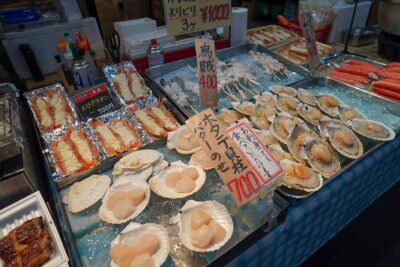
Kuromon Market Food Walking Tour in Osaka (6 stops, 6 tastes)
Read our review →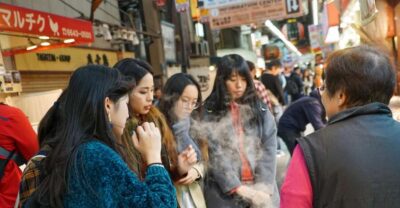
Kuromon Market Food Walking Tour (6 stops, 6 tastes)
Read our review →
Kuromon Market Tour: All inclusive 6~8 Dishes & 3~4 samplings
Read our review →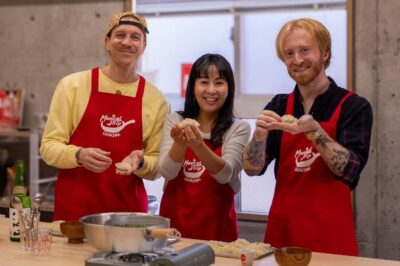
Cooking Class & Sake Tasting with Local Market Visit
Read our review →
Kuromon Market 1.5-Hour Seafood & Street Food Tour
Read our review →
Kuromon Market Street Food Tour with Pro Local Guide
Read our review →
Deep Dive: Osaka Food Markets from Local to Luxurious!
Read our review →Browse the lists this tour appears in