
Review · OSAKA
Deep Dive: Osaka Food Markets from Local to Luxurious!
Osaka’s food story is best understood by moving between very different markets. This four-hour walk takes you from the polished food floors of Takashimaya to Kuromon Ichiba, then on to Tsuruhashi and older shopping districts where locals buy meat, fish, vegetables, and everyday goods.
I like the clear contrast between upscale and ordinary Osaka, and I like the small group, limited to eight people. Guide Ferdinand has also brought a personal angle, explaining Japanese and Korean market customs, local history, and his life in Japan as a Frenchman. The main drawback is that food is not included, so the $59 price is only the guiding cost.
Key points
- Four distinct food districts: Compare department-store polish, a famous market, Korean-influenced Tsuruhashi, and practical local shopping streets.
- Kuromon Ichiba is a major highlight: You can browse raw seafood, prepared foods, meats, and other treats, but you pay for anything you eat.
- A small group of eight or fewer: This makes it easier to ask questions and follow a guide through busy market areas.
- Ferdinand adds a personal viewpoint: His French background and life in Japan provide a useful bridge between cultures.
- The route ends around Namba: You finish near one of Osaka’s best-known central areas, close to more food and shopping.
- Bring comfortable shoes and extra yen: Walking is continuous, transportation costs 330 yen per adult, and all snacks are extra.
Why this route explains Osaka through food
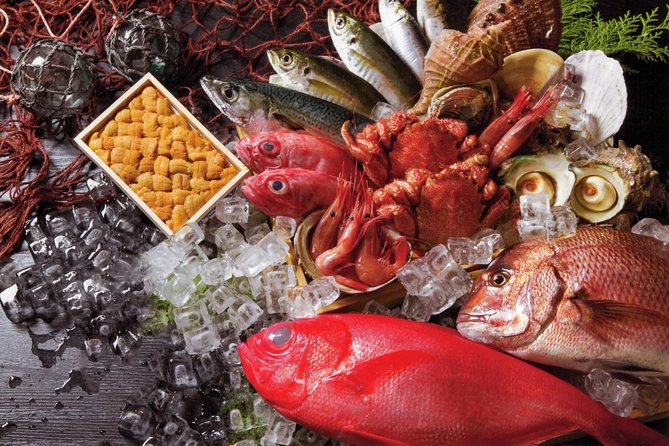
Osaka has a strong food identity, and this tour presents it through places rather than a single meal. You are not simply led to one restaurant and handed a plate. You move through markets where food is sold for different purposes: luxury presentation, quick eating, home cooking, neighborhood shopping, and restaurant supply.
That variety gives the tour its value. You can see how seafood and produce look in a department store, how prepared food is displayed at Kuromon, how Korean influence appears around Tsuruhashi, and how residents shop along older commercial streets.
The tone is informal and food-focused. The supplied description plainly treats eating as Osaka’s great priority, and the route follows that idea with plenty of visual appeal: meats, fish, vegetables, cooked foods, and ingredients you may not recognize at first glance.
You should think of this as a guided market walk with chances to buy snacks, not as a food tour with a set menu. Your guide explains what you are seeing, but your own appetite and budget decide what goes into your bag.
More food and drink tours in Japan:
- Tokyo Tsukiji Fish Market Food and Culture Walking Tour
★ 5.0 · 3,184 reviews - Tokyo: Tsukiji Fish Market Food and Walking tour
★ 5.0 · 1,724 reviews - Tokyo: Tsukiji Fish Market Food and Culture Walking Tour
★ 4.7 · 757 reviews
Takashimaya begins with Osaka’s polished side
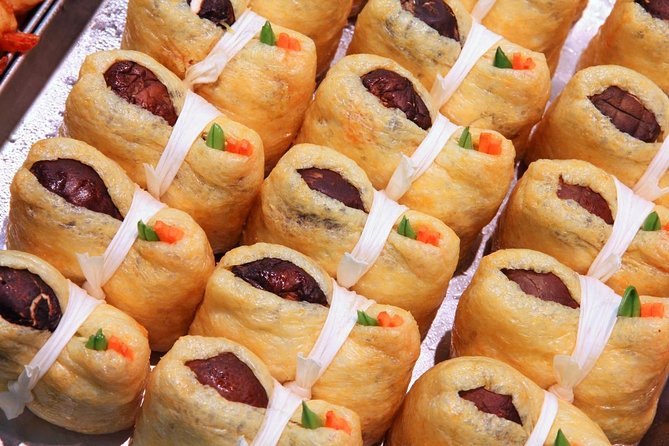
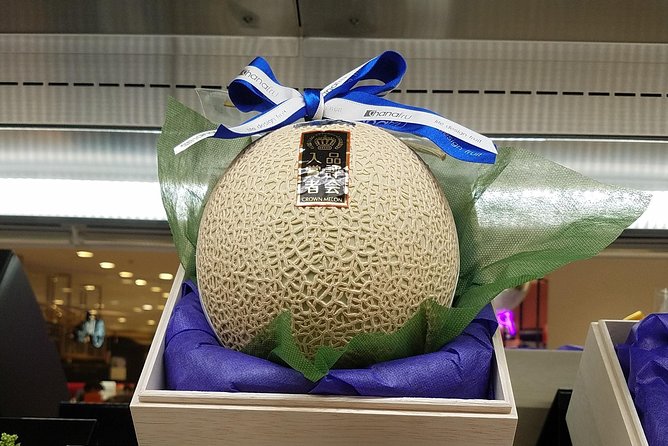
The first market-style stop is the food marketplace connected with Takashimaya Osaka. This is the most refined part of the route, giving you a look at how high-end food is presented in a major Japanese department store.
Expect careful displays and a broad selection of foods rather than the rough-and-ready feel of a street market. This stop works well at the beginning because it gives you a reference point. Later, when you reach Kuromon or the local shopping streets, you can compare the same broad categories of food in a different setting.
The stop is scheduled for about 25 minutes. That is enough time for an introduction and guided look, but not enough for a slow, detailed shopping trip. If you see something you want, remember that purchases are your responsibility, just like every snack on the route.
Tenma shows the everyday market rhythm
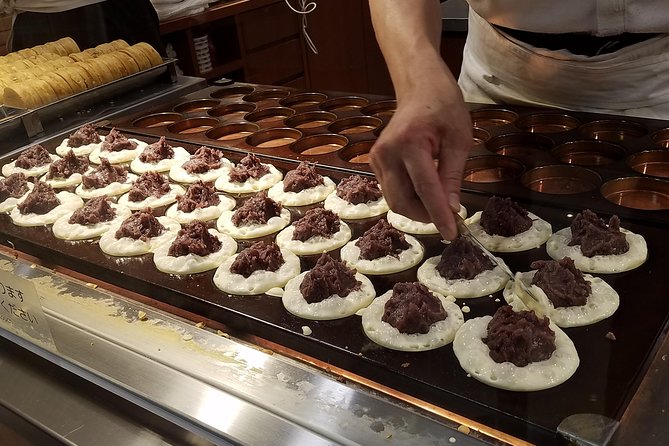
Pulala Tenma, also known as the Tenma Ichiba Market Building, shifts the focus toward practical food shopping. This is a useful counterpoint to Takashimaya because it places food in a more everyday market setting.
You may find produce, meats, fish, and staples arranged for regular shoppers. The point is less about luxury packaging and more about seeing the food world that supports daily life. Your guide can help explain what different items are and how the market fits into Osaka’s food culture.
The visit is another 25-minute stop. With seven named places on the route, the timing is brisk. You will get an overview rather than a long chance to examine every stall. That is a fair trade if you want variety, but it may feel quick if you prefer to shop slowly.
Tenjinbashisuji adds a long shopping-street view
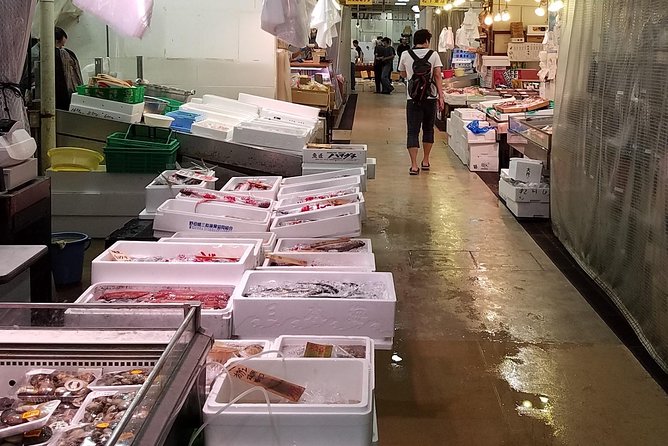
Tenjinbashisuji Shopping Street brings the route out of a single market building and into a broader commercial district. The walk lets you see food in the context of shops, local routines, and the long covered-street format for which Osaka shopping areas are known.
The supplied route gives this stop 25 minutes, so you should expect a guided section rather than a full walk from end to end. Your guide helps you notice how food sellers and other businesses fit together, instead of treating the area as a string of unrelated storefronts.
This is one of the places where a local guide matters. A first-time visitor can see rows of shops but miss the meaning of what is being sold. A native or near-native English, Spanish, or French speaker can explain the basics and answer questions as you go.
A few more market tours around Japan worth a look
- Tsukiji Fish Market: Street Food & Culture Walking Tour
★ 5.0 · 669 reviews - Tsukiji Fish Market Small-Group Food Walking Tour
★ 5.0 · 621 reviews - Kuromon Market Food Walking Tour in Osaka (6 stops, 6 tastes)
★ 5.0 · 550 reviews - Tokyo Food Tour Taste Fresh Delights at Tsukiji Market
★ 5.0 · 429 reviews
Tsuruhashi brings Japanese and Korean food culture together
Tsuruhashi is one of the most distinctive stops because the route describes it as a Japanese-influenced Korea Town. It also receives fewer tourists than some of Osaka’s better-known food areas, giving the walk a different feel from the central market stops.
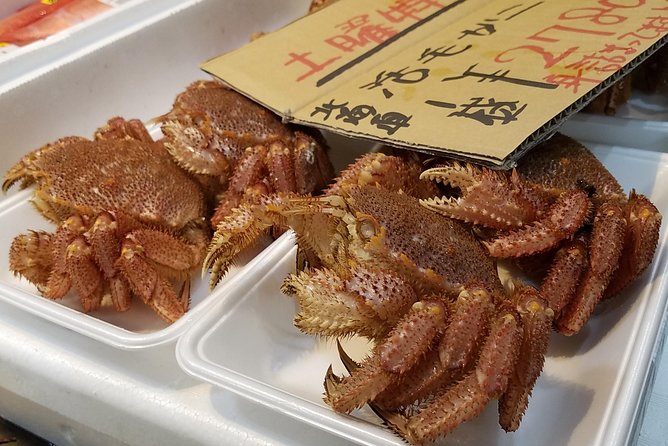
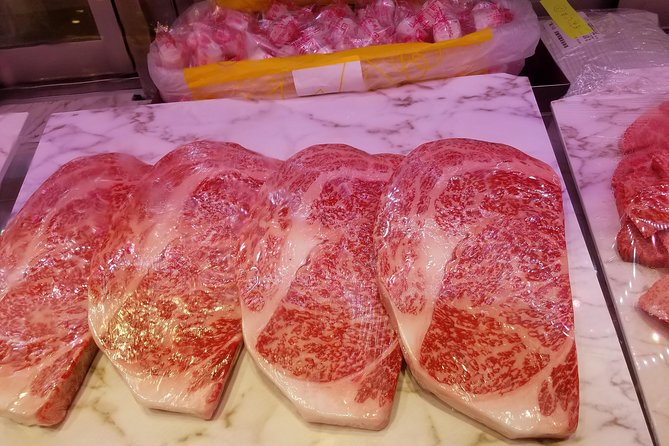
Here you can expect to see food and shopping shaped by both Japanese and Korean traditions. The description specifically points to meats, fish, produce, and other food staples, so this is not only a restaurant stop. It is a chance to look at a neighborhood food culture through the ingredients and shops themselves.
Guide Ferdinand’s background makes this stop especially useful. He is French and lives in Japan, and he can discuss customs, history, and his own experience of life there. That does not turn the visit into a formal history lesson. It gives you a personal voice while you compare Japanese and Korean influences.
Tsuruhashi is also a good reminder that Osaka is not one single food scene. A polished department store and a Korea Town can both be part of the same city, yet offer very different ways of buying and enjoying food.
Kuromon Ichiba is the route’s big food showcase
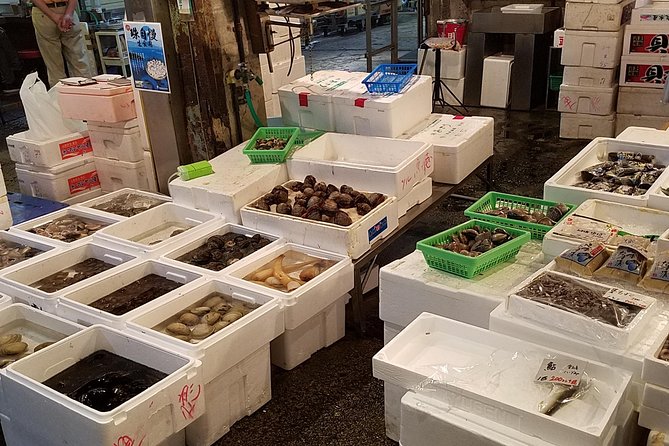
Kuromon Ichiba is likely to be the stop most people anticipate. It is famous for delicacies sold both raw and cooked, and the description promises a wide look at seafood, meats, and other food items.
This is where you will want to have extra money ready. Samples, snacks, refreshments, souvenirs, and other purchases are not included. If a stall offers something you want to try, you buy it directly. That arrangement gives you choice, but it also means the final cost depends on how much you eat.
The tour spends about 25 minutes here, so you should not expect unlimited browsing. Still, a guide can make the short visit more useful by pointing out what you are seeing and helping with questions. You can focus on the stalls instead of trying to work out the market’s food vocabulary alone.
Kuromon can also be the busiest-feeling part of the route. Comfortable shoes are required for good reason, and you should be prepared to keep moving. If you want a long, relaxed meal, this tour is not designed around that. If you want a guided introduction to a famous Osaka market, the stop fits well.
Doguyasuji connects food with the tools behind it
Sennichimae Doguyasuji Shotengai offers a different kind of food experience. Rather than focusing only on ingredients or ready-to-eat items, this shopping street is associated with the equipment and supplies used by food businesses.
The stop helps broaden the tour beyond eating. Food culture depends on knives, dishes, cooking tools, and other practical items, and a street devoted to these goods shows how seriously Osaka treats its kitchens and restaurants.
Again, the planned 25 minutes makes this an introduction. You may see tools and supplies that are unfamiliar, and your guide can explain their purpose. Souvenirs are not included, so any purchase here comes from your own budget.
This stop is particularly useful if you like the working side of food. It gives the route a little more depth without turning it into a museum visit. You are still walking through a functioning shopping area, with the chance to browse as you go.
Namba provides a fitting finish
The tour ends in Namba, a central Osaka area with a strong connection to shopping, dining, and nightlife. The activity does not promise a final meal or a formal farewell tasting, so the ending is practical: you finish in a place where you can continue eating or exploring on your own.
That makes Namba convenient for the rest of your day. You can use what you learned about Osaka markets to choose your next snack, restaurant, or shopping stop. You are also not locked into the guide’s schedule after the four-hour walk.
The sequence from Tenma to Namba covers a lot of ground. Transportation during the tour costs 330 yen per adult, so add that amount to the advertised price. The information does not specify the exact transport method, so you should allow for that extra cost and follow the guide’s directions on the day.
What the $59 price really covers
At $59 per person, the main product is access to a small, guided explanation of Osaka’s food districts. You are paying for four hours, a limited group of no more than eight participants, and a guide who can interpret what you see in English, Spanish, or French.
The price does not cover eating. That matters because Kuromon and the other markets are built to tempt you. You might spend very little if you only browse, or add noticeably to the cost if you buy several snacks, drinks, or gifts.
I see the value most clearly for first-time visitors who want context. Without a guide, you can walk through these places and enjoy the colors and smells, but you may not know how the districts differ or what belongs to ordinary shopping. With a guide, the four areas become part of one story.
The value is less clear for confident Osaka visitors who already know Japanese and Korean food markets well. You may prefer to spend four hours at one market and eat at your own pace. This experience favors range and explanation over lingering.
Group size, guide style, and walking pace
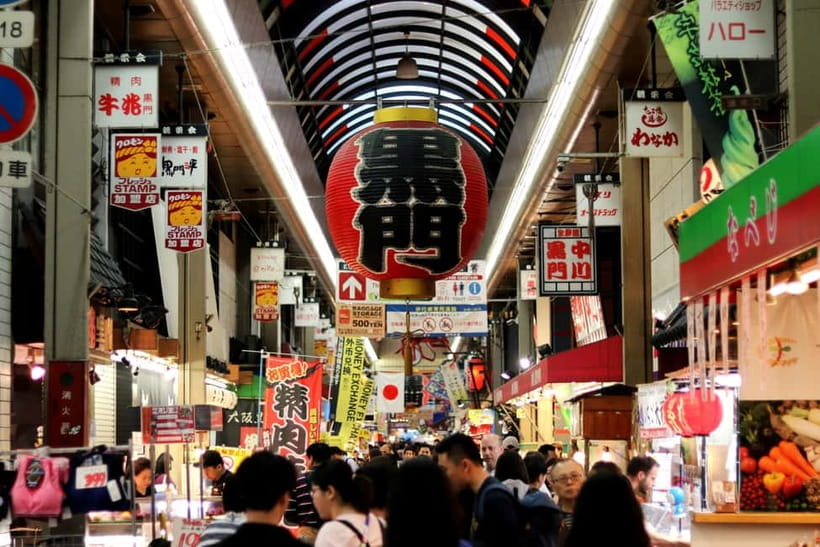
A maximum of eight participants is a strong feature. A small group gives you a better chance to ask about unfamiliar foods, customs, and neighborhood details. It also keeps the walk more manageable than a large coach-style tour.
Ferdinand’s personal background adds a useful human element. He can explain Japanese and Korean market customs while also sharing what life in Japan has been like for him as a Frenchman. The available feedback specifically praises his explanations of different markets, history, customs, and personal experience, along with his willingness to listen to questions.
The tour is offered in English, Spanish, and French. You should select the language that lets you ask detailed questions comfortably, especially if you are curious about ingredients or local habits.
Expect a steady walking pace. Each listed stop is planned for about 25 minutes, and comfortable shoes are specifically recommended. This is not the right choice if you want to sit for long stretches or spend an hour at each food counter.
What to budget and bring
The advertised cost is $59 per person. Add 330 yen per adult for transportation during the tour, then set aside extra money for anything you want to taste or buy.
A practical budget might include:
- The tour fee
- 330 yen for transportation
- Money for samples, meals, drinks, or souvenirs
- Comfortable walking shoes
- A flexible appetite, since the food is purchased as you go
There is no included tasting allowance, so you remain in control of spending. That is helpful if you have dietary limits or simply do not want to eat at every stop, though the available information does not provide specific dietary guidance.
The meeting point is the McDonald’s directly in front of Tenma Station. Make sure you identify that exact location before starting, since the route begins in Tenma and ends in Namba.
You can cancel up to 24 hours ahead for a full refund, and you can reserve now while paying later. Those policies are useful if your Osaka plans are still changing.
Who should book this Osaka food walk
I would choose this tour if you want to understand Osaka through several kinds of food districts rather than one famous market. It suits first-time visitors, curious eaters, and anyone who likes asking questions while walking.
It is also a good match for visitors who want a small group and a guide with a personal connection to Japan. Ferdinand’s experience as a French resident gives the cultural explanations a perspective beyond a basic list of food names.
You should think twice if your priority is a large included meal. Nothing in the price covers samples, and the 25-minute stop pattern leaves limited time for a sit-down feast. You should also reconsider if long walking and frequent transitions are difficult for you.
Should you book it?
Book this tour if you want a well-spread introduction to Osaka’s food culture, with stops ranging from Takashimaya’s polished marketplace to Kuromon, Tsuruhashi, Tenma, Doguyasuji, and Namba. The strongest reasons are the small group, the range of neighborhoods, and the chance to ask Ferdinand about customs, history, and daily life in Japan.
Skip it if you would rather choose your own market, eat slowly, and spend the afternoon without a fixed route. Bring comfortable shoes, 330 yen for transportation, and extra money for food. With those expectations, the tour offers a useful four-hour orientation to the many ways Osaka buys, sells, and celebrates food.
FAQ
How long does the Osaka food market tour last?
The tour lasts four hours.
Where does the tour start?
It starts at the McDonald’s directly in front of Tenma Station.
Where does the tour finish?
The route finishes in Namba.
Which markets and shopping areas are included?
The route includes the Takashimaya Osaka food marketplace, Pulala Tenma, Tenjinbashisuji Shopping Street, Tsuruhashi, Kuromon Ichiba Market, Sennichimae Doguyasuji Shotengai, and Namba.
Are food samples included in the price?
No. Samples, food items, refreshments, snacks, and souvenirs are not included. You pay for anything you choose to buy.
How much does transportation cost during the tour?
Transportation during the tour costs 330 yen per adult.
What languages are available?
The tour is available in English, Spanish, and French.
How large is the group?
The group is limited to eight participants.
Can I cancel for a full refund?
Yes. You can cancel up to 24 hours in advance for a full refund.
Just added around Japan
- Nagoya Super Market Tour & Home Cooking Class with a Local, Akiko★ 5.0 · 10 reviews
- Tokyo: Tsukiji Market and Hama-rikyu Gardens Guided Tour★ 4.8 · 73 reviews
- Tokyo: Private Tsukiji Street Food & Sake with Local Guide★ 5.0 · 3 reviews
- Tokyo: Tsukiji Market Guided Tour & Sushi-Making Experience★ 4.4 · 11 reviews
- Tokyo : Tsukiji Fish Market Food Walking & Shrine Visit Tour★ 5.0 · 3 reviews
- Tokyo: Tsukiji Fish Market Culture Tour with Sashimi Tasting★ 4.6 · 54 reviews
- 【Family pack】Tokyo: Tsukiji fish market food tour★ 5.0 · 3 reviews
- Tokyo: Tsukiji Fish Market Foodie and Educational Tour★ 5.0 · 4 reviews
Food & Drink, compared.

Old Town, Creek, Museums, Souks, & Street Food Tour
Read our review →
Old Town, Souks, Street Food, Guided Tour & Abra Ride
Read our review →
Bangkok by Night: Temples, Markets and Food Tuk-Tuk Tour
Read our review →
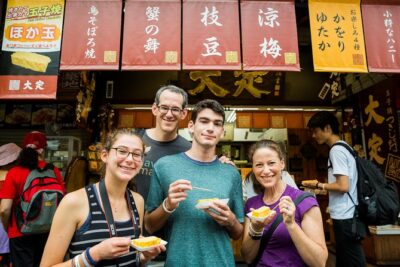
Tokyo Tsukiji Fish Market Food and Culture Walking Tour
Read our review →
Markets, Temples and Food Night Tour by Tuk Tuk
Read our review →
London Bridge & Borough Market Food Tour with 7 Authentic Dishes
Read our review →
Browse the lists this tour appears in