
Review · OSAKA
Kuromon Market Food Walking Tour in Osaka (6 stops, 6 tastes)
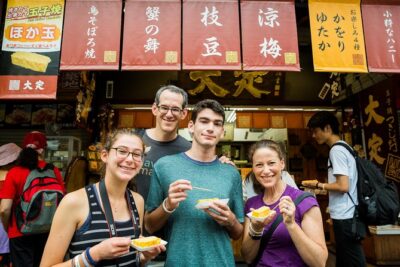
Kuromon Market is best enjoyed with a little guidance. This two-hour walk takes you through Osaka’s food center for six tastes, then adds market history, local customs, and a look at Doguyasuji’s kitchenware shops. Guides such as Nina, Rie, Yuto, and Niko have led this experience, and the small group size keeps it personal.
I like the small groups of up to seven and the practical help with ordering, especially when a food stall has no English menu. I also like that the walk is more than a snack crawl: you pass Namba Grand Kagetsu, nearby shrines and shops, and the lanes around Namba and Dotonbori.
The main caution is food quantity. Most people find the samples enjoyable, but one or two portions may not leave you full, and the value depends on how much food your guide includes that day. Dietary requests also need careful planning because gluten-free and other special meals cannot be guaranteed.
Key points at a glance
- Six tastes in about two hours: Expect Osaka favorites such as takoyaki, sushi, yakitori, dumplings, sweets, or other market foods, with the exact mix subject to change.
- A group capped at seven: The format allows more questions and easier movement through crowded market lanes.
- Doguyasuji adds a local shopping angle: Browse knives, tableware, cooking tools, and restaurant supplies alongside the food stops.
- Useful ordering help: Your guide can explain foods and assist with language barriers at stalls and shops.
- A good first Osaka food outing: You finish with ideas for where to eat during the rest of your stay.
- Plan for heat, rain, and limited food volume: Osaka can be very hot in summer, cold in winter, and the tour is not designed as a full meal.
Why Kuromon Market makes a good first food stop
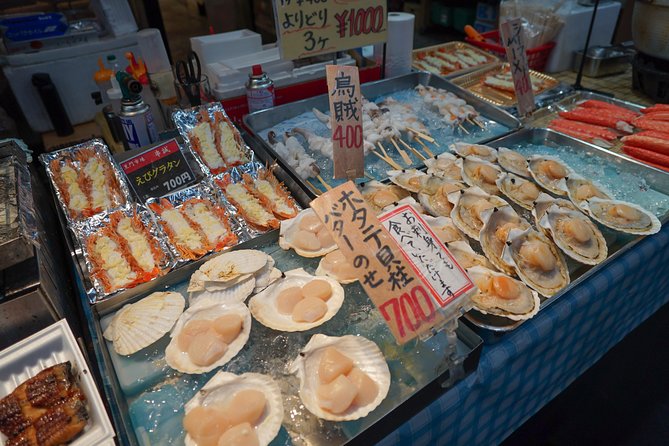
Kuromon Market is a long shopping street in Minami, the central area of Osaka. It is often called Osaka’s kitchen because of its seafood, produce, prepared foods, sweets, and small specialty shops. The name comes from the black gate of Enmyoji Temple, giving the market a link to the neighborhood’s past as well as its present-day food trade.
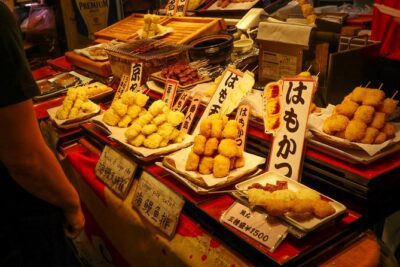
I like this setting because it gives you more variety than a single restaurant. You can look at ingredients, watch food being prepared, and taste several small portions without committing to one large meal. The market also offers a different feel from the giant signs and neon around Dotonbori.
Still, Kuromon is not a quiet place. The lanes can be crowded, and you will be walking while eating or stopping in busy shop fronts. If you want to inspect every stall at your own pace, a guided visit may feel brisk. If you want someone to narrow the choices and handle the ordering, the pace works in your favor.
More Market Walking Tours in Japan
- Tokyo Tsukiji Fish Market Food and Culture Walking Tour
★ 5.0 · 3,184 reviews - Tokyo: Tsukiji Fish Market Food and Walking tour
★ 5.0 · 1,724 reviews - Tokyo: Tsukiji Fish Market Guided Walking Tour
★ 4.9 · 1,397 reviews
Meeting near Nipponbashi Station
The meeting point is in front of the SMBC ATM at Nipponbashi 1chome, near Kintetsu Nipponbashi Station Exit 10. The listed address is in the Nipponbashi area of Chuo Ward. This is close to public transportation, but Osaka’s station passages can be confusing, so I would arrive early and check the exit number before you start walking.
The tour begins on time. If you arrive late and miss the group, you cannot join later, reschedule, or receive a refund. That rule matters here because a small food tour cannot easily pause and search for one missing person.
The tour ends back at the meeting point. You do not pay for the guide’s food or drinks, but bring cash if you want extra snacks or drinks beyond the included tasting plan.
The six tastes inside Kuromon Market

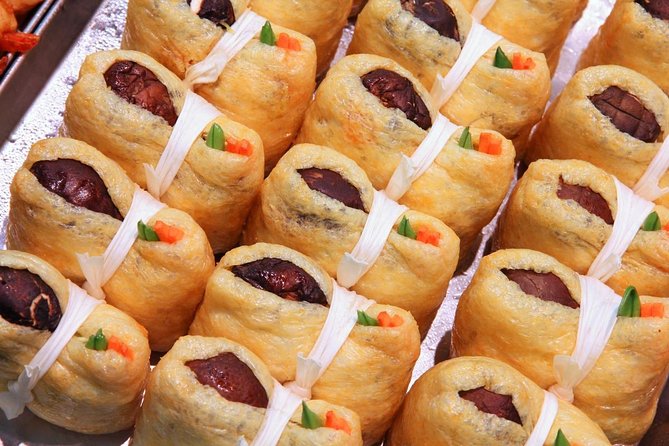
The heart of the tour is the food. Examples from the experience include takoyaki, fresh sushi, yakitori, dumplings, gyoza, oden, mushrooms, and Japanese sweets. You should not treat this as a fixed restaurant menu. Market availability and the guide’s choices can change, and your preferences may shape the route.
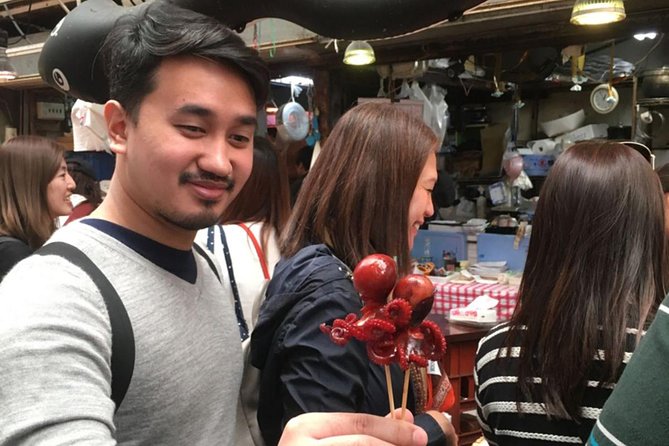
Takoyaki is the obvious Osaka classic. These hot batter balls usually contain octopus and are served with sauce and toppings. They can be messy and very hot inside, so your guide’s help with ordering and eating technique is useful. The tour is designed to introduce you to the dish without leaving you to guess at a menu or point randomly at a crowded counter.
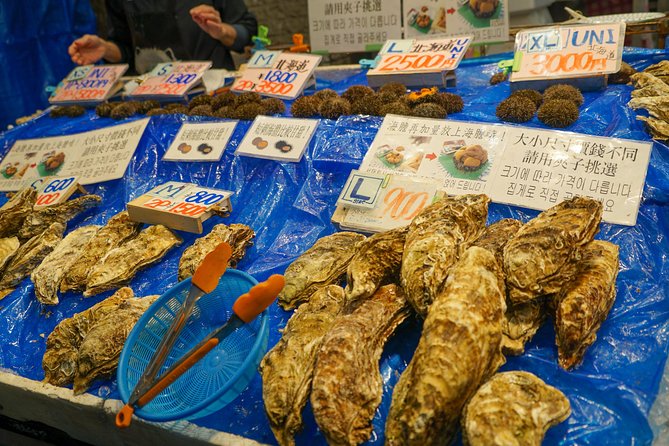
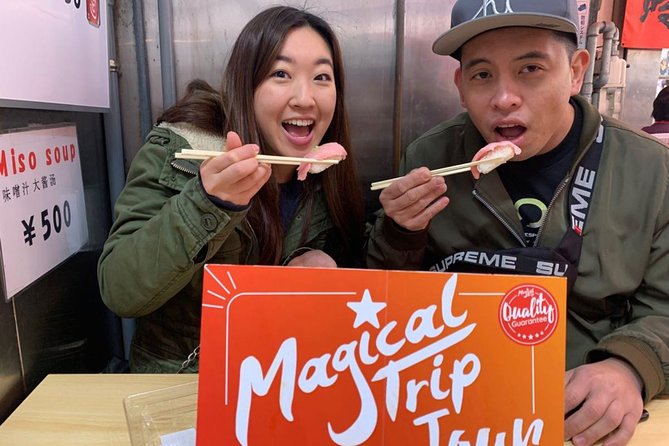
Fresh sushi gives you a different taste of the market. Kuromon’s food stalls often make seafood and prepared foods a visual part of the shopping experience, and a guide can help explain what you are seeing. The sushi portion may be modest, but that is useful on a food walk because you still have room for the next stop.
Yakitori, dumplings, and gyoza bring more familiar comfort-food flavors. One reported tasting included mushroom yakitori, which is a good reminder that the food is not limited to the most famous Osaka dishes. Oden, a simmered selection of ingredients, may also appear. It is less flashy than takoyaki but gives you a look at a common Japanese casual-food style.
Sweets can round out the route. The exact item is not specified, so you might find a market confection rather than a standard dessert course. Ask your guide what each ingredient is and how locals usually eat it. That small conversation is often more useful than simply being handed a sample.
One point needs emphasis: the tour title promises six tastes, not six full meals. One dissatisfied participant found the portions too small and bought more food after the walk. I would schedule this as a generous snack or light lunch, not as your only meal of the day.
What the guide adds beyond the food
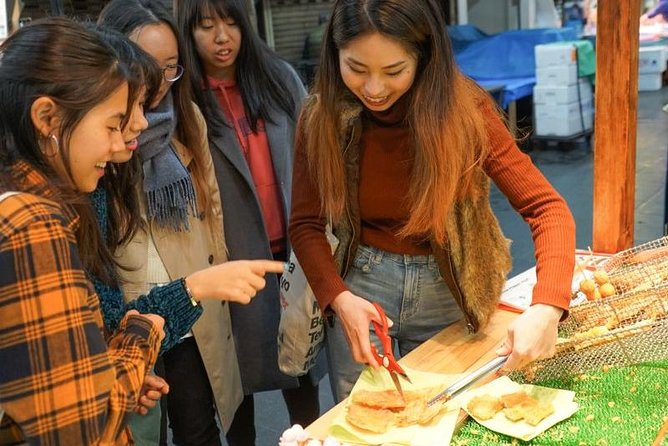
The strongest part of this experience is the guide’s role in turning a market visit into a readable story. Guides such as Nina have been praised for being warm, funny, and patient with children. Yuto has handled dietary concerns thoughtfully, while Niko has adjusted the pace and route around group interests.
That personal style matters in a place with many choices. A guide can help you ask what something is, learn how it is prepared, and avoid buying a costly item you do not really want. You can also ask for suggestions for later meals in Osaka, which may make the tour more useful than a simple list of tastings.
The cultural side is modest but worthwhile. You may hear about Osaka food customs, local history, and the role of the market in daily life. One guide also helped a family take part correctly at a shrine, while other guides pointed out historic spots and narrow lanes along the way.
Do not expect a formal lecture at every stop. The quality depends on the person leading your group and on how actively you ask questions. Some guides have been praised for making the information feel natural rather than scripted. If you want more detail, ask about the market’s name, the foods you are eating, and the shops you pass.
More market walks in Japan:
- Nishiki Market Brunch Walking Tour (7 Tastings + Brunch)
★ 5.0 · 1,355 reviews - Tokyo: Tsukiji Fish Market Food and Culture Walking Tour
★ 4.7 · 757 reviews - Tsukiji Fish Market: Street Food & Culture Walking Tour
★ 5.0 · 669 reviews - Tsukiji Fish Market Small-Group Food Walking Tour
★ 5.0 · 621 reviews
Doguyasuji and Osaka’s kitchenware culture
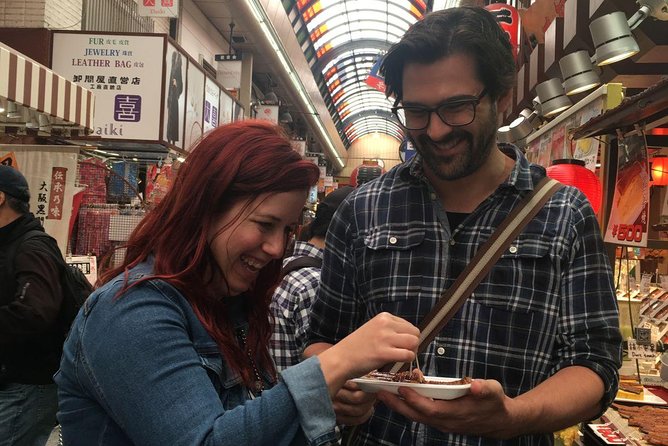
The visit to Doguyasuji is a welcome change from eating. This street is known for kitchenware, tableware, cooking equipment, knives, restaurant signs, and other supplies used by food businesses. Even if you are not shopping, it gives you a glimpse of the tools behind Osaka’s restaurant culture.
I especially like this stop for anyone who enjoys cooking or wants a practical souvenir. You might find serving dishes, chopsticks, utensils, or professional-looking equipment. Prices and suitability vary, so ask about quality and use before buying anything substantial.
Doguyasuji also makes the tour feel more local than a straight march through the best-known food stalls. It connects what you eat with how Japanese restaurants prepare and present it. The drawback is simple: if you want only food, time spent browsing kitchenware may feel like a detour.
Namba Grand Kagetsu, Namba, and Dotonbori
The route passes Namba Grand Kagetsu, a comedy theater operated by Yoshimoto Kogyo. This gives you a quick look at Osaka’s comedy culture, a major part of the city’s entertainment identity. You may not go inside, but the exterior and surrounding area help place the market within the larger Namba district.
The walk also passes through Namba, with its restaurants, boutiques, station connections, and Namba Parks complex. This is useful orientation for the rest of your stay. Your guide can point out areas worth returning to, though this is not a full sightseeing tour of the district.
Dotonbori appears as another pass-by area, with famous three-dimensional signs such as the Glico runner and Kani Douraku crab. These are the images most first-time visitors associate with Osaka food streets. Seeing Dotonbori alongside Kuromon helps you understand the contrast: Dotonbori is louder and more sign-driven, while Kuromon is centered on market stalls and food shopping.
You should not book this tour expecting a long stop at every landmark. These areas form the setting and walking route, while Kuromon remains the main event.
Is $50.41 a fair price?
At $50.41 per person, the value depends on what you want from a food tour. If you measure the cost only by the amount of food, you may find it high, especially if you have a large appetite or plan to buy extra snacks afterward.
The price makes more sense if you value the guide’s time, ordering support, local suggestions, cultural context, and route planning. A small group of no more than seven is more useful than a large procession when you are asking questions or trying to hear explanations in a crowded market.
I would compare it with the cost of making several mistakes on your own. You can certainly walk into Kuromon Market without a guide, point at food, and explore independently. The market is accessible and easy to browse. The tour earns its keep when you want help choosing, need English-language assistance, or prefer a short, organized introduction before returning on your own.
The best value comes when you use the tour as a first visit, then return later to buy the foods you liked. One useful approach is to walk through Kuromon before your tour, note stalls and dishes that catch your eye, and ask your guide to include them when possible. This combines independent curiosity with local help.
Family, dietary, and weather planning
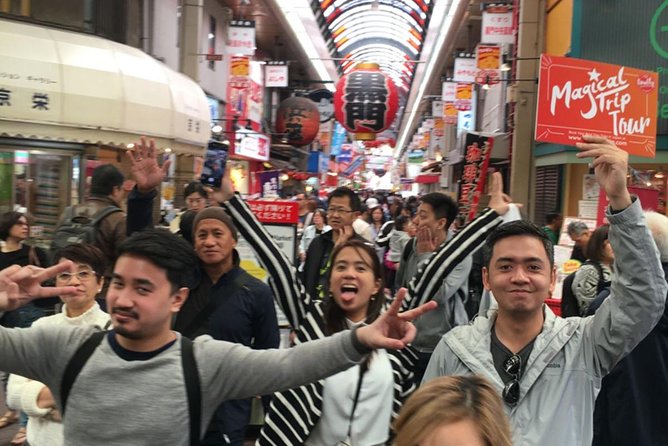
All ages are welcome. Families have found the pace and guide support helpful, and one parent managed the tour with an 18-month-old in a sling. A stroller may be difficult in crowded market lanes, so a sling is likely the easier option based on the experience described.
Children may enjoy the range of colors, smells, and small portions, but parents should remember that not every food will appeal to young eaters. Ask the guide what is suitable before buying, and bring cash for an extra snack if needed.
Dietary restrictions require advance notice, at least one day before the tour. Vegetarian and vegan requests may be possible, but choices can be limited. Gluten-free needs are especially difficult: the tour information says gluten-free requests cannot be accommodated in some circumstances and also warns that allergy-free meals and substitutions are not guaranteed. Contact the operator before booking if this is essential.
Osaka’s weather can affect comfort. Summer temperatures may reach 40°C, while winter lows can fall to -5°C. Wear shoes suited to two hours of walking, bring water in hot weather, and carry rain protection when the forecast is poor. Much of the market route may offer cover, but you should not assume the entire experience is indoors.
Who will enjoy this tour most?
I would choose this tour for a first visit to Osaka, especially if you want to understand the local food scene before ordering alone. It suits solo visitors, couples, families, and small groups who prefer conversation over a large organized crowd.
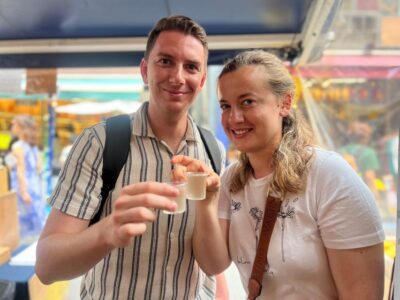
It is also a good match if you are nervous about language barriers. Guides can help with ordering and explain foods that may be difficult to identify from a display. Solo visitors may appreciate the chance to have photos taken and share a small-group outing without joining a huge group.
I would hesitate if you already know Kuromon Market well, speak Japanese comfortably, or prefer to spend as long as you like at each stall. I would also choose something else if your main goal is a large, filling meal. The tour is about variety and guidance, not maximum portions.
Booking details worth remembering
Confirmation is provided at booking, and mobile tickets are available. Group discounts may apply. The tour offers free cancellation if you cancel at least 24 hours before the start time. Cancellations or changes made inside that window are not refunded or accepted.
Because the group starts on time, plan to reach Exit 10 early. Keep the meeting address and station exit ready on your phone, and allow extra time for Osaka’s underground passages.
Should you book the Kuromon Market Food Walking Tour?
Book it if you want a friendly introduction to Osaka food, practical ordering help, and a guide who can connect Kuromon Market with Doguyasuji, Namba, and Dotonbori. The strongest reasons are the small group size, the range of tastes, and the chance to return later with better food knowledge.
Skip it if you want to eat a full meal, dislike a fixed pace, or are happy to explore the market alone. For the best result, eat lightly beforehand, bring cash for extras, tell the operator about dietary needs early, and use the guide to ask questions rather than simply follow along.
FAQ
How long does the Kuromon Market food tour last?
The tour lasts approximately two hours and ends back at the original meeting point.
Where does the tour meet?
You meet in front of the SMBC ATM at Nipponbashi 1chome, near Kintetsu Nipponbashi Station Exit 10. The listed address is in Nipponbashi, Osaka.
How many people can join the tour?
The maximum group size is seven travelers, making it a small-group experience.
What foods might I taste?
Food choices can vary, but examples include takoyaki, fresh sushi, yakitori, dumplings, gyoza, oden, mushrooms, and Japanese sweets. The experience is described as six tastes rather than six full meals.
Can the tour accommodate dietary restrictions?
You must share dietary requests or allergies at least one day before the tour. Vegetarian and vegan options may be limited, and gluten-free or allergy-free meals cannot be guaranteed. Substitutions are not assured.
What happens if I arrive late or need to cancel?
The tour starts on time, and you cannot join later or receive a refund if you miss it because of lateness. You can cancel for a full refund up to 24 hours before the start time.
More Food in Japan
- Inside Tokyo’s Kitchen: Tsukiji Market, Food & Culture Tour
★ 5.0 · 162 reviews - Tsukiji Food and Toyosu Market with Government-Licensed Guide
★ 5.0 · 158 reviews - Toyosu Market Morning Tuna Auction and Tsukiji Food Tour with Licensed Guide
★ 4.5 · 146 reviews - Tokyo Tsukiji Fish Market Food Tour: 15 Stops & Walk Local Street
★ 5.0 · 139 reviews
More Food and Drink Tours in Japan
- Tokyo Food Tour Taste Fresh Delights at Tsukiji Market
★ 5.0 · 429 reviews - Kyoto Nishiki Market Food and Culture Walking Tour
★ 5.0 · 412 reviews - Osaka: Kuromon Market Food Walking Tour (6 stops, 6 tastes)
★ 4.6 · 272 reviews - Tsukiji Fish Market: Street Food & Culture Walking Tour
★ 4.8 · 259 reviews
Just added around Japan
- Nagoya Super Market Tour & Home Cooking Class with a Local, Akiko★ 5.0 · 10 reviews
- Tokyo: Private Tsukiji Street Food & Sake with Local Guide★ 5.0 · 3 reviews
- Tokyo: Tsukiji Market Guided Tour & Sushi-Making Experience★ 4.4 · 11 reviews
- Tokyo: Tsukiji Market and Hama-rikyu Gardens Guided Tour★ 4.8 · 73 reviews
- Tokyo : Tsukiji Fish Market Food Walking & Shrine Visit Tour★ 5.0 · 3 reviews
- Tokyo: Tsukiji Fish Market Culture Tour with Sashimi Tasting★ 4.6 · 54 reviews
- 【Family pack】Tokyo: Tsukiji fish market food tour★ 5.0 · 3 reviews
- Tokyo: Tsukiji Fish Market Foodie and Educational Tour★ 5.0 · 4 reviews
Market Walking Tours, compared.
Tokyo Tsukiji Fish Market Food and Culture Walking Tour
Read our review →
Ben Youssef, Secret Garden, & Souks Walking Tour
Read our review →

Air Raid Shelter + St. Nicholas Market Walking Tour
Read our review →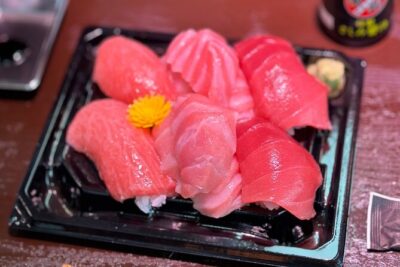
Nishiki Market Brunch Walking Tour (7 Tastings + Brunch)
Read our review →Tsukiji Fish Market Food and Culture Walking Tour
Read our review →Browse the lists this tour appears in