
Review · INDONESIA
Seminyak: Balinese Cooking Class & Market Tour
The best part of this four-hour Seminyak experience is that you do not begin with a recipe card. You start at a local market, where a Balinese chef shows you the herbs, spices, vegetables, meat, and fish that give the food its character. Then you use those ingredients in a hands-on class and eat the results.
I like two things right away: the class gives you a recipe book so the experience continues at home, and the small-group setup means you can get help instead of waving for a chef across a crowded room. The generous spread, certificate, morning tea, and hotel pickup for Seminyak, Legian, and Kuta add real value at $45.
The main consideration is the market visit. It can feel brief if you want a serious lesson in shopping and local food culture, and heavy rain may disrupt it. Transport can also be crowded, and there is no hotel drop-off after class.
Key points at a glance
- Market first, cooking second: Walk through a nearby morning market with a chef and learn which ingredients each dish needs.
- A full Balinese menu: Depending on the day’s program, you may prepare several curry pastes and roughly six to twelve dishes using chicken, fish, pork, vegetables, and satays.
- Hands-on help: Chefs demonstrate each step while assistants prepare the next ingredients, clean work areas, and offer one-to-one guidance.
- A banquet at the end: You sit down with your group and eat the dishes you prepared, often with far more food than one person can finish.
- Useful take-home extras: You receive a recipe book and certificate, and some sessions have also included a short video sent by WhatsApp or a restaurant voucher.
- Simple morning logistics: Pickup is at 8:00 AM in Seminyak, Legian, and Kuta. Other areas meet at Warung Nia on Jl. Kayu Aya in Seminyak.
Starting at the market in Seminyak
The morning begins with pickup at your hotel at 8:00 AM if you are staying in Seminyak, Legian, or Kuta. If you are staying elsewhere, you meet the group at Warung Nia, Jl. Kayu Aya Square, No. 19-21, in Seminyak. You should wear comfortable shoes and light, comfortable clothing. Leave large luggage and bulky bags behind.
The market visit is more than a quick shopping errand. Your chef leads you from stall to stall, pointing out the ingredients needed for the cooking session and explaining how to recognize useful herbs, spices, vegetables, fruits, fish, and meats. This gives you a better sense of how Balinese cooking begins, long before a wok or mortar appears.
The most useful part is the connection between the market and the kitchen. You are not simply shown unfamiliar produce. You learn which ingredients will become spice pastes, which ones add fragrance, and which ones can be replaced with products from an Asian grocery store back home. Some chefs also explain medicinal uses and the small differences in smell and purpose between similar ingredients.
If you want to buy something for your own kitchen, the chef can help you understand what is worth taking home and what price is reasonable. That practical advice makes the market stop more valuable than a walk with no context.
Still, keep your expectations in check. This is a short market orientation, not a full morning food expedition. Several people have wished for more time and more stalls. If you are especially interested in markets, ask questions early and make the most of the time you have. In heavy rain, the market portion may be shortened or skipped, as one participant chose to do, while the cooking class still went ahead.
More Market Cooking Classes in Indonesia
- Ubud: Cooking Class with Transfers and Optional Market Visit
★ 4.9 · 824 reviews - Balinese Ubud cooking school (9 Dish Cooking and Market Tour)
★ 5.0 · 540 reviews - Ubud: Balinese Cooking Class and Market Tour
★ 4.8 · 531 reviews
Learning the spice base before the main dishes
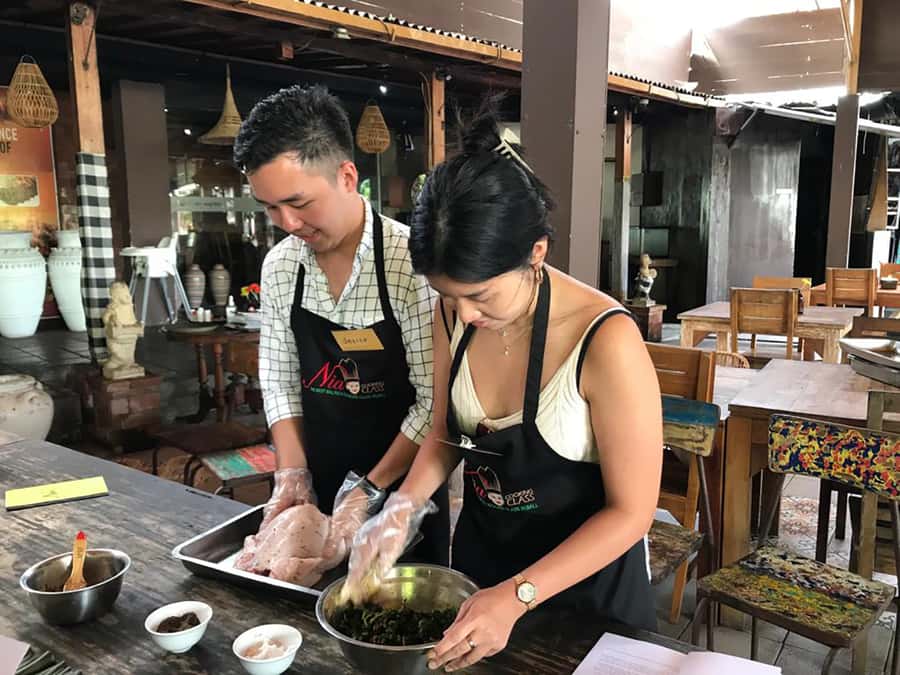
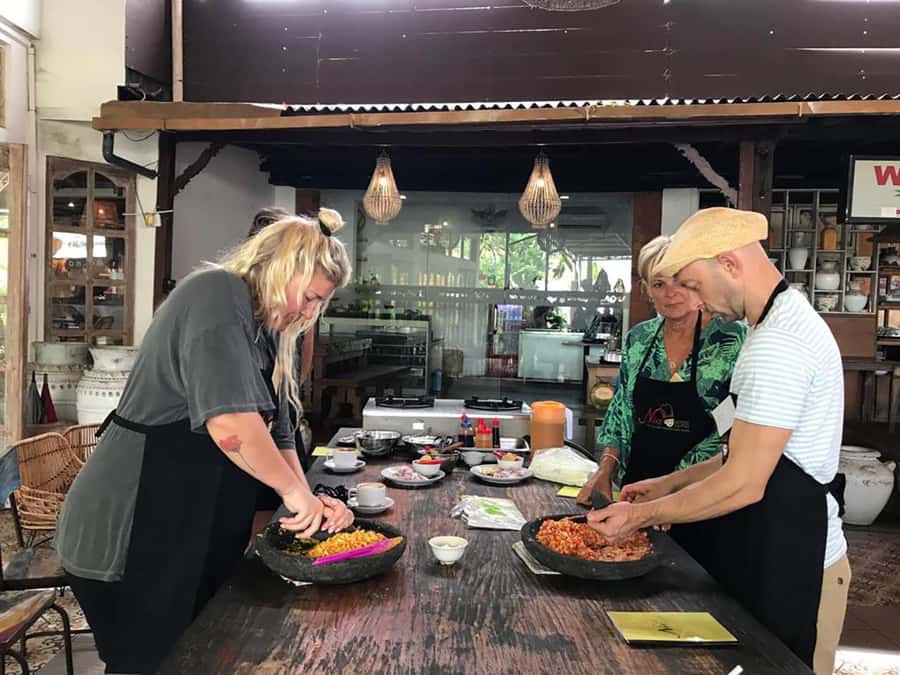
Back at the venue, you find a prepared workstation and begin the cooking lesson. The format is organized and active. The chef demonstrates a technique, you work through it with your group, and assistants circulate to give help and prepare the next stage.
One of the most useful lessons is the preparation of several curry pastes. These pastes form the backbone of many Indonesian dishes, and making them yourself helps you understand why Balinese food can taste so layered. You work with herbs, spices, aromatics, and other ingredients rather than simply tipping a ready-made sauce from a packet.
The class is taught in English. Chefs named Komang, Made, Tommy, Jim, Teddy, and others have led sessions at different times, so your exact instructor can vary. The strongest part of the teaching is the mix of demonstration and humor. Komang has been praised for making sure each person takes part, while Made and Tommy are noted for clear explanations, local stories, and an easy manner. Jim has also been singled out for keeping the lesson lively.
This matters if you are new to cooking classes. You are not expected to arrive with special skills. The staff break the work into manageable stages, and the assistants help with cutting, mixing, timing, and other practical details. One participant even picked up a better knife grip after years of chopping incorrectly.
Preparing six to twelve dishes as a group
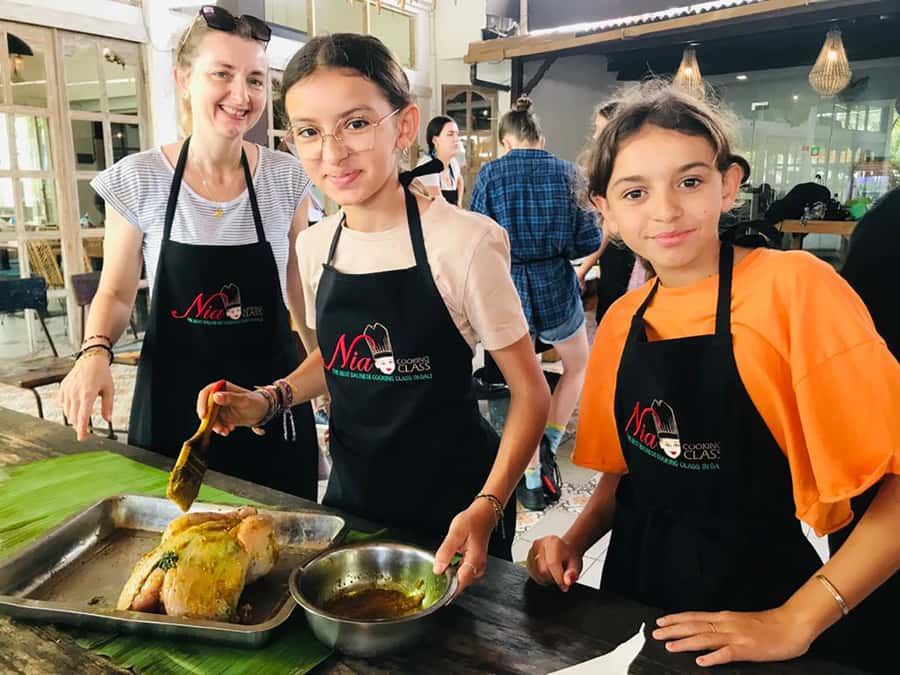
The exact menu can vary, but expect a serious amount of cooking. Different sessions have prepared about six, seven, eight, ten, or even twelve dishes. The food may include chicken, fish, pork, vegetables, curry-style dishes, satays, rice, and other Balinese or popular Indonesian preparations.
That range is one reason the class offers good value. You do not spend four hours learning one dish and then leave hungry. You get a broad introduction to the way spice pastes, fresh ingredients, grilling, simmering, and presentation work together in Balinese food.
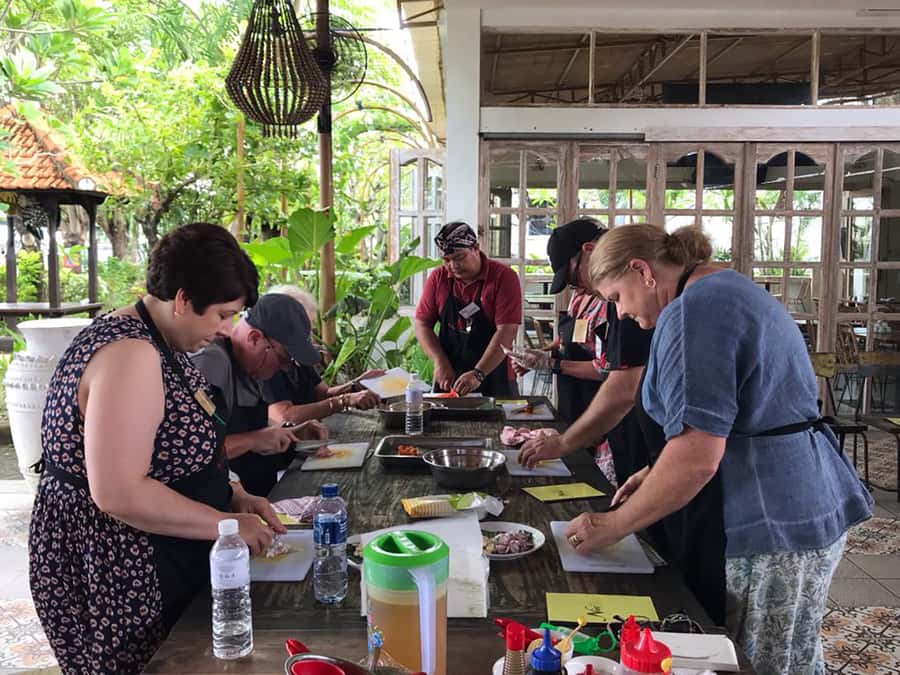
The class is hands-on, but it is not a private lesson. You cook alongside other people and share work within a small group. That gives the session a social feel, which can be especially helpful if you are traveling alone. Solo participants have found it easy to join in, and couples, families, and mixed-age groups can all take part.
The workstations are set up for small groups, with equipment ready to use. Staff keep the area moving by clearing finished ingredients and setting up what comes next. They also clean throughout the class and remind you to wash your hands between stages. This matters when many people are preparing several foods at once.
The pace can feel brisk because so much is covered. If you want to understand every ingredient or take careful notes, you may need to listen closely and ask questions as you go. The class favors participation and variety over a slow, detailed study of one recipe.
Sitting down to a Balinese feast
After the cooking, you move to the restaurant area and eat the food you helped prepare. This is not a token tasting. The portions are large enough that many people cannot finish everything, especially after several hours of chopping, grinding, and cooking.
I like this ending because it turns the class into a shared meal rather than a demonstration. You can compare results with the people at your table, talk about which dishes you preferred, and appreciate how the separate pastes and ingredients came together.
The meal also gives you a chance to notice the contrast between dishes. A curry may rely on a fragrant spice base, while a satay or vegetable preparation shows a different balance of heat, sweetness, salt, and fresh herbs. The food is the clearest proof of what you have learned: you can taste the role of each prepared component.
The large quantity is both a benefit and a small drawback. You receive excellent value, but you should not eat a big breakfast before arriving. Come ready for a substantial meal. Leftovers are common, and some sessions have included a voucher for a later restaurant visit.
Same stalls, a different way to shop and eat:
- Active Volcano, Rice Field, Hot Spring, Fruit market, Tea Plantation with Lunch
★ 5.0 · 513 reviews - Balinese Cooking class with traditional morning market visit
★ 5.0 · 161 reviews - PRIVATE Ubud Market Tour & Balinese Cooking Class with Putu
★ 5.0 · 125 reviews - Ubud Traditional Night Market Food Tour-All Inclusive
★ 4.4 · 95 reviews
How much value do you get for $45?
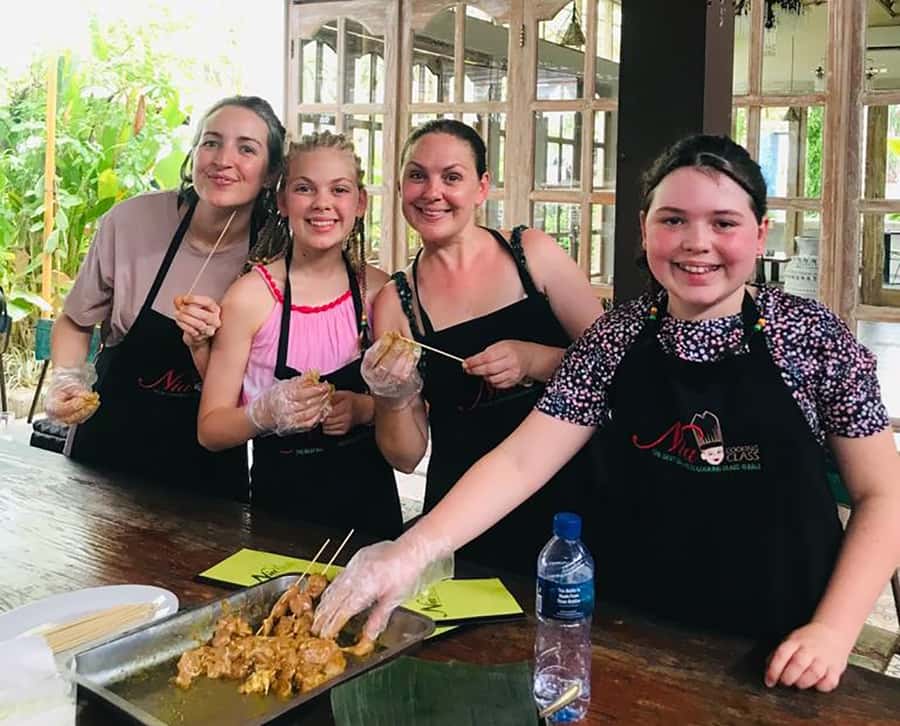
At $45 per person, this is not the cheapest cooking lesson you could find in Bali, but the price covers a lot. You receive hotel pickup in three popular areas, the market tour, ingredients, morning tea, the class, the meal, and a certificate. You also take home the recipe book.
The market and meal are important when judging the price. A standard cooking demonstration may teach you a recipe, but this experience adds a local shopping lesson and a full banquet. You are paying for several linked parts of Balinese food culture rather than only for kitchen instruction.
The recipe book makes the value last longer. It includes the dishes prepared in class, and the chef explains substitutions for ingredients that may be hard to find outside Bali. That makes the recipes more realistic for home cooks. You may not locate every local herb in an ordinary supermarket, but an Asian grocery store can often provide workable alternatives.
Pickup helps if you are based in Kuta, Legian, or Seminyak. There is no return hotel transfer, so plan to leave the venue on your own after the meal. One person found the shared transport crowded and noted that the walk afterward was easy, but your experience will depend on your hotel and the day’s traffic.
The cancellation terms are friendly: you can cancel up to 24 hours before the activity for a full refund, and you can reserve without paying immediately. Those details are useful if your Bali plans are still shifting.
What the four hours feel like
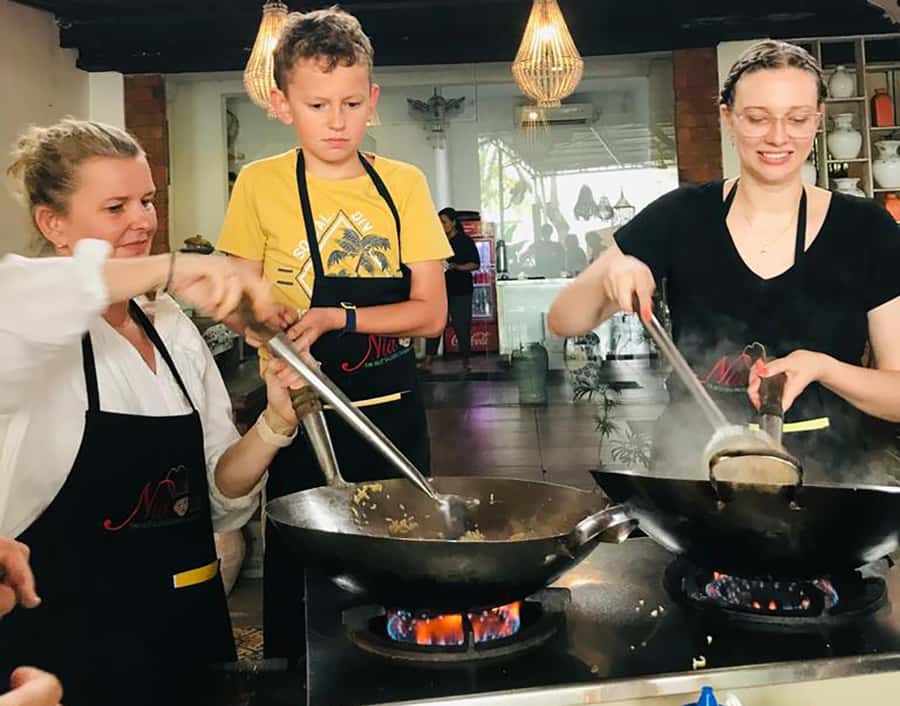
Four hours sounds long for a cooking class, but the morning is divided into enough parts to keep it moving:
- Hotel pickup or meeting at Warung Nia
- A guided visit to the nearby market
- Morning tea and a short break at the venue
- Demonstrations of ingredients, spice pastes, and cooking methods
- Hands-on preparation in a small group
- A shared meal of the finished dishes
- The recipe book and certificate at the end
The schedule is generally well organized, with staff working ahead to keep the class moving. You do not spend long waiting for a knife, bowl, or ingredient to appear. That efficiency is useful, though it also means the experience can feel busy.
You should expect some walking during the market section. Comfortable shoes matter more than dressy clothes, and you should avoid bringing large bags. The cooking area is practical rather than formal, so wear something you can work in.
Who will enjoy this class most?
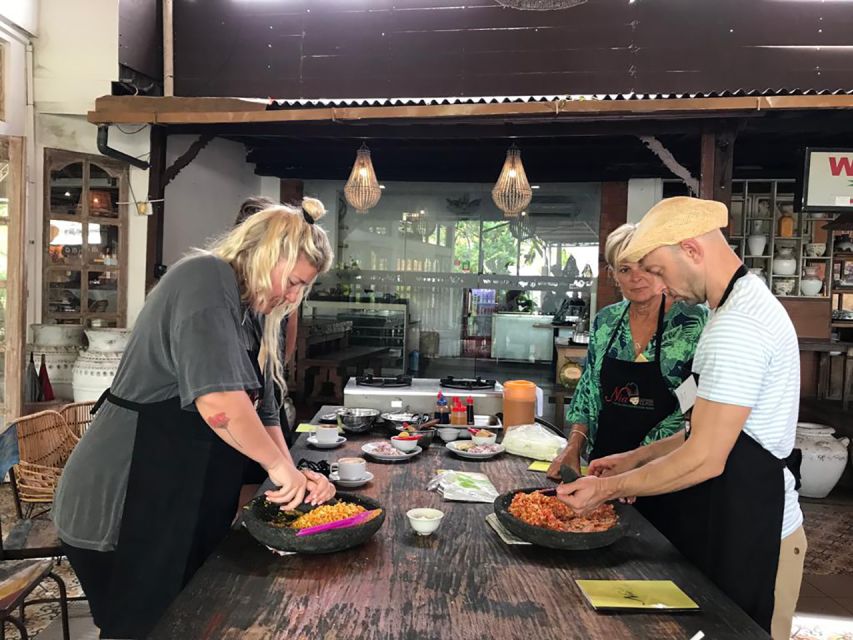
I would recommend this class to anyone who likes to connect food with place. It suits first-time visitors who want a clear introduction to Balinese ingredients, as well as regular cooks who enjoy learning how another food tradition builds flavor.
It is a strong choice for:
- Couples looking for a shared morning activity
- Families with members who can take part in hands-on preparation
- Solo visitors who want an easy social experience
- People who want recipes they can use after returning home
- Anyone curious about local markets but unsure how to shop in them
- Diners who would rather cook and eat than only watch a show
The class also works well for mixed ability levels. You do not need prior cooking experience, and the assistants provide support while the chef handles the larger demonstrations. If you are seeking a quiet, private lesson with long conversations about one dish, this is probably not the right fit.
It may also be less suitable if you dislike group activities, early starts, or large meals. The class is social, the morning begins at 8:00 AM for pickup, and the food keeps coming.
Small details that make the experience better
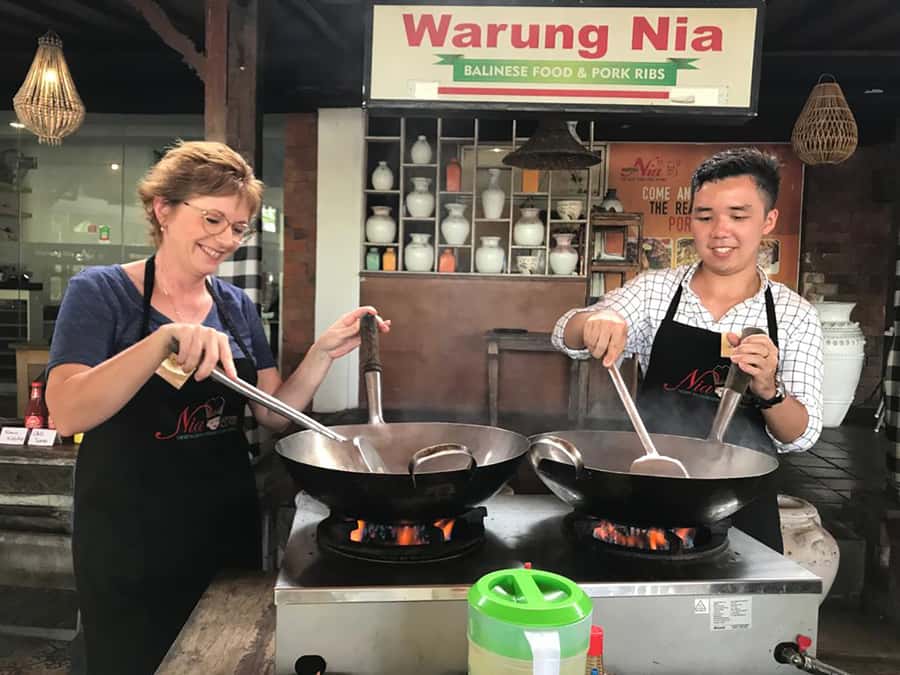
Ask the chef about substitutions while the recipe is still fresh in your mind. This is the best way to understand which ingredients are essential and which can be replaced at home.
Take mental notes during the market tour, especially when the chef explains the purpose of each spice. The recipe book gives you the framework, but the market helps you remember why the ingredients matter.
Wear shoes that can handle a little walking and clothing that is comfortable in a warm kitchen. Do not bring a suitcase or large day bag. If rain is in the forecast, bring suitable weather protection, since wet conditions can affect the market stop.
Do not eat a large breakfast. The final meal is generous, and you will want room to taste the dishes you prepared. If you cannot finish everything, ask whether the venue has a way to handle leftovers.
The certificate is a pleasant keepsake, but the practical prize is the recipe book. Some sessions have also produced a short video shared through WhatsApp, though that should be treated as an extra rather than a guaranteed part of every booking.
Should you book the Seminyak cooking class?
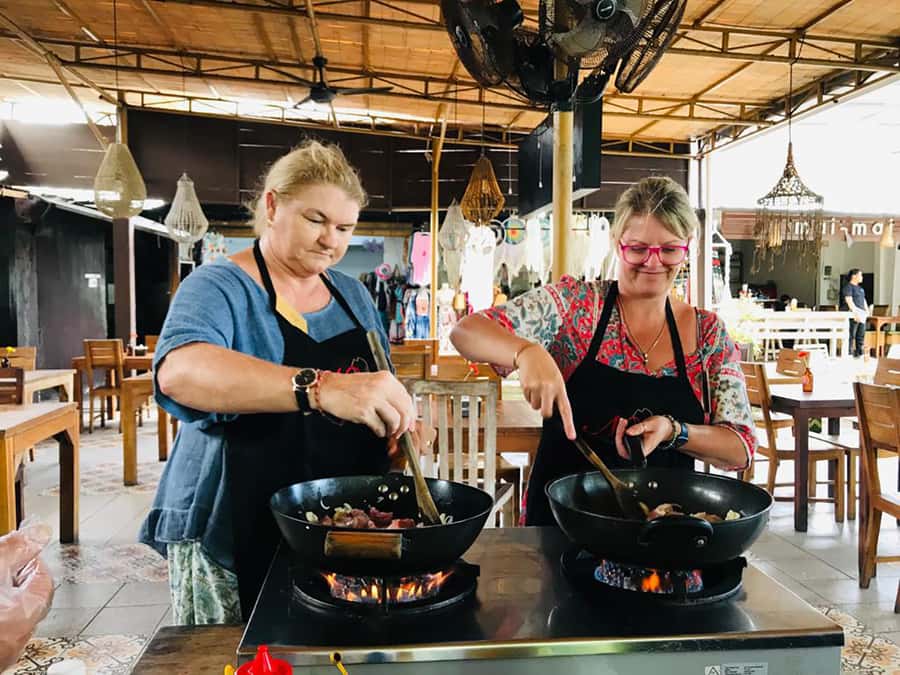
I would book this if you want a hands-on introduction to Balinese food with a market visit, an English-speaking chef, and a proper meal at the end. The combination is hard to beat for $45, especially with ingredients, pickup in the main resort areas, a recipe book, and a certificate included.
Book it with realistic expectations. The market tour is useful but may be short, transportation can feel crowded, and the group format favors energy and variety over a slow private lesson. Rain may also change the market portion.
For most visitors staying in Seminyak, Kuta, or Legian, this is a practical and enjoyable morning. You leave with a fuller understanding of Balinese flavors, a very full stomach, and recipes you can actually try at home.
FAQ
How long does the Seminyak Balinese cooking class last?
The activity lasts four hours, including the market tour, cooking lesson, and meal.
What time does hotel pickup begin?
Complimentary pickup from hotels in Seminyak, Legian, and Kuta is at 8:00 AM.
Where do I meet the group if my hotel is outside the pickup areas?
You meet at Warung Nia, Jl. Kayu Aya Square, No. 19-21, Jl. Kayu Aya, Seminyak.
Is the class taught in English?
Yes. The listed instructor language is English.
What is included in the $45 price?
The price includes hotel pickup in the listed areas, the market tour, cooking class, ingredients, morning tea, and a certificate. A recipe book is also provided as part of the experience.
Can I cancel the booking?
Yes. You can cancel up to 24 hours in advance for a full refund. You can also reserve now and pay later.
More Markets in Indonesia
- Bali Food Tour: Savor Street Food and Night Market Adventures
★ 5.0 · 46 reviews - Denpasar: Museum, Traditional Market and Food Tasting Tour
★ 4.9 · 33 reviews - Bali: Turtle Conservation and Education Tour & Local Market
★ 4.8 · 20 reviews - Ubud Day Tour : Waterfall, Temple and Local Night Market Tour
★ 5.0 · 17 reviews
More Cooking Classes in Indonesia
- Jambangan bali cooking class with morning market tour
★ 5.0 · 35 reviews - Bali: Balinese Cooking Class and Market Tour
★ 4.8 · 19 reviews - Balinese cooking class/Go shopping at the market, cook, eat
★ 5.0 · 12 reviews - Nusa Dua: Balinese Cooking Class with Market Tour
★ 5.0 · 4 reviews
Just added around Indonesia
- Nusa Dua: Balinese Cooking Class with Market Tour★ 5.0 · 4 reviews
- Bali: Balinese Cooking Class and Market Tour★ 4.8 · 19 reviews
- Jambangan bali cooking class with morning market tour★ 5.0 · 35 reviews
- Balinese cooking class/Go shopping at the market, cook, eat★ 5.0 · 12 reviews
- Bali: Safari Zoo and Ubud Palace and Market Day Tour★ 4.7 · 6 reviews
- Bali: Ubud Monkey Forest, Coffee Plantation, and Market Tour★ 5.0 · 5 reviews
- Bali: Turtle Conservation and Education Tour & Local Market★ 4.8 · 20 reviews
- Bali: Penglipuran Village, Waterfall, and Night Market Tour★ 4.2 · 4 reviews
Market Cooking Classes, compared.
Hanoi Cooking Class: Culture, Local Market & Meaning CSR Impact
Read our review →
5 Traditional Dishes Hanoi Cooking Class with Market Trip
Read our review →
Cooking Class and Lunch at a Tuscan Farmhouse with Local Market Tour from Florence
Read our review →
Cooking Class, Market & Thai Herbs Garden Tour
Read our review →
Authentic Cooking Class with Market & Farm Visit
Read our review →
Paella Cooking Experience & Boqueria Market Tour
Read our review →
Cooking Class Hoi An:Local Market, Basket Boat, Fishing & Cooking
Read our review →Browse the lists this tour appears in