
Review · TOKYO
Tokyo’s Kitchen: Tsukiji Market Food & Culture Walk
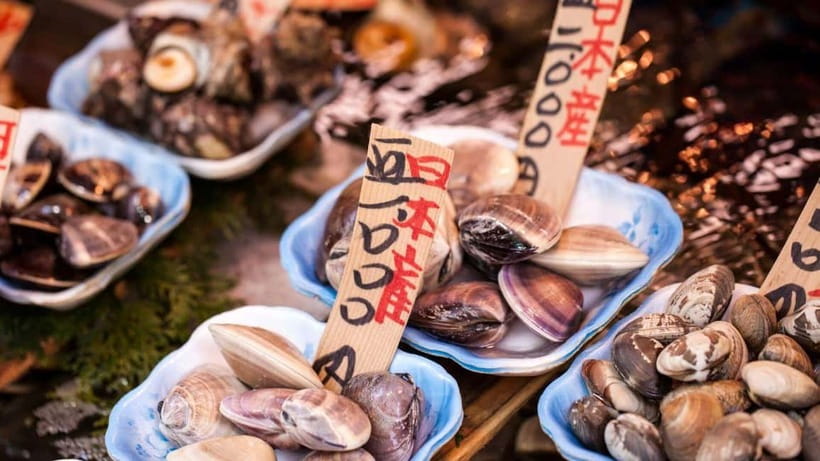
Tsukiji Outer Market is best understood with someone who knows which stall to stop at and how to make sense of the crowd. This three-hour walk pairs small-group access with sushi, tamagoyaki, sashimi, sweets, and other tastes, then connects the market to Buddhist and Shinto customs.
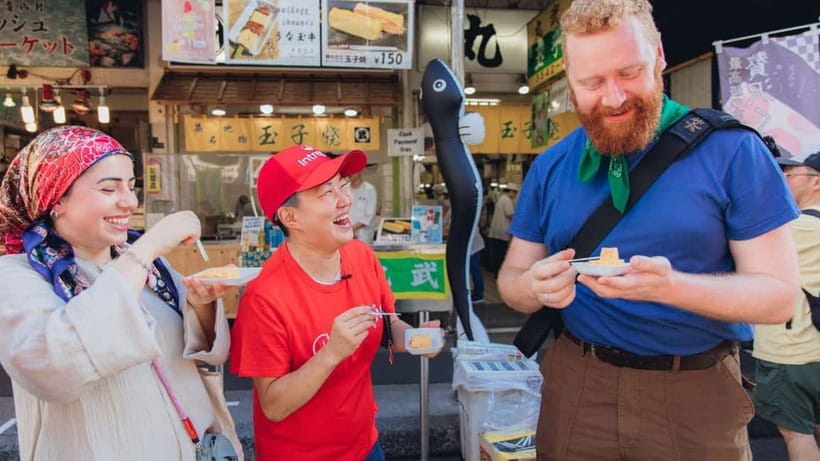
I like the personal scale, with no more than six people, and the way guides such as Oku, Mihori, Shino, and Mikki turn a food stop into a cultural lesson. I also like the vendor relationships: your guide may greet stall owners by name, making the market feel less like a display and more like a working neighborhood.
The main drawback is that this is a market tasting walk, not a tour of the wholesale operation. If you expect to see the old tuna auction or extensive back-of-house activity, you may find the experience more focused on food, stories, and public market life.
Key points at a glance
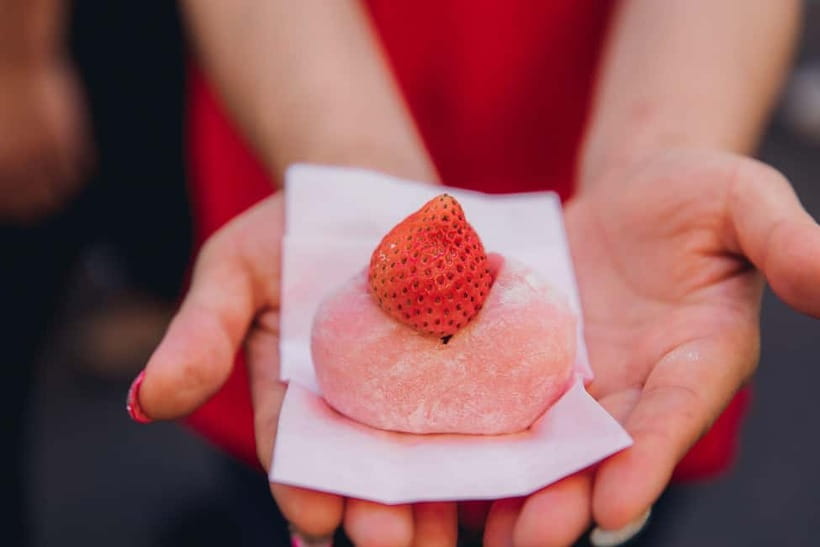
- Taste more than sushi: Expect small portions of sushi, sashimi, tamagoyaki, Japanese snacks, seasonal Wagashi, tea, and possibly sake.
- Six people maximum: A tiny group makes it easier to stay together and ask questions in narrow, crowded market lanes.
- Meet vendors through the guide: Local relationships help you order, understand unfamiliar foods, and see how items such as tamagoyaki or dashi are made.
- Visit two shrines: Kabuki Inari Shrine begins the route, while Namiyoke Inari Jinja adds a quieter look at the market’s spiritual roots.
- Come hungry, but not rushed: The tasting list can be generous, and the food arrives in small portions across the three-hour walk.
- Wear practical shoes: Market floors can be wet, so closed-toe shoes are the sensible choice.
Starting beneath Kabukiza Theatre
The meeting point is Higashi-ginza Station, Exit 3, at street level. Look for the top of the escalator, in front of the Kabukiza Theatre on the Harumi Street side, near the small shrine and torii gate.
This is a useful starting point because Kabukiza gives you a clear landmark in a busy part of Tokyo. Still, arrive with enough time to find the correct station exit. Higashi-ginza is served by both the Tokyo Metro Hibiya Line and the Toei Asakusa Line, and station corridors can be confusing if you are hurrying.
The tour begins at Kabuki Inari Shrine. It is a compact stop, but it sets the tone. You learn a few basic gestures of respect and begin to see how food, performance, work, and worship overlap in Japanese daily life.
Do not expect a long temple visit. This is a short cultural introduction before the market walk, useful for giving the rest of the morning some context.
More Fish Market Tours in Japan
- Tokyo Tsukiji Fish Market Food and Culture Walking Tour
★ 5.0 · 3,184 reviews - Tokyo: Tsukiji Fish Market Food and Walking tour
★ 5.0 · 1,724 reviews - Tokyo: Tsukiji Fish Market Guided Walking Tour
★ 4.9 · 1,397 reviews
Kabuki Inari Shrine and the meaning of ritual
At Kabuki Inari Shrine, your guide explains simple Japanese customs connected with a shrine visit. You will learn how people show respect and why small neighborhood shrines matter even in the middle of a dense city.
The stop is especially useful if this is your first morning in Tokyo. Rather than treating a shrine as a quick photo stop, the guide gives you a few practical details that help you behave comfortably at other shrines during your trip.
The Buddhist and Shinto connections continue through the food discussion. You hear how ideas about respect, purity, gratitude, and seasonal change shape market traditions. This does not turn the tour into a religion lecture. The explanations are tied to things you can see and eat.
Entering Tsukiji Outer Market
From the shrine, the walk moves into Tsukiji Outer Market. The old wholesale tuna auction moved to Toyosu, but Tsukiji remains a major food district with seafood shops, prepared foods, kitchen goods, sweets, and small specialty businesses.
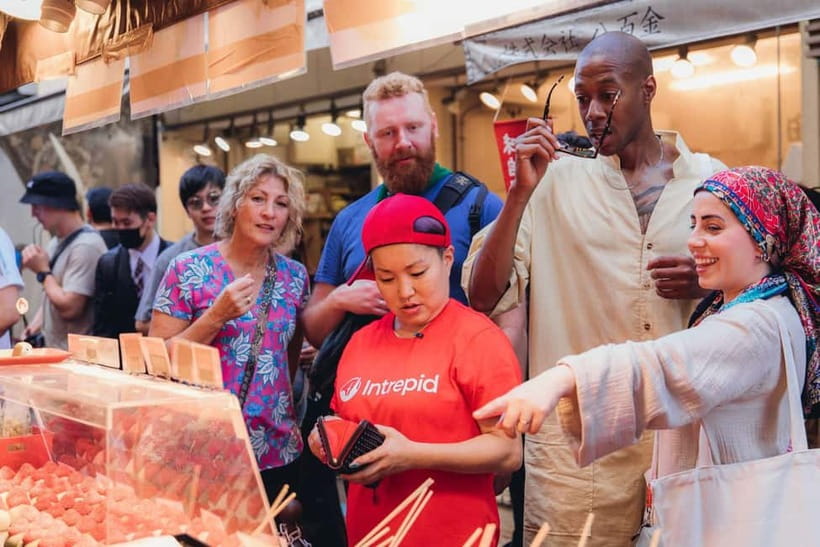
The market can feel like a lot at once. Stalls press close together, shoppers stop without warning, and food is prepared in front of you. That is where the six-person limit matters. A guide can keep the group together without blocking the narrow lanes, while also translating signs and explaining what you are seeing.
Your guide leads you through a sequence of tastings rather than sending you off to choose blindly. Depending on the day and the group, you might try fresh sushi, sashimi, tamagoyaki, Kobe beef, soybeans, matcha, dashi, strawberries, mochi, and other Japanese snacks.
The portions are generally small, which is exactly right for this setting. You can try a wide range of foods without committing to a full meal at every stall. Still, several food stops add up quickly. The best advice from the experience is simple: skip breakfast or eat very lightly.
Sushi, tamagoyaki, and the market’s daily craft
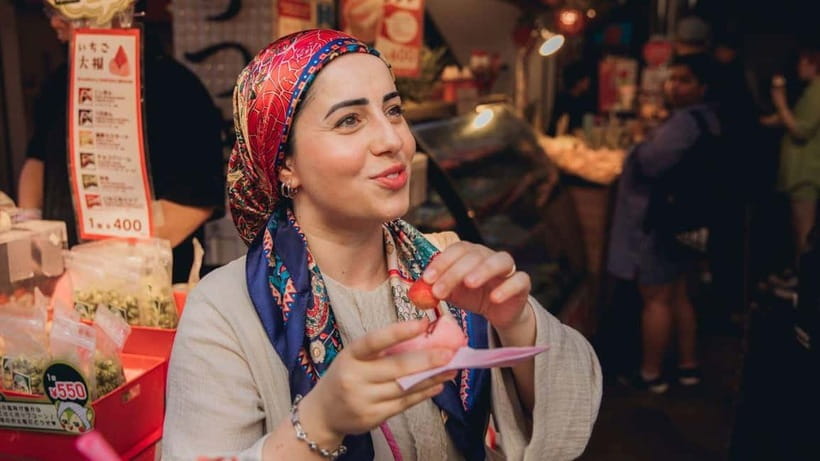
The food is not presented as a string of random samples. Your guide explains how each item fits into Japanese cooking and market life.
Sushi is used as a starting point for discussing the development of the dish and the way market access shaped Tokyo’s food culture. You also learn about ingredients and preparation, rather than only hearing which pieces taste good.
Tamagoyaki is one of the most interesting stops because it gives you a look at a familiar Japanese food being made. The sweet rolled omelet is easy to recognize, but seeing how a vendor prepares it helps explain why market food is tied to skill and repetition.
Other tastings may include dashi, the savory stock used in many Japanese dishes, as well as matcha, soybeans, seasonal fruit, and prepared snacks. Your guide may use photos, maps, or models to explain the market and its foods. That extra visual help is useful when a short English explanation cannot show the whole process.
One guide, Oku, was especially noted for moving between history, present-day customs, and market details while keeping the mood light. That mix is valuable here. A dry lecture would get lost in the noise, while jokes without substance would leave you with little to remember.
More Fish Market Tours in Tokyo
- Tokyo Sushi Making Class in Tsukiji with Professional Chef
★ 5.0 · 1,177 reviews - Tsukiji Fish Market Guided Tour and Sushi Making with Pro Chef
★ 5.0 · 775 reviews - Tokyo: Tsukiji Fish Market Food and Culture Walking Tour
★ 4.7 · 757 reviews - Tsukiji Fish Market: Street Food & Culture Walking Tour
★ 5.0 · 669 reviews
Vendor connections make the difference
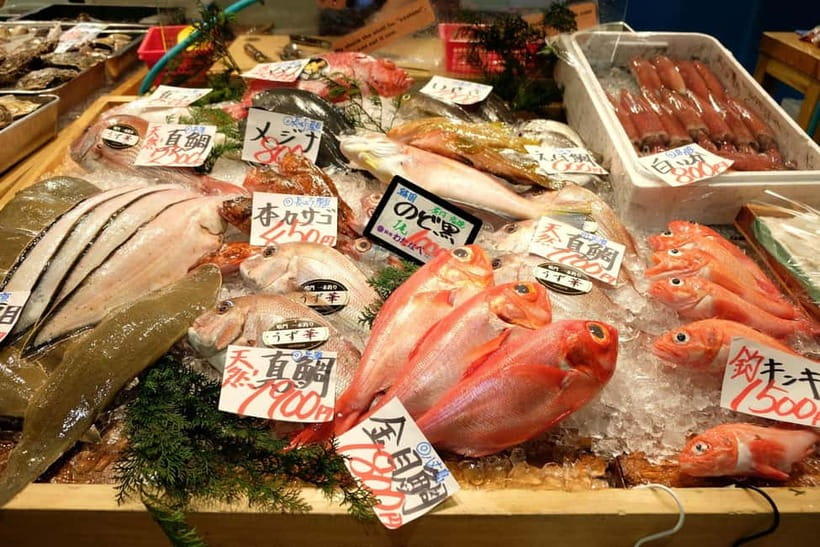
The strongest part of this experience is the guide’s relationship with the people working in the market. When a vendor recognizes your guide, the exchange becomes warmer and more relaxed. You are not simply walking up to a stall, pointing at something, and hoping for the best.
That connection also helps with unfamiliar foods. Your guide can explain what you are trying, how it is normally eaten, and what to notice. You can ask questions without feeling that you are holding up a line or offending a vendor.
This is where the tour earns much of its $80 price. You could walk through Tsukiji on your own for free and buy food as you go. But you would likely miss the stories, order less confidently, and spend time guessing which stalls are worth your attention.
The value depends on how much guidance you want. If you enjoy wandering independently and already know Japanese food, the price may feel high. If you want an easy introduction with several tastings and translation, the small group and local connections make the cost more reasonable.
Seasonal Wagashi and the sweet side of Tsukiji
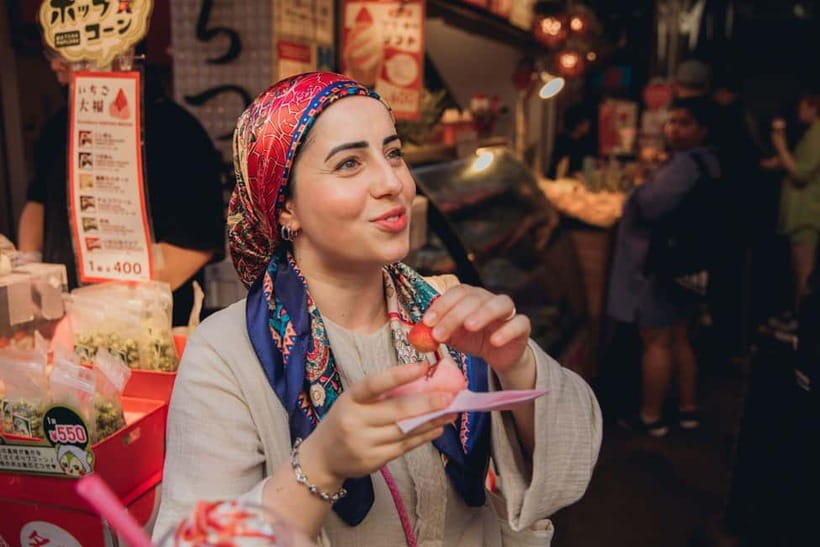
The tour is not only about raw fish. Seasonal Wagashi sweets show a different side of Japanese food culture, with attention to shape, texture, color, and the time of year.
You may also sample mochi, green tea, or other sweets and drinks. These stops give your palate a break from seafood and let your guide explain how Japanese snacks can carry seasonal meaning.
The exact selection can change. This is a working market, not a fixed restaurant menu, so you should think of the tasting list as flexible. That is part of the charm, but it also means you should not book expecting one precise set of dishes.
Vegetarian and vegan options are available, although choices may be limited because seafood is central to the market. Tell the operator about dietary restrictions ahead of time. The guide can plan where possible, but this is not the best tour for someone who needs a wide range of guaranteed alternatives.
Namiyoke Inari Jinja and the market’s spiritual roots
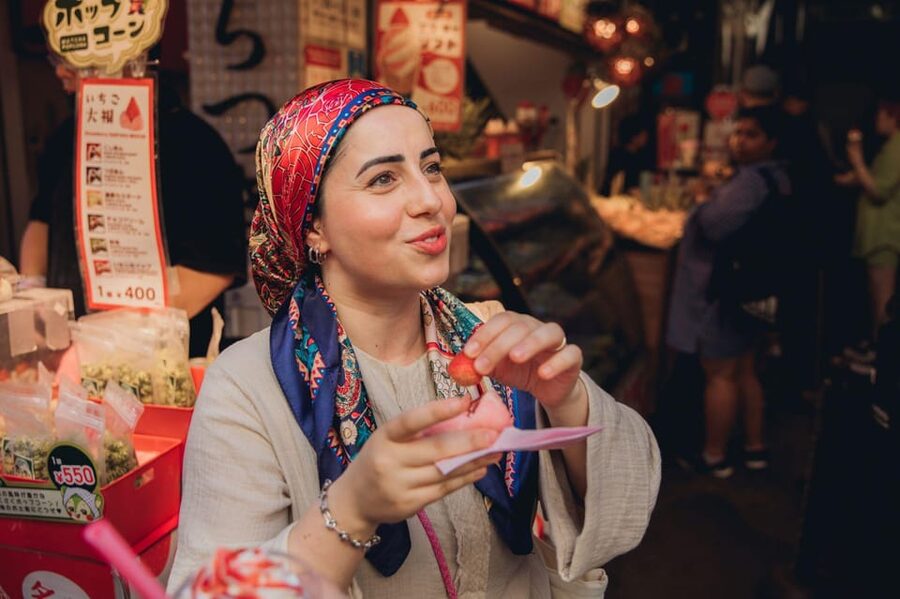
The route continues to Namiyoke Inari Jinja, a small shrine near the market. This visit ties the food stops back to the cultural themes introduced at Kabuki Inari Shrine.
Your guide explains the simple rituals used to show respect and the relationship between the shrine and the market community. The stop offers a quieter pause after the crowded food lanes.
It also helps explain why the market feels like more than a collection of shops. Work, food, community, seasonal customs, and religious practice sit close together here. You do not need prior knowledge of Shinto or Buddhism to follow the discussion.
The shrine visit is brief, so anyone hoping for a long spiritual retreat should adjust expectations. Its value comes from the connection it creates between the market and the wider culture of Tokyo.
The final sushi and sake tasting
The tour finishes at Tsukiji Fish Market with more food, often including fresh sushi or sashimi. Depending on the group and the day, the final tasting may include sake, and one guide even had participants grind their own wasabi.
That final stop can feel like a small meal after the earlier samples. It is one reason not to eat breakfast beforehand. Sake is available only to people aged 20 or older under Japanese law. Younger participants receive non-alcoholic alternatives.
The alcohol is not the main reason to book. The useful part is the chance to taste carefully selected foods after you have learned what to look for. By this point, the difference between a quick snack and a carefully prepared market item is easier to appreciate.
The tour ends at the fish market rather than returning to Higashi-ginza. This is convenient if you want to keep exploring Tsukiji, shop for food items, or find your own lunch nearby. Plan your next activity with the market finish in mind.
Timing, weather, and comfort
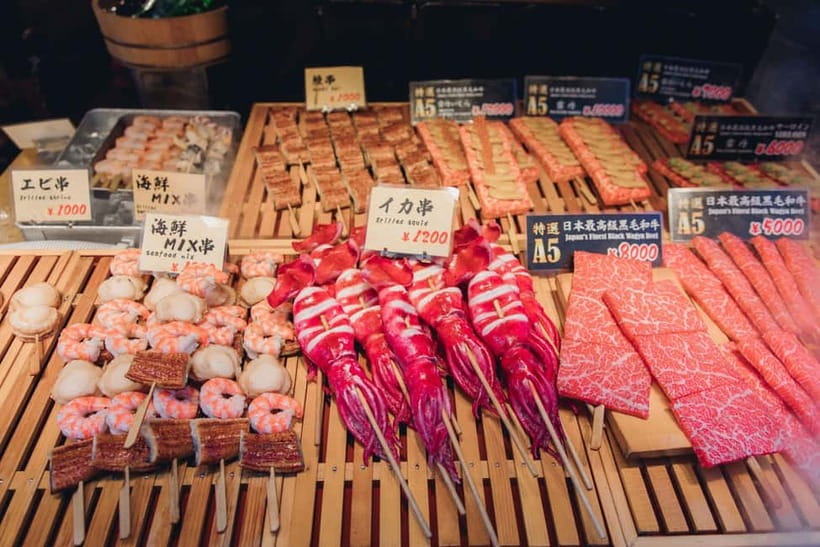
The experience lasts three hours and takes place in the morning, when the market is active and the food selection is appealing. Starting early also helps you see Tsukiji before the day becomes even more crowded.
Market floors can be wet. Closed-toe shoes, especially comfortable sneakers, are a practical requirement rather than a fashion suggestion. Rain and wind can make the walk less pleasant, so pack a light layer and weather protection.
One important point is that the market is not a quiet museum. You will be on your feet, moving through busy lanes, waiting at some food stalls, and sharing space with shoppers and workers. The guide works to keep the group together, but you should stay alert and follow instructions.
The format suits older children and adults who enjoy tasting unfamiliar foods. Children aged five and under can join free, but tell the operator when booking so the group can be planned properly.
Who gets the most from this walk?
I would choose this tour for a first or second morning in Tokyo, especially if you want food to serve as your introduction to the city. It gives you practical market confidence for the rest of your trip.
It is also a good fit if you enjoy trying many small bites rather than sitting down to one formal meal. You get sushi, snacks, sweets, drinks, and cultural explanation in one compact outing.
The tour is less suitable if you want to watch the old wholesale auction, visit the Toyosu market, or spend most of the time shopping independently. It is also not ideal for strict dietary needs unless you confirm options in advance.
The English-speaking guide is a major part of the experience. Past guides have included Mikki, Oku, Mihori, Shino, Shinto, Yumi, Kyou, and Kimi. Their personalities differ, but the best guides combine food knowledge, humor, vendor respect, and a willingness to answer questions.
The activity is carbon neutral and operated by a certified B Corp. That will not change what you eat or see, but it may matter if you prefer a tour designed to support local people and reduce its environmental impact.
Is the $80 price fair?
At $80 per person, this is not a cheap way to grab breakfast. You are paying for several tastings, a live guide, translation, cultural explanation, and the convenience of a very small group.
The price makes the most sense if you would otherwise spend time and money trying to choose among dozens of stalls. A guide can help you taste more confidently and avoid wasting a morning on choices that do not suit you.
The value is weaker if you are comfortable navigating Japanese markets alone or want a large meal. Additional food and drinks are not included, so keep a little extra money available if you want to continue eating after the tour.
Should you book Tokyo’s Kitchen?
Book it if you want a friendly, food-centered introduction to Tsukiji with real cultural context. The best reasons are the six-person limit, the wide range of tastings, and the guide’s relationships with vendors.
Go in hungry, wear closed-toe shoes, and expect a public market rather than a behind-the-scenes wholesale tour. If sushi, local snacks, shrine customs, and seasonal sweets sound like a good first morning in Tokyo, this is a strong choice. If your priority is the tuna auction or a quiet, highly structured meal, choose another experience.
FAQ
Where does the tour meet?
Meet at Higashi-ginza Station, Exit 3, at street level. The meeting point is in front of Kabukiza Theatre on the Harumi Street side, near the small shrine and torii gate at the top of the escalator.
Where does the tour finish?
The walk finishes at Tsukiji Fish Market.
How long does the experience last?
The tour lasts three hours. Starting times vary, so check availability when booking.
What food and drinks are included?
Included tastings may feature fresh sushi, sashimi, Japanese snacks, tamagoyaki, seasonal Wagashi, tea, and other market foods. Sake may be offered to participants aged 20 or older. Additional food and drinks are not included.
Can children join the tour?
Children aged five and under join free. Tell the operator when booking if you are bringing a child under six.
Are vegetarian and vegan options available?
Vegetarian and vegan choices are available where possible, but options may be limited because seafood is central to Tsukiji Market. Share dietary restrictions ahead of time.
What should I wear?
Wear closed-toe shoes such as sneakers because the market floors can be wet. Comfortable clothing and protection from rain or wind are also sensible for this walking tour.
More Food in Tokyo
- Tsukiji Food and Toyosu Market with Government-Licensed Guide
★ 5.0 · 158 reviews - Toyosu Market Morning Tuna Auction and Tsukiji Food Tour with Licensed Guide
★ 4.5 · 146 reviews - Tokyo Tsukiji Fish Market Food Tour: 15 Stops & Walk Local Street
★ 5.0 · 139 reviews - Tsukiji Fish Market Private Food Tour in Tokyo
★ 5.0 · 18 reviews
More Food and Drink Tours in Tokyo
- Tsukiji Fish Market Small-Group Food Walking Tour
★ 5.0 · 621 reviews - Tokyo Food Tour Taste Fresh Delights at Tsukiji Market
★ 5.0 · 429 reviews - Tsukiji Fish Market: Street Food & Culture Walking Tour
★ 4.8 · 259 reviews - Inside Tokyo’s Kitchen: Tsukiji Market, Food & Culture Tour
★ 5.0 · 162 reviews
Just added around Tokyo
- Tokyo: Private Tsukiji Street Food & Sake with Local Guide★ 5.0 · 3 reviews
- Tokyo: Tsukiji Market Guided Tour & Sushi-Making Experience★ 4.4 · 11 reviews
- Tokyo: Tsukiji Market and Hama-rikyu Gardens Guided Tour★ 4.8 · 73 reviews
- Tokyo : Tsukiji Fish Market Food Walking & Shrine Visit Tour★ 5.0 · 3 reviews
- Tokyo: Tsukiji Fish Market Culture Tour with Sashimi Tasting★ 4.6 · 54 reviews
- Tokyo: Tsukiji Fish Market Foodie and Educational Tour★ 5.0 · 4 reviews
- Tokyo: Guided Walking Tour of Tsukiji Market with Lunch★ 4.4 · 24 reviews
- Tokyo Morning Tour: Meiji Shrine, Asakusa & Fish Market★ 4.9 · 44 reviews
Fish Market Tours, compared.
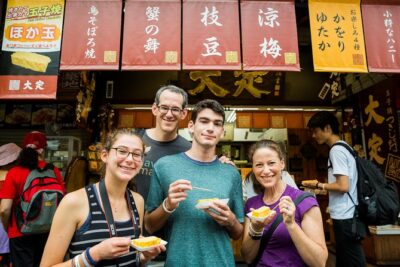
Tokyo Tsukiji Fish Market Food and Culture Walking Tour
Read our review →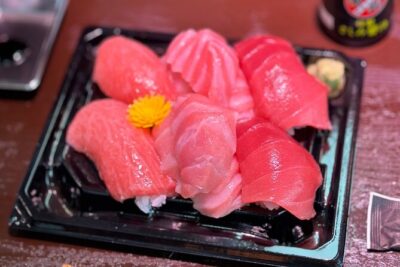
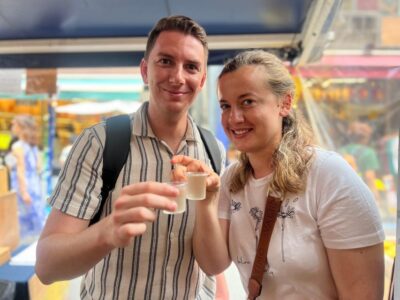

Tokyo Sushi Making Class in Tsukiji with Professional Chef
Read our review →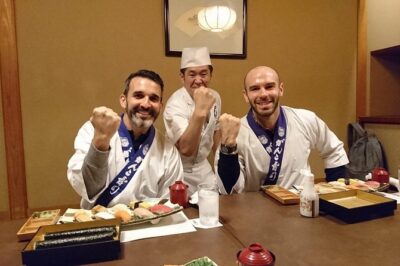
Tsukiji Fish Market Guided Tour and Sushi Making with Pro Chef
Read our review →Tsukiji Fish Market Food and Culture Walking Tour
Read our review →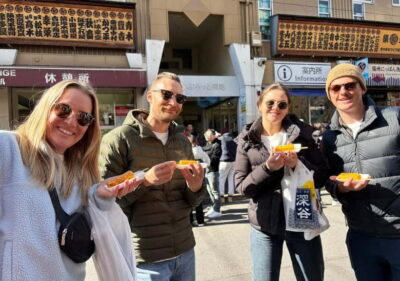
Tsukiji Fish Market: Street Food & Culture Walking Tour
Read our review →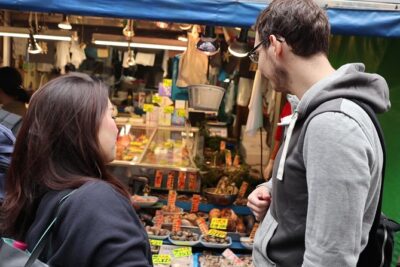
Tsukiji Fish Market Small-Group Food Walking Tour
Read our review →Browse the lists this tour appears in