
Review · OSAKA
Osaka: Food Tour Kuromon Market & Dotonbori with Guide
Osaka’s food culture makes the most sense one bite at a time, and this tour takes you from Kuromon Market to the neon streets of Dotonbori. You’ll try takoyaki, dango, okonomiyaki, kushikatsu, and a custard tart while your guide points out the city’s famous food and entertainment districts.
I like the clear food trail, especially the stop at Wanaka for takoyaki and the visit to Hozenji for a taste of old Osaka streets. I also like having a bilingual English and Spanish guide, with guides such as Paula and Angeles praised for their warmth and strong knowledge of local sights.
The main caution is that this is a guided tasting walk, not a full sit-down dinner, and one booking had a serious meeting problem when the guide did not arrive for more than 30 minutes. You should also know that the tour is not suitable for wheelchair users.
Key points at a glance
- Kuromon Market takoyaki: Taste Osaka’s best-known street food at Wanaka, with a crisp outside and soft center.
- Three-colour dango: Stop at Mitoya for chewy rice flour dumplings in a colorful skewer.
- Hozenji food stops: Try okonomiyaki and kushikatsu at Kushikatsu Yokozuna near Gigo.
- Dotonbori after dark: Walk beneath the district’s giant signs and neon displays.
- Glico sign photo: Finish the sightseeing portion at Ebisu Bridge, Osaka’s classic snapshot spot.
- English and Spanish support: The tour is designed for both languages and begins and ends outside Hotel Royal Classic Osaka.
Why this Osaka food walk works
This experience brings together three sides of Osaka in one outing. You get the market atmosphere of Kuromon, the old lanes around Hozenji, and the bright entertainment center of Dotonbori. That mix gives you more context than a simple restaurant crawl.
I especially like the way the route pairs food with place. Takoyaki tastes different when you know it is one of Osaka’s signature street foods. Kushikatsu makes more sense when you are eating it near the traditional entertainment streets of Namba. The Glico sign then provides a visual finish that ties the whole Osaka experience together.
The food is served as tastings, so you should not expect a large meal at every stop. That is useful if you want to sample several specialties without committing to one restaurant, but you may still want to arrange another meal before or after the tour.
The advertised price is $84 per person. That is fair if you value help choosing food, translation, local neighborhood context, and a planned route through several busy areas. It is less attractive if you already know Osaka well, speak Japanese comfortably, and would rather order individual portions on your own.
More Street Food Market Tours in Japan
- Tsukiji Fish Market: Street Food & Culture Walking Tour
★ 5.0 · 669 reviews - Tokyo Food Tour Taste Fresh Delights at Tsukiji Market
★ 5.0 · 429 reviews - Tsukiji Fish Market: Street Food & Culture Walking Tour
★ 4.8 · 259 reviews
Meeting your guide outside Hotel Royal Classic Osaka
The tour begins outside Hotel Royal Classic Osaka. Look for a guide holding an Amigo Tours sign, and arrive at least 10 minutes before departure for check-in. The activity returns to the same meeting point, which makes the start and finish easy to plan.
Because the route includes food stalls, market lanes, and crowded entertainment streets, comfortable shoes are essential. Bring a camera for the market displays and the Glico sign, along with sunscreen and sunglasses in warm weather.
Weather matters here. An umbrella or raincoat is useful, and you should dress for the season. In cold weather, bring warm clothing and consider extra socks and shoes in case snow or wet conditions make your footwear uncomfortable.
The language choice is English or Spanish. This is a useful feature for couples, families, and small groups who want to ask food questions without depending on translation apps. Paula received especially strong praise for explaining local attractions as the group walked, while Angeles was also singled out for being an excellent guide.
One practical point deserves attention: guide coordination is important on a walking tour. A reported no-show left six people waiting for more than 30 minutes. That appears to be an isolated but significant failure, so save the meeting instructions and arrive early enough to confirm you are at the correct hotel entrance.
Kuromon Market and the first taste of Osaka
Kuromon Market is the natural place to begin a food-focused look at Osaka. The market is filled with fresh ingredients and local specialties, giving you a sense of how food is presented and sold before you even take your first bite.
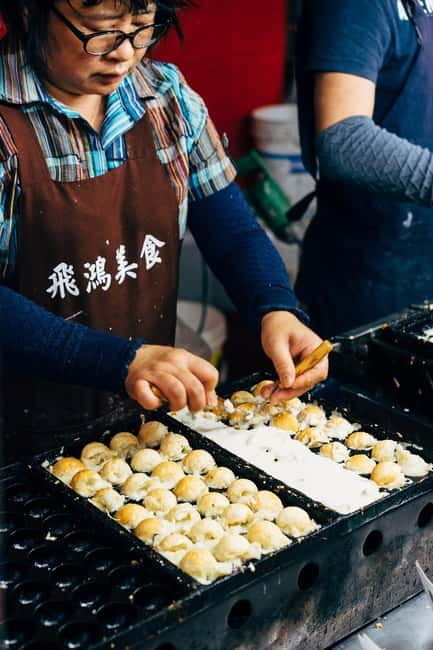
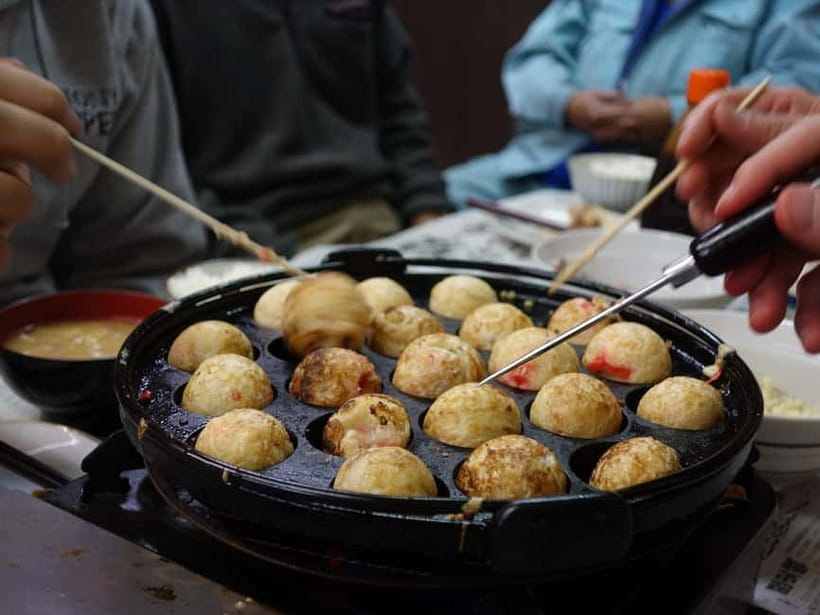
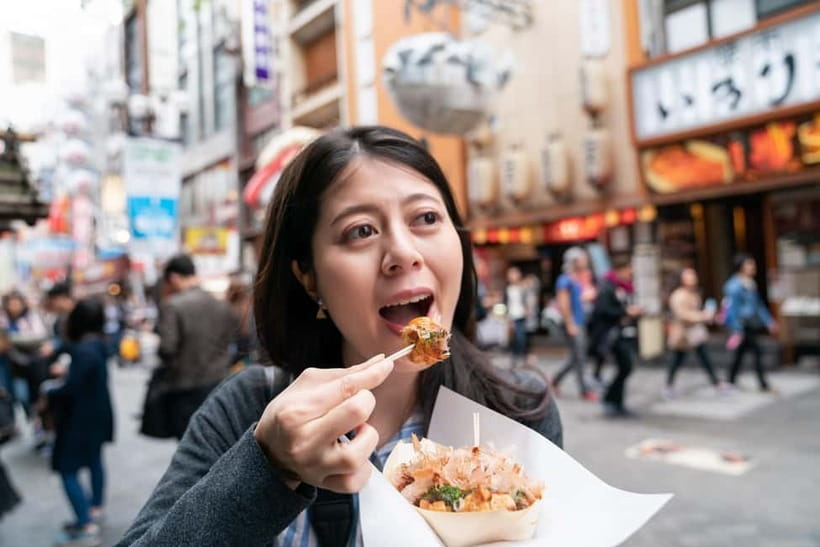
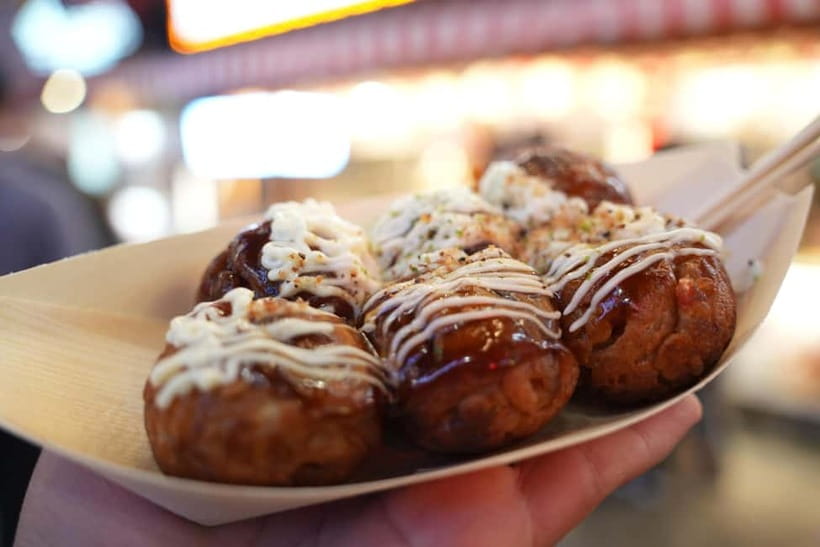
The first named food stop is Wanaka, where you try takoyaki. These round batter snacks are cooked with a piece of octopus inside and are known for a browned exterior with a soft, creamy center. They are served hot, so take care with the first bite.
This is a useful stop for first-time visitors because takoyaki is closely linked with Osaka’s food identity. The guide can also help you understand what you are eating and how it fits into the city’s everyday food culture.
Do not expect the market to feel like a quiet museum. You are walking through a working food district, with displays, shops, and people moving around you. That is part of the appeal, but it can also make the walk less comfortable for anyone who dislikes crowds or needs wide, level paths.
The market visit gives you more than a snack. It shows you the range of ingredients and specialties that make Osaka a food center. Still, the tour does not include every market stall, so you should treat this as a guided introduction rather than free time for extended shopping.
Mitoya’s three-colour dango
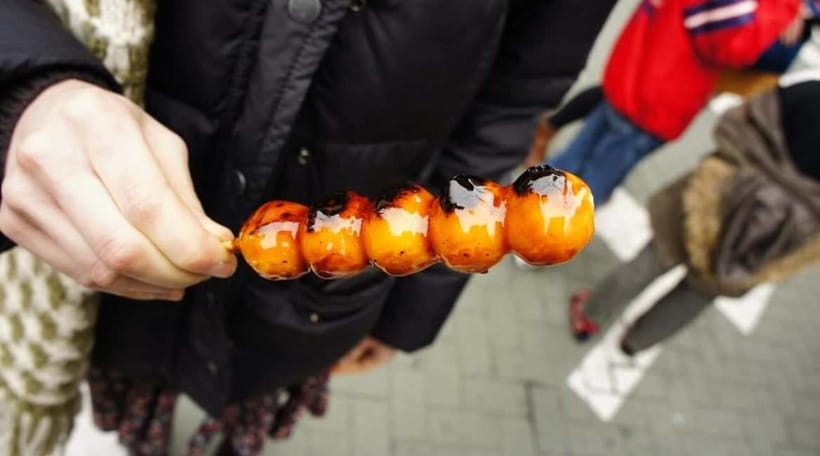
At Mitoya, the group stops for three-colour dango. These are chewy dumplings made from rice flour and served on a skewer. Their bright colors make them an easy food photograph, but the texture is the real point: soft, springy, and pleasantly chewy.
Dango offers a useful contrast to takoyaki. Instead of a savory snack with a hot center, you get a simple traditional sweet with a more delicate texture. It also keeps the food route from becoming a parade of fried or heavily seasoned dishes.
This stop may appeal most to anyone who wants to try familiar Japanese treats beyond sushi and ramen. Since the tour includes tastings rather than a full menu at each stop, the dango gives you another small portion without making the entire walk feel like one long heavy meal.
Same stalls, a different way to shop and eat:
- Tokyo Tsukiji Fish Market Food and Culture Walking Tour
★ 5.0 · 3,184 reviews - Tokyo: Tsukiji Fish Market Food and Walking tour
★ 5.0 · 1,724 reviews - Tokyo: Tsukiji Fish Market Guided Walking Tour
★ 4.9 · 1,397 reviews - Nishiki Market Brunch Walking Tour (7 Tastings + Brunch)
★ 5.0 · 1,355 reviews
Hozenji and two Osaka staples
The route continues through the Hozenji area, where the atmosphere shifts from market shopping to older streets and small food businesses. This section helps break up the larger city sights with a more intimate neighborhood setting.
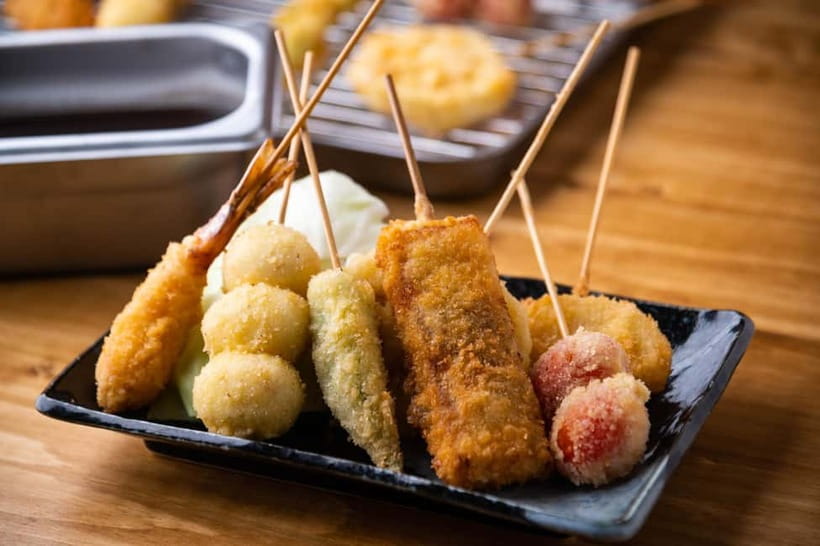
At Kushikatsu Yokozuna, near Gigo, you try two major Osaka specialties: okonomiyaki and kushikatsu. Okonomiyaki is a savory pancake packed with flavor. Its name is often explained as meaning something like cooked as you like, and the dish is associated with Osaka’s casual dining culture.
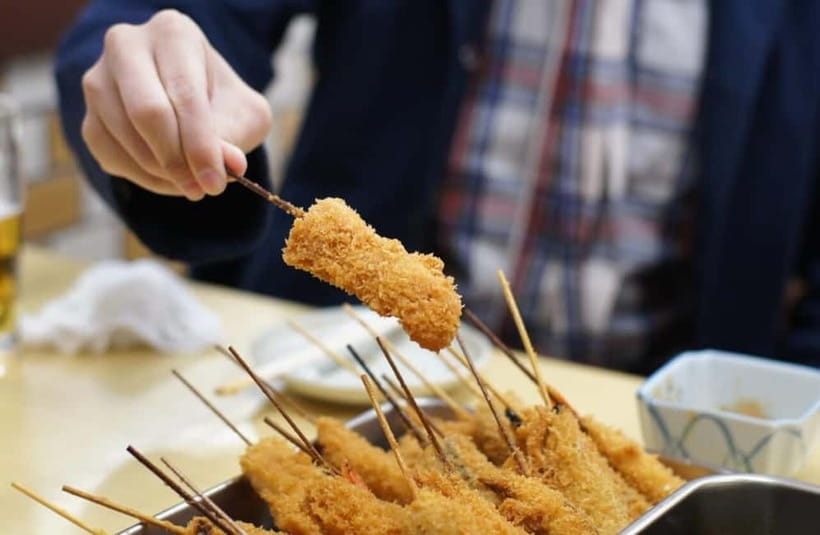
Kushikatsu consists of ingredients placed on skewers, coated, and deep-fried. It is traditionally served with a dipping sauce, and the crisp coating makes it a clear contrast to the soft takoyaki and chewy dango.
The combination works well for a food introduction. You get one dish that is soft and savory, then another that is crisp and fried. That variety is one reason the tour has good value for people who want a broad taste of Osaka in a single outing.
There is also a limit. The information provided does not specify the exact ingredients in each okonomiyaki or skewer tasting, so anyone with allergies or strict dietary needs should ask the guide and food vendors before eating. Additional food and drinks beyond the listed tastings are not included.
Egg Tart for a sweet finish
The dessert stop is Egg Tart, a shop known for custard tarts with flaky pastry and a creamy filling. After several savory foods, this is a sensible finish and gives the route a clear final bite before the sightseeing portion.
A custard tart is also a good choice for a mixed group because it is familiar in format, yet different from the Japanese sweets earlier in the tour. The pastry adds crunch, while the filling provides a smooth, rich finish.
Keep your expectations in check about quantity. The tour promises a tasting, not a dessert course with several choices. If you have a strong sweet tooth, you may want to budget for an extra purchase, which would be a personal expense.
Dotonbori’s neon streets and Ebisu Bridge
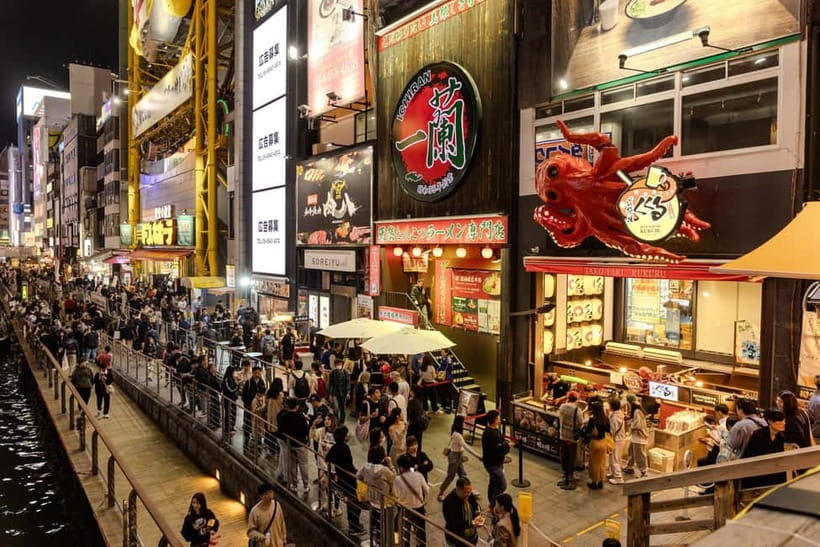
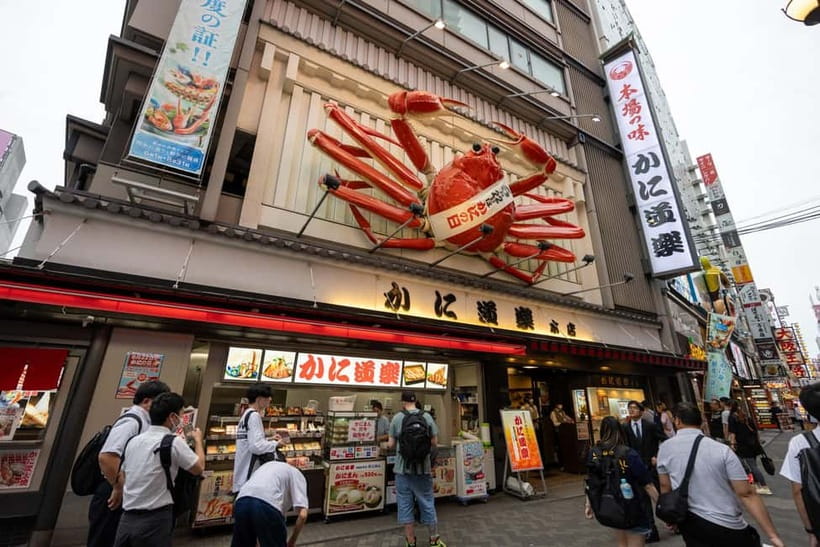
After the food stops, the route heads into Dotonbori. This is Osaka at its most theatrical, with bright billboards, glowing signs, entertainment venues, and a steady stream of people. The area is designed to catch your eye, so this is the part of the tour where you will want your camera ready.
Dotonbori is worth seeing even if you are not interested in shopping or nightlife. The signs and street frontage create one of Osaka’s most recognizable city scenes, and a guide can help you understand how the district connects with the food-focused areas nearby.
The walk ends its sightseeing portion at Ebisu Bridge. This is the classic location for a photo with the Glico sign, showing a running athlete with arms raised. It is a simple tourist snapshot, but it is also one of the city’s most familiar visual symbols.
I like that the photo stop is built into the route instead of left to chance. Many people want the picture but are not sure where to stand or how to fit the sign into the frame. The bridge can be busy, so be ready for a quick photo rather than a peaceful view.
After Ebisu Bridge, the tour returns to Hotel Royal Classic Osaka. The return to the starting point is helpful if you are still learning Osaka’s layout or want a straightforward end to the evening.
What the $84 price really buys you
At $84, the tour is priced above the cost of buying one or two street-food snacks yourself. The value comes from the combination of several tastings, a planned walking route, bilingual support, and an introduction to areas that can feel confusing on a first visit.
You are also paying for decision-making. Kuromon Market and Dotonbori offer plenty of choices, but more choice is not always helpful when you are hungry, short on time, or unsure what is worth ordering. A guide gives you a starting point and keeps the route moving.
The price makes less sense for a food expert who wants long meals, large portions, or freedom to choose every dish. The tour has a set sequence, and extra meals or drinks are not included. Think of it as a guided sampler with city sightseeing, not an all-you-can-eat experience.
The strongest value is for a first visit to Osaka. You can taste the city’s signature foods, see Kuromon and Hozenji, walk through Dotonbori, and leave with a landmark photograph. That is a lot of orientation in one planned activity.
Who should book this experience
I would recommend this tour to first-time Osaka visitors who want an easy introduction to local food and neighborhoods. It suits people who prefer to have a guide explain what they are eating, where they are walking, and which sights matter.
It is also a good choice for English- or Spanish-speaking groups. The guide can make the food stops easier to understand, and the walking route includes both food and sightseeing rather than focusing on restaurants alone.
Families with older children may enjoy the range of textures and colors, though parents should consider the walking, crowds, hot food, and fried dishes. Comfortable footwear matters for everyone.
I would hesitate to recommend it to wheelchair users because the activity is specifically listed as unsuitable for wheelchair users. It may also disappoint anyone looking for a quiet, highly traditional food experience led by a Japanese local. One piece of feedback raised that concern, noting that a non-Japanese guide may offer good English and Spanish but not the same depth of personal connection to Japanese cuisine.
That does not make the tour ineffective. Guides such as Paula and Angeles were praised for their energy and explanations. It simply means you should choose based on your priority: easy communication and a friendly route, or a specialist local food guide with deeper culinary background.
Should you book the Osaka food tour?
Book it if you want a guided sampler of Osaka’s classic foods with Kuromon Market, Hozenji, Dotonbori, and the Glico sign included. The best parts are the range of tastings, the simple route, and the help you get ordering and moving through busy neighborhoods.
Skip it if you want a large dinner, complete freedom, or a Japanese-led culinary lesson focused on detailed food history. Also plan carefully if you have mobility limits, allergies, or strong dietary restrictions.
For most first-time visitors who want an efficient introduction to Osaka’s food streets, $84 is a reasonable price. Arrive early, wear shoes made for walking, bring weather protection, and treat the included food as a sampler rather than your only meal.
FAQ
Where does the Osaka food tour start?
The tour starts outside Hotel Royal Classic Osaka. The guide will be holding an Amigo Tours sign.
Where does the activity end?
The tour ends back at the meeting point outside Hotel Royal Classic Osaka.
How early should I arrive?
You should arrive at least 10 minutes before the departure time for check-in.
Which languages are available?
The tour is available in English and Spanish.
What foods are included?
The tastings include takoyaki at Wanaka, three-colour dango at Mitoya, okonomiyaki and kushikatsu at Kushikatsu Yokozuna, and a custard tart at Egg Tart.
Is the tour suitable for wheelchair users?
No. The activity is not suitable for wheelchair users.
Can I cancel for a full refund?
Yes. You can cancel up to 24 hours in advance for a full refund.
More Food in Japan
- Osaka: Kuromon Market Food Walking Tour (6 stops, 6 tastes)
★ 4.6 · 272 reviews - Inside Tokyo’s Kitchen: Tsukiji Market, Food & Culture Tour
★ 5.0 · 162 reviews - Tsukiji Food and Toyosu Market with Government-Licensed Guide
★ 5.0 · 158 reviews - Toyosu Market Morning Tuna Auction and Tsukiji Food Tour with Licensed Guide
★ 4.5 · 146 reviews
More Food and Drink Tours in Japan
- Tokyo: Tsukiji Fish Market Food and Culture Walking Tour
★ 4.7 · 757 reviews - Tsukiji Fish Market Small-Group Food Walking Tour
★ 5.0 · 621 reviews - Kuromon Market Food Walking Tour in Osaka (6 stops, 6 tastes)
★ 5.0 · 550 reviews - Kyoto Nishiki Market Food and Culture Walking Tour
★ 5.0 · 412 reviews
Just added around Japan
- Nagoya Super Market Tour & Home Cooking Class with a Local, Akiko★ 5.0 · 10 reviews
- Tokyo: Private Tsukiji Street Food & Sake with Local Guide★ 5.0 · 3 reviews
- Tokyo: Tsukiji Market Guided Tour & Sushi-Making Experience★ 4.4 · 11 reviews
- Tokyo: Tsukiji Market and Hama-rikyu Gardens Guided Tour★ 4.8 · 73 reviews
- Tokyo : Tsukiji Fish Market Food Walking & Shrine Visit Tour★ 5.0 · 3 reviews
- Tokyo: Tsukiji Fish Market Culture Tour with Sashimi Tasting★ 4.6 · 54 reviews
- Tokyo: Tsukiji Fish Market Foodie and Educational Tour★ 5.0 · 4 reviews
- 【Family pack】Tokyo: Tsukiji fish market food tour★ 5.0 · 3 reviews
Street Food Market Tours, compared.

Old Town, Creek, Museums, Souks, & Street Food Tour
Read our review →
Old Town, Souks, Street Food, Guided Tour & Abra Ride
Read our review →
London Bridge & Borough Market Food Tour with 7 Authentic Dishes
Read our review →
Old Town, Souks, Street Food, Guided Tour & Abra Ride
Read our review →
Small Group Cooking Class & Market Food Tour in Florence
Read our review →
Old Town, Street Food, Creek, Souks, & Emirati House
Read our review →Browse the lists this tour appears in