
Review · TOKYO
Tsukiji Food and Toyosu Market with Government-Licensed Guide
Tokyo’s fish-market story makes most sense when you see both sides of it: Toyosu’s orderly wholesale complex and Tsukiji’s crowded, edible street scene. This private four-hour tour links them with a licensed guide, then leaves you at Tsukiji Outer Market, where you can keep eating on your own.
I like the way a guide turns a maze of seafood stalls into a lesson in Japanese food culture. I also like the chance to ask for practical help, from recharging a Suica card to finding sushi, tuna, eel, sea urchin, wagyu, or souvenirs. The catch is that food and public transport cost extra, and Toyosu can feel quiet if you visit after its busiest hours.
Key points to know before booking
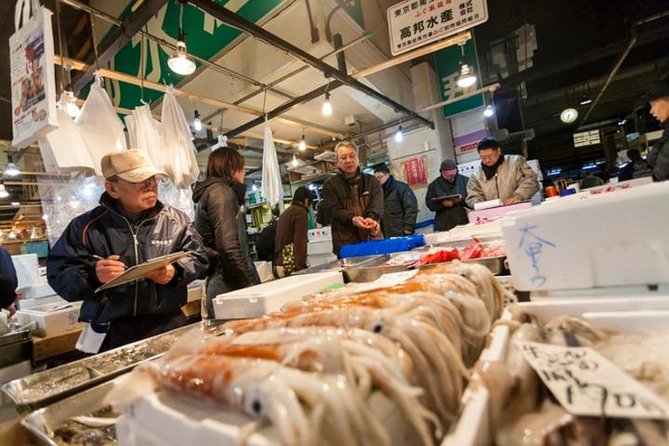
- Two very different markets: Toyosu is clean, controlled, and built around wholesale trade, while Tsukiji is lively, crowded, and packed with food shops.
- A private four-hour outing: Only your party takes part, so you can ask questions and shape the pace with your guide.
- Licensed English-speaking guides: Guides named Toyo, Suzuki, Koji, Show, Mami, Mina, and others have led this experience, though your assigned guide is not guaranteed.
- Food is not included: Bring cash and budget separately for seafood, sushi, meat, snacks, drinks, and personal purchases.
- Not the tuna auction tour: This experience may include the auction viewing area or an explanation of the process, but the actual early-morning auction requires a different product.
- Best for first-time market visitors: The guide helps with navigation, transport, ordering, and cultural context that can be hard to manage alone.
Why Toyosu and Tsukiji belong in the same morning
Toyosu and Tsukiji are not duplicates. They show two different parts of Tokyo’s food system.
Toyosu Market opened on October 11, 2018, on a man-made island in Tokyo Bay. It took over the wholesale business from the old Tsukiji site. The complex is cleaner and more modern, with viewing areas that let you look down toward the auction floor without entering the working market itself.
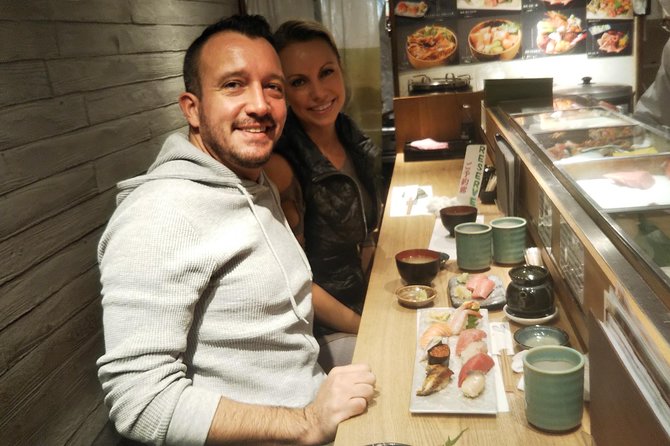
Tsukiji’s wholesale market moved, but its Outer Market remained. That is where you find the food stalls, specialist shops, sushi counters, kitchen goods, and small bites that make the area so appealing. It is less polished than Toyosu, but much more immediate. You are close to the food, the sellers, and the crowds.
That contrast gives the tour its main value. You learn why Toyosu exists, then see how Tsukiji continues as a place where people shop and eat. A guide can explain the move from old market to new one while also showing you how to behave around working vendors.
More Fish Market Tours in Japan
- Tokyo Tsukiji Fish Market Food and Culture Walking Tour
★ 5.0 · 3,184 reviews - Tokyo: Tsukiji Fish Market Food and Walking tour
★ 5.0 · 1,724 reviews - Tokyo: Tsukiji Fish Market Guided Walking Tour
★ 4.9 · 1,397 reviews
Starting at Toyosu Market
The published meeting point is Toyosu Market at 6-chōme-6-1 Toyosu, Koto City. The listed tour begins here and later ends at Tsukiji Outer Market. Some guide arrangements described a hotel-lobby pickup, but the official details describe pickup and drop-off on foot within a designated Tokyo area. Confirm the exact meeting plan before you set out.
Toyosu is a large site, and its scale matters. Alone, you may spend time simply trying to understand which building, corridor, or viewing area you need. Your guide can give you the basic layout and explain what you are looking at instead of leaving you to read signs and guess.
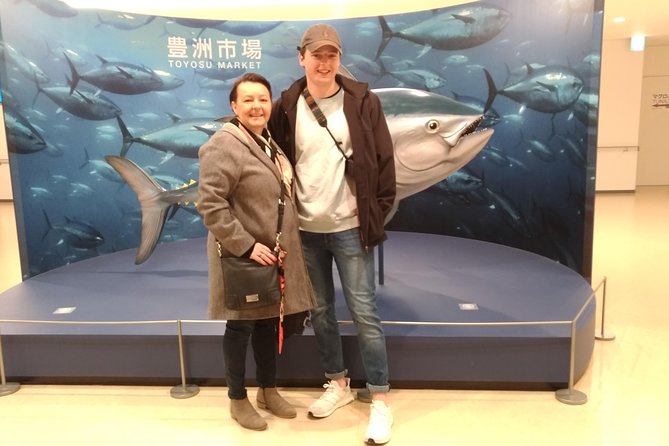
The market’s auction viewing areas are a key stop. You may see the floor from above, watch videos explaining the tuna auction, or view displays such as a replica of a very large tuna. The actual auction is not part of this tour. If seeing the live tuna auction is your main goal, book the separate morning tuna auction experience and confirm its early start.
One useful point from the experience is that Toyosu does not always feel busy. A noon visit may find many stalls closed, particularly compared with Tsukiji. That is not a flaw in the market itself, but it affects your expectations. Toyosu is at its best as a working-market explanation and viewing stop, not necessarily as a place to wander through endless open food stalls.
Some guides also include the fruit and vegetable building. A visit there can broaden the picture beyond fish and show how much of Tokyo’s food supply passes through the market complex.
Getting between the markets
The trip between Toyosu and Tsukiji uses public transport arranged by your guide. The transport fee is not included, so keep money available for fares. This is a small extra cost, but it is worth knowing before you arrive because the advertised price does not cover every expense.
The journey can be part of the experience. One guide used the monorail route to give a look at Tokyo Bay and the city, while another helped visitors recharge their IC cards. If Tokyo’s train system feels intimidating, this practical assistance may be one of the best reasons to book a private guide.
Still, the tour is described as a walking tour with public transport between markets, not a private-vehicle outing. You will be on your feet and moving through stations, corridors, and crowded market lanes. Wear shoes that can handle four hours of walking and keep your bags manageable.
Tsukiji Outer Market, where the tour becomes edible
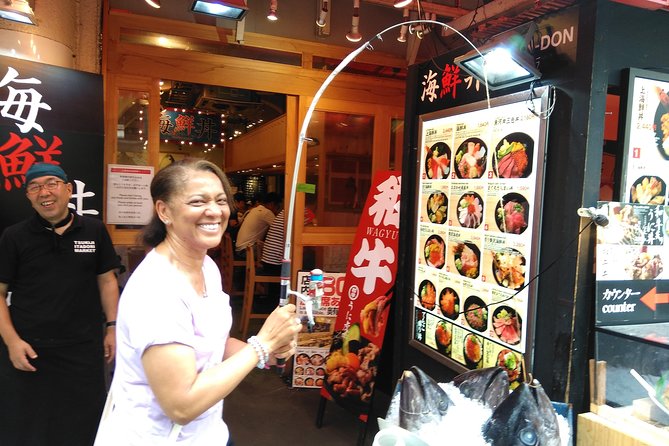
The Tsukiji portion lasts about two hours, making it the longer and more hands-on part of the outing. The guide meets you near Tsukiji Hongwanji Temple, just outside the market’s main gate, according to the detailed meeting instructions. The final stop is Tsukiji Outer Market.
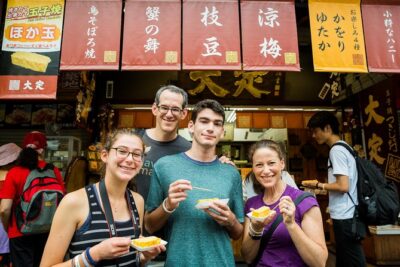
This is where the tour can become personal. You might want sushi, sea urchin, grilled eel, tuna, crab, wagyu, or small snacks. Your guide can point out suitable places, explain what you are seeing, and help you move through the market without wasting time on the wrong turn.
Food is purchased separately. Bring cash, as some small vendors may not accept every payment method. Also remember that the tour is not a tasting package. The value comes from guidance and access to local food choices, while you decide what to buy and how much to spend.
Several guides helped visitors find particular restaurants, including Daiwa Sushi, or stayed nearby while a meal was finished. That is useful, but restaurant stops are not guaranteed in a fixed format. Ask your guide early in the tour what you want to eat and how much time you would like for a proper meal.
The timing matters. One useful tip is to book early and finish at Toyosu’s food court, but the exact order may vary. If you start later, Toyosu’s stalls may be winding down, while Tsukiji can still offer plenty to see. Tell the guide if eating is more important to you than covering every market building.
More Fish Market Tours in Tokyo
- Tokyo Sushi Making Class in Tsukiji with Professional Chef
★ 5.0 · 1,177 reviews - Tsukiji Fish Market Guided Tour and Sushi Making with Pro Chef
★ 5.0 · 775 reviews - Tokyo: Tsukiji Fish Market Food and Culture Walking Tour
★ 4.7 · 757 reviews - Tsukiji Fish Market: Street Food & Culture Walking Tour
★ 5.0 · 669 reviews
Namiyoke Inari Shrine and Tsukiji Hongwanji Temple
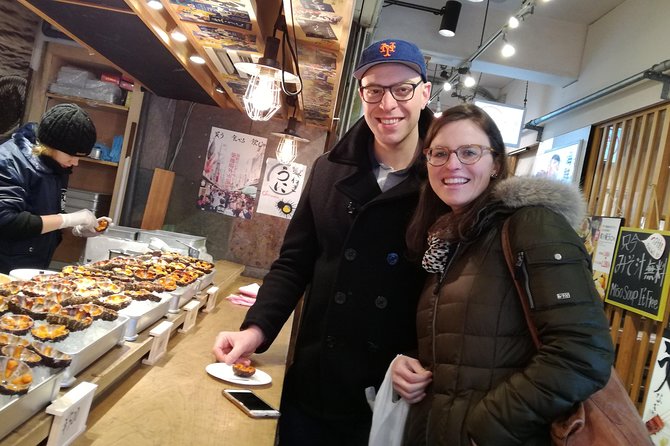
The market tour includes two short cultural stops.
Namiyoke Inari Shrine takes about 15 minutes. Its role is tied to the reclaimed land, with the shrine associated with protection from waves. This small stop helps explain why Tsukiji is where it is and gives you a break from seafood displays and narrow lanes.
Tsukiji Hongwanji Temple takes about 30 minutes. Its unusual architecture and Buddhist setting add a different note to the morning. Some guides have included a short meditation or an explanation of Japanese Buddhism here.
The temple is also a practical meeting landmark, not only a sightseeing stop. Starting near it makes the market easier to locate, especially if you have never visited Tsukiji before. Do not expect a long temple visit, though. This is a compact cultural introduction within a food-market tour.
What the private format really adds
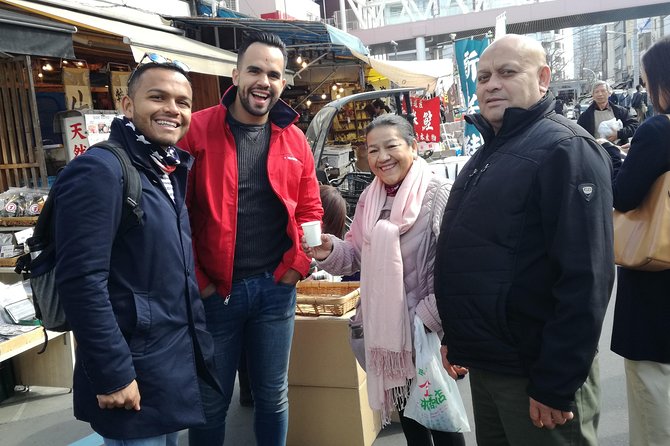
The tour is private, so only your group participates. That matters more here than it would on a simple sightseeing bus ride. Markets are full of small choices, and your guide can adjust based on what you want to eat, buy, photograph, or understand.
Guides such as Toyo, Koji, Show, Mami, Mina, Suzuki, Yoshii, Kazu, and Shuji have been praised for explaining Japanese culture, helping with trains, finding particular foods, and adapting the route for families. The exact person you receive will depend on availability, so treat these names as examples of the guide pool rather than a promise.
Families may find the private setup especially helpful. One guide adjusted the visit for teenage boys, while others helped families find food and souvenirs. Solo visitors can also benefit because a guide removes much of the awkwardness of entering a busy market alone.
The experience is not a formal cooking class or a fixed tasting crawl. If you want to eat at many stalls, say so. If you prefer history and architecture, say that instead. Your guide can shape the conversation, but the four-hour limit still requires choices.
Is $109.01 a fair price?
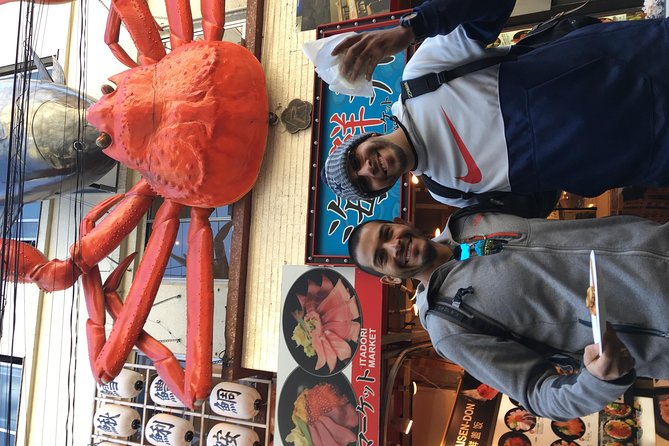
At $109.01 per person, this is not a cheap food walk. You also pay for public transport, food, drinks, and any unlisted entry costs. For two people, the guide fee alone is a meaningful part of a Tokyo day.
I think the price makes the most sense for first-time visitors who feel unsure about Japanese markets. You are paying for a private licensed guide, route planning, translation help, market context, and the chance to avoid ordering or navigation mistakes. If you already understand Tokyo’s trains and feel comfortable choosing restaurants alone, you may prefer to visit independently and spend the money on lunch.
The private rate is easier to justify for a small group because the guide serves only your party. Group discounts are available, though the exact savings depend on the booking. The experience is commonly reserved about 39 days ahead, so popular travel dates may require planning.
The strongest value comes from using the guide well. Tell the guide what you want before the tour: sushi, raw seafood, grilled food, meat, kitchen tools, shrine history, photography, or help with transport. A vague request can produce a pleasant walk, but a specific request gives the guide something useful to work with.
Timing, food, and practical limits
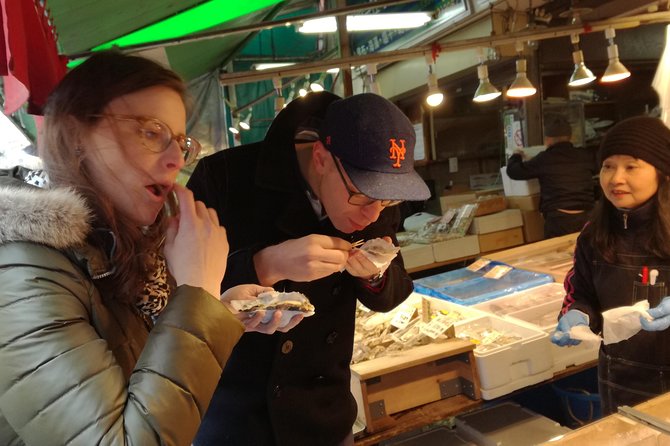
Plan for about four hours, with walking throughout. The tour does not include hotel transportation by private vehicle, and pickup is on foot. Some arrangements may meet you at a hotel lobby, but you should rely on the confirmed meeting instructions rather than assume that service.
Food and lunch are optional and at your expense. You may stay after the official tour to eat breakfast or lunch, which is a good reason to end at Tsukiji. Build in extra time if you want a full meal instead of quick samples.
The tour does not include the tuna auction. This point deserves attention because the word market can create the wrong expectation. You may learn how the auction works and see its viewing area, but a live auction visit requires the separate tuna auction product and an early start.
Most people can participate, and service animals are allowed. Since this is a walking tour, anyone with limited stamina should discuss needs before booking. The operator offers free cancellation up to 24 hours before the local start time. Changes or cancellations inside that window are not accepted.
Who should book this market tour?
I would choose it for a first visit to Tokyo, especially if you want food and culture in the same morning. It is also a good match for families, solo visitors, and anyone who finds Japanese train stations or market etiquette stressful.
You should think twice if your only goal is the live tuna auction. This is the wrong product for that. You may also prefer an independent visit if you want to browse slowly, eat without a schedule, or avoid paying a guide fee.
The best candidate is someone who wants a clear introduction, personal food advice, and a private pace. Book early, bring cash, wear comfortable shoes, and tell the guide your priorities. With those expectations, the contrast between Toyosu and Tsukiji becomes the reason to go, not a source of confusion.
FAQ
How long does the tour last?
The experience lasts approximately four hours.
Is the tour private?
Yes. Only your group participates, and you cannot combine multiple tour groups.
Does the tour include the tuna auction?
No. This is not the tuna auction tour. A separate Toyosu tuna auction experience is available for visitors who specifically want that early-morning activity.
Are food and drinks included?
No. Food, drinks, transportation fees, entrance fees, and personal expenses are not included. You may stay after the tour to eat breakfast or lunch at your own cost.
Where does the tour start and finish?
The listed start point is Toyosu Market at 6-chōme-6-1 Toyosu, Koto City, Tokyo. The listed end point is Tsukiji Outer Market in the Tsukiji area.
Can I cancel for a refund?
You can cancel up to 24 hours before the local start time for a full refund. Cancellations or changes made less than 24 hours before the start are not accepted.
More Food in Tokyo
- Toyosu Market Morning Tuna Auction and Tsukiji Food Tour with Licensed Guide
★ 4.5 · 146 reviews - Tokyo Tsukiji Fish Market Food Tour: 15 Stops & Walk Local Street
★ 5.0 · 139 reviews - Tokyo’s Kitchen: Tsukiji Market Food & Culture Walk
★ 4.7 · 74 reviews - Tsukiji Fish Market Private Food Tour in Tokyo
★ 5.0 · 18 reviews
More Food and Drink Tours in Tokyo
- Tsukiji Fish Market Small-Group Food Walking Tour
★ 5.0 · 621 reviews - Tokyo Food Tour Taste Fresh Delights at Tsukiji Market
★ 5.0 · 429 reviews - Tsukiji Fish Market: Street Food & Culture Walking Tour
★ 4.8 · 259 reviews - Inside Tokyo’s Kitchen: Tsukiji Market, Food & Culture Tour
★ 5.0 · 162 reviews
Just added around Tokyo
- Tokyo: Private Tsukiji Street Food & Sake with Local Guide★ 5.0 · 3 reviews
- Tokyo: Tsukiji Market Guided Tour & Sushi-Making Experience★ 4.4 · 11 reviews
- Tokyo: Tsukiji Market and Hama-rikyu Gardens Guided Tour★ 4.8 · 73 reviews
- Tokyo : Tsukiji Fish Market Food Walking & Shrine Visit Tour★ 5.0 · 3 reviews
- Tokyo: Tsukiji Fish Market Culture Tour with Sashimi Tasting★ 4.6 · 54 reviews
- Tokyo: Tsukiji Fish Market Foodie and Educational Tour★ 5.0 · 4 reviews
- Tokyo: Guided Walking Tour of Tsukiji Market with Lunch★ 4.4 · 24 reviews
- Tokyo’s Kitchen: Tsukiji Market Food & Culture Walk★ 4.7 · 74 reviews
Fish Market Tours, compared.
Tokyo Tsukiji Fish Market Food and Culture Walking Tour
Read our review →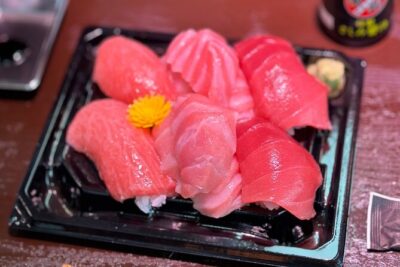

Tokyo Sushi Making Class in Tsukiji with Professional Chef
Read our review →
Tsukiji Fish Market Guided Tour and Sushi Making with Pro Chef
Read our review →Tsukiji Fish Market Food and Culture Walking Tour
Read our review →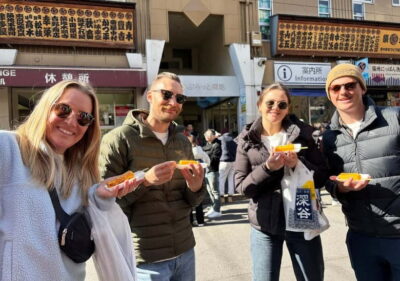
Tsukiji Fish Market: Street Food & Culture Walking Tour
Read our review →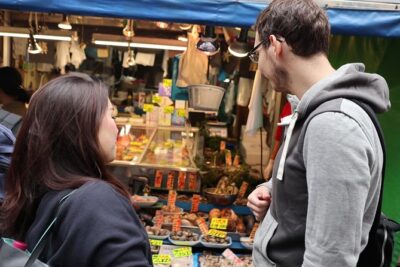
Tsukiji Fish Market Small-Group Food Walking Tour
Read our review →Browse the lists this tour appears in