Review · TOKYO
Tokyo: Guided Walking Tour of Tsukiji Market with Breakfast
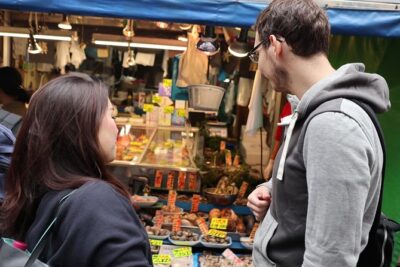
Tsukiji is at its best early in the day, when the market lanes fill with sizzling skewers, sliced fish, tea, soup stock, and workers moving with purpose. This 150-minute tour gives you a useful way into that food maze, starting at Tsukiji Hongwanji Temple and continuing through the Outer Market with seven breakfast tastings.
I like the way the guides make unfamiliar food easier to approach, and I like that the experience includes more than eating. You get context about Japanese food, religion, and daily market work, while guides such as Yumi, Nori, and Minoko have helped visitors choose food, translate with vendors, and adjust tastings for picky eaters. The main drawback is that the market can be crowded and noisy, and one past participant found the guide’s English difficult to follow at times.
Key points to know before booking

- Seven tastings make this a full breakfast: Expect grilled seafood or beef skewers, Japanese omelette, tuna sandwiches, fried fish paste, a drink, Japanese tea, and dashi soup stock.
- The temple is an exterior stop: You meet at Tsukiji Hongwanji Temple and learn about its unusual Indian-inspired Buddhist architecture before entering the market.
- Small groups keep the tour personal: The group is limited to 10 people, though some departures may feel almost private if attendance is low.
- Guides help with translation and choices: They can speak with vendors, explain unfamiliar foods, and adjust selections when you do not want to try something.
- The market remains open to explore afterward: The guided portion ends early enough for you to continue looking around on your own.
- Comfortable shoes matter: You will spend the full 150 minutes walking and standing in busy market streets.
Starting at Tsukiji Hongwanji Temple
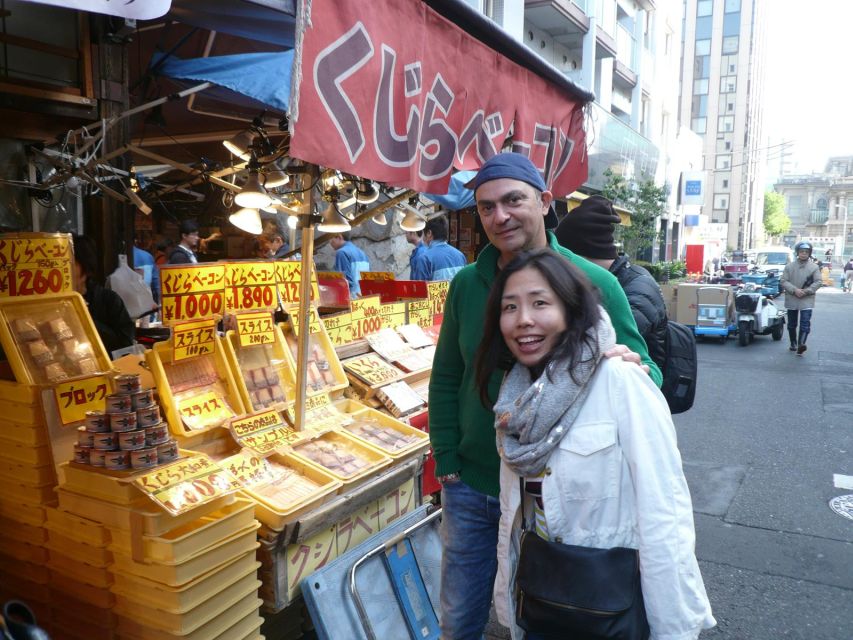
The meeting point is easy to reach. From Tsukiji Station on the Hibiya Line, take Exit A1, turn left, and look for the temple entrance about 50 meters from the station.
The first stop is outside Tsukiji Hongwanji Temple. Its facade does not look like a typical Japanese temple. The design draws on ancient Indian Buddhist forms, giving the building an unusual appearance before you have even reached the market. The tour uses this stop to explain how religion and food connect in Japanese culture.
That context is useful because Tsukiji is not simply a place to grab breakfast. Food in Japan is tied to ritual, season, respect for ingredients, and the daily work of people who prepare and sell it. You will not spend the entire tour in a formal history lesson, but the temple gives the market a little more meaning.
The temple visit is an exterior introduction, not a long interior tour. If you want a detailed look inside, you will need to arrange that separately. Still, I like the opening because it gives you a calm starting point before you enter the tight market lanes.
More Fish Market Tours in Japan
- Tokyo Tsukiji Fish Market Food and Culture Walking Tour
★ 5.0 · 3,184 reviews - Tokyo: Tsukiji Fish Market Food and Walking tour
★ 5.0 · 1,724 reviews - Tokyo: Tsukiji Fish Market Guided Walking Tour
★ 4.9 · 1,397 reviews
Entering the Outer Market with a local guide
From the temple, the group heads into Tsukiji Outer Market. This is the food-focused part of the old Tsukiji area, filled with restaurants, specialty shops, stalls, and businesses serving both local cooks and curious visitors.
The market can feel confusing at first. Signs may be unfamiliar, several lines can form at once, and the most interesting food is not always displayed in a way that makes its purpose clear. Your guide helps you move through this without spending the morning guessing.
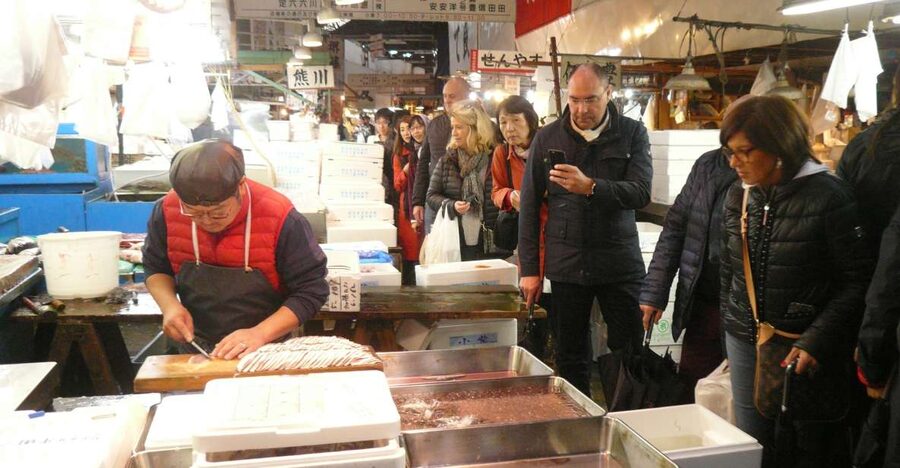
You will see expert wholesalers and market workers handling fish and other products as part of their normal business. This is a working market, not a staged food exhibit, so you should stay alert and follow your guide’s instructions. Keep your group together, avoid blocking shop entrances, and give workers room to do their jobs.
The small-group format helps here. With a maximum of 10 participants, the guide can usually answer questions and keep an eye on everyone. Some departures have been much smaller, including one family group of four and one tour with only a mother and adult daughter. That is not guaranteed, but a low number can make the experience more flexible.
You will also spend time looking at unusual products and listening to explanations about what they are used for. This is where the tour has an edge over simply arriving alone and walking in circles. You get a human connection to the market, not just a checklist of stalls.
Seven tastings, from skewers to dashi
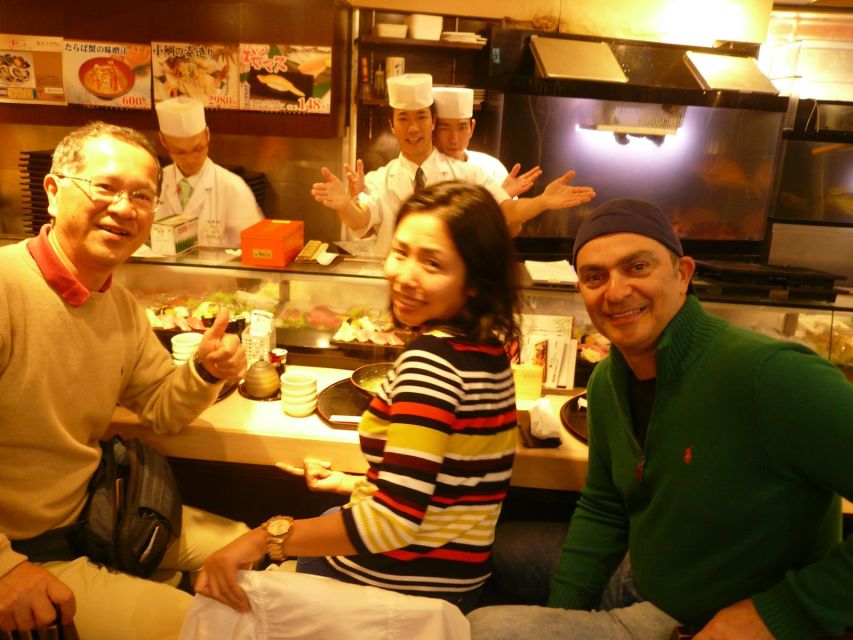
The food is the main reason to book this experience. The package includes seven local tastings, and the portions together can make a substantial breakfast. Come hungry.
The exact food available can vary, but the stated selection includes:
- Grilled seafood or beef skewers, which may include wagyu
- Japanese-style omelette
- Tuna sandwiches
- Fried fish paste skewers
- A drink
- Japanese tea
- Dashi soup stock
The skewer is an easy opening point. Grilled seafood lets you taste the market’s central ingredient in a simple form, while a beef option gives you something familiar if raw fish is not your preference. The possibility of wagyu adds appeal, though you should not assume every group receives the same exact cut or item.
The Japanese omelette offers a different texture and flavor from the grilled food. It is a useful stop for anyone who wants to understand how much variety can fit into a small breakfast. The tuna sandwich also shows how market ingredients can appear in an everyday, portable format rather than only as formal sushi.
Fried fish paste skewers may be less familiar. That is exactly where a guide earns the fee. You can ask what you are eating, how it is made, and how it fits into Japanese food culture instead of taking a blind bite and moving on.
The tea and dashi are smaller tastings, but they add important balance. Dashi is a basic Japanese soup stock, and sampling it on its own helps you recognize the savory flavor that appears in many Japanese dishes. The tea gives you a quieter pause amid the market noise.
Past groups have also tried items such as barbecue, mochi, onigiri, and other foods while exploring. Those examples do not replace the listed seven tastings, but they show that the guide may help you make additional choices if you want to buy something beyond the included food. One participant singled out the onigiri as especially good.
Do not treat the seven tastings as seven tiny samples that leave you searching for breakfast afterward. The amount of food can be generous. If you eat lightly, tell the guide early. Guides have adjusted the experience for people who did not want every item, offering alternatives where possible.
The guide makes the difference
This tour depends heavily on the person leading it. The strongest part of the experience is not simply that someone walks you through Tsukiji. It is that the guide can explain, translate, and make quick food decisions in a crowded place.
Yumi has been praised for guiding groups efficiently through the market and arranging tastings along the way. Nori has helped with food choices and even assisted with directions afterward. Minoko and her fellow guide have been described as a strong team, answering questions about the area and Tokyo.
The names may differ on your departure, but the useful qualities are clear. You want someone who can explain what you are seeing, communicate with vendors, and notice when a participant would prefer an alternative. This matters if you have a limited diet, a cautious teenager, or simply do not want to spend money on food you cannot identify.
English is the tour language. Most people should be able to follow the basic explanations, but the experience is not a substitute for a professional lecture in polished English. One person found the guide hard to understand at times, though the group still managed to enjoy the tour. If detailed historical interpretation is your top priority, keep that limitation in mind.
The guides also add a social element. You meet the other people in the group over food, and the relaxed pace makes it easier to ask questions. A tour can feel impersonal when everyone is rushed from one stop to the next. Here, the small group and food sharing create more room for conversation.
More Fish Market Tours in Tokyo
- Tokyo Sushi Making Class in Tsukiji with Professional Chef
★ 5.0 · 1,177 reviews - Tsukiji Fish Market Guided Tour and Sushi Making with Pro Chef
★ 5.0 · 775 reviews - Tokyo: Tsukiji Fish Market Food and Culture Walking Tour
★ 4.7 · 757 reviews - Tsukiji Fish Market: Street Food & Culture Walking Tour
★ 5.0 · 669 reviews
What the $85 price covers
At $85 per person, this is not the cheapest way to eat at Tsukiji. You can walk into the market on your own and purchase individual snacks for less, especially if you are comfortable reading menus, waiting in lines, and choosing food without help.
The price makes more sense when you count what is included. You receive an English-speaking guide, 150 minutes of walking and explanation, seven tastings, help communicating with vendors, and an introduction to the temple and market culture. You are also paying to avoid the trial and error that can eat up your morning.
I see the tour as good value for first-time visitors who want a planned introduction rather than a free-form food hunt. It is also useful if you are nervous about ordering in Japan or traveling with someone who needs help choosing food.
The value is weaker for confident repeat visitors who already know Tsukiji, speak Japanese, and enjoy making their own food itinerary. You may prefer to spend the same money on a longer meal or several independent purchases.
Remember that the included tastings are the core food budget. If you see gifts, tea, snacks, seafood, or kitchen goods you want to buy, bring a payment method for those extra purchases. The guides can help with translation, but the tour does not include every item you may want from the market.
Timing, crowds, and walking comfort

The tour lasts 150 minutes, so you should expect steady walking and periods of standing in line. Wear comfortable shoes, as the market streets can be crowded and you will not be sitting for most of the experience.
The early schedule works well for breakfast. You see the market while food businesses are active, then finish with time left to explore Tsukiji on your own. That timing is one of the tour’s practical strengths. You can continue browsing, return to a stall you noticed, or move on to another Tokyo sight without losing the whole day.
The trade-off is that busy market hours can feel intense. You will encounter many people, tight passages, strong food smells, and a lot of visual noise. That is part of the appeal, but it may be tiring for anyone who prefers a slow, quiet morning.
Wheelchair access is listed for the activity, but the market itself remains a working commercial area. If you use a wheelchair, confirm any personal mobility concerns when booking, especially since the tour moves through active market streets and food lines.
The meeting point is close to the station, which helps reduce the stress of an early start. Arrive on time. One person missed the tour after arriving late, although a refund was ultimately arranged in that case. Do not count on that outcome, and allow extra time to find Exit A1 and the temple entrance.
Who will enjoy this Tsukiji experience most
I would recommend this tour to first-time visitors who want a gentle introduction to Japanese food without spending hours researching each stall. It also suits people who enjoy learning through eating, rather than standing through a long formal talk.
Families can benefit from the flexibility. A picky teenager does not have to force down every unfamiliar dish, and the guide can help find an alternative. Couples and small groups who want local food but lack confidence ordering will also get real value from the translation help.
Food lovers should enjoy the range. You are not limited to one sushi tasting. The combination of beef or seafood, omelette, tuna, fried fish paste, tea, and dashi gives you a broader look at everyday Japanese flavors.
I would be more cautious about recommending it to someone who wants a quiet, seated breakfast or a highly specialized fish-market tour. The experience is active, social, and shaped by the market’s conditions. It is also less suitable if you dislike trying unfamiliar foods, though you can tell the guide what you prefer.
The tour is wheelchair accessible and limited to 10 people, which makes it more approachable than a large bus excursion. Still, you should be comfortable moving through busy streets and standing at food stops.
Should you book the Tsukiji Market breakfast tour?
Book it if you want a well-organized first look at Tsukiji, seven tastings, and a guide who can help you make sense of the food and market customs. The strongest reasons are the personal assistance, the generous breakfast, and the chance to continue exploring after the guided portion ends.
Skip it if you already know Tsukiji well or would rather choose every dish yourself. At $85, you are paying for guidance and convenience as much as for the food.
For most first visits, I think the combination works. Start at the unusual temple, follow the guide through the market, try foods you might otherwise miss, then stay on your own after the tour. That gives you both structure and freedom, which is a smart way to handle a crowded Tokyo food district.
FAQ
Where does the Tsukiji Market tour meet?
The meeting point is in front of Tsukiji Hongwanji Temple. From Tsukiji Station on the Hibiya Line, take Exit A1, turn left, and walk about 50 meters to the temple entrance.
How long does the tour last?
The tour lasts 150 minutes.
What language is the tour offered in?
The live guided tour is offered in English.
What food is included?
The seven tastings include grilled seafood or beef skewers, a Japanese-style omelette, tuna sandwiches, fried fish paste skewers, a drink, Japanese tea, and dashi soup stock.
Is the temple visit inside the building?
The experience begins at the main gate of Tsukiji Hongwanji Temple and includes viewing its exterior. The activity description does not list an interior temple visit.
Is the tour suitable for wheelchair users?
The activity is listed as wheelchair accessible.
Can I cancel the booking?
You can cancel up to 24 hours in advance for a full refund. You can also reserve now and pay later, subject to the booking conditions.
More Market Walking Tours in Tokyo
- Bangkok: City Highlights Temple and Market Walking Tour
★ 4.5 · 3,990 reviews - Marrakech: Ben Youssef, Secret Garden, & Souks Walking Tour
★ 4.6 · 2,802 reviews - Marrakech: Colorful Medina Souks Guided Walking Tour
★ 4.7 · 2,470 reviews - Air Raid Shelter + St. Nicholas Market Walking Tour
★ 5.0 · 1,950 reviews
More Market Walking Tours in Japan
- Tsukiji Fish Market Small-Group Food Walking Tour
★ 5.0 · 621 reviews - Tsukiji Fish Market: Street Food & Culture Walking Tour
★ 4.8 · 259 reviews - Tokyo: Tsukiji Market Walking Tour & Sushi Cooking Class
★ 4.6 · 122 reviews - Tokyo: Guided Walking Tour of Tsukiji Market with Lunch
★ 4.4 · 24 reviews
Just added around Tokyo
- Tokyo: Private Tsukiji Street Food & Sake with Local Guide★ 5.0 · 3 reviews
- Tokyo: Tsukiji Market Guided Tour & Sushi-Making Experience★ 4.4 · 11 reviews
- Tokyo: Tsukiji Market and Hama-rikyu Gardens Guided Tour★ 4.8 · 73 reviews
- Tokyo : Tsukiji Fish Market Food Walking & Shrine Visit Tour★ 5.0 · 3 reviews
- Tokyo: Tsukiji Fish Market Culture Tour with Sashimi Tasting★ 4.6 · 54 reviews
- Tokyo: Tsukiji Fish Market Foodie and Educational Tour★ 5.0 · 4 reviews
- Tokyo: Guided Walking Tour of Tsukiji Market with Lunch★ 4.4 · 24 reviews
- Tokyo’s Kitchen: Tsukiji Market Food & Culture Walk★ 4.7 · 74 reviews
Fish Market Tours, compared.
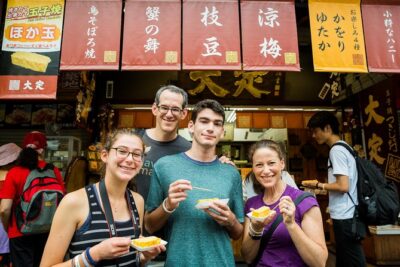
Tokyo Tsukiji Fish Market Food and Culture Walking Tour
Read our review →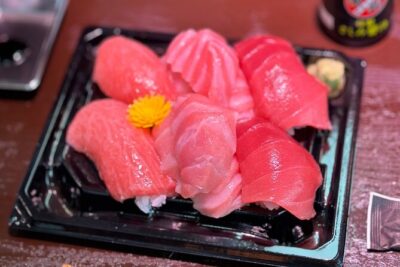
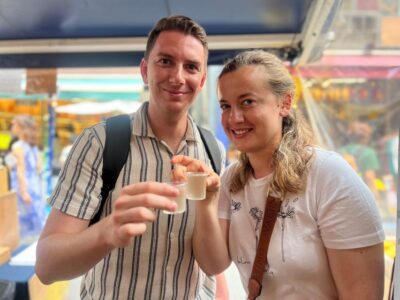

Tokyo Sushi Making Class in Tsukiji with Professional Chef
Read our review →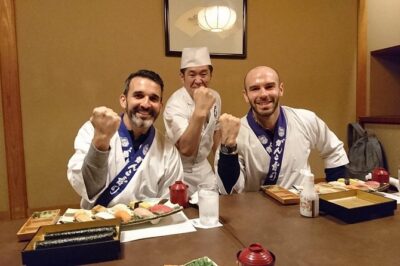
Tsukiji Fish Market Guided Tour and Sushi Making with Pro Chef
Read our review →Tsukiji Fish Market Food and Culture Walking Tour
Read our review →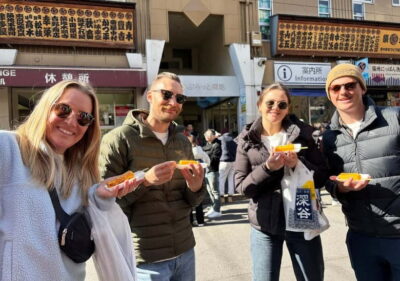
Tsukiji Fish Market: Street Food & Culture Walking Tour
Read our review →