Review · TOKYO
Tokyo: Tsukiji Fish Market Food and Culture Walking Tour
Tsukiji is best understood with your appetite switched on. This three-hour walk leads you through the market’s food stalls, small shops, and fish counters, with stops for Wagyu beef, tamagoyaki, fish cake, seasonal fruit, and sushi or a seafood bowl. The market can be confusing on your own, so a guide helps you find the good bites without wasting time.
I like the small groups of two to eight people, which make it easier to ask questions and keep up in crowded lanes. I also like the way the tour connects food with daily life, from shrine cleansing at Tsukiji Honganji to the techniques behind slicing fish. The main drawback is that some stalls close on Wednesdays, Sundays, public holidays, and other market closing days, so the food lineup can change.
Key points at a glance
- Wagyu is the headline bite: The high-grade beef skewer is repeatedly singled out as a favorite, and one guest went back for another after the tour.
- The final dish is more than lunch: Depending on the day, you receive sushi or a seafood bowl, sometimes with a fish-cutting demonstration.
- Guides make the market manageable: Guides such as Shun, Nazu, Kenji, Miki, and Robert have been praised for clear explanations, friendly help, and good vendor choices.
- The meeting point adds context: The tour starts at Tsukiji Honganji Temple, where you may learn basic shrine etiquette and the story of the area.
- Go when more stalls are open: Wednesdays, Sundays, public holidays, and other closed market days mean fewer available foods.
- Come ready to walk and eat: Comfortable shoes matter, and the included tastings can amount to a full meal.
Why Tsukiji works best with a food guide
Tokyo’s old inner fish market moved to Toyosu in 2018, but Tsukiji’s outer market remains a major place to shop, eat, and see Japanese food culture in action. It is not simply a row of seafood stalls. You will find fish, shellfish, prepared foods, sweets, tea, fruit, kitchen goods, and small eateries packed into a tight area.
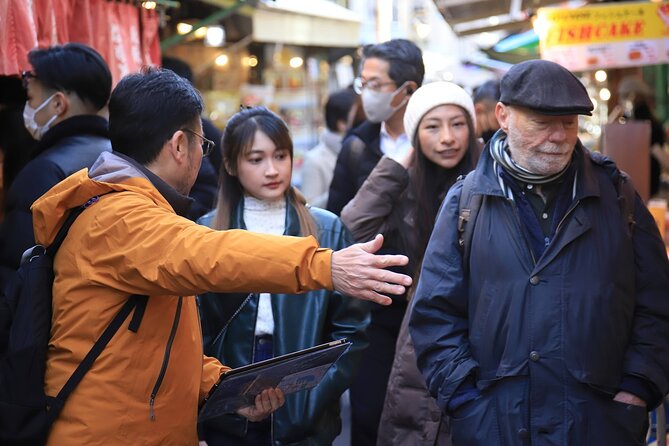
That variety is also the problem. Tsukiji can feel like a maze, especially when you are trying to decide which stall is worth your money and how to eat without blocking the flow of shoppers. A guide gives you a route and explains what you are seeing instead of leaving you to guess at every menu.
The tour runs for three hours and stays on foot. The group size is limited to eight, with some departures operating with only four people. That is a useful balance: you get the energy of a shared outing without being swallowed by a large crowd.
The English-speaking guides bring different personalities to the walk. Shun has been praised for mixing food knowledge with warmth and humor. Nazu, Miki, Kenji, Robert, Luna, Yoshiko, and others have also led groups, often adjusting the pace or explaining an unfamiliar item. Your guide will vary, but the experience depends heavily on having someone who can interpret the stalls and handle the practical side of ordering.
More Fish Market Tours in Japan
- Tokyo Tsukiji Fish Market Food and Culture Walking Tour
★ 5.0 · 3,184 reviews - Tokyo: Tsukiji Fish Market Food and Walking tour
★ 5.0 · 1,724 reviews - Tokyo: Tsukiji Fish Market Guided Walking Tour
★ 4.9 · 1,397 reviews
Starting at Tsukiji Honganji Temple
Meet at the main gate of Tsukiji Honganji Temple. This is a useful starting point rather than a random corner near the market. The temple gives you a moment to get your bearings before entering the food lanes.
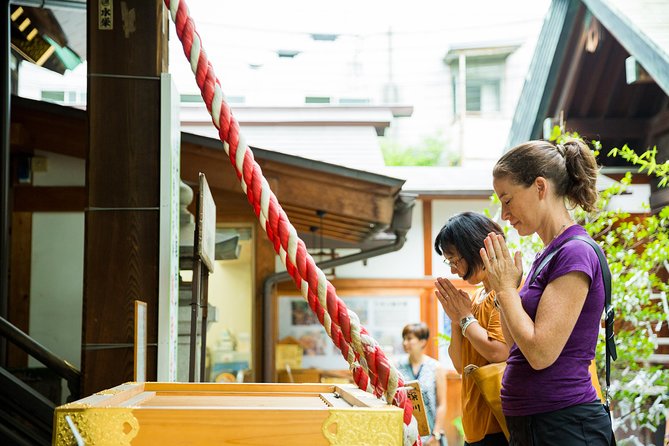
Some guides begin with the temple’s history and explain how the neighborhood developed around the market. You may also learn the basic cleansing ritual and proper shrine manners. One guide helped a group perform the cleansing ceremony before the food walk, while another explained etiquette in a simple, friendly way.
I like this opening because it frames Tsukiji as a neighborhood, not only a place to collect snacks. You see how food, religion, trade, and local routines sit close together. The temple visit is not a separate long sightseeing stop, so the focus remains on the market.
Arrive ready to start on time. The meeting point is clear, but the surrounding area can still be busy, and one person who missed the beginning after a train mistake had to join partway through. That worked out, but punctuality will give you the full experience.
First look at the Tsukiji Outer Market
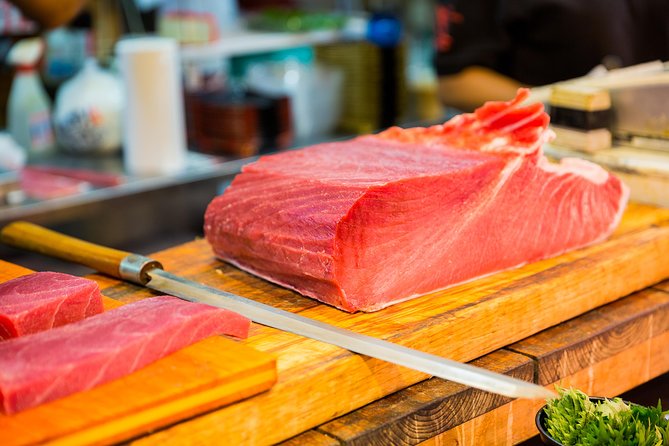
The first market section is a short orientation walk, followed by a longer two-and-a-half-hour route through the outer market and its food stops. You will see stalls selling fish and shellfish alongside prepared foods and produce.
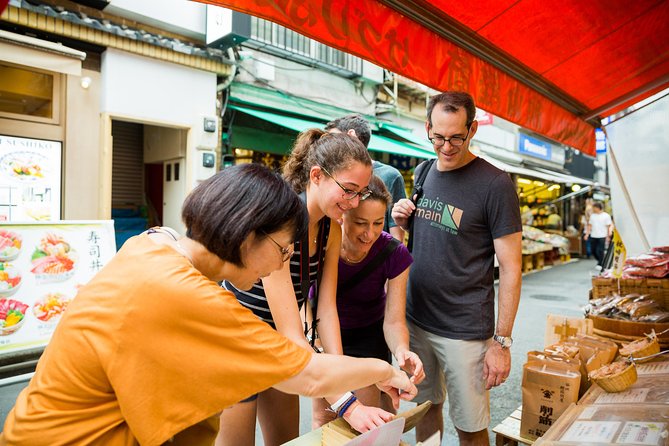
This is where a guide earns the fee. You might recognize sushi or fruit, but many foods are less obvious. Your guide can explain how an item is eaten, what makes it seasonal, and how it fits into Japanese cooking. You also get help moving through crowded lanes and stopping without getting in the way.
The market is aromatic, noisy, and tight in places. That is part of its appeal, but it can make conversation difficult. Rain adds another layer of trouble. Umbrellas, crowds, and narrow paths can make it hard to hear, so I would choose a dry weekday morning if your schedule allows.
Saturday mornings can be crowded too. One group found an 8:30 start particularly busy, while a midweek visit was suggested as a calmer choice. Keep in mind, though, that Wednesday is one of the regular closure days, so a quieter day is not automatically the best day if key stalls are shut.
The tasting route: from Wagyu to seasonal fruit
The food is served in stages as you walk. The exact order can change, but the included menu covers several textures and styles:
- High-grade Wagyu beef skewer
- Japanese omelet, or tamagoyaki
- Fried fish cake
- Seasonal fruit
- Fresh fish bowl or sushi
- Other market samples along the way
The Wagyu skewer is often the big early hit. It gives you a concentrated taste of rich beef without requiring a full restaurant meal. One person called it the best Wagyu of their life, and another group liked it enough to return after the tour for another skewer. That is a strong reason to keep a little room in your budget and stomach for extra purchases.
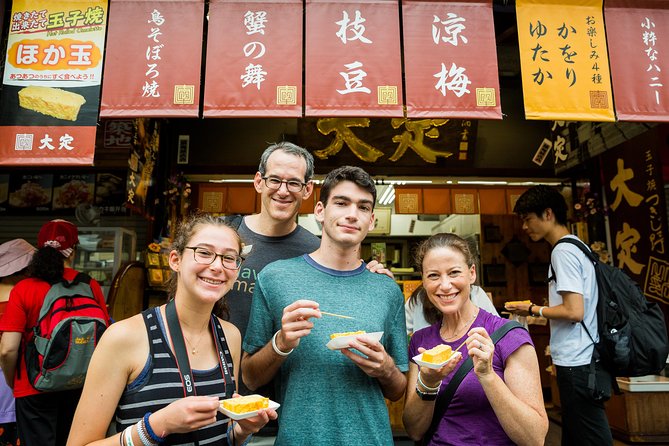
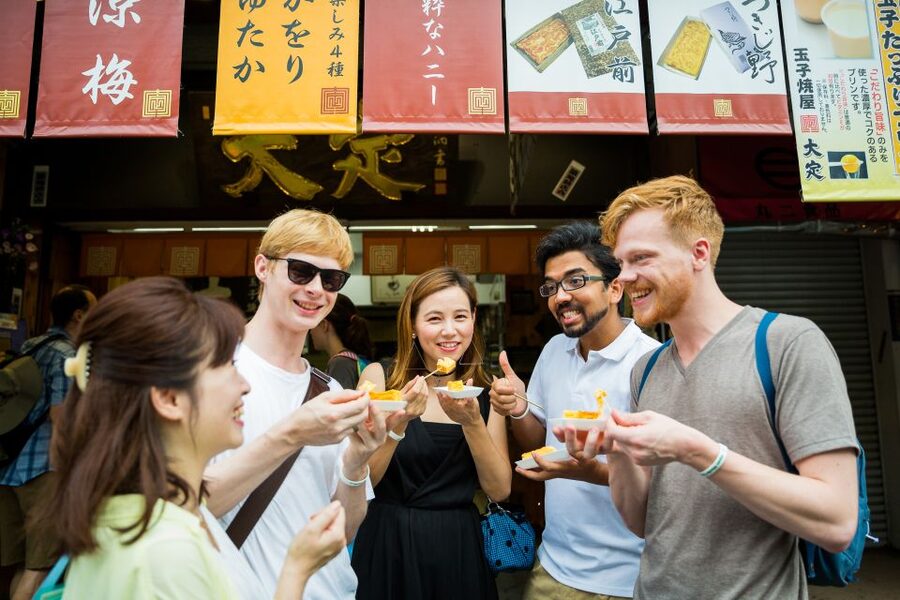
The tamagoyaki is another worthwhile stop. Japanese omelet can look plain, but it has a soft texture and a sweet-savory flavor that makes it different from a standard breakfast egg. Fried fish cake adds a more casual market bite.
Seasonal fruit helps break up the savory food. Strawberries were praised during one spring outing, though the exact selection depends on the date. This is one reason not to expect a fixed restaurant menu. Tsukiji changes with the season and with which shops are open.
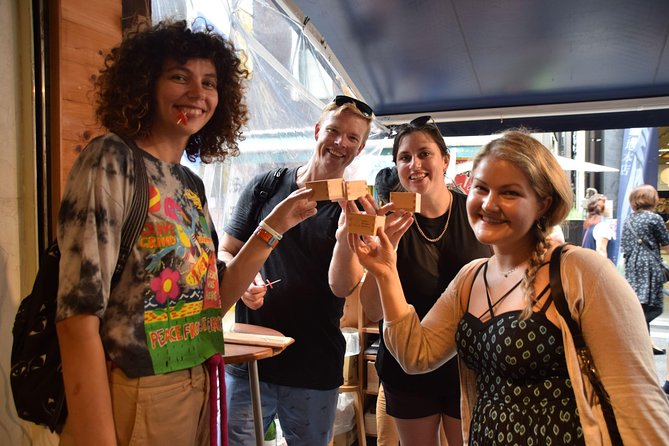
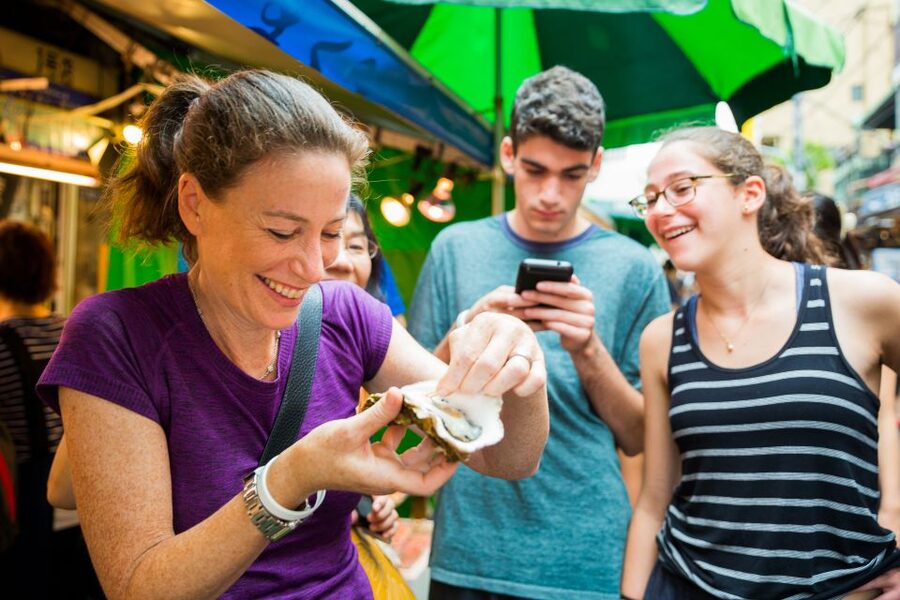
You may also encounter items such as squid, sea urchin, oysters, matcha ice cream, tea, or other seafood and snacks. These extra tastes are not guaranteed as part of the core menu, but the route gives you a chance to spot foods you might want to buy yourself. One guide helped a group choose tea to take home, and another left room for people to stop for things that caught their eye.
Alcohol is not part of the listed included menu. If you order sake or beer, expect to pay separately. The minimum drinking age is 20.
More Fish Market Tours in Tokyo
- Tokyo Sushi Making Class in Tsukiji with Professional Chef
★ 5.0 · 1,177 reviews - Tsukiji Fish Market Guided Tour and Sushi Making with Pro Chef
★ 5.0 · 775 reviews - Tsukiji Fish Market: Street Food & Culture Walking Tour
★ 5.0 · 669 reviews - Tsukiji Fish Market Small-Group Food Walking Tour
★ 5.0 · 621 reviews
The final seafood bowl or sushi stop
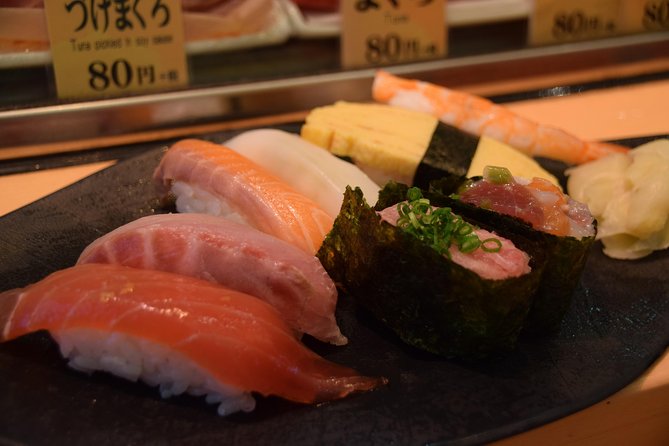
The tour finishes with a substantial seafood serving before returning to Tsukiji Station and the temple area. Depending on the day and time, you receive either sushi or a fresh fish bowl.
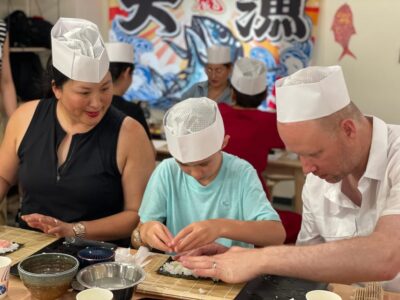
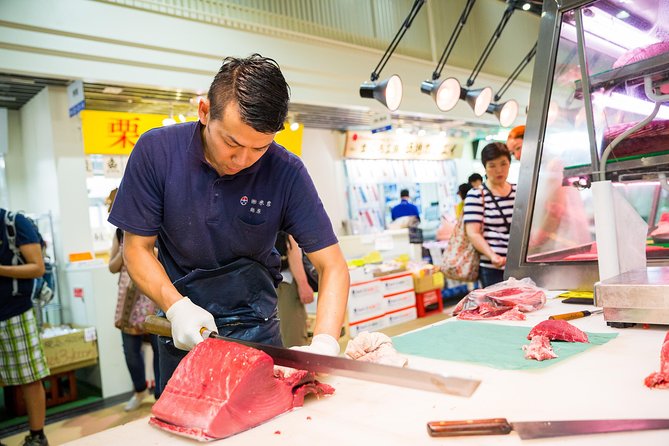
This final course gives the tasting walk a proper finish. Instead of only sampling bite-size foods, you sit down for a more complete dish. Several guides have paired the meal with a demonstration in which a sushi chef cuts and prepares fish before serving it in a sashimi bowl. That small presentation adds craft and explanation to the meal.
The timing is useful, too. By this point, you may already have eaten enough to feel satisfied, so the bowl or sushi works better as a final course than as your first stop. One group described the restaurant as a fun destination and show, though they were nearly full by then.
The meal is not guaranteed to be identical every day. If the restaurant closes unexpectedly, an alternative is provided. That flexibility is practical, but it also means you should book this for the overall market experience, not for one exact fish or one fixed restaurant dish.
What the guide adds to the experience
The guide is not only there to lead you from stall to stall. The best part of the job is interpretation. You learn why chefs visit Tsukiji, how the market serves professional kitchens, and how ingredients move from vendor to plate.
Guides have also explained the difference between the old inner wholesale market and the outer market. Some routes include a look at the wholesale side before moving outside, though the exact access can depend on the day. That distinction matters because the outer market is the public-facing food area, while the wholesale trade has a different rhythm and purpose.
The strongest guide reports point to three useful traits: clear English, practical help, and a relaxed pace. Shun was praised for making culture and food easy to understand. Robert was described as kind and entertaining, and Nazu was noted for helping the group make sense of unfamiliar foods. Miki, Yoshiko, Luna, and others have also been praised for personal attention.
You can ask questions, request help choosing something extra, and learn what to look for after the tour ends. Several guides offered recommendations for later meals, drinks, or shopping. That makes the tour more useful than a simple tasting coupon.
Price and value at $96
At $96 per person, this is not the cheapest way to eat in Tsukiji. You could buy individual snacks on your own for less, especially if you are comfortable reading menus, comparing stalls, and navigating the crowds.
The value comes from the combination of food, access to local context, and saved time. You receive multiple tastings, a Wagyu skewer, seasonal items, and sushi or a seafood bowl, plus three hours with a local English-speaking guide. If you tried to assemble the same food route without help, you might spend less, but you could also miss the best stalls or order items without understanding them.
The price makes more sense for a first visit, a short Tokyo stay, or anyone who wants an easy introduction to Japanese food. It is less compelling for an experienced Tsukiji regular who already knows the vendors and prefers to browse alone.
Think of the fee as paying for a guided meal across a market rather than paying only for lunch. You are buying a route, explanations, and a chance to try foods that might otherwise seem too uncertain.
Best timing, clothing, and food restrictions
Wear comfortable shoes. You will walk for about three hours, and the market surface can be crowded and awkward underfoot. Comfortable clothing helps too, especially if rain forces you to manage an umbrella while keeping up with the group.
Bring a camera if you want to record the stalls and dishes, but stay aware of vendors and shoppers. This is a working market, not only a photo set.
The fish market is closed on Wednesdays, Sundays, and other scheduled closing days. On those days, Japanese omelet, fish cake, and fruit may not be available because the relevant shops are closed. The tour may still operate, but the food lineup will be reduced or changed.
The tour does not accommodate vegetarian, vegan, halal, or gluten-free requests. It is built around seafood, meat, and market foods, so you should choose another experience if you need strict dietary adjustments. Infants’ meals are not included.
The route involves a moderate amount of walking and is not suitable for wheelchair users or people with mobility impairments. Rain will not necessarily cancel the walk, but it can make the narrow market lanes harder to hear and navigate.
Who should book this Tsukiji tour?
I would choose this tour if you are visiting Tsukiji for the first time and want to taste widely without making every decision yourself. It suits curious eaters, couples, small families with older children, and anyone who likes food served with a bit of local explanation.
It is also a good early-Tokyo activity. The mix of temple, market history, shrine etiquette, and food gives you useful context for other meals around Japan. You can return after the tour to buy tea, fruit, seafood, or another favorite snack with a better idea of what you are seeing.
I would skip it if you want a quiet meal, a fixed fine-dining menu, or a completely self-directed morning. It is also not a fit for strict vegetarians, vegans, people avoiding seafood, or anyone who finds moderate walking difficult.
Should you book it?
Book this Tsukiji walk if you want the market made simple, sociable, and edible. The best reasons are the small group size, the excellent Wagyu stop, the varied tastings, and the final sushi or seafood bowl with its possible fish-cutting demonstration.
Choose your day carefully. Avoid closure days, consider a weekday when possible, and expect crowds even in the morning. If you do that, the $96 price is fair for a three-hour introduction that gives you both a full stomach and a better sense of why Tsukiji still matters to Tokyo’s food culture.
FAQ
How long does the Tsukiji food tour last?
The tour lasts three hours. It includes a short guided visit through the market followed by about two and a half hours of walking and food tasting.
Where does the tour meet?
Meet your guide at the main gate of Tsukiji Honganji Temple, formally listed as Jodo Shinshu Honganji-ha Tsukiji Hongwanji.
What food is included?
The included menu features a high-grade Wagyu beef skewer, Japanese omelet, seasonal fruit, fried fish cake, and either a fresh fish bowl or sushi, depending on the day and time. Other samples may also be offered.
Is the tour offered in English?
Yes. The tour includes a live English-speaking guide.
Can vegetarian, vegan, halal, or gluten-free guests join?
The tour does not accommodate vegetarian, vegan, halal, or gluten-free requests. It is also not suitable for people who need a seafood-free or meat-free menu.
Is the tour available every day?
The tour may operate on different days, but the fish market and some shops are closed on Wednesdays, Sundays, public holidays, and other market closing days. On those dates, some foods, including tamagoyaki, fish cake, and fruit, may not be served.
More Market Walking Tours in Tokyo
- Bangkok: City Highlights Temple and Market Walking Tour
★ 4.5 · 3,990 reviews - Marrakech: Ben Youssef, Secret Garden, & Souks Walking Tour
★ 4.6 · 2,802 reviews - Marrakech: Colorful Medina Souks Guided Walking Tour
★ 4.7 · 2,470 reviews - Air Raid Shelter + St. Nicholas Market Walking Tour
★ 5.0 · 1,950 reviews
More Market Walking Tours in Japan
- Tsukiji Fish Market: Street Food & Culture Walking Tour
★ 4.8 · 259 reviews - Tokyo: Guided Walking Tour of Tsukiji Market with Breakfast
★ 4.4 · 134 reviews - Tokyo: Tsukiji Market Walking Tour & Sushi Cooking Class
★ 4.6 · 122 reviews - Tokyo: Guided Walking Tour of Tsukiji Market with Lunch
★ 4.4 · 24 reviews
Just added around Tokyo
- Tokyo: Private Tsukiji Street Food & Sake with Local Guide★ 5.0 · 3 reviews
- Tokyo: Tsukiji Market Guided Tour & Sushi-Making Experience★ 4.4 · 11 reviews
- Tokyo: Tsukiji Market and Hama-rikyu Gardens Guided Tour★ 4.8 · 73 reviews
- Tokyo : Tsukiji Fish Market Food Walking & Shrine Visit Tour★ 5.0 · 3 reviews
- Tokyo: Tsukiji Fish Market Culture Tour with Sashimi Tasting★ 4.6 · 54 reviews
- Tokyo: Tsukiji Fish Market Foodie and Educational Tour★ 5.0 · 4 reviews
- Tokyo’s Kitchen: Tsukiji Market Food & Culture Walk★ 4.7 · 74 reviews
- Tokyo: Guided Walking Tour of Tsukiji Market with Lunch★ 4.4 · 24 reviews
Fish Market Tours, compared.
Tokyo Tsukiji Fish Market Food and Culture Walking Tour
Read our review →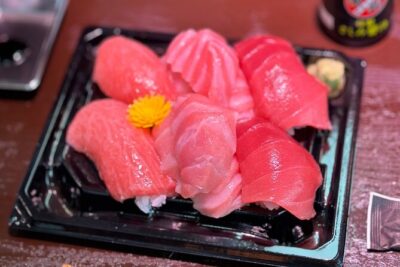

Tokyo Sushi Making Class in Tsukiji with Professional Chef
Read our review →
Tsukiji Fish Market Guided Tour and Sushi Making with Pro Chef
Read our review →
Tsukiji Fish Market: Street Food & Culture Walking Tour
Read our review →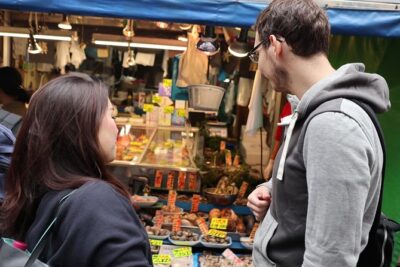
Tsukiji Fish Market Small-Group Food Walking Tour
Read our review →