Review · TOKYO
Tokyo: Tsukiji Fish Market Food and Walking tour
Tsukiji is easiest to enjoy when someone helps you make sense of its packed lanes, unfamiliar foods, and many small counters. This two-hour walk starts at the striking Tsukiji Hongwanji Temple, then takes you through the market for seafood, sushi, omelets, fried fish cakes, fruit, and other local bites.
I like the choose-your-own-food format, since you pay only for what you want to eat. I also like the small group size and flexible pace. Guides including Rie, Haydn, Jim, Minori, Sayaka, and Shino have been praised for steering people toward good stalls and away from tourist-priced choices.
The catch is simple: food and drinks are not included, and some people may find the temple visit a less useful use of time than an immediate start at the market. Bring cash, and plan to spend extra if you want to taste widely.
Key points to know before booking
- Food is paid for separately: Choose only the dishes you want, but bring yen for the stalls.
- The tour begins at a temple: You get a 30-minute look at Tsukiji Hongwanji before entering the market.
- Small groups help: The maximum is 10 people, useful in narrow and crowded market lanes.
- Guides make the food choices easier: Rie, Haydn, Jim, Minori, Sayaka, and others have led groups through the stalls.
- Expect a two-hour introduction: The schedule allows about 30 minutes at the temple, one hour in the fish market, and 30 minutes in Tsukiji Jogai Market.
- You return to the starting point: The walk begins and ends near Tsukiji Station at the Starbucks meeting point.
Why a guide helps at Tsukiji
Tsukiji is not the wholesale market it once was. The famous inner market and tuna auction moved to Toyosu, but Tsukiji’s outer market remains a busy food district filled with seafood shops, counters, kitchen stores, and small places selling prepared food.
That distinction matters. If you arrive expecting to watch the current tuna auction, this is not the right experience. The tour focuses on Tsukiji’s history, food culture, and outer-market streets, including places where fresh seafood and Japanese snacks are sold.
I like the idea of using a guide here because the market can feel like a puzzle. You may see sea urchin, eel, wagyu beef, sushi, tamagoyaki, fish cakes, fruit, and unfamiliar ingredients within a few minutes. A guide can explain what you are looking at, suggest what is worth trying, and help you avoid spending your food budget on the first stall you pass.
The flexible setup also works well for mixed groups. You can choose seafood if that is your priority, or focus on cooked snacks and fruit if raw fish is not your thing. You are not locked into a fixed tasting menu.
More Fish Market Tours in Japan
- Tokyo Tsukiji Fish Market Food and Culture Walking Tour
★ 5.0 · 3,184 reviews - Tokyo: Tsukiji Fish Market Guided Walking Tour
★ 4.9 · 1,397 reviews - Tokyo Sushi Making Class in Tsukiji with Professional Chef
★ 5.0 · 1,177 reviews
Starting at Tsukiji Hongwanji Temple
The meeting point is the Starbucks Coffee near Tsukiji Station, at 2 Chome 12-8 in Chuo City. From there, the walk begins with Tsukiji Hongwanji Temple, about a 30-minute stop with admission included.
The temple has an unusual architectural style for Tokyo, which gives the tour a calmer opening than you might expect from a food-market walk. Your guide explains the site and its place in the neighborhood before taking you toward the market.
This first stop has two benefits. It gives you a bit of local context, and it lets you meet your guide before entering the tight market lanes. Guides such as Haydn have been especially well received for explaining the temple and Japanese culture in clear, approachable terms.
Still, this is the tour’s most debatable feature. If you booked mainly for food, you may feel that half an hour at a temple delays the main event. One person specifically found the temple interesting but would have preferred more market time. I would choose this tour if you want culture along with food, not if you want two straight hours of eating.
One hour inside the Tsukiji food market
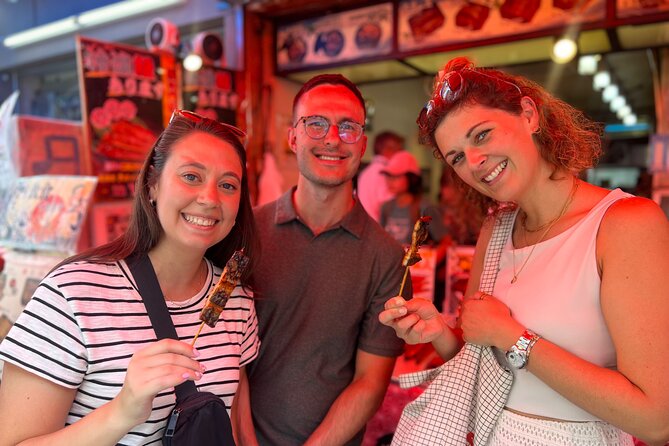
After the temple, you spend about an hour exploring the fish market area. The guide introduces Tsukiji’s past, including its former importance as a major fish-market site, then helps you navigate the shops and counters.
The useful part is not simply being shown where the market is. It is learning how to look at what is being sold. You can ask about sushi ingredients, seasonal produce, fish varieties, Japanese cooking staples, and ready-to-eat foods. The guide can also help with ordering and explain how particular foods fit into Japanese meals.
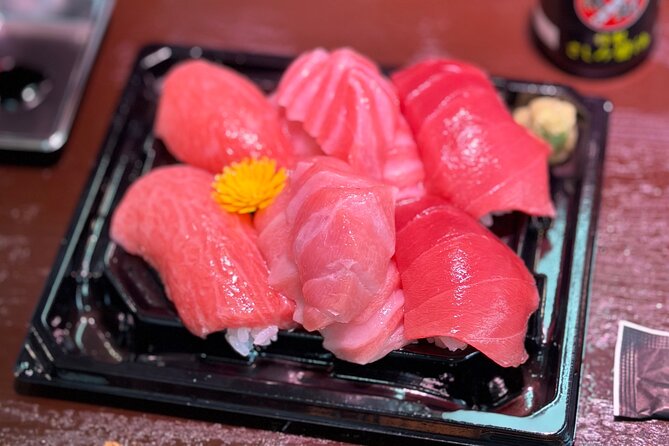
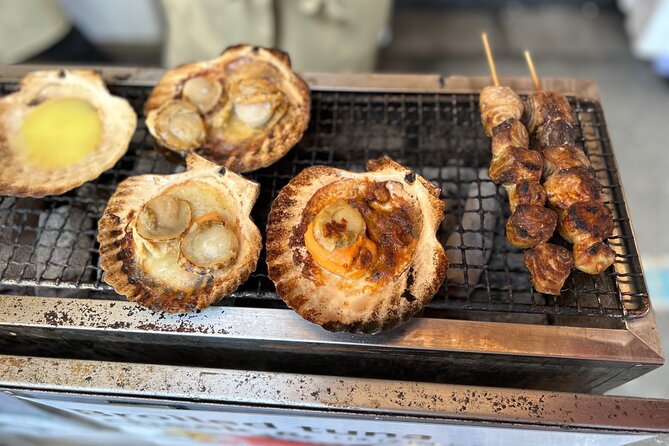
The tasting list is broad rather than fixed. Depending on your choices and what is available, you might try fresh seafood, sushi, fruit, Japanese omelets, fried fish cakes, eel, sea urchin, or wagyu beef. The experience is built around sampling several small items instead of sitting down to one formal meal.
I like this approach for a first morning in Tokyo. It gives you a quick introduction to foods that might otherwise seem difficult to order. Guides such as Rie have encouraged people to try items they might have skipped, including sea urchin and eel, while still respecting personal preferences.
The market can be crowded, and there is walking and standing throughout. This is not a slow restaurant meal. You move between stalls, pause to eat, and continue before the two-hour schedule runs out. If you need frequent seating or want time to linger over every dish, the pace may feel brisk.
Thirty minutes through Tsukiji Jogai Market
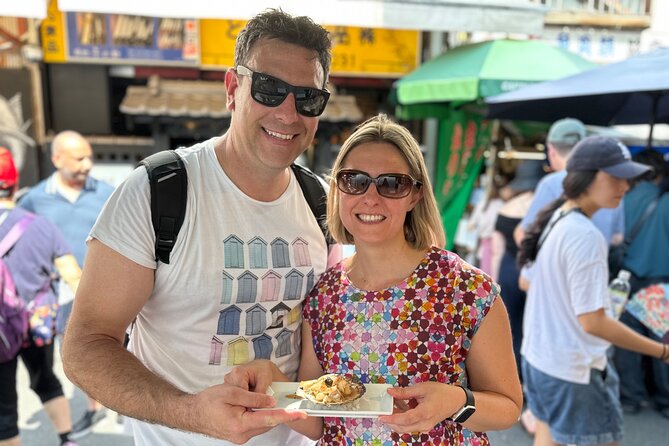
The final scheduled stop is Tsukiji Jogai Market, the outer-market area packed with food shops and stalls. You have about 30 minutes here, though the group’s exact pace can vary.
This is where the food-market character comes through most clearly. You may see seafood counters, Japanese street food, produce, cooking ingredients, and products aimed at both local shoppers and visitors. The guide points out places to sample food and helps you decide what fits your appetite and budget.
The outer market is also where local knowledge can save money. One guide, Haydn, was praised for identifying good value and showing people where similar products cost less than at obvious tourist stops. That kind of help is one of the strongest reasons to book instead of walking alone.
Do remember that this is not an all-inclusive tasting tour. Every sample comes from your own wallet. One practical estimate given for generous food sampling is around 10,000 Japanese yen, though your total depends entirely on what you order. You can spend less by choosing a few small bites, or more if you buy seafood, sushi, wagyu, or several premium items.
More Fish Market Tours in Tokyo
- Tsukiji Fish Market Guided Tour and Sushi Making with Pro Chef
★ 5.0 · 775 reviews - Tokyo: Tsukiji Fish Market Food and Culture Walking Tour
★ 4.7 · 757 reviews - Tsukiji Fish Market: Street Food & Culture Walking Tour
★ 5.0 · 669 reviews - Tsukiji Fish Market Small-Group Food Walking Tour
★ 5.0 · 621 reviews
What the guides add to the experience
The tour uses local Japanese English-speaking guides, and the individual guide can shape the feel of the morning. Rie has been described as energetic and attentive, with a good eye for food stops and lower-priced alternatives. Haydn has received praise for his market direction and temple explanations.
Jim is known for adding Japanese cultural context while guiding people through the market. Minori has led groups through food choices and local history, while Sayaka has been praised for a friendly, funny approach. Shino has a cooking background and has been described as efficient when helping a group make the most of limited time.
Those details matter because Tsukiji is less about one grand sight than many small decisions. Which fish should you try? Is that stall selling a fair portion? How do you eat the item? Is this a market price or a visitor price? A good guide makes those choices less stressful.
The guide quality can vary from one departure to another, as it does with any experience using several hosts. One person found the organization weak and felt the market explanation was too limited. I would treat that as a useful reminder to keep your expectations realistic: this is a guided food walk, not a formal food-history lecture.
The food budget and what you actually receive
The $30 price is reasonable if you think of it as payment for orientation, translation help, and a planned introduction to Tsukiji. It is not a bargain meal, because your food is extra. You are paying for access to a guide who helps you use the market well.
The no-set-menu format is a real advantage. You do not have to pay for dishes you dislike, and you can adjust your spending to your appetite. It is also useful for families or groups with different tastes. One person can choose sushi while another sticks with an omelet, fruit, or fried fish cake.
Bring cash in Japanese yen. Several stalls may not accept the payment method you normally use, and the tour price does not cover food or drinks. If you want to try a good range of dishes, budget well beyond the $30 booking cost.
I would also eat lightly before meeting the group. The tour works best when you have room for several small portions. You do not need to order everything, but arriving hungry gives you more freedom to make the most of the market.
Group size, timing, and walking effort
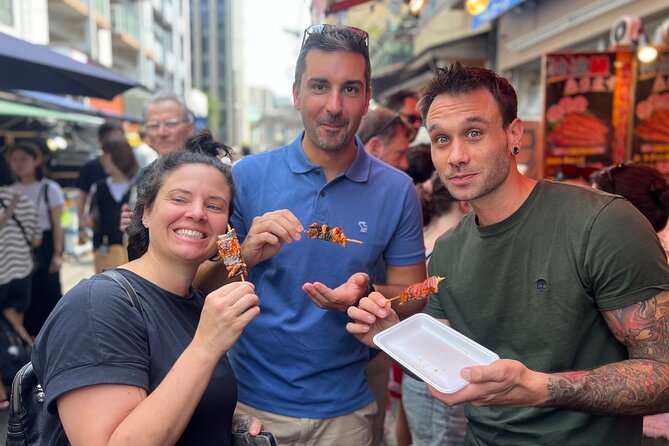
The maximum group size is 10 people. That is small enough for a guide to keep the group together and answer questions, though market lanes can still make it hard to hear every word.
The total duration is about two hours. The published rhythm is 30 minutes at the temple, 60 minutes in the fish-market area, and 30 minutes at Tsukiji Jogai Market. The tour ends back at the meeting point, which makes it easy to continue sightseeing from Tsukiji Station afterward.
You should expect walking and standing, but the activity is not described as especially strenuous. Comfortable shoes make sense, particularly if you plan to continue exploring the neighborhood after the tour.
The flexible schedule is helpful when the group wants to spend more time on a certain kind of food. It can also mean that the exact route and number of tastings vary. If you need a tightly timed itinerary, the flexible pace may feel less predictable. If you prefer to ask questions and follow your appetite, it is a plus.
Who will get the most from this walk?
I would recommend this experience to first-time visitors who want an easy introduction to Japanese market food. It is also a good choice if you are curious about raw seafood but want someone nearby to explain the options.
Families can benefit from the small group format and the ability to choose food individually. The tour also suits people who enjoy local culture, since the temple and market history are part of the experience.
It may be less suitable for you if you want the tuna auction, a sit-down meal, or a fully prepaid tasting menu. It is also not ideal if you dislike crowds, standing, or making several small food purchases during a short walk.
The tour is especially useful early in your Tokyo visit. You can learn which foods appeal to you, understand the market layout, and return later on your own with a better idea of what to buy.
Booking details worth noting
Confirmation is provided when you book. The activity runs near public transportation, starts at the Starbucks by Tsukiji Station, and returns to that meeting point.
Most people can take part, and service animals are allowed. Cancellation is free up to 24 hours before the start time. Changes or cancellations made within 24 hours are not accepted for a refund.
Because food is separate, the most important preparation is financial rather than logistical: carry Japanese yen and decide how much you want to spend on tastings. A small group and a mobile ticket keep the booking process simple, but the market itself is the part that requires planning.
Should you book the Tsukiji food tour?
Book it if you want a guided first look at Tsukiji, especially if you are unsure what to order or worried about getting lost among the stalls. The flexible food choices, small group limit, and guides who can explain dishes make the $30 fee useful.
Skip it if you already know the market well, want to spend the full time eating, or expect the current tuna auction. The temple stop may also feel like a detour if food is your only goal.
For most first-time visitors, I think the tour offers a fair balance of food, culture, and practical help. Bring yen, arrive hungry, and treat the experience as a guided introduction rather than an all-you-can-eat package.
FAQ
How much does the tour cost?
The tour costs $30 per person.
Are food and drinks included?
No. You choose and pay for your own food and drinks at the market.
How long does the experience last?
The tour lasts approximately two hours.
Where does the tour begin?
It begins at Starbucks Coffee near Tsukiji Station, at 2 Chome 12-8 in Chuo City, Tokyo.
Where does the tour end?
The activity ends back at the meeting point.
What places are included?
The route includes Tsukiji Hongwanji Temple, Tsukiji Fish Market, and Tsukiji Jogai Market.
How many people can join?
The tour has a maximum of 10 participants.
Can I cancel for a refund?
You can cancel at least 24 hours before the start time for a full refund. Cancellations or changes made less than 24 hours before the start time are not accepted.
More Market Walking Tours in Tokyo
- Bangkok: City Highlights Temple and Market Walking Tour
★ 4.5 · 3,990 reviews - Marrakech: Ben Youssef, Secret Garden, & Souks Walking Tour
★ 4.6 · 2,802 reviews - Marrakech: Colorful Medina Souks Guided Walking Tour
★ 4.7 · 2,470 reviews - Air Raid Shelter + St. Nicholas Market Walking Tour
★ 5.0 · 1,950 reviews
More Market Walking Tours in Japan
- Tsukiji Fish Market: Street Food & Culture Walking Tour
★ 4.8 · 259 reviews - Tokyo: Guided Walking Tour of Tsukiji Market with Breakfast
★ 4.4 · 134 reviews - Tokyo: Tsukiji Market Walking Tour & Sushi Cooking Class
★ 4.6 · 122 reviews - Tokyo: Guided Walking Tour of Tsukiji Market with Lunch
★ 4.4 · 24 reviews
Just added around Tokyo
- Tokyo: Private Tsukiji Street Food & Sake with Local Guide★ 5.0 · 3 reviews
- Tokyo: Tsukiji Market Guided Tour & Sushi-Making Experience★ 4.4 · 11 reviews
- Tokyo: Tsukiji Market and Hama-rikyu Gardens Guided Tour★ 4.8 · 73 reviews
- Tokyo : Tsukiji Fish Market Food Walking & Shrine Visit Tour★ 5.0 · 3 reviews
- Tokyo: Tsukiji Fish Market Culture Tour with Sashimi Tasting★ 4.6 · 54 reviews
- Tokyo: Tsukiji Fish Market Foodie and Educational Tour★ 5.0 · 4 reviews
- Tokyo’s Kitchen: Tsukiji Market Food & Culture Walk★ 4.7 · 74 reviews
- Tokyo: Guided Walking Tour of Tsukiji Market with Lunch★ 4.4 · 24 reviews
Fish Market Tours, compared.
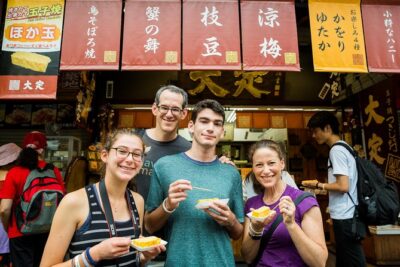
Tokyo Tsukiji Fish Market Food and Culture Walking Tour
Read our review →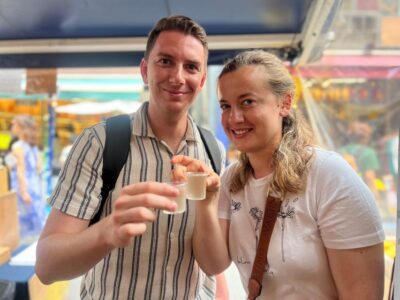

Tokyo Sushi Making Class in Tsukiji with Professional Chef
Read our review →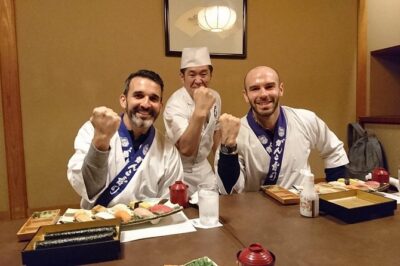
Tsukiji Fish Market Guided Tour and Sushi Making with Pro Chef
Read our review →Tsukiji Fish Market Food and Culture Walking Tour
Read our review →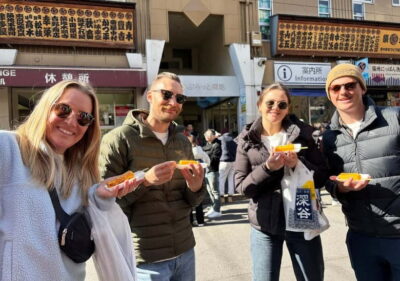
Tsukiji Fish Market: Street Food & Culture Walking Tour
Read our review →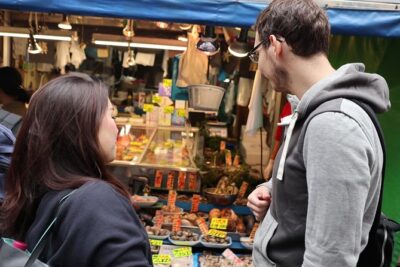
Tsukiji Fish Market Small-Group Food Walking Tour
Read our review →