
Review · TOKYO
Tokyo: Tsukiji Fish Market Seafood & Street Eats
Tsukiji is best understood one bite at a time. This 2.5-hour morning walk takes you from the unusual Tsukiji Hongwanji Temple into the old fish-market district, where tuna, crab, eel, scallops, seafood crackers, and street snacks compete for your attention. Food is not included, so you control both the menu and the bill.
I like the small maximum of 10 people, which gives you room to ask questions and keeps the group manageable among the market stalls. I also like the practical help from guides such as Haru, Toko, and Ryo, especially when a popular sushi or tuna shop has a long queue. The catch is simple: the $42 tour price covers guiding, not lunch, so budget extra for what you eat.
Key Points Before You Book
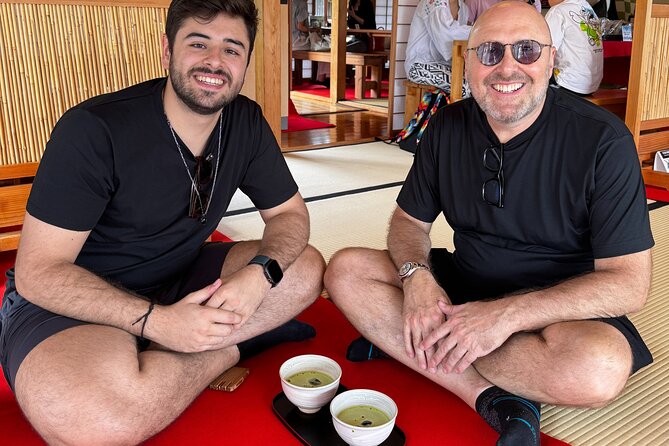
- Two different sides of Tsukiji: Begin at Tsukiji Hongwanji Temple, then move into the seafood stalls and food shops.
- Food costs extra: You can buy as little or as much as you like, from a quick snack to a full seafood meal.
- Guides help with choices and queues: Haru has waited in line at popular tuna and sushi spots while people in his group looked around.
- A compact morning plan: The tour lasts about two hours and 30 minutes, making it easy to fit before another Tokyo activity.
- Small-group format: The maximum is 10 people, useful in narrow market lanes and busy food areas.
- Strong fit for families and food-focused visitors: Guides have handled multigenerational groups and children with patience.
Why Tsukiji Still Makes Sense After the Tuna Auction Move
Tsukiji is no longer the main site for Tokyo’s wholesale tuna auction, but that does not make it a poor food stop. The public-facing market area remains a useful place to see seafood shops, Japanese snacks, cooking goods, and small restaurants concentrated in one district.
The tour focuses on Tsukiji Jogai Market, the outer market area, rather than promising access to the wholesale operation. That distinction matters. You are coming here to browse stalls, eat, ask questions, and watch the daily trade of food at close range. You are not signing up for an auction visit.
I like this approach for a first morning in Tokyo. The market can be confusing because many small shops sit close together, and not every stall is equally useful for a visitor who does not read Japanese. A local guide can point you toward the foods that fit your appetite and explain what you are seeing without turning the morning into a formal lecture.
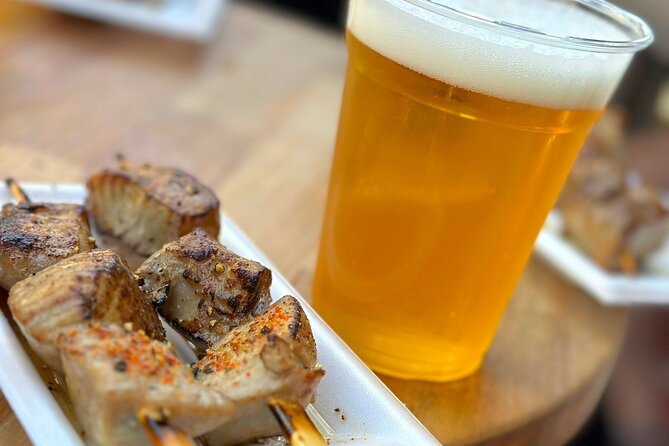
The market also works well as a food introduction. You might see familiar items such as sushi, then encounter preparations you would not have chosen on your own. The supplied food examples include fatty tuna, seafood rice crackers, tuna skewers, crab, eel, and scallops. Since you pay directly for food, you can keep the meal modest or turn it into a serious seafood tasting.
More Fish Market Tours in Japan
- Tokyo Tsukiji Fish Market Food and Culture Walking Tour
★ 5.0 · 3,184 reviews - Tokyo: Tsukiji Fish Market Food and Walking tour
★ 5.0 · 1,724 reviews - Tokyo: Tsukiji Fish Market Guided Walking Tour
★ 4.9 · 1,397 reviews
Starting at Tsukiji Hongwanji Temple
The meeting point is at 3-chōme-9-10 Tsukiji, Chuo City. The walk includes Tsukiji Hongwanji Temple, described as having a unique architectural site in Tokyo. Its inclusion gives the morning a welcome pause before the market begins.
I like starting here because it places the food district in a wider local setting. You get a cultural stop first, then move toward the stalls and shops that made Tsukiji famous. The temple is included in the admission, so you are not paying a separate entry fee during the tour.
Do not expect a long temple visit. The published timing gives about 90 minutes to the fish-market portion and about one hour to Tsukiji Jogai Market, while the full activity lasts roughly 150 minutes. The temple is part of the route rather than a separate, extended sightseeing session.
Your guide can provide context about the temple and the area before the group moves on. That transition is useful if you want more than a string of food purchases. You see how a major religious site and a working market fit into the same Tokyo neighborhood.
Inside Tsukiji Fish Market for 90 Minutes
The first major market section lasts about one hour and 30 minutes. Here, the guide explains Tsukiji’s role in Tokyo’s seafood culture and its connection to the famous tuna auctions that took place in the district.
This is where the tour earns its keep if you are unsure how to approach the market. Instead of walking past every shop without a plan, you can ask what is worth trying, how a dish is usually eaten, and which purchase makes sense for your budget. The guide’s local perspective is more useful than a simple map.
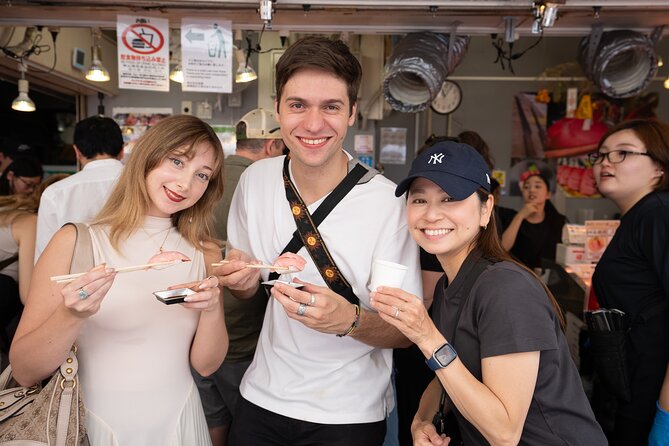
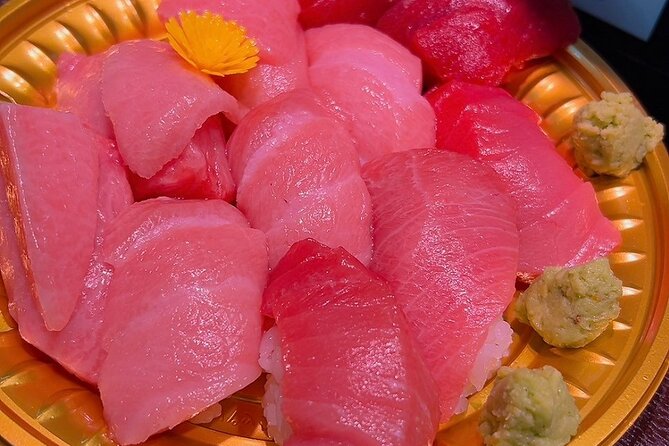
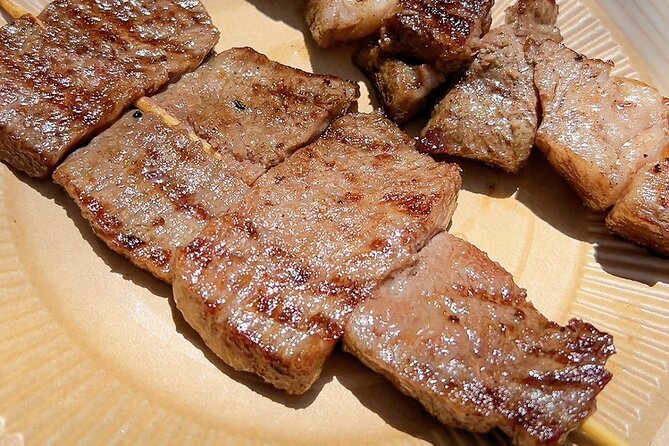
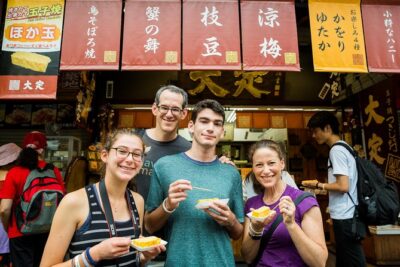
Food choices can be the highlight. One family’s tasting included three types of fatty tuna sashimi, seafood rice crackers, tuna kabobs, crab, eel, and scallops. That list shows the range of the stop, but it does not mean those foods are bundled into your booking. You must buy every dish separately.
For me, the key advantage is flexibility. You can try one piece of tuna and move on, or use the market as breakfast and lunch combined. If you are with children, sharing small portions may be a sensible way to let them try seafood without committing to a full plate.
The guide can also make queues less painful. Haru has waited in line at a popular tuna establishment while the group looked around, and another account specifically praised his help at a busy sushi spot. This is not a guaranteed arrangement at every stop, but it shows the kind of hands-on assistance you may receive.
Ryo’s style appears better suited to people who want to focus on food rather than receive a long history lesson. That can be a plus if your goal is simply to find excellent tastes in a short time. Toko has also handled a family with two children, with a patient approach that suits younger eaters.
The main drawback is that market conditions and queues can shape the experience. A popular shop may take time, and a short tour cannot cover every stall. You should treat the route as a guided introduction, not a complete survey of Tsukiji.
One Hour in Tsukiji Jogai Market
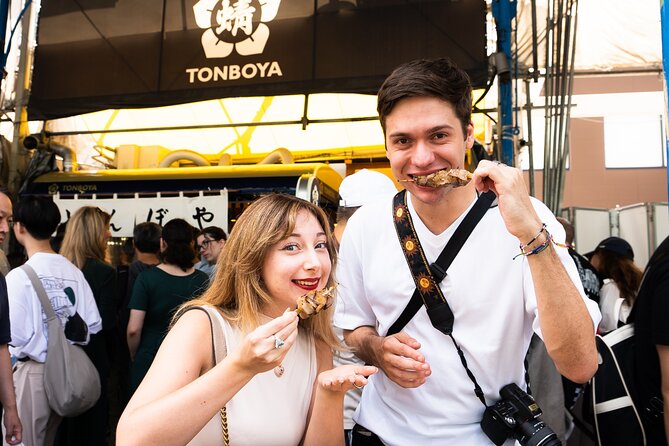
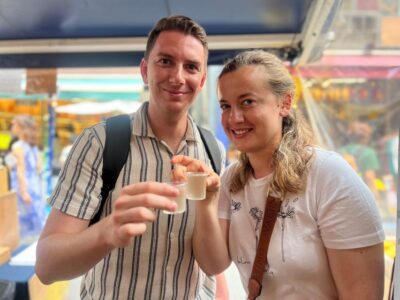
The second market section lasts about one hour and takes place in Tsukiji Jogai Market. This is the part most visitors picture when they think of Tsukiji: small shops, seafood counters, prepared foods, and Japanese street eats close together.
The word jogai refers to the outer market area, and that is the practical focus here. You will walk through stalls selling fresh seafood and snack foods, with your guide explaining the customs and products along the way.
I like the extra hour because it gives the tour a clear rhythm. The first market section introduces Tsukiji’s place in Tokyo’s seafood trade. The Jogai section gives you more time to taste, browse, and choose what deserves a spot on your next meal.
Do not arrive expecting every dish to be included. The tour price covers the local English-speaking guide, market access, and temple access. Food and drinks are separate. This is not a flaw if you prefer control, but it changes the way you should compare the $42 price with other food tours.
The best value comes when you use the guide actively. Ask about unfamiliar seafood. Ask which stall is suitable for a quick snack. Tell the guide if you prefer raw fish, cooked food, sweets, or a lighter meal. Your spending then works alongside the guiding rather than duplicating it.
The market can also be a good place for souvenirs or food-related browsing, though the supplied details focus on seafood and street food rather than specific shopping stops. Keep your attention on the guide and your belongings as you move through crowded areas.
More Fish Market Tours in Tokyo
- Tokyo Sushi Making Class in Tsukiji with Professional Chef
★ 5.0 · 1,177 reviews - Tsukiji Fish Market Guided Tour and Sushi Making with Pro Chef
★ 5.0 · 775 reviews - Tokyo: Tsukiji Fish Market Food and Culture Walking Tour
★ 4.7 · 757 reviews - Tsukiji Fish Market: Street Food & Culture Walking Tour
★ 5.0 · 669 reviews
What the $42 Price Actually Covers
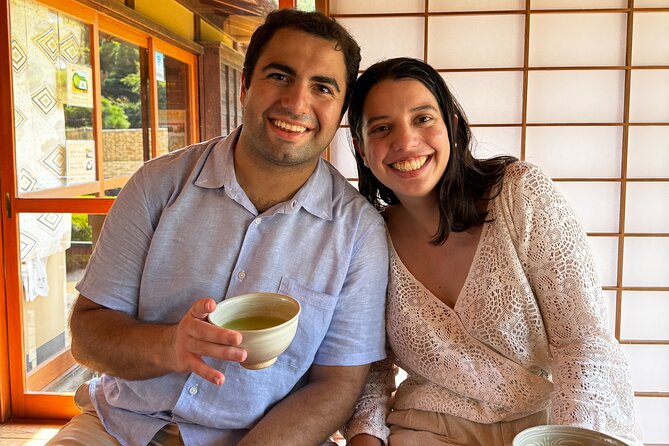
At $42 per person, this is not an all-inclusive food tour. Think of the price as paying for a local guide, a planned route, explanations about Tsukiji, and help making decisions in a busy food district.
That structure can offer solid value if you want local orientation without a long day commitment. A private guide would usually cost more, while exploring alone means you must choose stalls, interpret menus, and work out the area’s story yourself. The group limit of 10 keeps this from feeling like a large bus excursion.
Your final cost depends on your appetite. One person can sample a few items, while another can order several seafood dishes and spend much more. This makes the tour suitable for mixed groups, since one person can eat lightly and another can make the market a full meal.
I would compare the tour with two questions:
- Do you want help choosing food and understanding the area?
- Are you comfortable paying separately for each dish?
If you answer yes to both, the price is easier to justify. If you want a fixed-price tasting menu with food already covered, this is not that kind of experience.
The excellent rating record, listed at 5 out of 5 from 115 ratings with 99 percent recommending it, supports the idea that the guide quality is a major part of the value. Still, ratings cannot remove the basic cost issue: your seafood bill comes after the tour price.
The Guides Make the Difference
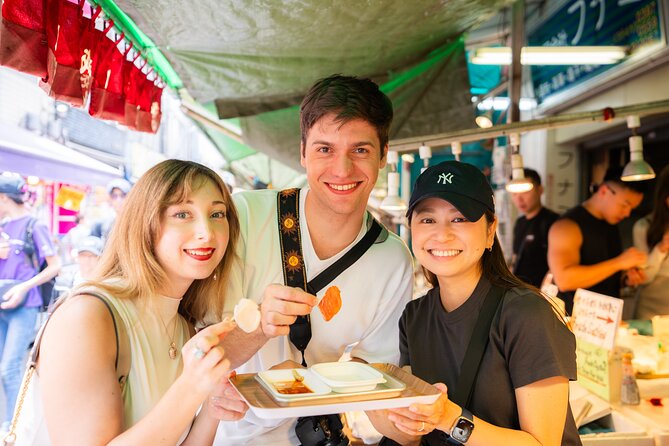
The experience depends heavily on the individual guide. Several names appear in the feedback: Haru, Toko, and Ryo.
Haru is especially useful if you want active help at the market. He has been early for the meeting, waited in line at popular tuna and sushi spots, and adjusted when a multigenerational family had trouble finding accessible subway exits. Those details suggest a guide who pays attention to the practical side of the morning, not only the talking points.
Toko seems well suited to families. Her patient approach with two children matters because market food can be unfamiliar, and young children may need more time to decide what they want.
Ryo is a good match for a food-first visit. If you want direct recommendations and less formal background, his approach may suit you. He has also helped with queues, which can free you to look around instead of spending the full morning standing in line.
You cannot select a particular guide from the information provided, so book this knowing that your exact style match is not guaranteed. Still, the range of guide strengths is encouraging. The tour is not built only around a fixed script.
Timing, Meeting Point, and Group Size
The activity takes place in the morning and lasts approximately two hours and 30 minutes. That timing is practical in Tokyo, where you may want to reserve the afternoon for Ginza, Asakusa, a museum, or another neighborhood.
The tour begins and ends at the same meeting point in Tsukiji. It is near public transportation, which helps, but you should still allow time to find 3-chōme-9-10 Tsukiji before the start. A late arrival can cut into a short tour, especially if the group has already entered the market.
A maximum of 10 people is a meaningful feature here. Ten is still a group, but it is small enough for questions and easier movement through narrow shop areas. It also gives the guide a better chance to notice dietary preferences, children who need help, or someone who wants to stop for a particular item.
The route requires walking and standing around market stalls. The activity notes say most people can participate, but no detailed mobility plan is provided. If you need specific subway access or have mobility concerns, contact the provider before booking rather than relying on general information. One guide has accommodated a family dealing with accessibility exits, but that should not be treated as a promise for every group.
Who Will Get the Most From This Walk?
This is a strong choice for a first visit to Tsukiji, particularly if you want to eat rather than simply take photographs. It also suits people who enjoy asking questions and making several small food stops.
Families can benefit from the compact schedule and the guides’ experience with children. The option to buy only what each person wants is easier than committing everyone to a set tasting menu.
It also works for food-focused adults who want a quick route to tuna and other seafood. Ryo’s food-first style, and Haru’s help with queues, show how the tour can be adapted toward eating rather than extended historical commentary.
The tour is less suitable if you want a wholesale auction visit, a fully prepaid food experience, or a long temple tour. It is also not ideal if you dislike busy market lanes or prefer to explore without a schedule.
Practical Advice for a Better Morning
Arrive hungry, but not so hungry that you rush your choices. The market offers enough variety to make a few small purchases more enjoyable than ordering one large dish at the first stall.
Set a food budget before you meet the guide. Since food and drinks are not included, this simple step keeps the $42 tour from turning into an unexpectedly expensive breakfast.
Tell the guide what you want from the visit. You might prefer fatty tuna, cooked seafood, street snacks, or a quick overview with only one tasting. Clear requests help the guide use the limited time well.
Wear shoes suited to walking and standing. The tour is short, but the itinerary gives 90 minutes to the fish-market portion and another hour to the Jogai Market. You will want to focus on the stalls, not tired feet.
Keep your schedule flexible after the tour. The activity ends back at the meeting point, and the exact time spent at a queue or food counter can affect the pace.
Cancellation and Weather Notes
You can cancel for a full refund up to 24 hours before the start time. Changes or cancellations made less than 24 hours ahead are not accepted for a refund.
The activity requires good weather. If poor weather cancels it, you are offered another date or a full refund. A minimum number of people is also required, and if that minimum is not met, you are offered another date, another experience, or a full refund.
Should You Book the Tsukiji Seafood Walk?
Book it if you want a short, guided introduction to Tsukiji with food choices left in your hands. The combination of Tsukiji Hongwanji Temple, the fish-market story, and an hour in Jogai Market gives the morning more shape than a simple stall crawl.
The strongest reason to book is the guide support. Haru, Toko, and Ryo have each shown useful strengths, from queue help to family patience and food-focused recommendations. The small group and compact schedule add to the appeal.
Skip it if you want food included in the price, access to the former tuna auction, or a private and slow-paced tour. For everyone else, $42 is a fair guiding fee, provided you set aside extra money for the seafood you came to eat.
FAQ
How long does the Tsukiji seafood tour last?
The experience lasts approximately two hours and 30 minutes. About 90 minutes are planned for Tsukiji Fish Market, followed by about one hour at Tsukiji Jogai Market.
Is food included in the tour price?
No. Food and drinks are not included. You purchase any seafood, sushi, snacks, or beverages separately during the walk.
What places are included on the route?
The route includes Tsukiji Hongwanji Temple, Tsukiji Fish Market, and Tsukiji Jogai Market. Admission to the temple and Jogai Market is included.
Where does the tour begin and end?
The meeting point is 3-chōme-9-10 Tsukiji, Chuo City, Tokyo 104-0045, Japan. The activity ends back at the meeting point.
How large is the tour group?
The maximum group size is 10 people.
Is the tour offered in English?
Yes. The experience includes a local Japanese English-speaking guide.
Can I cancel for a full refund?
Yes, if you cancel at least 24 hours before the experience start time. Cancellations or changes made less than 24 hours before the start are not refunded or accepted.
More Shopping Tours in Tokyo
- Tsukiji Fish Market: Street Food & Culture Walking Tour
★ 4.8 · 259 reviews - Private Toyosu & Tsukiji Market Adventure with Tuna Auction
★ 4.8 · 191 reviews - Tokyo: Toyosu Tuna Auction &Tsukiji Market Gourmet Adventure
★ 4.8 · 187 reviews - Tokyo: Tsukiji Fish Market Tour with 6 Stops & Seafood Lunch
★ 4.5 · 165 reviews
More Markets in Tokyo
- Tsukiji Fish Market Small-Group Food Walking Tour
★ 5.0 · 621 reviews - Tokyo: Tsukiji Fish Market Sushi Making Class with Pro Chef
★ 4.9 · 506 reviews - Tokyo Food Tour Taste Fresh Delights at Tsukiji Market
★ 5.0 · 429 reviews - Tokyo Tsukiji Fish Market Tour and Sushi Making Lesson
★ 5.0 · 390 reviews
Just added around Tokyo
- Tokyo: Private Tsukiji Street Food & Sake with Local Guide★ 5.0 · 3 reviews
- Tokyo: Tsukiji Market Guided Tour & Sushi-Making Experience★ 4.4 · 11 reviews
- Tokyo: Tsukiji Market and Hama-rikyu Gardens Guided Tour★ 4.8 · 73 reviews
- Tokyo : Tsukiji Fish Market Food Walking & Shrine Visit Tour★ 5.0 · 3 reviews
- Tokyo: Tsukiji Fish Market Culture Tour with Sashimi Tasting★ 4.6 · 54 reviews
- Tokyo: Tsukiji Fish Market Foodie and Educational Tour★ 5.0 · 4 reviews
- Tokyo: Guided Walking Tour of Tsukiji Market with Lunch★ 4.4 · 24 reviews
- Tokyo’s Kitchen: Tsukiji Market Food & Culture Walk★ 4.7 · 74 reviews
Fish Market Tours, compared.
Tokyo Tsukiji Fish Market Food and Culture Walking Tour
Read our review →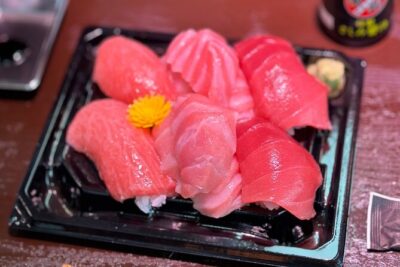

Tokyo Sushi Making Class in Tsukiji with Professional Chef
Read our review →
Tsukiji Fish Market Guided Tour and Sushi Making with Pro Chef
Read our review →Tsukiji Fish Market Food and Culture Walking Tour
Read our review →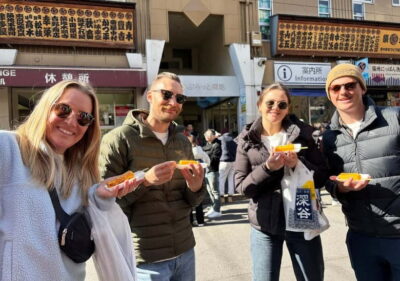
Tsukiji Fish Market: Street Food & Culture Walking Tour
Read our review →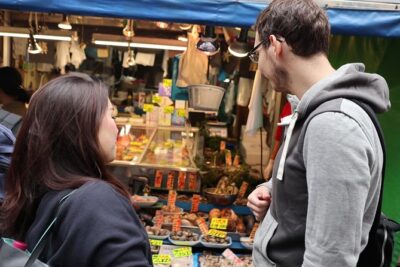
Tsukiji Fish Market Small-Group Food Walking Tour
Read our review →Browse the lists this tour appears in