
Review · TOKYO
Tokyo Morning Tour: Asakusa, Meiji Shrine and Tsukiji Fish Market
Tokyo can feel like three cities before lunch. This morning tour links the forested calm of Meiji Jingu, the food stalls of Tsukiji, and old Asakusa in about four hours. The small group, capped at eight, helps the guide keep everyone moving without turning the morning into a flag-following exercise.
I like two things here: the early start helps you reach popular spots before the thickest crowds, and the route ends in Asakusa, where you can keep exploring on your own. Guides including Ryota, Yota, and Andres Burgos have been praised for good timing, photo help, and clear explanations. The main drawback is the brisk pace, plus roughly 600 yen for public transport and extra money for food.
Key points to know
- Three very different Tokyo districts: Move from Meiji Jingu’s wooded grounds to Tsukiji’s food streets and Asakusa’s temple quarter.
- A maximum of eight people: The small group makes it easier to hear the guide and ask questions.
- An early start with a practical payoff: The schedule is designed to reach major sights before the day gets crowded.
- A guide who handles the route: You do not need to study train connections or navigate between each stop.
- Photos are included: The guide takes pictures during the tour, useful when you are traveling with family or friends.
- Asakusa is the final stop: You can continue sightseeing, shop, or eat nearby after the organized portion ends.
Three sides of Tokyo before lunch
I like this tour because it does not treat Tokyo as one big blur of towers, neon, and train stations. In a single morning, you see a major Shinto shrine, one of the city’s best-known food markets, and its oldest temple district.
The order also makes sense. Meiji Jingu offers a quiet beginning, Tsukiji adds movement and flavor, and Senso-ji gives you a strong finish in historic Asakusa. You get contrast rather than three similar photo stops.
At about four hours, this is a sampler, not a slow study of each district. You will have around an hour at each listed stop, with travel between them included in the overall morning. That makes the tour useful on a short Tokyo visit, but you should not expect long meals, extended shopping, or time to inspect every side street.
More Fish Market Tours in Japan
- Tokyo Tsukiji Fish Market Food and Culture Walking Tour
★ 5.0 · 3,184 reviews - Tokyo: Tsukiji Fish Market Food and Walking tour
★ 5.0 · 1,724 reviews - Tokyo: Tsukiji Fish Market Guided Walking Tour
★ 4.9 · 1,397 reviews
Meiji Jingu begins the morning in the forest
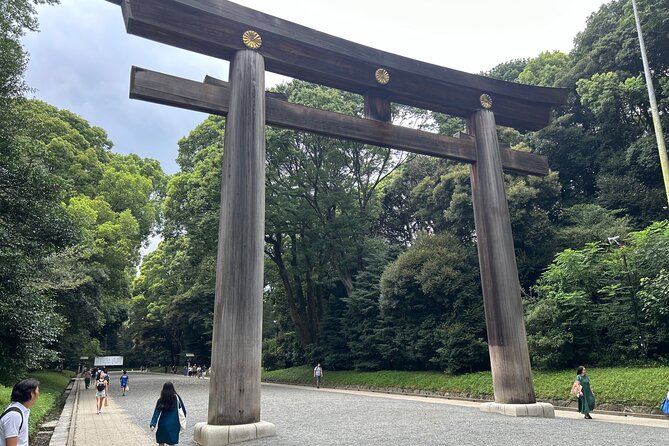
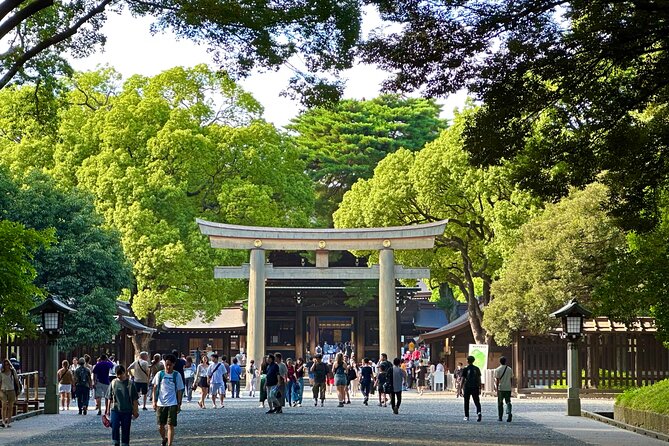
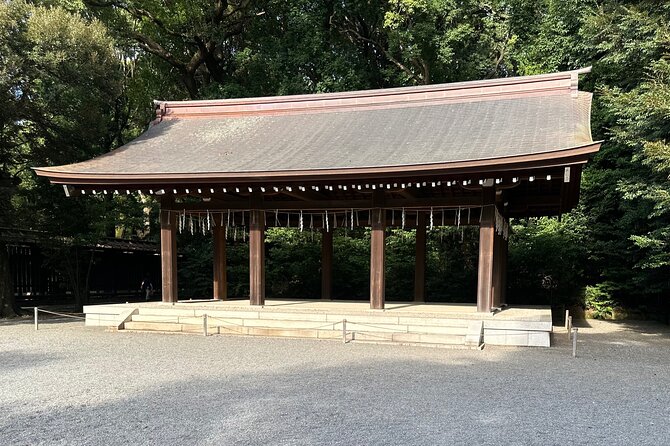
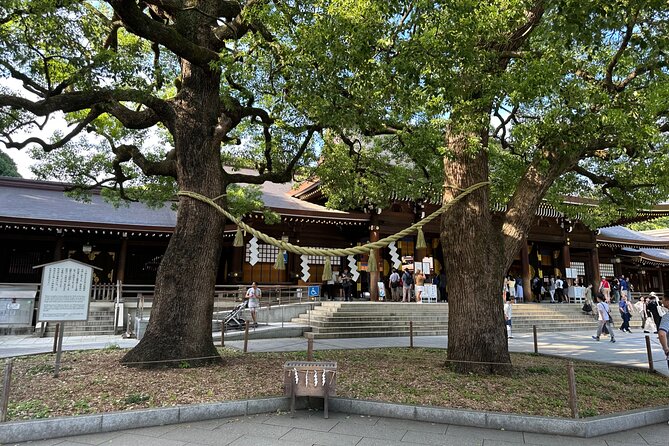
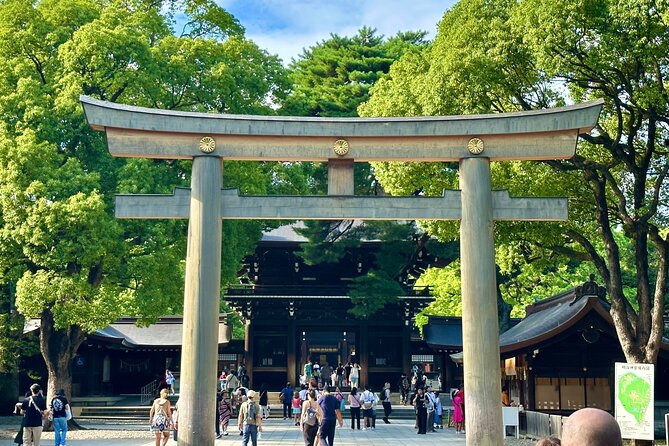
Meiji Jingu is a surprising first stop. You are in central Tokyo, yet the shrine is surrounded by a broad wooded setting that softens the city noise. The grounds honor Emperor Meiji and Empress Shoken, giving the visit a direct link to modern Japan’s imperial and religious past.
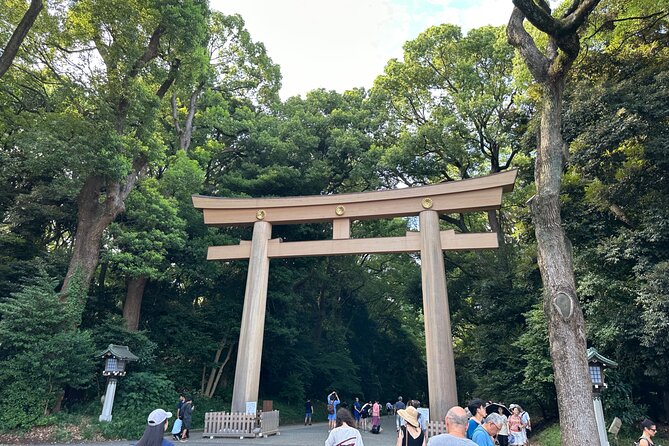
Your guide can explain how to approach the shrine and point out the customs that make a Shinto visit different from simply walking into a historic building. The torii gates, the paths through the trees, and the shrine buildings give you several layers of Japanese culture to notice.
I especially like starting here because it gives you room to settle into the day. Tokyo can be intense when you first arrive. An hour at Meiji Jingu offers a calmer introduction before the food market and temple crowds.
The limitation is that a one-hour visit will leave you with an overview rather than a full exploration of the grounds. If you want extended quiet time, personal prayer, or a long look at every shrine detail, you may wish to return alone later.
Tsukiji turns the tour toward food
Tsukiji brings a completely different mood. The area is known for its long connection to seafood and remains a favored place for local cooks and professional chefs seeking ingredients. You can expect stalls and shops offering seafood and produce, with examples ranging from tuna to octopus tentacles.
This is not the former wholesale market experience often associated with old images of Tokyo. The wholesale market moved, but Tsukiji continues as a food-focused district with a strong connection to the city’s cooking culture. That distinction matters if you are expecting the famous tuna auction. This tour takes you through Tsukiji’s current market area rather than promising that auction experience.
A guide is useful here because you can spend your limited hour noticing what you are seeing instead of trying to decode every sign or decide which lane to follow. The historical and culinary explanations add context to the stalls. You learn why the market matters, not just where to take a picture.
Food and drinks are not included, so bring extra yen if you want to sample something. The schedule may give you time for a quick bite, but it is not presented as a dedicated food tour with a meal. I would treat the market stop as an introduction, then return later if you want to browse slowly or eat your way through the area.
Senso-ji closes the route in Asakusa
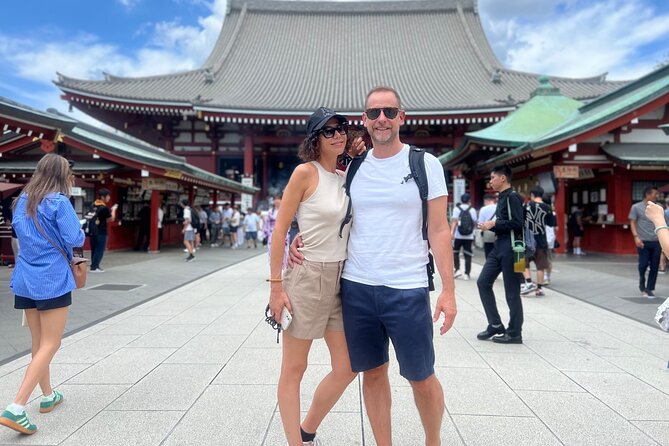
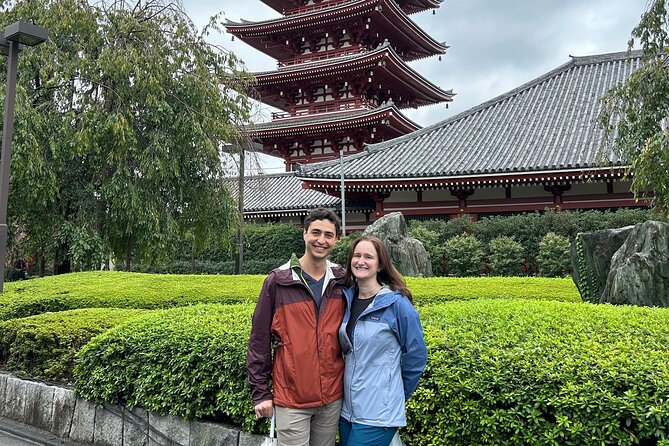
The final stop is Senso-ji, Tokyo’s oldest temple, in the Asakusa district. The approach begins at the red Kaminarimon Gate and continues along Nakamise shopping street toward the temple grounds. This is one of Tokyo’s most recognizable approaches, and it gives you a clear sense of how worship, shopping, and sightseeing overlap in the district.
Your guide provides background on the temple and the surrounding area, which helps make the visit more than a quick stop at a famous gate. You can look for traditional souvenirs along Nakamise, take in the architecture, and watch the steady flow of people heading toward the temple.
Asakusa is a smart place to finish because you are not rushed back to the starting point. The tour ends here, so you can continue independently after the guide leaves. That might mean more time at Senso-ji, a meal in the district, or further exploring the older streets of Taito City.
The tradeoff is crowding. Senso-ji and Nakamise are popular, and even a morning visit may feel busy. The early schedule helps, but you should not expect the temple to be empty.
More Fish Market Tours in Tokyo
- Tokyo Sushi Making Class in Tsukiji with Professional Chef
★ 5.0 · 1,177 reviews - Tsukiji Fish Market Guided Tour and Sushi Making with Pro Chef
★ 5.0 · 775 reviews - Tokyo: Tsukiji Fish Market Food and Culture Walking Tour
★ 4.7 · 757 reviews - Tsukiji Fish Market: Street Food & Culture Walking Tour
★ 5.0 · 669 reviews
Why the small group matters
The maximum group size is eight. That is a useful middle ground for Tokyo. You get the ease of a guided route without the scale of a large coach group.
A smaller party also helps at the three stops. At Meiji Jingu, you can stay close enough to hear the explanation. At Tsukiji, the guide can help keep the group together through busy lanes. At Senso-ji, you are less likely to lose the guide while moving from the gate toward Nakamise.
Several guides have been praised for the human side of the experience. Ryota was noted for careful timing and good photo locations. Yota was described as approachable and helpful with explanations. Andres Burgos was also singled out for making the morning enjoyable and well organized.
Guide assignments can vary, so I would not book on the assumption that one specific person will lead your departure. Still, the recurring strength of the guiding style is clear: expect an attentive escort who keeps the route moving, explains the districts, and takes photos for you.
An efficient route, with a few costs to plan
The meeting point is Starbucks Coffee at With Harajuku, in Jingumae near Harajuku. This gives you a clear place to begin, but check the exact address before leaving your hotel. Tokyo’s rail stations can have several exits, and a few extra minutes can make the difference between a calm arrival and a rushed one.
The tour ends in Asakusa, not back at Harajuku. I see this as a benefit. You avoid retracing the route and can spend the rest of the day in the same area. It also means you should think about what comes next before the tour begins, especially if you have luggage or a timed reservation elsewhere.
Public transportation is not included. The expected cost is around 600 yen. That is modest compared with the tour price, but it is still worth carrying an IC card or enough Japanese yen for the morning. The exact transport details are handled as part of the route, so you are paying for guidance as well as movement between districts.
The mobile ticket is convenient. Keep it available on your phone at the start point, and make sure your battery is not nearly empty after a morning of maps and photos.
Is $157 fair for four hours?
At $157, this is not a bargain sightseeing bus. You are paying for a small group, an English-speaking guide, route planning, historical context, and photo assistance. The value is strongest if you want to cover three major areas without spending your own time working out the transport connections.
For one person on a tight schedule, the price may feel high. You could visit these districts independently for much less, especially if you are comfortable using Tokyo’s trains and reading signs. You would then have more time at each stop, but you would need to plan the route, monitor the clock, and supply your own background information.
For a couple or family that wants a managed morning, the price can make more sense. You are buying simplicity, a limited group size, and someone who knows how to keep three stops moving in the right order. The included photos also help if you are usually the person left out of every group picture.
The tour is most valuable during a short first visit. If Tokyo is only one stop on a larger Japan trip, seeing Meiji Jingu, Tsukiji, and Senso-ji in one morning lets you reserve later days for neighborhoods or museums. If you have a week in Tokyo and enjoy independent exploration, you may prefer to split the districts across separate mornings.
Who should book this morning tour?
I would recommend it to you if any of these points fit:
- You have limited time in Tokyo and want several major sights in one morning.
- You prefer an English-speaking guide to explain customs and local history.
- You do not want to plan the train route between Harajuku, Tsukiji, and Asakusa.
- You enjoy food markets but want help understanding what you are seeing.
- You like a small group rather than a large organized excursion.
- You want photos taken during the morning.
- You would like to finish near Senso-ji and continue sightseeing there.
I would think twice if your priority is a relaxed meal, serious shopping, or long independent photography sessions. The schedule covers a lot, and each main stop gets about an hour. You will see the character of each district, but you will not have unlimited time to linger.
The tour should work for most people, and the activity is near public transportation. Still, you will spend the morning walking through shrine grounds, market lanes, and temple approaches, so comfortable shoes are a sensible choice. The early start is part of the value, not a minor detail. The first guide-led departure is designed to help you get ahead of the day’s crowds.
Cancellation and practical booking notes
You can cancel at least 24 hours before the local start time for a full refund. Changes or cancellations inside that 24-hour window are not accepted and are not refunded.
The tour requires a minimum number of participants. If that minimum is not reached, you will be offered another date or experience, or a full refund. Confirmation is provided when you book.
The activity has a maximum of eight people, accepts a mobile ticket, and includes an English-speaking guide. Food, drinks, and public transportation are extra.
My call: a strong first morning for a short Tokyo visit
I would book this tour if I had only a few days in Tokyo or wanted an organized introduction before exploring alone. The combination is unusually useful: Meiji Jingu gives you calm and ceremony, Tsukiji gives you food culture, and Senso-ji gives you old Asakusa. The route also ends where you may want to spend the afternoon.
The price is the main question. If you are happy navigating trains and researching sights, you can save money independently. If you value clear explanations, reliable timing, a group of no more than eight, and photos that include you, the fee is easier to justify.
Book it for efficiency and context, not for a slow, lingering day. Start early, budget for transport and snacks, and plan to keep exploring after the final stop in Asakusa.
FAQ
How long does the Tokyo morning tour last?
The tour lasts approximately four hours, including visits to Meiji Jingu Shrine, Tsukiji Fish Market, and Senso-ji Temple.
Where does the tour start?
It starts at Starbucks Coffee at With Harajuku, 1-14-30 Jingumae, Shibuya, Tokyo 150-0001.
Where does the tour end?
The tour ends in Asakusa, Taito City, Tokyo 111-0032.
Which places are visited?
The route includes Meiji Jingu Shrine, Tsukiji Fish Market, and Senso-ji Temple in Asakusa.
Is public transportation included?
No. Public transportation is not included. The expected additional cost is around 600 yen.
Are food and drinks included?
No. You pay separately for any food and drinks at Tsukiji or elsewhere during the tour.
Is an English-speaking guide included?
Yes. An English-speaking guide is included, along with historical explanations about the districts.
Are photos included?
Yes. The guide takes photos during the tour.
How many people can join the group?
The activity has a maximum of eight participants.
Can I cancel for a full refund?
Yes. You can cancel at least 24 hours before the local start time for a full refund. Cancellations made within 24 hours are not refunded.
More Shopping Tours in Tokyo
- Tsukiji Fish Market: Street Food & Culture Walking Tour
★ 4.8 · 259 reviews - Private Toyosu & Tsukiji Market Adventure with Tuna Auction
★ 4.8 · 191 reviews - Tokyo: Toyosu Tuna Auction &Tsukiji Market Gourmet Adventure
★ 4.8 · 187 reviews - Tokyo: Tsukiji Fish Market Tour with 6 Stops & Seafood Lunch
★ 4.5 · 165 reviews
More Markets in Tokyo
- Tsukiji Fish Market Small-Group Food Walking Tour
★ 5.0 · 621 reviews - Tokyo: Tsukiji Fish Market Sushi Making Class with Pro Chef
★ 4.9 · 506 reviews - Tokyo Food Tour Taste Fresh Delights at Tsukiji Market
★ 5.0 · 429 reviews - Tokyo Tsukiji Fish Market Tour and Sushi Making Lesson
★ 5.0 · 390 reviews
Just added around Tokyo
- Tokyo: Private Tsukiji Street Food & Sake with Local Guide★ 5.0 · 3 reviews
- Tokyo: Tsukiji Market Guided Tour & Sushi-Making Experience★ 4.4 · 11 reviews
- Tokyo: Tsukiji Market and Hama-rikyu Gardens Guided Tour★ 4.8 · 73 reviews
- Tokyo : Tsukiji Fish Market Food Walking & Shrine Visit Tour★ 5.0 · 3 reviews
- Tokyo: Tsukiji Fish Market Culture Tour with Sashimi Tasting★ 4.6 · 54 reviews
- Tokyo: Tsukiji Fish Market Foodie and Educational Tour★ 5.0 · 4 reviews
- Tokyo: Guided Walking Tour of Tsukiji Market with Lunch★ 4.4 · 24 reviews
- Tokyo’s Kitchen: Tsukiji Market Food & Culture Walk★ 4.7 · 74 reviews
Fish Market Tours, compared.
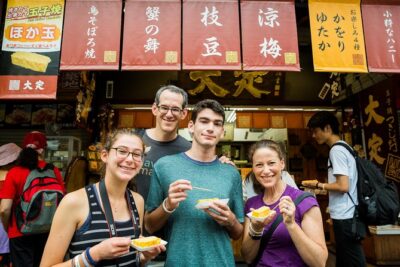
Tokyo Tsukiji Fish Market Food and Culture Walking Tour
Read our review →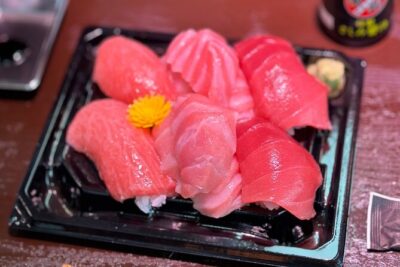
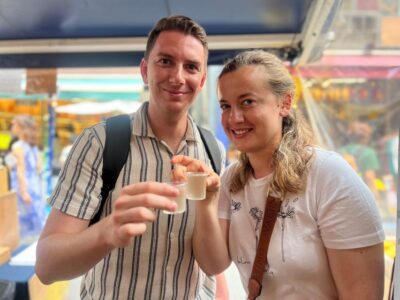

Tokyo Sushi Making Class in Tsukiji with Professional Chef
Read our review →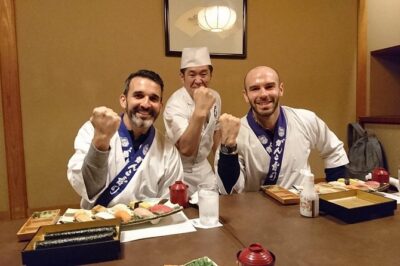
Tsukiji Fish Market Guided Tour and Sushi Making with Pro Chef
Read our review →Tsukiji Fish Market Food and Culture Walking Tour
Read our review →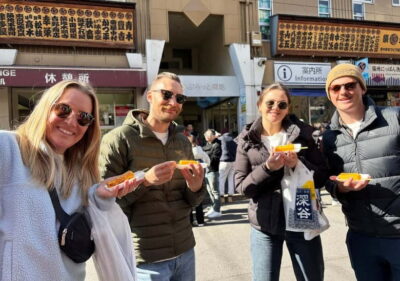
Tsukiji Fish Market: Street Food & Culture Walking Tour
Read our review →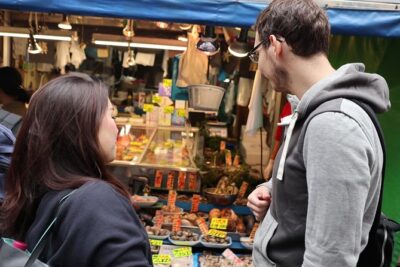
Tsukiji Fish Market Small-Group Food Walking Tour
Read our review →Browse the lists this tour appears in