
Review · TOKYO
Tokyo: Tsukiji Fish Market Tour with 6 Stops & Seafood Lunch
Tsukiji is no longer Tokyo’s main wholesale fish market, but its outer-market streets still deliver the city’s best mix of seafood, snacks, shopkeepers, and cooking culture. This tour adds a 300-year-old Buddhist temple, a small shrine, and a high view over Tokyo, so you get more than a food crawl.
I like the generous food sampling and the sit-down donburi lunch, especially if you want to try foods such as oysters, unagi, yakitori, tuna sushi, ikura, or custard-filled mochi with some guidance. I also like the small groups and the way guides such as Mai, Ken, Kiyo, and Taka help you choose what to buy and explain customs along the way.
The main caution is simple: this is not a tour of the old wholesale market or Toyosu’s tuna auctions. Tsukiji can also become very crowded, and one hour may feel short if you want to stop at every stall, shop, and photo point.
Key points to know before booking
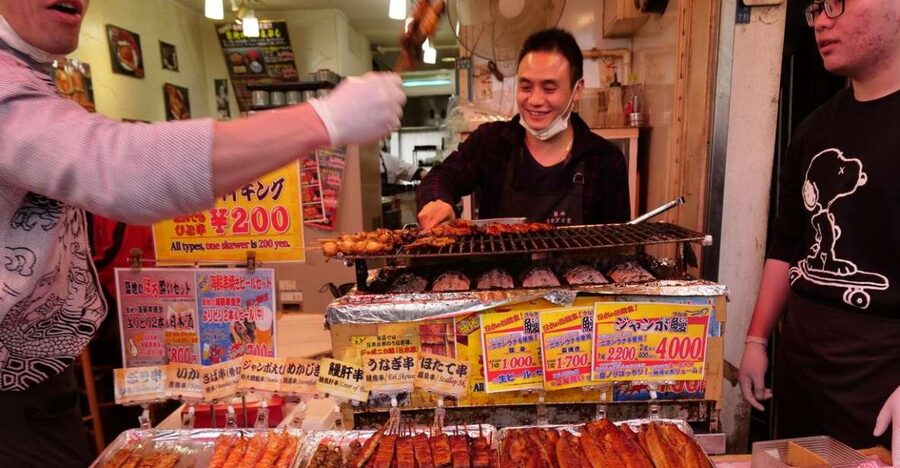
- Five or more tastings are included, with examples ranging from fresh seafood to traditional sweets.
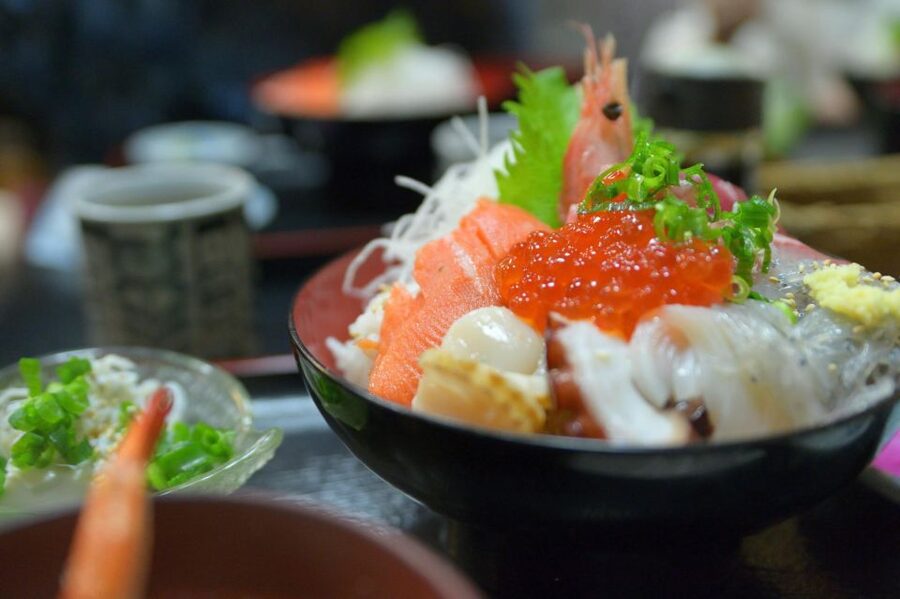
- Lunch is a seafood donburi bowl, covered up to 1,500 yen.
- Tsukiji Hongan-ji and Namiyoke Inari Shrine add useful cultural context to the food stops.
- The final view comes from Shiodome, with the observation deck around the 46th floor.
- Groups are limited to seven, and the guide speaks English.
- Bring cash for extra street food, shopping, beer, or sake.
Why Tsukiji still matters after the fish market moved
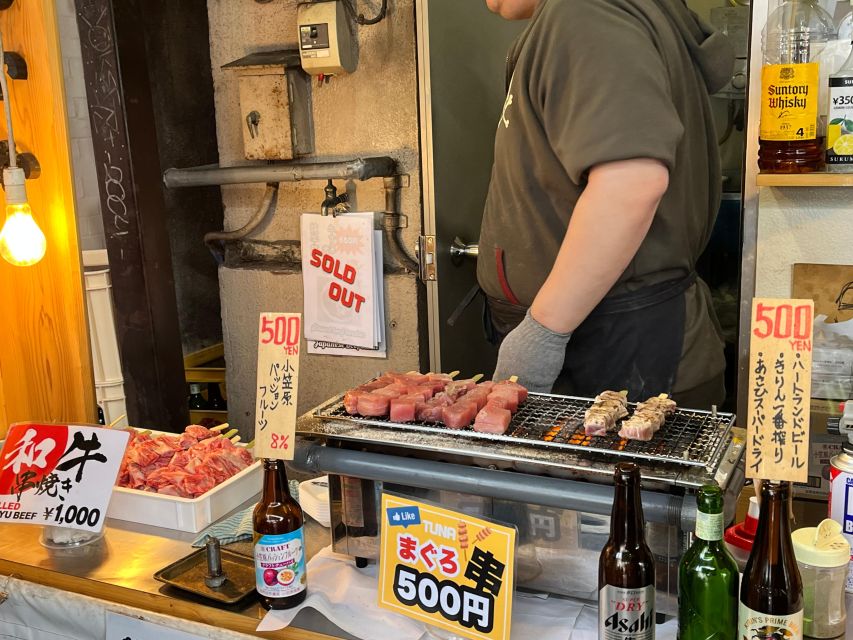
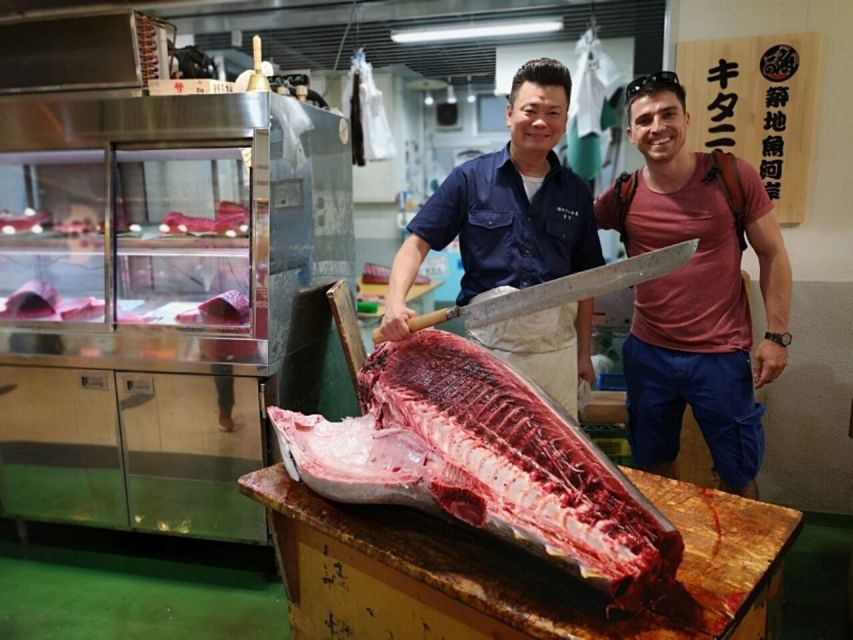
Many people hear Tsukiji and picture the old wholesale market, the tuna auctions, and chefs buying fish before dawn. That part moved to Toyosu. What remains at Tsukiji is the outer market, a dense group of food shops, seafood counters, kitchen stores, snack stands, and small restaurants.
That distinction matters. You will not tour the wholesale auction floor on this experience. You will walk through the public food quarter where the older market culture still feels close at hand. The streets are narrow, the crowds can be thick, and vendors are serving people who came to eat rather than simply look around.
I think this setting works especially well with a guide. A first-time visitor can easily walk past a good stall, struggle with a menu, or miss the difference between a snack meant to eat immediately and a product meant to take home. Your guide can point out choices, explain how foods are used in Japan, and help you move through the market without wasting the short visit.
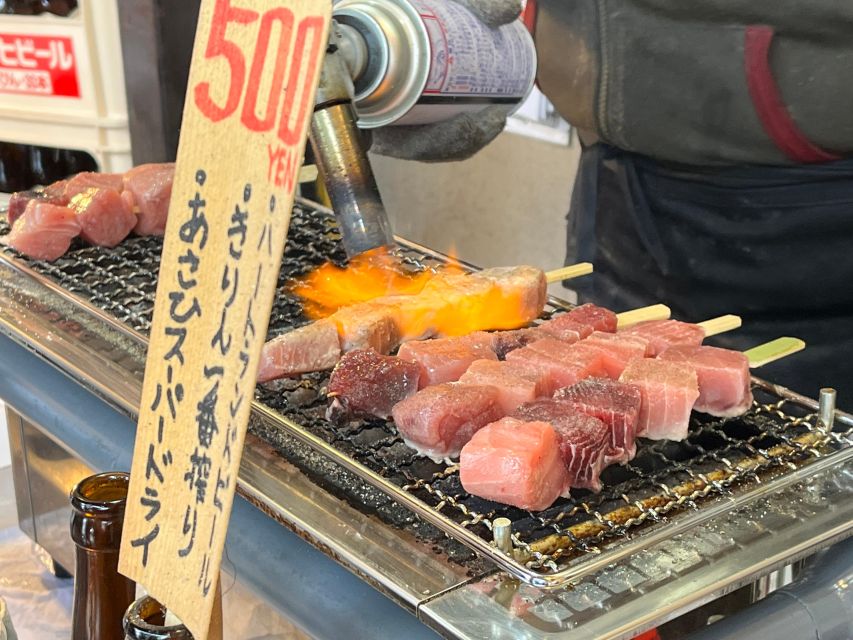
The tour includes at least five tastings, though the exact foods can change. Past stops have included oysters, grilled eel, tuna sushi, rolled omelet, yakitori, tuna-shaped taiyaki, mochi, and ikura. You should think of these as small samples rather than a full meal. The tasting sequence leads toward lunch, so you can try several things without filling up too early.
More Fish Market Tours in Japan
- Tokyo Tsukiji Fish Market Food and Culture Walking Tour
★ 5.0 · 3,184 reviews - Tokyo: Tsukiji Fish Market Food and Walking tour
★ 5.0 · 1,724 reviews - Tokyo: Tsukiji Fish Market Guided Walking Tour
★ 4.9 · 1,397 reviews
Starting at Tsukiji Hongan-ji
Meet at the main gate of Tsukiji Hongan-ji, near Tsukiji Station. The guide carries a red or orange MagicalTrip sign. Be careful with the station name: Tsukiji Station is the correct meeting point, not Tsukijishijo Station.
The tour starts with about 20 minutes inside or around Tsukiji Hongan-ji. The temple is an unexpected opening for a seafood-focused morning. Instead of racing straight to the stalls, you first get an introduction to Japanese religious customs, worship, and temple etiquette.
This stop gives the rest of the walk some context. Food in Japan is not only about ingredients and technique. Presentation, gratitude, seasonality, ritual, and respect for the source of food all matter. A guide can explain these ideas in a way that is much easier to follow than a sign in a museum.
You do not need special religious knowledge to enjoy the visit. You will be shown what to notice and how to behave respectfully. The temple stop is fairly short, so it adds cultural background without taking over the morning.
One hour through Tsukiji’s outer market
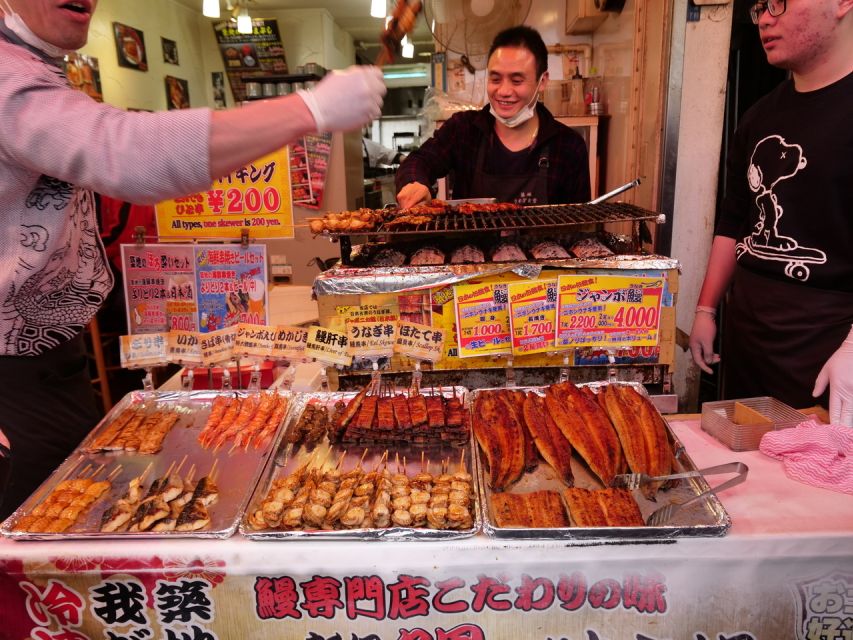
The market portion lasts about an hour and combines walking, shopping, and food tasting. This is the busiest part of the experience, and the pace depends heavily on the crowd. On a Saturday morning, the lanes can be crowded enough that the group has to move slowly and stay close together.
Keep your expectations practical. You are not likely to pause for long at every shop. The guide needs to keep seven people together, navigate around other shoppers, and reach the lunch reservation on time. If you want long photo stops or serious shopping, plan to return to Tsukiji on your own later.
The advantage of the guided route is that you can sample foods you might otherwise ignore. Guides have led people to oysters, unagi, yakitori, tuna sushi, and other market specialties. One guide may explain fish varieties, while another may focus more on Japanese food customs or useful places to eat elsewhere in Tokyo.
The experience can also be personal. Guides have helped people choose seasonings, flavorings, and food gifts. Some have offered restaurant suggestions for later in the trip. If you have a particular interest, tell the guide early. The tour description specifically invites requests, although the guide cannot guarantee every shop or product.
Bring some cash. The included tastings are covered, but additional street food and purchases are not. Beer and sake are also extra. The chance to pair a cold Japanese drink with seafood is presented as a local way to enjoy Tsukiji, but the drink is not part of the tour price.
Namiyoke Inari Shrine and the market’s working traditions
The next cultural stop is Namiyoke Inari Shrine, with about 20 minutes for a visit and explanation. This small shrine connects the market to Japanese customs and the working life of the area.
After the lively market lanes, the shrine offers a quieter pause. It also helps explain why Tsukiji is more than a collection of food stalls. The market grew alongside local religious places, neighborhood routines, and businesses tied to the sea.
The temple and shrine are not filler stops. Together, they make the tour useful for someone who wants to understand how food and culture fit together in Japan. If your main goal is only to eat as much seafood as possible, these visits reduce market time. If you want a broader introduction to the neighborhood, they are a strong part of the plan.
More Fish Market Tours in Tokyo
- Tokyo Sushi Making Class in Tsukiji with Professional Chef
★ 5.0 · 1,177 reviews - Tsukiji Fish Market Guided Tour and Sushi Making with Pro Chef
★ 5.0 · 775 reviews - Tokyo: Tsukiji Fish Market Food and Culture Walking Tour
★ 4.7 · 757 reviews - Tsukiji Fish Market: Street Food & Culture Walking Tour
★ 5.0 · 669 reviews
Donburi lunch in Tsukiji
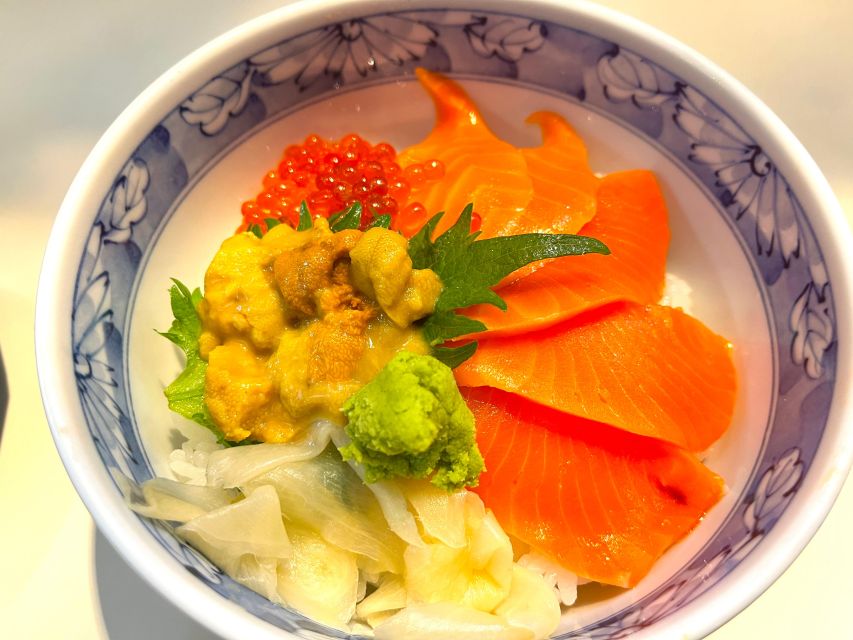
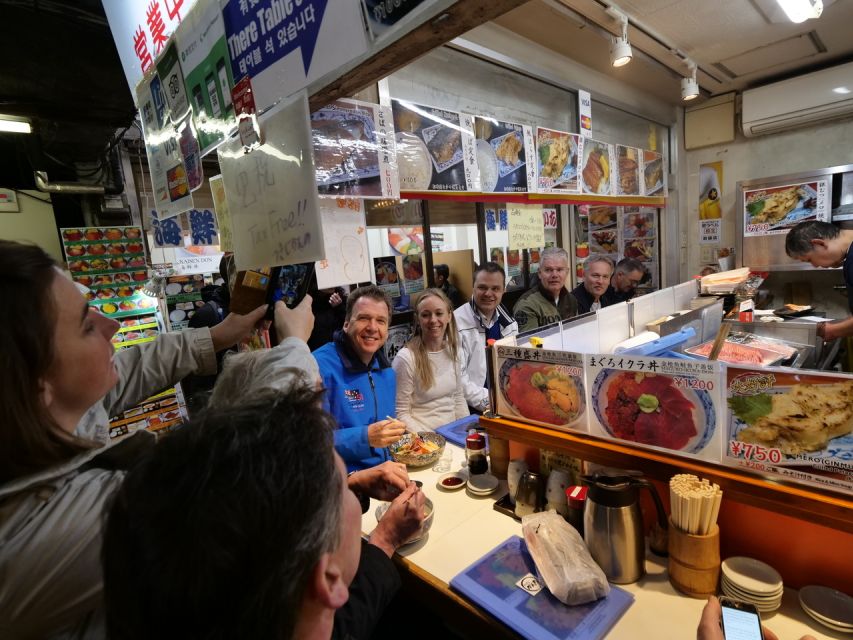
The tour ends its food portion with a sit-down lunch at a seafood restaurant in the market. You receive a donburi bowl, a Japanese rice bowl topped with seafood. The lunch allowance is up to 1,500 yen and is included in the tour price.
This is an important feature. Street samples are fun, but they are eaten standing up, often in tight spaces. The restaurant provides a chance to sit, rest, and have a proper meal after walking through the crowd.
The seafood quality is one of the main reasons to book this experience. Past menus have included fresh sashimi and ikura, and one guide-led lunch was described as especially memorable for its raw fish. The exact bowl depends on the restaurant and what is available that day, so do not book expecting one fixed menu.
The meal is also where the food-policy issue needs clear attention. The description contains conflicting information about vegetarian choices. One part says vegetarian meals may be available, while the important information says vegan and vegetarian options are not available. It also says allergy-free meals cannot be guaranteed, since the food is prepared in kitchens outside the tour company’s control.
If you have a serious allergy, vegan diet, or strict vegetarian requirements, contact the operator before paying and get a clear answer. Substitutions may not be possible at some stops. The guide may try to adjust food choices or compensate at other stops, but you should not assume a full alternative menu.
Shiodome views after lunch
After lunch, the group walks to Shiodome Media Tower for a final visit of about 20 minutes. The observation area is around the 46th floor, giving you a high view toward Tokyo, the market area, and the bay.
This is a smart ending. The market is easiest to understand from ground level, where you see the stalls and food. The observation deck lets you step back and see the scale of the surrounding city. Several guides have used the view to explain the area and point out parts of Tokyo that can be hard to grasp from street level.
The stop is brief, but it adds variety and gives you photographs that the crowded market cannot provide. If you are hoping for a long sightseeing session or a sunset view, this is not that. It is a short final viewpoint built into a food-and-culture walk.
The tour then returns to Tsukiji Hongan-ji. Some guides have helped people find a train station or continue toward their next destination, but that extra assistance depends on the guide and the group’s plans. Treat the official endpoint as the temple rather than counting on an escorted transfer.
Is $94 a fair price?
At $94 per person, this is not the cheapest way to walk around Tsukiji. You can enter the outer market without paying an admission fee, buy snacks yourself, and visit the surrounding temples and shrine independently.
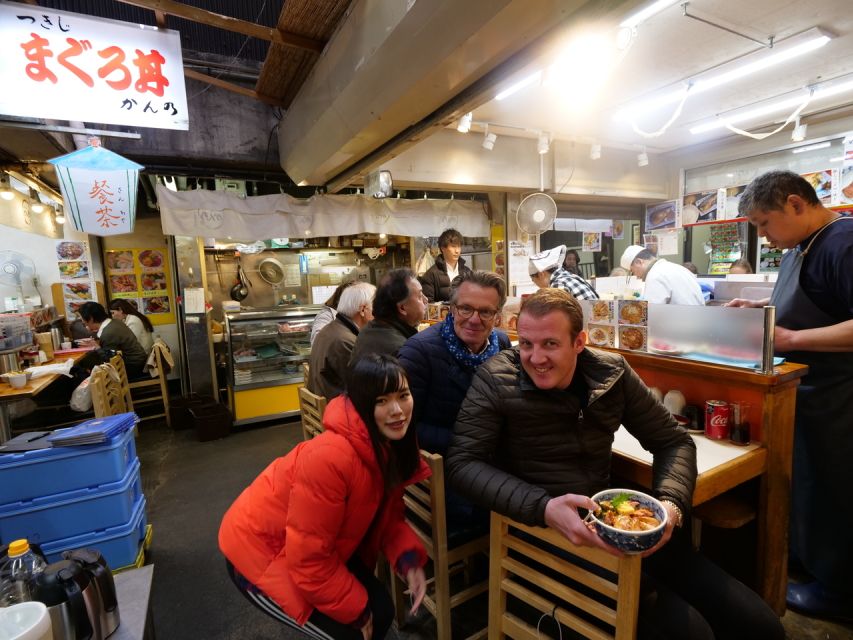
The price makes more sense when you count what is bundled: an English-speaking guide for three hours, five or more tastings, a seafood lunch worth up to 1,500 yen, tour photos, and the small-group format. You are also paying for help with menus, food choices, timing, and navigation in a crowded place.
I would call it fair value for a first morning in Tokyo, especially if you want an introduction rather than a self-guided food stop. It is less compelling for confident repeat visitors who already know Tsukiji, speak some Japanese, and are happy to wait in lines or choose restaurants alone.
The group limit of seven is useful. A smaller group can stay together more easily, and the guide has a better chance of answering individual questions. Several sessions have had only a few participants, and in one case a couple received what was effectively a private tour when nobody else joined. That is possible, not guaranteed.
Timing, walking, and practical limits
The tour lasts three hours and starts at a set time. Arrive early. If you miss the group, you cannot join later, receive a refund, or reschedule. The market is crowded, so even a small delay can make it hard to catch up.
Wear shoes suitable for walking and expect uneven, crowded areas. Some stops are not accessible to wheelchairs or strollers. The tour is open to all ages, but parents should consider the crowd, the standing tastings, and the need to keep moving.
The English-language guide is central to the experience. Guides including Mai, Meg, Ken, Kiyo, Taka, Momo, Nao, and Maiko have led sessions, with food explanations and local recommendations varying slightly by person. That means the personal style can differ, but the core route remains focused on Tsukiji, nearby religious sites, lunch, and the Shiodome view.
You can cancel up to 24 hours before the start for a full refund, and the reserve-now, pay-later option keeps your plans flexible. Drinks, extra food, and shopping are separate expenses.
Who should book this Tsukiji tour?
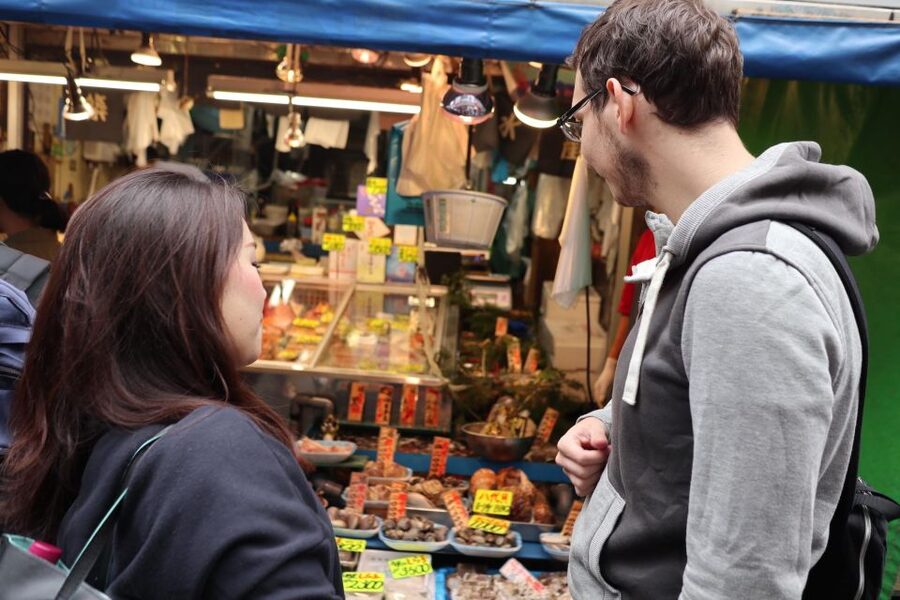
I would choose this tour for a first-time Tokyo visitor who wants food, culture, and orientation in one morning. It suits couples, solo visitors, families with older children, and anyone who feels unsure about ordering seafood in a crowded Japanese market.
It is also a good first-day activity. The route gives you a feel for local food, religious customs, neighborhood geography, and train connections. Guides have sometimes helped people with later restaurant ideas or directions, which can make the rest of the trip easier.
I would skip it if your main aim is the old tuna auction, a wholesale-market tour, or a long private shopping session. I would also look elsewhere if you need dependable vegan, vegetarian, or allergy-safe meals.
Should you book it?
Book it if you want a guided introduction to the public side of Tsukiji, with several tastings, a proper seafood bowl, two religious sites, and a Tokyo viewpoint. The strongest parts are the food guidance, the small group, and the way the morning connects Japanese eating customs with the neighborhood’s religious traditions.
Skip it if you already know Tsukiji well or want complete freedom to browse. For most first-time visitors, though, $94 buys a well-packed three hours and removes much of the guesswork from one of Tokyo’s most crowded food areas.
FAQ
Is this a tour of the Toyosu fish market?
No. The tour visits Tsukiji’s outer market. Tokyo’s main wholesale fish market moved to Toyosu, while Tsukiji’s public food streets and market culture remain.
Where does the tour meet?
The meeting point is the main gate of Tsukiji Hongan-ji, near Tsukiji Station. Look for a guide holding a red or orange MagicalTrip sign.
Is Tsukijishijo Station the correct station?
No. You should go to Tsukiji Station, not Tsukijishijo Station.
How long does the experience last?
The tour lasts three hours. It includes the temple, market, shrine, lunch, and Shiodome observation stop before returning to Tsukiji Hongan-ji.
How many people are in the group?
The group is limited to seven participants. The tour is conducted in English.
What food is included?
At least five market tastings and a seafood donburi lunch are included. Possible tastings include seafood, grilled foods, omelet, sweets, or other items available at the market that day.
Is lunch included in the price?
Yes. The lunch allowance is included up to a maximum of 1,500 yen. Beer and sake are not included.
Are vegetarian, vegan, or allergy-friendly meals available?
The information provided says vegan and vegetarian options are not available, while another description mentions vegetarian choices. Because the information conflicts, contact the operator before booking. Allergy-free food cannot be guaranteed, and substitutions may not be possible at every stop.
Is the tour suitable for wheelchair or stroller users?
Not fully. Some locations on the route are not accessible by wheelchair or stroller.
More Markets in Tokyo
- Tsukiji Fish Market Small-Group Food Walking Tour
★ 5.0 · 621 reviews - Tokyo: Tsukiji Fish Market Sushi Making Class with Pro Chef
★ 4.9 · 506 reviews - Tokyo Food Tour Taste Fresh Delights at Tsukiji Market
★ 5.0 · 429 reviews - Tokyo Tsukiji Fish Market Tour and Sushi Making Lesson
★ 5.0 · 390 reviews
More Tours with Lunch in Tokyo
- Tokyo: Guided Walking Tour of Tsukiji Market with Lunch
★ 4.4 · 24 reviews - Cooking Class and Lunch at a Tuscan Farmhouse with Local Market Tour from Florence
★ 5.0 · 4,831 reviews - Paris Cooking Class and Lunch with Wine plus Market Visit Option
★ 5.0 · 1,024 reviews - Cairo: Private Pyramids, Museum & Bazaar Tour with Lunch
★ 4.6 · 744 reviews
Just added around Tokyo
- Tokyo: Private Tsukiji Street Food & Sake with Local Guide★ 5.0 · 3 reviews
- Tokyo: Tsukiji Market Guided Tour & Sushi-Making Experience★ 4.4 · 11 reviews
- Tokyo: Tsukiji Market and Hama-rikyu Gardens Guided Tour★ 4.8 · 73 reviews
- Tokyo : Tsukiji Fish Market Food Walking & Shrine Visit Tour★ 5.0 · 3 reviews
- Tokyo: Tsukiji Fish Market Culture Tour with Sashimi Tasting★ 4.6 · 54 reviews
- Tokyo: Tsukiji Fish Market Foodie and Educational Tour★ 5.0 · 4 reviews
- Tokyo’s Kitchen: Tsukiji Market Food & Culture Walk★ 4.7 · 74 reviews
- Tokyo: Guided Walking Tour of Tsukiji Market with Lunch★ 4.4 · 24 reviews
Fish Market Tours, compared.
Tokyo Tsukiji Fish Market Food and Culture Walking Tour
Read our review →

Tokyo Sushi Making Class in Tsukiji with Professional Chef
Read our review →
Tsukiji Fish Market Guided Tour and Sushi Making with Pro Chef
Read our review →Tsukiji Fish Market Food and Culture Walking Tour
Read our review →
Tsukiji Fish Market: Street Food & Culture Walking Tour
Read our review →
Tsukiji Fish Market Small-Group Food Walking Tour
Read our review →Browse the lists this tour appears in