Review · TOKYO
Tokyo: Private Tsukiji Fish Market Tour with 3 food stops
Tsukiji is more than a place to grab sushi. This two-hour private walk links the market’s food stalls with a Shinto shrine and Buddhist temple, giving you a quick look at how old customs and daily eating habits share the same neighborhood. The three included tastings are the edible center of the tour.
I like the private format, which lets you ask questions, slow down, or adjust the food portion to suit your group. I also like the mix of market culture and religious sites, especially the chance to learn how to pray at both the shrine and temple.
The main thing to consider is depth. Some guides, including Shuto and Sowar, have offered history and local tips, but the amount of background can vary. If you want a long, detailed lecture on Tsukiji, two hours may feel brief.
Key points at a glance
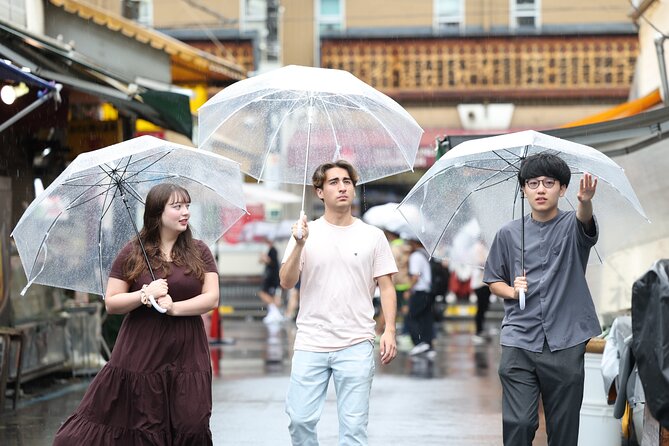
- Three local foods are included: Your guide selects the tastings, so you can sample Tsukiji specialties without choosing at random.
- Private from start to finish: You explore with your own group rather than joining a larger party.
- Two different faith traditions: Namiyoke Inari Shrine and Tsukiji Hongan-ji show Japan’s Shinto and Buddhist sides in one compact route.
- The market walk takes about 55 minutes: This is enough for an introduction, but not a full morning of browsing every lane.
- A flexible guide can make a difference: Sowar adjusted the route for an early group that did not want to eat yet.
- The tour ends near Tsukiji Station: That makes it easy to continue sightseeing or head elsewhere in Tokyo.
Tsukiji beyond the famous tuna auction
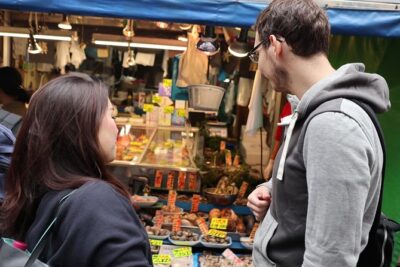
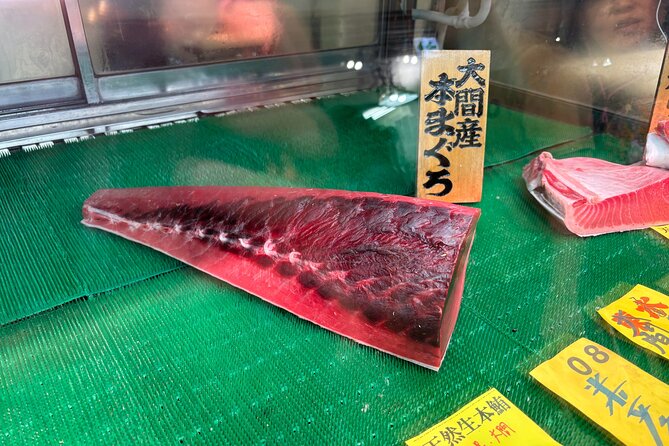
Many people still picture Tsukiji as Tokyo’s central wholesale fish market. The wholesale auction and inner market moved to Toyosu, but Tsukiji’s Outer Market remains a practical food district filled with shops, counters, ingredients, and small places to eat.
That distinction matters. This experience is not a behind-the-scenes tour of the Toyosu wholesale auction. It is a walking tour of the Tsukiji area, with food sampling and visits to nearby religious sites.
I like that approach for a first visit. You get a feel for the neighborhood without spending a whole morning trying to decode Japanese signs or decide which stall deserves your yen. Your guide can explain what you are seeing and point out local favorites along the way.
The route begins at the LAWSON Tsukiji 4 Chome Store. That is a clear meeting point, but arrive early. The tour clock starts at the scheduled meeting time, and arriving more than 15 minutes late without contacting the provider counts as a no-show.
More Fish Market Tours in Japan
- Tokyo Tsukiji Fish Market Food and Culture Walking Tour
★ 5.0 · 3,184 reviews - Tokyo: Tsukiji Fish Market Food and Walking tour
★ 5.0 · 1,724 reviews - Tokyo: Tsukiji Fish Market Guided Walking Tour
★ 4.9 · 1,397 reviews
A short stop at Tsukiji Uogashi Kaiko Bridge Building
The first scheduled stop is Tsukiji Uogashi Kaiko Bridge Building, with about 15 minutes to look around. This is a useful opening because it places you close to the working food culture of Tsukiji before the main tasting section.
You should expect a quick orientation rather than a long museum visit. Your guide can help you understand how the market area is arranged and what kind of shops you are passing. The value here is context. Without it, Tsukiji can look like a crowded collection of food counters. With a little explanation, the streets make more sense.
The short time also keeps the tour moving. You will not spend half of your two hours standing in one spot while the market waits outside.
Namiyoke Inari Shrine and the customs of prayer
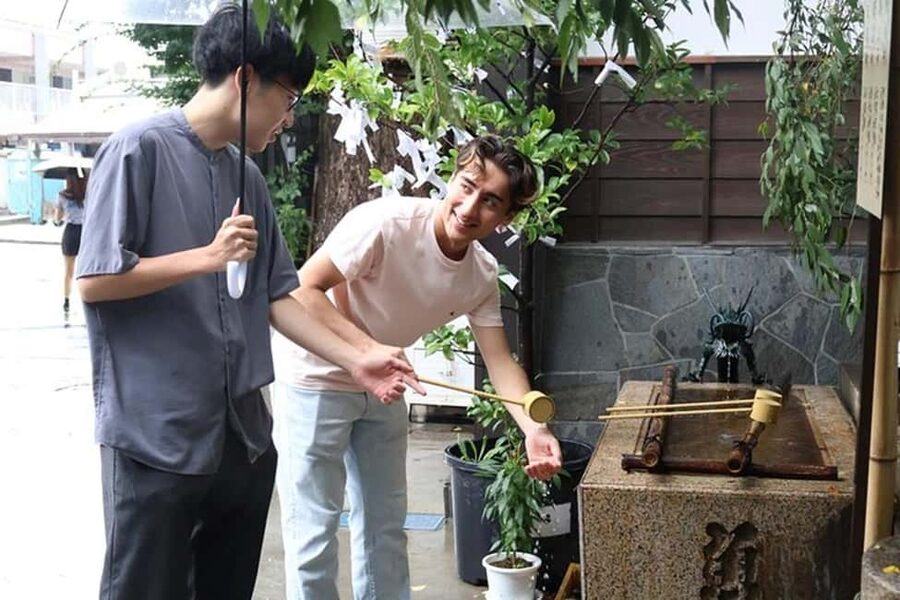
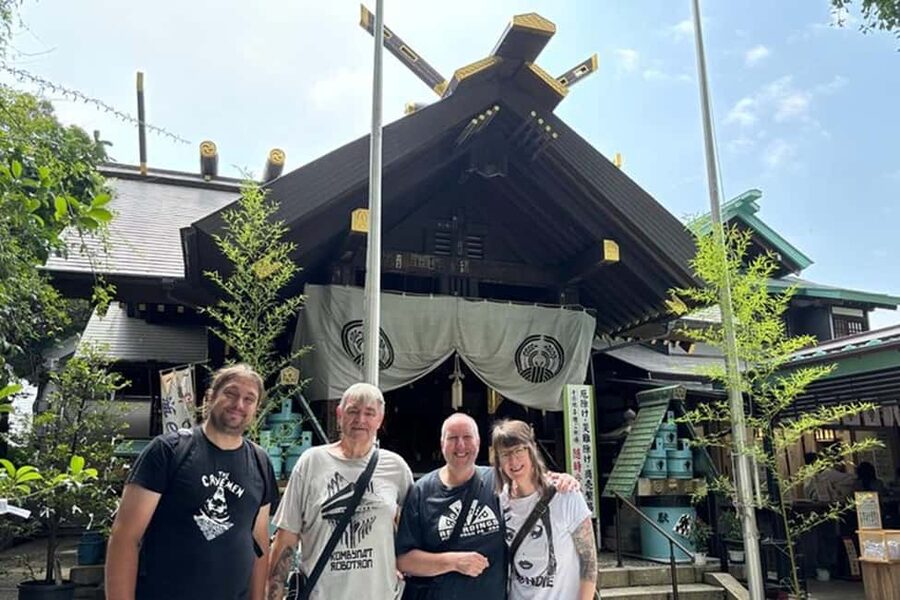
Next comes Namiyoke Inari Shrine, a 10-minute stop with a very different mood from the food stalls. The shrine is tied to Shinto, one of Japan’s long-standing religious traditions, and gives you a quiet pause in the middle of the market district.
Ten minutes is enough for a brief visit and a simple explanation, but not for a detailed religious study. The best part is the practical guidance. One booking was led by Shuto, who showed the group how to pray at both the shrine and the temple. That sort of instruction can be useful if you want to take part respectfully but are unsure what to do.
Your guide may explain the basic difference between a Shinto shrine and a Buddhist temple. You will also have a chance to observe the setting rather than rushing straight from one food counter to another.
Because the visit is short, keep your expectations sensible. This is a cultural stop within a food walk, not a dedicated shrine tour.
Three tastings in the Tsukiji Outer Market
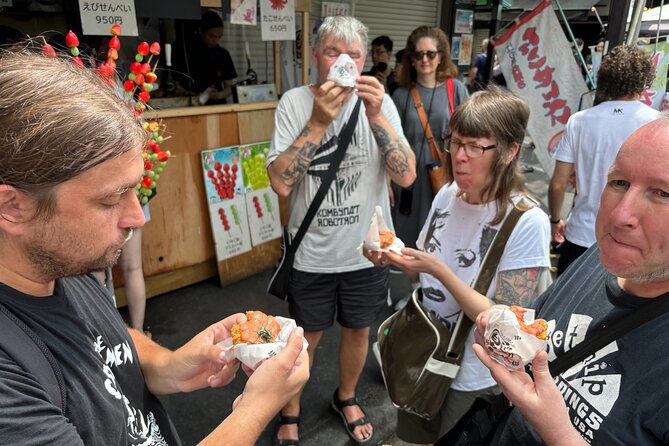
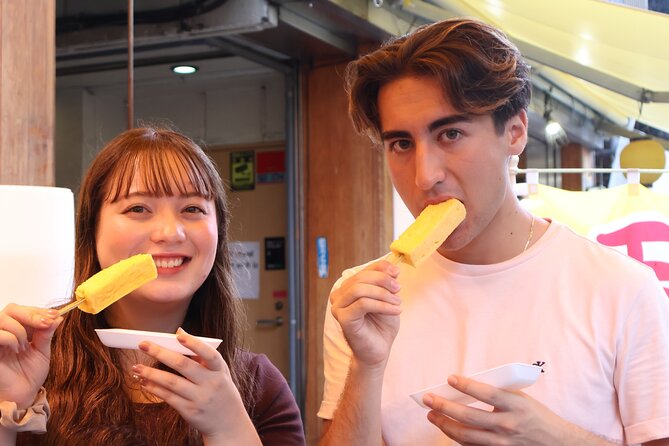
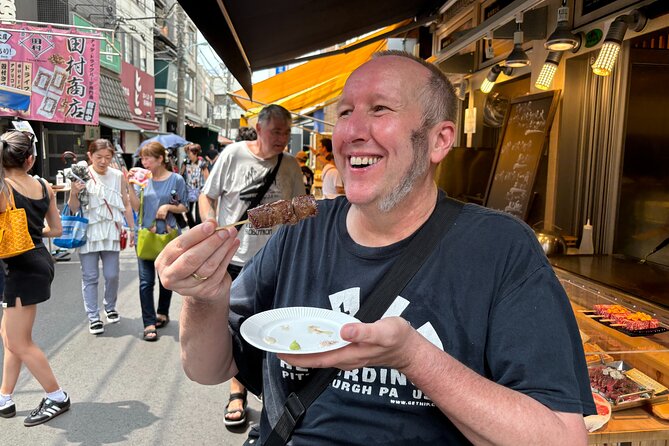
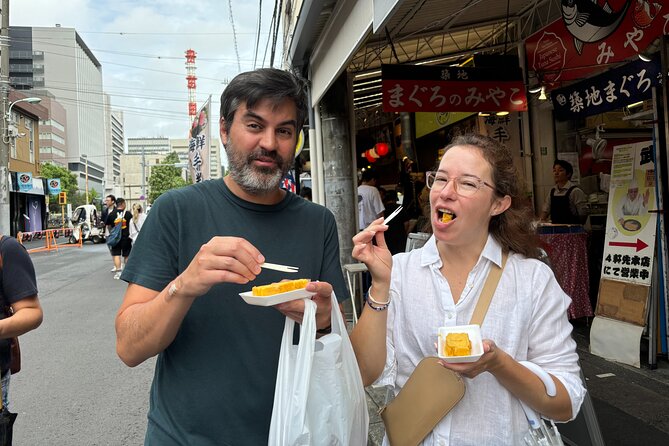
The longest section of the experience takes place in the Tsukiji Outer Market. About 55 minutes are set aside for street food, market browsing, and three included tastings.
The exact foods are selected by the local guide, rather than listed in advance. That gives the guide room to choose suitable local favorites, but it also means you should not book this tour expecting a specific dish. The three foods are included in the $49 price, while any extra purchases are your responsibility.
I see real value in this setup. Tsukiji has plenty of tempting choices, and deciding what to eat can take more time than the eating itself. A local guide can reduce the guesswork and help you focus on trying a few things instead of buying too much.
The tastings are also a good reason to choose this tour over a standard neighborhood walk. You are not only looking at the market. You get a small, guided sampling of what makes the area famous.
Still, three tastings do not equal a full meal. If you arrive hungry, you may want to budget for additional food. The tour price covers the selected items, not anything else you decide to buy.
One especially useful feature is the private format. If your group has dietary preferences, an early start, or different appetites, you can discuss the pace with your guide. Sowar adapted one early tour for a group that did not want to eat at that hour, offering information and sightseeing instead. That does not guarantee every request can be met, but it shows why a private booking can be more flexible than a fixed group tour.
More Fish Market Tours in Tokyo
- Tokyo Sushi Making Class in Tsukiji with Professional Chef
★ 5.0 · 1,177 reviews - Tsukiji Fish Market Guided Tour and Sushi Making with Pro Chef
★ 5.0 · 775 reviews - Tokyo: Tsukiji Fish Market Food and Culture Walking Tour
★ 4.7 · 757 reviews - Tsukiji Fish Market: Street Food & Culture Walking Tour
★ 5.0 · 669 reviews
Tsukiji Hongan-ji, a very different final stop
The route then shifts from market food to Tsukiji Hongan-ji, where about 30 minutes are set aside for sightseeing. This Buddhist temple gives the tour a strong visual and cultural change of pace.
The contrast is the point. Within a short walk, you move from food stalls and market talk to a place of worship and reflection. Combined with Namiyoke Inari Shrine, the temple helps you see two parts of Japanese religious life without booking separate visits.
A guide can also explain the proper way to behave at the temple and clarify how Buddhist customs differ from those at the shrine. That practical help is often more useful than a list of dates and names, especially if this is your first visit to Japan.
The half-hour stop is generous compared with the shrine visit. You should have time to look around, listen, and take photographs without feeling as if you are being hurried through the building.
The experience finishes at Tsukiji Station. That is convenient because you can continue your day from there, perhaps with more independent market browsing or a trip to another Tokyo neighborhood.
How much personal attention do you really get?
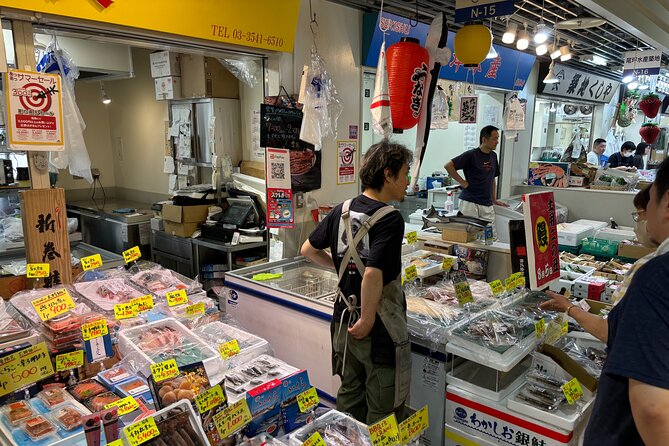
The tour is sold as private, so only your own group joins the guide. That matters most in Tsukiji, where narrow paths, food counters, and changing foot traffic can make a large group awkward.
A private guide can answer your questions as they come up. You can ask why a food is popular, how the market changed, or what you should look for during the rest of your Tokyo stay. You also avoid waiting for strangers who want to stop at every stall.
This format suits families, couples, and small groups with different energy levels. It is also helpful if you want to avoid being pushed through a fixed route. The tour still has a set two-hour structure, but the guide may be able to adjust the amount of time spent eating or explaining.
The tradeoff is price. At $49 per person, this costs more than walking through the Outer Market on your own. But the price includes three tastings, a private guide, cultural stops, and photos sent after the tour. For a small group, that can be fair value, especially if you are new to Tokyo and want a quick orientation.
For a solo visitor, the cost is harder to justify unless you place a high value on personal attention. For two or more people, the private arrangement becomes more appealing.
The guide makes or breaks the experience
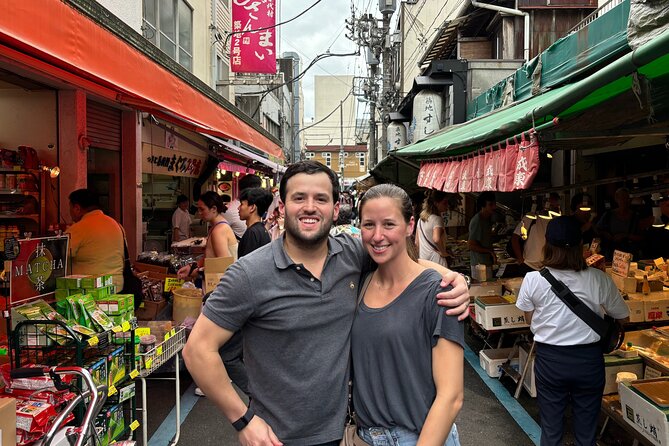
The strongest part of this tour is the human element. Guides named Shuto and Sowar have been praised for being personable, flexible, and comfortable explaining both market customs and religious etiquette. Sowar was noted for excellent English and for adapting the experience when the group did not want food at an early hour.
That flexibility is important, but the tour can vary with the guide. One booking found the explanations too light and wanted more detail about the market’s history, culture, and daily work. Another felt that more insider facts would have improved the visit.
You should therefore think of this as a friendly local introduction, not a specialist lecture. Ask questions early. If you want more history, say so at the start. A private tour gives you a better chance of shaping the conversation, but your guide cannot know your interests unless you mention them.
The overall rating is 4.7 from 15 ratings, with most scores at the top end and one notably critical experience. That pattern suggests a generally pleasant tour with some variation in storytelling depth.
Timing, language, and access
The tour lasts two hours and offers starting times according to availability. Since Tsukiji is a popular area, an early start may give you a different feel from a later visit, but the supplied details do not promise a specific market condition or food selection at any particular hour.
English and Japanese guiding are available. If you need detailed explanations in English, confirm your preferred language when booking.
The tour is listed as wheelchair accessible. It is still sensible to tell the provider about any specific mobility needs in advance, since this is a walking route through a market district rather than a seated attraction.
Cancellation is free up to 24 hours before the tour for a full refund. You can also reserve now and pay later, which helps if your Tokyo schedule is still taking shape. If you are late, contact the provider directly as soon as possible. The tour time does not stop while you are finding the meeting point.
Who should book this Tsukiji walk?
I would recommend it to you if this is your first visit to Tsukiji and you want a short, organized introduction without joining a large group. It is also a good fit if you want food samples but do not want to research every stall before arriving.
Families may appreciate the private pace, particularly if children or older relatives need breaks. Couples and small groups can enjoy the food stops while using the guide for questions about Japanese customs.
This is less suitable if you want a full meal, a long market history lesson, or an intensive food tour with many dishes. The route is compact, and the included samples are only three foods.
It may also disappoint you if you prefer to browse independently. The guide selects the tastings and leads the route, so you have less freedom than you would on a completely self-guided morning.
Is the $49 price fair?
For $49 per person, I consider the tour reasonably priced if you value the private guide and plan to eat the included foods. Three tastings alone do not tell the whole value story. You are also paying for route planning, explanations, cultural instruction, and the convenience of ending near Tsukiji Station.
The price is strongest for a small group. You receive personal attention and can potentially adjust the pace, which is difficult to get from a low-cost group walk.
It is weaker value for a confident Tokyo visitor who already knows Tsukiji and is happy choosing food independently. The market is accessible on your own, and the religious sites can be visited without a tour.
Remember to set aside extra money if you want more food, drinks, or market purchases. Those costs are not included.
Final call: book it for a friendly first taste of Tsukiji
Book this tour if you want three local tastings, a private guide, and a cultural route that includes both a Shinto shrine and a Buddhist temple. The format is relaxed, practical, and easy to fit into a busy Tokyo day.
Go in expecting a guided introduction rather than a full academic account of the market. Ask for more history and local facts if those matter to you, since the storytelling can depend on the guide.
For first-time visitors, families, and small groups, I think the mix of food and culture is worth the $49. If your main goal is serious market history or a large meal, spend your money elsewhere and explore Tsukiji at your own pace.
FAQ
How long is the Tsukiji private tour?
The walking tour lasts two hours.
What food is included?
The tour includes three local foods selected by the guide. The specific foods are not listed in advance, and additional food or purchases are not included.
Is the tour private?
Yes. It is offered as a private group experience with no other participants joining your group.
Where does the tour begin and end?
You meet the guide in front of the LAWSON Tsukiji 4 Chome Store. The tour ends at Tsukiji Station.
Which languages are available?
Live guiding is available in English and Japanese.
Can I cancel for a refund?
Yes. You can cancel up to 24 hours in advance for a full refund. Arriving more than 15 minutes late without contacting the provider is treated as a no-show, with no refund.
More Private Market Tours in Tokyo
- Cairo 8 Hour Private Tour of Pyramids, Egyptian Museum and Bazaar
★ 5.0 · 2,931 reviews - Private Excursion to Maeklong Railway and Floating Markets
★ 5.0 · 850 reviews - Floating and Railway Market (Optional Waterfall): Private Tour
★ 5.0 · 827 reviews - Cairo: Private Pyramids, Museum & Bazaar Tour with Lunch
★ 4.6 · 744 reviews
More Private Market Tours in Japan
- Private Toyosu & Tsukiji Market Adventure with Tuna Auction
★ 4.8 · 191 reviews - Tokyo Early Morning Tour Asakusa Meiji Shrine (Private Opt)
★ 5.0 · 69 reviews - Tsukiji Fish Market Private Food Tour in Tokyo
★ 5.0 · 18 reviews - Tokyo: Private Tsukiji Street Food & Sake with Local Guide
★ 5.0 · 3 reviews
Just added around Tokyo
- Tokyo: Private Tsukiji Street Food & Sake with Local Guide★ 5.0 · 3 reviews
- Tokyo: Tsukiji Market Guided Tour & Sushi-Making Experience★ 4.4 · 11 reviews
- Tokyo: Tsukiji Market and Hama-rikyu Gardens Guided Tour★ 4.8 · 73 reviews
- Tokyo : Tsukiji Fish Market Food Walking & Shrine Visit Tour★ 5.0 · 3 reviews
- Tokyo: Tsukiji Fish Market Culture Tour with Sashimi Tasting★ 4.6 · 54 reviews
- Tokyo: Tsukiji Fish Market Foodie and Educational Tour★ 5.0 · 4 reviews
- Tokyo: Guided Walking Tour of Tsukiji Market with Lunch★ 4.4 · 24 reviews
- Tokyo’s Kitchen: Tsukiji Market Food & Culture Walk★ 4.7 · 74 reviews
Fish Market Tours, compared.
Tokyo Tsukiji Fish Market Food and Culture Walking Tour
Read our review →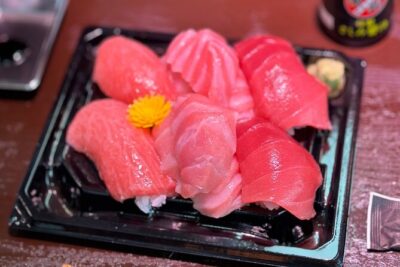

Tokyo Sushi Making Class in Tsukiji with Professional Chef
Read our review →
Tsukiji Fish Market Guided Tour and Sushi Making with Pro Chef
Read our review →Tsukiji Fish Market Food and Culture Walking Tour
Read our review →
Tsukiji Fish Market: Street Food & Culture Walking Tour
Read our review →