
Review · TOKYO
Tsukiji Fish Market: Street Food & Culture Walking Tour
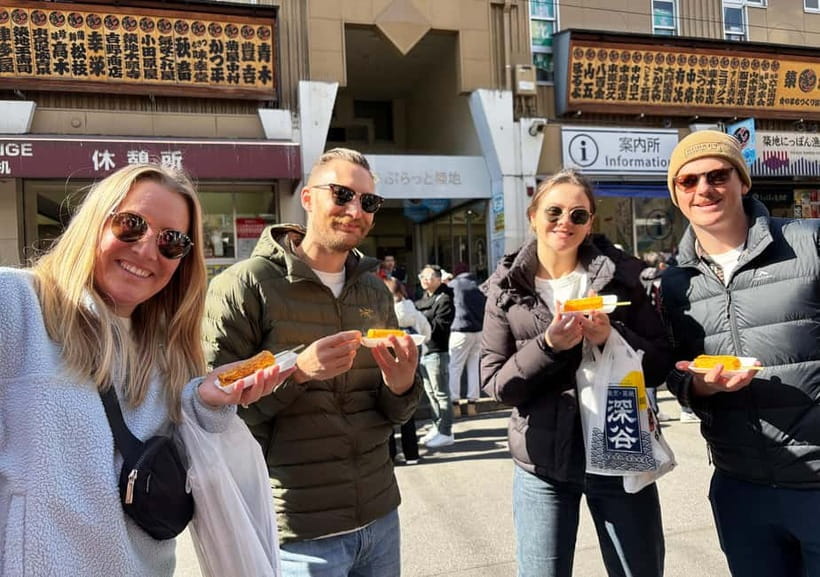
Tsukiji is best understood with a food-savvy local beside you. The fresh tuna, wagyu, grilled seafood, and street snacks are only half the story. Your guide explains what you are eating, how it is prepared, and why preservation, seasoning, and texture matter in Japanese cooking.
I especially like the fresh-grated wasabi and the freedom to choose what you want to buy as you walk. Guides such as Kawa, George, Mao, Tomo, and Chihiro have been praised for clear English, useful food advice, and friendly help with unfamiliar dishes. The main catch is the calendar: on Wednesdays, Sundays, and national holidays, around half the shops may be closed.
Key points to know before you book
- Start with Tsukiji Hongwanji Temple: A 20-minute visit adds architecture, ritual, and local history before the food stops begin.
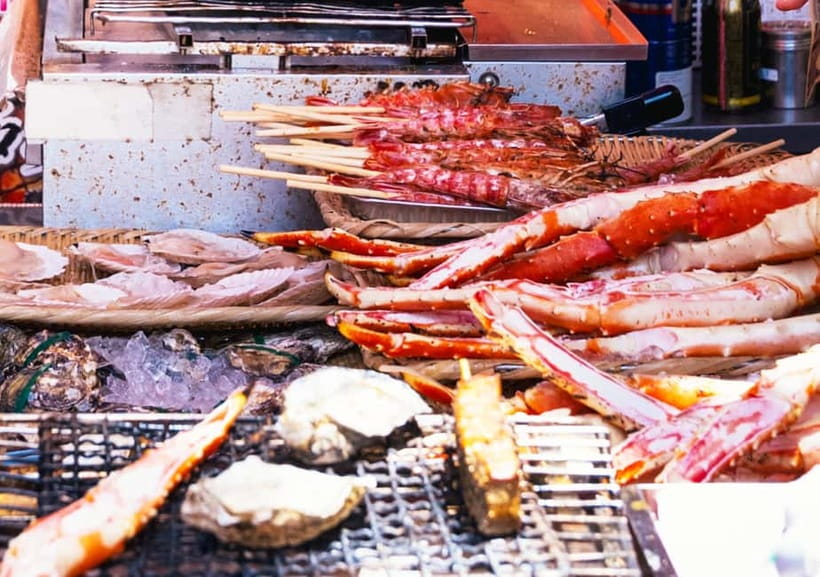
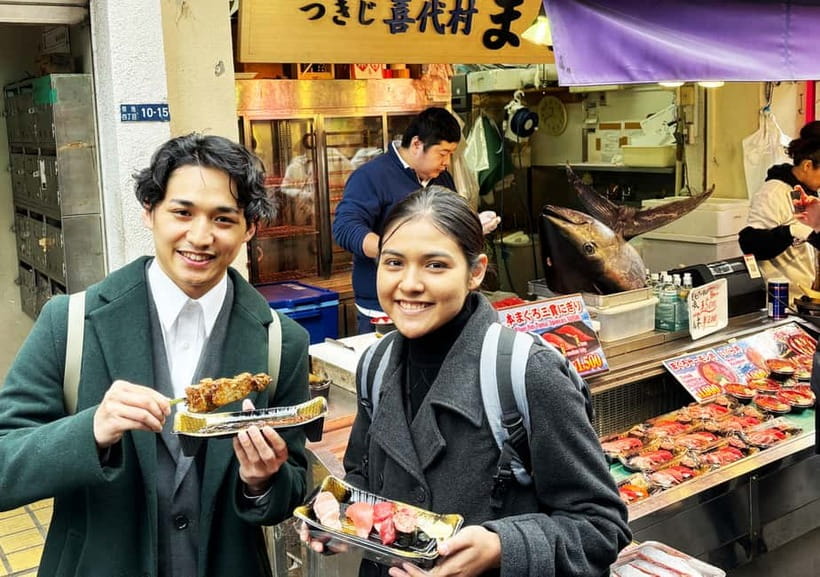
- Expect plenty of tasting choices: Tuna sushi, eel, grilled scallops, wagyu, octopus, fish cake, omelet, dumplings, and other market foods may appear along the route.
- Fresh wasabi is a signature touch: Your guide may provide a special wasabi set or freshly grate wasabi to show how it changes the flavor.
- The tour favors guidance over a fixed meal: You can spend as much or as little as you like at individual stalls, so bring cash.
- The outer market is the focus: The tour visits Tsukiji’s current food market area rather than promising access to every working section of the former wholesale market.
- Choose your day carefully: Shop closures can change the feel of the experience, especially on Wednesdays, Sundays, and public holidays.
Why a guide helps at Tsukiji
Tsukiji Outer Market can look simple at first: narrow lanes, food counters, shopfronts, and a steady stream of people choosing breakfast or ingredients. The difficulty is knowing where to stop, what is worth buying, and how to order when the food is unfamiliar.
That is where this tour earns its modest price. At $22 per person, you are paying for two hours of local direction, cultural explanation, and help making sense of a busy food district. Your food purchases are not presented as one large, fixed meal, so you keep control of your budget and appetite.
I like this arrangement. One person may want several seafood tastings, while another may prefer wagyu, grilled foods, or small traditional snacks. You can follow your guide’s suggestions without being locked into a set menu.
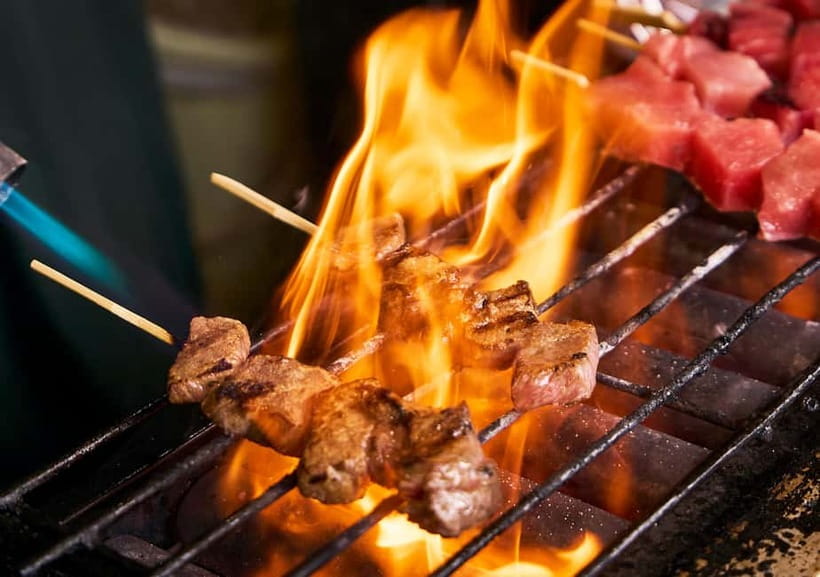
The food advice is one of the strongest parts of the tour. Guides have directed people toward tuna sushi, eel, grilled scallops, wagyu sirloin skewers, skewered octopus, fish cake, omelet, dumplings, and other market specialties. The exact selection depends on the stalls open that day and your own preferences.
You should still bring cash. The activity specifically advises it, and several food stops involve buying items directly from market vendors. The tour gives you ideas and direction, but it is wise to think of the $22 as the guiding fee rather than an all-inclusive food allowance.
More Fish Market Tours in Japan
- Tokyo Tsukiji Fish Market Food and Culture Walking Tour
★ 5.0 · 3,184 reviews - Tokyo: Tsukiji Fish Market Food and Walking tour
★ 5.0 · 1,724 reviews - Tokyo: Tsukiji Fish Market Guided Walking Tour
★ 4.9 · 1,397 reviews
Tsukiji Hongwanji Temple sets the tone
The meeting point is at Tsukiji Hongwanji Temple, with the exact meeting arrangement depending on the option booked. The temple stop lasts about 20 minutes and gives the tour a useful opening beyond food.
The building has striking architecture, detailed carvings, and a calm interior. One guide has been praised for explaining the purification procedure before entering, while other tours have included nearby shrines and temple details. This is a short visit, not a full temple study, but it helps place Tsukiji in its wider cultural setting.
I like beginning here because it slows the pace before you enter the market lanes. You learn that the district is not just a collection of stalls. It has religious, commercial, and culinary layers, all within a short walk.
The temple is also a practical meeting landmark. Still, pay close attention to your booking instructions, since the meeting point may vary slightly by option. One person reported some initial confusion about the meeting place, though the guide called to arrange the meeting. Confirming the location before setting out is a sensible step.
Eighty minutes among Tsukiji’s food stalls
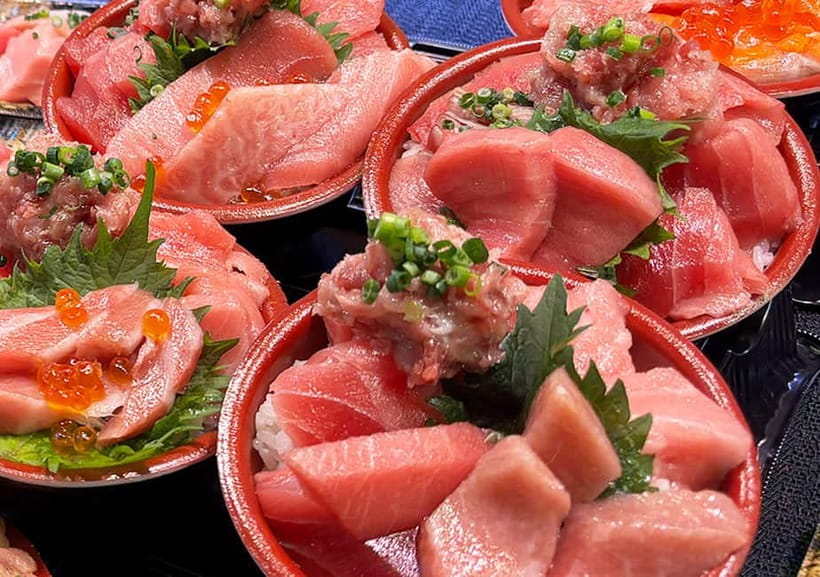
Most of the tour is spent in Tsukiji Outer Market, with about 80 minutes set aside for a guided visit and tastings. This is enough time to sample several foods, ask questions, and pause at shops selling seafood, spices, cooking ingredients, ceramics, and other Japanese goods.
The outer market is not simply a place to eat sushi. It is also where you see the ingredients behind Japanese home cooking and restaurant food. Your guide can point out specialty products, explain cooking uses, and describe ways Japanese cooks preserve food and build umami.
That explanation gives the tasting more meaning. A piece of fish is not just fresh or expensive. Its flavor can be shaped by aging, drying, curing, grilling, cutting, or seasoning. The tour focuses on these techniques and on the care required to handle seafood properly.
The fish preparation demonstration can be a highlight when the relevant shop is open. You may see how a fish is cut and prepared before trying the result. This is especially useful if you have wondered why Japanese seafood has such careful presentation and texture.
Do not expect the same demonstration on every date. The market’s opening pattern matters, and Wednesday tours have been singled out as less complete because more stalls may be closed. The tour can still operate, but you may see fewer vendors and fewer working demonstrations.
What you may taste at the market
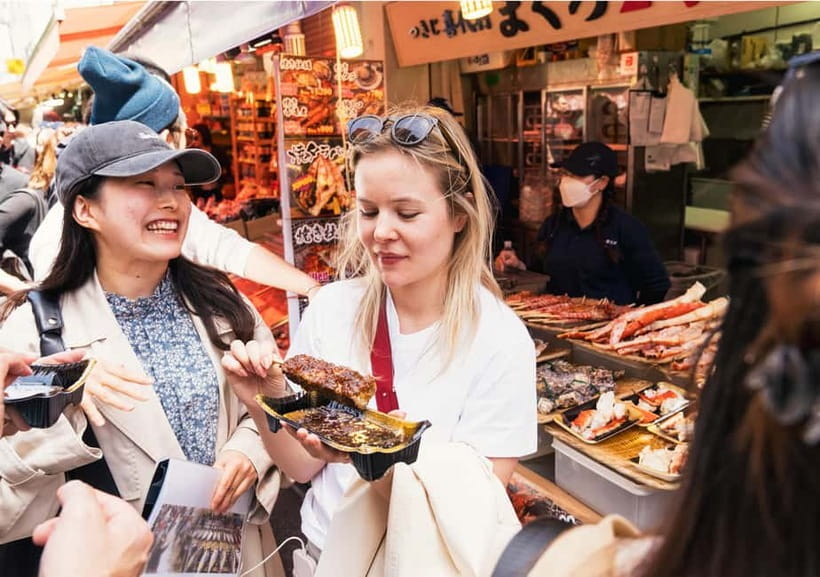
The food selection is flexible, which is both a strength and a limitation. Your guide can recommend good stops, but the exact bites are not fixed in the information provided. That means you should arrive ready for a changing menu rather than expecting a printed list.
Possible tastings and purchases include:
- Fresh tuna and tuna sushi
- Eel
- Grilled scallops
- Wagyu, including a sirloin skewer
- Skewered octopus
- Fish cake
- Japanese omelet
- Dumplings
- Other seafood and traditional street foods
- Rice snacks and market ingredients to take away
The guides have also helped people avoid paying touristy prices by steering them toward suitable stalls. That does not mean every item will be cheap. High-quality seafood and wagyu can cost more, and the market offers plenty of temptation.
The best strategy is to set a food budget before you begin. Ask your guide what each item costs, then choose two or three things that genuinely interest you. Since you are not forced to buy everything, the tour works well for both enthusiastic eaters and people who prefer smaller portions.
The fresh wasabi deserves special attention. Several guides have offered a wasabi set or freshly grated wasabi, and it has been one of the most distinctive details of the outing. Fresh wasabi has a different aroma and a cleaner heat than the familiar green paste served in many restaurants. Try a small amount first, then pair it with seafood if your guide suggests it.
More Fish Market Tours in Tokyo
- Tokyo Sushi Making Class in Tsukiji with Professional Chef
★ 5.0 · 1,177 reviews - Tsukiji Fish Market Guided Tour and Sushi Making with Pro Chef
★ 5.0 · 775 reviews - Tokyo: Tsukiji Fish Market Food and Culture Walking Tour
★ 4.7 · 757 reviews - Tsukiji Fish Market: Street Food & Culture Walking Tour
★ 5.0 · 669 reviews
The people make the route work
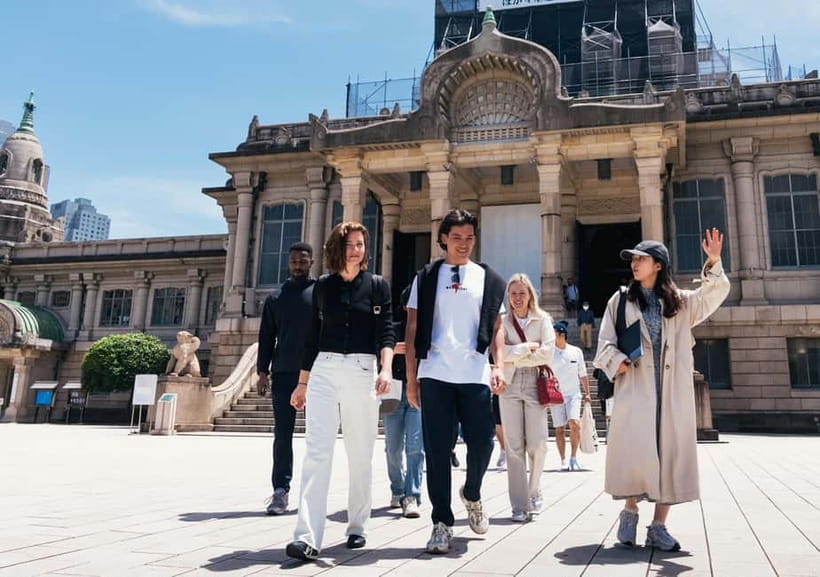
A market tour depends heavily on the person leading it. The named guides associated with this activity include Kawa, George, Mao, Tomo, Chihiro, Naoto, Daichi, Ayaka, and others. The strongest guide qualities are clear English, good stall choices, patience with questions, and the ability to adjust the food stops to the group.
Kawa has been particularly effective at explaining market history, cooking methods, and ingredients while keeping the route comfortable. George is known for detailed food recommendations, strong English, and help finding good-value choices. Mao has been praised for making unfamiliar foods approachable, while Tomo has tailored suggestions to individual tastes.
Other guides add their own strengths. Naoto has been described as friendly and well informed, Daichi has combined market stories with food preparation details, and Ayaka has offered a relaxed mix of history, local advice, and tastings. Your guide will depend on the date, so you should not book solely to meet one named person.
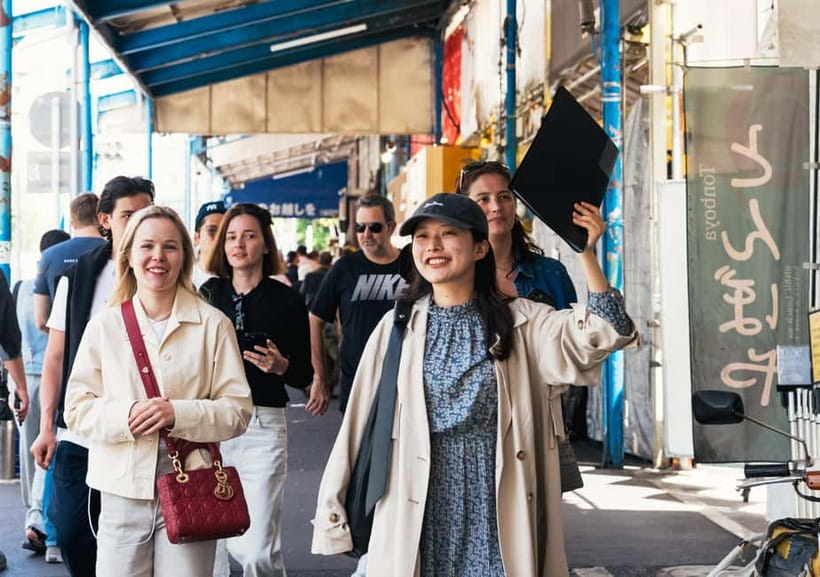
The group may be small, and some departures can feel almost private. That is useful in the market because the guide can answer more questions and adjust the route. A small group also makes it easier to stop without blocking narrow lanes.
The final 20 minutes help you shop independently
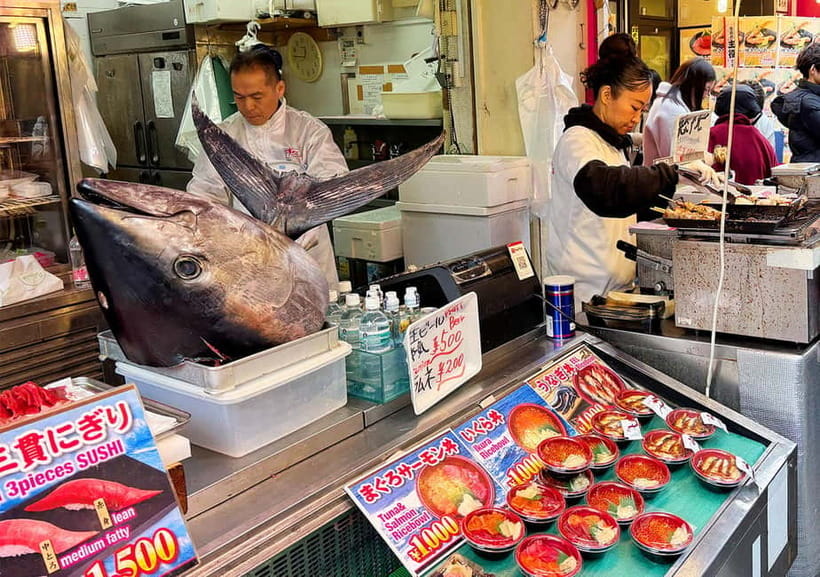
After the main food portion, the route includes another guided period of about 20 minutes in the outer market. This works as a chance to ask final questions, revisit a shop, or get advice about what to buy for later.
That closing time matters because Tsukiji is easy to revisit after the tour. You may want to purchase rice snacks, cooking ingredients, ceramics, or additional seafood once you understand the layout. Guides have offered practical tips about where to browse and which stops fit different interests.
I would use this final section to ask direct questions. What can you safely carry back to your hotel? Which foods are best eaten immediately? Which ingredients make sensible souvenirs? The answers will depend on the shop and product, but your guide can help you avoid random purchases.
The tour returns to Tsukiji Hongwanji Temple, with two drop-off options listed at the same temple location. From there, you can continue exploring the district or make your way elsewhere in Tokyo.
When the market is at its best
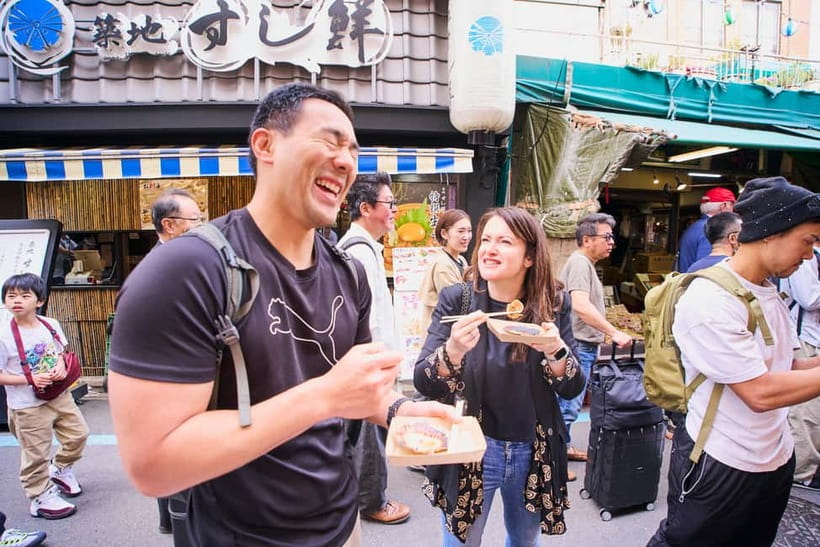
The activity warns that around half of the Outer Market shops may be closed on Wednesdays, Sundays, and national holidays. Some stalls remain open and the tour still runs, but the route will not have its usual range of choices.
If you can choose your date, I would avoid those days. This is especially important if you want to see a fish-cutting demonstration or compare many vendors. A quieter day may sound appealing, but fewer open shops can also mean fewer tastings and less of the market’s working energy.
The tour lasts two hours, so start times matter too. Check availability for the departure that suits your schedule. An early start may be useful for food freshness and shop activity, but the supplied details do not promise a particular opening time or a specific selection of stalls.
Wear comfortable shoes and keep your hands free. The tour involves walking and eating in a compact market district. You may want to buy food or small goods along the way, so a small bag is practical.
Is $22 good value?
Yes, if you want help choosing food and understanding what you see. The price is low for a two-hour guided walk in central Tokyo, especially when the guide adds temple context, market history, ingredient advice, and tasting direction.
The value is not that you receive a large included meal. It comes from avoiding wasted stops, learning how to approach unfamiliar foods, and finding useful vendors without spending your whole morning guessing. The freedom to buy only what you want is a real advantage.
You should budget extra for food. The activity includes food tasting, but the information also makes clear that you can spend as much or as little as you like at the market. Treat your purchases as separate from the $22 booking price.
Free cancellation up to 24 hours before the start and a reserve-now, pay-later option add useful flexibility. The tour is also wheelchair accessible, and an English-speaking guide is provided. Ask about the exact meeting option when booking, since there can be more than one starting arrangement.
Who should book this Tsukiji tour?
I would recommend it to a first-time visitor to Tsukiji, anyone who feels unsure ordering at Japanese food stalls, and people who want more than a quick sushi stop. It is also a good choice if you enjoy learning how ingredients are preserved, cut, seasoned, and used.
Families and mixed groups may appreciate the flexible spending. One person can try wagyu, another can focus on seafood, and someone else can simply sample small snacks. The guide can also explain ingredients when you do not recognize them.
You may not need this tour if you already know Tsukiji well, speak Japanese comfortably, and have researched the stalls you want to visit. The market is possible to explore on your own, and the tour does not provide exclusive access to every vendor.
Still, even independent visitors can benefit from two hours of orientation. You leave knowing more about the food, the district, and the shops, then have the option to continue alone.
Should you book it?
Book this tour if you want a friendly introduction to Tsukiji with fresh food, local explanations, and low financial risk. The fresh wasabi, fish preparation details, and flexible tastings give it more substance than a simple walk through the market.
Choose your date carefully, bring cash, and leave room in your appetite. If your schedule falls on Wednesday, Sunday, or a national holiday, expect fewer open stalls and a different route. On a fuller market day, this is a good-value way to get your bearings and turn Tsukiji’s many choices into a manageable, tasty morning.
FAQ
How long does the Tsukiji Fish Market tour last?
The tour lasts two hours. About 20 minutes are spent at Tsukiji Hongwanji Temple, about 80 minutes in the outer market with guided food tasting, and another 20 minutes continuing through the market.
What language is the tour offered in?
The tour is offered in English with a live English-speaking guide.
Is food included in the $22 price?
The activity includes food tasting, but you should bring cash for additional food purchases. You can spend as much or as little as you like at the market stalls.
What happens if I visit on a Wednesday, Sunday, or national holiday?
Around half of the Tsukiji Outer Market shops may be closed on those days. Some shops remain open and tours still operate, but you should expect fewer stalls and a different experience.
Where does the tour start and finish?
The listed starting and drop-off location is Tsukiji Hongwanji Temple, though the exact meeting point may vary depending on the option booked. The provided coordinates are 35.66661467955698, 139.77199430835137.
Can I cancel or change my booking?
You can cancel up to 24 hours in advance for a full refund. A reserve-now, pay-later option is also available.
More Street Food Market Tours in Japan
- Tokyo Food Tour Taste Fresh Delights at Tsukiji Market
★ 5.0 · 429 reviews - Toyosu Market Morning Tuna Auction and Tsukiji Food Tour with Licensed Guide
★ 4.5 · 146 reviews - Tokyo Tsukiji Fish Market Food Tour: 15 Stops & Walk Local Street
★ 5.0 · 139 reviews - Tsukiji Fish Market Private Food Tour in Tokyo
★ 5.0 · 18 reviews
More Market Walking Tours in Japan
- Tsukiji Fish Market Small-Group Food Walking Tour
★ 5.0 · 621 reviews - Tokyo: Guided Walking Tour of Tsukiji Market with Breakfast
★ 4.4 · 134 reviews - Tokyo: Tsukiji Market Walking Tour & Sushi Cooking Class
★ 4.6 · 122 reviews - Tokyo: Guided Walking Tour of Tsukiji Market with Lunch
★ 4.4 · 24 reviews
Just added around Tokyo
- Tokyo: Private Tsukiji Street Food & Sake with Local Guide★ 5.0 · 3 reviews
- Tokyo: Tsukiji Market Guided Tour & Sushi-Making Experience★ 4.4 · 11 reviews
- Tokyo: Tsukiji Market and Hama-rikyu Gardens Guided Tour★ 4.8 · 73 reviews
- Tokyo : Tsukiji Fish Market Food Walking & Shrine Visit Tour★ 5.0 · 3 reviews
- Tokyo: Tsukiji Fish Market Culture Tour with Sashimi Tasting★ 4.6 · 54 reviews
- Tokyo: Tsukiji Fish Market Foodie and Educational Tour★ 5.0 · 4 reviews
- Tokyo’s Kitchen: Tsukiji Market Food & Culture Walk★ 4.7 · 74 reviews
- Tokyo: Guided Walking Tour of Tsukiji Market with Lunch★ 4.4 · 24 reviews
Fish Market Tours, compared.
Tokyo Tsukiji Fish Market Food and Culture Walking Tour
Read our review →

Tokyo Sushi Making Class in Tsukiji with Professional Chef
Read our review →
Tsukiji Fish Market Guided Tour and Sushi Making with Pro Chef
Read our review →Tsukiji Fish Market Food and Culture Walking Tour
Read our review →
Tsukiji Fish Market: Street Food & Culture Walking Tour
Read our review →
Tsukiji Fish Market Small-Group Food Walking Tour
Read our review →Browse the lists this tour appears in