
Review · JAPAN
Tokyo: Tsukiji Fish Market food Tour
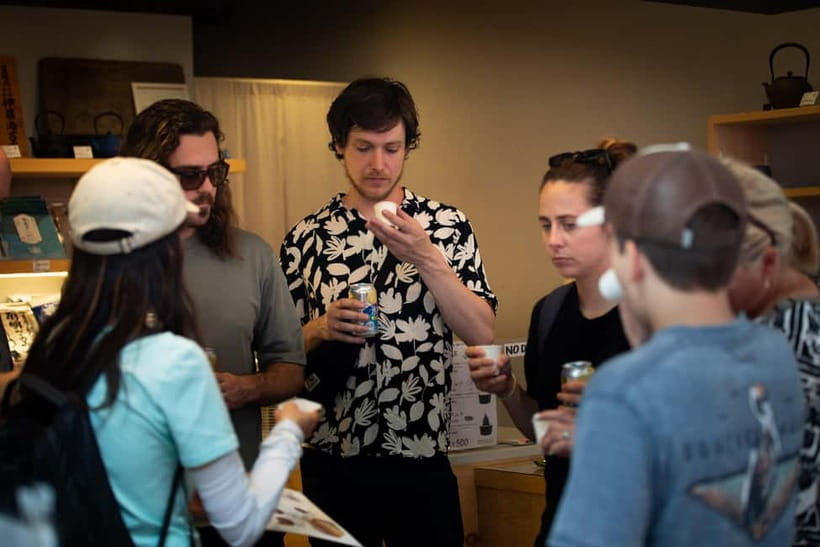
Tsukiji is best understood with an empty stomach and a good guide. This 150-minute food walk takes you through the Outer Market for tuna sushi, sashimi, fish cake, egg roll, dashi soup, green tea, and other bites, while guides such as Keiko and Loc explain what you are eating. I especially like the personal connection with market vendors and the chance to try foods you might otherwise pass by. I also like that the tour covers more than seafood, with lessons about beef, fish, tea, and everyday Japanese food culture.
The main thing to consider is that the route follows selected shops, rather than letting you choose every stop. One participant felt the experience was easy to do alone and disliked the fixed choices. If you want a fully independent shopping morning, this tour may feel too guided. If you want help ordering, tasting unfamiliar foods, and understanding the market, that structure is useful.
Key points at a glance
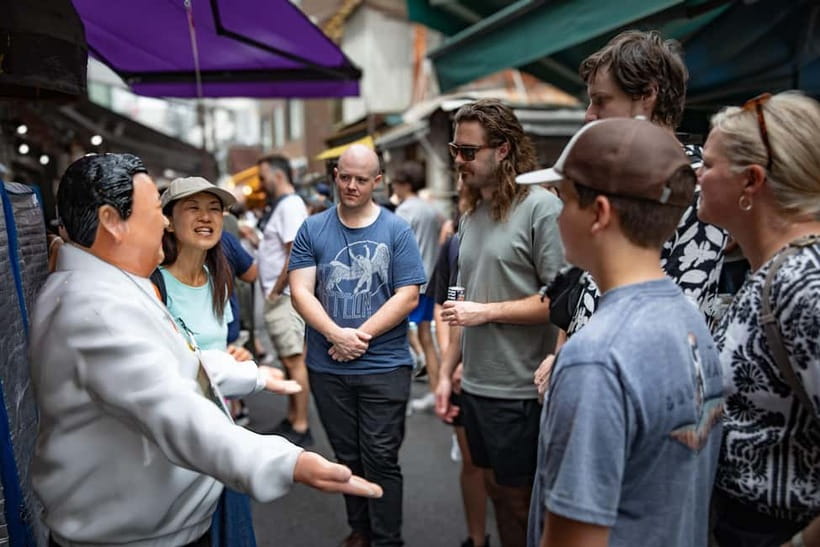
- Come hungry: The food includes tuna sushi, sashimi, fish cake, egg roll, dashi soup, green tea, and more.
- Meet near Lawson: The starting point is the LAWSON Tsukiji 4 Chome Store, where your guide holds a board.
- Expect market context: You learn about Tsukiji’s past, seafood, tea, vendors, and Japanese food customs.
- Guides matter here: Keiko is praised for her warmth and vendor relationships, while Loc is noted for a clear pace and strong explanations.
- Allow 150 minutes: The tour is long enough for several tastings without taking up your entire day.
- Plan for a flexible morning: You can cancel up to 24 hours ahead, and reserve now while paying later.
Why Tsukiji Outer Market works so well for a food tour
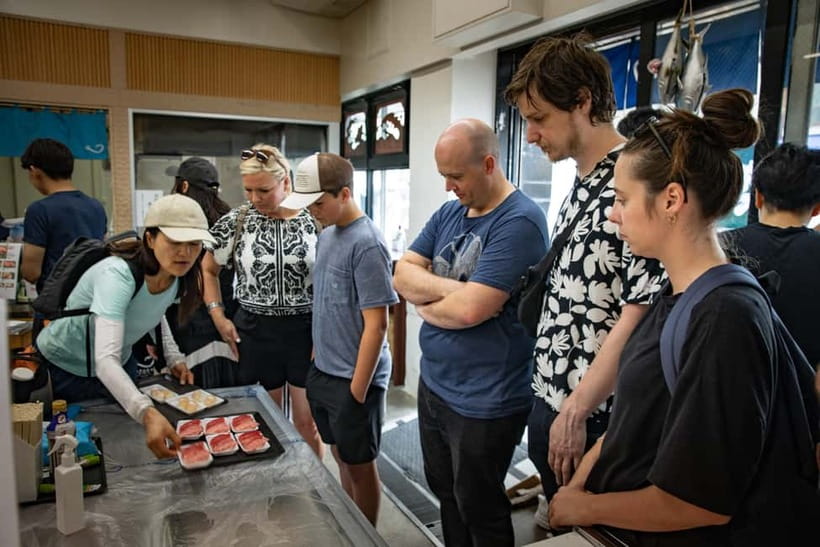
Tsukiji’s famous wholesale fish market moved to Toyosu, but the Outer Market remains a major food stop in Tokyo. Its narrow streets and specialist shops still offer seafood, prepared foods, tea, cooking supplies, and small Japanese treats.
That distinction matters. You are not being taken into the old wholesale auction area. Instead, you spend your time in the public market district, where the food is ready to buy, taste, and discuss. For a first visit, this is often the more practical side of Tsukiji because the focus is on eating and learning rather than simply watching commercial activity.
I like this tour because the market can be hard to read on your own. A stall may display a familiar-looking item with no clear explanation in English. Your guide can identify the food, explain how it is used, and help you decide what is worth trying.
The market also rewards curiosity. Some stops may be obvious, such as sushi or sashimi. Others are less familiar, including fish cake, egg roll, soup stock, and regional snacks. The appeal is not just getting full. You leave with a better sense of how several small parts of Japanese cooking fit together.
More Fish Market Tours in Japan
- Tokyo Tsukiji Fish Market Food and Culture Walking Tour
★ 5.0 · 3,184 reviews - Tokyo: Tsukiji Fish Market Food and Walking tour
★ 5.0 · 1,724 reviews - Tokyo: Tsukiji Fish Market Guided Walking Tour
★ 4.9 · 1,397 reviews
Starting at Lawson Tsukiji 4 Chome Store
The meeting point is the LAWSON Tsukiji 4 Chome Store. You should arrive 10 minutes before the scheduled start, since the guide will be holding a board for recognition.
This is a simple meeting arrangement, but do not treat it casually. Tsukiji has many lanes, entrances, and shops, and a late arrival could be difficult to fix once the group has moved into the market. The tour information does not provide a separate transport service, so plan to reach the meeting point on your own.
The tour is conducted in English. That is important for a food walk, since the value comes partly from explanations at each stop. You are not simply handed a sample. You can ask about ingredients, preparation, market customs, and the role a dish plays in Japanese meals.
The starting time varies, so check the available options when booking. A morning departure makes the most sense for this kind of outing, especially since one of the strongest practical tips is to skip breakfast beforehand.
The first two hours inside the market
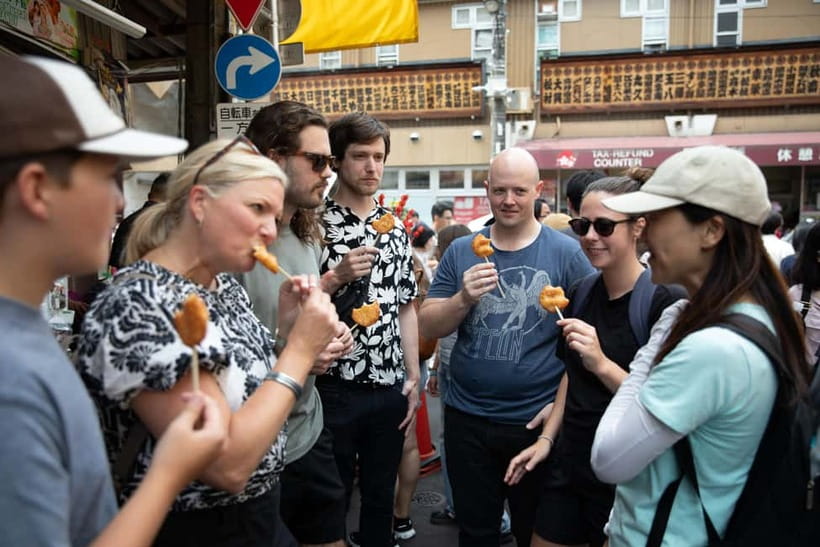
The main market visit lasts about two hours, within the total 150-minute experience. That gives the walk enough room for several food stops, short explanations, and time to look around without turning the morning into a rushed checklist.
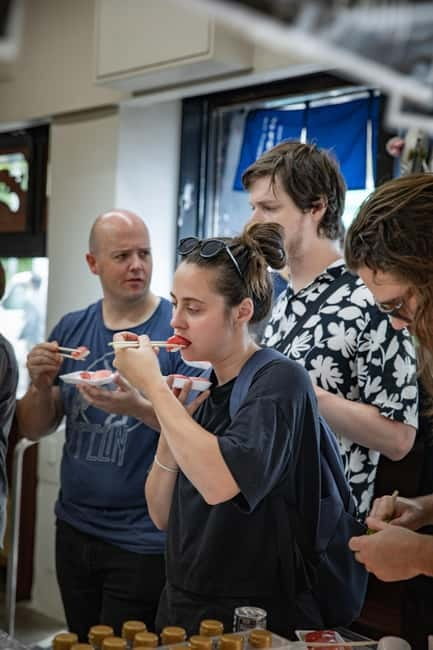
Your guide leads you through the Outer Market, pointing out stalls and explaining the daily work of the people who sell and prepare food there. The market setting is part of the meal. You hear the movement of vendors, see seafood being presented, and notice how much specialist knowledge goes into products that may look simple at first glance.
The exact order of tastings can vary, but you should expect a mix of seafood and other Japanese foods. That variety is one of the tour’s strengths. A sushi-only outing would give you one narrow view of Tsukiji. Here, you can compare raw fish with cooked and prepared foods, then finish with soup and tea.
The guide also adds context about the market’s past. This helps you understand why Tsukiji became such an important food district and why its name still carries weight after the wholesale operation moved. The information is useful in small portions, tied to the places you are seeing rather than delivered as a long lecture.
What you actually eat at Tsukiji
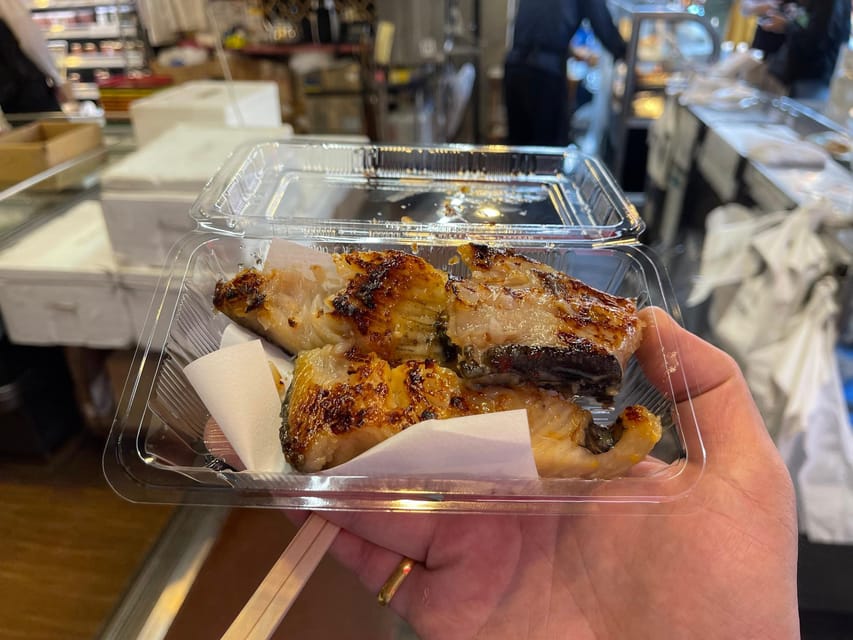
Food is included in the $83 price, with the listed selection covering several well-known Japanese flavors. You can expect tuna sushi, sashimi, fish cake, egg roll, dashi soup, green tea, and additional samples.
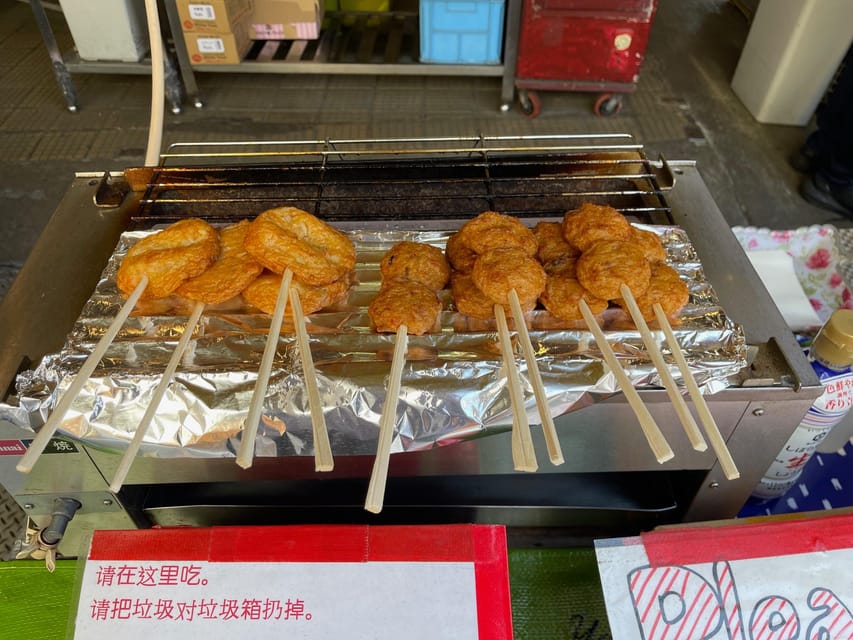
Tuna sushi and sashimi are the obvious stars for many people. The guide explains what you are eating and helps you approach the food with more confidence. If you have limited experience with raw seafood, that support is valuable. You can ask questions instead of guessing from a menu or pointing at a display.
Fish cake gives you a different texture and shows that Japanese seafood cooking is not limited to raw fish. It may be especially useful for someone who thinks a fish market food tour means only sushi.
Egg roll adds a sweet or savory cooked bite to the route, depending on the preparation. It breaks up the raw seafood and makes the meal feel more varied.
Dashi soup introduces one of the foundations of Japanese cooking. Dashi is used in many soups and dishes, so tasting it directly gives you a better sense of the subtle stock flavors behind everyday food.
Green tea provides a calm finish and another look at Japanese food culture. Tea is not just a drink to fill a cup. The tour also touches on tea sellers and their work, giving you another reason to pay attention beyond the seafood stalls.
The phrase and more matters here, since the food selection is not presented as a rigid, fully itemized menu. You should expect the listed foods, plus other samples selected along the way. If you have allergies or strict dietary needs, ask before booking because the available information does not specify substitutions.
More Street Food Market Tours in Japan
- Tsukiji Fish Market: Street Food & Culture Walking Tour
★ 5.0 · 669 reviews - Tokyo Food Tour Taste Fresh Delights at Tsukiji Market
★ 5.0 · 429 reviews - Tsukiji Fish Market: Street Food & Culture Walking Tour
★ 4.8 · 259 reviews - Toyosu Market Morning Tuna Auction and Tsukiji Food Tour with Licensed Guide
★ 4.5 · 146 reviews
Learning from Keiko, Loc, and the market vendors
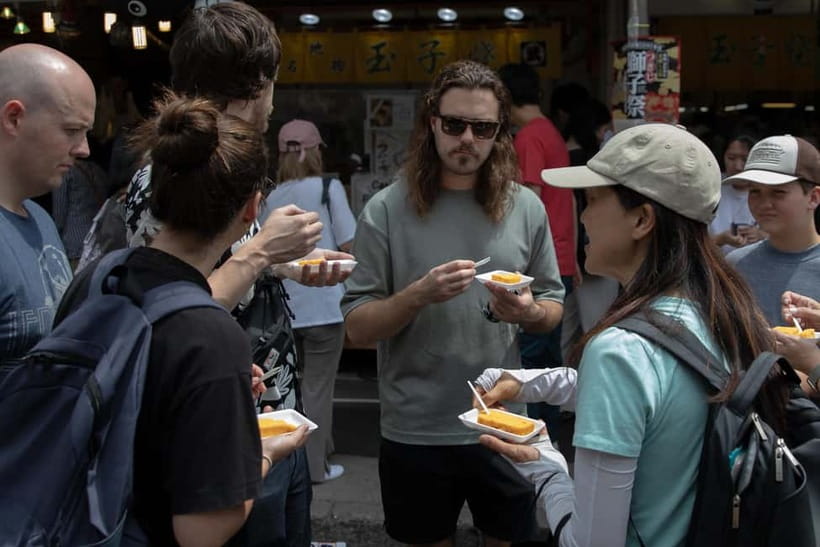
The strongest part of this experience is the guide. Keiko receives especially warm praise for her friendly manner, strong explanations, and relationships with market vendors. That last point can change the feel of the morning. You are not just walking past shops. You have someone who can introduce the setting and help make each stop feel connected to the people working there.
Keiko is also described as helpful when guests are unsure about unfamiliar foods. That matters at Tsukiji, where the best bite may be the one you would not have chosen from a picture alone.
Loc is praised for a clear pace and explanations about the market, fish, beef, and tea. That suggests a tour that keeps moving without making you feel hurried. A good market guide needs to manage both parts: giving enough information to make the food meaningful, while leaving you time to eat and look.
The experience provider is Localized Walking & Food Tours. Since the named guides can differ by date, check the booking details if having a particular guide is important to you. The supplied information specifically identifies Keiko and Loc, but it does not promise that either one will lead every departure.
What the fixed route means for you
A guided food tour has a built-in tradeoff. The benefit is efficiency. You do not need to compare every stall, work out what to order, or worry that you have chosen a touristy stop with little explanation. You get a planned progression through the market and a selection of food that has been chosen for the group.
The drawback is less freedom. One person found the stops too predetermined and felt the tour could be done alone. That is a fair criticism if you already know Japanese food, read menus comfortably, and enjoy making your own route.
I would see the structure differently for a first Tsukiji visit. The market is easy to explore physically, but it is harder to understand quickly. The tour makes sense if you want an introduction before returning later on your own. You can learn what you like, note the areas that interest you, and then come back for independent shopping.
The experience may also suit solo visitors and couples who want social contact without spending an entire day with a guide. At 150 minutes, it is a manageable commitment. You still have most of the day for Ginza, the Imperial Palace area, or other parts of Tokyo.
Is $83 a fair price?
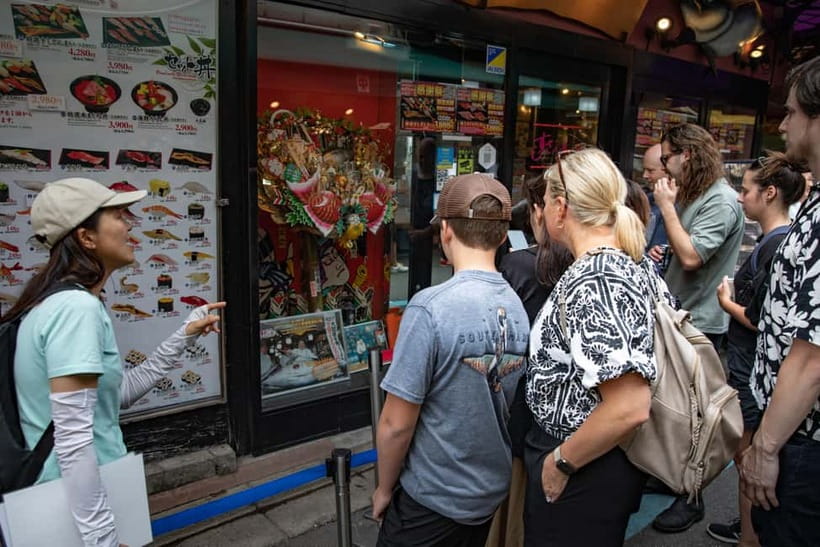
At $83 per person, this is not the cheapest way to eat at Tsukiji. You can buy individual snacks and drinks on your own for less, especially if you are careful about how much you order.
The value comes from the combination of food, interpretation, and time saved. You are paying for a guide fee as well as several tastings. The meal can also be more substantial than a quick snack run, with sushi, sashimi, cooked foods, soup, tea, and additional samples. One practical warning is worth repeating: do not eat breakfast first unless you want to limit what you can try.
I consider the price more reasonable for first-time visitors who want a clear introduction to Japanese food. It is less convincing for experienced Tokyo diners who prefer to pick their own shops and already know how to order.
Your decision should also depend on how much you value explanation. If you care only about getting food, go independently. If you want to understand the market and try items with guidance, the added cost has a purpose.
Timing, access, and practical planning
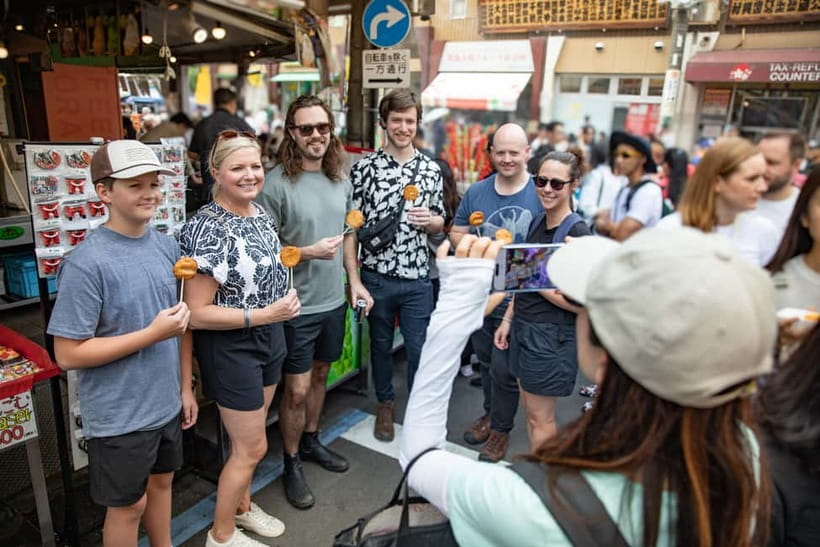
The tour lasts 150 minutes and includes a guided visit to Tsukiji Outer Market. The activity is listed as wheelchair accessible, though the information does not describe the exact route, pavement, stall entrances, or restroom arrangements. If you use a wheelchair, confirm the practical details before booking.
Wear comfortable shoes and be ready to walk through a food market. The supplied information does not state the group size, so you should not assume a private tour or a small group.
Arrive 10 minutes early at Lawson Tsukiji 4 Chome Store. The guide will be holding a board, which should make identification easier.
The booking terms are traveler-friendly. You can cancel up to 24 hours before the start for a full refund, and you can reserve now and pay later. Those options help if your Tokyo schedule is still changing.
Who will enjoy this Tsukiji food walk?
I would recommend it most strongly to:
- First-time visitors to Tokyo who want help understanding Japanese food
- People who enjoy tasting several small portions instead of ordering one large meal
- Anyone nervous about choosing raw seafood alone
- Visitors who want local interaction and market context
- Couples, families, or solo visitors with a free 150-minute morning
- Food lovers who want to learn about tea, dashi, fish, and prepared foods together
I would be more cautious if you are a confident independent eater, have strict dietary restrictions, or want complete control over every stop. The route is planned, and the available details do not promise menu changes.
The tour is also not designed as a wholesale fish auction visit. It focuses on Tsukiji Outer Market and its public food stalls. That is a better fit if you want to eat and learn, but not if your main goal is to see the former wholesale market operation.
Should you book it?
Book this tour if you want a welcoming introduction to Tsukiji, especially if sushi, sashimi, dashi, and unfamiliar market foods sound appealing but you would rather not make every choice alone. Keiko’s vendor connections and Loc’s clear explanations are particular strengths, though the guide depends on the departure.
Skip it if you prefer to wander without a set route or already feel at home ordering Japanese food. For everyone else, $83 buys more than a few bites. It buys a guided start to one of Tokyo’s most rewarding food districts, with enough time left afterward to continue exploring on your own.
FAQ
Where does the Tsukiji food tour start?
The tour starts at the LAWSON Tsukiji 4 Chome Store.
Where does the tour finish?
The tour finishes at Tsukiji Outer Market.
How long does the experience last?
The total duration is 150 minutes. The Tsukiji Outer Market portion is listed as about two hours.
What food is included?
Included tastings are tuna sushi, fish cake, egg roll, sashimi, dashi soup, green tea, and additional food samples.
Is breakfast included?
The listed food includes breakfast or brunch-style tastings, but a separate breakfast is not provided. Arrive hungry because the tour includes many samples.
What language is the tour conducted in?
The live tour guide speaks English.
Who may guide the tour?
Named guides associated with the experience include Keiko and Loc. The guide may vary by departure.
Is the tour wheelchair accessible?
Yes, the activity is listed as wheelchair accessible. The available information does not provide detailed route or stall-access conditions.
Can I cancel or pay later?
You can cancel up to 24 hours before the start for a full refund. You can also reserve now and pay later.
More Food in Japan
- Osaka: Kuromon Market Food Walking Tour (6 stops, 6 tastes)
★ 4.6 · 272 reviews - Inside Tokyo’s Kitchen: Tsukiji Market, Food & Culture Tour
★ 5.0 · 162 reviews - Tsukiji Food and Toyosu Market with Government-Licensed Guide
★ 5.0 · 158 reviews - Tokyo Tsukiji Fish Market Food Tour: 15 Stops & Walk Local Street
★ 5.0 · 139 reviews
More Food and Drink Tours in Japan
- Tokyo: Tsukiji Fish Market Food and Culture Walking Tour
★ 4.7 · 757 reviews - Tsukiji Fish Market Small-Group Food Walking Tour
★ 5.0 · 621 reviews - Kuromon Market Food Walking Tour in Osaka (6 stops, 6 tastes)
★ 5.0 · 550 reviews - Kyoto Nishiki Market Food and Culture Walking Tour
★ 5.0 · 412 reviews
Just added around Japan
- Nagoya Super Market Tour & Home Cooking Class with a Local, Akiko★ 5.0 · 10 reviews
- Tokyo: Private Tsukiji Street Food & Sake with Local Guide★ 5.0 · 3 reviews
- Tokyo: Tsukiji Market Guided Tour & Sushi-Making Experience★ 4.4 · 11 reviews
- Tokyo: Tsukiji Market and Hama-rikyu Gardens Guided Tour★ 4.8 · 73 reviews
- Tokyo : Tsukiji Fish Market Food Walking & Shrine Visit Tour★ 5.0 · 3 reviews
- Tokyo: Tsukiji Fish Market Culture Tour with Sashimi Tasting★ 4.6 · 54 reviews
- 【Family pack】Tokyo: Tsukiji fish market food tour★ 5.0 · 3 reviews
- Tokyo: Tsukiji Fish Market Foodie and Educational Tour★ 5.0 · 4 reviews
Fish Market Tours, compared.
Tokyo Tsukiji Fish Market Food and Culture Walking Tour
Read our review →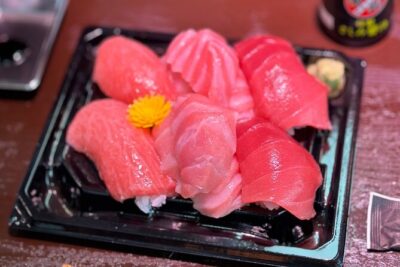

Tokyo Sushi Making Class in Tsukiji with Professional Chef
Read our review →
Tsukiji Fish Market Guided Tour and Sushi Making with Pro Chef
Read our review →Tsukiji Fish Market Food and Culture Walking Tour
Read our review →
Tsukiji Fish Market: Street Food & Culture Walking Tour
Read our review →
Tsukiji Fish Market Small-Group Food Walking Tour
Read our review →Browse the lists this tour appears in