
Review · TOKYO
Inside Tokyo’s Kitchen: Tsukiji Market, Food & Culture Tour
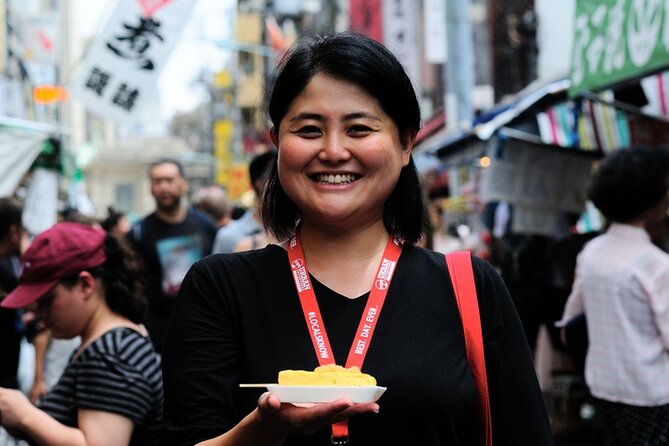
Tsukiji is easiest to enjoy with someone who knows where to turn. This three-hour walk takes you from Kabuki-za to the market’s narrow lanes, with stops for sushi, sashimi, tamagoyaki, fish cakes, sweets, and other small bites. I especially like the six-person limit and the way the tour adds shrines and food customs to the eating.
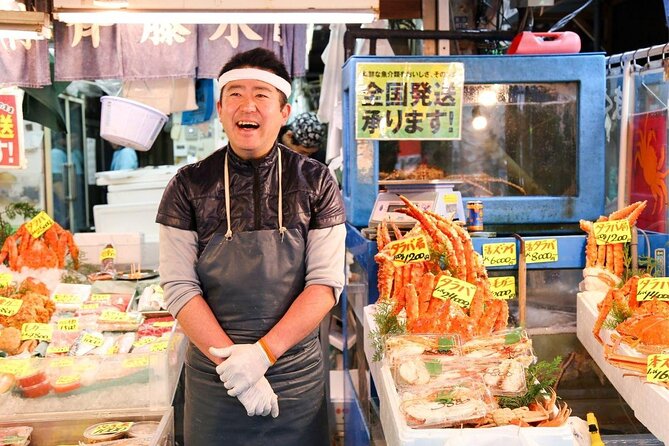
I also like the chance to ask questions through a local guide, especially when fish names and shop signs are hard to follow. Guides such as Aya, Yuri, Shino, Koz, and Mihari have been praised for their warmth and market knowledge. The main caution is that the food experience can vary. Some outings include an impressive range of fresh tastings, while others may involve packaged sushi or fewer samples than expected.
Key points at a glance
- Small group of up to six: You get a better chance to ask questions and keep up in tight market lanes.
- Fresh tastings: Depending on the day and guide, samples can include tuna sashimi, assorted sushi, eel, tamagoyaki, fish cake, dried anchovies, wagashi, and fruit.
- Two quiet shrine stops: Kabuki Inari Shrine begins the walk, while Namiyoke Inari Shrine provides a calm finish.
- Early 8:00 am start: The morning timing suits market activity and leaves most of your day free.
- Food options are limited for vegetarians and vegans: These diets can be accommodated, but the selection is not as broad.
- Bring proper shoes: Closed-toe sneakers are recommended because market floors can be wet.
Tsukiji Outer Market is not a single attraction with a neat entrance and an orderly route. It is a maze of food shops, counters, stalls, narrow lanes, and side streets. That makes it exciting, but it also makes it easy to miss the best parts.
This tour gives you a local escort through that maze. In about three hours, you walk from the Kabuki theater area into Tsukiji, taste several Japanese foods, hear how ingredients fit into local cooking, and finish at a shrine near the market. The focus is not only on eating. It is on understanding why these foods matter.
The tour costs $83.35 per person. That is a fair price if your guide provides a broad tasting menu and helps you make sense of the market. It is less compelling if you expect a full restaurant meal or want to choose and buy every bite yourself. Food and drinks beyond the included tasting are extra, and gratuities are not included.
Meet at Kabuki-za for a short cultural introduction
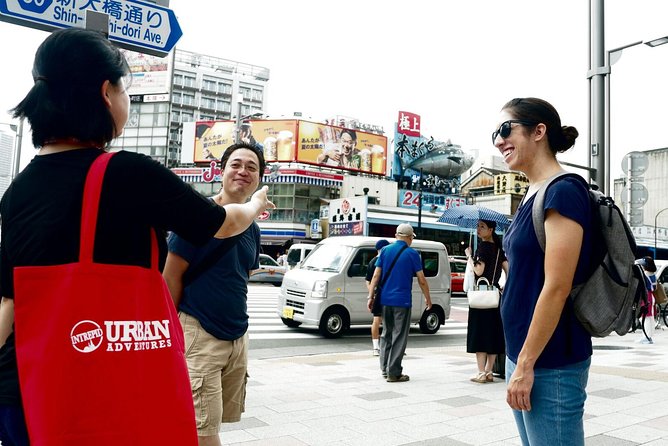
The meeting point is Kabuki Inari Shrine, in front of Kabuki-za at 4 Chome-12 Ginza. This is a useful starting place because the Kabuki theater is easy to recognize, though the shrine itself can be overlooked if you are hurrying.
The opening stop lasts about 10 minutes. Your guide explains Kabuki, Japan’s traditional combination of drama and dance, while pointing out the striking Kabuki-za building. This is a small beginning, but it gives the morning some shape. You are not simply being led from one food shop to another.
Arrive early. Tokyo’s streets and stations can confuse you, and one customer missed the group after walking past the meeting place and arriving only a few minutes late. The tour begins at 8:00 am, so allow extra time to find Kabuki-za and the shrine. It is better to wait nearby with coffee than to start the morning lost.
More Fish Market Tours in Japan
- Tokyo Tsukiji Fish Market Food and Culture Walking Tour
★ 5.0 · 3,184 reviews - Tokyo: Tsukiji Fish Market Food and Walking tour
★ 5.0 · 1,724 reviews - Tokyo: Tsukiji Fish Market Guided Walking Tour
★ 4.9 · 1,397 reviews
Tsukiji Outer Market is the main event
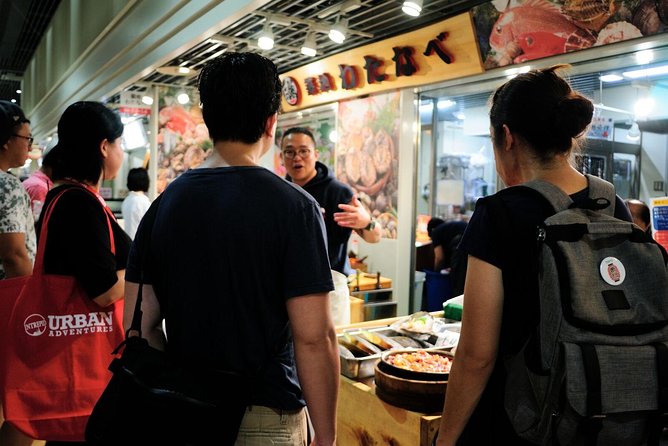
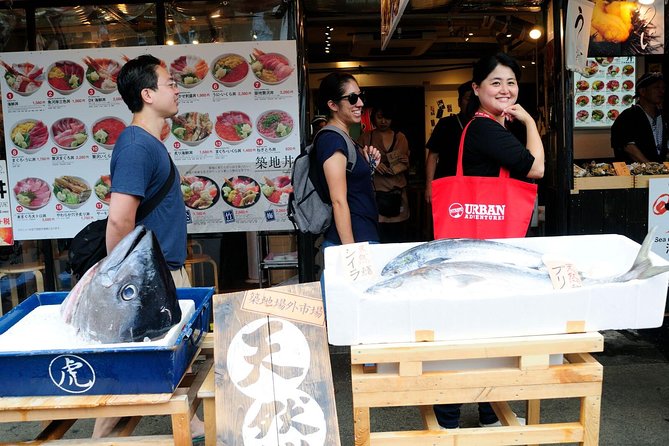
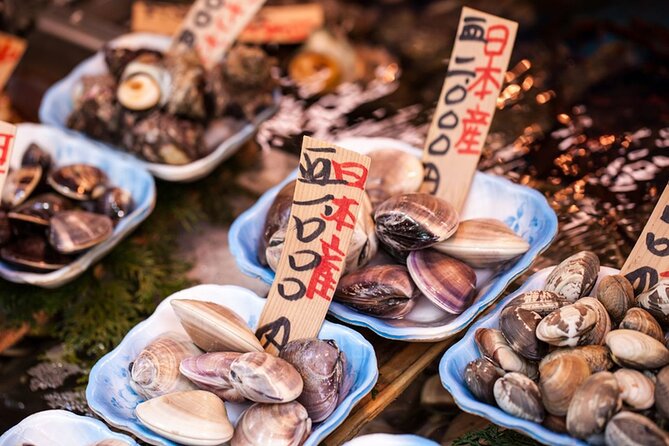
The market portion takes about two hours. You walk through narrow lanes lined with seafood sellers, produce shops, food counters, and places selling prepared snacks. The guide helps explain unfamiliar fish and can assist with translation, which is especially useful when you want to ask what something is or how it is normally eaten.
This is the strongest reason to book the tour. On your own, you may see plenty of food but have little context. A guide can point out the difference between types of tuna, explain ingredients, and show you how market foods connect to everyday Japanese cooking.
The market is also crowded and physically busy. A group of six is a sensible size. You can hear the guide without a large crowd forming around you, and the group can move through tight spaces more easily than a standard sightseeing party. The small size also makes it easier to ask for help with food choices.
Do not expect a quiet sit-down meal. This is a walking food tour, and much of the eating may happen standing up or at nearby food stops. The pace is designed to show you several places rather than settle in at one restaurant.
What you may taste in Tsukiji
The advertised tasting includes freshly made sushi, local snacks, and kawaii wagashi sweets. The exact menu depends on what is available and how the guide organizes the morning. That flexibility is normal in a working food market, but it is also the tour’s main point of uncertainty.
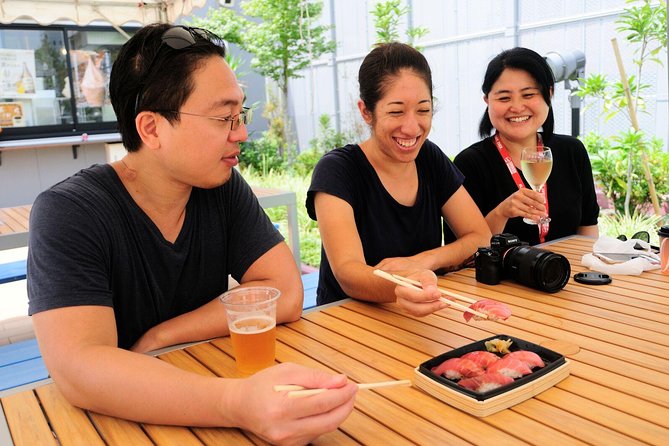
Past food selections have included tuna sashimi in lean, medium-fatty, and fatty cuts, assorted tuna nigiri, sea eel rolls, tamagoyaki, and satsumaage fish cake. Other tastings have included dried anchovies, white strawberries, sweet rice balls, fish-broth omelette on a stick, sake, and wagashi.
One particularly memorable possibility is a tasting of real wasabi, grated fresh with a small wasabi tool and served with sushi. That is a good example of what a strong guide can add. You are not just handed a piece of sushi. You learn how a familiar ingredient differs from the paste commonly served outside Japan.
Some guides have also arranged an opportunity to see a large tuna being cut for sushi. This cannot be guaranteed, but it shows why a morning visit with a market guide can reveal activity you would not notice on a casual walk.
The sweets are useful for balance. If you do not love raw fish, you can still enjoy Japanese omelette, fruit, fish cake, rice sweets, and wagashi. Still, this is best for someone comfortable with seafood. Vegetarian and vegan choices are available, but the selection is limited, so you should mention your diet when booking and keep your expectations modest.
Food expectations need a little care
The description promises tastings, but it does not spell out a fixed number of dishes or a guaranteed menu. That matters at this price. Some outings have produced a generous range of food and left people full. Others included less food, with tastings arriving at odd points in the walk.
There has also been a complaint about packaged tuna sushi and fried tuna rather than sushi made directly in front of the group. The provider addressed that concern and indicated that fresh preparation should be stressed with guides. Even so, I would treat the menu as a selection of market tastings, not as a guaranteed chef-led sushi meal.
You should budget for extra food if you have a large appetite or want to try something that catches your eye. Drinks and additional purchases are not included. The tour is better value when you think of the guide, translation help, cultural stops, and market orientation as part of the fee, rather than pricing it only by the number of bites.
More Fish Market Tours in Tokyo
- Tokyo Sushi Making Class in Tsukiji with Professional Chef
★ 5.0 · 1,177 reviews - Tsukiji Fish Market Guided Tour and Sushi Making with Pro Chef
★ 5.0 · 775 reviews - Tokyo: Tsukiji Fish Market Food and Culture Walking Tour
★ 4.7 · 757 reviews - Tsukiji Fish Market: Street Food & Culture Walking Tour
★ 5.0 · 669 reviews
The guides make the difference
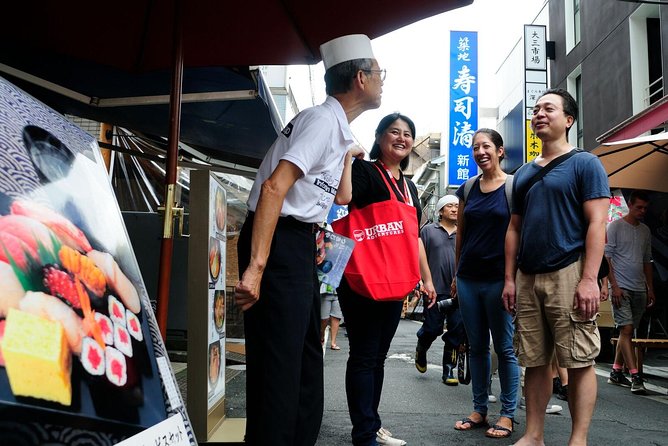
The strongest part of this experience is the person leading it. Aya has been praised for explaining different varieties of fish and arranging a tasting that included sashimi, sushi, eel, tamagoyaki, and satsumaage. Yuri has used fresh wasabi and helped make the sushi tasting more hands-on.
Shino has led groups through the fish market with clear explanations of the food and market activity. Koz has combined tastings with lessons about local traditions and cooking methods. Mihari has been singled out for answering questions and making extra effort to help the group enjoy the morning.
The assigned guide can vary, so you cannot book a specific person based on these names. Still, these examples show the range of the experience. A good guide turns a crowded market into a lesson in ingredients, customs, and daily life. A less well-organized outing may feel like a walk between food samples.
The six-person maximum helps. You are not competing with a large group to hear an explanation or see a counter. If you enjoy asking questions, this format is far better than a large bus-style food tour.
Namiyoke Inari Shrine provides a calm ending
The final stop is Namiyoke Inari Shrine, near the Tsukiji market. The visit takes about 10 minutes, followed by a walk of roughly 10 minutes to the nearest station.
This shrine gives the tour a welcome pause after the market’s tight lanes and food stalls. The stop also reinforces the connection between food, work, and local tradition. You finish with a cultural site rather than simply being dropped beside a shop.
The tour ends in the Tsukiji area, with access from Tsukiji Station on the Hibiya Tokyo Metro Line. That makes it easy to continue sightseeing after the tour. You can stay in the market, head toward Ginza, or use the subway for another part of Tokyo.
Timing, footwear, and family details
The 8:00 am start is early, but it makes sense. The market is a morning destination, and the early schedule leaves your afternoon open. If you dislike early starts, factor in the time needed to reach Kabuki-za before the meeting.
Wear closed-toe shoes. Sneakers are the best choice because floors in market areas can be wet. Avoid open sandals and anything you would worry about around water, food debris, or crowded walking lanes.
Most people can participate, and the activity is family-friendly. Children under six can join free of charge. The narrow lanes and wet floors still mean you will need to keep a close eye on young children.
The tour uses a mobile ticket and is near public transportation. Confirmation is provided when you book. You can cancel for a full refund up to 24 hours before the local start time. Changes or cancellations inside that window are not accepted.
Who will get the most from this tour?
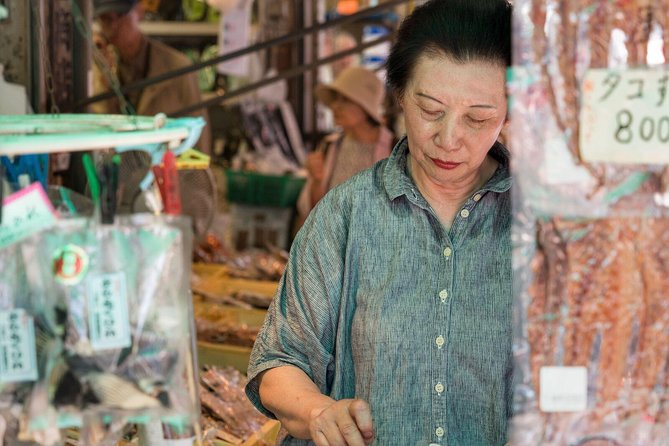
I would recommend it most strongly to a first-time visitor to Tsukiji, a food-focused person who wants guidance, or anyone who feels uneasy navigating Tokyo’s market lanes alone. The translation support is useful, and the small group gives you room to ask about foods you have never seen.
It also suits people who want more than sushi. The shrine visits, Kabuki introduction, wagashi, omelette, fish cake, and produce samples give the morning some range. You do not need to be an expert in Japanese cuisine, and you do not have to love every kind of fish.
I would be more cautious if you want a fixed menu, a long seated meal, or a deep focus on high-end sushi technique. The food selection can change, and the tour is partly a market walk. Vegans and vegetarians can join, but the limited choices may make the $83.35 price harder to justify.
Is the $83.35 price fair?
The price works when you value access and explanation. You are paying for a guide who can lead you through a confusing market, translate, identify seafood, suggest foods, and connect the tastings to Japanese culture. The six-person cap adds real value because it keeps the outing personal.
The price works less well if you plan to spend the morning browsing independently and buying only a few inexpensive snacks. Tsukiji is open to explore on your own, and this tour does not cover unlimited food or drinks.
My advice is to book it for orientation at the start of a Tokyo stay. You will learn what interests you, discover foods to seek out later, and get a better sense of how the market fits into the city. If you already know Tsukiji well, the added value depends heavily on the guide and the tasting choices that day.
Should you book this Tsukiji tour?
Book it if you want a friendly, compact introduction to Tokyo food culture, especially if this is your first visit to Tsukiji. The small group, market access, shrine stops, and chance to taste everything from tuna and sushi to wagashi make it a useful morning experience.
Go in with realistic expectations. The menu is not fully fixed, some tastings may be smaller or less fresh than hoped, and you may want to buy extra food. Bring an appetite, wear sneakers, arrive early at Kabuki-za, and think of the experience as a guided market lesson with tastings, not an all-you-can-eat sushi breakfast.
FAQ
Where does the tour begin?
The tour begins at Kabuki Inari Shrine in front of Kabuki-za, at 4 Chome-12 Ginza, Chuo City, Tokyo.
What time does the tour start?
The tour starts at 8:00 am.
How long does the tour last?
The experience lasts approximately three hours.
How many people can join the tour?
The group has a maximum of six participants.
Are vegetarian and vegan options available?
Yes, vegetarian and vegan options are available, but the food selection is limited.
What happens if I need to cancel?
You can cancel up to 24 hours before the local start time for a full refund. Cancellations or changes made less than 24 hours before the start are not accepted.
More Food in Tokyo
- Toyosu Market Morning Tuna Auction and Tsukiji Food Tour with Licensed Guide
★ 4.5 · 146 reviews - Tokyo Tsukiji Fish Market Food Tour: 15 Stops & Walk Local Street
★ 5.0 · 139 reviews - Tokyo’s Kitchen: Tsukiji Market Food & Culture Walk
★ 4.7 · 74 reviews - Tsukiji Fish Market Private Food Tour in Tokyo
★ 5.0 · 18 reviews
More Food and Drink Tours in Tokyo
- Tsukiji Fish Market Small-Group Food Walking Tour
★ 5.0 · 621 reviews - Tokyo Food Tour Taste Fresh Delights at Tsukiji Market
★ 5.0 · 429 reviews - Tsukiji Fish Market: Street Food & Culture Walking Tour
★ 4.8 · 259 reviews - Tsukiji Food and Toyosu Market with Government-Licensed Guide
★ 5.0 · 158 reviews
Just added around Tokyo
- Tokyo: Private Tsukiji Street Food & Sake with Local Guide★ 5.0 · 3 reviews
- Tokyo: Tsukiji Market Guided Tour & Sushi-Making Experience★ 4.4 · 11 reviews
- Tokyo: Tsukiji Market and Hama-rikyu Gardens Guided Tour★ 4.8 · 73 reviews
- Tokyo: Tsukiji Fish Market Culture Tour with Sashimi Tasting★ 4.6 · 54 reviews
- Tokyo : Tsukiji Fish Market Food Walking & Shrine Visit Tour★ 5.0 · 3 reviews
- Tokyo: Tsukiji Fish Market Foodie and Educational Tour★ 5.0 · 4 reviews
- Tokyo: Guided Walking Tour of Tsukiji Market with Lunch★ 4.4 · 24 reviews
- Tokyo’s Kitchen: Tsukiji Market Food & Culture Walk★ 4.7 · 74 reviews
Fish Market Tours, compared.
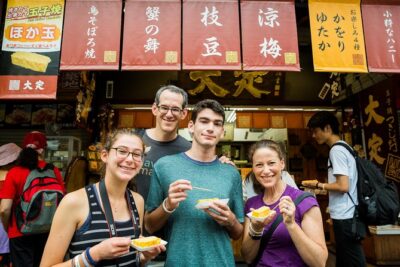
Tokyo Tsukiji Fish Market Food and Culture Walking Tour
Read our review →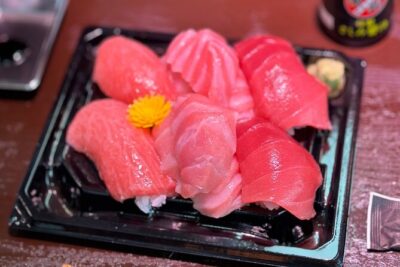
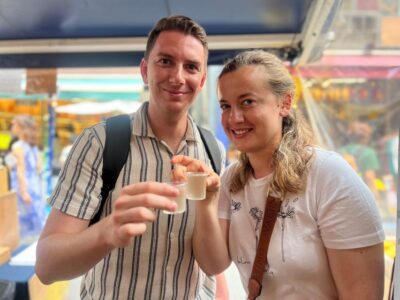

Tokyo Sushi Making Class in Tsukiji with Professional Chef
Read our review →
Tsukiji Fish Market Guided Tour and Sushi Making with Pro Chef
Read our review →Tsukiji Fish Market Food and Culture Walking Tour
Read our review →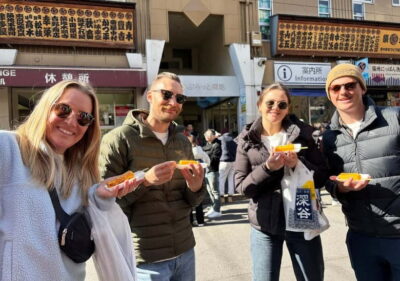
Tsukiji Fish Market: Street Food & Culture Walking Tour
Read our review →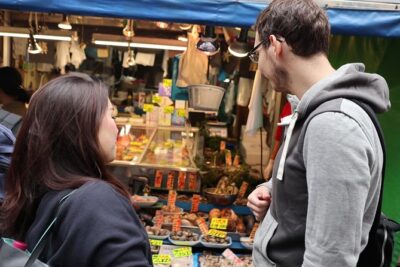
Tsukiji Fish Market Small-Group Food Walking Tour
Read our review →Browse the lists this tour appears in